The Remote Window Cleaning Business These 19 year Olds Started With $0
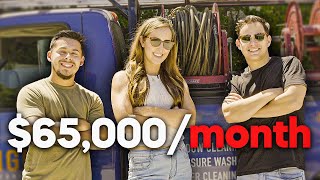
Johnny and Sergio started Orange Window Cleaning at 19 with $150, grew it through door-to-door sales and reputation, then scaled by subcontracting and acquiring other cleaning companies. They run 20-30% margins, charge $30 per holiday-light strand, and built an education product to teach others their model.
Questions this video answers
$150 (each put in $75)
Approximately 20–30% (varied depending on field work vs. subcontracting)
About 65 (interpreted as $65,000)
$6
2 acquisitions
Chapters
Two 19 year olds with 150 bucks started a company that made them hundreds of thousands of dollars in profit doing business and window cleaning that was making monthly about 50k.
Best month was about 65.
And they started this business with basically 0, 150 bucks and had margins that varied from, let's call it 20 to 30% on the business, depending on if.
We were in the field or not. So as you replace yourself and have technicians going out in the field, your margin is going to go down. But when you're out of the field, it ranges between 20 to 30%.
I'm going to give you all their secrets. We're standing right now in your first storage unit. It's fancy. This is probably expensive real estate. But the beautiful part about it is that you guys started super cheap. Basically was at a low failure rate. So what would a day in the Life look like as a 19 year old basically running this?
So at 19 we weren't here yet. We didn't have the money because we did have to pay about $1,500 for this nice beautiful space. You see 150 bucks. And the day in life at 19 was, I didn't even know you, you could just start a business. I thought you needed a degree. I have no entrepreneurs in the family. He got pumped up off Gary Vee and was like, let's start a business. I was like, all right, let's do it. And we're like, okay, well, we need to make money tomorrow. So it was between landscaping or window cleaning. Decided to go with window cleaning because we just thought about the hot sun and working out. Mowing lawns and stuff is going to be a pain in the ass. So gave each other 75 bucks and bought some equipment in the life. Literally after we put the money in was just knock on doors all around orange. Hey, can we clean your windows for 10 bucks here, 15 bucks there. The first paying job we got was it $12 or $6?
12. 6.
6 is what we made. Yeah, we ended up making about like 350 an hour because the job took us almost two hours. And we did it for 12 bucks. Kept, kept pounding the pavement and then it would kind of switch up and we started getting to residential, started learning about reviews and reputation and how much that mattered and Google my business how I was basically free real estate on the Internet and then just started farming reviews from all our customers and that started giving us more residential. That's the day in the life. It was always changing, but it was always up early and usually sweating our asses off. Because window cleaning is harder work than most people think.
So, Johnny, one of the favorite things for me about your story is that you were like, very much a kid next door, right? Like, you didn't come from really entrepreneurial parents. You didn't come from money. This wasn't stuff that you learned in college, even have a fancy degree yet or any degree when you started this business. So, you know, tell people a little bit about you, because I think people get really stuck up on this idea that other people could do it for some reason, but I can't. So tell them some of the things that your mom probably hates to hear you say on a YouTube video.
That's something I always preach, is like, if I could do it, you could do it too. And I mean that because I have zero entrepreneurs in my family, just like you said. No one comes from money. Everyone's pretty broke, to be honest. I have a single mom, and she raised me not making much money, always just work. She's like receptionist at a real estate company, just doing, like, odd jobs, making minimum wage. But she did enough to support me and. And, you know, raise me. When I found out you didn't need a degree to start a business, I was really kind of agnostic to what the business was. I just wanted to make money because I had my first job as a lifeguard, and that was the first time I've seen some income come into my bank account. And I was like, this is bullshit, because I had just worked like 50 hours walking on the lazy river at this. At this water park, and I made like 400 bucks or something. Well, this sucks. And I have to deal with managers who are breathing down my neck. Just job stuff can't be the only option. So then I started researching, like, how to start a business and stuff called Sergio, my partner. And we literally just didn't even care about the Internet. We just old school door to door, knocked on every storefront we could think of, just saying, hey, can we. Can we sell you window cleaning? Can we clean your windows? Had no sales skills whatsoever. Can we clean your windows, Cody? You would say no, and I would say, are you sure? Like, like thinking that was like a good objection overcome or something. But eventually it was cool because we got to see our skill stack, right? So first we needed to learn the skill of cleaning windows, and then we needed to learn how to sell it. And then we needed to learn how to market so we can do it at sell at scale without having to go door to door. And then we needed to learn how to hire and actually build systems and processes so the employees know what to do when we weren't there. And then so on and so forth. And it was really cool. Just started listening to a bunch of podcasts and just really YouTube university. Just watching a ton of YouTube videos and learning from other people, like contrary and thinking.
Are you guys subscribed here?
100%.
See that plug? Tell them what your GPA was. I love that little statistic.
Yeah, I had like a 1.7 GPA in high school. I didn't even actually. This is something I've actually never shared because I've been embarrassed. Now I'm not embarrassed about it anymore, but I actually went to continuation school because my grades are pretty bad. I had to go like once a week to school, and it was with a bunch of, like, I'm not gonna judge people, but just not. Not the typical people you see in a high school. And kind of made me feel really shitty. I was like, man, I'm, you know, I'm capable of a lot more than this. So, yeah, you don't need.
I don't think you should be embarrassed about that.
You don't need to have a 4.0 to be, quote, unquote, successful.
No, you definitely don't. So one other thing you've done that's really interesting is you've actually added a ton of businesses on. So a lot of people think, oh, I don't want to start a cleaning business because I don't want to do the hard thing of doing my first window for five bucks and doing door knocking. But they don't see the end vision, which is you start with the hard work and then you do the leveraged work. And so now you've had your first cleaning business. You've added. You've done how Many acquisitions now?
2.
Two acquisitions to add more businesses to it, to increase the total revenue of the business to hundreds of thousands of dollars. And then you've done an ancillary business, which is sort of an education company that allows you to sort of franchise in a different way these businesses by teaching other people how to build them. So talk to me about how you thought about adding each subsequent business.
When we were out in the field cleaning windows, it really sucks. 12 hours a day, sweating. And we're like, man, this sucks. We're still. It feels like we owned a job, except it was a lot worse because then we still worry about the marketing, the accounting, et cetera, all the things that come with running a business. And so we were like, okay, we have to figure out how to replace ourselves and hire employees and build a team. So we went the W2 route. And then we realized window cleaners are worker or insurance companies, favorite companies to provide workers comp to. Because we're getting on ladders, we're on roofs, right? So our workers comp rates were just outrageous. On top of everything else that comes with having employees and being in California after all that, we were barely making any money. We're like, there's got to be a better way. And we heard about this guy who was doing subcontracting window cleaning. And so I was like, why don't we just do that? So we started getting people who already had the trucks, the equipment, all this stuff. So if they were to like say, lose a piece of equipment or break something that's now coming out of their pocket, not ours, we don't have to pay for their gas. Their truck breaks down, that's on them, right? And so that saved us a lot of cost. Once we made that switch, our profit margin jumped. Quality honestly increased because we were using other business owners. And we did a really, really good job of setting expectations with the customers, providing really good communication to the customers, letting them know when we were going to get there, doing quality assurance checks, making sure the contractors did a good job, asking for reviews, and still maintaining that five star reputation. And it instantly pulled us out of the field. We're like, whoa, this is awesome.
Okay, so I want to pull out a couple different things that he said that's really important. One is this idea of subcontractors. What that basically means is you're not hurting cats. So when you own a service based business, one of the toughest things to do, in my opinion is manage all the employees. Having a bunch of employees or contractors underneath you, they come and go, they don't show up, you don't hire the right people, lots of stuff goes wrong. But if you have subcontractors, which is what they did, then you allow somebody else, a middleman who's a little higher up than your average employee, handle it for you. And that easing your margins slightly, but it also allows you to sleep better at night and maybe get a few more hours of sleep. All right, so let's talk about this deal. You guys did a deal where you put down a grand for this $250,000 business, which ended up netting you guys five figures in profit and then eventually six figures, I think. How did you find the guy to do this deal and how did you convince him to Take it.
Yeah, really funny story. So we were actually in this networking group and the guy that has his health insurance actually knew him. And so he knew we had a window cleaning business. So then he basically connected us and said, hey, this guy's looking to sell his business.
One of the, I think most important parts about finding deals is being in these networking groups that, like, hate to say it, all you people on YouTube would never want to join. Typically, like, you're not going to be in a, in a labor union group. You're not going to be in like Glass Workers of America. Like, probably not if you're watching this, but that is where you find a lot of these deals. So what was the group that you got into and how did you even think to get in that group?
Yeah, it was actually like a local networking group for just small businesses. So it's called latip over here in Orange. And we were just trying to basically make connections so we could just make more money.
How old are you at the time?
We were about 21.
Okay, you're 21. How old is he?
I couldn't tell you, but definitely over 60.
Okay, over 60 years old. How did you convince him that you were the one that should buy the business?
So honestly, it had a lot to do with the reputation because he was able to go on online and see that we had over 100 five star reviews. So a lot of these people that are selling their businesses, they care about their customers. They've been working with them for, you know, 20, 30 years. So they want them to be taken care of. So he knew that we were going to take care of his customers.
I love that. One of the most important parts, I think, is that you're willing to do the work and then sellers will see you as somebody who will get in the weeds. The worst thing that you could do is just say, hey, buddy, you're doing it all wrong. Why don't you let me run it as a 22 year old? Don't do that. Do what Sergio did.
Yeah, Cody. So this is actually the first liquor store, well, the first even storefront that we've ever pitched. We actually came up to this liquor store owners and she, she, she was like, no, no, no, don't do it, don't do it. I don't want it done to me and Sergio.
So this was your first gig. Didn't go so well, but you learned a lesson and then you basically went down two stores. And what happened next at this place?
Yeah, so this one we're really excited about because they told us they gave us a yes, but it was a conditional yes. It was conditional on the fact that the windows had to look good. So we were like, okay, that's pretty easy. But even at that time, we were kind of like, second guessing ourselves because we had. Before we came out here, we practiced on, like, one window, on how to clean windows. So we barely even knew how to do it. Believe it or not, there is some skill to cleaning windows. We clean them real quick and like, yeah, it looks really good, except we're gonna pay you in donuts. So they gave us a dozen free donuts. And it was midday, too, so they weren't even, like, warm. They were cold donuts. And then they gave us those cheesy croissants with, like, the. The ham and stuff in them that are melted. And so we were pretty stoked. It was our first job that we actually, like, won. But donuts weren't gonna pay the bills, so we had to go keep pitching and actually make amazing.
Well, we should probably go buy something for supporting small businesses. So this is kind of cool. Not only do they do window cleaning, but what's called add on services. So they were smart. When you buy a company, you can buy a company for the profits that it's doing right now, and then you can look at what's the future state. Are they actually maximizing the lifetime value of each individual customer? So for this house, you charge about 1,500 for the windows. Not a small house. But then they were smart, and they added on Christmas light wrapping, which is like 2800 bucks to do this, because people with money don't want to be out here wrapping trees, breaking necks? All right, should I take you guys inside of a Laguna mansion where they did a job that was for 12, 600, so you guys can see how to price yours. Let's do it.
Let's get.
Welcome, guys.
All right, let's talk pricing. We got a freaking huge house here. There's like, what? We got horses. We got a huge lawn. We got double gates. I don't know what else is going on in this place.
A 12,000ft home, I believe. Multiple stories. Chandeliers. We had to bring a scissor lift in to just clean those chandeliers.
This is what a scissor lift is, by the way.
Yeah. Wait, where in the video.
Oh, first time on YouTube. This guy. So now how do you decide what to charge in a giant monstrosity like this?
It's all custom, so you're going to want to bid this in person. Ideally, this isn't something we try to do most of our quotes over the phone, 99 of them we actually do end up doing over the phone. But something like this, where it's very, very big and they want a multitude of different services, then maybe it's worth it to come out and give an actual quote and talk with the customer to see what they want. Especially for a tree like this right here that's all wrapped.
Wow.
That tree alone probably took us like three days just to wrap all those mini lights. So as for bidding lights, you're going to want to do it by the number of actual strands of light. Each strand is about how many feet?
About 18, 24, depending on what strand you're getting.
Yeah. And how much do we charge?
About $30 per strand. So you basically look at a tree, if it needs 10 strands, you just multiply that by 30. That's $300 for one tree.
So one of the hacks in service based businesses, maybe more important than almost anything else, is reviews, right?
100%.
You guys went from zero to over 400 at Orange Cleaning and you did in a really unique way that I think a lot of old school business owners don't think about.
Hit us, number one thing was just asking for the review and planting the seed in their head that we're going to be asking for a review not just once, but lots of times. So it starts all the way at the beginning with the person who's answering the phone saying, yeah, our goal at Orange Window Cleaning is to make sure we give you a five star service. Right. Five star being the key word there. We come out, technicians come out, they do a good job. They're trained to build rapport and specifically ask questions about the customer to get them to talk about themselves. People love to talk about themselves. We learned that when we were in the field, just because we were asking them, hey, what do you do for a living? And then typically the person who's purchasing window cleaning services has lots of disposable income 80% of the time about they ended up being a business owner. And business owners especially love talking about themselves about their business. We would ask them, either us or the technician would be trained to ask them. Then at the end of the job, after they had built some report saying, hey, look, thank you so much for using Orange Window Cleaning. After they did the walk around, the windows look clean. They're like, hey, would you mind leaving your review on Yelp or Google my business? We'll send you a link after it keeps Us busy, keeps at the top and keeps us working. Something along the lines of that. And then we had our reputation management software on the back end called Nice Job that we had set up to send them a four step sequence through email with the review link. Basically if they didn't click it the first time it's like, hey, don't forget about us. Hey, we're still here. Hey, this is the last time I'm going to send this, but could you please leave a review? So they're getting hit with that and then also SMS sequences as well with the same review links. So they're getting hit by our admin person, the technicians, or us if we're in the field. The email and the SMS automation.
I think one of the core things in SaaS business or in service businesses is adding a SaaS component. Whether it's nice job jobber, Couchcall Pro.
Is what we used. Responsive. We had a lot of tech on the back end.
I don't know if you can really call it a house if you don't have horses in the background, which is what we got going on here. But one other thing we haven't talked about is your tech stack. So anytime you know, you want to run a boring business and you want to do it remote because eventually you guys were not in the business at all, you are not on site, you are actually in different locations than the business. At many times you have to add in tech. So what was the tech that you added into the business to allow you to run it without it running you?
So we had a CRM which basically means it just helps you run your business. And that was Housecall Pro. And you know, at first we were being a little cheap about it and didn't want to Pay, you know, $100 a month. But I can't stress enough how much it changes your business. It's going to save you at least 50 hours a month on sending invoices, you know, scheduling your contractors or your employees. So definitely a game changer. And then we had responsibid that allowed us to have online booking so someone can get a quote from our window cleaning company at any time of the day. So that's basically an admin on the back end that doesn't need to answer the phone at 10:00 at night.
Yeah, they show up to work on time every day. They don't get sick, they don't take vacations. Anytime you can add a robot into the mix, it helps you optimize your humans. It's really Crucial, especially in an economy like this where we have so many people who can't fill jobs. So how do you turn your couple hundred thousand a year business into a multimillion dollar a year business? The secret that I've found is you definitely can't do it by yourself. And one of the fastest ways to do it is either acquisition, buying businesses, franchising, bringing other people along to do the business with you, or adding additional businesses to the business that you have. Now. One of the cool things that you guys have done, Johnny, is add an ancillary business, a satellite business, to Orange Cleaning, which is essentially education for other people on how to start their business. Now people sometimes think, oh, why would you start an education business about how to compete with you? But what you don't realize is it's just another method of almost like franchising or almost like starting a new business yourself. You could take a percentage of the profits of these guys stuff, or you could do what you do, which is create a community and sort of a mastermind around it. So talk to me about when you realized that you couldn't take it where you wanted to go just by yourself and what you guys do now.
So as we were tweeting about the window cleaning business and growing the audience on Twitter, people were really interested. Hey, can you like, you know, can you mentor us? Can you, can you do this for me? Dming me. Why don't we just create kind of like a low cost alternative to a franchise? Because that's expensive. We gotta go file with the tax board and all that stuff. So what we did was essentially created a business in a box where we basically do the marketing for you, we do all the software setup for you, basically do everything for you and spoon feed it. Why would we create competitors? There's no one company in the home service space that owns more than 1% of the entire market. It's so fragmented. So I always say, like, even if you wanted to come in Orange county and compete with Mary and a Mop or Orange window cleaning, by all means go ahead. Because there's no shortage of houses. They're always building houses, there's always new buildings coming up and guess what? They continue to get dirty over and over again. So there's just like an endless amount of customers.
The flip side too is if you create competitors, sometimes you create acquisition strategies. So like, if there's somebody else out there and they're starting and growing, but they aren't as good as you to get your scale, you can buy those people and you can buy them with profit sharing or revenue sharing. So I love this model. We actually wrote an article about Johnny here. You can see it and Sergio and how they started this business. You can also see here where we talk about this educational business in a box strategy so that you can learn more.
Sweet. Bitch.
You know you gotta hit that subscribe button already. But I want you to do one other thing. I want you to think about what you spend money on. Is it window cleaning? Is it lights? And could that be your next business, like these guys? Because the truth of the matter is, somebody's getting paid for the things that you do. Don't you think, guys? Sweet. All right, guys, that's it. See you next week. Sweet.
Sweet.
More from Codie







He wouldn't give you the dream if he didn't believe you had what it takes. You have what it takes.



What’s the one thing most job seekers overlook that could get you hired faster than you think?