The Richest People In The World ALL Did This
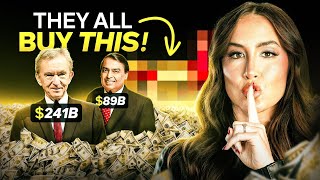
Codie Sanchez argues that the fastest path to wealth is buying existing, cash-flowing businesses (not starting or speculating), using a "core-satellite" acquisition approach that leverages a buyer's existing skills and networks. She explains practical mechanics—value is a multiple of profit (typically ~2–3x on small businesses), structure and terms matter (seller financing is common), and risk is primarily what you don't understand. The talk includes examples (laundromats, plumbing, car washes, online agencies), decision tools (deal box, P&L review, volatility calculator), a sponsor mention (BetterHelp), and a short interview with Gary Keller emphasizing strategic and real-estate-aligned acquisitions.
Questions this video answers
About 2–3x profit (based on analysis of BizBuySell transactions over 3–5 years).
"Six out of 10 businesses" are claimed to be sold with seller financing (seller helping the buyer purchase).
Chapters
There is a truth that only the so rich know. The richest man in the world, richest man in India. The richest man in Mexico. One of the richest guys in the U.S. do you know how these guys made all their money? That nobody tells us in school. He bought that mother. If wealth equals power, then your job, as human beings who spend every single one of your days with purpose, should be to acquire as much of it as humanly possible. Because all that means is that you become the architect of your life as opposed to somebody else. And in this world today where every. Everybody wants to tell you what to do, and everybody wants to tell you what to think, and everybody wants to tell you what to say. It's about one word. Freedom. And the wonderful part about freedom is it has a dollar sign attached to it. And that's something they never taught us in school. They taught us to Dave Ramsey, save our way to millions. I don't know about you guys, but I don't think I ever skipped a Starbucks and made a million bucks. Anybody do that? No, they didn't. And why would they tell us that? Because it was wealth free thee. And not for me. This is something that I found out when they let me behind the scenes, and they never should have at Wall street, that in fact, it's easier to buy profits than it is to grow them. Then why would you own one company when you could own 10? And oh, by the way, earning is fine, but buying is sweet. Because what happens when you buy a company is you have what I call a core and then a satellite of opportunities around you. And then the thing that I started thinking a little bit more was, well, Cody Sanchez, daughter of immigrants, father, didn't get a chance to go to college. Probably like a lot of you, I had to make my own way. I didn't know what a mutual fund was. I thought it was a mutual fun, like everybody's having fun. Turns out, that's not it. And so I didn't have millions to buy my first company, but then I realized that you can actually use other people's money to do it. The other truth that I wish somebody had told me is the best way to find businesses is not on, let's call it the Zillow of business buying. It's. It's your network, but in the back of everybody's heads. Every time I talk about this, they go, cody, that sounds nice, but there's no way that I could buy a business because of xyz. Cody, that sounds nice, but there's no businesses to buy anywhere. So I want you guys to play a game for me. I want you to hold up your hand if you own a business and I want you to keep it up. Hold up your hand. Yeah, I figured everybody. Okay, now keep your hand up. No, no, keep it up, keep it up. Tell me, who wouldn't sell your business at the right price and the right terms? I like this only like two hands go down and they're liars. Of course everybody would sell your business at the right price and the right terms, which means where are the deals? They're right next to you. Just in the same way you buy real estate. I think that our world is a little bit under attack. I do not like to be told what to do. That's why I run my own company. Because I am unemployable, maybe like a lot of you guys. And since I am unemployable, I am interested in making more unemployable humans who are. Who become owners because owners have sovereignty. But I would more than that like you all to have skin in the game and teach the next generation to have the same thing. Now, why? Listen to me. It's actually not all of this, which is the reason to listen to me. And it's not even that I worked at Goldman Sachs and all those big firms. It's that while I did it, I bought really boring businesses and told nobody about it. I bought laundromats, nobody knew. I bought plumbing companies. Nobody knew because I was embarrassed, kind of. I thought like, no, if you want to be thought highly of, what do you do? You get a fast growing Silicon Valley tech startup, you burn a bunch of people's money, and then they put you on the COVID of Forbes and that's success. I think we were all kind of lied to. If I can do it while working a job, while not coming from money, while thinking a mutual fund is a mutual fund, I think anybody in this room can do the exact same thing. I have a word that I like to use. I call it the core satellite method. And this is what we're going to talk about today. And what I hope is, once I tell you this method, you're actually never going to look at making deals the same same way. And that, I think is what is going to save our generation from the big guys owning everything and the little guys asking for scraps. That's the difference. All right, so let's get specific with some problems. Let's say that you need more clients. Well, you buy them. This is called a horizontal acquisition. Let's say you need more things to sell you, your current clients, you buy them. That's called a vertical acquisition. In fact, this company was one of the companies that I bought. Kind of a crazy deal. Look at these numbers. $0. MMR August 109,000. By the end of the first year, 1.38 million in annual reoccurring revenue. Valuation 3 to 5x. What did I buy that company for? You think $0. And I'm going to tell you guys how. This is a really fun part about when you play in your zone of genius and when you play in your core that has a satellite all around it, it's that deals become so unfair. Feels a little criminal. Which are my favorite kind of deals. Not criminal. Feel a little criminal. There's a bunch of humans just like you doing deals. Now, you guys want that Warren Buffett level. I know you do. This good looking gentleman, wait until you see what I got coming from him. This right here is pretty much all you need to know if you want to buy businesses. 10 Steps to Buying a business. Now, within each of those steps, there are a lot of things, but if you understand the framework, you can usually paint the picture, right? So this is the thing that Wall street doesn't want us to know, which is they have something called 2 and 20, which is how we make money. I sit on the board of a hedge fund. It's how we make money. In the hedge fund, I take 2% of every dollar you give me every year, no matter how I perform. And then I take 20% of the profits of every dollar I make you. Those numbers are crazy. If you look at them mathematically. They don't want you guys to know this stuff because they want to say, you poor sweet realtors, you don't know how to buy businesses. This is for us on Wall Street. It's too difficult for you guys to understand. Workers, you could never buy a business. You don't understand how hard it is. And my entire life mission is to say, you guys, this isn't rocket science. Okay, so here's the what very first thing that I think is the most important, that most people don't realize is risk. What does risk actually mean? Well, Warren Buffett with his big bad ping pong paddle says it is not knowing what you're doing that's the biggest risk in any business. Right? Same thing with buying a house or buying a multifamily. It's all about what you don't know is what risk is. So to simplify, what is a business that we want to buy. Very simple. First of all, businesses, not jobs, profits, not problems. And we buy past performance, not future potential. What does that mean? We need to have a business that has an income stream with four things on here. Enough money to cover the debt service financing, your operator salary so that you can go on fancy vacations to Las Vegas while somebody else does all the work. Just saying. Growth capital, ability to grow the business with cash on your balance sheet and then earnings and income. Because nobody really wants to own a Laundromat. What do you want from the Laundromat? Cash flow. Right. You want money. This is really baseline 101. If you remember nothing from this talk, I hope what you take away is the thing. People in Silicon Valley still have not gotten to this date, despite the Harvard's and Stanfords behind their name. And it's this that we don't invest in other people's dreams. We invest in actual realities that exist today. I invest based on your P and L, not based on your feelings. And that, surprisingly, is not that common on Wall Street. So let's do rapid business buying 101. How do you do deals without all these things? You are stronger when you ask for help than when you assume you can do it all on your own. And yes, this applies to your business ventures, but also just for you. Like we're all just mental, messy little monkeys trying to figure it out. Which is why I partnered with Better Help, the sponsor of today's video, to remind you and me that it's okay to ask for help. Better Help makes it easy. And you can do sessions as a phone call, video chat, or even messaging, whatever's most convenient for you. You answer a brief questionnaire and BetterHelp matches you to a therapist, usually within 48 hours. And if the first match doesn't work, there are 30,000 therapists in your network that you can switch to, no additional cost. It's never too late to get on the right track. So go to betterhelp.com codysanche or choose Cody Sanchester and sign up to receive a special discount on your first month of therapy. These are the reasons why people say that they can't buy a business. And so I thought, why don't we sort of tackle that? This is business buy in 101. We really care about EBITDA. But we could be more simple than that. We could even call it profit, or we could call it seller's discretionary earnings, or we could call it just money in my pocket. What do I take home at the end of the day to do, I put in my actual pocket. Then we've got our multiple. Now, when I talk about buying businesses, I talk about a multiple of profit, not revenue. Super important. And then terms. I remember back in the day, David Osborne taught me my price. But your or your term is my price, but you can't have both. And what do most people optimize for? You guys are smart. So maybe you're saying terms, but most people do price. And then I go, let's say your business does a million dollars a year in profit. Can we pretend that if I say to you, can I buy your business that does a million dollars a year in profit for $50 million? What do you say? She says, yes. I go, perfect. You want to know, guys, why that's so good for me? I'm going to pay you a dollar a day until I pay off the 50 million bucks. Do you still like that deal? Why? Because she asked for the price, but what she really cares about is the terms. Same thing in business, buying land. So if we're looking at a business like these businesses here, let's say you have a business that does revenue of 2 mil, EBITDA of $400,000, your valuation should be somewhere around 600k, a multiple of 1 to 3. Everybody's going to focus on the price. Because you guys are smart, you're also going to focus on the terms. Now, here's how traditional business buying works. This is where a lot of people get stuck. It probably looks a lot like real estate, doesn't it? You put down a down payment of 10 to 30%, let's call that something between 60 to 180k. You get a loan. The SBA, which is a small business association, is like going to get a mortgage. You go to Uncle Sam, you say, hey, want to spot me a couple hundred thousand dollars for this business? If Uncle Sam likes the business and the balance sheet, he says, yes, but what does that mean? You have to put a personal guarantee. So you got to say, huh? Anything goes wrong in this business, I'm on the line, right? And. Or you could put all your own cash down, and you probably are going to operate the business. Business buy in, 101. I want you to keep this in the back of your mind because we're going to talk about another methodology in a little bit. The second question that people typically ask me is, okay, well, now I kind of understand the what, what we're buying, but what's a business worth? Anybody know what a business is worth? How do you decide what A business is worth. You decide what a business is worth based on the multiple of profit. We don't care about anything else. They go, there's a lot of upside in this business. Look at all the things I haven't done yet. You say, exactly realities. They say, oh, look at the market size of this business. You say, not today. All we care about is if this business is $100,000. We pay on average somewhere between 2 to 3x. And if you say why Cody, did you just make up 2 to 3x? I go, no. I like numbers over narrative. So I go to the site where they sell more businesses than anywhere else, which is called biz, by selling and I do an analysis of the businesses that have been bought over the last 3 to 5 years and ipso facto they sell for somewhere between 2 to 3x. So now we can simplify the complex Harvard, Stanford MBAs and say skip your projections. We go to the simple math. You have an unfair advantage. We've already talked about a few components of that. But one of the most important ones actually is that you never invest in a business that you can't understand. As told by Warren with a popsicle. And the reason why you never invest in a business that you don't understand is because that's when you lose money. And let me give you some examples. I bought part of a company that builds autonomous ships. That is pretty cool, right? Who thinks that's cool? Look, we're in Forbes autonomous ships. Taking over the world, straight to jail, lost all my money. Company folded. No dice. I also bought part of a company that fuels assets athletes with unique protein synthesis. Incredible, right? Unbelievably. Also straight to jail, lost all my money in this deal. Why? Because your biggest business buying problem is actually typically that you think you're smarter than you are. And by you I mean me and all of us, we're actually looking for businesses so simple that grandma understands it. And surprisingly a lot of people think it's sexy for things to be complicated. How often do you hear people over complicate to try to sound sophisticated and then you realize that the people who actually understand things, what do they do? Simplify that simple. So you are going to be grandma because look at how Mr. Slim made all of his money. Telecommunications. I need to pick up the phone. I need to make a phone call. It's existed for a long time. Pretty standard business. How about banking? I need a dollar, he's got a dollar. Exchange the two not that complicated of a business. How about retail? I'm hungry. I want an Apple. It's in a grocery store. Okay. Infrastructure bridges. We drive on them. Okay. I could probably invest in that business mining more complex smaller business and look down their real estate. Fascinating component if you think about Carlos Slim and almost any billionaire out there. How do you think most of them usually make their money? They buy our own businesses. If you want an empire, if you want that fund with the words FU on it, in case anybody says anything you don't like, you need to get into some sort of serious business. And the reason why Carlos Slim and some of these guys are so wealthy is one of the reasons. It's something called the Lindy effect, which basically means that the longer a business has been in existence, the more likely that business will continue to be in existence. Which is crazy, right? Because can I tell you the number of times I've bought a Laundromat and people have gone, does anybody still use those things Every time? And I go, yeah, they do. And I make a lot of money doing them. Because there's this weird phenomenon where when something is new, we think that it has less risk. What's the new new right now, guys? What won't people shut up about? AI? What do you think people are going to lose a lot of money. Oh, you guys are so smart. So much smarter than Stanford and Harvard. In fact, I think that if people realized that most humans during a recession are probably not going to invest in the next, I don't know, AI technology to add to their stack. But if their toilet breaks, they might call a plumber. We'd all be a little bit richer. So I have something that I call the brrt. And this is how I decide businesses to buy at a simplified level. I buy businesses that cash flow that are in recession resistant asset classes. I raise prices and I add technology because the average small business has not raised their prices in the last one to three years and they need to raise them on average from anywhere from 10 to 30%. Then I like to buy businesses for something I call sales, which is simple, old, weak, stale. I want the worst competitor imaginable. I don't want to go up against Zuckerberg or Elon Musk. I want to go up against your handyman who doesn't show up, who also leaves things broken, kind of dusty, never texts you, no automated billing, barely picks up the phone. Oh, you want to schedule appointment, advance. Not a f Cking chance. That's the kind of business I want. And because of that, what happens? I can have businesses that in a recession are 10% better than my competitors and yet have a moat built around them for that exact simple reason. Now the other reason that people don't typically buy businesses is because they don't actually know what they want. Most people are like this. I feel that I'm like that too. And so if I can get you to start thinking about business buying a little bit differently and the core to your satellite, it's to start thinking about where is your unique zone of genius. If you are great at sales, what other businesses would benefit from sales if you were an operational machine? Or where else could you be inserted in that type of business? If you are incredible at hiring, what other business just needs more talent? And I'm going to talk to you specifically about how to do that. But let's give another example from one of the Koch brothers. Look at what these guys own. Napkins Billions we're talking about. Now, some of these other companies are like oil and gas. These are really big, huge companies. But for the most part, does anything on here look like something you can't understand? The Stainmaster Carpet company billions. And yet nobody teaches you that. So let's talk about this really specifically. This is my core satellite method. Now, back when I was investing on Wall street, they called core satellite investing. What they taught me was like, well, you have your bonds and then you buy a bunch of stocks around it. And because you do that, you have decreased risk. That's fine. But I like this better. So let's imagine you guys are in real estate. How about that? And you're pretty good at buying and selling houses. And you want to buy maybe single family, multifamily, commercial, industrial. What is around your current business right now that you pay every month, that you don't even think about that you already know the owners and you could buy instead. And so if I was in real estate, to get your little juices flowing, I might look at something like this. I might look at laundromats. I might look at property management, shipping and mailboxes. Because you guys already know the best places where a bunch of people are going to go and, and new people are moving in. And probably they could use more P.O. boxes in that area. If I was at a media company like me, this is probably what I would buy. If I wanted to get a bigger presence online. I might be thinking about all of these other companies that every single time I go to spend a dollar and I'm not sending it to Jeff Bezos because I'm pretty sure I can't buy Amazon. I'm Thinking, can I buy this company and can I have a conversation with them about it? Now, here's a secret tool that I'm going to give you guys. This one will help you make sure you are no longer distracted by the red dress in the matrix, which is your deal box. You figuring out what exactly you want. And this is so important because of its actual simplicity. The truth is that the right tools limit mistakes. If you want everything, what happens? You find nothing. This is in life again and again and again. And yet if you narrow your deal box, this is a friend of mine, Brett, that I helped buy a business is when he realized, man, I just needed to narrow my target of focus. Oh, odd. It's a lot easier to shoot something when I aim for it specifically. And we know what type of business that we want to buy. And I have talked you into this idea that freedom is tied to money, that money is made through businesses, that diversification in your unique unfair advantage is real and beneficial. Then the next question people usually ask me is something along the lines of how do we get the money? Where does the money come from, Cody? So I'm going to break down something I call self liquidating acquisitions. Let's look at this business. We've got a $2 million business. Remember the valuation that we've said is about $600,000 because it makes, let's even simplify it from EBITDA and just pretend it says profit on there. Typically we'd have to put down a pretty significant down payment, right? But what if instead we get the seller to sell us their business? What percentage of businesses do you think get sold with some percent of seller financing? Anybody know? I'm hearing 8%, 13%, 60%. Six out of 10 businesses get sold with the seller helping you buy their cash flowing business. Let that sink in for a second. Means it's hyper normalized. So what if you can buy a business without a ton of risks and without a lot of cash? And if you don't believe me, I thought we'd go to strangers on the Internet because we can always trust them. Right? So this is Clint. He's talking about seller financing deals. We got two gents here, you can check them out on Twitter. They're talking about the same thing. We've got multifamily guy doing it in both property management and properties. We've got people buying car washes, we've got people buying storage facilities. We've got people buying every type of business you could imagine on seller financing. It happens all day, every day because what happens when you see one Porsche is you see them all around you. Now if you're like, alright, these sellers stupid, which is what some people think. All right, Cody, are you taking advantage of sellers? I want to go to the next slide, which is why would anybody do this? Does anybody know how many small businesses are for sale in the US right now? It's 11 million. You know how many if there are 12 businesses on a block, imagine like how many. 12 houses on a block. 12 businesses on a block. 11 of them are up for sale. How many of them will sell inside of one year? 1. You have the most massive supply and demand imbalance in our history because we have a generation of baby boomers retiring and their kids want to be on TikTok. They don't want to own businesses. And so because of that, we have a generational opportunity. What I want you to remember is this idea in your mind because what could go really sideways here is you get talked into the dating app, you get talked into the sexy. And what I want you to think about instead is that every time we buy, we get paid. We buy cash flowing. Businesses that are profitable, that are based not on hope and dreams, but in realities and have been doing it for a while. The older, the sexier. And there's a crazy secret that I don't think a lot of people realize. That is the truth from private equity buyers. And that is that they don't actually care about the price. They don't care if they overpay for a deal because they care about the cash flow. They know they can buy a business with existing infrastructure, knowledge and resources to collapse the time frame to their goals. Now the second thing that typically happens here is people go math. And so I like to stick with this idea of tools limit mistakes. Tools limit mistakes. So what you want is something that probably looks a lot to you guys, like what you do in real estate. You put a little calculator together with the asking price, the multiple, the profit, the down payment, and you determine what deal sounds good for you. Now, devil in the details here. We don't have enough time to go into how to become a negotiation pro. But the truth of the matter is investing is really simple but not easy, as shown by Warren Buffett with a Dairy Queen. Also, he owns this company, which is hysterical to me. Now the next question that I think about or I get asked a lot is, what if my business that I buy slows down? That's scary. Like a house doesn't just collapse in value typically immediately. Often it's not like one year, it's worth X next year Y next year X next year Y. And sometimes it's scary for business buying. You think it might be something like that? So what if my business slows down? Well, because tools limit mistakes, I use something all the time in our communities called the SD volatility calculator. And because tools limit mistakes, we like to steal other people's homework. And so we make sure that we buy businesses that last the test of time so we can create empires so big the word freedom ripples. Then people sometimes ask me, well how do I know Cody, that this actually works? And I go, well, I've used them to buy agencies, online businesses, property management businesses. I've used of them by beanier businesses. I have not yet found a business in which you cannot do seller financing, you cannot do simple negotiation tactics, and you can actually use other people's money to buy businesses. The question is really just do you spend the time on the highest leverage game or do you play other people's games? The other truth is you want to get around people where your dream is just their Tuesday. You want to get around a bunch of people just like this who are all business owners. They've all bought businesses, but they started out as teachers and engineers and tech founders. Because it turns out just sitting next to high performers increases your performance, which is wild. Same is true of under performers. If you sit in a 25 foot radius of a high performer, they will increase your performance on average by 15%. If you sit next to an underperformer in a 25 foot radiance, they will decrease your performance by 30%. Energy, money, knowledge, success, all contagious. And so the rooms you're in are really, really important. But the truth of the matter is there's really only one reason why people won't buy a business. What do you think that is? The mirror. And the truth of the matter is that most people don't know. We weren't taught this. And then the second that you know what will happen is that the world is set up for you to skip Starbucks as opposed to own the coffee shop. And you have to make a dedicated commitment to close the knowledge gap, but also to close the execution gap. Because I've never heard of anybody losing money learning, but I have heard of people losing money implementing. And we want to collapse the ability for you to lose money and increase the ability for you to make money. Because here's what I think is the truth, that on average we spend too much time in the sexy because that is what society has told us we should focus on. And if instead we could spend time focused on the boring, it turns out that's where the billions are, but nobody told us. And this is my little plea for you at the end, which is we're at a precipice here in this country. It's not just about you getting richer and buying Lamborghinis and buying planes. Although I think that's awesome if you do, it's because I actually think that we are at war as a society right now against those who want to destroy your mind and against those who want you to own nothing and beg for scraps. And you know how I know this? Because I hear things from guys like this mother, CEO of Salesforce. This kills me. First of all, didn't know capitalism was dead. He also said the American dream was dead. I go, wow, Mark, capitalism must have died right after you made your, what, second or third billion convenient. Not to mention the guy still runs the company, has record earnings and just laid off 11% of his workforce. But that's definitely not capitalism. This is what we are up against, the American dream. Capitalism is not dead. But. But it is under attack. And the only way we push back against this is we let ownership change hands. If you guys don't buy small businesses, who buys all the businesses in your community? The big boys and the big get bigger and we ask for scraps. And so I dedicate today to all of you and to this idea, this idea that the American dream is actually where there is no ceiling on your ability, no foot on your neck to progress and where man can be an owner, not own. Thank you so much. You guys want a secret interview with Gary Keller, Self made billionaire that nobody else got to see unless they were in the millionaire group? I got you.
Someone asked me, they said, do you want all these people out here buying businesses? I said, yes. Yes, I do.
He does, yeah.
Number one, I want them to run their sales career like a business. And number two, I do. I do.
You know, I actually asked him that before I was going to do a presentation, we got on a call, Jay, Gary and I, and I said, you know what I talk about, right? And he said, yeah, buying businesses. And I said, well, aren't these sort of people who work for you in some way shape or form? And he said, these are partners and these are people who I want to have generational wealth. And I was like, I never had a boss like Gary, so I thought that was pretty cool. And I think that that's really, really rare that you guys get an opportunity to own alongside of owners. It's really, really cool.
Yeah, absolutely. You were such a stream of consciousness. I have no notes. It's all right here. So, yeah, yes, I do want them to buy businesses, and it's a lot easier than they think. If you haven't spent any time studying it, then it's like a foreign language, right?
That's right.
But the more you study it and the more you understand it, it's kind of like the curtain falls away and you go, oh, wait, hold it.
Right 100%. Yeah. I mean, think about how valuable you all would be as realtors. I always wonder this. And you can tell me where these ideas are bad, since I'm not a realtor.
Okay, that's bad.
So you sell somebody a house, and why wouldn't you also be able to sell them because you own part of it, the cleaning service for that house. Why wouldn't you also be able to sell them a handyman for that house? Why wouldn't you also be able to sell them the, you know, local, I don't know, restaurant scene that you love? Like, it seems to me you guys are at the nexus of a trigger point.
Well, here's what you said. That, that I jumped up and down because I get 100%. You know, when I got into real estate, I was taught to go sell it to other people. And then one day I looked up and I went, hold it. Maybe I should think about buying it first. And my whole world changed when I now every piece of real estate I see, I go, should I buy it?
Yeah, right.
Before I think about someone else buying it. Well, you said that same thing about a business, right? That you walk into any business now and you go, hmm, should I buy this?
Oh, 100%.
That's where I want everyone to get.
Yeah. Well, I mean, I think the beautiful part about real estate, well, there are many beautiful parts. But your tax base is incredible. I mean, you guys have the best tax tax code in any industry. And so you have an ability to essentially have massive write offs as long as the majority of your time is spent on real estate. And so most business owners do not. So you also can take a look at a business that maybe is not as profitable for somebody else, but because of your tax write offs, could be more profitable for you. You could buy a business that's more profitable for you because you can immediately plug in individual clients into that ecosystem that somebody else couldn't. These are called strategic acquisitions. And so I think there's a lot of ways for you to play this game. It also surprised me how many realtors don't own real estate. That seems like step one.
Yeah, yeah, yeah. That's right. That's right. Well, you're from Austin. You live in Austin, right? Have you been to the Collective Gym?
Yes. Yeah.
Okay, well, I'm one of the owners of that.
Oh, there we go. Yeah, I'm.
Have you gone to Milk?
You're welcome.
Have you gone to Milk and Honey Spa?
No, but I've heard of it. You want own. You own some of that, too?
Yes, we do.
Do I get a.
Have you gone to Alamo Theaters? Alamo Drafthouse Theaters?
I have.
Okay. We're owners in that.
I've paid you money then.
Have you gone to the. Have you gone to the finish line car wash ever?
No, I own some car washes. We're competitors, actually. We've got a line to drive.
Are you selling?
No, I'm buying. I'm buying.
Yeah. Have you gone to the Mohawk?
The country club?
No. The outdoor venue?
No.
Oh, shoot. Okay.
Okay.
You need to go there.
All right.
Owners in that. How about the Saxon Pub? Have you gone there?
No. Not a big drinker, but it sounds fun.
You don't have to drink.
Okay.
You just go listen to the music.
Oh, I like that.
All right, so the point is, is that. Yeah, yeah. Daily Juice. You ever eat juice?
Juice. No, but I like juice.
How about Juice Land?
I'll have a list of Juice Land. You own some of Juice Land?
No, I own the real estate underneath it.
Oh, I like that too.
But the reason I bring all that up is because you can own the business or you can own the real estate underneath it. And everyone here is in the real estate business. And the greatest real estate to own is one that has a tenant that's never leaving.
Oh, yeah. It's funny. I buy laundromats and I like to own the real estate because almost every business abides by the pareto principle, right? 80. 20 rule. And so 80% of your pain typically comes from 20%. 80% of your profit typically comes from 20%. And when you look at a business like a laundromat, you have, you know, your utilities are really expensive. Water, you know, heating, et cetera. And then you have your lease. And if you own a laundromat, you basically only want to buy a Laundromat if it has a 10 to 12 year lease. As long as it's good. A good leads.
Right?
And that's hard to get. And so I like to own the real estate and the underlying laundromats.
Right. Well, the point. Yes. So the entry point for a lot of people in this room in businesses is go try to buy the real estate out from underneath the business.
Yeah, yeah, it's smart. Well, the other thing is, you know what you guys have the secret to buying a good business is what? Knowledge. You need to know more about business. And you need to realize that typically when you go to buy a business, you're at an information disadvantage. Right. The owner always knows more than you do. But if you are the real estate agent and you already see their financials and you've already done into the, you know, do they need a remediation of the land for the property? You have all of this information where they're not thinking to firewall you from it because you're helping them do a transaction. Well, the second that you see all that information, just like if you were going to buy a house, they give you all the information for you to sell it to somebody else. The same thing is true for a business, except there's no open houses for businesses. There's no huge market for buyers of businesses. And so you getting that information means that you could buy a business at really unfair terms, meaning just a lower price.
So how do you find a business to buy?
Yeah, we have a lot of methods that I talk about or we teach. We have 12 in particular, but one of my favorites, I call the P and L review. And it's pretty simple. I don't really like to spend money or give other people money. I like to keep it. You're probably the same, huh? Yeah. I don't know. He probably has a plane, so maybe he doesn't like to keep money. Do you have a plane too?
No.
No plane.
No.
Okay. I would like one one day maybe. Okay. So anyway, so a personal P and L review basically means that every time you and your business have an expense, you ask yourself three questions. Can I get to the owner of this business? So is it not Jeff Bezos? We can't buy his stuff, but can I get to the owner of the business? Does this business make money? Do I think, is this a profitable business? And then would I want to own this business or could I be good at being a partner of owning this business? Right, Those three things. And when you ask yourself that on every single line item that you spend on a monthly and annual basis, you will find that in your business today, you, you have a lead list. You have a lead list of people that could Potentially sell you their business. And that's the first where. That's the first place I go.
It's totally true. Every place you write a check is most likely a small business.
Exactly. Yeah. And a fun one, if you want to go really small, is look at your past Venmo or PayPal history, because you're sending them cash. Right. Which means a big business is not going to typically take venmo in particular, PayPal maybe. And so pretty quickly in there, you'll realize, oh, my cleaning lady's business is on there. Maybe I'm tipping the local car wash. And you can start at a very, very low level, which is probably not your final business you're going to want to buy, but it's your gateway drug business. It's that first business for you to get comfortable enough with the risk, the marijuana of business. Buy.
Yeah, yeah, yeah, yeah, yeah, yeah, yeah.
He's speechless.
No, not at all. Not at all. You know, the thing that most people. The first thing that people say is, and they say about real estate too, is, well, I can't buy it because I don't have enough money. Right. So I had a. There was a. He was a guitarist for a band called the Little River Band. And we were driving around in my truck and he made that statement to me. I said, okay, good. I have a million dollars I'm going to give you to invest. What are we going to invest in? He goes, I don't know. I said, that's your problem.
Exactly.
I said, money is not your problem. There's so much cash out there right now that would love to invest in something. You just don't know what you would do with it, by the way, if you had the investment, the money would be there.
It's so true. Did he believe you after you told him that?
He did, actually, and started buying. Yeah, yeah, yeah. In fact, I think he owns three properties.
Oh, that's amazing. I think you're exactly right. I mean, it's the red dress in the Matrix. We get distracted by all of these things and before you know it, we have decision paralysis by analysis. Right. Too much optionality leads to no execution. And so one of the best tools that I've used for myself, because I can be a little Labrador chasing squirrels and shiny objects, is my deal box. And basically we use something that's, you know, we have just a green, yellow and a red, which means a deal that is in my deal box. A deal that is like maybe there's two or three things missing and a red, which is Immediate kill. And the problem with businesses are you can talk yourself into them. And so I have lost money on things like autonomous ships and protein synthesis because they were way outside of my deal box, but I did them anyways. And so I think tools limit mistakes. And just like children, adults need boundaries, too.
Yeah, yeah, yeah, yeah, yeah. I think that the challenge is that people get intimidated by the concept of numbers, don't you think?
Oh, yeah.
It scares the heck out of them.
Yeah, Right?
I don't do math. I don't do numbers. How can I invest? What do you say to that?
A lot of salespeople in this room. How many people in here identify as a salesperson? Okay, yeah. First of all, every hand needs to go up, because if you want to run a business, you know what? Gary is chief sales officer. Gary is also the CEO. But every business owner will live or die by one thing. Cash flow, which comes from clients. And so I think it's really cool you're with an institution like this that has massive amounts of training, because the best salespeople tend to be the best sellers CEOs, in my humble opinion. Now, that said, salespeople also often were good at selling, because I don't know about you guys, but when I was younger, I have a little brother. I love him dearly, but my mother always used to say to him, you know, oh, well, he's the smart one. And Cody, you work hard. He's the smart one. Cody, you work hard. So I was like, well, watch this, you know? But she also said, colton, you're good at math. Cody, you're not so good at math. And those little stories live on in our head. And for a long time, I thought I wasn't good at math. And then I was so pissed at the idea that my little sweet brother could be better at something than me that I went into finance. And then I realized that those guys are just salespeople. Everybody in finance is just a salesperson with an Excel spreadsheet that an intern creates. And so when you realize that you don't actually need to be good at math, you need to be not an idiot that understands a plus sign versus a minus sign and whether money's coming in or money's leaving. And if you can do that, you can do a deal as long as you keep it stupid simple.
Here's the way I think about it, and that is, you don't have to be good at math to be a good investor. The game you play is. Is when they give you the math, say, explain it to me. And by the way, if you don't understand it, don't fake it. If you don't understand anything, go explain that to me. Explain that to me. I'm real simple. Explain it to me. How do you make money? Why do people give you money? And when you get the money, what do you spend it on in the business? And why do you do that? If you ask those questions, you'll look up all of a sudden and go, wow, okay, I think I get it.
Yeah, you're so right. I remember the biggest shark I've ever met, One of the smartest deal guys I ever met, was from Texas. He had a little bit of a drawl. And I remember the first time I went to go try to get him to invest in one of my deals, he looked at me and I'm really bad at accents, so excuse me if this comes out like a Mexican Russian. But he said something along the lines of, you know, well, I'm just a simple man from Texas, so I don't know much about doing deals. You know, can you explain this to me? And I thought, I can explain. And then he proceeded to tear me apart. Just, what is this? What is that? How does this work? How does this work? And what I realized is the dumb ones are the ones that pretend like they know everything. And the smart ones are the ones that say, explain it to me like I'm six.
Yeah, that's right.
And I think you nailed it.
Yeah. The truth is, if you can't understand it, don't invest in it. That's Warren Buffet. Buffett basically said, only invest in what you understand. If you don't get it, don't do it. Just walk away. It doesn't matter.
Yeah. I mean, if you guys haven't. Have you read Charlie's Almanac? Charlie Munger's book? It's an incredible book, but I like watching Munger and Buffett. Munger was Buffett's partner, who recently deceased. Because they speak so simple, yet they are so sharp. And they keep it simple. They do. And because of that, they were able to make quite a large return year after year after year after year, which is incredibly difficult to do. And actually, I remember I told Gary this before, but back when I was trying to understand structuring and partnership agreements, I actually think one of the best agreements I ever read was Keller Williams, one of your original partnership docs. And it was because at the time, it was hard to find other people that published that stuff publicly. And with franchises, you can see some of the fdds and otherwise. And you can learn a lot by just seeing how a mind thinks about a partnership. Doc. Because what is a business but a series of humans who have come together in partnership? And once you can understand the language that is money, which is really just legally binding contracts, you can make more of it. And I actually think math is overrated, and understanding contracts might be more important.
Amen to that. All right, dear, we've ran out of time. Thank you so much.
Thanks, guys.
Thanks, Cody.
Thanks, Gary.










