The SHOCKING Link Between MONEY and HEALTH | Codie Sanchez
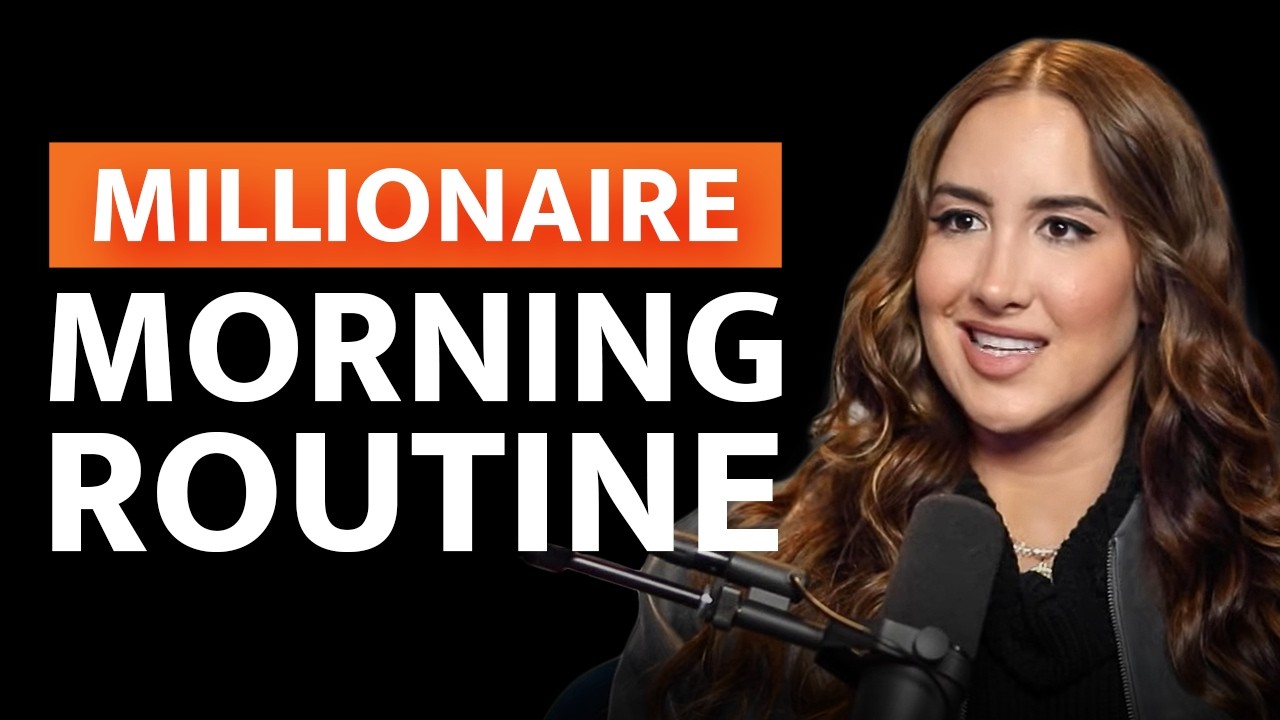
Codie Sanchez argues that financial stress causes most doctor visits and that traditional saving advice is
Chapters
80% of all physician visits are for stress-related conditions, and the number one stressor in our world is money. And yet we're not taught about money.
You're never suffering from a lack of money. You are suffering from a lack of knowledge on how to get money.
What is your morning routine look like?
When it comes to the morning, there's a magical period before the rest of the world has awoken where you have no distractions, you're not on anybody else's schedule. And so I try to chase the sun. I love a cold plunge, and I like to get out and try to get to the gym as often as possible.
Our guest today is the incredible Codie Sanchez, and she's the founder and CEO of Contrarian Thinking, one of the fastest growing financial media businesses with 6 million followers and 100 million monthly views. She's teaching people how to gain real wealth and true financial freedom through Main Street businesses. And on this episode, we're gonna talk about the very strategic programming that we have all been indoctrinated with that keeps us in a poverty mindset and a poverty reality, and how we You can change that. What does your morning routine look like?
Yeah, well, I'll be really honest upfront to say I work a lot. I work a ton. And one of our sayings at the company is, "We don't do what we want, we do what is required." And I try to embody that. Never tell a team member to do something that I'm not willing to do first. I mean, I think we got in last night I don't know, 9 or 10. We got up this morning, I was up at 6 doing a workout, um, hair and makeup at 7 because we have these podcasts. This is all face painted. And, uh, and then, you know, we're working all day until we leave at like 6 or something, and then we get a flight, we'll be home at midnight, and then tomorrow I'll be up again at 6 and, and rolling again. So, um, you know, at this period of my life, I just have the energy and I can, and so I'm going to work as much as humanly possible to achieve the things I want to achieve out of life. Um, but when it comes to the morning, I I think like there's a magical period before the rest of the world has awoken where you have no distractions, um, you're not on anybody else's schedule. And so I try to chase the sun for sure. So, you know, my husband and I are up early, um, we're doing all the things that people make fun of these days. Like I love a cold plunge, um, it kind of gets me motoring. I like to get out and try to get to the gym as often as possible. I joke that that's like 60% of the time every time because I'm probably not as good as you, but my husband is every single day, um, and I'm probably like 5 days a week. And then I get right to work. And so right after the gym, it's like a, you know, a coffee. And I'm working until, you know, 5, 6, 7. And one thing that I never allow a day to go by is I think my husband and I have been together for 7 years. We've known each other since we were 12 though. And every time we're in the same house, we've never missed a dinner when we were in the same house together. So that's really important to me as our family. We don't have kids yet, but, like that's when we come together as a unit, which is super important, I think, to have that moment for your most important person.
That's so awesome. Like, again, I didn't know about the decaf— we had a decaf moment.
Yeah, we did.
That we connected on before you even got here. And also this is the centerpiece really of my work is the dinner table is a unifier.
Yeah.
You know, and so you already having that anchored in That's why, again, like certain special things start to manifest. And sometimes we kind of stumble into these habits, but it's so important to have that time together, you know, to be face to face, to just sit together and especially under the umbrella of food. And I love that so much.
You would like my husband. He's a lot like you. He loves to cook. He finds like that moment, the dinner together between us, very important. There's never any TV on, you know, it's always just the two of us chatting. It's like a good glass of wine. And we talk about her day and try to not make it banal. It's like, seriously, tell me like what's going on in your head? What are you thinking about? What's keeping you up? And I hope we are as good as it sounds like you guys are as parents with bringing our kids into that. I'm sure a lot of chaos can reign there, but I think that's really beautiful and also lovely when a lot of men these days are leading it. I think that's really unique, yet not so unique anymore.
Yeah. Yeah, you said it.
Yeah.
And I love that you said the 60% of the time. And the thing is, I don't know if you remember this from Anchorman, but he had like the Sex Panther cologne. He was like, 60% of the time it works every time.
That's exactly, that's Chris and my favorite joke. Cause you know, sometimes people come on podcasts and they're like, I'm up at 4:30, then I do this, then I do this, then I do this. And I do it every day and I never miss it. And then like you see 'em at like 8 rolling out, you know, not having, and you're like, wait a second.
Mm-hmm.
So I'm always kind of careful of saying, Hey, like, you know, we're trying. Yeah. Pretty consistently we do this thing, but I definitely fuck up often on many things, including mornings.
Yeah. Yeah. But it's just really, again, I want to share that you have these anchor things that are pretty consistent, and this is not an all or nothing. Even with your teaching on business, there's so many different paths to the goal.
Yeah.
But there are certain principles and do your, doing your best to really follow and cultivate these principles to the best of your ability and give yourself some grace. As well. And so I wanna dig in on your morning routine a little bit more, why you do some of the things that, that you do. You mentioned that quiet time, that early time before the rest of the world gets to buzzing. Why is that important for you?
Yeah, you know, I think there's time and attention. So we have a limited amount of both, but the most important thing that we have is not necessarily our time, it's our focused attention. And so I try to always live by the Mark Twain quote, which is, if you have to eat a frog, eat it first thing in the morning. If you gotta eat to eat the big one first. And so each morning I try to eat the big frog. Like what's the one thing that if I do that morning, the rest of the day is kind of a win. And the first thing for me is really working out because then I don't get anxious at the end of the day. It like, you know, works out the scariest. And then the second thing is usually that one work thing I don't wanna do that I really need to focus on and I don't want anybody bothering me while I do it. And so, you know, a good friend of mine, Jay Papasan, wrote the book, "The ONE Thing," And I would always fight with him on this 'cause I have a portfolio of many things. So I was like, one thing? That sounds kind of boring. And he'd be like, listen, it's small decisions all the time on the one thing. And we have decision fatigue, you know? And so the more decisions we have to make during the day, the less brainpower we have. And so I like to get that big hairy frog done in the morning because then I know for the rest of the day it's okay if my day gets stolen from me because I've done the really hard thing first.
Yeah, yeah. Would that fit in the category with the cold plunge as well? Why on earth would you do that? Why would somebody choose to put themselves in that cold-ass water in the morning?
My husband's a psychopath. I blame him. He was a Navy SEAL, so he like likes pain. I joke with him about that. I'm like, you are nuts. He just, he loves, he loves it. But I started to like it for some reason. I don't know. And I don't really see it as pain. It's, it's very clearing and like clarifying somehow. And if you would have said that to me like a year ago, I would be like, you're out of your mind. But, but I do think it's true. You build up a muscle to everything, right? So the more you go to the gym and the more you lift heavy weights, it doesn't seem so heavy anymore. And I think the cold plunge is really lovely because it's like acute, intense feeling for a very short period of time. It's like, what, 3 to 5 minutes? Um, and so for 3 to 5 minutes you can be like very focused, very clear. And then, yeah, and then the rest of the day feels like, yeah, I'm at least I'm not in freezing cold water anymore.
Mm, right.
But it's weird. Do you do it too?
Of course, yeah.
Don't you kind of like it after a while? I don't know how to explain that to people.
It's weird. It's the chemistry. There's a chemistry thing. Oh, that makes sense. And also your body knows what's coming after.
Oh, like the serotonin release?
Yeah, this flush of feel-good chemistry that takes place. And also just one of the most obvious things is that it builds up stress resilience, you know, because stress, even though it's psychological, right? Just our perception of something could tip us over or get us, you know, change our biochemistry because our thoughts create chemistry in our body.
Yeah.
And but it's still all physical. So even your belief about something that is, you know, freaking you out, it changes your physical chemistry. So doing that physical act is building up a buffer in a way. And so it's building up this physical and mental resilience. And so, yeah, I mean, I wasn't surprised that you'd say that, but you know, because it's becoming more kind of socially acceptable because, you know, there was a time when you'd see some, you know, people, these frozen swimmers or whatever, like, why are these psychopaths running off to jump into some frozen water? And now we're like doing it at our house.
I know it's weird. It's so weird. But, you know, I think the— I think the other thing is it's really hard to have a strong bank account if you don't have a strong body. You know, I think You know, weakness breeds weakness in almost every sense of the word. I mean, there are actually many studies that show that I can tell the size of your bank account by the people that you hang out with the most, that your bank account is likely a reflection of the people that you hang around with. Same with your body fat percentage. And the more you hang around people who are heavier than you, actually, the more likelihood you have of gaining weight. And so bank accounts and bodies are very similar in this way, which Sounds elitist in some way, but is, is just true. We're very contagious as humans. I mean, I talked about this with the team the other day. I said, if you are a leader of the business, you are not allowed to be, uh, energy neutral. There's no such thing as neutrality in the world. There's no such thing as stasis. You're either moving forward or backward. We know that at a physical atomic level. There is no such thing as being perfectly still and static. And so if that is true, when you come and show up to something and you have neutral energy, you have negative energy actually. So you are either you're actually helping people progress and raising the bar, or you are pulling it back. And it doesn't mean that you always have to be like pounding your chest and screaming or whatever. It could be calm, focused, grounding energy. Cool. But, uh, you know, don't get it twisted. The people around you, if you allow people in your company to be consistently neutral or negative, they are affecting their coworkers and they're affecting their coworkers' bottom line and yours. And so that's the other reason I kind of obsess on making everybody better at my companies, or attempting to, or helping them get better and helping them make me better. Because I know that I'm gonna be spending a lot of time with them, and they're rubbing off on me and I'm rubbing off on them.
A recent study published in the Journal of the American Medical Association found that upwards of 80% of all physician visits today are for stress-related illnesses. Stress is literally killing us. And another recent study found that money is the number one cause of stress in our modern world. And so obviously there's a lot of other reasons, a lot of other things that can cause us stress, but money is one of those things and we simply don't get education about it.
Mm-hmm.
In fact, you share that we're programmed to be poor. Mm-hmm. Can you talk about that?
Yeah. Well, you know, the wild thing about the world around us today is that everything that we believe about money really comes from one baseline idea. Which is that the way to make more of it is not to earn more, not to have asymmetric upside, but to save it. You know, the first thing that we were taught, if you go back to high school curriculum back in the '80s when most of us were, you know, coming up there in this range, '80s, '90s, 2000s, the two main things that you learned about money is you had a budgeting class. And so this was part of home ec back in the day. These days it's a separate personal finance class, but you learned about budgeting and you learned about debt. Overall. So you basically learn the downsides of money before you learn any of the upsides. You don't learn negotiation, you don't learn equity, you don't learn how to earn more money. All you learn is the downside. And this is why I think deep down inside we believe this untruth, which is that the root of all evil is money, which actually comes from the Bible, the Bible, but is misquoted. It is the desire for money is the root of all evil, that it's actually just part of a sentence that was taken out of context. And so we believe this deep this truth that money is bad, and simultaneously we believe this truth that money is hard to get, and that money only really comes to us if we spend less of it. And especially, you know, I'm Latina, and my family came from, from an immigrant background. We in particular were really only taught about this idea of saving. Well, when you live in a, in a place of scarcity all the time, and you're only focused on the downside, it's real hard to get upside. And so I've sort of obsessed on this idea because I remember when I was young, I remember the feeling of checking accounts, you know, beeping because when I would go to the grocery store and try to, you know, get some food out when I was in college, not have enough cash in there, I remember being like, oh, whoops, it's, you know, that was the wrong one. But it wasn't. It was just out of cash. And I remember, you know, my parents checking every single transaction on my statement. My mom would because she would still get it when I lived at home and say like, why did you spend that? Why did you spend that? And so when I was really young, I had this idea of money like it felt tight, you know, like, have you ever been really poor? Yeah.
Yes.
Yeah. Like that feeling you have in the pit of your stomach when you don't have anything else.
Yeah.
And you kind of feel less than for that. And I've felt that many a time. And at some point I think I got pissed and I realized that there were all these people around me who were operating at a different frequency and they realized something totally different than I did, that actually money is there for you to create and there's no limited capacity to it. And the only way I saw that was from seeing some of my parents' friends cousins growing up who had a lot of money and thought about how to take more money and make it make more money for them. And that was never an idea I had. What do you do with money? You take money, you save it, you protect it. You know, it's like a princess in a castle. And they were the opposite. And I remember one of the first moments I realized that was, you know, my father, who I love dearly and is an incredible man, has been a realtor for, I don't know, 20 years, in real estate for 20 years. Never bought an investment property. And I thought that was weird. And then I went and looked at the average statistics for real estate professionals, how many of them own real estate? Less than 10%. So you work for decades in an industry where you don't actually go and put risk on the table in the industry you know better than anybody else. Why? Because they're concerned about protecting. And so when I saw one of my dad's friends instead Early on, when I had an opportunity to start doing some investing in finance, I remember going to him and saying, "Hey, I'm working on this deal and this is how it works." And I was working in a big firm at the time and he was like, "Can I invest in that?" And I was like, "What do you mean? Like you wanna give me money for this? I don't know. I don't know what I'm doing. It might not work. Why would you wanna do that?" And he's like, "Well, that's how this works. I know that some of these won't work, but I'm betting on you." And he's like, "I don't need to understand like every single detail of the deal. I'm betting on you and like kind of your resiliency." And so at that moment I was like, oh, that's interesting. I don't have to have all the money. I just have to have like a wild work ethic, an ability to get some deals, and then I could get money from somebody else. And that's when my world started to open up and realizing, man, we were taught all the wrong things.
Now, you just mentioned a bunch of miseducation that we get and also just a reframe in our thinking, because even if we're in a business that's related to financial freedom, right? A lot of people who are in real estate, like, they're like, this is the way, right? But missing out on that key component. I never thought about that before. And it's really through ownership that we can achieve true financial freedom. And, you know, this is a message that you share in your book and through your work again and again and again. But I just don't think that we understand that or get that message. You mentioned the S-word, savings. All right. You mentioned savings. Is it possible, or is it probable, how about that? Is it probable that through very, being very meticulous in our savings that we can achieve financial freedom, or is there a better and more important way?
You can achieve financial freedom through saving over decades. So if you are comfortable with waiting to become a millionaire until you're 65 plus, compound interest and investing over time has proven that that is totally feasible. Impossible. The problem is that then your best years, they're behind you. And so I don't think that we should believe in getting rich fast. And, um, we, I don't think we should believe in get-rich-quick schemes, but I don't think that saving our way to 65 to where we finally have a time to enjoy life then makes a lot of sense to me. I think there's gotta be a middle road and the middle road being we combine earnings plus savings, plus investment opportunities, plus risk in order to make more money. And, you know, we— there are a couple statistics that like shocked me, and one was that, you know, if you want to be a millionaire in the US, 60% of all millionaires own a business. They have ownership in something. They don't have to own the thing outright, but they've got a percentage of equity in a business that is a private equity investment. If you want to make like that fuck you level of money, so let's say $30 million plus, 80% of people, 88% of people who are worth $30 million plus, they have ownership stakes in companies. So you can be an employee and make a lot of money, but what you should be trying to do is during your employment, take that money and invest it in things that get you equity. And this is my big pushback with entrepreneur porn today is there's a lot of people that are like, go all in on your own thing. You know, only do you sleep on the couch, you know, start in the garage. I don't think that they've looked at the statistics on that because what you would be much better off to do is instead of taking a 90% failure rate, which is what most startups have over any 10-year period and a 3 to 4-year period in which you make nothing, why don't you take a 100% rate of you being able to afford your mortgage, aka a job, and take the money you make while you for sure can afford your mortgage and start investing some of that in the— on the side along along with your skillset to get some equity in companies. And I think we usually only think about that in Silicon Valley-based startups, but it can be available for all if we actually knew how to negotiate and provide real value and we stopped disconnecting what we do for a living from how we make money from the company. Those are totally divorced. But if we brought those back together again, we would know how to negotiate with our companies, with our vendors, and how to bring deals to the companies we work for so that we could all have more ownership. But education has taken that away from us and we think only the owner at top can own anything. And I have to go all in my business if I ever wanna become an owner of anything. And I've gotta travel through this death zone of 90% failure rate in order to one day maybe become the 10% that's profitable.
Right? Maybe.
Maybe.
And the odds are against you versus this is more of a very practical proven method. And you know, we think about Wall Street in relationship to money and you are bringing this paradigm of main One Street Millionaire. And you mentioned investing and having equity in a business. Yeah. Right. Can you talk a little bit more about that? Because when I hear that initially, if I, again, if I wasn't exposed to your work, I'd think like, that's not something that I could do. Like it would be if I was like a part of something getting started.
Yeah. Well, there's two things I want you to think about if you wanna make a lot of money and you wanna never have that feeling again about You know, I don't know if I'm going to be able to afford the things I need to enjoy my life or just get by, man. So if you want to never have that feeling again, the first thing is I think people should start taking on what we call an owner's mindset. This is extremely rare in a world in which we're all victims all day long. It's somebody else's fault. It's somebody else's problem. It's not ours. Owner's mindset is this, that no matter where you work or what you do, you act like you own part of the place. And you— and what does it mean to be an owner? It means you understand how the place makes money. It means you understand how you make money for the place. It means that you understand and are aligned with the company on helping it grow overall. It means you're not an I, you're a we mentality. And if you have this type of owner's mentality, you can get a percentage ownership in any business over time. And how do I know that? Well, you know, we know that even the guy who came up with Cheetos, for instance, was a janitor at PepsiCo before he created the idea for Cheetos. Then he climbed the corporate ladder. He came up with this idea for Cheetos. He got equity in the company. Company. Now he's very, very wealthy. This is available at almost every single company out there. The problem is most of us don't care enough to become valuable enough to a company for them to consider giving us equity or allowing us to invest in order to get equity. Two paths. And simultaneously, most of us don't want to have an owner's mindset. We want to say, like, not my problem, not my thing. Boss, increase my salary. Boss, make it easier for me. Make it somebody else's problem.. So I wanna change that mentality. And the third thing that I think we should really obsess on is like, there aren't very many chances in life we get for a generational wealth creation event. I had an old economist and I was in 2008, I was working at a financial firm and I remember in 2008, 2009, 2010, that economist was speaking to a group of people. His name's Brian Westbury. And, um, the group of people were, they were asking about what what stocks they should buy during that time period. And Brian's answer was, yes. Yes. The whole market was completely depreciated. The whole market was on sale. What stock? Yes, largely. Now, if you had asked Brian then 5, 6, 7 years later what stock to invest in, more particular. But the whole market was on sale during that time period. So there are lots of us who got lucky and, you know, I bought some Goldman Sachs stock and that stock and everything else was a yes back then. Well, right now we have something very something very similar happening, which is what I talk about, the baby boomer retirement, the silver tsunami, and the fact that we're having small businesses everywhere either have their owners age out or start shutting their doors. It's happening around the world. And what we don't have is we don't have enough buyers who know how to buy businesses to take over these small business owners. And we don't have actually enough sellers, aka owners of small business, that know that they have sellable assets and know how to sell those assets. So I think we are sitting on one of these generational wealth creation events. And if we understand how to do, do deal making, if we understand how to be owners in our mindset, we can actually set ourself and our future generations up for success. And that doesn't happen that often.
Simultaneously, we also have the Great Resignation.
Yep.
Going on. And I see some, a bridge there potentially.
Yeah.
Let's talk about that.
Yeah, you're right. So, you know, You know, we've talked about this for a while with young people, our generation and those younger than us, opting, opting out basically, right? Quiet quitting. They don't want to work at big companies anymore. They want to have work-life balance. And I understand why, you know, for the first time ever, a 30-year-old today makes less than a 30-year-old, than their 30-year-old parent did at the same age. So for the first time ever, we're not progressing in American society for this generation on a dollar-for-dollar basis. Simultaneously, houses are more expensive than they've ever been. Credit card debt is at at all-time highs, student loan debt is at all-time highs, inflation is eating away at our dollars, and although we have a very low unemployment rate, our wages haven't increased. We have really bad wage stagnation even though we have productivity that's increased. And so young people are like, fuck it. Like, I'm not making more money, I can't afford anything, so I'm just gonna go to a Taylor Swift concert that costs $3,000 'cause I can't afford my mortgage anyways, right? And so we see a lot of this YOLO attitude happening in the world from, you know, You know, online apes and NFTs to Taylor Swift concert tickets at crazy valuations. Why? Because young people are like, what am I saving for? And I can't earn enough to actually invest in assets. So there's a big opt-out culture. They're like, I'm over it. I'm over it. And I think we have an opportunity for this generation if they want to work hard and if they actually want to do the only thing that I know for sure leads to money, which is short-term pain for long-term gain. Then I think they could be the buyer of the baby boomer that is selling their business. And if you think about it this way, these two generations have hated each other forever, right? You know, they've been like, "Okay, boomer," and they've been like, you know, "Oh, lazy millennial," right? At each other. But what if they're actually the solution to each other's problems? What if like your parents' friends who are 65+ looking to retire, they don't have kids or their kids don't wanna take over their small business. Can we go back to how this country started and have you apprentice under one of those owners, learn how their business works, and eventually take over the business and pay them a royalty or an annuity for their business. Is it immediate rich? No. And why would I go screaming about this on the internet? Warren Buffett has the best line. Remember, Jeff Bezos asked Warren Buffett at an event, he said, "Why do you tell everybody about your strategy if it works so well?" Well, like, if it works year after year, why do you tell everybody? And Buffett said, because nobody wants to get rich slowly. And I think that's the same feeling I have. You know, if you are willing to put in 3 to 5 years of learning deal-making, of finding deals, and then getting ownership in businesses, your next 30 to 50 years look totally different. And I'm willing to talk about it on the internet because there will be very few humans who are willing to do what it takes, not what they want.
Yep. Yep. We evolved having this apprenticeship, you know, just taking kind of taking over the family business. But today there's so many options, right? And we go to school and we are educated in all these different modalities. And then we're supposed to figure out what do you want to do from all the thousands and thousands of choices. And oftentimes we don't have a great model. We don't spend time learning how to be actually successful in that thing. There's usually a handful of superstars in any, any industry, and the rest of everybody's just trying to make it. And so getting back to that mindset, not just going back, but like doing it better with intention, like I'm choosing to apprentice this particular domain and seeing— man, one of the greatest things about this and this experience is that you're telling people exactly the types of businesses that tend to do extremely well from an investment perspective. But this isn't the flashy, you know, like get rich fast type of, uh, mentality.
Yeah.
So can you talk about some of those businesses for people to consider as far as investments? And, and then of course I know people are gonna be like, well, where would I get any money to invest? And so let's talk about that as well.
Yeah. Well, let's, I mean, today, great example, announcement came out, Jersey Mike's subchain sells to Blackstone for $8 billion. So it's a sandwich shop. It's a sandwich shop that's just sold for $8 billion. We have, I mean, we have in our portfolio, we have a company called Resi Brands. They own one company called That One Painter. This is Steven who started as a painter 11 years ago, uh, just painting. And, uh, 11 years later has a business that'll do $40 to $50 million, uh, this year in revenue, bootstrapped entirely. We were some of the first capital he ever took into his business in order to get it to the next level because he wants to build a billion-dollar painting company. You know, we got 2 2 young kids in the portfolio. They run a company called Pink's Window Cleaning. They started Pink's with a couple bucks that they had individually. They clean windows. They got these cool outfits. They have a brand. They have like real swag about how they do things. And just one of their locations does $3 million a year in Austin. And so my point is all around us are what I call these Main Street millionaires, these standard small business operators who aren't investing, uh, inventing the next Tesla or Tinder, but they are instead instead making a business that we need. We need our windows to be clean. We need our roads to be paved. We need our roofs to be fixed. We need our houses to be painted. And there's a lot of competitors, but there's a lot of demand and our competitors aren't that good. And these businesses have an opportunity to be revitalized. And so these boring businesses are all around us and they cash flow. And the interesting part about them is how do we know that they're going to continue to cash flow in the future? Well, nobody gives loans to a painting company. Nobody gives VC funding to a window cleaning company. That just doesn't happen. It probably will in the future because I won't shut up about it on the internet. But prior to this, you knew these companies were profitable because they had no choice. Nobody was giving them money to burn like a SaaS marketplace. And so I think we got to get back to realizing that these businesses in particular have a ton of profitability in them. Now, they're not huge margin businesses where you can sit on your computer in your ivory tower, make 80% margin, not work very much. You can't do that. You got to get your fingers a little dirty. But I'm not sure it even makes us happy sitting behind a desk on Zoom meetings all the time, remote working for a big tech company. I think we were sold a lie. And in fact, if you met my Pink Skies, if you met my painter, Steven, And those are some happy motherfuckers that are out there making millions of dollars and also making their community a little cleaner again. Yeah. Yeah.
You share some statistics on this as well. Just even working in businesses like that, people tend to be more happy.
Yeah.
From the proprietor themselves to the employees. And we have this huge wave of people. There's so much unrest and unhappiness in our modern businesses. And part of this is the corporate capture. And this was one of the things that really was like, I've got to talk to you, was you brought this right to my face that there's this mist creeping in with all these massive— well, there's not that many— these massive corporations buying up small businesses and buying up homes right now. All right. Can you share a little bit about that? What's going on?
Yeah. I mean, perfect example, Jersey Mike's with Blackstone. I mean, I mean, basically what you have in the world today is you have 3 companies that control 40% of all public stocks. That's BlackRock, State Street, and Vanguard. And I worked at 2 of them previously. Now, a lot of people might say, wait a second, those are passive funds. Those are exchange-traded funds. So they don't actually own all those companies and actively operate them. They don't, but they have what's called governance over those companies because they own the shares.. And Bill McNabb, who is a CEO of Vanguard, has said publicly, "We are not passive in our governance." So our big public stocks, we have 3 companies that own 40% of our entire stock market. When it gets to the S&P, the S&P 500, those same companies own 80% of the S&P 500. There are very few that own on top and the rest of us have to say thanks. Then we go to the private sector. And in the private sector in 2000, we had private equity own 4% of US companies. Flash forward to 2020, they own 20% of US private companies. We are having this creeping risk of the few owning everything. And the way that we push back on that is not shopping local, although that's great, but instead it is actually owning our own businesses. And here's the upside. We know that when we go into a Starbucks these days, our experience is much less fun, kind, pretty, unique than going into a local coffee shop. Tannen and I were just in a lovely local coffee shop here. It was great. They were super nice. They had fun pillows. It felt good in there. They had a little candle burning. You go into Starbucks, they spell your name wrong. They're a little angry that you're there. It's pretty dirty. Coffee's not very good, right? So what happens at scale with some of these companies is when they're community businesses, they lose their community soul. So we can actually compete with the big guys, and I believe that to be true. And if we can compete with the big guys, that means we get to keep the profits, they don't. You spend a dollar at a local store, we have 60 cents of those dollars stay in your local community. You spend a dollar with Amazon, only 10% of that stays with your local community. So we are having all of this consolidation of money, and it's not because Bezos is a bad guy. He's a brilliant fucking businessman. I'd never want to compete with them. But the problem is incentives are misaligned when there's no skin in the game. And the last thing I'll say is what I'm really concerned about is if we don't take this opportunity to go and buy our businesses back, we are going to have a massive tragedy of the commons. And the tragedy of the commons is an economic— it's an economic phenomenon where when nobody owns anything or when everybody owns a little bit of something Then everything falls apart. And let me explain what I mean by this. If you go to Section 8 housing, if you build Section 8 housing, which is owned by the federal government, subsidized, and you allow people to live there, but they don't own anything in the Section 8 housing, there's no home ownership versus the same exact building right next to, next door to it, same construction, same purpose, but you allow these people to have ownership in the non-Section 8 housing. Which one do you think depreciates faster? Section 8. Rapidly. Why? Because you don't burn down the house that you own, but you don't really give a shit about the bird scooter that you ride down the street that you throw over on the side of the road and you beat the hell out of because it's not yours. It's human nature. And so I'm very concerned that if we don't start owning these small businesses, then nobody cares about our local community because we have no skin in the game and we become an entire nation that quietly quits.
For me, I'm all about getting to the root cause. All right. And obviously we're, as we talked a little bit about, being programmed to be poor. And because I grew up living in Section 8 housing. All right. So when you asked, do I have any experience being poor? Yeah, we had— we got Christmas gifts from a charity, you know, and, you know, having that experience there are certain things that changed the course of my life. And to look back and to know— and these are some of the things you point out, because right now you're like, what is he about to say? These are things you specifically point out that can change the trajectory of somebody's life. And it was exposure, right? And you talk about this economic interconnectedness and how that can literally change your financial outcomes because our environment has a huge impact. On our outcomes, especially financially. But what if someone comes from lesser means? What if somebody comes from a very poor environment? They're growing up in a, in a glorified food desert. They're living on Section 8. What makes the difference? Because there is a difference to be made, even if you're coming from the worst of circumstances.
Yeah, it's so fascinating. Studies on this, basically, um, one of the studies that I dug into was about the fact that if you have a group of young people and they're all in, let's say, St. Louis, it might have even been St. Louis where the study was, but let's say this group of— there's two groups of people, they're both in St. Louis, and both segments have the same economic background. So by and large, you know, Family A makes $50,000 a year, Family B makes $50,000 a year, two parents, you know, the kids are the same age, almost all things being equal, but they live in slightly different sections of St. Louis. Now the average of both of the communities that they live in is about the same income-wise, about the same. Maybe the average income is $50,000. But in Community A versus Community B, there are some outliers. There's a lot more outliers. There are some people that make $150,000. There are a few people that make $1 million in that neighborhood. And so the people who don't make a ton of money engage more with people who do make a ton of money. And so we have rich and poor just Just swapping stories, maybe hanging out, maybe going to school together. What's fascinating, a long-term study over many, many years shows that all things else being equal, the group that had more interactions with rich people than the other group over time made 30% more money, material degree of wealth over their lifetime. And what I thought was fascinating about that is it goes to show the importance of exposure to your point, to how can you get around a few rich people that get you to just see the world a little bit differently. You know, I was living in Washington, DC, and I lived in Columbia Heights. And the area that I lived in was not very nice. Some of it was gentrifying, you know, some of the houses were whatever, but one of my neighbors who lived right next door, Terrence, he had never been on a train, never been on a plane, and never left DC. And Terrence was really, really cool and would kind of look out for the rest of the people in the neighborhood. And so he brought over a young woman who would come and study at his house often. Her house was more tumultuous, so she couldn't study very well there. And Terence was old. I mean, he must have been— he looked great. He was always gardening, but he must have been in his 80s. And this young woman, I won't say her name, but she— I remember when I first met her, she was like, what do you guys do? Because you look rich. And I remember kind of laughing because, you know, as you're older, you forget that you think things like that when you're a little bit younger, but maybe don't say them. And I was like, well, you know, I kind of explained what we did. And she goes, so you like went to college? And I was like, yeah, Yeah, I did. And so I started talking to her about how do you get in college and what happened. And she told me that nobody in her family had ever been to college. And she actually didn't know really anybody that went to college. And this is Washington, DC, the capital of our country, like one of the power centers of the world. And yet in this little neighborhood, there was this bubble where people really didn't escape it or get out of it, or they got pushed out of Columbia Heights into another neighborhood as it started to gentrify. And I remember talking to this, young woman and explaining that there are all these things called grant and you could go to the library and we could show her how to do that. Anyway, my husband actually helped her more than I did. I don't want to sound like I was like a— it was all her decision to make changes in her life. But I remember in that moment thinking, man, one meeting, one question could actually change the trajectory of your life. And I got lucky that my parents had a few friends that were well off that I could kind of see And I got lucky that my parents worked really hard to be like the non-nicest house on the best block that we could be in. And because of that, probably it changed the trajectory of my life forever.
Yeah, yeah, yeah. Wow. Holy moly, holy moly. You know, just to, to reemphasize this exact point, um, growing up in the inner city and just my mom decided to put us in the deseg program, so we, you know, long bus ride to the, quote, good schools. Yeah. And making friends with people who live out there and spending the night at my friend's house, you know, just— and I— because it was more comfortable over there, to be honest. And we eat good, all the things. We proactively enjoyed staying over there frequently. So his dad worked in law enforcement and his mom worked in healthcare. And so they had a really nice home. And my favorite teacher actually lived like their backyards were bumping next to each other. And just being around that environment, seeing the structure, seeing this kind of family unit that I didn't have as well, and just seeing also how the parents kept showing up as well. You know, they'd be at the games and that kind of stuff. It was all planting these seeds on what was possible because I didn't see that. My mom came to one of my games, you know, in all of the years that I played sports. And these were planting seeds that I didn't even realize until literally this past weekend. We were at my son's basketball tournament and talking to the coach's wife, and my wife was right there. And my wife mentioned how, you know, my mom is a bit of a mess. She's crazy. But she's, you know, she's my mom. And I was just like, you know, she actually came to one of my games, da da da. I started telling the story. And then my wife said, "This is why Sean comes to every freaking game, every practice." And I never thought about it until that moment.
You did it unconsciously.
I did it unconsciously, but I had an example. I saw this family and how they were showing up for each other, and I saw this picture of success, safety, routine. And little did I know— and one day I had the idea, I was like, I'm going to live out here one day. And I had already moved out there. We had moved in, I was at the gym, the local gym in this area is Chesterfield, Missouri, which is the nice part of Missouri, part of St. Louis, like right outside St. Louis. And I realized that I lived here now and it all happened without me really realizing it, but it kind of created this like North Star or the reticular cortex, reticular activating system in my choices. But it all started from exposure.
Oh, I love that.
And so, you know, even you mentioning being somebody to go to college, I was the first person in my family to do that. Yeah. And that changes the trajectory for other people because now I'm here and I can share your message with other people.
Oh yeah.
And potentially change that trajectory. Yeah.
And I always liked that saying too, that you can't be what you can't see. Yeah. And so, you know, if, if you don't see other people that look like you, have a background like you, achieving the things you want, you kind of think that maybe it's not for you. Maybe that's for people that are something special, not like you. You. So I think that's— it's really important. And, you know, I think also your generation, our generation as dads, is really, really cool because, um, you know, like my dad, for instance, he, he was probably— he was like you in some ways. So when he grew up, his parents worked super, super hard. Um, but, you know, he would tell me that his grand— my grandfather, his father, could never come to any of his sporting events. He was always working. Like, he— I don't think he'd ever probably seen my, my dad do that. And they didn't have like the type of relationship that I have with my father, or my brother does with my parents. Parents, um, you know, it was, it was dictatorial. It was, it was not a democracy in that family. And, uh, and, you know, it wasn't participating either. It was like, you do this, you're the kid, you go. I try to do the best I can as a dad. And so my father broke that cycle with me, like it sounds like you're doing with your kids, you know. He, he was at every single one of my sporting events. Um, he coached a, you know, a girls softball team, which is like a second level of hell in general, you know. And then in Phoenix, Arizona, where it's 120 degrees, awful. And, uh, and he was at everything. And I think a lot of times people ask me, you know, like, what was your family like? Like, you turned out okay, uh, so how do you think that happened? And I give a lot of the credit to my, my dad and my mom because he just showed up for everything, coached everything. And then my mom made sure that education was a top priority. Like, it was not an option to not be educated. And, um, for first generation, I I think that makes a huge difference, you know?
Yeah, absolutely. Absolutely. You know, when you just said also that looks like me, that's very important as well. You know, just sub— it's a subconscious thing.
Yep.
Because this family, they look like the Winslows. All right. And also him working in law enforcement as well. And then, you know, and the mom. But I think the mom worked in hospitality, I think, on the show. But it's just very similar. And I kind of felt like, yo, I'm living in a sitcom. Like, this is— this is crazy. And so with that being said, I want to talk about how people can get started. All right. If people are wanting to create real financial freedom for themselves, if they're wanting to help to surpass or move past the number one stressor in our culture today, again, the Journal of the American Medical Association, JAMA, has affirmed upwards of 80% of all physician visits are for stress-related conditions. And the number one stressor in our world today is money. And yet we're not taught about money. So with that being said, let's talk about the RICH acronym.
Oh, of course.
Let's dig in.
Yeah. So in the book, here, here's my idea. There's many ways to get rich. I think we have this generational wealth creation event happening. So if you buy into what I'm saying, which is that there's about, let's call it somewhere around 10 to 11 million small businesses for sale in the US right now. Most of these businesses will not be bought or sold, they will close. That means we have a massive supply of businesses available for purchase that are profitable businesses that people can take over and run. So if that is true, then the question is, well, how do I learn how to do that? Because we're not taught that. And so I started obsessing on this book about 3 years years ago. And the idea was I take everything I've learned in private equity and investing over the past long time, 15+ years, and can I consolidate how to buy a business into a book that's as short as humanly possible and as long as it needs to be? And, um, and so we had this idea that there are really 4 steps to buying a business, and it starts with R. So that's research. First and foremost, if you have $10,000 to spend, if you have $1,000 to spend, if you have $100 to spend, I believe you to spend it on yourself first, which means I want you to invest in your education before almost anything else. I want you to spend this time learning what businesses are appropriate for buying. How do people buy them? What is due diligence? How does it look like to finance these businesses? What does it look like to structure the deals and close them? I want you to do your research. That is, research is the foundation for riches. Then after we have learned the core tenets of how to buy a business, then we start moving towards investment. So now how do we take either our dollars or other people's third-party dollars and invest in these businesses in order to get a return for us, them, and help the owner of the small business. Then we get into Command. So now, how do we become not owned by our business but the owner of our business? How do we take over a small business, have it run profit— profitably, but not have it be miserable? Let's get in command of what it means to be an owner. And then finally, we have Harness. And Harness is where we start I'm thinking generational wealth. So how do we learn how to do multiple deals? How do we grow said business from zero to, you know, 7, 8, 9 figures? How do we build a holding company if we want to? Or how do we continue to do acquisitions just like we would real estate transactions from our first studio that we might own to our next apartment, to our first house, to a multifamily unit? And I want people to think about buying I mean businesses kind of like we think about buying real estate except these things actually cash flow as opposed to most real estate is just for taxation. So that's what RICH is. It's research, invest, command, and then harness.
Awesome. Awesome. I love that you mentioned how important it is for the research part.
Mm-hmm.
And I think that that can be overlooked, especially if somebody's motivated, they're excited, they can just go like, well, I can invest in this, uh, this laundromat that's down the street right here, or go and talk to them. But finding out how to go about it is super important, obviously. So can we talk about— so you, you did mention already a few of the businesses that rarely ever fail.
Yeah.
For us to be mindful of and investing in. Can we cover some of those?
Yeah. So when it comes to small businesses, here's what I want you guys to think about. If you want a business that is less likely to fail than anything else, it really needs to have 4 components. One, you want the business to be around more than 5 years. The longer a business has been around, the likelier— the likelihood it's going to continue to be around. Two, you want a profitable business. You need a business that is not losing money. You need a business that is not a turnaround, at least not for your first deal. Three, you want a business that is simple to understand. You're already learning how to do acquisitions for the first time. Get rid of intellectual property ideas, proprietary. We don't want anything that we can't explain to Grandma pretty easily. And then number 4 is Ideally for this small business, we want this business to be something that is in a recession-resistant asset class. So that might mean things like a plumbing company. Even if the economy goes down and your toilet breaks, you're calling a plumber. Uh, it might be a laundromat. The people need clean clothes consistently. It might be a, um, road sweeping business. We need clean roads even in a recessionary period. So we're thinking about the businesses that get done every single day and week, no matter what's happening in the world, as opposed to like a custom framing business or a podcast production build out business, right? Those would be more luxury businesses. And so if you have those 4 things, you have a pretty good foundation. The second thing that's really important, like if you're going to buy a business right now and you're figuring out how do I determine if it will make enough money for me if I buy this business, I define income streams a very particular way. When you buy a business, an income stream means that the business you buy has to cover It's debt service, which is like, let's say you're buying a house, you need to be able to afford the payment of the interest on the mortgage. So same thing for a business. You need to be able to afford an operator. You don't want to be the only person working in the business, otherwise it's a job, not a business. You need to have some operating capital, so you need to have some money for the business to continue to grow, because sometimes businesses go up and down. You want to manage the downside. And then lastly, you have to have enough money to pay for yourself. So when it comes to buying a business, I'm buying income streams. I am buying businesses that have these 4 things that allow me to make enough money off of them for me to feel like an owner and not owned by my business. That's the idea.
Got it, got it. Now let's just use the laundromat example. Why would somebody want to sell you their business in the first place or give you a part of their business?
Yeah, well, a fun, a fun thing to think about is for anybody that's ever owned a business— actually, let's do this. If you're listening and you don't think somebody would sell a profitable business, go talk to 5 owners of businesses, small businesses that you know, and say, hey, I'm just curious, I've never owned a business, but would you ever sell your business at like the right price and the right terms to somebody? And just see what the answers are. And the answers you're gonna get are like, yeah, yes I would. Right now you asking? Most of us that have been a business owner know that if you catch us on the right day that ends in Y, we'd probably sell this shit thing because it's hard. And if you have owned a for a long time, you also have fatigue. So a lot of times in, in your business, you've been running this thing for 10 or 20 years, you might be ready for a new challenge. If you're going through a divorce, you might have to separate from your business. If you're getting older and you've got disease, which is happening chronically all over this, this country, you might need to exit your business. If you wanna move, you just need some different demographics around you, you might need to sell your business. And so there are all these reasons why business owners wanna sell. The real thing is, is catching them before they even realize it because most times they will do what's called a slowdown and a close down, which is they don't think about their business like an asset. They don't think about it like a house. They think about it like, I'm just tired of this, I'm going to close it down and on to the next thing. Closing down costs them time and money. And most small business owners have 90% of their net worth tied up in their business. So if they have to close down their business, they got to go get get a job because they don't have enough capital. So you are doing a huge service to a business owner when you creatively structure a deal so that you can profit off the business and they can continue to get an income too.
The next question would be, where would we get the money?
It's a great question. You're like, I would love to buy a business, I just don't have hundreds of thousands of dollars or millions, which I felt the same way. There's really— there's 3 ways to buy a business in general, and I call it the get rich tripod. And so one leg of the stool is cash. Now, there's lots of ways to get cash. You can do creative financing, which is like seller financing methods. You can do other people's money. You can do SBA loans and debt. We teach 21 different ways to get cash. So that's one leg of the stool. Another way is expertise. So let's say that you know how to grow sales. You're, you're a great salesperson. Most small businesses need more clients. You help a small business grow their, their sales, grow their top line and their bottom line. You could get a percentage of the business for your efforts, your expertise. And the third way is sweat equity. Maybe you don't have a ton of expertise, but you're just going to remove some pain points from the owner of the business. You might find the deal in general. So for either time, a.k.a. sweat equity, expertise, or cash, you can buy a business. And one thing that I'd like to plant in people's heads which is really hard to get people to break through on, is that you are never suffering from a lack of money. Just like, if you would've told me that a while ago, I'd have been like, this bitch on the internet doesn't know. But, um, you're never suffering from a lack of money. You are suffering from a lack of knowledge on how to get money. And I don't mean just your earned skills. I mean, if people taught us all the different ways we can get loans, we can get debt, we can get grants, we can get seller financing, we can get creative financing methods, we can get third-party capital. There are, there are all these ways to get money, but we aren't taught it. And so, um, you don't actually suffer from not having enough money. You suffer from not having enough knowledge. And if you can, and, and fixing knowledge will then fix money, which is a crazy thing to ponder.
Yeah. Yeah. And the only thing stopping us is fear.
Right.
And once we start learning, the fear is gonna be, uh, is gonna be resolved. And you shared that this is so important, this fear part of the equation.
Yeah.
Because risk. And you also, there's a lot of little food, you know, connections in this risk appetite. You talk about risk appetite and how much of an appetite you have. And for many of us, and actually, how about if you could share a time when you were risk averse and you had fear and maybe it was stopping you from investing in a business or doing something that was really important in your in your growth? Do you have any examples like that?
Oh yeah, um, I mean, I remember the first time I bought a business, like this type of business, a boring business. It was a laundromat, but I talk about it in the book because I had an irrational fear. I mean, I remember buying that laundromat and the first time I stepped inside of it, because I wasn't living in the same city where I bought it, and so the first time I stepped inside of it, I owned that thing. And I remember it was beat up. It smelled like mold and like bleach, and it was kind of dirty. And I didn't know how to use any of the machines, and I kind of barely knew the guy I was operating the thing with. And it wasn't in the best part of town. And I remember looking around and going, oh my fucking God, this is a terrible idea. Who does this? Like, most people have a midlife crisis and they buy a Porsche. You know, I bought a liability. I bought, you know, a problem. And, um, and I remember like thinking that was a really bad idea. And then we rolled up our sleeves and figured it out. But that I was even scared when I had money and it wasn't going to bankrupt me and I did it. And so, you know, Bill Perkins, who's a dear friend of mine that I quote a lot, said something the other day at one of our events for our community that stuck with me. He was like, he looked me in the face and he basically said, you have zero risk. And I was like, excuse me? I have so much risk. Like I have this happening and this happened. And I was like, what are you talking about? And he's like, you have zero risk. He's like, most of us have zero risk. He goes, listen, Codie, right now today, and almost for anybody everybody listening. If I lost everything, could I go and be a bartender and probably make like $50,000, $60,000, $70,000 somewhere? Yeah. Uh, could I probably leave what I'm doing now and go be a salesperson for somebody else even if I had no connections? Could— like, is it reasonable to think that I would be homeless, that I would be starving, and that I would have no opportunity? It's not reasonable. It's actually not reasonable at all. So that means that we basically have zero survival risk. All we have is ego risk, which means that we don't want to lose the relative game of, well, I'm here right now, and if I take this risk, I'ma fall. You know, I make this much in my job right now. If I take this risk, I'm going to be less than my peers. I'm going to go backwards. You know, I'm not going to be able to keep my standing. And so because of that, we don't ever progress. And so fear holds us back really just based on our egos. And, you know, I know plenty people through my life, which is interesting, that have gone through bankruptcy proceedings. And I remember the first time I understood what bankruptcy was, which was like defined as like you basically announce to the government that I don't have anything else. Like, you can't take anything else from me. I failed. Here's all the stuff that I have, and you get to take everything I have, and I have to go start over again. And I remember the first time I heard that, I was like, that's the scariest thing out there for me. Like, oh my God, what if I mess up so bad that I lose everything and people realize what a failure the failure I am. Like, I still have that fear inside. I still have an irrational fear of having no money, even with as many businesses as we own now. I mean, my husband jokingly will often say like, yeah, I think we've got like 2 companies. I'm like, there's like 50 in there. Like, have you checked lately? And, and he still in his head thinks that we don't have what we have because of where we started. And so, um, I think risk is never going to leave you, and it's just that in a— in the developed world like we're in, in the U.S. right now, you have a lot less of it than you think. And your biggest risk is probably not taking any, especially when you're young. Like, the younger you are, the more monetary risk you should take, in my opinion. You should go and work for the hardest company that you can get into, that teaches you more than anywhere else, that teaches you the skills at a level that you can't imagine, with other people who are better than you and better than you at different things. And you should try to never be the smartest person in the room as often as possible. And you should get over yourself if you think that you are, because that's actually your big risk is like playing too small, too young.
Yeah. Or you can just get on the phone and scroll.
Yeah, exactly. And you're right. And that's hard to not do, man. I mean, the world is designed right now to steal our attention and our attention is our earning potential. And so it is designed that way.
Yeah. Yeah. This brings me to the, the big question right now, because, you know, the person that you are, you've gained a lot of experience and wisdom and, you know, tried a lot of things. You know, I'm sure you struggled through a lot of things, and this tie-in with people is so important. And I think that a lot of us, especially if you're very passionate and, you know, have a lot of goals and aspirations, we can be a little bit of a lone wolf with a lot of stuff. And so my question is, if you were to start over, all right, you mentioned a little bit, could I get a job as a bartender? Coyote Ugly?
Yes, probably. I'm too old for that shit now. They'd be like, get out of here.
But if you were to start over today, truly, like I'm removing all of your assets, but you still have your knowledge, what would you do? What would you do to rebuild your wealth?
I do everything humanly possible to get in with an organization that's buying businesses. And that's partly my bias. Anybody who answers this question, I think, is— it's an amalgamation of the biases that we have because it's worked for us. So the best predictor of future behavior is past behavior. So if it worked for me in the past, I'm going to assume it might work for me in the future. And what I think I know more than anything else is the data tells us if you can get near people who consistently get ownership, you will have a higher percentage and likelihood of getting ownership. So whether that is trying to do everything humanly possible to get in with a holding company, to get in with a private equity firm, to get in with a company that is buying other companies, to get in with somebody who is an investor, I want to get near the game of ownership and I would do just about any job in order to do that. And then I would have my owner mindset. I was saying today, like, let's assume right now you're working as a waiter at a coffee shop. If you're working as a waiter at a coffee shop and you hate that job right now, and you're thinking, I don't make enough money, I don't like where I am, my life isn't turning out the way I want to, I'd say pretend like you own the place. Flip one thing. Pretend like you own the joint. What would you do if you owned the joint? Start acting like you owned the joint. Write down every single day. Here's all the things I did to bring in more revenue. Here's things I did to cut costs. Here's things I did to make it better for the customer experience. If I am going to do this job right now, I'm going to do it as well as if I owned the place. And then I want you to start just leaving those notes for the owner or your boss, whoever it is, every single day. Hey, here's some extra stuff I did all day because I thought it would be useful. Let me know what you think. If they aren't shocked and amazed at this behavior, I'll eat my hat. I don't have a hat, but if I had a hat right now, I would eat it. They'll be shocked and amazed. And if they aren't shocked and amazed, then you should find a new job because they don't actually care about their people and they don't want you to progress. But what they probably will do is be like, wow, why are you doing all this stuff? What's happening? And you just say, I want to become an owner one day. I want to grow. I want to make more money. What else can I do to become more valuable to this company and you? And here's the fucked up part, and I'm sure you've seen this too. If we post this on the internet, you know what all the comments are going to be? I'm not doing one more thing for this place that doesn't pay me what my worth is. Blah, blah, blah. That's why you're poor. And if that's your response, you're never gonna be rich. You're never gonna be an owner, and you're never gonna make it until you change your mindset. And I wish somebody had told me that sooner because that is the cold, hard truth. I wish people gave you things for doing nothing. They don't. And guess what? If they do give it to you for doing nothing, you're like a lottery winner who has a higher likelihood of being broke after winning the lottery than before. So be careful what you wish for. Instead, what you wanna do is the rarest of all things, which is earn it because you are uniquely capable. Every single one of us has some skillset we can apply on this planet in an owner's mindset in order to make more, give more, and do more. You just gotta dig in and actually do it. And if you are surrounded by anybody who says comments like that, like, I'm not gonna do one more thing for this place that doesn't whatever, get away from them. They're cancer and they're why your bank account is also smaller. You and them.
Mm-hmm. Codie, why are you teaching this? Because you don't have to.
Mm-hmm.
You know, I really want you to be completely honest. You have all these other things that are going on that are building you wealth. You don't get wealthy with a book.
No, you don't get wealthy with teaching a book, you know?
So why are you doing it?
Listen, I saw early on what my future looked like if I kept going down the private equity road. Like, I saw what my boss looked like, my boss's boss looked like, the lives they had, the second and third wives, the unhealthy bodies, the heart attacks, the cars that meant nothing, the comparison of watches to country clubs to big bottles of wine. And I just saw empty, vapid lives. And I was like, what are we doing? You guys are what the Bible says, which is that your desire for money is the root of evil, and you are the reason why we have the society that we have today, because your moral compass is aligned to this dollar, this relentless need to fill a hole inside of you with a dollar, and it's not filling. And I saw it and was like, I don't want to become that. I don't want that. I want a life— I want a good family life with like a family that I love. I want people to feel like I made their lives better in some way. I don't want to feel like I have people just on a rat race for no reason. And so I remember very well one of my CEOs that I still highly respect and look up to, I started saying, why don't we talk about some of this stuff publicly? You know, one, selfishly, I was trying to pitch it to him in the way that you would in finance, which is like, it'll give us more deal flow, it'll help us grow our businesses, it'll give us more investors. Let's talk, let's share some of what we learned. And he said, to me a couple words that I'll never forget, which is, "Around here, we get rich quietly." He was like, "We don't talk about it publicly." And I kind— I understand where he's coming from. There's a lot of hate you can get from talking about this stuff on the internet, but I don't think that's the right thing to do. And so at some point, I was like, "All right, you get rich quietly, we're going to get rich together, and we'll see which one ends up being a better life at the end end of the day. And, you know, I think one way leads to sycophants and self-interest, and I think one way leads to a group of people who are all super enabled. And, and now, like, very selfishly, you know, when we're running around on the street and I meet somebody who recognizes us from the internet, it's— they don't just say like, hey, Codie, I'm a big fan. They say like, hey, I bought a mobile 'Home Park,' like, 'Thank you,' like, 'Hey, I did this and now I'm the owner of this, like, come by if you're here.' And, um, that matters more to me than anything else. I don't want to be known for, like, my fame or whatever. I want to be able to feel like a bunch of people who listen to our stuff made their lives better from listening to it. And that makes me excited and feel like my life was worth living.
Yeah, amazing. As of this release, Main Street Millionaire is available everywhere that books are sold. And is there anything else you want people to know? Best place to pick up the book and also where they can follow you?
Amazing. Um, msmbook.com, like mainstreetmillionairebook.com. And then, uh, if you guys buy a business or when you buy a business, we wanna know, we track every single person who tells us that they bought a business and the total number of businesses and total revenue bought. The idea is, can we actually make a material change on this country and world by teaching people this? And so the idea is not just that you get inspired, although I hope you do, but that you take some action. So thank you so much for having me.
Oh, it's my pleasure. Thank you so much for being awesome. Hey, if you like this video, make sure to check out this video right here. People have it backwards. People are all like, yeah, I'm gonna lose some weight and then I'm gonna get a gym membership. That's backward. And people do the same thing with money. Money. They're like, I don't have enough money to start. And they just let years go by and it just keeps getting worse.
More from Codie







He wouldn't give you the dream if he didn't believe you had what it takes. You have what it takes.



What’s the one thing most job seekers overlook that could get you hired faster than you think?