This Is Best Way To Buy A Business
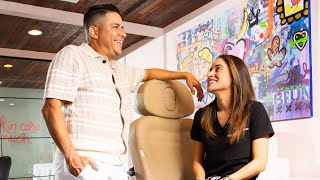
Codie Sanchez interviews Ullman about buying a med spa for $362,000 using seller financing at 6% over five years while keeping his day job. His partner apprenticed to become a certified injector, they hit $379k revenue in year one and $644k in year two, and Ullman credits transparent pricing and community-building for the growth.
Questions this video answers
56
$379,000
$644,000
Approximately $1.25 million
$362,000
Chapters
Imagine working a 9 to 5 to owning a business that does seven figures in 12 months. I did this with a subscriber to prove to you that even though he has zero experience, you can do it too. This is Ullman. He bought a business without having any idea what he was doing while working a 9 to 5. And he had the owner pay for it.
What?
Yep. How'd he know how to do that? Well, I taught him and his lady how to do it. Let's break it down. Live. Exactly what happened, what almost crushed them. So you can feel their homework and playbook step by step. Wait until you guys see how much they grew this business in just one year. Sup, Olin? How's it going?
What's up, Cody?
So you guys glad you did this?
Oh, my God. Changed our life.
Oh, yay. Okay, I want to break this down today. This is our agenda. How did this start? Why did they choose to buy a business instead of start one? How do they find a business to buy? How much money these guys got? How do they pay for it? How do you do the same exact thing? We're going to break it down. Solman bought this business and had the seller put 90% of the money down to get it. But how big was this bad boy? I know, year one, when you took over, you had what, 56, 56 day one, 56 membership subscriptions to this place.
Right.
Then by today, how many yachts?
420.
Whoo. That's not bad. Year one, it was doing 379,000 when you took it over, right? Yeah. What about the next year?
644.
So we're almost doubling, baby. And what do you think you're going to do this year?
One to five.
Wow. $1.25 million. Not a dollar and 25 cents. But it probably wasn't always this easy. Where did you get the idea to buy a business from?
It's from you.
Let's take it back to the beginning. So we met at a coffee shop because Ullman wanted me to describe how exactly do you buy a business? We broke down our 10 step process and we got into our secret super proprietary method called the Perfect fit business. First, you draw the Perfect Fit Venn diagram. Passion skills network. Now, first he wanted to buy a laundromat. Bad idea. Then we talked about starting a property management business. Wasn't right. Then finally, a med spa. Because his wife is a nurse practitioner. So network skills. She knows how to do this. Passion. She's obsessed. And he's obsessed and great at marketing. Although probably not great at fillers. So, ding, ding, ding. We got a winner of a business. So now he had to go find a business, and I sent him off to do just that. And then something crazy happened, which is you were like, hey, I'm going to buy a med spa. And so I became your little accountability buddy. I found this text message from you. So this One was in 2022, and it was like, hey, I'm almost done reconstructing the P and L for a med spa. What are the items you need to get things moving? Which is amazing. Then we go back and forth. Three months later, you're like, what's up, homie? I'm closing this bitch on January 15th. Which is hysterical. And then you also say, I would love my favorite Patagonia vest back.
Oh, yeah, you must wear.
Which I think I finally returned that.
You did. You did.
And that's when was game on. Also, if you guys haven't smashed that subscribe button, like, it owes you money. What are you doing? I don't think it's very natural for people to look at lip filler and Botox and med spa and think they're going to buy it. What made you decide you wanted to do this industry?
So I was driving with my wife girlfriend at the time, and she had gotten her lips done and asked her how much it cost. She's like, 7 $800. I'm like, what $800? I mean, how many hours were you there for? And she's like, 20 minutes. And I'm like, how much does that product cost? She's like, probably like $300. So she made $500 profit in 20 minutes. That's when I started kind of brainstorming. I'm like, this is a pretty good business maybe get into.
Yeah, you got some margin. So you can layer on top of that. What else made you like the med spa model?
So I noticed a lot of, like, inefficiencies and lack of transparency. I asked her, well, how much does everything else cost? And she goes, oh, I don't know. You have to call in. I'm like, what do you mean? Just check the website. Like, oh, no, prices aren't online. Like, so if I want to book something, I have to call in. Like, what if it's like after hours? And I'm like, oh, you call the next day. I'm like, you're missing out on customers. So that's when I started thinking, like, oh, my God, there's so much optimization that you can do with this industry.
And you Went even one step further than that. That we'll talk about later. Brilliant idea. You're going to want to stick around. How did you think about starting this business tactically? What were the next steps once you figured out you liked the model?
Alright, so we talked about it and the first thing is she needs to know how to be an injector. So she's a great nurse, worked in the hospital, but she had no experience. And how do you get a job without experience? And how do you get experience without getting a job? So that was a little bit of the issue we had. And there's Jen now with all the experience in the world.
Say hi Jen, how did you fix the chicken and egg thing?
So I told her, hey, why don't we just cold outreach and email a bunch of smaller med spas. You can go in there and just offer to work for free. You pay for college, you pay for school. It's the same thing. Pay with your time. And that's what we did. We cold emailed, I think about 20 different med spas and one responded to Jen and said, actually I need somebody to do the medical consultations and if you do them, in exchange I'll teach you everything. Aesthetics and you can shadow and learn everything you sell.
So many times people don't do things because they say I can't, I'm not qualified, I don't have the license, there's no way. But is that an excuse or is that reality?
It's an excuse, you know, and the time's gonna pass. And the time did pass. It was, you know, maybe about three, two years that she was doing this apprenticeship while working a full time job.
Yeah.
And made it happen. And now she, you know, is the expert. Now she's teaching people.
You'll never be able to buy a business unless you learn the basics about doing business. There are five crucial financial documents you're gonna need to know how to use, read and analyze. This is so you are putting yourself in a position to generate a positive return on your investment. So HubSpot sent me these templates that are amazing. They also sponsored this video. So the number one, personal financial planning template. So you and your family stay in a spot where you can safely buy a business. Number two, cash flow statement. This template allows you to stay on top of the top reason businesses fail cash flow problems AKA don't buy a business with cash flow issues. Number three, balance sheet template. So you can review the full snapshot of the business you want to buy. Number four, profit and loss statement template. What kind of debt service are you taking on? Is there enough left over to hire an operator? And number five, financial projection template. Maybe the most important document for analyzing an acquisition. What's going to happen after you buy it? Link in the description. If you want to download all five of these for free, everyone say thanks. HubSpot. So you started out thinking you were going to just start this business, and then you realized you were going to buy it? Yeah. Why?
Starting a business is actually harder than buying business and more expensive when you do the math.
Okay, let's break this down.
That machine, that's an $80,000 machine.
This remodel, about 60,000. How about that chair and whatever those can track?
That chair's $2,800. You know, pretty much all the inventory that we have there is probably like, another 40, $50,000.
Wow. What about in here?
That machine there is about $40,000, and.
Then you have a ton more inventory here. Stuff like this and this. Another couple thousand dollars.
Yeah. When we bought the spa, it had about $165,000 worth of furnishing and equipment.
So it was either start a business with $0, but you'd have to spend $165,000 to start. Plus you'd have to wait to get clients because you actually build it out.
I have a lease right now. I'm paying a lease. I'm paying a front desk. I'm paying for marketing. So I'm pretty much bleeding money for about 12 months. It's probably gonna come out to about the same amount of money as it is to just buy the business. But you start profitable from day one, and you're breathing. You're not worried about, like, will I even make it?
I think I was reading a Harvard Business Review the other day that said that only 7% of Americans actually own a business. Less than 10% of businesses will ever hit a million dollars in annual revenue. Less than 0.4% of businesses will ever hit $10 million in revenue. So every single dollar that you can front run just decreases your risk in ownership. Right. It's not that it's easy. It's hard. But it is more likely to win with less likelihood of failure.
Yeah. You're getting a head start.
Talk about how you guys felt when you bought a business. Was it scary?
Yeah. Mine screwed up several times.
Yeah.
Before signing everything, we were like, are we sure we're gonna do this?
Like, did you have a moment where you thought, we should not do this? We should back out?
We were almost looking for, like, a big red Flag to be able to like, just, you know, bungee out of there, right? Like, almost like we were looking for an excuse to be able to say why we backed out because it was scary. But, like, everything adds up. Let's, like, stop being little bitches, okay?
So you finally get over it, and then you talk the seller into seller financing. Explain what happened and how you guys did the deal terms.
The seller financing, I learned from you, right? Which I thought was kind of weird. I'm like, why would the seller want to finance it versus just getting the cash up front? And there are many reasons which you've talked and dived into. But we proposed stellar financing, and she actually was open to it because I think she wanted to work with us, right? So she knew that she had to facilitate it, and an SBA loan was just going to take too long, and we didn't have enough, like, P and L history and all that. So that was the easier route. When she gave us a price, I remembered another thing you said, which was your price, my terms. So I said, all right, cool. Let's do. I'm not going to negotiate on your price, but let's do, you know, five years, 6% interest, seller financing on this amount.
How are you guys positioning yourself for somebody you don't know to eventually buy the business?
So I told Jen, whenever the owner feels frustrated, just mention, hey, if you're frustrated, I can just buy the business from you.
I can't remember if it was her that brought it up first or us. She was getting very flustered with, like, patient complaints, and she was the only injector. And I'm like, look, I can start injecting. Like, I can also buy your business. Kind of just like, planted the seed little by little. And then eventually she's like, you know, I'm thinking about selling the business. And I was like, hey, well, there.
Was a big problem at one point, right, which is you guys started digging into the business and you realized, holy hell, there was no financials. So how do we actually even determine what the business is worth? And I remember you sent me the P and L, and I was like, the. Is this.
You mean lack thereof?
Yeah. So the business almost completely falls apart. The deal almost completely falls apart, but you guys recoup it at the last minute. What happened?
I actually made the P and L for her. Luckily, she used an emr, which tracked all the sales. So I can see, like, how much sales came from services and products. And then she gave me her bank statements, so I was able to match the Sales to the deposits from, you know, the merchant into the bank account. So like, okay, this all makes sense. And then I just pretty much built it out for her. Took me a few days. But yeah, you know, you know, she's older, single, like operator. She didn't have time to be doing all this. She just knew that the money, the business was making money and she knew that she had more money at the end of the month that she started with and that was good enough.
Which is most business owners. Right. You know, and I think the other thing is people use the words P and L and that seems scary, but actually P L is really just a fancy spreadsheet. It is, but you guys got a hell of a deal, I think because there was a lot of trust. She knew you guys weren't going to fly by the seat of your pants. She got to meet you and she knew that you'd probably pay her back.
And a lot of the patients too were friends and relationships that she had built. So she wanted to leave them with somebody that she trusted. She wanted to sell to like any random person that you know, she didn't know.
So you end up buying the business for how much?
$362,000.
With about what, two thirds of that? No, more than that. Almost three, four of it seller financed. The rest of it. You guys use your savings because you had been Both working a 9 to 5 and you stayed working a 9 to 5.
Yeah. Until two weeks ago.
So through the entire first year you're working your 9 to 5, making sure everything's okay.
She kept mine for the first month.
Because I'm like, don't quit in case like this business blows up. Like we need that job.
You guys have both now quit your nine to fives to go all in on this. Are you guys making more money or less money than you were making when you were doing it for somebody else?
She's making more, I'm making less. Next year I'll make more.
That's amazing. So you think within two years of you guys owning the business, it will have made you more money than both of your nine to fives?
Yeah.
In a calendar year.
Yeah.
That's wild. And then theoretically, if you take a business that was doing three hundred thousand dollars in revenue and you take it to 1.25 at probably like a what, four hundred thousand dollar profit a year and then you sell that business at $400,000 a year profit. I mean, you're looking at a business that you can sell for close to 2 million plus as opposed to the one you bought for 300.
Right.
So even if you guys in two years are like, we're done, you could have a nice little nest egg that you take out of this if you sell this bad boy.
Exactly.
So we have this bad boy, which was a scary moment. What happened?
All right, so this bad boy is probably, like, $80,000. Previous owner bought it for, like, 40 grand because she bought it used. Works great. I had been treating patients on it, and then I got to a point where I ran. Every patient gets a different tip. Right. It's a skin resurfacing treatment. So I run out of tips, and I'm like, oh, shoot. Okay. I call the company. I'm like, hey, I need to buy more tips. And they're like, sure. We don't have you registered. What's the serial number? I go through this whole thing, and they're like, actually, your machine was purchased in the gray market, and it's not certified with us, so we can't sell you any. Any consumables.
What?
And I'm like, okay, how do I get certified? And they're like, well, you got to go through the certification process. It's $15,000.
Get out of 10. What a racket.
I was at a point where I'm like, crap, I've got treatments that I've sold on this, and now I don't have any tips. Like, what am I going to do? We started emailing some med spas in Austin, in Miami, just like, hey, this is what's going on. Like, would you be so helpful to, like, sell me some of your tips? Like, I'll even pay you more. And one med spa responded, and they were glad to do so for us. So we got lucky with that. But I'm still. If this thing breaks, I'm.
I'm screwed.
Half the game of business is just not taking no for an answer, thinking of creative solutions when the inevitable disaster comes next. It's like, business is just a carefully concealed series of disasters moving down the highway. And I think it's cool for you guys to share that with other people, because they don't always know, but that is the truth.
Yeah, but, you know, if I had done the deal over again, I'm like, okay, let me look at these machines. Are they under warranty?
Where were they purchased from?
Are they certified? Like, but these are things I don't know. And maybe if I would have sat down with the med spa owner and chatted with that person for an hour, and I would have paid them $300 for an hour of their time. I would have saved a lot more money.
Yeah, I think that is one of the most underrated things to do is you need to have an attorney, an accountant, and a sector expert. And as long as you have somebody that's actually owned the business before, they're going to tell you where all the bodies are buried. And there's only like that 20% for every industry. Most of it's the same like P and L. Pretty good. You know, bank accounts, understand the employees.
Fine.
Then you got the $80,000.
You don't know what you don't know.
Biggest lessons you guys learned in negotiation, because it's never a clean process. There's always a little sum, little hair on the deal. What happened for you too?
I don't know if I learned it from one of the Facebook groups or from one of the models in your course, but we bought this business as an asset sale, right? So we didn't take any of the liabilities that the business had, any debt that they that they owed. However, imagine telling that to a customer that bought a gift card a year ago and say, I have this $500 gift card, I want to redeem it. I'm not going to say, oh, I'm sorry, that was from the previous owner. So I'm like, wait, we're probably going to have a bunch of customers coming in wanting to redeem these packages and gift cards that they've bought over the past year. So I included into the agreement that anybody that you know, came in with gift cards or pre purchase packages and they redeemed them that we would take it off the principal amount owed.
Smart. All right, we're calling this segment Hot or not Business acquisitions. Did you guys make hot? AKA good decisions or bad decisions? Not. First up, seller financing. Hot or not Hot. Hot. Hot. Second, apprenticing.
Absolutely hot.
Due diligence. Hot or not?
Not.
Not.
Hot. Hard.
I guess not.
I don't know. Bought versus started business. Hot.
Bought is way better.
Yes. On market deals.
Not not off market deals.
Hot.
I like it. Med spa. Hot or not hot.
Hot.
Location. Hot.
Hot.
Buying another business.
Yes.
Hot. Yes. Hot. In this episode of hot or not. You heard it here. First, you guys absolutely killed it. In this business, inside of a year, you 4x'd it. That's not normal. What do you think the three secrets were to you growing that fast?
I think starting out number one, we're very transparent with our pricing. We've gotten a lot of feedback from our patients how much they appreciate knowing how much something is going to cost actually show up. I'd say number two, we're building a community now being in this new location we really want people to feel like they're at a second, like in their second home. Number three, underselling. I like to be very honest with patients. I'll actually tell them like no, you don't need more lip filler or whatever it may be and just honesty.
I love it. It doesn't take that much to make a small business at 10 because so many people don't even try. I really think what you guys are doing here is pretty beautiful. Most successful people I've met would say that they're not that smart and they're not experts. They just work a little bit harder than everybody else for a little longer than everybody else. And the truth of the matter is is that it is in the work we trust. That's what makes a Main street millionaire.
More from Codie







He wouldn't give you the dream if he didn't believe you had what it takes. You have what it takes.



What’s the one thing most job seekers overlook that could get you hired faster than you think?