The Harder You Try, The More She Pulls Away
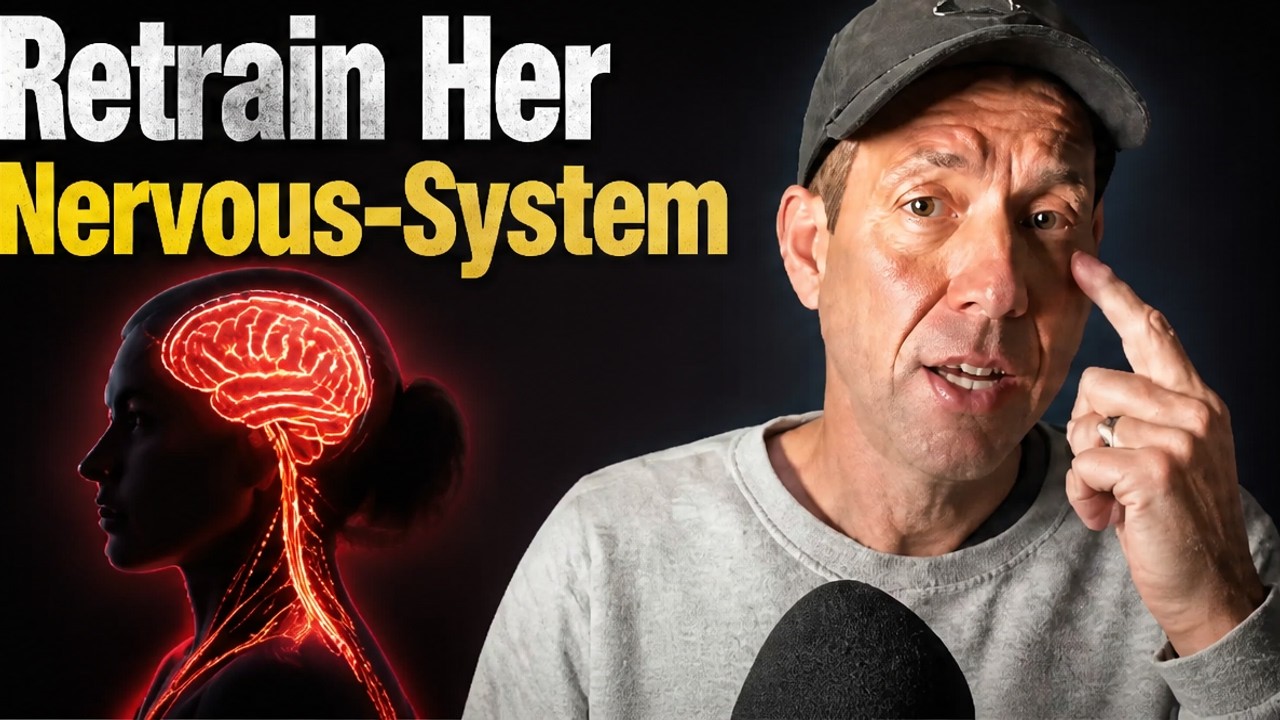
Cody Butler explains why desperate efforts to save a marriage backfire: your wife's nervous system has learned to predict failure, and intensity feels like threat. The fix isn't grand gestures but weeks of boring consistency that rewires her expectations. You have to become the stable one in the room.
Chapters
Hey, Cody Butler here, and I help men save their marriages in divorce scenarios. And what I want to talk about in this video is the situation of the harder you try, the more effort you make to save the marriage and make the situation right, the more she pulls away, the more she pushes back, and the worse the situation gets. So I'm going to share with you why she's not responding to your effort and why the intensity that you're putting into saving this marriage is the enemy, and I'm also going to give you the steps that you need to take to actually do So the story that I love to share here to highlight this is the one with the fly trying to escape the room, and he flies at the window and hits the window, and he obviously doesn't break through. And he just looks at the window and keeps telling himself, if I just fly harder, if I just put more intensity into breaking through this window, eventually I'll break through this window and I'll get to freedom. But the reality is the exact opposite is true. The more intensity and the more effort the fly makes to break through that glass, the faster he brings about his demise and his death. The reality is if the fly stopped for just a second and looked off to the side, he would see that there was an open door and he could effortlessly fly to the freedom that he's looking for. And the same is true here, that the solution to saving your marriage is not more intensity and effort. It's looking for a different solution and a different pathway that's going to get you the result with a lot less effort than you're making right now. So the purpose of this video is not to give you control tactics, get her back tactics, how to accelerate the recovery tactics, that kind of stuff. The goal is to give you diagnostic accuracy. And to give you the tools that you need to actually resolve the situation here and to save your marriage. You have to understand what she's actually leaving from, because if you try to solve the wrong problem, even if you solve it very successfully, you're going to have a bad outcome. So what's act— what your wife is actually leaving here is a dysregulated nervous system, which is a very chaotic, very pressured environment for her. And it's got to the point to where the pressure within the marriage has become unbearable. And for whatever reasons, she's now decided that the only way she can get the pressure relief that she needs, or she can escape the dysregulation that her nervous system is now creating, is to exit the marriage. Now, that can look like a lot of different things for a lot of different people, right? She can withdraw from the marriage, she can physically exit the marriage, she can get involved in another relationship. All of these produce the same outcome, which is she's fundamentally looking for pressure relief. She's looking to regulate her nervous system. Again, how she achieves that is different for every situation. But ultimately, she— you're dealing with a dysregulated nervous system. I want to share with you how to understand what that dysregulated system, nervous system, looks like, to understand how your behavior trained it to get to where it is, to understand why intensity delays the recovery of that. So ultimately, she's leaving the marriage because she believes that the only way she can get the pressure relief that she needs is to leave the marriage. If you can create that space within the marriage, then, or until you do that, she's not going to come back. And if you can create a pressure-free environment, a regulated environment within the marriage, it then creates the space to— that she can make the decision to come back into. And I'm also going to give you the understanding of why stability, not passion, is what actually rebuilds trust that allows her to believe and trust that you are the man that she wants to be with. So the first principle here is that she's acting out of her nervous system. Her nervous system is a predictive mechanism Predicting what is going to happen next, and if her nervous system does not feel safe, emotionally safe with you, or even physically safe with you, it will not attach to you no matter how good your intentions are, no matter how hard, how much effort you make. So the nervous system reality is that her nervous system has been trained by you over the years and decades that you've been with her, and again. Let me make something very clear about what she's actually leaving here. She's not leaving the present version of you. She's not leaving this version of the marriage. Trying to fix that is an error. She's leaving a future version of the marriage, and she's leaving a future version of you. So what's actually happened is her nervous system, her predictive mechanism, has predicted the future of what her life is going to look like inside of this marriage with you, 1, 3, 7, 10 years into the future. And she's saying no to that future. Her nervous system is predicting what kind of man you are going to be in that future, and she's saying no to the prediction of you. That is what she is saying no to, and that is what she is leaving. And this is her nervous system that has been trained by you over years and years. This is the mechanism that's making that prediction. So that mechanism, her nervous system, has not been trained by a single argument, not by one betrayal. Not by one failure, but it's been trained by repeated unpredictability, repeated escalation, repeated emotional volatility, repeated inconsistency, repeated emotional insecurity, etc., etc., etc. All of these things have happened over and over and over and over again to where now, understanding that her nervous system is a predictive mechanism, it is now predicting a future that has become unacceptable To her, and that is what she is rejecting. So realistically, no amount of effort in the present is going to change that because she's not responding to the present. She's changing— she's responding in fact to the past, which is predicting the future, which I'm also going to share with you how to change that as we go through this. So the psychological truth that we have to accept is her nervous system does not respond to your words in the present. It responds to the patterns that you've trained it with in the past. Now, let me just be clear, I'm not about trauma labeling or anything like that. I don't want to give names to behaviors. This is about just the repeated conditioning that you have put her nervous system through that is now causing confirmation biases to predict who you are, what your capability of change is, and what the future is going to look like with you. So, we're What does a, what does a dysregulated nervous system look like in a woman? Well, if you— I'm sure you're experiencing hypervigilance, emotional distance, irritability, shutdown, refusal to have conversations, all of these things, or lack of intimacy, not wanting to be around you, refusing to deal with anything within the relationship, being detached, avoidant behavior, all of these things. This is all signs of a dysregulated nervous system, which actually fundamentally is the problem That is causing her to want to leave the, the relationship. So some more signs that her nervous system is dysregulated is she's very suspicious of your nice behavior. She's constantly testing you. Anything you do, she puts it to the test. She doesn't believe you. She doesn't trust you. She has a complete avoidance of any conversations about the future. She doesn't want to discuss the future with you. These are signs that her nervous system has reached a point of dysregulation. that has now just triggered the exit button, the ejection button, right? She's gone, nope, I can't handle this anymore. And again, let's be clear, she's not necessarily doing this because she's moving towards a future without you. She's doing this because she's moving away from the future that is present with you and the future that she sees and predicts with you. She can no longer— she can no longer experience that, probably purely from a point of just self-preservation. There comes a point when the person is exhausted or they just simply can't take pressure. anymore, and they have to leave the relationship for no other reason than that. So what's going on right now is the effort that you're making— she's not evaluating your effort, she's not evaluating your words, she's simply scanning for threat. Is there a threat in this scenario? Is this a threat to me? Is this going to create more pressure? Is this going to create more dysregulation? Is this going to create more problems for me? She's not viewing what you're doing from the perspective of Is he trying to make this better? Is he trying to help? She's looking at it from the perspective of, is this going to make the situation worse? And when you understand that, the more effort that you put in, the more dysregulation that it creates for her. So a good way to look at this is the self-awareness test, right? Does— when she's around you, does she brace or does she relax? Is she chilled out and relaxed around you, or is she hypervigilant? So, if she's leaving the marriage right now, she's going to be very hypervigilant. She's not relaxed at all. But what that tells us is that historically, over time now, that she's experienced so much instability, so on and so forth— we could call it a lot of things— that she just doesn't want to experience those things anymore. So, let's go on to talk about why intensity makes this situation worse. Your effort makes this worse. So as the woman's pulling further and further away from the marriage and moving towards divorce or separation, the man naturally and instinctively tries to have deep emotional talks. He tries to— he makes emotional declarations. He tries to close that emotional distance. He pushes for that breakthrough conversations. He looks for the one big thing. He tries to sell a vision of the future, a vision of himself. And he tries to force that closeness in many different ways. And when I say force it, I don't necessarily mean in a forceful way, but he's trying to force that closeness through legitimate means, really, like trying to be the nice guy, trying to make the effort. To him, he's just trying to close that gap. To her, this is forced intimacy, this is forced closeness that she doesn't want at this point in time. So From his perspective, he sees all this effort of, I'm really genuinely trying to save— I'm really genuinely trying to save this marriage. Why? Why? I'm trying really hard. Why is she not trying? Why is— why is everything I do just making the situation worse? But from her— from her perspective, from her nervous system's perspective, she's just experiencing this as more unpredictability, right? It's like, he never did this before, now he's doing it. So what's going on here? This is just more unpredictability coming from this guy. So the first principle to understand here is that repairing her nervous system, getting her to predict a different reality, a different future with you, it's time-consuming and it's boring. It's not— as men, we want that, we want that firework moment, right? We want that, just tell me what to do, Cody, and I'll do it. Just tell me what to fix and I'll fix it. But it doesn't work like that. Nervous system Repair is about— it's about predictability. It's about repetition. It's about calmness. It's about uneventfulness. And it's not about doing something extraordinary. It's about doing ordinary things extraordinarily well. And again, I work with men on this. It's about like, what are the behaviors that she's saying no to right now? Because there are deal breakers, right? There are behaviors that she cannot tolerate anymore, and that's why she's leaving the relationship. How do we identify and remove those behaviors and show up predictably? Remove those behaviors predictably, repetitively. How do we introduce calm consistently? How do we make the relationship uneventful? She's not looking for something that's a big massive event that's going to take place. She's looking for consistent uneventfulness. She wants emotional safety, and safety is uneventful. I always say I never complain about being bored because if I'm bored, it means nothing's going wrong. If I'm not bored, it potentially means that I'm in chaos or crisis, right? It's the same for the woman. So nervous system repair here is not about fireworks, grand gestures, dramatic breakthroughs, big things, all of those things. And as men, size matters, right? For women, size is not as important as consistency. She would rather see 100 small things Done consistently than 2 or 3 really big things done immediately. We're on different agendas and different schedules as men and women. So what productive success actually looks like, it's not increasing the intensity. It's about lower intensity. It's about fewer spikes in intensity, and it's about smaller reactions, right? It's about success for the fly is not higher intensity, more speed, more effort breaking through that window. It's about a lower intent. It's about slowing down, lower intensity, and just looking around and seeing where the opportunity is. And then a small reaction or a small amount of effort actually gets a massive result here. So it also includes stable tones, predictable responses, all of these things, right? It's about— it's about you stabilizing as a man and then projecting that stability into the marriage, not emotional highs. It's not about passionate reconciliations or big conversations. So again, the way you stabilize her nervous system is through repetition of calmness and predictability. And it also comes down ultimately time under non-threat conditions. When you understand that her nervous system is actually just a predictive mechanism and that predictive mechanism is predicting a future based on the experience of the past, then everything you do in the present is really, really important. It's going to make a massive difference, but it's really not going to make any difference at all until the present becomes the past, and it's become the past multiple times. So it's like the present has to become the past, and then the present has to get stacked, and then the present has to get stacked. So ultimately what's happening here is you change Or you create the environment that changes or causes her to want to change her mind through displacement. Right now, 100% of her capacity is filled with negative emotions, negative feelings, negative predictions. What you do today is 1%. What you do tomorrow is 1%. What you do the next day is 1%. So you go from 100% negative, 0% positive in her predictive mechanism. To 99.1, 98.2, 97.3. You have to displace the negative, and you do that by giving her repeated experiences of a different reality, to where once you reach a certain level of concentration, this destabilizes her predictive mechanism. When she has a 100% negative experience of you, it may— it take— it does not take a rocket scientist To understand, or, or talented psychologist to understand what she is going to predict her future with you is going to look like. It's going to look much like the past, which is negative. But when we get to the point to where 50% of her predictive mechanism is positive and 50% is negative because you've consistently reprogrammed it over the last however long, now this causes some instability, right, in her nervous system. That causes some instability in the predictive mechanism, which now she has to question what's going on. Whereas before it was black and white, it was, she's leaving this marriage and there's no doubt about that. Now you've introduced some doubt and confusion into the predictive mechanism because it's 50% bad, 50% good. And if you continue with this time under, time under non-threat conditions, boring repetition, you're able to do this day in, day out. Eventually you get to 70/30. 70% is positive, 30% is negative. Now again, it doesn't take a genius. If 70% of her predictive data on you is positive and only 30% is negative, what do you think she's going to do? This is how you change— you get her to consider to change her mind. Big gestures, all they do is produce suspicion and they're simply not going to work. So you do this through constant time under non-threat conditions. Not through persuasion or trying to talk it into this. The time reality is that you trained her nervous system over years. You do not undo years of training in one week. It's as simple as that. And, and I hate to say this, but if you're of the opinion that one, two, or three things that you can do, or if you're looking for the, um, you, you, you look at these save your marriage in 4 weeks guaranteed your money back, or Save your marriage in 30 minutes. It's like, hopefully you can see that is just not— that's not going to happen. That is not honest. It just doesn't happen because you can't undo years of training in 3 weeks or 4 weeks. You have to do this over time. So if you're looking for some, some specific guidance, I work with men on this. Check out some links in the description. I'd love to talk to you about how we can put this into your situation specifically instead of the generalized advice here. So Let's get more into this, uh, and look at impatience versus patience, right? So again, what happens here is the man that's showing up, that's probably watching this video, i.e., you right now, you're impatient to turn this situation around. Understandably, I get that. I'm not criticizing that. But what that results in is control attempts. When you're impatient to get a result, you act in ways that produce More verification and validation for her that you're unstable, and, and you're just showing her that you're still controlling, you're still manipulative, and she's better off out of the marriage. Whereas when you adopt the position of patience and you go, it's going to take as long as it's going to take, if it takes 3 months, it takes 3 years, it doesn't matter, I'm going to continue, then you move into a position of leadership, which is what she's actually looking for. That's what actually starts to change the difference, so, or make the difference. So The first principle to understand here, man, is there is no reset button you can press right now. There's no do this, do that, and it will change your situation. There's only retraining of her nervous system through repetition. That's all there is. And the sooner— if you— the sooner you accept that and understand that it's not extraordinary things that change her mind, it's ordinary things done extraordinarily well, consistently over an extended period of time. Or again, the, the formula, the success formula that I work with, with the men that I actually work with, is consistent execution every day, devoid of emotion, regardless of emotion. You're going to show up consistently and you're going to pump stability into this marriage consistently, regardless of how you feel on any given day. That's how you hit the reset button. That's how you do it. So what's required here For her is a new baseline. And what that new baseline, or how she views you, is consistency of behavior long enough for her to form that baseline. Let me, let me just put it this way. If you're working, if you've got an employee, if you're an employer and you've got an employee who hasn't been on time once in 3 years, and you say, I'm going to fire you, John, because you're just— you never show up, and you've told John over and over and over again, you need to show up on time or I'm going to have to let you go. And after 6 months or 12 months or even 3 years of telling John he has to show up on time— John, I can't tolerate this anymore, I'm going to have to let you go— do you believe for half a second that he's going to start showing up on time when he says, I'll do it, I'll show up on time? And even if you give him the opportunity and say, okay, I'll give you one more chance, do you believe the fact that he shows up tomorrow on time that he's changed and he's reformed his ways and he's been completely redeemed? No, you're going to need to see that employee show up on time for an extended period of time for you to start to believe that that man has redeemed himself or changed. Again, another great example: somebody that's 100 pounds overweight that says, I'm going to lose— I'm losing 100 pounds, Cody. Okay, awesome. Do I believe you? No, not really. Well, I'm going to do it. Okay. And then 4 weeks into it, He says, "Look, you know, I'm still on the diet." Do I believe that he's still going to be on the diet six months from now, twelve months from now? No, not really. I need to see this for consistent period of time. The man that says I'm going to stop drinking and he stops drinking for a night or a day or a week. Do I believe he stopped drinking? No. I need consistent behavior long enough for a new baseline to form with that person. Once that new baseline forms, that creates my confirmation bias of what I believe this person is capable of achieving, and who are they going to show up as, as a future version of themselves. Now, while the baseline is very negative, the confirmation bias is a very, very bad thing, right? Because she believes negative things about you, and she's going to react to you maybe unfairly. But here's the great thing: it took a decade to form that confirmation bias. When you form a confirmation bias or a baseline that's favorable to you, It builds you and buys you a huge runway, huge margin for error. So if instability— if you, if you give up on this and the instant— and the instability or the stability is interrupted, then it resets back to the baseline, right? It resets back, the baseline resets. So if a man stops drinking for 3 months and then he starts drinking again, or the man goes on the diet for 3 months and then he puts the weight back on. He doesn't get to pick up at the 3-month point. If he wants to start over again, then unfortunately there's a reset. This is just the way that it is. This is what we have to deal with. We have to deal with reality. So again, when we're talking about resetting the baseline, resetting the nervous system, it's not— and I know this sounds harsh and some men are going to go, so I've got to do everything right? But the truth is Pretty much, right? Like, it's not the 99 things that you do, that you do right. It's the one thing that you do wrong that resets the baseline again and again. This is the advantage of, of, you know, what I offer, what, what I do when I work with men. It's, it's providing that accountability to make sure that we stay on track, that we don't continuously reset the baseline. This is the advantage. This is the Accountability is the one thing that it is hard for you to bring to yourself, and it is utterly impossible for me to bring you in a context like this video. I can't hold you accountable through this video. I can only hold you accountable in a face-to-face environment or a virtual face-to-face environment such as a Zoom call or something like that. And that is one of the biggest elements of what you get when you decide to work with me. If you'd like to do that, there are links in the description Uh, for those who want to take that further. If not, let's, let's continue with this video here and talk about the leadership, the, the leadership shift that needs to take place if you want to save your marriage. So leadership is not about getting compliance. It's not about calming her down. It's not about controlling her reactions so she feels safe. It's about you becoming a regulating presence. It's about you being the most stable nervous system in the room. Are you the adult in the room? Or are you the only adult if she shows up and stabilizes you? It's about you leading this marriage or any other aspect of your life through calm predictability. Do I know who I'm going to get with you when you show up, or are there multiple aspects to your personality? And depending on how much sleep you got and what mood you're in and how your wife has reacted to you today, I'm going to get a completely different man. The chances are I'm going to get a completely different man. There's going to be no stability in your personality. Because you're a man currently driven by emotion and moods. The success formula is consistent execution devoid of emotion. The failure formula is inconsistent execution driven by emotion. Right now you have the ability to be stable when the emotion is good. If she's pumping stability and she's showing signs of reconciliation, you're stable and you can pump that stability back into the marriage. But as soon as she withdraws that from you, And she shows signs of leaving, signs of leaving again. The stability goes away, and now you pump instability, pump instability and uncertainty back into the marriage. That almost certainly is where you're at right now. And again, this is where accountability comes in. You have to learn how to be the most stable presence in the room all the time. You have to become a regulating presence, not some of the time, not most of the time, but all of the time. So the key principle here is do not scale chaos. Regulate yourself first. Do not be a monkey with a machine gun. Do not keep hitting the stupid button. If you are not regulated, your efforts— if you, if you have not developed the ability to control and regulate yourself and act consistently in spite, in spite of emotion, or act consistently regardless of emotion, you haven't successfully regulated yourself sufficiently yet. And any attempt for you To act upon the marriage is going to scale chaos. You produce more of what your internal state is, and if your internal state is regulated and controlled and you have internal authority and emotional, uh, sovereignty, then you are going to create a regulated, stable, safe environment for the marriage to flourish in. If you are not that, if you are unstable inside, you are simply going to scale chaos, and she's said no to that. So here's the thing, right? You cannot regulate your environment. You can only regulate yourself. And if you are dysregulated, and you— then you cannot regulate the environment. She needs stability right now. She needs emotional safety. She needs the pressure levels to decrease in order to even get to the point to where she's willing to have a conversation, a serious one. The fact of the matter is, if you're gonna— if you're gonna save this marriage, you've got to talk about the problems. And she's not going to talk about the problems until she feels safe enough to do that. And she's not going to feel safe enough to do that till you show up as a sufficiently regulated presence to where she doesn't feel threatened by you. That's just the truth. You need to learn how to not be triggered. You need to learn how to control your emotions. You need to learn how to act in spite of emotions in a way that allows her to feel safe. Most men want to jump to— they want to go to 70, 80, 90 miles an hour without going through 10, 15, 20 miles an hour. You have to go through the process. You, you can't talk about what needs to be talked about until— to save this marriage until she feels safe, to where she feels safe in the environment where that conversation is going to take place. So again, the conditions required for this environment, the conditions required For her to reset her nervous system, the conditions required for her to feel safe enough to have a conversation with you is a predictable you, a reliable you, and an emotionally restrained you. And again, these are a lot of the characteristics that if we do— well, if you decided to work with me, there's some links in the description. I highly recommend you do. Then these are a lot of the characteristics that we're gonna work on. She will not have a conversation with you until you hit these milestones. Until you become predictable, reliable, and emotionally restrained, good luck getting her to have a serious conversation to where you're going to actually get to discuss the issues that need to be discussed. So again, the conditions required for the reset that you want to happen: absence of emotional escalation, repetition of calm responses over extended period of time, lowered emotional volatility with you, which automatically translates to a lowered emotional volatility within the marriage as a environment. So you only have one objective at this point, man. You are not calming her. You're not calming her down. You're removing the threats. You're removing the threats in the environment that are causing her to be dysregulated in the first place. Don't look at her and go, how do I calm this woman down? Look at the environment and go, what, what threats am I pumping into this environment that she doesn't want to be around right now? That's your objective. That's your only objective. Because when those threats disappear, her nervous system stabilizes itself, uh, or her nervous system will stabilize itself when those threats disappear for a long enough period of time for it to recalibrate. When it recalibrates, her decision to leave the marriage recalibrates. Now, I'm not making any promises here. I don't know if she's going to come back or not. I don't know what you've done to this woman. I don't know what's happened. I know nothing about this situation. But I do know that this is your best chance To get her to reconsider her decision, and if she is, if it is possible to get her to reconsider her decision, this really is the only pathway to it. So again, self identity question, right? The diagnostic: Are you diagnostic? Are you stable, or are you an intense person? And one of the primary principles that that I do teach with the men that that I work with is never grade your own homework. It's not for you to determine if you're stable or not. You've got to ask the people around you. You've got to ask your wife, or you've got to get it from your wife, or you've got to get it from somebody like me, or some therapist, or somebody else, right? And you have to have somebody in your life that will tell you the truth, that will tell you the way that you really are and not tell you the thing that you want to hear. So there's the— the real question here is, uh, the question to ask yourself is, am I stable or am I too intense? Am I too intense for her to engage in this right now? Do you— are you seeking— are you just seeking a breakthrough moment, or are you actually committed to deep repetition of what needs to happen to actually get that breakthrough? Are you the fly that's just going, let's hit this thing hard, or are you the fly that's looking around looking for the, the different— the different exit that you can just fly through effortlessly and effortlessly and get the result with much less effort in a much shorter period of time? So human nature, man nature, male nature 101, is we as men want dramatic recovery. We just want to fix the problem. Just tell us what to do and I'll do it, Cody. That's what we are, right, as men. We want to fix things and we want to fix them as quickly as possible. Women need boring stability. They're not looking for a quick fix. They're looking for stability over an extended period of time. So my closing argument, my closing point to make here, is you're not trying to make Her respond differently to the situation. Your goal is to become a man that she can relax around. That is it. So the sequence to do this is stability precedes safety, safety precedes respect, respect precedes vision, vision of the future. It's the vision of the future that she's rejecting right now. So if you want some specific— if you want some specific guidance on your situation, not generic advice, I can only give so much in a 30-minute YouTube video. Check out Coach Cody AI, link in the description. It's built on like 5,000 coaching calls. Every coaching call I've done over a better part of a decade, I've recorded and trained Coach Cody on. You get my exact frameworks, strategies, you get my advice. Every single question that's ever been asked on a coaching call is answered in Coach Cody AI. Check it out, links in the description. And if you're looking for some more free advice, then I've got another video for you right here that I think you're going to find is really helpful. God bless you, and I'll see you in the next video.
More from Cody





His Wife Says She Feels Unsafe. Then We Find Out Why? — Live Coaching With Cody Butler




Watch Him Find The Blind Spot Destroying His Marriage In 15 Minutes (Coaching With Cody Butler)