25 Killer Ways To Profit From Content With Colin Sprake - MYMSuccess.com
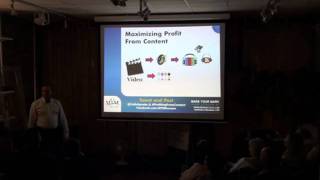
Colin Sprake shows how to turn one piece of content into multiple products: record a video, transcribe it, chop it into clips for YouTube, bundle it into an ebook or course. Test headlines on social media first, build an email list with free value, then stack launches so each product feeds the next one.
Good evening, everyone. Welcome. Franco, Matt, thanks for very much for the opportunity to come in and present as well. I'll get into who I am and what I do. Dave likes beer is the WI fi password. If you guys get on Dave likes beer. Okay, so let's get into this evening. My goal this evening is to assist you as much as I can with understanding how to take content and package. I know Linda's going to talk about how to package a different. No, I like that. Structuring the information. Absolutely. I'm going to go through some of them this evening. I think we had a little bit of overlap and maybe actually very complimentary, which I think would be good too. Between the two presentations, just at the bottom of the screen is our tweet and post. That's my Twitter address, the hashtag for this event. Profiting from content and then Facebook mimsuccess. So the key thing this evening for me is to make this interactive. I'm a trainer by trade. That's what I do for a living. To go into a little bit about who I am. Yes. I don't have a Canadian accent. I'm South African. So there's lots of nationalities in this room you'll never forget. I've got an engineering and a business degree. I actually have a metallurgical engineering degree. Everyone says how to help do you end up being a trainer? Well, I just love training so much and I got tired of traveling around the world likes of Chamil for 12 years, pretty much 10 months a year on a plane. Matt wants the thing straight, so I'm sorry, I think it was somewhat doing this. Okay. I've owned and operated businesses in Vancouver since I've been here. I'm a serial entrepreneur. Absolutely love business. The saddest part for me is how many entrepreneurs really, really struggle in business. I had an email today from a business saying to me, colin, how do I get. Yeah, should I even continue with my business? Because my products are not even. I don't think we get that much profit from the product. I'm like, well, why did you even get into it in the first place? It's amazing how many people don't even look at their cash flow before they get into things. So I run a skincare business. I ran probably one of the fastest growing fitness businesses in North America in 2005, 2006. You might have heard about it in Vancouver when pole dancing was the biggest fitness craze. I was a company that did the home pole dancing parties called Apollo Fun. So we Took that. It was a fad. It grew really quickly and we did extremely well. We were in 15 countries. Every state, every province in Canada in eight months. Grew extremely, extremely quickly. But that's a fad. You have to know how to get in and get out of those really quickly. I run a mining equipment company and a carpentry company as well. I've been mentored by some of the best people in the world. Joel Roberts, one of my favorite. Joel Bauer and of course for social media, one of my favorite out of the states is don Crowther. Last 15 years I've started four businesses. All were multi million dollar business or million dollar businesses in 12 months. No matter what industry you're in, you can get there and you get there quickly. That's what I love to do. I like to show businesses how to grow quickly and we do it in very specific strategies to get you to where you need to be. I'm passionate about assisting small business owners and really love watching small business owners grow and get to the next level because. Because this economy doesn't survive unless you have small business owners grow and employ people and do a bunch of different things. I'm really passionate about youth as well. I was returning to Scott at the back of the room. I run a program called High School Millionaire which is really focused on getting into the schools and watching kids grow, changing mindset, changing the way they do things by getting to the next level before they leave school. My whole goal is that I'll be financially set by 25. And some of them say to me, do you really believe that's possible? The only challenge for them actually getting there is between the ears. It's that simple. So I don't call myself a motivational speaker. I'm an inspirational speaker. Motivation is temporary. So let's look at what is content. So I thought I'd just give you some. Let's get right down to the basics of what content is to start off with before we get into the details for this evening on actually how to take content and expand on it. So content is information and experiences that may provide value for an end user or audience in specific contexts. So really writing content in a way and understanding that content is really king of your entire business. And getting content out in a format, in a forum that you can really present it to many people is really important. And you can take content and cut it up and break it up and what have you in so many ways. Like this evening, I'm busy recording this event. I'll video every single event I do. It doesn't matter what it is, why? And I'll show you a little bit later. Because there's so many things you can do with a video that can grow your business, and so many people don't do it. They don't take the time to grow their business, look at their content, and take the time to go out and buy the equipment to get themselves to the next level. Video equipment. Now, I don't use anything fancy. I use just a small Sony camera. It doesn't cost that much money. The amount it costs you not to learn is a fortune. I'm sure Linda can attest to that. There are a number of people in the room that are marketing experts as well. So that's content. So give you a couple of tips on writing content. This is one of our favorite slides, especially when you look up top here. It's all about us in the computer. Most of us write about who we are. The people in the computer, actually the other side of the computer want to be the ones reading it. So it's really a great little comic strip. What about me? What's got anything to do with you? It's got to do with the person reading on the other side. So who are you writing to? The age, the sex, the income, the interest. Like you've got to put yourself in your client's shoes no matter what you write and no matter what you present. Really, really important, very simple. I've gotten some real basics this evening. Why? Because most people scan over the basics and I like to get the basics done first and then understand how to get to the next level as well. What not to do. My favorite two coats. Worry about the yapping hounds. When your copy is focused on the foxes, there will always be people that complain about the emails you send out or the content you put out or whatever. If it's a majority, then you should listen. If it's the odd person, don't listen. I think a lot of us, even in our personal lives, we run our businesses. We have yapping hounds in our families that tell us how our business isn't going well, why it's not going well, and go get a job and all those kind of things. If they're not business experts, don't listen to them. That simple. And one of the other things, what not to do when writing copy or content is water down your copy in terms of watering down your content so you don't offend somebody who's not your market. So many people water down their content because they don't want to offend somebody, but they're not even the person going to be buying from them. So why water down your copy or dilute your copy, as I call it. We come from. I'm actually blessed to be South African. We call it the way it is. In some ways, I wish. In Vancouver, we're also politically correct because we're always concerned about what other people want and how we when you're writing copy, you've got to go for the jugular. You've got to go to the heart and the pain and the true need of your client. How long should it be? People only read for as long as you keep them interested and engaged. There's no right or wrong length when you're writing copy or writing blogs or do anything like that. It's how long do you keep them engaged, how long do you keep them interested? When writing copy, it's going to be like an express train going along with very few stops. Every single time a person stops reading your copy, it's an opportunity for them to bail communicators. If you're speaking to one person and be conversational, these are some very basic tips we did in our marketing warrior training. But it's one of the key things to understand when you speak to one person. When you're writing copy or you're writing a blog, speak as if you're speaking to one person, one on one. Really, really important. And here's my favorite thing, turn off your computer monitor. We spend so much time editing to make things perfect. We forget about how to get the content flowing properly and getting the right quality out there. So turn your monitor off. You can go back and do grammar, go back and do spelling, go back and do what you have to do once you get to where you need to be. But we spend so much time editing. I always use a joke. Not the joke, but the statement. Imagine talking the way you write. Be like, hey, Michelle. No, no, dear Michelle, how are you, Michelle? No, we don't speak like that. And what happens if we kept on doing that? We would keep on. We wouldn't have any flow in our conversation. So when you're writing and you want to write to somebody, just let it flow from you, let it come out of you. Turn the monitor off. You can go do spelling and all that kind of stuff later. That's easy stuff to sort out. But the most important part is get the message out in the right context and in the right manner so you convey what you want to be conveying learning styles. You very, very seldom see me use PowerPoint. I don't normally use PowerPoint because PowerPoint is visual, is auditory. But the one thing it's not, it's kinesthetic in terms of learning styles or sensory. And those are the four learning styles that everyone should learn in. And when you write, copy and when you do different things, the products you create should be for all of those, because that's how people learn. How many of you are visual learners in this room? How many auditory. How many of you know kinesthetic learners? Anyone do kinesthetic? Kinesthetics, by far the most powerful way to learn and to teach. What is kinesthetic learning? I'm doing motions, actually putting motions into it. You see, I speak with my hands. It's unusual for me not to. I normally have my hand up like this about 50% of the time. That's just who I am. But kinesthetic learning is actually motion. Getting motion into people, getting people learning through motion. Because kinesthetic learning goes into your subconscious and it really does get you to understand things very, very quickly and actually gets things to sink in really quickly as well. Sensory is. What is sensory learning? Senses, touch, feel, what have you really important. So all four of those, I want to think whatever products you create, whatever you do, you should have all four of them covered. Why? Because people learn in different styles. So when it comes to writing, copy, doing what have you in your business, that's really important. To cover all four of them, let's look at types of content. So to me, there's three key areas of content. There's audio, there's print, and there's video. The three key areas, I'm going to go through them this evening and show you what we do in our business. Because to understand how to do some of these things, some of the stuff is so simple. But when you plan it from the beginning, you start to get amazing results. So let's look at print. You've got your blog, Facebook, books, ebooks or ereports, whatever it might be, your website reports, Twitter and ereports. So there's so many different things that you can get your content out there. It's just a matter of which one you decide to choose and which ones are important to you in terms of getting out hard copies or electronic copies that people can print off or they can just read online or read in a tablet, whatever it might be. But the key thing is getting content out there. I'm going to go through how to get these out and how to do it in a specific structure in A few minutes. So let's look at audio. So looking at audio content, there's audio, blog, audio books, CDs, which are pretty much passe, pretty much dead USBs. In terms of having content, like, I look, I go to, I do seminars pretty much all over the place. And one of the key things I find is a lot of the speakers are going to USB bracelets. So you take away your product or you take away the content of the seminar in a USB stick as opposed to CDs or DVDs like it used to be. Of course, still packaged in really big boxes because of the value part. Packaging works, man. Packaging works. Hands down, your website in terms of putting audio onto your website as well. MP3 players, you know, learning through MP3 players, creating products where people can learn through MP3s. And then of course, podcasts as well. Podcasts, really, really important. There's so many. Anyone do podcasts in the room. That's cool. Awesome, awesome, awesome. So it's really just looking at. Those are sort of the avenues, of course. Could there be more? There's a lot more. Okay. There's a lot more in terms of audio as well. You can have online audio trainings. There's so many different things that you can do as well. I'm just going through some of the basics here this evening, just to get through and maybe get some discussion going as well. Video course, DVD, YouTube, webinars. Really important. I'm going to use webinars for educating. Webinars are really, really powerful. Really awesome, dude. Where's Matt? Matt, do you follow Don Crowther at all? Okay, really cool. And he's renowned for doing webinars. He does so many webinars, so many different things as well. And of course, just being a video reporter. Continue getting content, being out there, bringing content back, whether it's at an event like this or what have you. Continue bringing video and really understanding that video is really, really important. Okay, so let's just look at maximizing profit from content. So what do you think you can do with your blog? So you write lots of blog articles. What do you think you can do with them? Turn them into a book. Combine it into a book. What else? Sell them. Sell them. You can make it a membership. You can make your blog a membership. What else? Create MP3 downloads from them. Create MP3 downloads from them. Scott. Link to other key blogs and bloggers. Link to other key blogs and bloggers. What else? Place affiliate links to items that are related to your blog articles. So place affiliate links. So all These things are key. Like there's lots of information coming out here. You'll see some of the things I've done, other simple stuff. But there's key things here that you're hearing other people say which are really important. You can even pull out key sentences from your blog and use them on Twitter. Twitter for me, I love Twitter. I think Twitter is one of the best things for testing headlines. That's what I use it for. It's one of the key things. You test headlines, you go to specific articles. I do headlines all the time and I keep on changing them and monitor from a week to two week basis for which ones get the best results. I love Twitter for testing headlines. So here's your blog. So you go to ereports. Once you get enough ereports, you can combine your ereports to do what? Ebook. Ebook. So you combine them to form ebooks. This might be simple for some people, but when you first start out, it's actually good to realize the categories you set your blog up in are really important. Set your blog up in specific categories with the future in mind. Because so many people don't think of what the future of their business looks like. This is an informational product. We're in an information era where setting information is key. From your blog to hard copy reports, that is not as common anymore. And then to books. I'm writing three books at the moment. Most of them are more motivational and inspirational books. But the one key book I'm writing is Sell, don't tell in every aspect of your life. If we looked at that in our marriages, life might be a little bit easier too. In our marriages. Won't go too far with that. Okay, video. What can you do with video? Post it. You can post it. What else? Sell it. Sell it. Post it. Sorry. Syndicate. Syndicate. What else? Make a dvd. Optimize it online. What else? Turn it into home study program. Turn it into home study program. What else? Okay, cool. What else? Self sponsorship. Self sponsorship. What about transcripts? Pull out just the audio. Create an audio program only. So pull out just the audio from the video. To me, I video everything. Why? It's the greatest form. You can pull out audio from audio. You can transcribe to get a script. You can do e book to books. You can do everything but from video. Start at the top and work down. If you only get an MP3 or you only record it in terms of audio and you're limited from doing anything video wise. Really, really cool. So you go to audio from Audio you can go to everything's spoken about, audio books, MP3s, podcasts, you can go to print. So same thing, go back to print. So you take the video, you split it up into audio and into transcribe it into materials that you can put onto your blog. You might say, well, I'll put my video on the blog. You put the video on your blog, but you can put the transcribed text somewhere else. Create a report, go to ebooks. So write an ebook from the video that you take. So powerful. They don't take enough time to plan their content, but their content in the beginning will give you so much information for the future. The first thing I say when I go to do any training or any seminar or any kind of thing, even the evening like this, first things I'll say is the video camera pack. The most important thing to take with you. It's really, really powerful. How many of you have video testimonials on your website? One of the most powerful things you can have. We're one of the few seminar companies out there because most people go to seminars and they'll say yes, but it's just raw, raw, raw. Of course you're going to get those testimonials at the event. We go back three, six, nine, 12 months later and put videos together where we've got them at the event and the results that people have got three 12, 18 months later and we put those video testimonials together. You want to see impactful and powerful. A before and after testimonial on video is extremely powerful. Does it take time? Yeah, but it sells hands down. Really, really powerful. So ebooks, of course you can take from your ebooks and you can print off your e books, put them into books, get them published, what have you as well, full course reports and ereports. And this might be simple. When you first start out, you can take your blog and you might just talk about sales. For me on my blog I talk about specifically sales training. So during sales training I can say put in blog about. We don't call it closing techniques that make your mark. We call it opening techniques because you cannot close until you open with a client. It's all about the relationship. So we call them opening techniques because you can talk about opening techniques. Objections. How many of you have objections in sales? Any of you? Just a few. Okay. Objections. You can then get four or five of them and then just take and put them together in a report and say five key things to get going, to do to get going in sales in A small business. And that report can go into your opt in box on your website so people download it, whatever it might be. That's a simple opt in box. You can go to video. You've got a number of other things. But the key thing is understanding that the content you put together is very, very important. So this is some of the ideas of some of the things we do. We take a video of a seminar like this. We can put together, pull the video of the seminar apart, put together YouTube snippets, just take the video and cut it into small little segments. Actually use those for YouTube. So you put them out and you put hundreds and hundreds of items onto YouTube. You can take it out and you can put into a webinar program. Just online training, where you don't have to be there all the time in order to do the training. There are so many ways to do this. For me, one of the key things we say is 25 ways to take your content and expand it alone already, or probably mentioned 30 to 40 ways. Because there's so many things you can break up into some of the most simplest things to get your content to work for you. So let's look at a couple of things we use at make youe Mark. And you know, we take a seminar. What do you think you can do with seminar materials? Resell it, Distribute them. Sell live seminars. Sell live seminars. What else? Sell courses, do tutorials. Okay, what else? Packaging. Packaging. Package it. Turn it into an ongoing coaching program so that you'd have a Q and A call as a mastermind group. In between, they'd watch a portion of it as a module, you know, then have a live Q and A session. Absolutely, absolutely. But here's the thing. All the products you create should feed each other. Should feed each other. When I do events, that's what we do for. That's what we do for a living. Our small business seminar events. Of course, we train for bank of Montreal. We train for a number of the big corporates as well. And the one key thing to understand is all of the stuff should fit each other non stop. So all your products should feed each other how many authors in the room. Your books should feed everything that you do. I'm coming out with a book and my first book will be launched the first part of next year. We have a killer program for that book because the book will drive people back to our seminar business. In fact, the book will be more valuable than the seminar themselves or more value than the actual. Not the seminar, but the book itself. Why because you've got to drive things around in a circle. Everything should work together. Most people write a book, but it doesn't drive traffic to their site, it doesn't drive them to social media, it doesn't drive them back to their website, doesn't drive them to their events, doesn't drive them. Everything should work together. Does this make sense for everyone along with me? Okay, cool. So to give you an example of a couple of things we do, I'm a big fan of YouTube. I don't use it extensively at the moment. I've got to be on a huge strategy to put up 200 videos by December 31st. Well, he's 100. He's 100. There's a very safe strategy I have on ours. We're very blessed with social media. One of the things we do social media, which is really awesome, is that when it comes to social media is actually understanding how to monetize social media extensively and how to monitor your results. Yeah, I know. There's lots of people in the room who do social media. I love monetizing things. Why do you like to monetize what you do? That's why we do it. We're very fortunate, very blessed. Since we started in January, I only got really actively involved in social media in January of this year, and my goal was to do a quarter of a million dollars by the end of the year. Actually, quarter million dollars in the first eight months of the year. We hit 160,000 by August 31st. Pretty amazing. So we know what we do. We've got really good ideas when it comes to social media. I leave that to the experts like Matt, who does it for a living. I do it as part of one of our training courses, but really, at the end of the day, I stick mainly to our core courses like sales marketing. I love what Keith said about customer service. I get asked all the time by people in Vancouver, what product or service should I start? I say you can start anything. Just give great customer service because most people suck at customer service. You can start any business. Just make sure you're profitable, number one, before you start. But number two, make sure the customer customer service is outrageous. Look at Zappos, customer service extraordinaire. In fact, I watched the show. Did Anyone see the 2020 show on Zappos? It was really cool on the four billionaires that they had on. Really, really cool. Love that. Love watching people be successful. The guy's selling shoes, you know, it's the same as Sleep Country Mattresses only started a few a number 20 years ago, how long have your mattresses been around? But they came out with a strategy, knew what their core market was, knew what their niche was, and went after it and were tenacious enough to grow where they needed to be. So let's look at. So we take our seminars and break them up into YouTube videos. We put them onto USBs, we blog about them and take the audio, the video, transcribe what have you all onto the blog as well as into ebooks. Really, really take all the content. And of course when we do that content on those four items, we feed them all back to our seminars. So everything you do for your business needs to be focused on what are you doing with your content and how's it driving your clients in a never ending loop back to your business. Because if you don't do that, you've got content sitting out there that's just doing nothing for you. Your content doesn't have to be sales or pitchy related. It's just a matter of having great content that people can use, utilize and want to find more out about you and really, really cool strategies. Anyone know Andy Jenkins? Really awesome to me. He's the video guru. Really cool the stuff he does and I've been doing some work with him and it's really cool to see what people are doing with video. And one of the things that we teach is getting people to understand how you link all of this together. It's just a never ending circle of what you do in your business. How many of you have everything linked in your business right now, driving all the way around in the full circle. Isn't it amazing? But how many of you blog or write content? Wow, this is such a great opportunity, such an amazing opportunity. I hope you've learned something tonight. Good job. Okay, see my hand comes out eventually. Okay, so here's the thing. This is one of my favorite slides. I blogged about it and it got a ton of traffic. It's called the Entrepreneur Success Recipe. So this was more by coincidence than by design. I liked what Owen said a couple of weeks back when Owen got up front and he said when you blog about your business, often you learn the most about your company because a lot of time when you blog, you start to learn a lot more about your business and the details. So let's just go through this quickly because I want to take you how we did this. We put this onto Facebook. Really cool on Facebook. So he said, what is the entrepreneur success recipe? I meet so many entrepreneurs. In fact, my next blog and it came from the event. I think it was Indira that asked me last time I was here, said, so tell me, what is an entrepreneur? How do you know if you're an entrepreneur in business? Because some people aren't entrepreneurs. They have to learn that skill. And some people go out with a business, start a business, and they realize that their business isn't doing what they want it to do. Why? Because there's certain skills they haven't got. So we blogged it. We actually have a blog we wrote this on. So one of my blog was on Facebook. So put it on a Facebook. So take one entrepreneur, add a massive hunger for success. So many entrepreneurs don't have a hunger, they have a desire. There's a huge difference. How do you know Les Brown? You want to know Les Brown? He has a big, huge hungry. Les Brown's like, have you got a hunger? He's like, really cool. Big black woman. Amazing. Add a perfect product or service. Turn up the heat to maximum discomfort. How many of you find running your own business is uncomfortable? Great. Keep it that way. The more uncomfortable are you, the more you're learning. Really, really important as you run a small business. Turn up heat to maximum discomfort. Avoid the environment of toxic influences. So get rid of those people around you that are the naysayers, the yapping hounds that are holding you back from huge success. How many of you know these people? Your life that you shouldn't be listening to. But you do. Find a setting with consistent and unwavering support. So your oven's now baking. You want it to be consistent so you can bake the right entrepreneur. So get consistent and unwavering support. Amazing to find that. That's what we do through our best mindset groups, is give people support so they understand how to. And each week they're signed there to support them. Really, really important. Be extremely tenacious until the goal is achieved. Progress until perfect growth and property is obtained. Dress up the product or service to make it look pretty. Determine your true needs of your customer and sell for maximum dollar value. It's that simple. So when you take it out the oven, your goal is to dress it up. Find out the true needs of your customer. What's the difference between a need and a true need? True need is when you get down to the emotion of why your customer's buying from you. Just when you get down to the emotion, there's a true need. The need is might be their pain, but the true need is when you get down to the emotion of why they're buying in the first place. Really, really cool. We go through it. There's a lot of detailed sales worry. So we wrote this on Facebook and we said, well, what do we do with it? What do you think that looks like? Make it friendly. You can make it training from it. Okay. So number one, you could write a book. Aren't those. That's 11 chapters. Oh, wow. We didn't even know this ourselves. We just put it up and we said. Someone said, colin, you got a book? I said, I'm writing through already. I don't need another one. So you can write an ebook. Favorite one. How many of you know Greg Habstrud? Anyone recognize Greg Habstrud? Greg is someone what I'm starting to do some work with. Really cool guy in Calgary. And Craig has the number one downloads on iTunes at the moment. It took think and grow rich because the copyright has now done on it. And he said he wrote, I think, I'm not sure what he called the title. Something along the lines of don't think and grow rich. Because when we think too much, that's what causes all the problems in the world in our business and everything else. Don't think and grow rich by. Who wrote the book? Napoleon. Napoleon Hill. So he wrote by Napoleon Hill and Greg Hampstead. What did audio. And he put onto itunes. It's one of the number one downloads on iTunes at the moment. 66,000 people entered his database last week. 66,000 people opted in. So really smart. No, it's a free download on itunes. You could create from this. Create a webinar. This is how simple it is. So many of us write blogs, but we don't expand on what that blog could be for us. You put a posting on Facebook. What could you expand that into being? This is one of the most powerful. One of the nicest things we did, we actually wrote another one called the life success recipe. Because the life success recipe goes hand in hand with entrepreneur. There's a couple of quite a few things we changed that you can do. Like someone said a seminar. Take all that information put into a seminar or you can put it onto your blog. It's that simple. But so many people don't take the information that's in front of them and expand it into different avenues. Does this make sense for everyone? Everyone with me. Okay, cool. What else could you do with that outside of those? Give me small ideas. Build an app out of it. Oh, excuse me. Build an app out of it. Absolutely. What else? That's a great creative idea. Thank you. Remember, I'm a distant teacher. I learn as much as you do while I'm up here. Turn into a series of videos. You could have opt in. Get an opt in box with entrepreneur success recipe. Get the videos over the next 11 days. Tailor it to students. Tailor it to students. Make it a challenge. Make it a challenge. Do it. And then go through the steps and have a testimony. Now a testimonial. I think you should One of the key things to understand is that when you go through this, always tell people. One of the things you have to understand is, well, one thing I didn't add into it is you have to decide what sacrifice you're going to make to get your business to where you need it to be when you first start out. Really, really important. So that could be added into this as well. Why? Because so many people don't make that. They sacrifice everything. How many of you have time challenges in your business? Let me give you a statement that I'll use for many people that's got nothing to do with time management in your business. We don't even teach time management. It's about your commitments. It's your commitment management that needs to review, not your time management. Because some of us commit to so many different things. The one thing I've learned over the years of running small businesses and I've done so many of them from the age of I sold my first business when I was 21 years old, is understand that when you stay focused, you get amazing results. But I mean focus, focus for a year, maybe two, maybe three years before you get where you want to be. Most people don't stay focused for long enough. Within three months they're looking to add another product, will diversify or go somewhere else. They don't even give the product or the service a chance to succeed. So be very careful when you start to plan this stuff. Can you see how you can take one product or service, write little bits about it and expand it. This is an entire business you can do on one product. But yet how many of you like bright shiny objects? That's what takes us out of the game so much of the time. Are bright shiny objects that take us out of the game when here's just something simple that we put on Facebook and how it leads into so many other things that we could do with. Now when we look at taking video testimonials or anything like that, so many people don't look at how much effort and all that kind of stuff you put into video testimonials. But the thing is, video Testimonials, People go, is it so difficult to get them? It's not difficult to get them. Just ask. And carry a camera with you. Most of us have smartphones. Just get the testimonial, ask for permission and use the testimonial. Because video testimonials do when, hands down, when it comes to putting on your website, using different things on your website as well. So, Cheryl, why don't you do me a favour? Yeah, that'd be great. I've got a handout for you. I've actually got the entrepreneur success recipe as a handout. There's a couple of things I wanted you to go through once it comes out. Thank you. Any questions so far? Any questions? Yep. I find it a real challenge because, you know, very. In my case specifically, I am very. What I do is I'm an engineer. Okay. And I help people that are not how I can't understand and believe. I just don't say, what's the problem? It's not being married. So, I mean, I really work a lot on this. But do you have any tips on how to really understand your reader? Here's my number one tip on understanding readers is your readers all the time tell you what they want to hear and what is problematic for them and what are challenges for them and what are successes for them. We just don't listen enough when your readers are telling you certain things aren't working for them. Like when you go see your clients, just listen to your clients intensely. The ones you meet one on one with, write down the things they say. This doesn't work for me. This is a challenge. Or I find this more difficult. This is really cool and really successful. Whatever. And just take detailed notes. The sad part is, while we go into sales negotiations or meetings with clients, we're so focused on what we can get from the meeting, we forget to receive it. I'm a big fan of training business owners to understand it's all about the relationship. The more you can give during a meeting, the more you'll get anyways. So listen to your clients. They will tell you everything you need to hear about their challenges. And then you realize that you have to ride towards those challenges they have. Does that make sense? Just listen to them. Just listen to your clients. If you're not sure, phone a few and set up a questionnaire and ask some specific questions and they'll give you all the challenges that they have. So you can do a bit of a market survey as well? Yes. Another question. At what point do you start to sell Your content, do you start selling it right away? Do you want to monetize it right away or do you give it away for free initially to suck them in? Great question. Depending on what you're using it for. So I wrote a book. I said I'm a serial entrepreneur. So I'm on these slides. I wrote a book on how to immigrate from Canada. How to immigrate to Canada, anywhere in the world. I decided Sapphire is just too small a market so I decided to do it from anywhere in the world to Canada. And what we'd do is we'd give away half the book, give away half the content through autoresponders. Give go send out autoresponders which are automated emails for those who don't understand what autoresponders. I know there's lots of senior people here marketing wise, but you have autoresponders give away the first five chapters and then people get so, so drawn into what you've written. They want the rest of the book and they buy the entire book. And we did it as an ebook. We used to do around $75,000 a year just in that ebook. Feels like you don't do anymore. Don't know because there's a legal chapter in it that we had to rewrite every year. And for my time now it's not worth time, but I'll eventually go back to it. So my goal now is to use it, get somebody else to rewrite that chapter for me and then give it away as a gift in another business I'm looking at doing as well. So it's actually give away content because that's how one thing I always say to people, be very careful. People always say don't give away too much. They're so nervous about giving away a lot. That's how you build credibility. That's how people fall in love with who you are. If you don't give away content, you only give away just little snippets enough to piss them off. You'll piss them off. Z Blunt if you give away enough to give them education that they can actually use, they want to come back and get more. Does that make sense? And then from there start monetizing your product lines and bring in because here's the thing people say to me, Colin, I've been doing seminars now for nearly five years before I stepped out of my pole dancing company. Maybe pull my spun out of my pole dancing company. But the key thing is we've been doing it for five years. People say, where are all your Products like where are Your they're coming January 2012. Why? I'm very methodical about the way we've written stuff, the way we've done stuff. So everything come out in the product lines that I want them to be. You know, because the thing is you don't want to launch too quickly. You can launch junk and get a junk response or you can launch huge quality. I'm just plugging into now. Anyone ever heard of SAN Speakers Authors Network? That's probably one of the most exclusive places in North America to hang out as a speaker or an author. And you only can be invited to join. And I've just joined there or I got invited to join by the members at san. But now the nice part is when you promote something, it goes to their entire databases. So key speakers like Mark, Victor, Hannah, Robert Allen, there's a whole bunch of them are part of sand I get now to be able to promote my materials through them as well. So all of a sudden when I launch in the new year, you launch it all of a sudden massively. My goal is to. I like to hit seven figures. I'm a big seven figure fan, not a six figure fan. So that's a key thing. So to look at where you going and where you want to launch. First of all, just get education out there. Whether you do it via Twitter, Facebook, whatever, just get education out there. Give people content, let them learn who you are, let them understand who you are, even if it takes you a year, two years, three years, whatever. And then package the materials together. Then package materials together and sell them. And there's very specific things. Linda, are you speaking on actually the packaging part of it at all kind of interest is just how to organize Great. So you'll come in and really compliment what I'm saying tonight as well, which is really awesome. Because packaging, once you start to package things, it's really cool. Really cool. Once you understand packaging. I mean we have a program that we're launching in the new year called Own youn Greatness. That's a seminar we're launching in February next year. And it's all about how to train and how to be an effective trainer, how to use your skills. How many of you would like to train, trained other people, anyone in the room, be on stage and how to actually be effective at it and how to monetize it. I'm all about connecting with your clients. The reason why you start a business, make money, it may be philanthropic for some people. I'm very blessed with our business that we Actually have a lot of time now to give back to youth because it's really important to give back to youth as well. So it's a matter of taking all your materials and saying, well, what can I do with them and how can I get them into material products that I can sell and split the content up. Any other questions? How do you make 100 quality videos in 30 days? From all the videos we've taken, we must have four terabytes of video. So we take those videos, we've had somebody working on them, he's on number 86, somewhere around there, or pulling out content from our events. How many hours per video does it take to produce a single two minute video? I suppose it takes more time to render it and then convert and what have you. It's around 15, 20 minutes to pull out a three minute segment, two to three minute segments, and then it dumps it into very specific intros and extras. So we've got a young guy working, he's done 86 or 87 videos for us. My goal is to get them. And then of course the big goal of the big thing of uploading all of them, it doesn't. It's not just around, you know, that's time by itself. So there's lots of content. I mean, the big thing is all these events, like what I do here, what you do. When you go and see a client, even record yourself, even with a video camera, record yourself doing a sales presentation. We're going to go do an hour sales presentation, take a video camera, record yourself, look at the content you have, but convince Zapine may well convince clients online. Call someone like yourself to come shoot it. Absolutely. You can have people come in and shoot it for you. But when you first start out, take all the tools with you. I'll never forget doing a seminar where I had three people in the front row and there were no back rows. But the thing is, tenacity gets you to build your audience and build what you do in your business as well. So it's really about making sure that you get the content up there to make sure you've got content to start off with. How many of you see clients every day? That's content. What you talk to them, what you tell them. Everything else, it's content. Even ask a client if you can record the sales presentation. Maybe not necessarily video, but maybe just audio. How many of you ever heard of livescribe? Anyone ever heard Live? Do you use it? Keith Livescribe L I V E Live Scribe livescribe is a Book that you buy. And what happens is any meeting you go into, it's an electronic book and as you write it records the content of your discussion. And all you do is you put the bullets in your book of the main dragon. Sorry, no, it's not Dragon. Dragon is more text to voice. Voice to text. This is actually where you. It's an electronic book. You write in it when you're in a meeting. The pen records the meeting, the audio, and you write it down. And then you go back to your notes and you can put your pen on the notes and actually play it from that point on in your notes. Isn't that cool? Isn't it cool? 300 bucks or something like that. 300 bucks? The books are about 4 bucks a book. But the thing is, these are tools. I'd rather recommend you get that than get a brochure. When I train marketing people, I say, when I train in marketing, I say the most important marketing tool is what? What's the most important marketing tool? Yourself. You don't need any other tools other than a business card, A really good quality business card. Outside of that, you don't need anything else. I ran as a marketing company for my first two years without a brochure, even without a website. Phil said, do you have no website in your marketing company? Yeah, because the quality of the human being is what can sell product or service. So I always tell people, the key thing you can learn is how to go out, guide and promote yourself. The number one for me is this one here is turn up the heat to maximum discomfort. What are you doing to be this uncomfortable? Because majority remember, everything we do in sales is what? Psychology. That's all psychology. So until we get our own psychos right about what we're selling, how we're selling, knowing our value, all that kind of stuff becomes difficult to sell any of this stuff. This makes sense to everyone. So working on yourself is important. How many of you agree working on yourself is important? In fact, we always say there's a book written by Campbell that says get out of your own way, because how many of you know you're standing in your own way? Awesome. Okay, so that's just looking at bringing the content. Any more questions on that? Yeah. So you were saying that you'd like to do a big launch where all the products are sort of happening at once. But small people might often start with just doing their blog first and then they eventually announced. Is it better to do like have all these pilots and then kind of hit it all at once or Build it slowly. Build it slowly. I really mean that. So when I say we're launching all at once, I'm not launching everything at once. There'll be a launch in January, There'll be a launch just before the summer. There'll be a launch just. Yeah, just before everyone goes back. Just after everyone goes back to school next year in the fall. There'll be launches all the way through. Like planning your launches. Really important. Planning what you're putting out there, planning how you're doing it. Like planning the launch of your blog. Even sitting down. One of the key things, your blog, deciding what categories to use in your blog because then you can decide what you're going to write about and then you can pull those categories out. So I write about sales, I write about marketing, I write about business with soul. So I'm a big believer that business is moving and shifting to a different place at the moment where it's more relationship than it's ever been. People say it has been but it's going back to where corporate North America is starting to learn how to put heart back into their business. I mean that's why I train for bank of Montreal. I don't train with any companies that aren't SOL based. They haven't got heart in their business. They ask me to train and work with them and they say figure out that they're dollar based but also spark based. You've got to put back into your business. Really, really important. Any other questions? What are some insights that you have on growing your list or connecting with people that have already an established list? Oh, great comment, Matt. It's a tough one for me because I know so many people with big lists and now of course connecting through speakers, authors, network. But one of the key things I'll go back to where I first started out. Find people that have lists where you have complementary products or services and help each other to get grow each other's businesses. You have to believe in their product or service. Please do not promote people that you don't believe in. That's out of integrity. Promote people that you believe their products or services can help your clients and ask them to do. You'll promote their product or service and they will promote your product and service. Great thing. We call it, some people call it joint venture, I call it cooperating agreements. We just cooperate with each other to assist each other. Really great way to grow your list and get people to opt in. But of course you need a great opt in as well because if you haven't got people Opt in. You have got nowhere for them to opt in. In terms of opt in box. My blog is not there, but there's an opt in box on our site. The key thing is on our side we have a nine video boot camp in terms of sales, marketing, what have you to grow your business. The key thing to understand is you need to be able to work with others to grow your list quickly. To grow your list quickly. So find complementary products or services, promote each other. Another great way to do it is have people, if you're a great client for somebody else in your business, have them write a story on you and promote it out to their clients. The actual story of working with you and where you started, how it was, where you got to the results from it, everything else. So they're writing about you, but to their clients. So their clients get, wow, he's done it for this guy, therefore he can do it for others. Writing stories about other people, having people write about you, all you do it for your clients to help them grow their lists. And there's opt in. We did a story in our early days on a company that sells one of our students that sells laser etched black mirrors, beautiful stuff that they do. They actually do product one of our events. And we went and wrote a story about him and all his successes, whatever in his business. And what came back, we got a ton of recognition for it, but he got 23 new clients from it. That's cool. That's what it's all about. How much do you give before you get? My big believer in that. I go to a lot of networking events, what have you, and amazing me how many people got to get before they give. It's all about giving and you'll be amazed. The Japanese have a principle. North America, we live like this, pushing against each other. It's called the push principle. The Japanese have the opposite. They say if you let go, the other one will follow you.