BEST Mindset Onboarding Video Call for New Students Apr 20th 2018
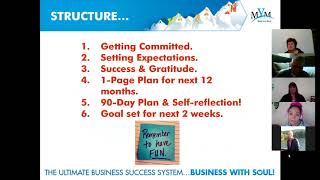
Michael Byrne walks new Best Mindset students through the Make Your Mark system, including a one-page 2018 business plan, a 90-day action plan split into six biweekly segments, and how to track metrics from leads to revenue. Students learn about the Success & Expedition handbook, K-club milestones, and journaling, then commit to bringing their completed plan to Tuesday.
I hope we're all cool with that. So we are now recording stuff out of the way. Perfect. All right, so it is April 20, 2018. Welcome, you guys, to the Best mindsets onboarding call. Lost my brain there for a moment, but I've got it back. The onboarding call. Today, what our real focus is, you guys, is to take all of those strategic best mindset documents that you have in your binders, okay? So if you don't have your binders handy, I suggest you go grab them. Perfect. Thank you. Rosie. Have those within reach of you right now. If you have to go get them, just let me know. But should have suggested that at the beginning. I'm sorry, guys, but make sure your binders are close by so that as we're working together today, you can start filling out some of those numbers and getting an idea as to what the rhythmic process of being a part of Best mindset is all about. Because Best mindset, you guys, really is the lifeblood, the pulse of the make your mark system and the structure. Because in the end, what we do in Best mindset is we do what it says ultimately as well, which is we give you great mindset and we coach you through and to keep you focused and everything else. But on top of that, we also really want to help you systemize your approach to your business. Systemize the way in which you're measuring your results, measuring your activities, your actions, and give you guys and help you develop that 30,000 foot perspective so that you can be rhythmically watching what's going on even at the same time as working inside your business. Because I think we can all agree that it's really easy to get stuck inside your business. Am I right or am I right? Right, totally. So when you're stuck inside your business, sometimes it's really hard to see how it is that it's working on a grander scale and get that really outside perspective. So you can see, ah, I'm doing this really well, but this needs improvement. And when I improve that, this is going to be the result. So part of the Best Mindset process is to give you some systemization to what you do so you can get a real arbitrary sort of objective look at what's actually happening. So give me a thumbs up. That makes sense to everybody. Yeah, perfect. Okay, so let's get started, shall we? So this is your orientation session, or onboarding session as we like to call it. All right. We're gonna talk about your committed documents. We're set some expectations as to what best Mindset is all about and what you and I and the community are all about. We'll talk about your journaling process. We'll develop that one page plan. So as I said, you want to have that business plan ready and rocking and rolling for Tuesday. So we're going to give you the tools and help you build the structure to make that happen. And then we break that down and show you how to turn that into a 90 day action plan for this particular quarter and then how that sets into the next two weeks for the goal setting as well. Because of course, Best mindset is a two week process. So we break a 90 day action plan down into six bi weekly segments. So as you can see, we're taking a big piece and we're funneling it down into smaller and smaller bite sized chunks as we go along. Make sense everybody? All right, and let's have some fun. Just quickly open your mics, you guys. I'm curious to hear when you, when you made the decision to join Best Mindset or the Sherpa program, etc. But, but specifically when you heard about Best Mindset, what was it that you wanted to draw out of your experience with Best Mindset? Curious to hear from you guys.
Well, I guess I'll go first since no one else is jumping. So I'll jump. Absolutely. So you know what, I will use the word enamored. Michael. I was just enamored with all of the structure that was in the entire program. I've been an entrepreneur my entire life. I've owned, operated lots of different businesses, had lots of good success. But I'm going into and stepping out of one field to go into another that I don't. I know lot of. But I'm just being very cautionary as to putting it together for maximum benefit, not only for myself, but for my potential customers or clients. And clearly could see that this was the roadmap to my success. It's just that simple.
Cool. Very cool. Thanks, Deb. Excellent, excellent. Thank you very much. A digital round of applause from us to you for. Thank you for MPJ and. All right, what about Girish? What was it that when you heard about Best Mindset specifically, and you're like, aha, this is a really cool piece. This is what I'd like to pull out of Best Mindset. What was it that you were looking for?
The planning for two weeks, Every two weeks and then work on that and so that the business grows. So that was my main, main thing, the main focus. Okay, so planning every day, every day, what to do?
Absolutely. My friend. Okay, perfect. And that's. Then you're in the exact right spot just to be able to break down. We get so enamored with our grandiose plans sometimes. Right. And they're beautiful, they're fabulous but you got to break them down into chunks that you can actually get done in a day, let alone a two week period. Right. So and it's the layering of all those pieces. Right. A tree is built one row of bark by one row of bark by one row of bark. And over and over and over all those decades and hundreds of years. Sometimes you can get a tree that's 25 or 30ft across. Right. But it's built simply one layer at a time. And that's how we have to build things. And best mindset is really about layering those pieces in. So perfect. Awesome. Thank you. Rosie, how about yourself?
I would say why I came to this program. I have lots of. I can do lots of things but my main problem was that I'm not organized so I cannot do plans. And it was before I had all my kids but after that I became more reflexing and everything just I don't pay attention all the main things that I have to do. And now when they started to go to school I realized that I need to self organize and two weeks period this is that gives me push to organize everything that I need to organize within this period. So this is my. I'm in the process. I'm really in the process. I do I commit my morning exercises and evening exercises. I read there I read this book not much as I wanted but one page in the day and also with my clients. The last meeting in the restaurant was very interesting because how you introduce yourself to the clients. So before I was telling you have this one, this one. We for example we have photobooth business. Yeah. So I just. Yes our tenant come this time and you have. You will get this, this, this like service. But now I tell them you will have lots of all your guests will be will remember this day because we provide lots of fun.
Perfect. Good, good. Well Rosie, I'm very excited to help you give you that structure. It sounds like to give you the planning skills and the structure to be able to really push forward so you're in the exact right place. And and congratulations on using the. In the process of right. How we think you guys is represented so often by what we say. Right. The words we choose are all the time reflective of how we actually think. So your word choice. That's why we. Why Colin Encourages us to develop these habits of what words we choose because it completely reframes the context of how we think. Very, very important thing. All right. Awesome. Awesome. Okay, well, so let's keep moving forward here, you guys. So all the details about what Best Mindset is going to be about and really the whole process of being a make your mark student are found in your Success and expedition handbook. All right, so inside that handbook you're going to find all the details that are necessary and ultimately you can keep referring back to the handbook. I did a number of times in my first six months because being a part of the program as to how the system was going to lay out and what my expectations should be around certain particular aspects of the system. Right. And it's very, very beneficial to have this as a presence in, as I said, the first, first two or three months and indefinitely. But certainly for the first couple of months as you get accustomed to the rhythm, the layout and the process of being a Best Mindset student and part of make youe Marks student body. All right, so inside this you will find the Commitment agreement. Alright, so the Commitment Agreement itself, right, the first part is what I essentially honor towards you guys. And I will sign this document when I see you guys on Tuesday for your particular books. But just so that you can essentially hear my voice telling you right now, you guys will commit this to me individually on the bottom section. So the bottom part where it says you commit to the group, we'll do that individually. When I see you on Tuesday. I won't make each one of you read individually, but I promise I will read to you the top part here. So you know what my role is as a facilitator for you guys and what my promise and pledge is to you guys as far as fulfilling what Best Mindset is all about. Does that make sense to everybody? That good for you? All right, so ultimately we commit to you to provide a focused private facility for you to work on your business, to hold you accountable to taking action on income generating activities that will increase your profits, to provide education you can implement immediately to grow your business and to hold your feet to the fire on taking action on your biggest challenges and, and opportunities in your business. All right, so I'm digitally signing your book for you right now. And that is our promise to you guys. That's our commitment. And as a facilitator, that's my commitment to you, all right? Is ultimately to be there to help educate you, but more importantly, a lot of the time to help push you, push you to the next level. Because as entrepreneurs, we're our own boss. And sometimes. Right. Am I right here, you guys? We're not the best boss of ourselves. Anybody else feel that way sometimes? Right? We let ourselves off the hook. Totally understandable. So here is myself, Michael, as your facilitator invest mindset, saying, guys, this is what it was that you wanted to have as your goal and your objective, alright? This is what it was. You stated it on the paper here. Why have you achieved it? Why have you not achieved it? What can we do to push you forward to the next level? All right? Because in the end, growth is a massive part of what we're all about. And in order to grow, you must be challenging yourself all the time. Right? Okay. So inside your success and expedition handbook, you have dates for your 2k, your 5k, your 10k, your 15 and your 20k clubs. Alright? Now you don't have to fill this out right now, but I encourage you to start putting in some time frames for yourself. Because the massive difference, you guys, between dreams and goals is that goals normally have a very specific timeline under which they're going to be met. Alright? And we can't turn a dream into a goal unless we define a date by which we want to achieve. So I really encourage you. Look at the 2k, the 5k, the 10k, maybe you're already past some of them, which is awesome. Look at those specific elements. And these are essentially rankings. So the K clubs are. They're not more priced or anything like that, you guys, these are just internal rankings as far as where your business has grown to and achieved. In make youe Mark. It's a way of honoring your progress within the confines of make youe Mark. And we measure it by having a rhythmic amount of income or revenue, I should say, for three consecutive months that reaches that number. So in order to be a part of the 2K Club, you need to have reached 2km, 2km, $2,000 in revenue for three consecutive months. All right? We have some documentation that you demonstrate that on. And it's the same thing with the 5k, the 10k, the 15. So it's a matter of demonstrating a rhythmic amount. So your business is realistically at that point and you are rhythmically hitting that number on a month by month basis. And then we get to honor your progress and your achievement internally in the best mindset group and amongst the rest of the students. Okay? So that's how we do it. There's application processes to get those rankings when you're at best mindset and we'll go through that process on Tuesday. But I really encourage you put dates on these. And I'm telling you right now, one of the best mindset students I've got in my evening class or late afternoon or dinnertime class, whatever you want to call it. So the class that you guys are going into that group, he had his I'm going to script which K club. It was either the 10 or the 15k club. And he had a specific date on which he put it in that book. And you know what's funny is he was within, I think, two weeks of that exact date of reaching that K club this year. Right? So Manifest destiny. I know. Totally digital applause to that guy, right? His name is Alan, and he runs a company called Iceman. So you guys will meet him on Tuesday. And Iceman's got a great story, but he set that intention, and he used his success handbook for the first three or four months quite a bit. And then he's put it away for basically a year. He hasn't looked at it right. And sure enough, he opens it up a couple weeks ago, and he's like, holy cow, look at that. That's the K club I wanted to reach. And look at the date. That's crazy. I think it was in March, and it was either he wanted to reach by mid March or the end of March, and he reached it by mid or the end. Something like that was in a couple weeks of exactly when he said it. So these things have a tendency, you guys, once we put them out into the universe, of really manifesting themselves, because you naturally start making decisions to align yourself with that particular objective. You've put it there, you set it there. It's something you want to accomplish. And now all sorts of little choices, these little nudges of where you're going, suddenly wind you up there. So please, please, please put dates on those things, and let's help you hold you accountable to those things. Because who here would not want to set a date for the $20k club within the next 18 months and hit it rhythmically. Who doesn't want $20,000 in the business all the time, Right? Exactly. So set the intention, set the date, let's get you there. What does your life start to look like when you make $240,000 a year in your business? Right? How does that start to make you feel? What does that do for you? Set the date, set the intention, and let's push you towards it. We're all good on that. Everybody with me? All right? Cool. And then if you are not part of the full Sherpa program. So let's say you are taking the essentials or the brilliance or anything like that, or you're simply in best mindset, which is awesome. Give yourself a date by which you want to take advantage of these courses. The coursework that you get with the make youe Mark system is phenomenal. I've done a bunch of different courses in my time as a business owner and entrepreneur. And to use Deborah's terminology, or to use her thought process earlier, the cohesiveness of the courses and the structure with which they give you to move forward as an entity. I mean, you can find, yeah, this person teaches an email course or this person teaches that, but the overall theme and the overall objective of those courses may not be synchronistic because it's not the same educational institution giving them to you. The beautiful part about make youe Mark, you guys, is it's going to teach you a full spectrum of business basics and mastery skills that all have a cohesive direction. And that, my friends, is incredibly rare. Incredibly rare. So I do really encourage you, if you haven't bought it already, take a look at that Sherpa system and then get all those course pieces and put them together for your business and set a date by which you want to do it. Then of course, date your cap it. So cap it, you guys, is when you're doing about. I mean, Once you reach 20,000 revenue per month, we start to look at your profitability quite a bit. And if you have enough profitability and you've achieved the right level of mindset, then we start to really talk to you about CAPIT and moving into that next level of accountability groups and that next level of education inside the make youe Mark system. So I encourage you to put a date on when you want to join CAPIT as well. You know what is funny? I need to look this up. So somebody who wants to hold me accountable to looking this up, raise your hand. Who wants to hold me accountable? Okay, Deb or Rosie or everybody hold me accountable to this. I'm going to take a look at my Success and Expedition handbook. I'm going to find out when I put down my cap and date, because I'm really curious now as to what I put down that date. So it's. My binder is down in my car, so I'll have to check it out. All right? So, yes, fill all those things in over the next couple of days before I see you on Tuesday and set the intention for where you want to get to. Alright. And of course, this is the actual seven step Sherpa system, right? So mastering your business, setting your goals, defining your plans, growing your knowledge, which is all the courses holding you on course, right. Which is essentially part of what Best Mindset does and the acknowledgement and the recognition and then helping push you through to that next level. And that's what the Sherpa system is all about. And then once you reach a certain level, guess what, you guys, we do the whole process again. We help you roll accountable to the next objective and the next goal. You just keep moving forward. All right, so everybody with me that we're going to love the, love the journey, love the process and learn a ton and how we're doing it. Yeah. Okay, awesome. So let's break out this page now. If you have the page. Perfect, perfect. If you don't, I think Janet emailed it to you, so you may be able to bring it up on your computer. Right. And take a look at it. So with this document, you guys, this sets your goals for 2018, and it sets them as a, as a whole as to what you want to accomplish in 2018. All right, now I know we're a little over a quarter of the way into 2018, but that's okay. So ultimately, when you fill out this document and everybody has it now, right? Everybody's got that document. They got it in their emails. Okay, cool. Yeah, awesome. So when you fill out this document, that revenue objective is what you want to do for the whole year. Okay. And the marketing, sales, operations and profitability sections are three or the four main factors of what influence your business. And we set down what three key action items or areas of focus that you should be tackling in each one of those sections. Now, to develop this whole business plan piece, right. As Janet was saying yesterday, I taught a whole course on how to fill out these particular objectives. So it is. There is a lot going on, right, as far as all these different pieces, but I do encourage you guys to essentially start filling in here. Let me rephrase this. Essentially what I want to do today is I want to make sure you understand what each of the four categories mean specifically so that when you do your own work a little bit later, you know what it is that should be included in each one of these different four sections. Alright? So when it comes to gross profit and net profit, I'll get into that a little bit tighter with you guys on Tuesday. Okay. So I can show you some math on that and actually draw it Out. So you see the math on what we do by gross profit and net profit. In case it's not familiar terminology for you guys. Okay? But in your marketing, think of your marketing, you guys, as absolutely everything that's required to create customer. So when you think about your marketing and what you want to focus on, it should be everything that it takes to create a buying customer, right? So this can be. And literally everything from signage to brochures to business cards to networking events to trade shows to online sales funnels through email, lead generation through Facebook, Google strategies, all those different elements. Any way in which you get a customer's attention falls under marketing. All right, I will. I often draw out a specific diagram to demonstrate this, which don't. No, I'm not going to have the ability to do it on here right now, which is okay. But ultimately, here, hang on one sec. I have an idea. Maybe this will work. There we go. Can everybody see the drawing section? Nice. Yeah. Okay, so ultimately I view this, this business plan document very much like this. So everything in the top here, you guys, all of this whole section, this whole.
Whoa, whoa, whoa.
This whole piece is your marketing, all of it. And customers pour in the top, right? And as those customers come in, you qualify them through your marketing to become a closer and closer to buying customer. So if we use make youe Mark as an example, who here by show of hands, came in through a Mastering Profit and Success two hour event? Yeah, did you see that? Tour events? Yes, Deb did. Girish did. Did you see that one? Rosie, was that. Okay, so you probably might have been invited by somebody or seen an ad to go to the two hour event. So that might be somewhere in here. Then Colin invites you. It gives you a gift to come to the Business Mastery event. Right? And through Business Mastery, he continues to help you with your mindset and educate you and everything else. Right. To turn you through this funneling process into his ideal client, educating you and demonstrating the benefits of working with make youe Mark. And then ultimately, right, you get down to this section right here. This is where the sale process happens. So the sale is right in this juncture. So when we talk about areas of marketing to focus on, it's all the top part of this hourglass shape. And then the sale process is that juncture when a client says yes or no to buying from you. Right? So when you guys are. Can you see my. Anybody can see my video. So when you're looking at this document, all that marketing stuff we're talking about, that's up here. This is the sale process. So that sales section is just right here. Just that part, that moment and the strategy around selling somebody. Right. Then the bottom part of your hourglass figure, guys, is all the levels of delivery of the value of your product and service. And this is all operations. All of this section here is all operations. So operations can include client care. Right. Operations can include shipping and receiving. If you're sending a product manufacturing, it can include all of the necessary systems and structures with which to deliver what you've promised your client, the transformation that you've sold them on. All that stuff, all those pieces are all part of your operations. Does that diagram help kind of indicate what those different sections are? Yeah. Okay, cool. So I will go back to my regular sharing of the screen. Cool. So when you're working through three key areas of focus on these different sections, I wanted you to have a really good, clear understanding of what each section is all about. Right. So marketing is anything to generate leads and clients and then develop them into your product. Perfect. Ideal client sales is everything to do with that moment of them purchasing. So you've made them an offer to buy your product or your service. Right. And everything goes in conjunction with that. So that could be support material for the people who are making the sales. That could be an area of focus, that could be scripting out how you want to ask for the sale. So you're very confident, you're very courageous for it. It could be working on a couple of different ways you may want to ask for the sale. Would you like the red one? Would you like the blue?
Blue one.
Right. How would you like to pay? Like just all these different scripting things that you can do for sales. It could be about teaching your staff how to be better at sales. All those elements can go into the key areas of focus for sales. Alright. And then think of operations as now the delivery of what it is that you've sold and the. And the actual operation, the operating factors that operate your whole business. So how do you do your payroll? How do you do your accounting? Right. Do you have a customer management system? How do you do your follow up? A lot of those pieces are all in your operations section. Got into a big conversation yesterday, in fact, about standard operating procedures. Right. So what are some of the standard operating procedures that you have for your business? For client care, for client complaints? Right. For any type of onboarding of a new client. So they've said yes. What's the system that you now bring them through when you onboard a client? Right. What documentation do they Fill out what things do you need from them? All those types of pieces are all things that make up your operations right now. Just by show of hands, does that make sense to everybody the way I worked that out? Okay, so when you're developing the key areas of focus for this, you, you have to make sure that you are really drilling down as to what you want to accomplish over the course of a year now. Right. Don't put in three marketing items, you guys, that you want to all accomplish in the next six weeks. It's not going to serve you very well to do that. Think about this as a. What are the big marketing chunks of things that I want to do right in the next eight and a bit months or eight months or so? A little less than eight months, I should say, until we end 2018. All right. These should be big, huge items. Right. So then off the top of our heads here, anybody want to share what one of those items might be for their marketing and first instinct, does anybody have anything that they need to get done in their marketing strategy that they need to get done before the year is out?
Yeah, as I understand. So marketing strategies is like how I sell my product like through Facebook, Google AdWords and other like customers that are bringing us this different kind of customers. Yeah, like this.
Yeah. So marketing essentially is any. Anything you use Rosie, to get attention to your. From your clients client and then to or from client from lead and then how to qualify them as an ideal client.
Yeah. So on the marketing I need to improve my online marketing like website, Instagram and what else? Social media. Yeah, I don't know how to do it on social media. Google AdWords. Okay. I found someone who can help me and I pay for this person and he's like doing all these Google Adwords, keywords and all kind of things. Yeah, I would like to do it alone because I want to control everything.
Spoken like a true entrepreneur.
So but on Facebook and Instagram I really don't know how to do. I all I started to learn online but it didn't give me any results. So I have my pages on Instagram and Facebook but I stopped my friends. They told me today in the morning she told me, oh, your, your page is thy. Why don't you advertise? I don't know what to write on the Facebook, I don't know.
And we're going to help you with all of that stuff, Rosie. So I mean that's not the objective of today's meeting. Of course. Today's zoom.
Yeah, yeah. I mean this is I need to write that I need to improve my Facebook page on the marketing. So as I understand.
Yeah, yeah, fair enough. So ultimately then, when you're working on this marketing section, I encourage you to put down some specific things. So like start Facebook ads. Right. And put a date on that as to when you want to be doing that. Right. Don't worry about the how right now. Do not worry you guys about the how when you're setting these goals and objectives. We'll formulate the how as we go, but without a direction and an objective in mind and a completion date with which we want to do it, we can't figure out the how anyway. Yeah, right. So doing, doing more Facebook advertising could be one of your marketing objectives, right? Having a Facebook advertising fund, that could be a marketing objective, right? For sure, absolutely. Yeah. Deb, what would be a marketing objective for you?
Well, this is, this is going to be quite exciting for me to do because I'm starting right at ground level right now. I do not have the business that I'm seeking.
Okay.
So for me, this business plan for the next eight months is. Some of it is going to be by guessing, by golly. And for me, with the marketing, the sales particularly, I'm gonna have more than three points because I'm starting right at ground level.
Zero. Right? Yeah.
So I have a very clear vision.
But with more than three points. Deb, this is what I would encourage you to do. Think about the three points then as the umbrella, the tip of the umbrella for a whole section.
Okay, great point.
You may say, I want to. Like we're talking about Rosie with Facebook advertising. You may say, I want really good Facebook ads. You might have seven of them running at a time. Right. With different target markets and different. But having that portfolio finished of marketing finished by this completion date is what we're after.
I will definitely have it done.
Yeah. So have some. Does that help everybody have really top down, big, sort of like top of the umbrella concepts that you want to have finished or programs or platforms inside your business that you want to have finished. Because I've had people say, oh, you know what, I want to get a blog up about this specific topic. That's just one blog by a completion date. What you'd want to have is I want to have my blog ready to go with finished content for six months. That's an umbrella thing. And have this done by a specific completion date so that it can actually become a marketing system inside your business rather than just a one off. Right, Garresh? Yeah. Yeah.
My Main marketing. Like one of the marketing objectives would be to make others like specific kind of other businesses.
Yeah.
As my partners where I can achieve bulk sales.
Okay.
Like a volume sales. Say for example, you know, private phone directory.
Yeah.
Need to partner with the phone directory guy so that he can make money too and then he can promote to his customers my product.
Nice, nice. So essentially like a joint venture kind of situation to be able to do. Yes. So then I would put that in as far as marketing venture and then put a date on that when. Because that's a big project. Right. Is to get that done. So that's a big enough thing. So. Good, good. So in order to really take full advantage of how we're going to run out the rest of the Zoom call guys, what I want you to do is to put in on even if it's on just a blank piece of paper. Okay. Put down what you want your 2018 revenue goal to be be. If you've done this sheet already. Fantastic. Just use the sheet if you haven't done it yet, put down what your revenue goal is going to be for 2018. Okay. So put that down revenue goal 2018 and then put the number. Okay. So now as we after today's Zoom, what I want to encourage you guys to do and to have done for Tuesday is have this document filled out with three key elements that you want to focus on in each of the four sections and profitability. You guys could be all sorts of different things as well, which could be negotiating different terms that you have for your debit and Visa and MasterCard machine. It could be things like getting all of your suppliers on a certain. I know in my business I can buy. If I buy within 10 or 14 days for some companies, I get a 2 or 3% discount on my retail product I buy. Right. And when you do half a million dollars in retail, that starts to add up to some pretty decent numbers if you can save 3%. Right. So these are profitability elements that you can shift and change. Perhaps you can shop your business insurance around. So these are all different. Or if you have benefits for your employees, you can shop those things around. That's one of my goals this year for profitability is in June. I think my employee benefits plan comes up for renewal. So I'm going to shop the plan around starting next month and see if I can find a better plan at a better price increase profitability. So these are different elements that you can all take a look at as far as profitability is concerned. And don't hesitate to look at elements of efficiency. Right. Is there inefficiencies in your business that are costing you money and therefore evaporating your profitability? So take a really holistic look at all the different pieces of your business and how they integrate and how your profitability can be eroded in different areas because of certain decisions that you can change.
So, Michael, somebody like myself that's coming at this from a completely different angle.
Yeah.
Than maybe everybody else currently on this. Zoom. What would some of the key things be for me, for example, as I'm birthing what I'm this company.
Are you, are you asking specifically about profitability, Deb, or the whole kit caboodle here?
Well, yeah, profitability.
I mean, I. Oh, well, first thing with you when you're building your business, right. What is your pricing structure? What's your pricing model like if you're selling a product or a service? It doesn't matter. We often just consider. The trouble with many of us is we get into a mindset of where we consider making just enough over what we bought something for is going to be fine, but in the end it's not. So I mean, and what I'm getting at by there is that if you buy a product for $100 and you sell it for 150. Right. So you've got yourself that sort of 33% margin there. You want to really explore what is that margin enough to take into account my marketing budget, my. What could potentially be a payroll budget. Right. My operations costs, all the different elements, my phone, having buying myself lunch, all the different things that go into that profitability section. Right. You have to really take advantage or take a look at that. So I would. As a profitability goal for you, Deb, you have to take a look at your pricing structure. Right.
And because mine is not naughty, it's my time. So I've already given my time a value.
That's right. Good. And so then you have to factor in materials, obviously, because you're going to need some of those things. And one of the things I would encourage, Dev and anybody who's in a young business or if you're just by yourself right now, is what is the cost of me hiring somebody else to do this job? Because ultimately, even if it's just yourself, Deb, you are the service, right. I would encourage you to think about the long term plan of when you've built a system as to what your service is. Right. How do you go about now hiring somebody and what can you afford to pay them to deliver the service? That you've sold somebody. I'm not sure who that is.
I'm sorry.
Okay. Nobody jumped to their phone right away. So I was like, so, yeah, Deb, I would really encourage anybody who's building a brand new business and it's a service based business. What does this service based pricing structure look like when I'm paying somebody else to do it right. As the business grows? So things like that pricing structure and your profitability, I would still consider, Deb, things like my business insurance and all those different elements that could erode profitability really fast. Building those into your, not only your pricing structure, but also making sure you're getting a great deal on those things and for just buying good value. A lot of different stuff. Banking, you guys, it's amazing, right? These little banking fees that add up that erode profitability. You know, I switched debit and Visa card transaction companies and I went from paying, I think it was about $900 a month in fees down to 725 or so. Right. So you. But. And that's just pure profit. Like that's an extra almost two and a half thousand dollars a year in profit that I could just be handing to somebody else if I didn't make that switch. I think I'd rather keep that, do something with it, you know, turn into marketing or just, you know, I could buy, buy staff and customers lunch. Like in the end, that's money that you don't have to be paying out and doesn't seem like a huge amount, but it can have a big impact. You put that $2,000 that you save into a marketing strategy that flips over five times over and you've multiplied it into ten extra thousand dollars with a business. Now we're starting to talk about some real differences. So don't hesitate to push some of those numbers and really shop what seems to be a trivial amount. But when it's happening, transaction over transaction or just a monthly fee can make a huge difference long term. That makes sense to everybody. Okay, so this document, you guys, is crucial. It is absolutely a necessity for Tuesday. All right, necessity. Now, does Everybody have their 2018 revenue goals written down? Yeah, we're all good. Okay, perfect. So let's move on to the next step here. So your journaling process. Every single best mindset that we get into, we're going to explore your journal process. So you're going to break out your journals at the best mindsets and you're going to do some sharing as to what you discovered through the journaling process. Now, if I can tell you a little. Give me a moment here. Where are my. It's fun because I'm actually at home. So I'm an avid journaler, you guys. And just to explain, these are my journals from the last. Not only two, just over two years, actually.
Wow.
Right, so. And I have another stack that's almost as tall as I am that I've had the last eight or eight years or so before then. So I'm a huge believer in journaling. Massive. And one of the key reasons that I believe so strongly in journaling is because numbers in our business tell a story about what our business is doing. Right? Can we agree with that? Numbers. You know, you look over historical numbers, you see what's going on. Okay, so we can go, ah, well, you know, we had lots of sales this month. This was great. Everything else, you know, what we never do is we rarely actually look back and see what's most. My journey here. What was going on inside me? What did I. You know, I felt really great three months ago, and now I feel kind of slow and stressed and, you know, everything else. Everybody feel that way sometimes? No, you're kind of being dragged down everything. Exactly. Right? And three months ago, you're like, but I was on top of the world 90 days ago. What the hell was the difference? Right? I will bet you right now, you look at your journal, you'll see a massive difference. What you were writing about, what you were thinking about, right? What you were grateful for, what type of successes you were doing. So what type of momentum and courage and energy you were building. Right? Those things you're chronicling in your journaling process. And now three months later, you go, why am I bogged down? Ah, you know what? I haven't journaled in a week. Right. Or what am I journaling about this week? And you realize your successes are. Yeah, I brushed my teeth today. Like, you know what I mean? Like, the successes aren't what they were three months ago. And you go, wow, I got to get back to thinking, feeling, taking the same type of action I was three months ago. So the journal, you guys, is literally. I mean. I mean, my journaling is just nuts. Like, I just go on and on and on and on and on. Right. Ultimately, your journaling process, because I've been using the make youe Mark journals now in that structure quite almost every single day. Pretty much. Once I discovered it a couple years ago, I long hand journal as well. Just what I like to do. But I use that structure because it helps me get re. Engaged with what is important to me. But now I can look back a few months ago or even a year ago and say, look what I was thinking about, look what was on my mind, look what I had as a priority and, and sometimes you go, look what I had as a priority and a goal and look what I've accomplished. I forgot that I set this as an intention nine months ago and here we are, right? And doing the journaling, you guys, is a beautiful way of chronicling your journey and that is crucial. Yeah, Rosie.
Journal is you're writing what happened today or what you're thinking, what your dreams you are writing.
So the make youe Mark Journaling process is a very systemized way of journaling what happened today. Right. This is about chronicling. Colin encourages us to journal at the end of the day essentially as a, as a, as a, as a writer. Wrap up of that day and go, okay, these were the successes I had today, the things I was, I can cheer myself on for. How happy was I? What type of things I can be grateful for? Right? My actions towards my big dreams, my actions to make me happier. Right. Those are the four key elements of that process, I guess five, because you denote how happy you were and it's a very structured way of documenting your day. Me personally, right. I do that process and then in the morning I long hand journal for as long as I have or as long as I feel is necessary. So I do two different ways of journaling because as you were saying, Rosie, I like to document where I want to go. I want to talk about my dreams, I want to have. Essentially what I want to do is I want to pep talk myself every morning to get really frickin excited about tackling my day and what I'm doing with my life. Right? And then I use the make your mark journaling process to essentially go, how did I do today? Was I working towards what I wanted? Did I get there? Right? And, and, and how happy was I in the process of getting there?
So you mean short to write on this today? Yeah, and specifically write on your, my own journal everything what I write, for example, here on my, my success today was. So just write everything, I mean properly.
Yep.
Not in short way.
So yeah, so, and I would. Exactly. So I would, I do that journal process that you've got in your hand every night. And then as I said in the morning I give myself some time to freehand right about my objectives, my dreams and everything else. And I always keep, I mean me personally, I keep my weekly goals on a card in my pocket all the time. And on the backside of that, I keep my big dream goals.
Okay. Okay.
So I have. These are kind of beat up because I use new ones every day, but I basically have. Or every week, but I basically have my weekly goals on one side and then my big goals on the other. And that sits in my pockets wherever I go. Right. And that's just me personally. I like to measure myself against that stuff all the time. And it's just a nice physical reminder of the things that I've set out were my intentions. Right. What I want to do. Because, I mean, who here agrees with me? It is really easy to get into a pattern of habits and you wake up five years later. Yeah, right. You know, Exactly. And, guys, it is amazing what you can accomplish in a year or just a few years with your life and how you can do some incredible things. And we often completely underestimate what the value of a year of our life dedicated to something is and completely overestimate what we can accomplish in a day or a couple days or a week. Right. So do yourselves the massive favor when you're filling out this business plan document as well. Notice how there's three spaces. Okay. There's basically, we're in the second quarter of 2018. So as a completion date, these site items here, I do not want to see on Tuesday that you have a whole bunch of different things all to be completed by the end of June or something like that. Okay. Make sure that you give yourself the space to do it well. So. And to make sure it really works for you, so put down as completion dates one of these items per quarter. So we're in the second quarter right now. So you have until the end of June. Yes, the end of June will end this quarter. So whatever your first item is, you want it to be completed by the end of June. At some point. It could be May something or June something. It doesn't matter. But have it. Give yourself some time. And then the second marketing thing should not be completed until sometime between July 1 and September 30, the second quarter of the year. And then the same thing for the third one should be between October 1st and December 30th, 31st. Right. Honor the fact that these things take time to do well. And do not be. What's the word I'm looking for here? Don't martyr yourselves by trying to get it done too fast, too quick. It's just abusive, right? It's just cruel to do that. So don't do that to yourself. Give yourself the time and the space to get them done. Right. And repeat that same process for all the other completion dates. So in the sales section, you should have one done before June, one done in the third quarter, which is July to September. And then the third sales item that you want to tackle and make sure is really good in your business, have that done in the last quarter between October and December. Okay. Give yourself the time and the space to make sure it works really well. Because you guys are busy, Right. Are you fabulous and brilliant at what you do? Yeah. Then you're probably really busy, right? So give yourself the time and space to get it done and not be stressed out about it because stress is dangerous. So with the journaling process, please do this every single night. All right? I cannot stress how important it is to just embrace your journal because it's wonderful to look back and go look at the journey that I've had. Look at, look at the things I was writing about a year ago and look at what I'm writing about now and look at the journey that I've taken. Because a physical journey is so easy to watch, a numerical journey, which is what your business is. This math is easy to look at, but your personal journey, you guys, is one that is way more important and to be honest, is far harder to quantify. Does that make sense to everybody? Okay, good. So I'm a big journal lover, as you guys can probably imagine. And so I will continue to encourage you to do that and share the great stuff that you're getting out of your journal process. So now we're going to take this revenue of 2018 number and we're going to break this down into the 90 day action plan segments. So in your binders you should have these two sheets. They go hand in hand. I have to admit, Rosie, your headphones are adorable.
This is my daughters. This is like who is her name was about them. No heroes. Got their names.
They're awesome.
This is the first thing that I found around my table. Sorry.
No, it's good. Okay, so give me a thumbs up or a yes in the chat, anything like that. Once you have these documents, very important for us. Did you find them, Deb? Not yet. Okay. They should be in the best mindset section of your binders.
Yeah.
Hey, Sam, welcome to the zoom. Sir, are you able to grab these two pages? Sam?
Not today. Actually, I'm out. I was joined. I missed almost 45 minutes. Yeah, I don't know, should I be able to get the video or not? Are you guys recording or not?
Yes, we are recording. So the video is going to be uploaded to make your mark by this afternoon around probably 3ish. Yes, I would contact customer care. Janet is here, so she's popping in and out. So we'll make. We'll ask her. Just remind me to ask her before we finish up. You guys, another thing to hold me accountable, please hold me accountable to ask Janet how to access the recording after this. But I encourage you, Sam, to watch us go through the process right now because then you'll have a chance to think about it before you even get to the documents. Yeah. Did you guys find them yet?
Yeah.
Yes. Yes.
Yeah, we all got him. Okay, perfect. Deb, are you good? Yeah. Okay, awesome. So we won't worry about the start dates and the end dates, you guys, because you're gonna be filtering into a pre existing best mindset group. To be totally honest with you, I don't remember the date exactly that we started this particular 90 day plan versus when you get there. So don't worry. The start dates and end dates. What I want to take into context though is what all these pieces mean. So these two pieces of paper go back to back and they cooperate with each other. And as we move through, as you'll see on the left hand side, there's six periods here, right? Each denoting a two week section of the 90 days. So what happens is you start tracking your progress, right? This isn't exactly today's date. So you're. There we go. You start tracking your progress through how these pieces work on a bi weekly basis. So think of this. This is your business's journal, right? The journal is your personal mindset and your journey here. What we're chronicling here is the mathematical journey of your business. And it helps you now to take a really good solid look at where your business is at, what it's doing and the progress that it's taking. That makes sense, everybody. Okay, so we're going to focus now. We're going to zoom in without or. Sorry. On the section number three here. So.
Hi, Michael. Sorry to interrupt. Did you have a question for me before I stepped away for a second?
Oh, yes. Don't let me forget. Or if you want to just let everybody know. How can they access the video later?
The acceleration webinar that kept that Colin did.
No, the replay essentially of this particular. This video.
Oh, okay. So I was planning on sending a recording of the video to everyone who was not in attendance. But if you'd like me to send it to everyone who was on attendance too Just as a recap, I can do that as well.
Yeah, so if you guys would like the video, just maybe post your names in the chat box. Does that work? Pull them from there. Okay, cool. So I'll send it in an email. So yeah, it'll be in a video link. All right. My friend. Oh, he's busy talking to somebody. Okay. All right, so we have now as I said, this is box number three, guys, section number three here. So the next slide here is a zoom in on that. Alright, so number one, your revenues and your profits. So in your 2018 revenue structure here, okay, so you guys all have a number right here as to how much you want to earn for 2018. Okay, what I want you to do now is take a calculator and divide that number by four and just let me know when you guys have that done. Whatever number it is, it's your number, but let me know when you have it done. Okay, thank you, Deb. So divide your 2018 total revenue by four. You got a garage? Yeah. Okay, perfect, Miss Rosie.
Yeah, yeah.
Okay. That you guys, is how much revenue you are pushing to earn every single 90 days. So in section number one here on this page, that's when it goes right here. So if you have those documents in front of you right now, put that number in there, whatever your number is, put it in there. So if you want to make $8,000 in one year, that divided by four is $2,000. That's how much would be in this section. Okay, so now section number two is how many sales do you need to. Do you need to have in your business to reach that number?
Sales one, yeah.
Sales one, yeah. How many sales did you win? So if we're using our previous example and you wanted $2,000 in revenue and you were selling a hundred dollar item, that would require 20 items, 20 sales. Alright, now some guys, sometimes you have multiple different products and services. This is where understanding the average sale becomes really important, right? Took me a little while to figure it out, but the average sale in my business is just around 48 bucks. So when I wanted to figure out my revenue number was I divided by 48. And that told me how many sales I was going to win, right? So this should tell you how many sales you need to generate. Box number three is income generating meetings. In other words, after a client has started their. The. So remember the top of the funnel you guys that I was showing you with that hourglass, once they've come into the funnel, right? How many times do you need to connect with Them before they say yes to buying from you. Right. So it may take four points of contact or income generating meetings. I use the term points of contact just because I think it's more general because you never know how you're connecting with somebody. But how many points of contact do you think it's going to take before they say yes to buying from you? Is the question.
You mean per one client for one.
Client to say yes? Yeah. So I guess what we get at is there's kind of two numbers in this section, Rosie. There's one number as to how many times one client does it. And then of course you have to say, well, if it takes me three touches, right, three points of contact to get one sale. And we know that we want to generate 20 sales, that means we'd have 60 points of contact. Does that make sense?
Yeah.
Okay, so the income generating meaning section, you guys, is I often put down a full number. How many in total do I want to do? So in this case it would be 60, not necessarily 3, but I needed to know the how many points of contact before I could come up with the 60. Okay, all right, section number four is then how many leads do you need to get before? Right. Or how many leads need to come in so you can generate that many sales? So how many leads do you need to connect with in order to start the sale process with them? Now this number could be really high depending on how you want to do your marketing. Right. So how many leads come in? And then in the end it's about follow up. So how many follow ups are you committed to doing in this 90 day period with your past and existing clients or potential prospects, I should say too. Now before we break into questions, I think my next slide gives an example. Alright, so let's walk through an example. Does this help people? Walking through an example? It'll probably help people. Okay, okay, so let's get to the example. Here we go. So let's say this business here, right, that $12,000, you guys, is the full year divided by four. So this business would want to do $48,000 in one year of revenue. Just give me a thumbs up if that makes sense to everybody. I just want to make sure this number works. Okay, perfect. Cool. So now they know that in order to create $12,000, they need to sell 24 items. Obviously whatever they're selling is 500 bucks a piece. Okay, so they need to generate 24 sales. They know that they need to contact a client at least twice, need to have two touches with every Client in order for them to create a sale. Alright, so 48 income generating meetings. To create those gen income generating meetings, they need to have connected with at least 240 leads to get them into that sales process. Alright. And this particular company is committed to doing 120 follow ups with their leads, right. Over the course of the next 90 days. So Girish, does this, does this chart make sense for you?
Yes, it does.
Okay, perfect. Rosie, how about for you?
I quite didn't understand about leads because I think, I thought leads, this is a follow ups, but I see here the follow ups also.
So let's dig into leads then for one sec. So a lead, right? Might be you do a, we talk about Google Ads. You do a Google Ad, right, that then gets attention from 10,000 people. Yeah. Right. How many of those? So those 10,000 now get onto a landing page, right? Yeah. So that, what I'm getting is that's 10,000 leads, right? That then may, they may download your free product or they may, they may pay seven bucks for your quick course. Whatever they do, whatever you get that lead to do, whatever your call to action is, that starts the income generating meeting process. Right. So we're trying, we're layering the system. So leads are essentially how many people you have to connect with, how many different people you need to connect with in order to start the sale process.
You mean how many clicks has to be on my Google AdWords?
When you're working with Google Ads or Facebook ads, you get a lot of leads, right? So a lot of the time, right? Some, a lot of the time businesses, they may not measure what their click rate is, but they'll measure how many people opt in for their free product, they call that a lead.
Mm.
So the 10,000 wouldn't necessarily be leads, but the, if you get 200 out of the 10,000 that all download your ebook or whatever you're giving away, those are leads and then you start the income generating meeting process is the sales touch process with those 200 leads now, right? Think of it like with advertising guys, I often use a, I often use a highway and a billboard analogy. So not everyone driving past your billboard on the highway is a lead. Yeah, right. But if you run a lunchtime restaurant, right, And I hope this analogy makes sense. If you run a lunchtime restaurant, anybody now who's driving past that billboard, who happens to also be hungry and it's in the right time frame now, they kind of become a lead, right? Like it's, it's, it's, it's. I Don't think that analogy really helps anybody actually. So scratch that from the record for a moment. What I'm getting at is that a lead is somebody that's opted in to take a look at what you're selling. They've said yes to show me something more. Right. And then you start that education and nourishment process to turn them into a client.
This may be also something like real estate agent knocking on to 240 doors. That's a lead. And he wants two contacts for that 24 sales. So basically 24 people, he wants them to say yes, come, like let's come make an appointment, come back and let's talk about it.
Yep.
So that would be sales one and then it'll be the second contact when he goes there for the second time.
It could be. Yeah, yeah. And guys, these numbers, when we get into it a little bit further on Tuesday, some of these little, some of these columns are adaptable for your business. Right. So don't get too hung up on the exact wording of the titles. It's really a matter of going, you have this many leads in the funnel that turn into this many income generating or education style meetings that turn into this many sales that give you this much revenue. Think about it more like that top of the hourglass picture. All right. Okay. And now for different styles of business. Is it here? Sorry, I'm flicking back to my slides here. Like these types of businesses may need to customize these things a little bit. So if you're in the MLM business or direct sales style business, you may want to measure sales one as how much product sold. Then sales one also may be how many new distributors you bring on. Right. There could be a couple of different numbers that you measure here. Inconsistent income. People like realtors, mortgage brokers, that type of thing, they're going to have maybe a different style as to how they work this out. So ultimately, when we look at this over different industries, we can tweak it and edit it. The biggest factor is we want to watch how much front end marketing you're doing. Right. Because if you're not generating that client interaction off the hop, if you're not pouring clients in for the top of that hourglass figure, you're not going to get any results on the bottom. And so many business owners are focused on operations all the time and just making their business run, they forget that if they're not putting clients in the top of that business and really watching that process, they're never going to have anybody pouring through to the bottom. All right. Okay. So.
Okay. Sorry to interrupting. I got home now I have access with my books. Which book? We are looking to it.
So in your, in your binder Sam, you should have a best mindset section that's got some of these orange topped pages.
Which one?
So in your best mindset section.
Okay. The last step it's called.
And so Sam, we're just a little pushed for time so I'm going to keep us moving forward.
Okay, good.
Pages down and just follow along my friend. Alright?
Okay, thanks.
You bet. So now what we do, you guys is we want to break down what is a 90 day action structure here into the two week intervals which means we divide all of those top numbers by six. Okay, so what this means we're going to use the above example here is it would then look like this for this particular business. So the 12,000 divided into each two week period and there's six two week periods, don't forget, you guys would be $2,000 in revenue, four sales, 18 meetings, 40 leads, 20 follow ups. So now make a take a look at what this is going to look like for your business. Now Deb, while these guys are looking at this and actually doing some math, right. So I get, I encourage you guys do the division by six right now. So you get some two week numbers. Deb, when you're building a brand new business like you are, you may not have any revenue to count right now. Right. So what I encourage you to do is rather than set revenue objectives in your first when you're off the hop, right? Set action item objectives.
Okay.
What type of things do I need to accomplish in my next 90 days to launch my business? Like what needs to happen, what needs to be done and then you must start itemizing that stuff and then giving yourself those action items in here. So sales one could actually mean something along the lines of finished setup projects. You know what I mean? It could be all those different. So I've worked with a lot of businesses in Best mindset that are just starting out. I help you. It's too big a conversation to do it in this call, but I really help you craft a strategy of setting up your business so that you have numbers to measure. Even if it's Not Revenue and Sales 1, you have numbers to measure. I've done this many of this type of thing. I've done this many of this type of thing.
Okay, thanks for clarifying that because just walking through what you have, I'm like.
How is this useful for me right now?
I need Your email address.
Good.
Clearly we need to have a conversation.
So on Tuesday.
Thank you for clarifying that.
Yeah, no problem. It happens. Trust me. You are not the first member to be walking in with a brand new business. Right. And a lot of them take three or four months before they're actually open and starting to generate revenue. But they've chronicled the process and given themselves a really systemized approach to how they got their business started and realized they were really prepared.
Okay, so I'm not even going to fill in those numbers then, Michael.
That's fine.
With action steps.
Yep.
Because right now it's, it's just concept perfect.
So then, then the biggest thing that you need to have for Tuesday, Debbie, is that 2018 business plan. Right. Even if it doesn't have a ton of revenue on it to begin with, you still need a plan or else I can't help you illustrate the steps that you need to get there. Okay.
Thank you.
Yeah. So then right now, so Rosie and Girish, you guys should have some numbers across the bottom. They may, guys, they may not be right. Here's the thing. This is your first walkthrough of this process. Unless you know your business really, really well. Some of these numbers you're going to be guessing on, I would imagine, right? You're just going, well, I think it's this. Okay, you're just making a guess. Totally fine. Very normal. Okay. Very normal. What's great is as we get some week after week data, some actual measuring of, you may say, well, I think it's going to take me, you know these numbers. I'm going to take 48 income generating means to generate my 24 sales. You may realize that it takes you 96 meetings to generate those 24 sales. Right. Not just 48. You may cover. There's some big differences. So as you're working through, chronicling your progress now allows you to understand the metrics of your business way more effectively. So you know what it looks like to ramp it up and when you're going to need help and how much of it and how much help you're going to need because you know, you know if I'm going to double my business, it's going to take double this many sales, which means I've got to have extra staff to do all these extra generating meetings to generate more leads. Now the metrics right now are going to be guesses. But as you grow, you guys parties, you get real metrics, real numbers that have real life influence over your business. Awesome. Yeah. Cool. Okay, so this is the last part to do with the numbers. So every single bi weekly process, you guys, we bring you in, you measure your numbers. So I'm circling the how are your results? The past two weeks section. You measure your numbers across here. And so over the course of the full 90 days, you've got this beautiful layout of all of the progress that you've been making as you go. So you rhythmically start filling this stuff in every single week. Okay? And then we have some sticker fun time for when you get your different progress that you're making. Okay, this is the two week sheet. My profit and success goals is the two week sheet. Now we're not going to fill this out today, but you will be filling this out on Tuesday. So I'll just give you a very quick overview of what the pieces are of this document. Alright, guys, so ultimately, Whoa, whoa, there we go. You'll have dates at the top. All right, the achievable goal. This is. Remember how the $12,000 got divided by six? It became $2,000. Yeah. Remember all that? That would be in this case, the achievable goal for this business over that two week period. Okay. The inspirational goal is 10 to 20% greater than the achievable and the outrageous is 10 to 20% greater than that. Alright? So as you build your business, these numbers are going to go in here and you'll know what it looks like to hit an inspirational goal, which means you're really making some progress. And then hit the outrageous goal, which is where we want your business to live. Don't hesitate you guys to fill in why this is important to you. Why is creating this much revenue doing this business important to you? What does it mean to you? And you guys, it might mean something this week and two weeks from now it may mean something different. And that's totally okay. This is about what's going to drive you over the next two weeks to be dedicated to building your business. Because I think everybody here can agree that being an entrepreneur ain't always easy. Am I right? So ultimately, we must identify why this is important to you so you can help push forward. Maybe it's because you want to help a certain number of people this week, right? In our business, we measure how many pets we helped. Maybe I wrote down, this is important to me because I want to help 1,000 pets in the next two weeks. Maybe that's the reason. I mean, my son, who you may have heard here there, is four months old when he was born. That's changed, right? This is Important to me because. Completely shifted when that little guy arrived. Totally. And which was very normal. Right. Exposure activities. Exposure activities are marketing activities. These are not get naked activities. All right? These are not that type of exposure. These are marketing activities. So what are you doing to expose your business to more clientele? Every single two week period you should be doing three different ones. And these are. Should be reasonable sized ones that are helping grow your business. Okay. And then every week, right, you get to monitor. Every two weeks, I should say, you monitor how you're measuring up against those 90 day action plan goals. So the ones that you divided by six and you've got all those goals, you've got the revenue number up here and then you've got all the action goals down here. And then over the course of this two week period, you simply measure and keep filling in all the different items as to how you're doing them. So now you've got a really great spectrum over the two weeks of gathered data as to what you're doing and what those results are. It's just rhythmic. Fill it in with your journaling every night if you want to. I know people who take these pages out of their binder and they stick it in their journal, right? That's where they live. That's where it lives. If you want to do it that way. Awesome. I kept mine in my business because that's where all my numbers were. It's up to you guys, right? Wherever it makes sense that this is in a place where you can rhythmically fill it out. Alright, so before we start wrapping things up on our intro orientation call here, has everybody learned something today? Yeah. Good stuff. All right, who's here? Excited about putting together best mindsets? Yeah. Awesome.
Yes.
Perfect. Thank you, Chris. So I'd like to wrap these off with a little bit of some accountability from us to you and from you to yourselves, really and each other. Guys, you're entering into a community now, all right? This is a community that has existed for a number of years that's going to fully embrace you. All right, You. The beautiful part that I discovered about make youe Mark, beyond the coursework, beyond the education and everything like that, and beyond the systemization of my business, which really helped me was the fact that I was no longer alone. Because as a business owner, I know that it can feel really freaking lonely sometimes that you are all by yourself, you are on an island. There is no nobody there to help you and to pick you up when you fall. And that you are basically trying to figure these things out. On your own, by yourself. You're no longer in that spot, okay? You've got a wonderful community of people that are here to completely embrace you, to encourage you, to help you, to coach you, and ultimately, as this says right now, to hold you accountable to those beautiful things that you've set out that you were here for. Right? And that was probably the biggest learning lesson for me, was that I realized that I was no longer alone, that I had a community that was there to fully support me. And sometimes that's encouragement and loving support, and sometimes it's butt kicking support, whatever it needs, right? You now have a community of entrepreneurs around you to help you get that. What that means, though, guys, the reflection or the reverse of that is that we need you. We need you at your best, right? There are many times when you come to best mindset, right? Where you're like, yeah, I need this. I really, really need this. And some two week periods, you're like, yeah, I had a good two weeks. Maybe I don't need to go to best. Or maybe, you know, things are rolling along and I don't know. Or I'm just not feeling it right now. Guess what, you guys, everybody in that room needs you every two weeks, right? You may not always need best mindset, although I think you do, but you may not always think you need best mindset. But the fact of the matter is, best mindset always needs you. You are going to have a dedicated group of entrepreneurs that are going to surround you and embrace you and help you grow. The least you can do and out of absolute integrity and respect is be there to do the same thing for them. Does that make sense to everybody? Okay, so make sure that you prioritize being at Best Mindset. We want to see your beautiful shining faces every two weeks. We want your genius every two weeks. All right? And I really strongly encourage you to be there for that first hour. It shouldn't be that mindset or the mastermind in the first hour. It's wonderful way of grabbing some fantastic, innovative ideas. So the first 45 minutes, you guys, from 5:15 to 6 is a mastermind session. So you come in, right, have a very specific problem that you want to tackle that day when you come in, right? Have a super laser focused specific problem to tackle in your mastermind session. Okay. Because when you come in, you've got 30 seconds. Oh, thank you, Gresh. You've got 30 seconds to get that problem out onto the table. And then you'll have several minutes with a group of business owners all throwing you ideas on how to tackle some of the biggest challenges that you're facing in your business. Isn't that awesome? All these people with crazy experience. Basically, okay, do this, try that, do this, use this one. Oh, shouldn't say try bad, Michael. No, try, do this, do that, take on this thing, Use this particular software, use this type of like all these different elements of these things that you and I run into as challenges as business owners. You can get a group of us all helping drill down and really find some super big value for you. So you get a 45 minute mastermind session every single time. Massive value. In one of those mastermind sessions, you guys, I found myself a quarter of a million dollar idea in one of those mastermind sessions. And that idea continues to make me even more money after that. That's just what it's done in the last year. So really, really, really get to those masterminds. And then we give you a 15 minute break. And at 6:15 to 8:15, we jump into all the stuff that we covered today. We walk through your journaling process, we walk through all the two weeks, we measure your goals for your 90 day action plan, we set up some exposure activities and some accountability elements and then we give you some great course material. We do about 25 to 35 minutes on course material every single time with a new topic. All right, so man, are you guys excited to be at best next week?
Yes.
Yeah, perfect. Yes. Give each other a big round of applause. You guys did great today. Yeah, well done. Okay, so before we cap this off, any final questions about, about what we covered today? I know it was, it was pretty intense. We got through a lot of, a lot of material. But any questions?
Michael, do you have. I noticed it's facilitator email. Do you have an email that we can jot down?
Yeah, so you guys can write this down. It is Mike. Michael B. You know what, I'll put it in the chat box here as well. It is Michael B. M I C H A E L B Y M success dot com. Sorry, I'm sending it to a person. There we go. Michaelbymsuccess.com Please feel free to email me. You guys. I'm a busy business owner. I do run a couple different business ventures, so I mostly respond through email. Right. And really the method that we use guys for any type of working you guys through stuff is we work through things at best mindset if it needs more time after that. Right. I'm always there for 15 to 30 minutes after every single meeting. Meeting so feel free to stick around, ask questions. If it needs even more after that, feel free to email me. And I normally work through email. If we're really finding a challenge, then sometimes we'll do phone calls, but ultimately we work through email. Make sense to everybody.
Perfect.
Okay. All right, so any other questions before we wrap up?
And it's the comfort in on 166, correct?
Is comfort in on 166? Yes. Yep. Comfort in Surrey. The doors do open 15 minutes early. So hey, come in at 5:00'. Clock. Right. We'll have the music pumping and Stefan will be dancing as usual. So it's always a good time.
And typically how many people are in this session?
This session, you guys are probably going to be sitting between 15 and 25.
Okay, great. Thank you.
Yeah, yeah, for sure.
We will get the confirmation email, I guess.
You'll probably get another email, I would imagine, Sam, confirming the location details if you haven't got those already. And Janet's gonna be sending out an email with the link for the replay of this particular onboarding call as well.
Perfect. Thank you.
You are welcome, sir. Yeah. Anything else? Any other questions, you guys? No, we're all good. All right.
Not for now, thanks.
For now. Perfect. Well, guys, it was a pleasure serving you this afternoon, really, I guess. And I'm super grateful to have you guys as a part of our team. We're gonna make some big results. Who's up for big results? Yeah. Grow your businesses. Let's get some major accomplishments going. Serve those fabulous people who need your help. You guys, they really, really, really do need your best. And, and I'm looking forward to having you be a part of our best mindset crew. All right.
Thank you, Michael.
Oh, you're very. Thank you guys. Right. I really shall. And hang on one sec, guys, just so you guys can see my newest member of the family.
Wow, cute.
There he is.
Cute.
What's his name?
His name's Alexander.
Hi, Alex.
Who's those people?
His short name is going to be Alex.
Yeah.
And does he have a sibling, Michael?
No, no, no, he's a. He's a one off at this point.
Oh, he's beautiful. Congratulations to you and your girl.
Yeah. What's wrong? All right, well, I've been away in Toronto for three days, so he's like, who is this strange man?
Oh my gosh, he's cute.
All right, guys, well, Alex and I are gonna sign off. Have a wonderful weekend. And I will. I will see all you beautiful people on Tuesday. Have that Business Plan 2018 filled out, please. You guys, the rest of the documentation I can really help you with. 2018 business plan must be done. Yeah, yeah.
Thanks.
Awesome. Beautiful, guys. Have a great weekend.
You too.
Bye. Bye.