Business Survival Masterclass with @PhilTownRule1Investing
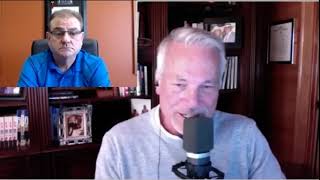
A recorded interview where Colin Sprake interviews Phil Town about navigating investments and business strategy during extreme market volatility. Phil outlines his Rule 1/Buffett-style approach (understandable businesses, durable moats, honest management, buy at deep discounts — 10x free cash flow target), warns about high market valuations (Shiller PE well above historical norms), central bank interventions, and fiscal stimulus that could fuel inflation; he gives practical advice on cash allocation, picking individual companies versus broad indexing, HELOC use, precious metals/crypto as hedges, and the importance of aligning investments with personal values.
Questions this video answers
Wilshire market ~32 trillion USD vs GDP example ~20 trillion USD (Phil's illustrative figures).
Shiller PE above 25 is termed 'uncharted territory'; he cited ~32 (three weeks prior to the call).
He references the US printing/putting into the economy roughly 6–8 trillion USD (ballpark).
About $1,500 per adult and $500 per child (as cited in the discussion).
To this. This is one amazing man. He teaches. His company is called Rule 1 Investing. He teaches the Warren Buffett principles. He is super, super intelligent and I'm pleased to call him a friend. He's on the Transformational Leadership Council with me. We get to do stuff together and we get to just support one another. So I would like Phil to come on air. There we go. Phil, good to have you here this morning. And for you, it's the afternoon, so.
Thank you so much, man. It's great to see you, Colin.
Beautiful. So it's great to have you here and I'd love to just. Do you know the stock market's gone through craziness? Of course. We were in one of the biggest bull cycles we've been in for a long time in the history of the stock market. Then of course, I went to like bust down into a bear cycle, then it bounced, and now it looks like it's going back down again. Walk us through what typically happens in these times. Like, people are nervous, people are concerned about the world financial situation. If anyone, I was going to go to ask about these situations, I'd be asking you. So can you give us some of your brilliance on what you've seen through these situations in the past?
Well, thank you for that vote of confidence. I wish I had a better crystal ball. We do have a pretty decent track record of being out of the market when these kinds of meltdowns happen. We were out of the market in 2007 and out of the market in 1999. Basically, we follow Warren Buffett's style of investing, which isn't to try to time the market, it's to try to price specific companies. And when we do that, we find ourselves in markets that are massively overpriced, simply being in a position to sell what we bought when they were cheap. And so we tend to sell into these really what we would call a greedy market, where people are piling in. In this particular market, because there was no real alternative bonds, were paying nothing. And it just keeps going up. So people just keep piling in. And of course, your RRSP is set up to put money in the stock market. And down here in the United states, it's the 401ks are set up so there's sort of a game on to keep pouring money into the market. And that keeps driving the market up. And it gets to where, if you're a person that looks at price compared to the value of the business on the businesses, we can understand, which is a small percentage of the Companies that are out there, we can make a pretty good guess as to their future value. And then we're going to buy that when it's on sale, and that takes us out of the market. When they're no longer on sale, they're massively overpriced, and then we're going to sell them. So we started selling pretty aggressively in 2017 and 1819. So we've been basically timing the market for the last three years or so, pretty much out of it, but mostly because we just can't find good things to buy in this market. And that's kind of how Buffett's been doing it forever. I mean, he was out of the market in 1997 before or 1987 before that big crash. And then you got to buy a bunch of stuff cheap. And that's what we basically do. Effectively, our ideal way of investing is to buy a bunch of stuff when it's cheap from going into a recession like we're going into now, and then hold it, sit on it for five or six or seven years till we reach the end of the up cycle. And then when everything is pretty expensive, we sell those off and then hope to buy them back again in a few years. And we've done that over and over and over again. So it's not the kind of business investing strategy that a fund manager typically could use, because fund managers get their money from investors who by and large are really large investors. Pension funds, banking funds, places like that are putting $50 million into somebody's fund, and they don't like it much if you just sit in cash for two or three years. They don't go along with that much at all. They pull their money out and give it to some more active fund manager. And so they've all learned the lesson. The cautionary tale of trying to be heroic and make very high rates of return like Buffett works out very badly for most fund managers. They end up getting stripped of all of their capital, fired by their boss, and kicked out. And so it turns out the only people who can really do this kind of investing strategy are people who are individual investors, people like me that have a good track record, and people will stick with me for 10 years. People like Warren Buffett. So our view of the world, Colin, you want to hear it right now?
Yeah.
Hear what we think's going on out there.
What is it? Run like hell or what is it?
Well, again, realizing I don't have a crystal ball and realizing that the federal banks, which are the central banks in Each country have exhibited an enormous amount of willingness, historical amount of willingness, never be seen before, to intervene in the markets. And that's going on in China, Europe, all over Canada, America, to prevent the markets from collapsing, kicking us into a depression. And that was very, very wise for them to do that in 2008 and nine. But it's a little bit like taking, what's that drug you take if you have cancer? Like they give you treatments to try to prevent the cancer from growing. What do you call that, chemotherapy or something like that? Yep, yeah, chemotherapy. So chemotherapy, if you take a lot of it, will kill you, but if you take the right amount, it might prevent you from dying. And that's exactly what the financial treatments were in 2008 and 2009. They were chemotherapy. Now the problem is we haven't been able to get off it. And as a result, they've had interest rates at 0 being driven for nearly a decade now. And what that does is two really terrible things. The first thing it does is it drives asset prices up far higher than they should ever be. In the United States right now we have a broad market index called the Wilshire, which is tracking 5,000 stocks roughly. And when the market is typically priced, a reasonable price, historically for 100 years has been about. The market price is about 80% of our GDP, our gross domestic product. So let's say we have a 20 trillion dollar amount of revenue going on. All the revenue and services for everybody who's doing business is about 20 trillion. And a reasonably priced stock market would be about 16 trillion. Okay. Today's stock market is priced at about 32 trillion.
Wow.
So it's never been there before. We've never seen assets priced like this relative to what they're bringing in in terms of cash. So that's a huge, huge red flag that took us out of the market. Also, Robert Shiller, who got a Nobel Prize in economics at Yale, produced a view of the market. Can't really use it to trade, but you can use it to get an idea of how pricey things are. Called the Shiller PE ratio, which is a kind of a compilation of PE ratios adjusted over a 10 year period for inflation. He got the Nobel Prize for it in 2013. So it's a really powerful piece of information. And what it says is when you're over 25, a ratio of 25 on the Shiller PE, you're in uncharted territory. It has only managed to stay over that three times in the last 140 years. The first time was 1929. And we all know what happened there. The second time was 2000, and we all know what happened there. And the third time was 2008, and we all know what happened there. So in every case that that's been above 25, we've had a huge market crash that followed it. And we're, we just three weeks ago, we were at 32. That was higher than the market in the Depression or before the Depression. So those are some huge, huge red flags. Now, if we're looking at the world situation, then to see, okay, well, we might have a market crash, but how deep, how bad all that. Then you got to look at the central banks and what they've done so far, which is the chemotherapy, which is now heavily engaged with 0% interest rates. And it's not having much effect because nobody wants to borrow money if your shop's not open, right? So that's not pushing the economy at all to put interest rates at zero. And the next thing you can do is you can start printing money and get it into the hands of people. The United States just decided to print, ballpark, depending on which guy you listen to, six to eight trillion dollars.
Wow.
Right. Now that's. To put that in perspective, Remember the stock, the whole stock market's $32 trillion. That's. They're basically saying, oh, we're going to pour in about 20% of the value of the stock market in cash, right into cash, and we are going to hope people spend it on people's incomes and keeping their businesses alive and put it into the economy. And that's a down payment. Nancy Pelosi, who's head of our House of Representatives, said, that's just a down payment. We're going to keep doing this until we save our economy. All right? So that's the goal, save the economy. But when you do that, there is the potential for another problem to happen, and that is you have started to just print money. And at some point, lenders demand, since their money is being printed and there's a lot of money out there. What happens is you start to see an increase in prices, an increase in demand, wages start to rise. And everybody's like, yeah, we want that, and that's great, but how do you control it is the question. And when you've put 6 trillion into the market, you may have stepped over the line. And what that means when you step over the line is that I, as a lender am not going to accept 0% interest rates. I'm going to start demanding more. And the federal Reserve can't do a damn thing about it. If nobody will lend you money unless you give them a high interest rate, there's nothing the Fed can do. They're out of ammo. And that can take us into a much, much larger problem. Right? Because if people are starting to demand higher interest rates and we're again talking worldwide, Japan is in a position now as a country where if their interest rates double from 0.8%, which is where they are right now, to 1.6%, which would be historically a low interest rate for a 10 year T bill. If they double it, most of Japan's budget will go to pay interest. I mean that is 90 plus percent of their entire tax base will go just to pay interest on their debt. The United States isn't far behind. We have half the debt relative to gdp, Japan does, but we are increasing it extremely rapidly. And if that happens where interest rates start to go up against this debt, then the government has to do some things. And by the way, that's only the first thing that's bad that happens. The second thing that's bad that happens is that these asset prices go up and the people who own assets, people like you, Colin and me and the other people who've been on, we're very fortunate. We own things, we have stocks, we have real estate. Those asset prices go up massively, leaving behind the majority of people. And so the people who are in the middle class find themselves farther and farther away from their, from their goal of financial independence. And the people who are in lower economic condition are finding themselves thrown into abject poverty. And this disparity between the wealthy and the poor grows to a point where social unrest is inevitable. And this is where we start to see a parallel between the world today and the world in the 1930s, where many of the things that are going on right now with these central banks putting interest rates at zero, trying to prop up stumbling economy resulted in populist leaders. Donald Trump would be an example of a populist leader. You're going to have more and more populist leaders because nobody else can compete with somebody who's coming in there and telling you it's that guy's fault, it's not your fault, it's somebody else's fault. The finger starts getting pointed and people start, hate starts to grow, but divisiveness starts to grow. And so we are, we are, in my view, we are in the 1930s in terms of our economic situation, certainly not in a depression, but we're in that same tight position with the Federal Reserve having no more ammo, and we're starting to see that disparity between rich and poor grow. The coronavirus throughout the world is going to increase that disparity, not lessen it. The impact of coronavirus is going to be much greater on poorer people who can't afford to shelter in place and sit back on a farm like we are. They're going to be out and about, and they're out and about. They're going to get coronavirus more often than wealthy people do. And so you're going to have that kind of energy, start becoming more aggressive over time. So that's kind of where we are now. Where can we go with that? Right.
I was going to say, because of course, I'm sure everyone's listening right now is like Whiskey, Tango, Foxtrot. You know, this is one of the most down calls I've ever been on.
Yeah, welcome.
And we're bringing you realism here. This is not blow smoke up, you know, blow smoke where the sun don't shine. Like for me people, this is about being realistic right now. So listen to what Phil's saying. Like, we're in times now that are uncharted waters. You know, the thing you call the Schuler index or what have you, the PE ratio. Schuler pe. Like, we're in places we've never been before. We're in places where, you know, governments, whether it's our Canadian government or American government, you know, at the end of the day, I believe our Canadian government's doing good for us. But the same thing we got about, I think it's around 8% of our GDP now. They spending to rescue the economy, you know, was 5, but it's now over $100 billion, probably about 110 or something like that right now. So, phil.
Well, Randy McCord's making an interesting point right here, and that is he's saying that QE doesn't involve printing money. It's true. You know, they're buying debt is one of the ways they do qe. They buy the government treasury debt. But understand, Randy, they do that with money that didn't exist a minute ago. They just put an entry on the Federal Bank's books, and then they go in and buy treasury bills from the US Government. In other words, they lend the US Government money. And the US Government says, well, we'll pay you back someday. And so that $4 trillion that they put in in 2007 and 8 and 9 didn't exist in the monetary base. And as A result. You're just, you are. It's. I mean, they can say they're not printing money in a way they're not. But that was 2009. Today it's different. They are literally putting money in the hands of people. They are sending checks out that they don't have and that is printing money. They're just literally printing it. Putting in somebody's bank account in the United states, they're putting $1,500 in every person's bank account who's an adult and five, five hundred dollars in every kid. So yeah, they are. And this. And so I think we are going to see a pretty, you know, pretty decent impact on this going down the road. Yeah. So what do we do about it?
Right, so I'm sitting at home now, Phil, and I'm like, I'm not at home right now. I'm in my office because I needed a wide connection to do this. But the key thing is I'm sitting at home now. I'm very concerned. I got maybe RRSPs, I've got maybe money in this. Yeah. I mean it is a stock market. RRSPs as a mutual fund, whatever the situation might. What. I mean, I know this is not crystal ball, I know we're not meant to be giving advice on here, but what would you be doing? I mean, am I allowed to ask you that? What would you be doing if you had your RSPs up the Yin yang and going what would I, what did I do with them right now? Like, what is the average person on the street? What should they be doing right now in terms of. I know people understand full's from the States, but he teaches a lot in Canada. So if you're thinking, oh, this is some American giving us advice. No, Phil teachers, he's taught in Vancouver, Calgary, Toronto, Edmonton. Like he's across the country. So understand, this man understands what he's talking about. So be really, really open and just take some really good notes. You might see this as maybe a little bit of a negative call or whatever the situation is. It's not negative. Listen, here I am, Colin Sprake. I bring you realism. I don't bring you stuff that's not going to help you. We bring you stuff that's going to help you, but we need to be wide awake to what's coming. So Phil, if I'm the average person on the street right now, the person, I mean not even average, but the person sitting on this call, that's a business owner that's like, oh my God, Phil, what's happening? What would your, what do your advice be? Sitting there with a whole bunch of RSPs or whatever people might have, Right?
So if you didn't exit the market and there was. If you're following standard financial advice, you didn't, then I think at this point it is. It's a buy you hold. You basically hold it. And you recognize that this market could be down 60%, not 30. It could be down 80%, not 30. But here's some good news. The US stock markets in 1929, 1930, dropped approximately 90%, right? So if we have a really monster, horrible thing happen here and it goes down 90%, the good news is it came back up most of that way. A good two thirds of it came back in about a year. By 1932, the market had already recovered all the way back up to 200. And by 1937, 38. So six or seven years later, it had pretty much recovered. So not that much different from what happened in 2009-2019. Eventually it comes back. And let me tell you why it will come back, okay? Because the federal banks are going to make it come back. They are going to pump money either by taking corporate debt, by taking treasury debt, by putting money into the economy. They are going to be extremely aggressive. They've learned their lesson from the Depression. Ben Bernanke, who was formerly ahead of the federal bank in the US Wrote the book that's being used at Harvard and Columbia and everyplace else, University of Toronto, about the Depression, about what they did wrong. And so what they're going to do right is they're going to provide an enormous amount of liquidity, prevent businesses from going under, and make sure that people do have money, that they have money to spend, and they're going to print their way out of this problem. So the market will respond to that almost with, I can't say, certainly about anything, but there's a very high likelihood the market responds to that. So whether it's going down 30% as it has already 30, we're down about 37 on the Russell now, or 50% or 55 like it did in 2009 or more, it's going to come ripping back. I mean, it's going to come ripping back with a vengeance as we get over the coronavirus, you know, sort of sequestering and the money comes flowing into it. It's what happens after that that gets interesting, I think. So we will see. Ray Dali, if you want to read more about this, you guys, I would very strongly recommend that you read Ray Dalio, who has a lovely little YouTube video called the. I think it's called the Soul of the Economic Machine about these cycles. And Ray is basically. And by the way, he runs the largest hedge fund in the world and is probably the best macro investor in the world. He's averaged 18% per year for 36 years, compounded. And Ray Dalio, D A L I O D A L I O. He is producing books about this that are online and you can download them for free. And I strongly recommend you look at them because he's a very sober guy. And it's, you know, I think that you gotta, you gotta get a real good picture about what may be on the way here over the next five or six years to protect yourself, your family and your business that you're creating. So better. Better to be safe than sorry. I think when it looks at a market like this. Read, read Dalio. I think that's pretty awesome.
Absolutely. So someone, I saw someone put in the chat window. Therefore they said, so where did Phil come up with that? The stock that the Dow Jones is going to go down by 90%. He hasn't heard anyone else say that. So I don't think you said that directly, but you were just talking about what it could do. You know, some people be careful. If you're so busy in the chat window, be very careful. Be listening very carefully to this call.
Like, did you ever watch Life of Brian?
Absolutely.
By Monty Pothon. Well, those guys are sitting there watching the Sermon on the Mount, and one guy turns the other guy, he says, gonna inherit the earth. He's gonna inherit the earth. But which Greek is going to inherit the earth? Which Greek. So it's a little bit like that. No, that the 90% was simply a pointer toward the Depression that we were in, in 1932. So that's not where I'm saying we're going. I'm saying let's just invest in such a way or think about it in such a way that we can benefit from whatever direction the market goes here in terms of our businesses, in terms of our investing. Right?
Absolutely.
Yep. So that was Ben Bernanke, B E R N A N K E, who's the former chairman of the Federal Reserve that wrote the Bible on the, on the Depression. And. And Ray Dalio, who's the best student of that era that I know of and is managing a $180 billion fund and is the best investor I know at Macro Investing, which is essentially predicting what's going on in the World, I'm really bad at that. I just sort of quit buying when things are too pricey, and I start buying when they're cheap. And I'm buying now. For those of you who are asking, thank you. Yeah, we are in the market. We are not in the market all the way. We've got a substantial amount of cash, but we've gone from 75% cash to 50 cash. So we're now diving in on companies very specifically that we really like. And we'd encourage you to think about it that way. This is a time to. This would not be a time to buy the whole market, I don't think. In my opinion. I think that diversifying across a massive stocks is grossly overrated and a real sales tool for financial advisors. But it's now pretty clear that if you have 20 good companies, you've got as much diversification as the s and P500, or at least within a 1 or 2 percentage points of the same amount of safety and risk as the, you know, buying the whole marketplace. So right now is a really good time to pick up individual companies, and I think it'll get better and better as time goes along. I don't think we're at the bottom yet. I think the coronavirus hasn't really hit, but it will hit America very hard here in the next few weeks. And you're going to see people, the fear level rise in people. And I'm sorry we got to talk about it like that, but if I put it bluntly, Warren Buffett and I and Mohnish Prabhrai and Guy Spier and Ray Dalio, we buy fear and we sell greed. So we are positioning ourselves to be stepping into the market when everybody's running away from it. And if you want to think about it, one way to think about it is this. If nobody were willing to do that, in other words, if nobody would run to the guns, right? If nobody's willing to step into the market, then it just goes down to zero. So you've got to have investors out there who have the courage of their convictions and the capital to step into a market aggressively when things are on sale. Not because they think it's the bottom, because nobody knows where the bottom is. Mm.
I mean, so, I mean, I don't put you on the spot, Jacks. I have to be very careful. I ask my questions because at the end of the day, I don't want to. I don't have a challenge from anyone out there. But that. But, you know, so in, you know, I don't know. We're not individual stocks. What industries? I mean, I know that you are all about research, the companies you often yarn. I know the way you talk about it, find the things you love the most. Of course, my wife likes to invest in shoe companies and whatever because that's what she loves the most. So the key thing, that's what you sort of recommend. What are the industries right now that have the biggest potential that you see? If you allow us anything.
Let me come at that obliquely, if I can. I'm going to start by suggesting that the most important thing you can do probably as a human being, much less as an investor. Certainly in my view, the most important thing you can do as an investor is to understand what you value. What are your values as a human being? What do you want to see in the world and what do you not want to see in the world? So I'm going to give you guys my view of what values are here, just real briefly, and you can see if that might help you think about it. In a way, I think values are what you do. They are not what you say you do.
I agree.
Values are reflected by your actions. Your children figure you out not by all the advice you give them, but by what you actually do out there. Which is why the old saying is the apple never falls far from the tree. It's because your kids will do what you do. Values are what you do, not what you say you do. And values are not built in adversity. That's where they're tested. So as we come into adversity, you are going to be tested about what your true values really are. Values are expressed in adversity. And we see that all the time with CEOs who talk a wonderful game of values and then do something heinous when they're under significant adversity of losing their job or having the company go bankrupt or whatever. So we know values are expressed in adversity. And third, values are. Are driven, are unconscious in many of us. Many of us have not taken the time. I think a recent study said that 2/3 of Americans have no idea and have never thought about what their values actually are. And so their behavior and their thoughts and their emotions are driven by things that are unconscious because they do have values. Their values are expressed in what they do. Right. And then finally. And you won't like this, I don't think. But most investors, when looked at through the lens of values, are hypocrites. Most investors are hypocrites because as an investor. You own the companies that you own. You have a mutual fund. You own those companies, right? Your mutual fund is just a window into a bunch of things you own a piece of. And if you're an owner of a business that you say you hate, then that's one of the biggest hypocritical things you could do. Can you imagine telling your children, look, I think it's really bad to drink Coca Cola. It's a sugary substance. It's really bad for your health. You know, we should be eating hummus. You know, we should be drinking water. But you own Coca Cola. You own the company. Can you imagine the level of hypocrisy your children would think you are? Hypocritic moron. Mom, you know, oh, cigarette smoking is horrible for you. Oh, it's horrible. You own Altria, for God's sakes, right? Or you, like, I'll give you a more, you know, example of like, the guy that was running Chicago Bridge and Iron, just a completely heinous, bad, moral, terrible person with bad values. And you, like, hey, everybody hates him, hating on him all over. And you own the company because why? Because you own the index. You own the index, and you own those companies in the index, which is all of the companies I just went through. So you've got to get a grip on this idea that you can sit back and just give somebody else your money and not have any impact of that on your life. I call bullshit on that. There is karma in the world, Colin. You know it and I know it. You all are out there going, oh, you know, it's just my money. I'm just, geez, do you realize how powerful the votes are that you're making with your money that you're not making? You got some fund manager out there who's completely amoral, if that. You know, you've seen Wolf of Wall Street. Let me tell you, some Wall Street's full of a bunch of buggers, man. Those guys are. They're not necessarily moral people down there. And that who is managing your money. And you are letting them get away with it out of sheer ignorance. Which is. Just makes me crazy. Here's why it makes me crazy, Colin, is because we, the little guys, everybody who's listening to this thing have 85% of the money in the stock markets, is our money. But we've put it into these funds or banks or insurance companies, and they're distributing it out to whatever they think in. Let's try this. It'll maybe go up, you know, oh, well, that thing you just bought, that's got children slave labor out of Guatemala. That's fine. That's not. I don't. I don't. You know, I own XYZ Fund, so I don't really. I'm not really involved with the children slave labor in Guatemala. Yes, you are. You have that karma. You have that karma. So if you wonder why you can't get the parking place you keep trying to get, it's bad karma in your mutual funds keeping you from getting what you want.
Absolutely. Phil. I'll never forget a guy approached me. This was years ago, and it looked super awesome. It was a look like a great investment. It was an investment in a company. I'm not going to mention the names and. Or the name of the company. And I was like, well, that's super interesting. And then eventually got more down the detail into the details with them. And they guys develop software for kids, for gaming, for playing at home and what have you, mainly for teenagers. And it was only that week that, you know, I was like, just online saying to people, there's a teenager just killed himself after drinking Red Bull for so many hours. Playing for nearly three days playing computer games. I'm like. And the guys came to me and said, colin, are you investing my. Absolutely not. It's against my core values. It's against who I am. Why would I invest in your company and watch your kids die and then say, I'm okay with it because I want to make money? Like, I so believe you. So not believe. Want to reinforce what you're saying, Phil, is it's ethical investing. It's doing the right thing for people. Like, you cannot say it's just a fund, and I don't really manage it. If you stuff in there that you don't agree with. If you're a vegan, we're talking about what we had yesterday. If you're a vegan, you're buying stocks and it's in meat companies or whatever, all part of your portfolio. You're not really truly a vegan.
Oh, my God. You own the slaughterhouse.
You never know, which is so crazy. You got people thinking now, really crazy out there. So.
Oh, my God. Oh, yeah. I mean, this gets really into the deep end of the pool because you start to realize, oh, my God, what are my values? What I mean, look, what I want to say is you guys should put your money where your mouth is, okay? If you're a vegan, put your money where your mouth is. If you love McDonald's burgers, all I want you to do is vote your values. If those are your values, you got no. I got no issue with you owning McDonald's. I might not agree with you, but at least you're being a moral person with integrity. We can disagree on the values. Warren Buffett loves Coca Cola. And somebody asked him at the last annual meeting, warren is going to kill you. You're drinking so many glasses. He said, I love Coca Cola. It makes me happy. That's why I drink it. And he owns 10% of Coca Cola. Right. The guy is a moral investor. And he said, look, Coke makes me happy. I drink six or seven a day. He says, I've been to Whole Foods. There's nobody smiling at Whole Foods.
That's such a Warren Buffett statement. Oh, my goodness. So, Phil, what I'm going to do is I'm going to go. It's so super awesome. I know Andrew's going to come on you pretty quickly from our office. Who's supporting me here on the call. There we go. Beautiful. So let's go to questions. Andrew and. Good morning, Andrew, welcome or good afternoon now. Welcome to the call.
Absolutely. And Phil, it's a pleasure to be with you today. Thank you for being here. What questions should I be asking my fund manager or my financial advisor right now?
Oh, interesting question.
Let me explain what your fund managers and financial advisors are trained to do. They're trying to properly manage a substantial amount of money to get you to retirement and have assets. And to do that, they. Their fundamental approach is to diversify assets across a large number of asset types, including bonds and stocks, and have that diversification, be able to handle the ups and downs in the market and then encourage you to stay stable and stay the course that they're going to say that no one can time the market. I think we all agree on that and that certainly the day you take your money out will be the day the market goes straight up. If you were to ask your advisor anything, those are the things they're going to tell you right there. Right. So here's where I think it might be fun for you to ask an advisor, See what they say. Ask them what it looks like for you to retire at age 65, assuming a 3% inflation rate and these number of dollars going into your account between now and retirement, how much money will you have? And what I'd like you to do is to make them real. You know, be sure they understand what the impact of inflation will be on, how much money you need to live on. Let's say 20 years from now, which at 3% will mean twice as much as whatever you think you want to live on today. And I would be really interested to see that you get good answers or not good answers. A lot of times they don't want to answer that question because you simply aren't going to have enough money. And that gets really scary. And they don't have a way for you to do any better than what they've been advising you all along. But I think reality, even if it hurts, is very, very important. And especially if you're entrepreneurs, you're going to realize that, wow, I am not going to get there any other way, but then doing it on my own, and so I better do it right. So that's what I would, I would do. Andrew.
Absolutely, Phil. And I think one of the key things for me is, and that's that realism, Phil, that we bring to this, to the show every single day. You know, people, please. You know, at the end of day, you might be like, ah, you know, Phil doesn't know what he's talking about. He knows what he's talking about. We just need to be real with all of you. Like, that's the key thing is. So let me just, let me add to this. So what happens if I am 65.
And what? 65. And you've got several million dollars like you do.
Well, like this. But if I'm 65 now and I'm like, whiskey, tango, foxtrot, I got no money, what am I doing? Phil.
Yeah, you're in real trouble. And if I think you really gotta get going on a business of your own because you're not gonna be able to earn your way out of this working for somebody else if that hasn't worked so far the first 65 years. So I think you better learn from this gentleman right here in the blue shirt exactly how to build a great business and get going on it, because I think that's going to be your way out. Well, you're sure going to be in trouble if you're going to try to invest your way out of it. I mean, I could tell you that if you could start with a little bit of capital, you could start building it up. But at the end of the day, if you're 65, you have no capital. I think the only avenue there is to go be an entrepreneur. Crank it up. You think I'm wrong? You think that.
No, I think you're 100% correct there. Because at the end of the day, obviously, the control of others hasn't Got you where you need to be. So take the full control, take the bull by the horns, launch a business, what have you. Now people, this wasn't really planned at all. So just think everyone's like, I thought there was no selling on you. There's no selling. We just know we do it. Make your mark. We've created so many, many, many successful businesses, thousands upon thousands. We'd love to help. And one of the key things for most people is you've got to get going now. Don't wait for it to happen. You don't wait for your ship to come in. Go and swim out to it and get something happening for you. Like we said already, take quick, just make quick decisions, not perfect decisions.
Yep.
Especially right now. So Andrew, go for another question there, my friend.
Colin, it's like you can read my notes. That was my next question. What if I'm close to retirement? I'm going to X that one out. Phil, there's also a real common question here and let me paraphrase. So a lot of people on the call, likely their home is their biggest asset. So talk about HELOCs and is that a good idea to take one and invest and take money out of your home? What are your thoughts?
Well, right now interest rates are going towards zero. Mortgages aren't following them down to zero and probably won't, but they're going to be very low. They're historically extremely low. And so there's a temptation to borrow money out of something, an asset like that and move it into a different asset that might make you rich. I mean obviously that's a real temptation. I don't think you want to gamble with equity. I think you want to invest with equity. So there's a couple of ways you can go here. If you are a really good entrepreneur, then invest that equity in your business and make it work. And that is just such a well trod path. Right. You can rest assured that most entrepreneurs have done something similar and then that's up to you. Then you have the bull by the horns. You've got your future in your own hands and that's pretty awesome and amazing and wonderful to do. The second way to go or way a number of our students are going is that they have a decent job or they've already running their business and it's got the capital it needs and they want to diversify a bit. They learn to invest. And by learning to invest, what I mean is they're not learning to hope that the market goes up. What they're doing is looking for other people's businesses to buy. That's real investing, right? So we step in and we're looking at somebody's business. It just happens to be public most of the time. We do buy some private businesses, but most of the time they're public and we're buying a piece of it, a sliver of it, but we treat it exactly the same way. And if you get an education at doing that, then if the market continues to tumble. Right now some companies have gone on sale, but they're not six inch bars that you can jump over easily. They're three foot bars that you know, you got to know what you're doing. But if the market continues to tumble with the coronavirus, then everything will be on sale. The best companies in the world that will go screamingly, successfully through a depression that will be phenomenal in terms of the dividends they provide and the growth that they provide. Those companies will go on sale. And we know from the 30s in the depression that those companies carried families through with cash flow from dividends and through the rise in the value of the company made many people rich. And, and so there's a real advantage to learning about that. If diversification is something that you're interested in, I would say your number one thing is where's my personal business? Am I cranking that up? Do I need some capital? And if I pull the capital out at 3%, am I making a good investment? Am I making 15, 20, 25% a year on that 3%? Well, damn, yeah, I'm going to do that. If I can invest and put money into companies that would give me a 20, 25, 30% return over the next 10 years, then yeah, I'll do some of that as well. So those are the two things I would look at now. If I don't have the skill set, then you really start to gamble with money that you can't gamble with. And in that case, I would not touch that.
I agree on that fully. I think that's the key thing. I mean, Andrew and Phil, you can always correct me if you think I'm going down the wrong path. But for me I think it's the same. In the same vein is most importantly, as a business owner and you want to now start a business and you've got some good ideas and you know that you're going to take action and do what needs to be done, then invest in yourself, you know, go invest in somebody else's company. But at the end of the day, the best investment, I believe you can ever make is in yourself because you have control over your destiny. Go learn, go get educated. Go do what you need to get done. Go take advice. I was on a call today, earlier this morning, Phil, when you and I were texting backwards and forwards around at 8 o' clock with all our clients just helping them, guiding them, giving them advice on what needs to be done next in their businesses, even during this time. But the key part is they're taking action and doing something. So if you know you're an action taker and you're going to do the work and you're going to take the advice, then really awesome to invest in yourself, that's great. But to take money and put into another company right now and hope that they're going to do a good job for you. You have to do your research work. I mean, the amount of research that Phil does before they buy a company is monstrous because you know, clicking that button to buy is one click pretty much at the end of the day, the risk research before you buy is the most important. It's like going onto the battlefield. You don't run on the battlefield, get blown to pieces, then run off and say, hey, I should put a strategy together. You put the strategy together first, then you run onto the battlefield.
Exactly. These are all, these are all books that are companies that we're looking at right now. And just to give you a little flavor of what Colin's talking about, these are just the summaries of the work being done right before we decide to pull the trigger on something. This is a summary of all of that into a story that I can look at and understand real quickly. Oh yeah, we decided because of this. And then behind one of these notebooks is just weeks and weeks of work to make sure we understand that business. So you treat it as if you were going to go buy into somebody else's company and a franchise. Right. You say, oh, I'm not just going to throw the money and I'm going to go to work there first. Wouldn't you? I mean, you'd put the work in and you make sure you understand what you're buying. Anything short of that is just gambling. And we do. Right now is the wrong time to gamble, you guys. This is, this is a time when you are either going to be setting yourself up to make, I think, make a fortune if you set yourself up properly here, or lose one. And that's kind of the nature of this opportunity that we're looking at right now.
Cool. Absolutely. Andrew, just got another question there. My friend.
For sure. Phil, are we allowed to talk about gold and precious metals?
For sure. Okay, 100%. I think we have to throw bitcoin in there as well, or cryptocurrency. So if we're looking at something as an alternative currency, then precious metals and, and cryptocurrencies would be the two focal points. There's a real advantage of doing a precious metal. It's a well known entity that's substituted for currency. And most of the time in the world and currencies are potentially going to be backed by some precious metals in the future. I don't know if that'll ever happen again. But there's the known factor when it comes to gold and silver. There's big markets for it. The problem with. Many people don't know this, but the problem with gold is that it's confiscatable. Is that a word? It's confiscatable. They can take it from you. And they have throughout history. Most recently in 1934 in the United States of America, Roosevelt, our president, decreed that you can't own gold and took it in the middle of the depression. And then, I mean, and since then it hasn't been back in the currency. So gold can be taken. And that's of course why cryptocurrencies came into existence, because theoretically they can't be taken. But the difficulty with crypto is nobody really knows for sure that they can't be taken. We just hope they can't be taken and we're not so sure if it can be dominated by a country like, let's say, China or something like that and manipulated. So it's really difficult when we're looking at alternatives to currency, which I think to go full circle, Andrew, would be to talk about hyperinflation for a second, which is what of course drives this need for an alternative currency. As your currency, whatever it is you've got for paper dollars or digital currency is it becomes less and less valuable. And Canadians are much more familiar with that than Americans because currencies around the world are kind of adjusted against the dollar because the dollar is in the enviable position of being the world's reserve currency. And we have massively abused that privilege. So the currency in Canada moves up and down. You know, a few years ago it was up near 1 to 1 on the dollar and it's been at 70 cents on the dollar for some time. I don't know where it is right now, but that's a lot of change in the value of a currency. So if all the currency started to become less and less valuable because of hyperinflation being created by printing money, which we were talking about earlier, then bang, you are onto the need for some sort of alternative. Dalio, who is one of the most sober investors on the planet, has one recommendation as a way to diversify against this potential real big downside of hyperinflation and potential depression. And that is in his mind having gold. So he's not a gold bug. He's never been a big deal about gold, but he's not saying put everything in gold but hedge yourself with gold. And I'm saying that having not done it, okay, I haven't done that, but I do think about it a lot because that will probably ride through a hyperinflation scenario and leave you with some substantial amount of real wealth. That's basically best I can tell you on that stuff.
Cool. Andrew.
Yeah, let's keep it rolling here. Fantastic. I know this is, as Colin would say, this is sort of like the question how long is a piece of string? So bear with me here, but what are your decision making filters for investing? And could you put that into a top two or three category for us?
Yeah, actually I can. We have a real simple four point structure that we were given by Warren Buffett and Charlie Munger and he got it from Buffett, got it from Ben Graham. So this is a four point screen, if you will, for investing in anything I invest in. And that means real estate down the road for an apartment building, for a farm, for stocks, for buying a private business. So the first thing is, and the most critical ultimately when we buy something, we're going to pay money for it. And if you'll think about what that means, it means at some point, if we've got half a brain, we want to figure out what it's worth, right? You go into a giant flea market or a garage sale, you don't just pay whatever, right? You have an idea of what that thing is worth. So in order to get to what a thing is worth, we go through these three, these first three steps. The first one is, am I able to understand this business? Am I capable of it? So I'll start into a lot of businesses that I don't understand necessarily right off the bat. But what I try to find out by doing some reading about it is is this simple enough for an ex river guide to figure out? And I can figure out burritos really good. So I can understand Chipotle, right? I mean there's a few things I can figure out. There's a lot of things I can't figure out. And so we have what we call the too hard box, which is where companies go that we're looking at when they're just too hard. Right. So for right now, I can figure out Carnival Cruise Lines, but it's too hard right now because they have a lot of debt, and I don't know what's going to happen with that. And I know that management can go bankrupt. So it goes to the too hard box. As much as I would like to own it, it's just too hard. Right. I don't know enough about Micron, but maybe you guys do because you're in that industry or something, right? So first off, am I capable of understanding. Second, once I understand the business, what I'm looking for is a durable. These are the keywords here. This is a durable competitive advantage that's intrinsic to the business. It's built into the business. So railroad tracks are part of a railroad business. And you can't have a railroad business without the railroad tracks. So if you want to compete in the railroad business, you got to get railroad tracks. And guess what? You can't get railroad tracks without buying from somebody that's already got them because you can't get a right away. So this is an intrinsic part of their business that is really durable, gives them a massive competitive advantage. And you want that in your business. Whether you're an entrepreneur or a solopreneur or you're an investor in other people's businesses you want to build. In my view, Colin, you're an expert at this, but in my view, I would want to build a business that an investor like me would want to buy. And what I'm looking at is a business that's durable. And why do I want it durable? Well, obviously, I want it to be around a while. But since what we're working at is to try to figure out what this thing is worth, if I can't project out into the future with any kind of confidence, how the hell am I going to figure out what it's worth? Which means I'm not going to pay much for it. Right? Okay. I figure out what it's worth this year, I'll pay you one year's worth of earnings. Okay, fine. Good. But if I'm going to pay a number of years worth of earnings for this business, I got to know it's going to be around to deliver that. That's. We call that a moat in our tradition. A moat protects the castle. Okay? So that's this, that's the second one. The third one is a management team with integrity. I got, you got to get CEOs that you can trust. That goes really strongly. If you're selling your business to somebody, chances are they're going to have you run it for a little while. They got to trust you that you're going to be, you know, a trustworthy CEO. And that's what we're looking for. So somebody we can trust. Those three things. If we get those three things, that's a great business. Now what we want to do is figure out what's this thing worth and I'll give you our easiest way to do it. If you've ever done any real estate, you're going to realize just how big of a discount we're looking for. When we buy something, we take what amounts to the free cash flow of the business. Okay. What you have left over before you pay taxes, right? So you got a real estate is producing some money. It flows through to you. This is what you have left over before you pay taxes. We take that and we multiply it times 10 and that's what we'll buy it for. So it's essentially if you're used to doing cap rates in real estate, it's a 10 cap purchase. We want free cash flow to provide US with a 10% yield pre tax on our purchase price of the business. And I mean it's hard to find real estate like that for sure. But my gosh, you guys, we bought Apple Computer at exactly, it was at 11 cap, 11% yield on free cash flow just a couple of years ago. And we were able to buy it for that. So great businesses go on sale from time to time with massive cap rates and that's what we look forward to. Purchase those four things.
That was gold. Thank you. Phil. You mentioned real estate and there's been a lot of questions about the housing market. So can you talk about the impact that you think this might have on the housing market as it relates to investing in real estate?
Sure. We're in a short term problem here and it's going to, we're going to come out of it because we have very aggressive federal banks that are going to be pouring money into this. Interest rates are going to stay low, low, low for I think quite some time. And then when they start to come up, you want real assets and houses are real assets. So I'm a fan. Cool, cool.
I think what we'll do, Phil, we'll round off today. I mean, huge gratitude thank you for coming on and thank you for bringing your opinion, your realistic way of looking at things, your educated way of looking at things, your experience to the call today to really help people as well. And there's so much gratitude in the chat window. You can see all the gratitude coming by the chat window.
Colin, can I just jump in for a sec?
With pleasure, my friend.
Because you're using a word that is, I think, one of the most powerful investing words you can say, which is gratitude. I was invited over. Somebody mentioned Ken Honda over here, which is. Ken's a friend of mine. I met him in Japan. He is an investing disciple of a man named Wahei Takeda who died a couple years ago, but who I got to meet with because he liked my book. And so here's the richest. The richest single investor in Japan's history, okay? The Warren Buffett of Japan. And this guy is still reading books like mine, which is amazing. So he said, if I ever come to Japan, come and meet him. And I did. And Ken Honda was right there. And I met Ken at that time. And what Waihei wanted from me to spread this word that he called Maru, which I'll just tell you right now is amazing. He said, basically, my investing success comes because I think of something to have gratitude about 1,000 times a day. I am thankful a thousand times a day, Colin. I can't even imagine the discipline to do that. But he also applied it to the businesses that he bought into by going to the CEO and, and saying, if you guys will put this idea of Maru or gratitude into your business on a, on a way where some companies would hire it, you know, would just make it happen. He said, I will stay with your investment. And if they didn't do it, he would quietly withdraw from, from that. So his view was not only do you do all the work, you know, the, that we just talked about with Andrew a second ago, but you also personally grateful all every day, as much as you can possibly be, because it changes what nature is willing to bring to you in a very practical kind of way. And you hope that the companies that you're investing in are sharing that kind of good energy into the world, which again, is where your values come in to choose where to put your money. So I wanted to share that with you guys before we send off here because I think, well, he's a brilliant man and that's what he wanted me to pass along, and I'm honoring that for him now.
Yeah, thank you so much, Fulan. I'm the same way as well, that to me, everything we do at make youe Marks around gratitude, you know, even had someone write me a text this morning. I read in this text, I was like, ha, where's this guy's gratitude? Like, it's so fascinating, you know, like, some people are so void of gratitude in their lives. Like, so busy complaining about what's not working, what is working. Be grateful for all we have. You know, I was on a call this morning, I said to people, look, you have a computer in front of you. You have a camera that's on. You have a couch or something that you're sitting on or a table or a chair or whatever it is. You have stuff. You have a roof over your head. Why are you so focused on what you don't have? Be grateful for what you do have every single day. So, people, what a great way to end this. And it's called Maru. Is that correct? Maru.
Correct. Maru.
Maru. And I know, I remember Ken Honda telling me the story as well. And, you know, so grateful, all of us to be part of the transformational leadership Council and the ones that really. The council that really goes out and really supports the world and we do these great. This great work together. So once again, Phil, huge gratitude for you being here today. Andrew, immense gratitude as well, for supporting us. And for all of you being here today, immense gratitude as well. People have asked about the vault. The vault we'll talk about later in the week. There's no vault. Every day it will come up later in the week. We'll talk about it. My most important thing is be grateful for what you have. When you get off this call, go hug your loved ones, you know, hug the ones that are home with you right now. Go. And be appreciative. Look around your home and say thank you. You know, I cannot stress that more. For most of you looking outside when sometimes you should be looking inside and being grateful for everything you do have. Be blessed, everyone. Be awesome. And we'll see you on the call tomorrow with Kevin Harrington, same time, same place. Be awesome. And once again, thank you, Phil.