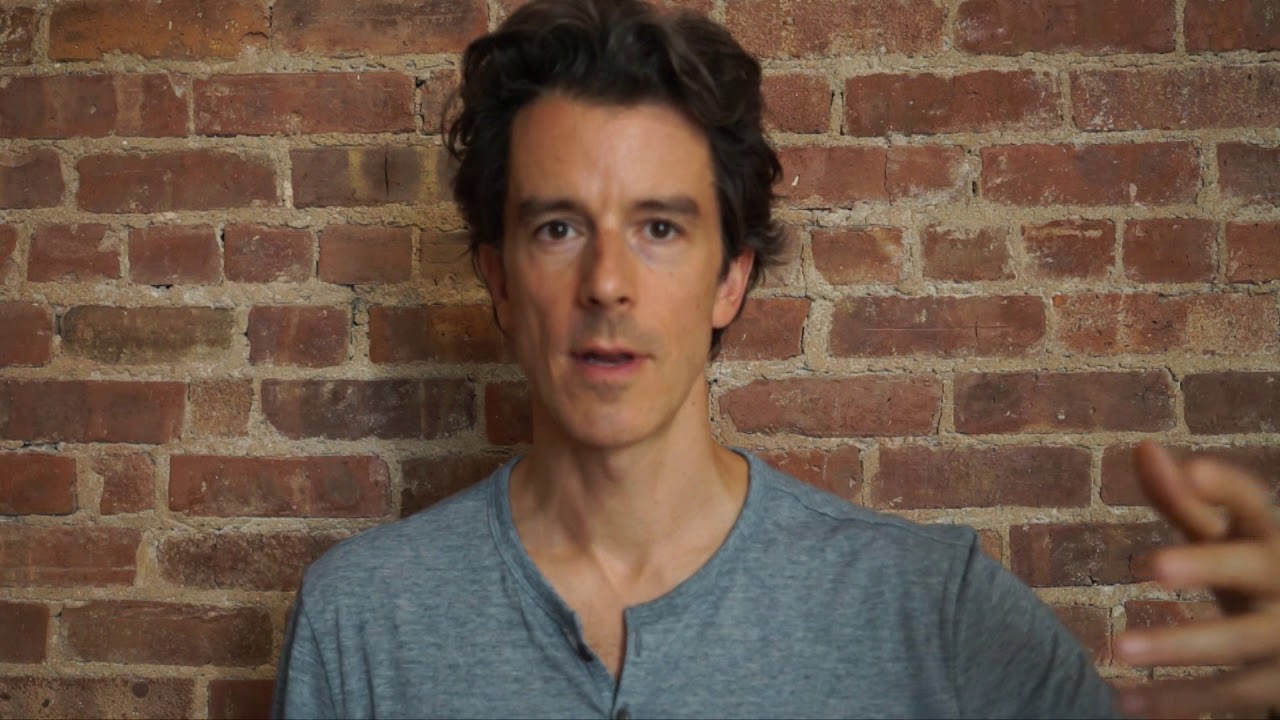
A yogic teacher disputes a study claiming yoga increases self-enhancement, explaining that in yogic philosophy the ego (ahankāra) isn't meant to be destroyed but repositioned. Yoga expands awareness from the limited egoic state toward Chitta, the broader witness consciousness, cultivating genuine confidence and inner joy rather than inflating the ego.
Chapters
Hello and welcome. This is my first video. I thought I'd try doing some short talks about specific yoga topics and see how it goes. I'm not used to talking to a camera, so we'll just see how much I ramble here. And I thought I'd start— I'd open with a reading from the Upanishads, which is a very old ancient yoga text. And it's one of my favorite passages. Purnam ada, Purnam idam, Purnat Purnam udaciate, Purnasya Purnam, Ada yai, Purnam evavashihaciate. That is full, this is full, the full comes out of the full. Taking the full from the full, the full itself. Om Shanti Shanti Shanti. So I recently came across this article in, I think, on Quartz, and I'll post a link below or to the side or wherever those go. And the article was talking about this recent research study that had come out of Germany, I think it was, where some psychologists had studied, I think, 200 yogis over the course of a month or so, or a few months, to see what effect yoga has on, I guess it was ego, but also on what they were calling self-enhancement. And the research study, and especially the article, seemed very confused about a lot of things. The entire premise seemed a little bit strange to me, so it inspired me to want to talk about this question of ego. So it The article and the study starts out sort of under the assumption that these mindfulness practices, these, you know, yoga and Buddhism and whatnot, are designed to eradicate or somehow sort of kill off the ego. And that's absolutely not true, actually. So we'll talk about that in a little bit, and we'll talk about that more in other videos, other blog posts. But, you know, ego is an essential part of the mind and an essential part of the self. I don't think you could function as a human being in society without the ego. So the point is not to eradicate the ego. The point is to put the ego in its proper place. So anyways, the study went on to talk about how The researchers noticed over the course of the study, over the course of observing these people practicing yoga and improving their practice, that they seemed to come out of the whole experience with a greater self-enhancement. And so the question was then posed, so what's the deal? I mean, it seems like their ego got bigger. And so I think, you know, it's important to realize that the point of practicing yoga is to To feel better and to become more sort of at home with yourself. And part of that is, you know, greater self-esteem, greater confidence, greater feeling of bliss and joy. You know, there's nothing wrong with that, but it's totally different than an expanded, outsized ego, which is definitely a problem. So I thought I'd spend a few minutes talking about yoga and yoga's view on the mind and on the ego, and maybe that'll help clear So yoga has this view of the mind where it's— the word for mind actually in Sanskrit is heart-mind, which I love. And it's the idea that, you know, your thoughts and your emotions are actually quite connected, and you can't really have a thought without a corresponding emotion. You can't really have an emotion without a corresponding thought. So the idea is that, you know, every experience we're having, every sensation comes in and sort of falls somewhere on this kind of heart-mind spectrum. And then that thing, the mind, the heart-mind, is divided up into 4 aspects in yoga, and those are as follows. So there's Manas, which is the part of the mind that is taking in information, and it's kind of like a sponge, and it's not discriminatory. But then there's the Buddhi, which is the part of the mind that takes that information, categorizes it, you know, and organizes it. There's the Ahamkara, which is the sense of self, the individual I, and this is probably the closest thing in these 4 aspects to the ego. It's the sense of separateness in a sense, and of identity. And then the 4th part is the Chitta, or the consciousness, your little piece of the cosmic consciousness. So that is the awareness, the inner sort of witness, that in yoga we're trying to move towards. So we're trying to move from a small ego state in yoga to a broader, more expansive chitta, or conscious state. So that partly answers or addresses the confusion, I think, in this research study and in this article. But let's talk more about that. So the ego in And yoga is viewed as this thing that's sort of dragging you around by the nape of your neck, and it's ultimately sort of a persistent contraction of your awareness, a persistent contraction of your consciousness. It's this, this ill-conceived notion that the only way to be happy is to have experiences outside of yourself. And to gain or achieve certain things to satisfy you. So the ego is telling you, hey, you know, if you can just get this promotion, if you can just get this relationship, if you can just get this car, or even if you can just do this pose in yoga, or if you can, you know, maybe if you can move to India, then and only then can you finally be happy, fulfilled. And all that stuff, you know, which is absolutely false. That is never true. I mean, maybe, maybe if you achieve those things or get those things, you'll be happy for a brief moment, but of course, as I'm sure you've experienced, something else always comes along, you know, that becomes a new condition before you can be happy. So, so really what we're doing in yoga is trying to shift, you know, these practices that we teach Are all designed to try to shift you from this state of egoic thinking to a state of cultivating bliss and fulfillment and joy and happiness, all inside as a starting point. So the idea is that you're starting from the state of already being fulfilled. Now of course, that's— that sounds great. It'd be wonderful if we could all just Snap our fingers and boom, you know, we're blissful. So it's not as easy as just deciding to do it, although ultimately in some sense it is. I mean, it is kind of a decision, but, you know, it's not easy to go from that decision to that experience. So a lot of the practices in yoga are designed to take you into that experience, that actual experience of bliss, you know. So the more you practice, the more you cultivate that experience, Mm-hmm. The more you will experience joy and bliss in your life, and then the less you'll be sort of attached to external things to bring you those feelings, you know. Which is not to say that you don't still have desires and still seek out experiences and still have relationships and all the things, you know, the whole chaotic existence of living in the world is great, and you can— you'll have those experiences and you'll achieve those things, With this greater state of bliss to start with. And so as a result, those experiences, those relationships especially, will take on a more sort of sattvic or spiritually enhanced or just higher state of experience. You know, you'll be in the world in a much sort of more blissful and aware and conscious state. And there's nothing that compares to that kind of life. So, you know, that's ultimately the idea. So, you know, I think it's just too bad that there's this notion out there that the goal of these practices is to totally eradicate the ego. I think that results in a lot of misunderstandings and a lot of people who are sort of outside of the yoga world, they kind of look in and they say, well, I I mean, look at these people, they seem like so egotistical, they seem so, you know, sort of focused on achieving these sort of egotistical goals, you know, like these advanced poses or whatever it is. But I think, you know, it's hard to look at somebody and to know what kind of, what their inner state is actually like. So, you know, it's, I think it's important to understand that you can improve yourself And you can feel better, and that doesn't mean necessarily that you're going to have a bigger ego. I think if you're doing the practice properly, it actually means that you're going to have a much healthier, more refined ego that's put in its proper place and at the behest of your higher self. So that's ego and the mind, and that's all for today. Thank you so much for joining. I'll see you next time. Namaste.