Unraveling the Mysteries of Quantum Consciousness and AI with Nobel Laureate Roger Penrose
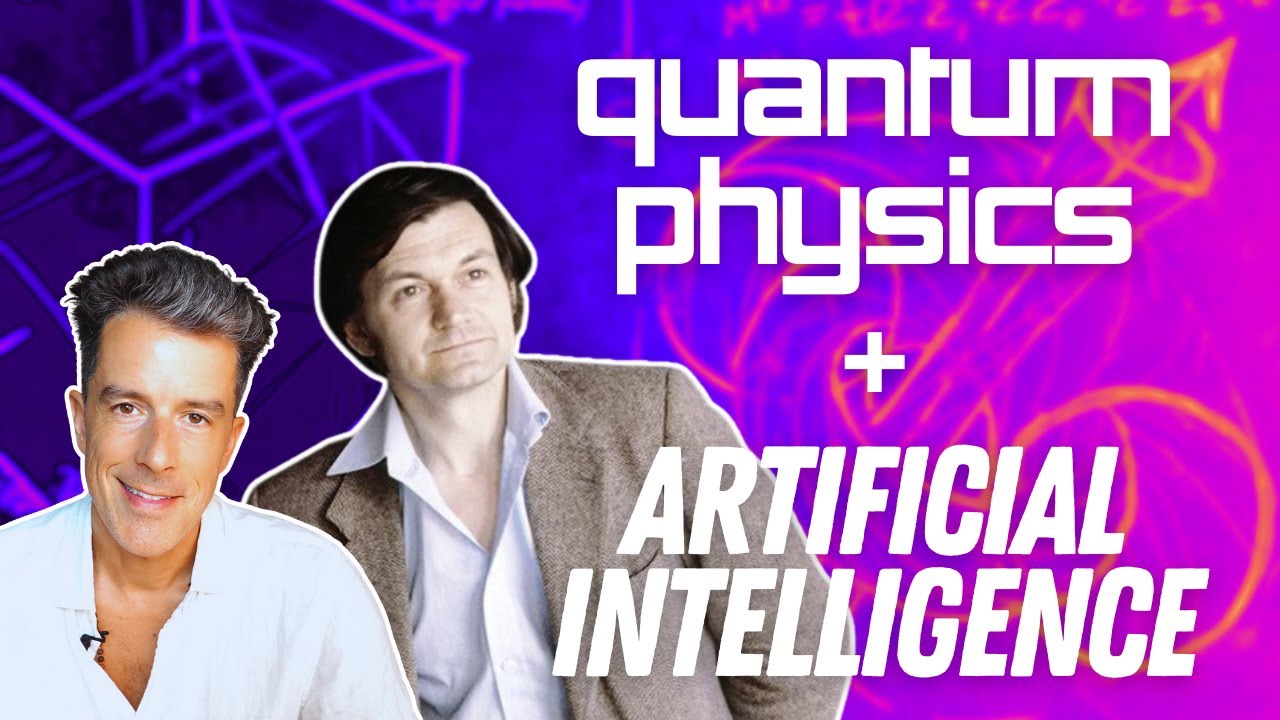
The video presents a comprehensive overview of Roger Penrose and Stuart Hameroff's quantum consciousness hypothesis (Orch‑OR) and situates it within the broader debate on consciousness and artificial intelligence. It begins by contrasting the dominant materialist view—where consciousness is an epiphenomenon of neural activity and faces the "hard problem"—with panpsychist/idealist perspectives that treat consciousness as fundamental. Quantum consciousness is introduced as a middle path that leverages quantum weirdness (measurement problem, self‑collapsing wavefunctions via quantum gravity) and proposes that microtubules in neurons orchestrate protected, ambient‑temperature quantum computations, potentially giving rise to proto‑consciousness. Empirical hints such as quantum effects in photosynthesis are mentioned. The speaker argues that consciousness may be non‑computable, enabling abductive reasoning that current algorithmic AI cannot emulate, and suggests quantum computing as a possible route to artificial general intelligence. Open challenges are acknowledged: lack of experimental verification, unclear memory mechanisms, and ambiguity about whether the theory truly bridges materialism and idealism. The talk concludes with a critique of the pervasive computer metaphor, urging viewers to notice metaphorical framing in their thinking and to reflect on the possibility that our own cognition operates in the quantum realm.
Chapters
I want to tell you about a really interesting and unorthodox theory of consciousness called quantum consciousness. This is a theory that was proposed by the physicist Roger Penrose in the '90s, and then evolved in his collaboration with this Dr. Stuart Hameroff throughout the past few decades into where we are now. And I want to tell you a little bit about it. The theory basically says that consciousness in the brain is arising out of the quantum realm, inside the millions and billions of proteins that are inside the neurons of the brain. So let's unpack that a little bit. Before we get into the details, I want to just bring in artificial intelligence. This theory of consciousness is highly relevant to the larger conversation that we're having right now about artificial intelligence as we go through this kind of AI revolution. So the explosion of AI right now has been raising all sorts of interesting questions, Can machines become intelligent? Can they become super intelligent? Can they— can we achieve artificial general intelligence? Can a machine become self-aware, sentient, conscious? What is consciousness? These are all interesting questions that are coming out of this artificial intelligence conversation. It seems to me, and Roger Penrose agrees, that you can't have true intelligence without some form of consciousness. And that's part of why I think we need to look more closely at these theories and approaches that we're taking to artificial intelligence. Without consciousness, there's basically no artificial general intelligence. There's no superintelligence. And so I think, as we'll see, that means that superintelligence and these things are pretty far off, actually. Before we get into quantum consciousness, let's first take a step back. And explore some of the prevailing theories of consciousness. So probably the most common and the most widely held theory of consciousness is a materialist theory of consciousness, which says that consciousness somehow arises out of the neurochemical processes in the brain, and we don't really know how that happens, but that seems to be the case. Right, so consciousness is seen as basically an epiphenomenon of the brain. One of the big problems or challenges with the materialist view of consciousness is that it bumps into what we call the hard problem of consciousness. And the hard problem of consciousness is there seems to be some phenomenological experience of being you. There seems to be like When you eat a strawberry, or you drink a delicious beverage, or you are in awe of the night sky, these things are producing an experience in the brain that's not just analytical processing. It seems to be some kind of something higher level, in a sense. So how is that possible when what we're talking about is basically this metaphor of the mind as a machine, as a series of neurons that are firing and synapses that are Firing, and, and like, how does that actually produce these experiences of consciousness? It's a big question that doesn't really have an answer. Not only that, but the current approaches to artificial intelligence are based on this theory of intelligence, this theory of mind, seeing it as basically a computer that is operating in a neural network in the brain. And so artificial intelligence is basically modeling this neural network, and that's why we have machine learning, which is a neural network. And that's what's kind of driving these large language models and generative AI, ChatGPT, Midjourney. This is all based on this approach to consciousness and the brain and intelligence. And so it's interesting because the theory, I think, among a lot of AI researchers is that if we can just produce enough of a complexity and enough of a large enough dataset driving a large enough data model and a large enough neural network, Then somehow true intelligence, and even consciousness, will arise spontaneously somehow. So that's the current approach to artificial intelligence, and that's the materialist worldview that's driving that theory of consciousness. The alternative theory of consciousness is called panpsychism, or idealism, depending on where you're coming from. And this is the view that consciousness is fundamental, and everything is made of consciousness. And so our entire experience is within consciousness, and the brain is basically inside of consciousness, the body's inside of consciousness, emerging out of it. And so the brain, because there seems to be this correlation between brain activity and consciousness, all it is, is it's like a radio receiver that's tuning into the broader consciousness that's out there. So that's panpsychism or idealism. It's actually quite an old worldview. It goes all the way back, you know, thousands of years. For example, in India, the Yogvedantic view, the Hindu view basically, is that everything is consciousness. So this is a very old kind of view of the brain and the mind and that kind of thing. So that's the second alternative view of consciousness, and that brings us to quantum consciousness. Quantum consciousness is kind of the middle way. So Roger Penrose and Stuart Hameroff, they're trying to essentially make the case for a form of idealism or panpsychism by sort of getting there through materialist quantum physics. It's a very elegant, in a way, and creative solution to bridging the gap between these 2 theories of consciousness and of mind. In order to talk about quantum consciousness, we need to spend a few minutes talking about quantum weirdness, or the ways that the quantum world is very strange. And I'm sure we're all familiar with some of these notions from the popular culture and the zeitgeist. You've got Heisenberg's uncertainty principle and Einstein's phrase, spooky action at a distance. And just this general notion that when we go from the classical world of physics to the quantum world, things seem to be a little strange, or at least the interaction between those 2 worlds is a little bit wonky. So for example, when physicists had, in the early part of the 20th century, were trying to determine whether light was a particle or a wave, it behaved like wave until they tried to measure the light, and then it seemed to collapse into a particle. And so this, this strange measurement phenomenon— it's a measurement problem— it continues to this day. Whenever quantum physicists are doing experiments, there's this kind of indeterminate state in terms of the subatomic particles, and they're not— they don't, they don't collapse. The waveform doesn't collapse, as they say. Until we actually take a measurement. And so that's a quite strange result. It's a little bit counterintuitive, and it seems to indicate that our consciousness is directly related to the quantum world and they're interconnected. Roger Penrose came along and he kind of turned this on its head. So he said, not only does consciousness or observation seem to influence the quantum realm, But the quantum world itself can then in turn create consciousness. So he has this theory of basically self-collapsing particles in the quantum realm, and this happens through something called quantum gravity. And it's a whole other thing we don't need to get into right now, but basically he's saying that there is this phenomenon where throughout the universe quantum particles can self-collapse and And this can create a sort of proto-consciousness, he calls it. And this phenomenon of self-collapse and the creation of proto-consciousness, or low-level consciousness, let's say, this occurs throughout the whole universe and has been going on since the beginning of time, since the Big Bang. And we'll see in a moment why that is relevant to the larger conversation. This theory of quantum consciousness is basically saying that The brain is actually structured in a way where these microtubules are sort of orchestrating this large entangled set of quantum processes that all together are forming these various moments of consciousness. That's the theory of quantum consciousness. Not only that, but the brain structure seems to be designed to not only orchestrate this collective entangled series of quantum interactions, but to protect that whole process from what physicists would call environmental entanglement, meaning that it's self-contained. It's not being, at least not typically, being affected by the quantum processes that are happening outside of the brain. And so it's a self-contained system, and part of the benefit of the structure is that it's able to shield it from environmental influences. Another benefit of the structure of the brain for this purpose is that it's able to achieve quantum computing essentially at ambient temperatures, at body temperature, which is something that we haven't figured out how to do yet. If you know anything about quantum computers, these are required to operate at pretty close to absolute zero. So they have to be, I think, around 15 millikelvin, which is almost 0 degrees Kelvin. So somehow The brain is able to sustain these quantum processes at body temperature, essentially. And there's some empirical evidence for this theory, because recently in the past few years, scientists have found a kind of similar process happening at the quantum level in the process that plants use for photosynthesis. So photosynthesis seems to be happening in a kind of organized way at the quantum level inside of the cells of the plant. So what's really incredible about this theory, one of the many things that's incredible about it, is that it seems to suggest that biology and life basically evolves in a way, is driven by this inclination, or you could say desire, for the proto-consciousness to kind of self-organize into more complex structures to achieve Higher and higher levels of consciousness. That seems to be part of the implication of this theory, and that makes a lot of sense. I think if we look at the evolution of nature and the genesis of the cosmos, we can see this process unfolding, basically, where life is counteracting entropy and creating increasingly complex structures that are finding increasingly creative ways to burn energy to create Higher levels of consciousness. And part of this theory, too, is that the reason that consciousness is so attractive or so beneficial to evolve is because the higher the consciousness, the more accurately it's able to represent the world, so to speak, which is, depending if you're a dualist or not, we can say the external world or just the world. But it's able to accurately represent the world, and not only that, but to then provide the organism with experiences of pleasure. And this is something that further drives increasing evolution. And in essence, evolution is the pursuit of positive experiences. And it's— this is great too, because again, going back to the yogic philosophy, the— one of the views in the tradition of yoga is that the purpose of life is to— has 2 purposes. It's to evolve and And to enjoy, to celebrate. And so this theory seems to confirm that in a way. That's quantum consciousness in a nutshell. There's a lot more to it, but that's, that's the essence of it. I want to talk for a moment about this idea of computability and talk about the reason that this whole theory is relevant to the larger conversation about artificial intelligence as well. One reason to be skeptical about the ultimate success of the current approaches to artificial intelligence is that the current approaches assume that the mind is an algorithm, that the mind is a computer, and this is because one of the godfathers of artificial intelligence, Alan Turing, had this attitude. So back then, everyone kind of saw— this is back in the early part of the 20th century— everyone saw the brain and the mind And consciousness as simply computation. What is a computation exactly? So a computation is essentially something that's solvable with an algorithm. Mathematics is a good example, formulas, that kind of thing. Things that are very easily sort of linear and analytical are computable, in essence. But there are things that are non-computable. For example, determining whether a very large number is a prime number or not. That's non-computable, which means that an algorithm would probably never reach a solution given any amount of time. And so there are these things. This is a whole other topic that's very deep, but there's these problem sets that are non-computable. And part of the advantage of quantum consciousness is that it too is non-computable in the positive sense, which means that It seems to indicate that consciousness itself is not limited to strictly being an algorithm. It seems to go so much beyond that. The human mind seems to be able to solve problems that are non-computable, or to at least take a non-algorithmic approach to problem solving. And this bears out if you simply reflect on your own experiences, your own way of solving problems. You might begin on one train of thought and follow that to a certain point and then realize you need to jump up a level and question the assumptions of that. And then you might take a different tack and go a different direction on a different train of thought, and then you might jump up a level from there. And then you might compare those 2, and that might sort of reveal to you what was wrong with that approach to the problem. And then maybe you'll take a break and you'll take a shower or you'll meditate or— Take a nap or something like that, where suddenly the solution to the problem just spontaneously emerges and pops into your head. And this is such a common thing that it, it's even got a name. It's called abductive reasoning. And this is the kind of thinking that is very common in our experience, but very hard to emulate or implement in an artificial intelligence system today. Given the current approaches. Because this is the case, it seems like we may need a new approach to artificial intelligence, and maybe that's quantum computers since they do operate in the quantum realm in the same way that this theory is proposing our consciousness does. And so maybe that's one avenue of research that we could pursue using quantum computing for achieving artificial intelligence. Quantum computers have shown a lot of promise because they are able to do very high-level parallel processing. They may not be non-computable. They may, they may still be algorithmic at the end of the day, but they're able to do this high-level parallel processing through the quantum mechanical realm. And that's allowing them to, to find the prime factors of very large numbers and to simulate nature. These are things that they seem to be good at doing. So It could be an interesting place to do some research, at least, into the viability of AI through quantum computing. With this theory, there are still a lot of open questions. It's relatively new. None of it has really been experimentally verified. It's not even close to any kind of empirical support. But it's promising. It's interesting. It takes a novel approach. And it suggests a lot of avenues for research. Another thing it doesn't really get into so much, from what I've read, is where memory is stored, how memory works, and so that's another kind of unanswered question with this theory, but I like the way that it is sort of bridging the gap between materialism and idealism. In fact, it's either a very elegant solution to bridging the gap between materialism and idealism or panpsychism, or it's a way of trying to get to panpsychism and idealism, but clinging on very tightly to materialism. So I can't quite tell which it is based on my research, but either way, it's really interesting, and I think it's time for us to explore a new approach to these questions of consciousness. And I really love this idea that that consciousness and life is evolving to create the conditions for ever-increasing levels and ever-increasing complexity of consciousness itself. So this, this idea that consciousness and life in the universe is basically organizing everything partly for that purpose and partly to enjoy as well as evolve. I'll leave you with this interesting side note. Roger Penrose feels very strongly that quantum physics as a whole is a kind of a stopgap theory on the way to something more elegant and powerful, because we have this quantum weirdness and because it seems like we don't quite understand what's going on. And there's no unified theory of classical physics and quantum physics. So it's interesting to me that despite the generally held view that quantum physics is this pinnacle of achievement in the 20th century, It's also very incomplete and needs a lot of further theorizing and a lot of further research. I want to leave you with this question about metaphor and just ask you to notice metaphor in your life and the ways that we use it. There's no doubt that we currently live in the age of the computer metaphor, so almost everything seems to be seen through the lens of computer metaphor. The mind is a machine, and chaos theory and systems theory sees the purpose of, of everything as sort of compressing information. And many people think that we might live in a simulation. These are all things that are very much inside of this computer metaphor, and I think metaphors can serve a beneficial purpose. But at the same time, it's so important for us to Constantly be vigilant and notice where this metaphor is coming in and where it might not be totally accurate or where it might not be serving a purpose. So just, I leave you with that. Just notice, just notice metaphor in your life and where it's being used and whether it's being used appropriately. Whether quantum consciousness turns out to be a viable theory, there's no doubt that With quantum physics and everything we know about science right now, that we are intimately connected to everything else. That is definitely the case. And so I just ask you, after you watch this, when you're contemplating, when you're thinking, when you're having a quiet moment, just reflect on the fact that your thinking is probably happening in the quantum realm. And so you're existing, we're all existing in some sense. In the quantum world. So I'll leave you with that. So if you have any thoughts or comments about this, I'd love to hear from you. Leave a comment in the comment section, and, uh, yeah, I'll see you in the next video.
More from Chad

A Poem: Stewart Brand and the Commodification of the Counterculture #technology #counterculture




Peter Thiel's obsession with the antichrist, techno-Christianity and its roots in Apollonian Mind


We need to evolve our #consciousness instead of outsourcing our evolution to machines and #ai



