What is Yoga? It's partly having the right attitude
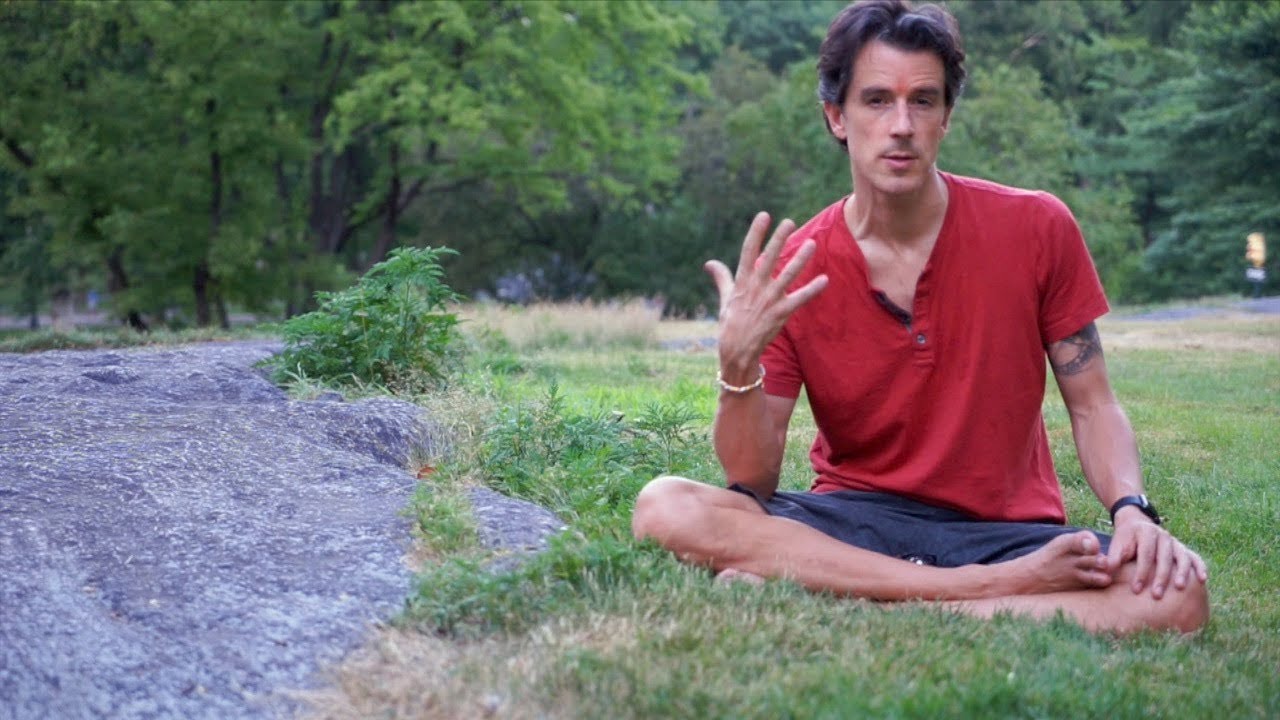
Yoga is a state of blissful union, a process toward it, and practices that deepen the experience. The speaker explains Sat-Chit-Ananda (truth, consciousness, bliss) as yoga's aim, and how asana, pranayama, and meditation engage five layers of being. The real work is attitude: acting without attachment to outcomes, staying present both on and off the mat.
Chapters
Namaste and welcome. Namaste. So last time we talked about the mind and the ego and how yoga views those things. So this time I thought we'd take a step back and talk about what yoga is in a broader sense. It's a very large topic, so we'll only just scratch the surface here, but I just wanted to, I don't know, kind of riff on it a little bit. I had a satsang last night where we talked about that, and I thought that was really interesting. We got into some areas that I thought would be worth exploring on a video. So where to start? You know, I think ultimately yoga is 3 things. It's a sort of state of being, but it's also an experience that you have that sort of leads to that state, and it's also a series of practices that take you deeper into the experience of yoga so you can ultimately achieve the state. And the state that we're talking about is really just bliss or a state of union. The word yoga often is translated from the Sanskrit So, you know, the idea is that you're moving towards this different state because the default state that we start out in in life is sort of layered with a lot of different sort of conditioning, a lot of obstacles, a lot of samskaras, a lot of karma, a lot of, you know, a lot of these things that kind of get in the way of experiencing your true nature, which is really, according to yoga, bliss. state of bliss. In fact, you know, there's a very popular Sanskrit phrase or mantra called Sat-Chit-Ananda. What that means is truth, consciousness, bliss. And this kind of summarizes the view of the ancient yogis, which is that our true nature is consciousness, and consciousness is inherently a blissful state of being or a blissful experience of life. So yoga is Yoga is about moving us towards this state of bliss, right? But how do you do that? Different practices have different techniques, and different lineages and different sort of traditions over different periods of time going back 5,000 years have different approaches to yoga and how to achieve that state. So we can kind of run through those, but I thought it'd be actually most useful to start out by saying that really the first thing I think that most yoga practitioners experience, especially in the West, especially in a class where you're just doing the poses and doing the asana, is this sudden feeling that possibly you're not your mind. I think the first thing a lot of people encounter is this notion that, you know what, maybe I'm not my mind, maybe I'm something bigger than that. And that's a huge part of what yoga is about, is about sort of having this experience and having this realization that you're you as a being, you know, We as beings are ultimately this larger, more expansive thing than just the kind of narrow egoic mind. And so what is that, right? So it's awareness, it's the part of you that is pure consciousness according to yoga. And, you know, it may sound a little bit esoteric, but what it really means is if you ever stop and sort of watch your mind, if you stop, you know, and meditate and just watch your thoughts, what you notice is that there is an awareness that's aware of the thoughts and aware of the thinking. That seems separate and apart from the thinking. So that must be, you know, something, some part of you, some higher part of you, right? And so the more that you move away from identifying with your mind and your thoughts, and the more you identify with this higher consciousness, this awareness, the more you experience this state of just presence and being and groundedness. And that's a huge part of the transition to yoga. I think we could even just stop there. I think that could be enough, you know. Mm-hmm. But, but, you know, how do you get there, I guess, you know? Of course, I think most people in the West understand yoga to be these asanas, these poses, Warrior 1, Warrior 2, wheel, and down dog, and up dog, and all that. And those are all very effective for sort of moving towards this state, especially in the beginning, especially for Westerners who definitely need to ground, need to get more into their bodies and less out, get out of their heads. I think that's very effective for Westerners especially. So yeah. Yeah, so asana is one way to access this state and to have this experience. It's a very effective practice. And what it's doing is it's actually addressing multiple layers of your being at the same time. So in yoga, a lot of traditions talk about the sort of 5 layers of the being, which is the koshas. And those are sort of a physical layer, an energetic layer, a pranic layer, A mental layer, and then a wisdom layer that's sort of analogous to the kind of higher consciousness, and then bliss, which is also consciousness. So there's these 5 layers. And so when you're doing an asana, or you're doing a meditation, or you're doing a pranayama technique, a breathing technique, what you're doing is you're accessing your different layers of your being in order to sort of integrate those, balance those out, and penetrate deeper into, towards, you know, towards the bliss layer, which is the sort of like— The highest state. gooey core of your being. So, yeah, so asana is a very effective practice. And there are other practices though, you know, like I just mentioned, there's pranayama, there's meditation, and these are all described in a lot of the ancient yogic texts. But I think, you know, another thing that's kind of important is just your attitude. A huge part of yoga is sort of understanding a little bit intellectually sort of what we're all about, what we're kind of like moving towards. chords. And those things are, you know, tied up in a lot of what is talked about in the Yoga Sutras, a lot of what's talked about in the Bhagavad Gita. These are very famous yogic texts. So for example, in the Bhagavad Gita, which is a story about a dialogue between Krishna, one of the incarnations of consciousness or of the divine or of Shiva, Krishna is having this conversation with Arjuna, and Arjuna is this warrior who's about to go into battle, and he's having a lot of sort of consternation and doubts and just confusion about, you know, what— why is he— you know, what is the point of going into battle? What is the point of potentially killing a bunch of people? You know, people he actually was related to in the story, his cousins and whatnot. So there's this long dialogue, and, you know, Krishna talks a lot about— in yoga, yoga is really acting in a way where you're You're in the world, you're achieving things, you're acting upon your desires, but the whole time you're not attaching to the outcome, the fruits of those actions. And by doing that, by having that attitude, that orientation towards the actions that you take in life, you can move more towards this state of equanimity and bliss and pure awareness. And so what this book is really saying is that yes, you can do these practices, you can do the asana and the pranayama, And whatnot. But in a way, if you just live your life with this attitude, that alone may be enough to bring you into this higher state. And of course you can do a combination of all these things, but I think it's very powerful. It's a very powerful teaching to think about acting in the world in a way in which you are sort of surrendering the fruits of these actions that you're taking. And just trusting that if you act in a way where you're tapped into this higher awareness, trusting that you'll sort of take these spontaneous right actions based on this higher awareness, and then that will be enough to lead you down a higher path in your life. So that's, you know, that's one way to look at the yoga that's taught in a lot of the ancient texts. A lot of these books talk about sort of having that orientation, that attitude, you know, separate linda. lineage, the Tantras from the Himalayas about 1000 AD, they spent a lot of time talking about having the right view and sort of acting from that state. And they also thought that you could live a normal life as what they called a householder, and you could still sort of practice yoga in your everyday activities by having this correct orientation, this view, you know, that ultimately everything is connected, you know, nothing is separate and that you're part of this larger whole. And just by doing that, you will experience a much more, much richer, a much more satisfying and fulfilling life that's free of these cravings and aversions and these attachments. And that state alone is huge, you know, it's like you're halfway there basically. So that's, you know, that's a huge part of yoga I think is these teachings about It's about having the proper attitude, the proper orientation toward the activities that you're taking in throughout your day. And so I think it's useful to start from there and to think about yoga in that way. And even when you're doing the asanas, it's the same idea. So, you know, you're doing a pose, you're doing, let's say, a challenging pose, maybe Crow Pose, or even, you know, Triangle Pose may be challenging for you. And in the pose, you're just You're sort of just present in the pose. You're doing it from a state of non-attachment, without any kind of ego getting involved and trying to push you into a more advanced variation of the pose, or criticizing how you're not doing enough yoga. Why are you doing this pose and why does it feel so bad? All these thoughts that might arise. You're just sort of finding a place of sort of equipoise and— Presence. And rest within the pose. And that can be— that kind of attitude towards individual asana poses can be taken into the other actions that you take in your life. So I think it's a useful reminder to think about this state of non-attachment, this state of fulfillment where you're starting from a point of feeling fulfilled, feeling connected, feeling blissful. And then you're taking actions from that state. And so that state and that experience and those practices are a large part of what yoga is. So hopefully that's helpful. Thank you for joining me in this first video shoot in the park. It's kind of an experiment. We'll see how it comes out, and I will see you next time. Namaste.
More from Chad

A Poem: Stewart Brand and the Commodification of the Counterculture #technology #counterculture




Peter Thiel's obsession with the antichrist, techno-Christianity and its roots in Apollonian Mind


We need to evolve our #consciousness instead of outsourcing our evolution to machines and #ai



