Fund Friday E57: Oil and Gas to Offset Taxes with Courtney Moeller
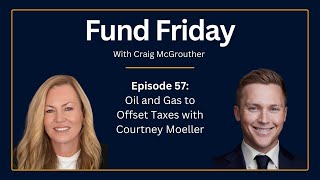
Interview with Courtney Moeller (oil & gas operator/sponsor) describing her path from a Midland, Texas family oil background to sponsoring upstream oil & gas working-interest investments. She explains deal sourcing (buying interests in projects operated by major producers), de-risking by acquiring interests after drilling, and modern drilling methods (vertical vs. horizontal/fracturing). She gives concrete investor economics and timelines: typical year‑one depreciation of ~80–90%, return of capital roughly in ~18 months, target 3–4x multiples with ~80% of returns within 10 years, monthly distributions (first distribution example received March 26), wells producing for 20+ years, and tax benefits including intangible drilling cost expensing and a 15% depletion allowance (taxed on 85% of income).
Questions this video answers
March 26 (first distribution for that project; represented ~Nov–Feb production).
Approximately 80–90% depreciation in year one (intangible drilling costs).
About 18 months ("18ish month time frame").
Approximately 3–4x return, with about 80% of that return occurring within 10 years.
15% depletion allowance (investors are taxed on ~85% of income from the wells).
Chapters
Welcome back to another episode of Fund Friday with a very special guest. This is a true oil and gas guru and we're going to talk about everything and why this matters to you. If you're in fact a capital raiser or if you're a retail investor, a, you know, investor who wants to be an LP in opportunities. But without further ado, please welcome Courtney Mueller. How are you today?
I am awesome. Thank you so much for having me. It's such an honor to be on your show. You guys are always doing awesome cool stuff.
We are always trying to collaborate with the best. That's why we called upon you to kind of give your kind of story, your background and your expertise here. So very grateful to be here. For those who don't know how we know each other, we're kind of familiar with one another through the masterminds and such. The ecosystem is very, very small through raise masters, of course. So it's a small world, It's a smaller industry. So we're very grateful to, you know, have access to great people like this to enrich each other's lives and to learn. And that's what we're going to do here today. So let's just dive right into it. How did you get to where you are today? What is your story and how did you get into the oil and gas space?
Yeah, that's such a great question. Because it's a very male dominated space. I feel like everything I do is very male dominated. I was in the Navy, I was in avionics in the Navy, which is very male dominated. Then rolled right into oil and gas, also very male dominated. Investing is pretty male dominated too, but feel like I thrive in these spaces.
I get. Well, you're a pistol, so it makes sense.
Yes. Well, I am originally from Midland, Texas, so West Texas, Permian Basin, you know, number one producing oil and gas space in the country. My dad was a petroleum engineer and you know, we've lived in Abu Dhabi and Pakistan. He's drilled in Jakarta and I inherited his oil and gas company about 12 years ago. Never thought that this was a path I was going to go down. But we, when I inherited that and you know, we continued to drill in West Texas. I actually figured out that this a lot of really cool opportunity in it. And it's kind of funny, when I got involved in syndication, I was looking to diversify into other assets and I was asked to come and speak on a panel with Robert Kiyosaki and G. Edward Griffin, which was amazing. I did not know who Robert Kiyosaki was at the time, though, which I. It's almost, it's. I was embarrassed to admit it at the time, but, you know, I deep dove into that and thought, okay, you know what, I'm just going to say, yes, let's go do it. And that conference several years ago is where I learned about syndication, and I thought I was going to syndicate real estate. And then I figured out very quickly that the tax advantages of oil and gas and the cash flow created from it pair very well with, you know, real estate and other asset classes. So I just thought, you know, I'm going to stick with what I know and what I'm good at and started, you know, syndicating several years ago. And it's allowed, you know, not only the ability to have great tax advantages and cash flow for my family, but I want to help other people do that too, because I like to invest in oil and gas, get that money back very quickly, and then deploy it with freaking awesome, you know, real estate guys like y', all, so that I'm diversifying my portfolio.
Right, that makes sense. So you had that background there. So oil and gas is truly in your blood. So you didn't. Did you see yourself going into this trajectory long term or, or do you just kind of fall backwards into it just from happenstance? I mean, naturally you. You were probably exposed to it. You hear your parents in conversation, you know, probably talking about it. Right. But, you know, maybe you didn't see as a career path always. So what did that kind of look like?
No, I did not think it would be anything I would ever be involved in. You know, my. My dad drilled, my brother drilled, my sister works in the space. My uncle has a well servicing company, and I inherited his company, which was great. You know, we continue to drill, but really my participation was. Was more passive, which I loved. You know, I would cut checks to cover expenses every month and get this great monthly income. I did not think that it was going to be something that I deep dove into the way that I have now. And so it's really cool. You know, I tell people, gosh, on Friday nights in Midland, you know, we'd be riding pump jacks and, you know, drinking beer, you know, because there's nothing else to do. You finish watching football and there's not a whole lot else to do. But it's such a special asset class and it's really hard to get involved in. And, you know, once I really streamlined what that looked like and kind of figured out, okay, how do I bring this to other people and how do we do it in a way that they can be confident in what they're investing in? It's, it's been kind of a mission for me to go and, you know, provide that education and teach people how to, how to look at deals.
Yeah. So let's, let's talk about this holistically speaking, because I think people hear oil and gas and they just think maybe you're just buying oil, you know, taking it from position A and then putting it to position B. But there's a lot more to that. It's not, hey, you're, you know, it's like, hey, if you're buying a distillery for alcohol, you're just buying the alcohol and then putting into a bottle, white labeling it. Right, right. So let's just kind of talk about what the process is and what you actually do from your perspective. And then we'll get into the nitty gritty after. But just soup to nuts, I guess. High level. How does the process work?
Yeah, that's a great question. And so when, when you're involved in oil and gas, you've got, you know, upstream, midstream and downstream. I'm involved in upstream. We're involved in the exploration and drilling of oil. So we are actually taking rigs going out there, drilling holes in the ground and extracting the oil out of the ground. I am not involved in the midstream is transporting it, whether it's through pipelines or railways or whatever. And then that downstream stream, I'm not involved in any mid or downstream. So we're specifically going after working interests in oil and gas. So there's so many different ways you can invest in oil and gas. You know, from the stock market to drilling to all kinds of different things. I want to be involved in working interest because that is what offsets that active income that everybody loves so much. So we go in and our strategy is pretty simple. You know, if I'm gonna drill, I want to drill with the ConocoPhillips and the Continentals and the anshoots and eogs of the world. These are, you know, billion and multi billion dollar companies and they're drilling in top areas. They plow through those things and get these wells dug and drilled super, super fast. And so it kind of minimizes a little bit of the risk on our end. So we go in, acquire the lease, they drill the wells, and next thing you know, we've got, you know, pump jacks out there and they are pulling ground. So it's, it's pretty simple. I don't want to be the operator. Nobody wants me to be the operator. I want to go in and operate and drill with these top producers. And that's what we do.
So basically what you do is you find the best of the best. Whether it be if you're kind of a capital partner looking for a sponsor, you look for the lonesome capitals of the world, right, or the Asics hunter and his team. What you do is you basically with your expertise, acknowledge you do the painstaking process of finding the right people, finding the groups who are best in class that maybe have good oil going. There's some proof of concept, they've got the science and surveys done and then you basically kind of go in and start drilling. Has there been drilling before or has it started like where in the cycle in the process? Because if I'm not mistaken, technology is getting really good where you can kind of pre identify if it's a winner or not. As opposed to just drilling in the ground, hoping some black gold comes up, right?
Oh yes. Yeah, I, you know, so probably the biggest risk you have in drilling is potentially drilling a dry hole, meaning you have no oil there. And so what we do is we. I already know who the top, you know, companies out there are. I know where they're drilling. Fortunately, we have landmen that are kind of like realtors for us. So, you know, realtors will have certain investors that they know are looking for certain types of property. So when they get those listings in, they'll call those investors and say, hey, you know, we've got this house coming up over here. You know, I thought you might be interested. I have land men that do the same thing for me. They know that I'm looking for interests with top producing oil and gas companies. So when those interests hit their desk, they call us immediately so that we can buy them. So yeah, so I am only looking for interest with those top companies, people that have done, you know, really cool stuff in really big areas. And then the great thing is during that drilling process, they're able to determine if you've got commercially producible oil in those wells or not. So we pay more for the interest that we're acquiring, but usually the drilling has already happened and we know we've got oil. So we are kind of dipping into a little bit of the return on it. But I'm okay with that because we are getting rid of a whole bunch of the risk in doing it that way.
So for those who are listening just to kind of break this Down. Very simply speaking, what you do is you de risk, but you also maybe slightly lower your return. So you're not. I mean, obviously there's a great return metrics which we're gonna get into, but you really de risk the opportunity because you are picking a surefire winner. Am I hearing that correctly?
Yeah. And I don't ever want to say surefire because there's a lot of good information.
Oh, g. The G word. Guarantee. I didn't want to say we should almost bleep that out. But the guarantee, the G word does not exist in your repertoire. No, mine.
Right, yeah, absolutely. But there's things that we can do to minimize a lot of that risk. And where we're coming into these projects, we. We are minimizing that as much as possible. And not only are we looking at the operator and location, but, you know, I'll never invest in a project that's got at least four wells. You know, there's certain metrics that we go in to minimize that risk as much as possible.
Yeah, that makes sense. So you go in to. You find these opportunities that are more surefire and seem to be a really good opportunity. Can you talk to the kind of risk profile if you're kind of going around and just basically going in early process what the upside look like and then what it looks like to be in kind of a. More of a, you know, proven concept. Potential winner here.
Yeah. You know, obviously, the earlier you get into an oil and gas project, the more upside that you'll have to that. Now let's just give you an example. So the last several deals that I've done, at some point in time, they were all done on federal land. So the federal government came and said, you know what, we're going to sell these mineral rights for 250 bucks an acre or whatever that is. And just like real estate, the further along in a project, the more valuable the land is. Right. So when you're getting raw land and nothing's been done on it, it's. It's cheaper. But once you put that real estate or build an apartment building or something like that, once you develop it, it's worth significantly more, and it's the same. So as soon as an oil and gas company says, you know, we're going to get permits to drill in this area, the price of that acreage goes up. So I think one of the last deals I did about a year ago, it was probably sold for 250 an acre. We paid 7,500 an acre for that lease because you know, Anschutz had come in and already drilled 12 wells. The wells weren't online yet, but they'd already drilled them. So we paid a lot more for it. But we KNEW in those 12 wells that they had hit oil. You know, I guess you could say in all 12 of those wells, not a single one of them was dry. Now from there I can't guarantee the amount of oil they can extract from the ground. But you know, these top companies, these billion dollar and multibillion dollar companies, they've got the top of the line equipment, the top of geologists and landmen and if you've got Exxon or Chevron or one of these big companies that are spending 50 to $100 million, you know, drilling wells, they're not speculating and so can't guarantee it. But I have a lot of faith in what they can do and what they're going to be able to recover from those wells.
Yeah, what's super interesting is the process from drilling hasn't necessarily changed that much over the years to my limited knowledge, but science, technology and information has kind of way surpassed the kind of process of drilling. Would you kind of agree to that statement?
Yes, 100%. And I would say that a lot of the, you know, safety valves and you know, a lot of the equipment has gotten better. It, you know, the, the technology that's going out there. You know, I was just talking with a gentleman the other day that has created technology where they can take in the mud logs and other information and give you a, of an exact amount of what is in that reservoir. And we haven't seen that technology go mainstream. But the way that AI and some of this other stuff is being implemented, I think is going to really make a difference not only where these guys are drilling, but what they're able to recover. You know, a lot of the, the Nebrara area in Wyoming, which is where we've been drilling, a lot of those wells were drilled back in the 60s, but they weren't horizontally drilling. So vertical is just going down and then horizontal, they're fracking and going out sideways. And a lot of those wells that were drilled, you know, 40, 50, 60 years ago, they just didn't drill them in the right place. So now they're going in and they're fracking those wells and they're, they're able to tap into reservoirs and reserves that they weren't able to get before. So now they're recovering significantly more and it is more, much more expensive to frack these wells, but they're able to recover, you know, three to 10 times more than what they would have been if they, they hadn't done the fracking.
So drilling is one way you're going down. So then you mentioned horizontal as fracking. So can we just talk about the difference? Because fracking almost seems like, not like a buzzword, if you will, but more of a newer concept in the, probably the latest and greatest way. So if I'm understanding this correctly, drilling going down single, but fracking is taking that space and really just kind of catapulting all the ability there, if you will, and all the resources in there, as opposed to basically in one kind of smaller, kind of cylindrical shape, if you will.
Yeah. So every single area that you're drilling, they're going to have, you know, different depths and different components. Some areas are shallow wells that are, you know, a couple thousand feet or, you know, whatever that area looks like. Where we've been drilling in the Nebrara area, we're going two miles vertically and then two miles horizontally. So these are four mile wells which when I think about that, that's, that's a, that's a deep hole. And so yeah, it's crazy, but when you're just going down vertically, you're only going to tap into what you drilled that way. But then when you go out two miles horizontally, you're now able to tap into so much more.
Would you also say there's a ton of space that was basically, if it was also government land that was frankly maybe just wasted or not fully utilized, the highest and best use due to the fact that you just couldn't extract all those resources there?
Well, and that's what we have seen happen in the neobrara. So in 2008 they came in and started fracking in that area and wells that had maybe a 300,000 barrel life, you know, expectancy for their production, they're now 800,000 and you know, 1 million plus you know, expected, you know, recovery from those wells which has significantly improved the amount that's being produced out of that area.
That's crazy. So oil and gas, as the President elect is saying, you know, we've got more liquid gold under our feet than ever before and drill, baby, drill is his mantra. So we'll get in. Maybe some of the political takes as a nonpartisan perspective, but I've actually heard some almost contradictory stuff that might be counterintuitive to how pricing works, depending on which parties in the office, which maybe you can speak to or not if you feel comfortable doing so, but with that said, so let's talk about the investors. So you basically identify with some key groups and sponsors that you work with. Where, what looks good, what looks like the winners, how does this work from a return perspective? And then we'll kind of get into some of the potential tax implications.
Yeah, so I am the sponsor, I actually have not ever worked with other sponsors. We go in and acquire those interests, you know, directly. So the way that, that, well, what that looks like is we buy that interest and then once the oil and gas companies finish drilling, we get what's called a division order. So they just, you know, cut us orders, you know, acknowledging that we own whatever percentage we've acquired. And, and so our typical what we're looking for, it's pretty much the same across the board. You know, I want an oil and gas project that's going to give me anywhere from 80 to 90% depreciation in year one, you know, good against that W2 income or capital. I also am looking for something that's going to return capital in that 18ish month time frame. It could, could be a little bit longer, a little bit shorter, but typically about that 18 month time frame. And then I want something that's going to 3 to 4x my investors money in a relatively quick time frame. So we're looking to get capital back in 18 months and then we're looking to 3 to 4x with probably 80% of that capital coming in and that return coming in under 10 years. Now these wells that we've just drilled, the last 20 wells that we've done, they're going to pay out for 20 plus years. They're going to produce for a long time and produce monthly income. But where oil and gas is very different from real estate is you get really high returns initially when those wells come online and then it just kind of depletes over time because the more, you know, you're pulling oil out every year, there's less and less oil to recover from those wells. So it just continues to decline. Whereas real estate, you know, you invest and then you have an exit, you know, five years down the road. And that's really, really kind of where your, you know, large return comes from on that exit. Oil and gas, it's really in that first couple of years that's really important, at least for my project specifically.
Well, that makes all the sense in the world and what I would be looking for from a strategy perspective and obviously, you know, I might be too nice and too friendly of an investor for my Needs. But what I hear about there is, okay, I get a massive deduction. So let's say if you were a non real estate professional here, and I'm not a tax attorney, not a cpa, nor is my good friend Courtney here, we're not tax people, but this is how our experiences have been. Right. So just to preface that, but that said, you get roughly, you know, a dollar to dollar depreciation year one, and then if you recoup about, you know, your principal by the first two years, to me that's huge. And then also the advantage to this, and I really want to speak to this, is it's not like, you know, in real estate where you don't, you know, pay no taxes, you defer paying taxes and you can inevitably kick the can down the line indefinitely. Unless you cash out, there will be some phantom income or you know, a tax assessment you have to pay at some point. But in the oil and gas business it's different because there's not recapture. Is that correct?
That, that's correct. So a lot of the tax benefits come from what's called intangible drilling costs. And those are the things like the fuel and the labor that went into actually drill those wells. Well, the wells got drilled, you know, they're, they're not going to come back and recapture that, you know, five years down the road. So the money got spent, right?
So the money gets spent. You get a massive depreciation amount and figure that can offset any sort of income. If you're a real estate professional or a non real estate professional, which is very crucial. So think about if you're a doctor or an attorney and you're getting taxed, really, really tough, right? You're getting taxed probably at the highest tax bracket in the country. Okay. And maybe even in the world, potentially this is an opportunity for you to offset some of that taxable income and also generate a return. But even if you broke even with this and didn't have spending taxes on that, isn't that a massive win? Or you can start diversifying everywhere. Like why wouldn't most people make that at least a portion of their kind of alternative space? Or do you, do you see that often? You know, what are your investors asking you when they inbound? Because just deploy the game, strategically speaking. If you're a multi six figure income generator and you can just break even on that, well, you're not just breaking even, you're actually making about 30% because that's where your taxation would be roughly depending on the state that you Live in.
Yep. No, and you're exactly right. And I call the IRS a dry hole. Every single dollar that you pay to the IRS is gone. There is not going to be any return on that. So, you know, hopefully we don't ever drill any dry holes. I can't guarantee that. Hopefully it never happens. But you're always going to get those tax benefits. And which is another reason we do multiple wells. So that if we do have one that's not producing the way we want it to, we've got multiple there to cover that. And some of them are going to end up kind of picking up that slack. But the other really cool thing about oil and gas is you get a, what's called a depletion allowance. So you are only going to pay taxes on 85% of the income for the life of those wells. You get a 15% depletion allowance year after year in perpetuity.
Wow, that's amazing. So tons of advantages here. And I say this frequently for those who have listened to this podcast before. You need to think about it this way. The government does not care if you provide oil, which is energy or housing, shelter, but they do incentivize you to do so.
Yeah, and, and this is the thing. I mean, this was written into the tax code a long time ago to incentivize people to drill an exchange Explore. Because we need oil for so much more than just fuel in our cars. You know, a barrel of oil is about 42 gallons and about a third of that is used for plastic and all of the different products that we use on a regular basis. You know, another third of it. And these are really rough numbers. They're, they're a little more than a third, a third and a third. So these are rough numbers. But about a third of it does go to fuel in our cars. Another third goes into all the different products we use, like asphalt and tape and computers and medical equipment. Another third of it goes into diesel and jet fuel for our tractors and farming equipment and airplanes. So it's not just, you know, gas in our car, so we need it. And I was actually talking to a CPA the other day and he said that he had his team go out and do like a 50 year study to see if there were any tax returns that had been audited for taking this, you know, working interest depreciation that you get. And they couldn't find a single, a single deal that had been audited because of these tax advantages.
That's incredible. And I just love the fact that it is Efficient in that regard. You can kind of create something from nothing and really just keep a lot of your dollars. That would be kind of not going to use, which is really right, you know, not how you want to play the game. If you're really systematizing all the processes there. What are some of the big misnomers people have investors come through, people that want to bring capital to your projects. What are some of the kind of myths that you need to debunk? Because I'm sure a lot of people perhaps on our space really don't know much about it. You know, what can you kind of speak to on that front?
No, and this is unfortunately, I feel like I see a lot of bad actors in this space. You know, there's a lot of fraud and a lot of scams and, and I think, you know, a lot of people just don't know how to verify ownership and verify a lot of these things. So I've spent a lot of time over this last year just trying to provide education so that can not only look at my deals, but look at other people's as well and have confidence and feel good about what they're investing in. But you know, there's third party. Here's, here's a couple of things. So the cool thing about oil and gas interest, they're recorded at the county level, just like real estate is, you know, we get a wellbore recording and I can actually show we bought this interest. Here's the wells, here's their API number. Each one of those wells gets like what's called a serial number. And so, so you can actually verify through the county tax office that we do own it. And then every single state has a governmental agency that maintains all oil and gas information. So for Texas, it's the Texas Railroad Commission. For Wyoming, it's the Wyoming Oil and Gas Conservation Commission. And you can actually go in and verify that. Okay, Courtney, we verified that Courtney owns this interest. Now she's saying that, okay, EOG is drilling these wells and from there you can go into those sites and verify when permits were filed, when those wells were drilled. You can take a look at the survey information, insurance information, all of the production for those wells and when they came online. So that's another thing I teach my investors. When we send out those monthly reports and they get their payments, we can actually go into this third party site and verify that they're getting paid the amount that we were had gotten paid. So they can verify that those production numbers match.
Yeah, I mean it's so Interesting how bad apples and bad actors really make everyone's life more difficult. It's really not people like you or us who are, you know, kind of making the stain. It's people who embezzle people who aren't acting in good faith. And it happens. And you know what happens is when the market is frothiest, when times are very difficult and challenging, no one really pays as much of attention. But things are kind of going okay, well to great is when that stuff all gets pushed underneath the rug. So to have the verify process is really special. You know, we obviously do monthly reporting and quarterly reporting. It sounds like you have that component on your end as well, which is great. So then when it comes to a scheduling of payments and things of that nature, what does that look like? You know, how does that process kind of work? You know, Tell me about that.
Yeah, that's, that's a great question. So we do monthly distributions. It's, it's great. So it's typically. I'll give you a perfect idea. So we, we finished a project in November of last year. All of those wells came online by November 20th. And gosh, okay, so everything that was 12 wells, all of them came online. We bought about a 2 1/2% interest in each of those wells. We got our first distribution on March 26th of this year. So just about four months later we got our first distribution. And it represented the last 10 days of November, December, January and February. So the oil and gas companies paid us in March for the first three months and 10 days. And it, it actually ended up being about 25 of our investors capital is what they got back on that first check. So that first check represents, you know, that first few months of production and then from there it goes, goes to monthly.
Yeah, well, that's a great pop. So to have that kind of coming back right away, it's like, hey, well that's, that's not nothing. So that, that's, that's incredible there. What are some other misnomers and things that you really have to work people through and educate them on to get them comfortable? Or do most people kind of, are they comfortable in automatically? And that's kind of, you know, they've done preliminary research, you know, where, where is your typical investor coming from in that sense? From a, you know, educational perspective or is this totally foreign to them?
Yep. No, I, everybody, I spend a lot of time providing education. So I would say probably the number one question I get is all of these companies, they're billion dollar companies. You know, if they're spending $100 million to drill wells. Why do they need your five or $10 million? And which is such a great question. And the answer is they don't, they don't need my $5 million. But somebody else owned that interest and I was able to go in and acquire it. So they really don't have a choice. You know, I own it and they have to work with us. It's, it's not an option. So it's not that they needed it. And the other question I always get is, well, you know, then why didn't they just go and buy that, you know, other interest? And it's because we were willing to pay a lot more than the, the big companies were. They acquired this stuff at 250 an acre. They're not going to pay 7,500 an acre like I will. So they are not willing to pay that high of a price. So really it's just about showing people how to verify this ownership, how to look up these production numbers. And not just that, you know, I teach my investors to take a look at, at where were these wells drilled, you know, where were they drilled, what does that area look like and what are the wells around our wells doing? How did they perform over this last 1, 2, 5 and 10 years? Because I always want to base my numbers on the performance of the surrounding wells. I mean, those wells are not going to have an immediate impact on what we're doing. But I could, I like to take the average of what they're doing because that gives us a little bit better idea of what we can expect. And so just I like to teach people how to look that information up, how to verify it, how to look at that production and how to look at the ownership. And then, you know, I'm not ever going to bring a deal with small operators. It's just not what I do. I've lost money myself. I've had some hard lessons there and so, but I've got a pretty good and in depth, you know, questionnaire that I go down when I'm looking at a deal. It's, you know, the first thing is, is this a, you know, a major operator? And when I say major operator, they're, you know, a billion dollar plus, you know, company. Where are they drilling? Because I don't have any. I don't want to drill an oil well in Maine. There are very specific locations in the United States that are, you know, top proven areas. I do not want to wildcat out in the middle of nowhere and hope that we're going to hit oil. Nope. I want to be in an area where they've got the pipelines built up, they've got the infrastructure already there. We know it's already a top producing area. And I like come in after they've already drilled. I can't always promise that, but I like to come in after they've drilled. We know we've got oil. And a lot of that information is just, it's easy to share and to prove and show people and, and to take a look at those production numbers. So it's unfortunate. It's not like a, an apartment complex where I can say, hey, we've got 300 doors and our rent's $2,000 a month. We've got a 5% vacancy rate. You know, we can take a look at where we're drilling and what we expect to produce, but we're really, our returns are affected by the price of oil and what those wells actually do. So it's a lot harder to gauge what that income is going to be. But this is why those top producers in those top producing areas really, really matter.
Right. That totally makes sense. And then, you know, it's kind of so, so funny. You mentioned about plastics, petrochemicals. Right. Well, for those who invest with us, Lone Star Capital, big players in Houston, Houston's biggest market. Arguably, you know, obviously medical stuff, super big there. The market is more robust, but it is famously, notably and for good reason a oil and gas city, which is such a big component to the market there. But it's not just, hey, yeah, well, where's oil at, guys? Everything that you do, everything that you have, your iPhones, your, you know, makeup, everything of that nature, it is all processed through the refineries in Houston. So that infrastructure and setup a is not cheap or easy to make, but also is an inelastic good no matter what. And I think it's so funny how there's a contingent of people who think we can just get off oil and gas and natural gases. That's just a very utopian esque, you know, thought process. We aim and shift to wanting to have obviously more, I guess, renewable energy in different sources, whether it be nuclear, you know, green, solar, things of that nature, that's all fine and dandy, but oil and gas, you know, crude oil, like this, this is not going to go away anytime soon. So I think of those thoughts in your head. You've kind of been sold some propaganda that you should probably reshift your mindset around because that's just really a utopian esque idea. Thank you so much for being here. For everyone who's listening. We appreciate your time. We'll see you next week. Peace.