Leasing Land for Solar: How Much Money Can You Make Per Acre with Dakota Malone
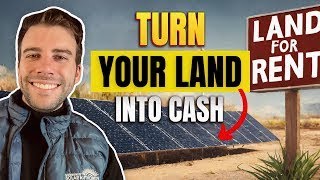
Dakota Malone explains how landowners can lease property for solar farms. Raw land parcels of 30+ acres near substations typically lease for $875 to $1,250 per acre annually, with developers signing 20- to 25-year agreements. The process takes 12 to 18 months from submission through interconnection studies, though there's no guarantee a site will actually develop.
Chapters
All right, tribe, you've heard about the solar craze. Now it's time to introduce you to the guy behind it all, Dakota Malone in the house. So glad to have you, man.
Awesome. Thank you for having me, guys. Really appreciate you making the time for me today and looking forward to getting into it.
Dakota, on a quarter acre piece of property, I want to put solar on it. Is this going to be a good fit for me today?
Not for the type of work that we're doing. You know, there are potential, of course, you know, we'll see. You think about a residential home that's probably a thousand square feet or less where solar goes on top. And so, you know, solar can work. But in the context of what we're doing and where I think we'll provide the most value for your audience today, you know, we're typically looking at parcels much bigger than that, usually 30 acres plus.
I knew that was the case. But tell me really, what, what's the win here? What are we looking at? Because I have so little time, I'm trying to figure out what's the. What should I be spend spending my time listening to? What is the big win that I'm going to get out of hearing this today?
Yeah, so we help landowners, whether that's farmers or investors, turn their raw land into passive income, leveraging community solar and access to renewable deployment. And so, you know, I started my company, I've been in the energy space for over a decade. I've been in the community solar and commercial solar space for six of those years. And my company consults for some of the most significant solar developers in the country. We have a streamlined interest in deploying access to renewables. And when you think about the value chain of the trillion dollar clean energy economy, it really starts with putting those assets in the ground. And so as far as the lucrative opportunity for those land investors, landowners, farmers, et cetera, people with raw land, is that they can turn their raw land into passive income by leasing those parcels out to Solar developers for 20 to 30 years at a time. And oftentimes longer, as technology keeps advancing, those developers are going to want to keep their assets in the ground for as long as possible. And so really, you know, the game that we play with landowners is helping them again turn their raw land into passive income and really doing it over the long haul.
All right, so I've got 100 acres that was. Has been in my family for 100 years. Nobody's ever done anything with it, but I now have it. And I hear this, what is the real opportunity though, is it like, hey man, I'm, we're going to give you 500 bucks a month and be able.
To put a bunch of, you know.
Solar panels all over this land. It's going to be an eyesore and it's not going to be worth, like, tell me what's the, what's the so what behind that for me and my family going forward?
I love it. Yeah, thanks for the question, Joey. It's a, it's a really big so what? And I'll give you an example through story. So I had a close friend reach out to me, very similar. He had about 100 acres. It was his family's property. It was generations handed down to him and they really didn't want to sell it, but they also had a need for earning additional income. They were sick of the taxes going up on the property. And so, you know, we're in the middle of kind of exploring this opportunity for him right now. And the big piece here is that they don't need to sell that piece of land, meaning they can keep it in their family, continue to pass it down, but now they're turning that liability that is just raising in taxes and they're doing nothing with into a cash flowing asset that stays into the family. And so when I think about sustainability in general, which is a core value of our business, which may seem like an irony, but I don't think that it's talked about enough, is the whole idea of sustainability is like, we love to practice what we preach. And so when you have the ability to keep a cash flowing asset in your family for generations to come, compared to selling it off or getting rid of it, all of a sudden you are creating sustainable passive income over the long haul. And like, just for raw numbers, just for an example, you know, we typically look at anywhere from 8, 75 to 1250 per acre. I've got to change my numbers on all the different podcasts I've gone on. I'm a big believer in under promising and over delivering. There's oftentimes where we come back and we're like, hey, it's you know, 2,000 bucks an acre for the next 30 years per year. Sound fair? And you know, they're going from paying a couple $10,000 in property taxes and not making any money on it to, you know, turning that parcel into an actual asset that's generating hundreds of thousands of dollars across the length of the term.
So you said $8.75 to $12 and something cents per acre per Month or per year? What's the math?
No, no, no, no. So $875 to $1,250 per. Per acre. Per year.
Per acre per year. So someone who had 100 acre parcel at $8, $875 is looking at 87, 000 a year?
Yeah, yep, that's right.
Okay, you get my attention. I'm, I'm, I'm looking, you know, looking, looking for land now I'm, I'm looking, looking to find an opportunity here. So what, what makes a good piece of property? We've talked about it needs to be bigger than a quarter acre. You said probably 30 acres or more. What other things do I need to know about? How do I know if I'm a fit?
Yep. Well, the first thing I'd like to do, jets, is I'll send you a copy of our Landowner's guide to Solar investing. We could attach it to the show notes and anybody can kind of just go and look at that PDF. There's a great checklist in there that walks through everything that I'm about to say and more. So what we're really looking for is 30 plus acres and typically again, that scales up. So there are solar farms that go across hundreds of acres. Really, they go into two different buckets. One's called community solar, the other is called utility scale. There's really no differences in the leasing opportunity being that a landowner can turn the raw land into passive income by finding a developer that wants to build on site. But typically we start with a 30 acre parcel that will give us the ability to build 5 megawatt solar farm. Again, that solar lingo, no one really needs to know. It's just how much power we're able to produce on that 30 acres. And typically we like to build to suit for at least 5 megawatts from there, you know, 30 acres, typically flat land, we don't like to deforest. We prefer brownfields. And so again, we'll build on. We're working with international paper companies. They have a sludge pit behind their factory that is of zero use to them. They can't use it for anything else. And renewable energy, commercial solar becomes the best and highest use case for brownfield sites. So we always like to start there. But again, we're okay with Greenfield. We have farmers that reach out to us. They're like, hey, we've got 80 acres of hay. You know, we only, we only lease 20 of it. Right now we've got 60 just sitting. What can you do for us and so that's typically what we're looking for. So, again, like, if you imagine bare, flat land, of course, you know, there's some slopes. This is nothing that a particular landowner needs to, like, have the exact numbers. We'll do all of the research. And in fact, our entire process is turnkey. So if you have 30 acres, if you think it's close to a substation, which is another piece, those substations are what connects the utility grid together and where all the power kind of draws from, they typically need to have what's called upgraded substations, which again, we check for really the big factor is proximity. Typically we're looking for parcels of land between 1 to 2 miles max next to those substations. And the reason why is that once you have to start laying trenching down and wires down for further than that, it starts to get pretty expensive. And so not to say that the lease becomes impossible at that point, but as far as the lease payments, you know, going from that 875 to the 1250 spread, you may see a much lesser amount based on if the developer has to do, you know, $10 million in trench work or substation upgrades. All right, and so again, let me.
Pause you real quick to go. So I'm not familiar with finding a substation. Are there resources that would be able to help me identify how close I am to that? Like how. What do you, what do you recommend for that?
Yeah, so this is exactly why we started our process the way that we do, because we'll just do it all for you. There are substation maps, there are utility maps. The average Joe with a piece of land is not going to understand how to look at that and how to kind of figure that out. We have an internal land team, we have a GIS team. My co founder runs and is a former land investor himself, and so he kind of takes over that entire opportunity. And, and what we actually invite people to do is, again, you can check out the PDF, we'll attach it to the show notes. But if they have a piece of land that again, is above 30 acres, based on what the PDF says, what I'm saying today, it sounds like it might be a good fit. Regardless, if you don't know, you know, where the substation is, if it has phase three power lines, which is what we're looking for, we just ask people to go to lease.communitysolar.com again, we can kind of attach that somewhere. Lease.community solar authority.com you turn in your parcel of land, basically send us your address and your parcel ID and we'll do all the work for you. Within seven days we'll be able to say, hey, Russ, Joey, this parcel looks good to us. We think that this has potential and we want to take it to an RFP for you. If we think it looks good on our end, based on our experience and expertise, we'll ask that you sign an L A Y completely non binding. Again, it's really just an energetic agreement saying, hey, we're going to do some more work for you. It's not going to cost you anything, but if we're going to go ahead and do this, we want to know that you're serious. But it really starts with people just submitting their land and then we'll take care of everything for you and then within seven days we'll kind of give you a yes or no based on our interpretation of our findings.
So what are the gotchas in this? As a landowner, what am I needing to know getting into this before I go fill out a form? What are those potential gotchas?
Yeah, so the big gotcha is that none of this is guaranteed to turn into a solar farm on your property, being that it may not be a good fit. And so again, we take a lot of at bats, we keep a wide filter because, you know, we'll, we'll come and do these podcasts and we'll get people reaching out like, oh, I've got five acres here, can you make it work? And I'm like, well, no, it's not 30, you know, so we, we keep a wide net and we like to kind of narrow it down into the, the opportunities that we think are going to be home runs for those landowners because we don't get paid unless we develop solar farms into the ground. And so, you know, I am an entrepreneur, but also, you know, very much keeping an investor's mindset here in that we like to use leverage, we like to think and work with parcels that we believe are going to work. But the big gotcha is that there are studies that need to be done. So it may qualify. It may be 30 acres, it may be close enough to a substation, it may have the capacity availability to install solar into that substation, but it might fail for an environmental study or the permitting, excuse me, the permitting might be bad in that specific county. And so again, what happens is we'll do that seven day due diligence. We'll give people a yes or no as whether we think it looks good. Then over the next 60 days we're going to bring that parcel to our solar developers. We may want to co develop it ourselves if we think it looks good and say, hey, we actually want to develop this ourselves. Or we might just bring it into our solar developers to take on for themselves and they'll start to do what's called those interconnection studies. And so that typically takes 12 to 18 months. After that, 60 days, where we come back and say, hey, Russ, Joey, good news. We want to do a lease review for the next 12 to 18 months. We want to be able to get you some milestone payments to go through our environmental studies, soil studies, interconnection studies, all of the work required to develop and build these solar farms. You'll get paid in the meantime, if it ends up not working out, you get to keep the milestone payments that we have sent. But in the event that it does work out, we have the full intention of developing on this piece of property, building a solar asset and then you're set to make, you know, the agreed upon lease payment as kind of outlined in the agreement structure. So that's really the big gotcha is that none of it's necessarily guaranteed. We do our best to keep those safeguards and bumpers, like kind of just like in bowling, how the bumpers come up and, and keep the ball moving where it needs to go. We do our best to do that and streamline it and make it as efficient as possible, but it's not necessarily guaranteed.
If you've listened to our show for any length of time, you've heard us talk about infinite banking and how we were able to use that concept to create over $50,000 a month in passive income. But it's just not that easy to figure out. How does this all connect into my own personal system?
Stallion. That's why we created the Passive Income Operating System, bro. It shows you how to turn income, active income, into passive income. It makes all the steps come together. If you would like to get access to it as a podcast listener, we've never given this away in public before. Go to what'swhat wall street.compios There was nothing worse than walking into class when you're in school and the teacher saying, PA quiz day. Why? Because you were unprepared. Are you unprepared, though, for financial freedom?
Don't be. Find out how close you are by taking our 30 second quiz at wealthwithoutwallstreet.com forward/quiz. Okay, so Dakota, I think I'm starting to get the potential idea of how this could be bad. All right, so I'm, I'm a land. We have a ton of people we work with the land of how this could be bad. All right, so I'm, I'm a land. We have a ton of people we work with the landgeek.com and a lot of the people in our community have started land businesses. So they're out there, they're buying raw land, 20, 30 cents on the dollar. They hear this, my first thought is like, holy cow, this is a great way to turn that Broadland inventory that they're sitting on into passive income. But what you just said gives me pops. It's like, okay, well this is a 12 month time frame before I get any sort of payment and then it might be 18 months and then it's still not guaranteed to actually turn into a lease agreement that will actually turn into this cash flow. Am I better off just turning around and selling it on terms and you know, like, help me walk through. Is that really the case? Like there's nothing, I can't turn it into passive income before that time?
Great question and shout out to Mark over at the Land Geek. I was just on his podcast a few weeks ago and I love hopping on land investing shows just simply because that's obviously where a lot of people who have these parcels will be and they hang out. And I tell land investors that it's not a one size fits all strategy. In fact, it's just a single exit strategy in your tool belt. And so many times, at least in my experience of working with landowners and investors in that like specific space, the flippers, they're usually working with like infill lots or you know, properties in the middle of nowhere, depending on what they're doing obviously. And typically they're not like those 30 plus acre parcels as far as like what's in the wheelhouse of what they're constantly getting for inventory and then flipping over into a lease payment or you know, that passive income in particular, this would really be a one off strategy in their tool belt as you know, something where it has potential to be an exit strategy. They know going into it it's going to be a little bit longer term and it's not necessarily straight aligned with their typical exit strategy for their book because oftentimes their properties don't look typical to the ones that we look for in solar. And so oftentimes we'll jump in with land investors, we'll have conversations with them and they'll say, well, you know, typically not what I'm Hunting, typically not what's in my inventory sheet, but I do come across this types of stuff and now I know what to look for in the future. Or sometimes they do have stuff and they're like, Dakota, I've been sitting on this property forever, I can't get rid of it. And I think that this might make for a great solution as far as an exit strategy. So we see a little bit of both. And that's really my answer there is that of course it's not, you know, the immediate passive income from, you know, leasing out that property and then, you know, getting, getting the payments on it, creative financing. It's much more of a longer term play and you know, it's obviously a little bit more lucrative as well if they're, if they're willing to ride that ride.
Well, what I hear too is that, you know, when I'm around the Langee community, the biggest concern that newbies have is what if I can't sell it? And if you're finding properties that maybe initially fit this model, maybe you're not looking at this as the plan A, it may be plan D or F. Right. Or E. I skipped E there. I didn't mean to skip B. But my thought is, to your point, it's just a potential different exit. It may give me one more exit option and that's what we're really looking for. More investors, we're looking for, the more options, the better. If I have one option, that's the only strategy and it could go bad. But if I have 10 options now I'm just trying to figure out which one to execute on. I like that. So we've talked about finding a property that fits the need. It needs to be 30 acres or more, needs to be within a couple miles of a substation. You've told us how to do that. You guys are going to come in, do this research on it. They're going to tell us pretty quickly within a week if, if it fits the process and then it's going to go to this 12 to 18 month cycle. Really doing the due diligence now. Let's, let's take this through and say, all right, we went through that, you guys said, yes, we want to build on this property. We're signing a 20 to 25 year agreement. Walk me through that. Other than receiving, you know, 875 to, you know, 1200 something dollars an acre potentially for the next 20, 25 years, what would I expect as a. Yeah.
And so this is really speaking to the spirit of what you Guys teach and preach, which is that passive income. And so when it comes to, you know, from the time where the lease payment starts to hit the bank account and you know, up to the 25 years when it's done, by the way, again, solar developers will want to keep that partial. So, you know, we say 25 years because typically that's the life cycle of panels, where they're at now, 25 years, technology is going to be much more advanced. And so, you know, we anticipate those solar farms staying for much longer as long as the landowner is comfortable with that. But it truly is passive income. You know, the operations and maintenance, the O and M is taken care of by the developer. The developer is taking care of. You know, there's no. We had a landowner ask us like, can I still come in and mow the lawn? Because I'm retired and I love to do that. We're like, well, no, like we'll take care of the lawnmower. You do around the gate, around the outside of the fence. But truly it's a, it's a passive income asset. So it's a set it and forget it type deal. They're working long term with the asset owner of that project. That's truly all there is to it. At the end, let's say that does want to come down. There are decommissioning bonds associated with the lease agreement so that they have the peace of mind, such that that land is going to be returned back to its original state. There's been endless soil studies done with no research proving that solar farms affect soil impact in any way. And so really it's as simple and straightforward as that. Again, a sustainability practice within the clean energy economy, really just something that we try to practice from the full value chain down. But as a landowner, that's it. It's very straightforward. And it works no different than commercial properties as well, which we do rooftop leasing as well and parking lot leasing as well. We just did, or rather we're working on 25 acres on a mall in Rhode island right now. The parking lot is 25 acres and we're turning it into a carport solution. And so we're kind of marketing that as like a sustainable urban oasis where this is one of the biggest malls in Rhode Island. They want their patrons to come in, they're going to have dual use where they're going to get passive income. So they get the value add in the commercial property, they get the snow and ice removal taken care of, the patrons get to see the sustainability action. Taking place. There's got to be EV chargers to charge their cars, and they're also going to get covered parking as a result. So very much like a dual use or triple use case of leveraging solar leasing. And so we do it from roofs to parking garages to carports to actual land.
So here's. Here's a question just kind of dawned on me, Dakota. If the solar developer really wants to, for 20, 25 years, they want access to have this solar farm, why would they just buy the property from the landowner?
Like.
Or do they do that? Is it just always leases or do they. Will they also consider just purchasing?
Some of them do, yeah, we've done. We, we, you know, for example, we sold a parcel last year. This particular developer hadn't bought anything for over 10 years. 90% of the industry just likes to do the leasing. I really don't know why off. Off the top of my head in particular, that I would assume that it's. Well, actually, I wouldn't assume because as an investor, you would want to own the real estate you have. Right. That's how I feel too. But typically, most of it's done by and through this leasing process. We do have instances where we'll sell, and again, sometimes landowners do want to sell and we'll have our team buy it up. We'll say, yeah, we'll take your property if we think that it's going to work. And we'll do the same exact thing where we'll do a lease option and say, hey, if this works out, we'll purchase it at the end of it and we'll take the passive income if, if you want to, you know, upfront cash or whatever. Again, going back to the creative financing piece, everybody's in a different situation. And so it's all about just kind of remaining flexible. So again, last year that guy wanted to sell his property. He sold it for a lot of money and he was able to kind of just move on from it. And it was a fantastic transaction.
What keeps me, if I am a, you know, have this entrepreneurial spirit and I want to go out and find land that may be out there that would fit this criteria that's around these substations that they're still raw, and start reaching out to these landowners and saying, hey, I'm just interested, I'm looking for land. Do you have any intention of potentially selling in the near future or would you be interested in leasing it? Right. What keeps me from going out and trying to create some sort of letter of intent that Equals the letter of intent. A timeframe that you guys have, right? I know it's a short. Like, it's a long period, but if I. If Joey doesn't have the property for sale, and I'm like, hey, if I came to you in 12 to 18 months and said, I'll write you a check for X, would you be interested in selling? He's like, yeah, let's talk. And then I come to you and I say, hey, I got a property I want you to do the valuation on. You know, and then you go and spend the next 12 to 18 months figuring it out, and you come back to me like, yes, that's what we would do. And if I have, like, some sort of contract with Joey that says that if I want to buy it in 12 to 18 months, you'll sell it to me. What. What keeps me from doing that?
Well, Dakota, be careful. You, the idea guy, is throwing out ideas. So on the proud here, it's about to start coming full force. Go ahead. Yeah.
Well, this is the exact setup we have with land investors all across the country. They call us and they're like, hey, you know, I'm looking for these types of parcels, but if you're saying, I could do it this way, what does that look like? And, you know, we don't license per se, what we're doing, but we'll certainly make them a 1099 contractor, allow them to access our resources, and then finding and creating more opportunities like that, and then bringing it into us again. Like, we just happen to have access because we're consulting with some of the most significant solar developers in the country. So if we can just build a greater pipeline of people running around and locking up land, we'll take that all day. That's. That's literally what we're building. So we do it internally, and then we do it externally as well with 1099 contractors who may be land investors, they may just be real estate agents. You know, we've seen it all. We partner across the full value chain of commercial solar. So, like, you know, we'll partner with construction companies who want to be GCs on our project, but then they'll sell commercial solar to their previous clients. And so we create this beautiful synergy in everything that we do. Again, another principle of ours, as far as a core value of efficiency, I believe that the energy created and the goodwill created from teamwork, partnerships, and synergy, it just simply is built to last, and it out competes the energy wasted in competition. And so for us, like, we love Those ideas and those are the exact strategies that we run. You know, we don't actively promote it. Like we probably could run Facebook ads and do the whole bit of like, hey, if you're a land investor and you want to, you know, learn, like we could probably do that. It's just not our main game at this point in time. We may grow that out as it starts to become more and more kind of our main focus. You know, right now our main focus is actually not in land development per se, but actually filling these solar farms with large consumers of electricity. So we work with like national brands, municipalities, Fortune 500 companies and we help them meet their sustainability requirements and their energy commitments by actually participating in commercial solar. The land investing is really just something that we're doing as a way to build into co development because we have a long term vision for what we're doing and we recognize that, you know, as far as the opportunity in the vehicle, there is, and we're seeing right now the nationwide adoption of the clean energy economy. We're not at the peak. We're seeing solar growth year over year and you know, there's a massive demand for what we're doing right now. And so I think a strategy like that, Russ, to answer your question, I think it's going to become more and more popular. And again, if you're a land investor and you don't have 30 acres but you're interested, you're interested in talking about stuff like that same exact thing, you know, you can go to our website, book a call with us and we'll be able to talk about what it might look like to piece something like that together where you could leverage our resources, bring us back pipelines of deals and we'll just do all of the work to make sure that it, you know, there's a little legwork up front for that particular person, but we'll do all the back end work and make sure that we can turn it into passive income.
So I know we need to wrap and just to point people, you just mentioned your website. Go to the website to set up a call. That's communitysolarauthority.com correct?
Yes.
Okay, so just go there. Team or tribe? If you're looking to connect with Dakota, that's the easiest way. But you just mentioned, I just want to be clear on this because Russ asked the question if I'm kind of bird dogging these deals, but maybe they're not necessarily buying the properties, they're just connecting the dots. Is that, I mean, obviously that can't be treated the same way because you don't own the property, you're not receiving those lease payments. Is there some other sort of way that they set up with you to, to be paid for that time or that.
Yes. Connection. Yes. Yeah, exactly. And again, it goes back to exit strategies. So an investor, you know, someone with an investor's mindset that has cash flow elsewhere, meaning they don't need the upfront money, they may want to work with us for the long term and kind of, you know, take on associated risks and end up making more. But in the event where people are just finding us parcels and kind of bird dogging it, very similar to any other type of wholesaling, real estate, etc. You know, we pay finders fees. So if you bring us property and it ends up working out, we'll be able to get you a nice, you know, a finder's fee. I've seen them typically 10 to 20 ish grand based on, you know, the size of the parcel we're talking about. We've done a couple of those ourselves. And then you know, we realized like, oh, there's, there's way more money involved if we take the associated risks and do it for the long term. And again, we have a cash flowing business model and so we're not relying on this land stuff as our, you know, income source. And so therefore we're kind of approaching it with an investor's mindset. But if people are in a different position and they still want to find a way to monetize those opportunities, yeah, we can absolutely find a good setup where they can get paid for the work that they're doing based on what they're bringing in. And we can do it in an upfront fashion where they're not waiting years to, to get paid out on something that they don't know.
Well Dakota, thank you so much for bringing another strategy to the Westbot Wall street tribe. Like we're always looking for side hustles, other potential strategies to earn passive income or maybe just something cool about to talk about at your next vacation with your brother in law who's never heard of anything like this. This is all the above. So one more time somebody wanted to connect with you. Where would you send them?
I would send them to actually my LinkedIn. So just LinkedIn.com INDECOTAM alone, my first and last name. I'm very active on LinkedIn, creating content in the sustainability realm all the time. So I encourage people to connect with me there. And then of course if they want to talk partnership or business, they can go to communitysolarauthority.com specifically. If they have land that they want to lease, they can go to lease.communitysolarauthority.com.
All right, Tribe, we'll put all of those things in the show notes so you can just click whatever. The easiest one of those ways to connect with Dakota is, and we appreciate you for listening. If you found value, please take time to rate and review the show. Share this with somebody that you know. Have an amazing day.
This has been the Wealth Without Wall street podcast. Don't forget to subscribe to the show to break free of the Wall street mindset and begin building wealth on your own terms in places you understand so that your wealth will never run dry. See you next episode.
More from Dakota
Forcing Appreciation in Real Estate on Episode 53 of Sustainability Strategies
How we form strategic partnerships across the US for commercial solar: delegating value-add #cre