Fireside Chat with Cybersecurity Girl
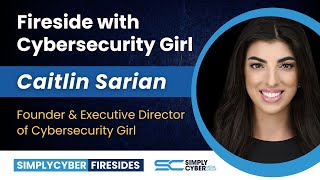
A live Fireside Chat (YouTube) featuring Caitlin Sarian (Cybersecurity Girl) and host Gerald Doer. Caitlin describes her transition from mechanical engineering to cybersecurity, work across GRC/privacy (EY, GDPR experience), running TikTok's global cybersecurity advocacy program, and founding Cyber Security Girl, LLC (June 2023). The conversation emphasizes her creator-driven public education (social reach cited), approaches to security awareness for consumers, mentoring/networking advice for breaking into GRC, and tradeoffs of corporate roles versus independent creator work.
Chapters
It's foreign.
What's up, everybody? Welcome to another episode of Simply Cyber Firesides. I'm your host, Gerald Doer. And today we're going to be diving into cyber security, education, awareness, career development, GRC Mafia action with one of the most influen, with one of the most influential voices in our industry. See, if this was recorded, we could go back and edit that before live, and that's what's cracking now. If you are joining us live and you just got to see that, say hello in chat. Drop an Oprah emote. If you're a squad member, say hello. Engage. Remember, this is an interactive show. We'll be taking your questions throughout the session, so don't be shy. Say hi to a friend in the audience. And if you got a question for me, or more importantly for Caitlin, like, that's why we're here to listen to her, put a Q in front of it just so it's easier for me and the mod team to be able to flag it and be able to pull it up. Now, I am incredibly excited to introduce today's guest. Many of you know her as Cybersecurity Girl, and her journey is fascinating. Like, really fascinating. She started as a mechanical engineer working with companies like GE and Abbott Laboratories and Chevron. But finding her before finding her true calling in cybersecurity, which I absolutely can, you know, identify and resonate with. I love cybersecurity. Over the past decade, she's built an incredible career, performing global cybersecurity assessments across 20 key sectors, implementing ISO 27001, and working with frameworks like NIST CSF and NIST RMF. Her expertise spans from technical implementation to privacy, having helped organizations with GDPR compliance during her time in London and later specializing in data production and privacy at dla, Piper and Pro tvt. But what truly sets her apart is her passionate commitment to democratizing cybersecurity knowledge. For the past three years, she's been on a mission to encourage diversity in cyber, demystify cybersecurity careers, and teach essential online safety to the public. She's built one of the largest cybersecurity social media platforms in the world. Like, literally, she's one of the biggest ones in our space, right? Reaching over 1.3 million followers, which I think that number is actually from her LinkedIn profile, and I think that number is actually inaccurate. I was kind of like pulling things up. I think it's much higher than that, actually. And she generates up to 30 million on a slow month and impressions. Okay, so she's got some reach and she's helping so many people. It's phenomenal. In June 2023, she took a bold step to fully commit to this mission. Founding Cyber Security Girl, LLC and recently co founding Cyber Career Club to help aspiring professionals break into the field. So she's helping my Aunt Dorothea and, you know, stay safe, good cyber hygiene. She's helping us break into the field or level up our game. Truly an impact.
And.
And her impact hasn't been. Has been widely recognized in addition to being on Simply Cyber. Right. She was just named Cybersecurity Woman of the year influencer for 2024. And Caitlin's listed among the top 50 CISOs and cyber leaders shaping the future of information security. As if that wasn't enough, she's just a boss. Straight crushing it. And she's just a really, really personable, kind person. You guys are going to love this conversation. So please do me a favor, drop your Oprah emotes in chat. I see many of the regulars in here. I see PBO and Code Brew. Jesse Johnson with the mod team. I'm sure Kimberly can fix it. Chris Whitlock of the GRC mafia is up in here. FedEx, as always. Good to see you. Philip Martin. Hey, what's going on, guys? Please join me in welcome Caitlyn Sarian to Simply Cyber Firesides. Caitlin. Let me go grab her and bring her up here and let's get into it. What is up? Caitlin? How you doing?
No, just blushing in my room over here. No, no big deal.
I may have prefaced that and set that up, but yeah, I got some.
Big shoes to fill.
Now, I will tell you, that is an accurate statement. That is what you've done. It's truly phenomenal. And you know, really, seriously, congratulations on just all that you've accomplished already. Now, before we get into cyber security, okay, if you. Oh. Sent Caitlin's LinkedIn profile to kind of like figure out what she's up to. What one of the things you might notice is that she worked with or she's part of the LA Galaxy Star squad. Okay, that's very different from cybersecurity, Caitlin. So what was that experience like?
Yeah, so I really enjoy cheerleading. I cheerleaded my whole life, actually went to SMU and cheer it in college too. I loved it. And I always consider myself just like a cheerleader for everyone. And it turns out that that's what I'm doing right now. But I was there for a year when I was doing grad school as an engineer and I wanted to do some. I missed. I missed cheerleading, so I was like, you know, I might as well try. This is before we had any of, like, the football teams, so we didn't have that option. But it was. And I'm aging myself now, but it was amazing. I loved it. And I was there when we won the MLS cup, so I couldn't. I couldn't complain about it. It was pretty great.
Oh, that is truly awesome. Yeah, I'm from New England and we have the New England revolution. But I feel like that's like a tax write off for Bob Kraft because he owns the Patriots too, because they don't really invest. But. No, it's definitely very cool. LA is a cool city.
Yeah, it was. I mean, it was a blast. And I, I. Well, so part of. I'll explain the whole thing. So part of my journey with this was I did cheerleading my whole life, and I also was an engineer, and I never felt like I could fit in because there wasn't a lot of women. And I couldn't see myself as an engineer. But I was really good at math and science, and so I actually applied as an elementary education major. When I first went to school, and I was like, I changed majors because I really, I wanted to do engineering, but I was doing cheerleading because I was like. I felt like my life was in, like, two separate boxes. Like, I was like this, you know, cheerleader, like, bubbly, like, really excited girl all the time after, outside of work. But when I went to work as a cyber security or an engineer, I had to be like a shell of who I was. And part of the reason why I loved starting this cybersecurity girl journey was because it was like this culmination of my whole self to the public. Like, I couldn't. I mean, I would work at law firms, I'd work at consulting firms, and I couldn't show up, or at least I felt like I couldn't show up my full self. So that was one of the reasons why I started. But that's. I digress.
No, no, I mean, that is wildly interesting. I mean, one of the things I did want to ask you was, you know, phenomenal. Caitlin has a. The way I read it, a bachelor's and a master's in mechanical engineering, which, by the way, if you're. If you're following along at home, they don't just give those out. That's like a very difficult degree, both of them, frankly, to earn. At least. I went to UMass Amherst. Like, I was in computer science, but the engineering quad was the same space. And you would just hear the engineers groan about thermodynamics. Like, I don't know.
That was the worst.
Yes, yes. Like, I. Like, I did. I wasn't even an engineering degree, and I have PTSD from thermodynamics. So. But. But I wanted to know, like, how does someone like yourself, who spends all this time, energy, and effort, you know, studying to become and truly becoming a mechanical engineer, transition into cybersecurity? Like, was there a specific moment or an experience where you're like, oh, my God, this is my calling?
Yeah, So I had a passion for learning. Like, I absolutely loved problem solving, which is, like, I just consider every engineer glorified problem solver. And the reason why I went into mechanical was because I was like, I don't know which area I'm really passionate about, so let me just try. Like, it's like, the baseline. It's standard. And I did that. And I did three, like, three different jobs, and I loved every single job I did. But at the end of the day, I was like, could I see myself doing this for the rest of my life? And I was. I grew up in a family and still growing up in the family where, like, you have the same job your whole life, right? Like, and you love it. Like, my grandpa, you know, unfortunately had his funeral before he had his retirement party because he worked until he was 95 and absolutely loved what he did. And my dad doesn't have any shows show any signs of stopping. And so I was like, can I imagine myself envision myself being in this role for the rest of my life? And the answer was always no. And when I found. And I stumbled upon cybersecurity, I was talking to this lady during an interview, and she was kind of telling me all these areas of cyber, and I just got really excited because I was like, okay, I don't think I could get bored with this. Like, I think this could be something I could be in for a while. And if I don't like a certain area, I can move. And that's exactly what happened. So I. I started with absolutely zero experience, which is another reason why I started my channel. Like, zero. Like, I was really, really bad at coding. We had to take Matlab in school. I had to take two semesters. That was like, matlab and physics were, like, my worst classes in school. I could not stand them. And so I originally assumed, like, cybersecurity was coding. And I was like, I'm not going to tell this lady. I want the straw. I'm not going to tell her I'm bad at coding. And so I just said yes to the opportunity. And then I literally learned everything on the job. And I found out there were all the different areas of cyber and I fell in love with it. And it's just something that constantly, like, allows me to use my brain and solve problems and just be extremely passionate about, like, all the little areas that I never even imagined existed.
Yeah, that's. That's definitely one of my favorite parts of cyber security is just how vast it is as a field of study. And then on top of it, it's constantly evolving. So I always tell people, you know, like, I want as many people to be in cyber security as possible because I. It's given me a lot. I love it. But one thing I do caution people is, you know, if you're not a lifelong learner, it really might be a very difficult row for you to hoe because it's constantly changing. You have to desire that constant, you know, input and feedback and stuff. I mean, have you gone down one path? I know you worked a lot in GRC and we're going to spend a lot of time talking about this, but you do have that mechanical engineer you were at Chevron. Like, I could see in a minute, like, oh, this. This professional is going to end up in industrial control system security. So, I mean, did you dabble a little bit before you found kind of, like your calling within the industry?
I still feel like I don't have my calling within the industry. And I think that's what's so great about cyber is that I. I feel like I'll be great and I'll find, like, an area that I love for like, three or four years, and I'll be like, okay. I kind of feel like I'm an expert now and I'm seeing the same things over and over again, or at least I'm encountering the same things. I'm going to move on. And so I actually first started in cyber transformation at ey, which at that point was just like, you went into a company, a lot of times you went into company after a breach or a company that was having issues with cyber. And we look at their cybersecurity stance from every. Every area, right? So we'd look at access management, like threat, threat detection and prevention, data protection, like, all the areas, and we'd, like, have about 400 questions that we'd ask every team and then we'd give them like a layout of, okay, you're rated this in threat protection, comparatively to your, you know, your counterparts. Like, how do we get you to a better level, a more advanced level or more blanking on the word, but maturity level. Maturity. There we go. That's the word. Maturity. And so we were like helping them mature their cyber security stance because at that point this was like 10 plus years ago, companies just had like no idea where to start. They were kind of popping up random teams like trying to figure out what to do. And so we were, we were coming in there and really assessing all the different areas and telling them how mature they were. And if there was any, you know, teams that were immature, we come up with a path and help them figure that out. And I love that because it helped me get and understanding of every area of cyber at that point in time. And then I was like, after two or three years, I was like, I'm kind of doing the same assessments over and over again. Let me try data protection. And I was doing like DLP scans. So I was going in like implementing the DLP software, running the scans for a couple weeks and saying, hey, this is like, you know, what, what, what's going on in your environment? Maybe we should fix this. Maybe you should implement the CLP solution and I'll train, you know, the person that needs to be, be managing it. And then DLP and privacy or data protection and privacy was paired together at ey. So I was like, okay, let me try to figure this privacy thing out. And I got an opportunity to move to London before GDPR hit. And then I became like really obsessed with privacy. Came back still obsessed with privacy. And while I was back in the U.S. i started realizing, like, I kind of want to tell consumers that they have these rights to their data. And I started like kind of flipping from being like, I want to protect companies to like, I want to protect the consumers.
Yeah.
And so, and then I started my channel while I was still working and it kind of just like went off from there. But yeah, I mean, I did a lot of GRC stuff in terms of like helping like MAP NIST frameworks or ISO frameworks. My first project ever was Cisco's cloud environment to get ISO 2701 certified. So love, absolutely love that. Learned a lot about it. Again, ISO similar where you have so many different areas that you have to help them with that you have to kind of learn a little bit of everything.
Yeah. And I always tell people, especially people trying to break into industry, like I broke in, it's. I, I don't know. Again, I, I did the research, but I Don't know exactly when you went in, but like, Eny is a professional services company, huge conglomerate, easy. Not easy to break in with, but like, they have tons of jobs, tons of opportunities. I broke in with KPMG Consulting and got in that way through D.C. and stuff like that. So I always advise people, like, you know, the way that consulting industry works, they charge X amount of money and then the. Their profit is what they don't. The difference between what they pay you. So like, if they hire junior people, there's a bigger delta, more profit. So. And anyway, so, like, it's great to see, you know, ey, same thing. KPMG Consulting. Like, I tell people this all the time, and it's just you're reinforcing it, which I love. Now a question from Chat coming in real quick and from Gary Sergios, you had mentioned loving all different things, but do you have a, like, a dream job, like kind of a stretch goal, if you will?
I think I'm doing my dream job now. Like I said, I always was. Like, I felt like I was always a cheerleader. I always want to support and encourage and motivate, and I get to do that in two ways right now. I get to do it with my cyber career club, which actually, by the way, one of my members is obsessed with this podcast slash stream. So Derek, if you're watching, hello. But I get to, like, inspire the next generation. And then I also get to teach people and, like, cheer them on and be like. For me, I'm like, cyber security is not a scary thing. And it shouldn't be like, it shouldn't be scary. It's something that we have to live with every day. We have to, like, understand how it works. And it's not that complicated if we understand the basics. And so I get to do that every day. I get to show up, I get to be creative. I get to figure out how to solve problems in different ways. I don't. I'm a little biased because I don't have to report to anyone anymore, which is great.
Oh, my God. Yeah.
So I honestly feel like I don't know what I did to be like, to have God put me in this position. I feel so blessed every day to wake up and be like, I can choose my own adventure. Did you ever read those books, by the way?
Oh, my God. Junior books are the bomb. We don't have to disclose your age because I never ask people their age, but I am a. I was born in 1979. My shows are always littered with, like, you Know, late, you know, 80s, early 90s references, hip hop and then like Saturday morning cartoons, he man, stuff like that. So, yes, choose your own adventure. Books were a staple in my, in my grade school because we didn't have iPads, you know.
Yeah, yeah. I mean, that's what I feel like. My, my like, job is right now is like I get to choose, like, every day, like, what I'm going to dedicate more time to or, and at the end of the day, it's always about helping. So it's either about helping, like, the people getting into cyber or helping the people understand cyber and like, protect themselves and protect their loved ones. And so I get to be a cheerleader for cybersecurity, which is like, not a thing, but that's like, what I like to say. So I, I, this is my dream role. I, I do think consulting is also part of my dream role. If you get, like, very antsy about, like, learning new things or want to keep learning, I feel like that's the best place to push yourself. I don't know if, if you feel the same way, but.
Yeah, no, yeah. Basically, I don't know if I want.
To be a partner.
No, no. So consulting is good. I'll tell you what. So this is one thing. So I advise people to break in with consulting, but for me, I wouldn't stay long term with consulting because it is a lot of work. And there's two things about consulting, and I want to get mostly talk to Caitlin here. But like, with consulting, there's two things. One, you're on contracts, right? So if you're not on the contract, you're on the bench or on the beach, and like, you're just overhead. And that's not good for the bottom line. So then the reason I was actually at Booz Allen Hamilton for like, six years, and when I left there, it's because I was, I was, my wife was starting to have kids, I was not having kids. My wife was starting to have kids. And we were coming up for contract renewal and it was like, high stress. And like, if we didn't get renewed, I was probably going to get laid off. And I was like, I don't have time for this. That's one thing. And then two, typically you have to do a lot of travel, which is epic cool when you're young, but it's really not great when you're trying to raise a family. And by the way, traveling to San Diego or Rome or London is cool, but if you're just traveling for work, I got to tell you, a hotel, a Marriott in London looks like a Marriott in Topeka, Kansas. And, like, an office building in Schenectady looks the same as one in Paris. Like, if you, if you're just doing hotel, airport, office, you're not, you're not really traveling.
No. Like, everything you said is spot on. And that's why I left after manager.
Yeah, exactly.
It was amazing. Like, I literally had the best time. And I learned, I think that was a job I learned the most. And maybe it was because I'm, like, the most eager, and I, like, knew I needed, like, I was drinking from, you know, like a hose. But I, I really enjoyed my time at the beginning, and now I'm like, I love it now. So I, I don't think there's, I think it also depends on, like, what you, what people want. There's some people that want to be like, us, have a steady job. Like, I was asked, like, a year ago, hey, do you, did you know that you like being uncomfortable all the time? And I'm like, what are you talking about? He's like, just everything that you do, you put yourself in a position that makes you probably very uncomfortable or, like, like, you need to grow or stretch to get into it. I'm like, yeah, that, that tracks. So there's some people that don't want that. That's totally fine.
Yeah. No, and it's perfect. I mean, you gotta, you gotta listen to your own voice, your own calling, and, like, do the things that, you know, fill your cups. And if challenging yourself fills your cups, then push it. So let's just pull this up really quick. So this is Caitlin's web website, or landing page, or zero, you know, homepage, whatever you want to call it, for Cybersecurity Girl. And I'm sure you can get to all the things there. But in, in leading up to my next question, and I believe I don't have the URL here. Let's see, is it CybersecurityGirl.com? yeah, okay.
Of course.
CybersecurityGirl.com. so, but this is her social media presence, right? This is Instagram, which, by the way, Kaylin, I gotta tell you, mad props to you. I have literally tried, like, Instagram and shorts multiple times over my career. I, I, I swear it's because I'm like a Gen X millennial and I just don't get it. But I, I'm terrible at it. But if you go to, you know, at Cybersecurity Girl on, on that, or on TikTok, if it's still around after Sunday. It looks like you use that same kind of profile with the pink circle background and you chose not to do it on YouTube here. But these are her social media presence where she's pumping out really, really. I got to tell you, Caitlin, really, really engaging, fun, like pithy shorts. Like when I see him, I'm like, oh man, I like, I wish I could do that. It's like inspiring, but at the same time, like, intimidating. So go, go check her content out or subscribe to it. Like, I swear to God, you've definitely seen her pop up in your feeds. But what I wanted to ask you is, okay, this is all a long way to get to the point. You've worked both in high level corporate roles and now, you know, you're doing your dream job essentially like an independent creator, but you're still doing education, you're still kind of pushing that GRC level forward for end users, for, you know, individuals and for people who are just trying to consume and be better. What are your thoughts or what have you learned kind of about security awareness and training that like, works differently in the real world versus kind of corporate environments?
Yeah, it's funny that you asked that because I actually, I don't know if you knew this. It was kind of kept on the DL for a little bit. But I, I started my TikTok before I started Instagram. My Instagram was always personal up until like a year and a half ago and they changed it to Cyber Security Girl. And I was really embarrassed that I was even doing this. I was like, how am I a director level person, like putting out these tick tocks like that are like cyber security but not really. Like, they're just like basic stuff. And so I was really embarrassed with my tick tock. And anyways, it doesn't matter. I, I kept.
No, no, actually I would argue it does matter and I appreciate you sharing that because a lot of people might feel self. Self. What's the word I'm looking for, huh?
Self conscious.
Yeah, self conscious. In my mind I was thinking self confident. I'm like, that's absolutely not what I'm trying to say. People could feel self conscious and then when you're saying it like, you know, you're, you're out there doing it, but hearing, hearing you say about like these concerns and these fears, I think it's totally warranted. I appreciate you sharing it, so please continue. But like, definitely. Yeah, this is a safe space.
Yeah, no, for sure. I mean, I started, I was like, I'm only going to. So I wanted it to do this because I wanted to get more women in stem. I wanted to educate the public, and I wanted to demystify what cybersecurity was as a whole. And I was like, okay, if I start this, I'm going to post. I'm only going to do TikTok because I want to reach the next generation of individuals. And Instagram, like, it wasn't good at that point to push anything out. It just, like, you had your followers and that was it. And so I was like, I'm going to do TikTok. I'm going to post three times a day. I'm not going to have my name on it. There's no email that's going to be linked to me. This is literally. That's why it's called cybersecurity girl. It was never called my name because I didn't want anyone to know. I didn't want anyone to Google me and try to figure it out. And so I did that for about three or four months before I started really realizing it. I got a lot of traction, like, three times a day. Like, I was doing a lot of posts. This is what. This is what I was doing my free time after work. And then TikTok actually found me and asked me to, like, speak at RSA at one of their events. And I was like, no, no, it's okay. And then a year later, I was interviewing at TikTok to do data privacy there, and I got the job. And I reached back out to the lady that had interviewed me or asked me to do, not an interview, but asked me to speak. And I was like, hey, by the way, I'm gonna be a TikTok. I'm so excited. And she's like, what? What are you talking about? Like, I had no. Like, no, we want you on our team. So I actually decided. I went through 12 more interviews, and I ended up leading TikTok's global cybersecurity advocacy program. So I actually got my TikTok job from my TikTok, which is ironic.
That's super funny. That's so meta.
Yeah, it's like. It was kind of ridiculous. Everyone's like, oh, so you have a TikTok because you're on. You work there? I was like, actually, it's the opposite. I worked there because I had a TikTok, but I was leading their global advocacy and culture program, which basically meant that I was in charge of all cyber awareness training for the entire global company. And I had never done, like, a awareness Training thing again, I was always like, grc, data protection, privacy, cyber transformation. And it was a lot more difficult than I expected because you had to go through so much red tape and like, like there's so much like, legal stuff about it too. And pr, like, oh, you know, if, if one of our employees decides to record this and then post it, like, what could happen? Or, you know, legally with grc, we have to make sure that we include like, X, Y and Z. I'm like, well, that makes this, like, not fun to post. Like, no one's going to want to watch like a legal term cyber security training video. You know, like, what am I supposed to do? There was like, not a lot of creativity that I had there, which was very interesting considering, like, it was TikTok. So that made it difficult. It is a lot easier to educate the general public without having some weird, like, PR agendas and GRC agendas in the background.
Yeah, that's like a massive GRC job. Usually, you know, end user awareness training is like a segment of your job if you're like, you know, working in the GRC space. But I could totally see a company like that wanting to have like, dedicated people. I. I also heard it. FedEx brings it up. Did. Did you say you had 12 more interviews? Oh, my God.
Like, at one point I was leading a global team. Like, I was like, right under the ciso, so it was necessary, but it was ridiculous. It was like, yeah, it was a lot. It was a lot of people. And then I, I, like, I, I'm not gonna lie, this sounds really bad. I'll be very transparent with you. I kind of regretted doing that. I was like, I should have just stick with. Stuck with privacy because it was blending my two worlds to a point where it was like making training and awareness, like, not fun for me. I was like, this isn't fun. Like, I can't do anything fun. And also I was responsible for. Which they didn't tell me before I got there. Helping the PR team mitigate fires when it came to cybersecurity. So basically what would happen is if, you know, TikTok was in the news, which it was constantly.
Yeah, you may, you may have seen them in the news.
May have seen them in the news a few times. We would have. And if it was cybersecurity related, which it pretty much every time was, I would have to go back and take it and say, okay, they're saying that this about us. What. How can we debunk this? Or how can we prove otherwise without giving all this information. So I would go to all the engineering teams, work with PR. We'd have like 24 hours or less to manage all these issues and come up with a solution which would have to be approved by, like, everyone and their mother, legal PR and everything like that. It was crazy. And then by the time I wrote response back and it went through all the stuff, it ended up just being like a cookie cutter. Like, we don't do this. And I'm like, I'm trying to show the, like, world what we do, and you're not allowing me to show because it was like some type of issue. You know, we can't share that information or if we share that, it could lead to this. And so it was, it was. It was a whirlwind. I will say. I. Yeah, it was a lot. Learned a lot. Never again.
That reminds me of. I worked at a large company at one point and we had like an active incident and we needed to send an email out to the entire workforce. Like, it was. It was like a really bad situation and we needed to communicate to everybody because it was the fastest way to get in front of it. And we. We were going to fire something out, but it had to go through, like, legal and PR and the communication team. Like, by the time we got it approved and back, it was like two weeks. Like, the incident was. We were cleaned up and it was over. It was like, what the hell? So, yeah, totally feel that corporate grind now. Caitlin, if you do not want to answer this, it's fine. Okay. Kimberly can fix it. She's a mod. Great. Kimberly can fix it. Is amazing. She's just curious about life at TikTok. Your career life at TikTok. As little or as much as you'd like to speak about that.
Yeah. So there's a lot of different teams and a lot of different leaders. I think certain teams had an amazing career life. I like, talk to a lot of people. My life because I was in this weird role where, like, it. My role was created for me. And originally, like I said, it was only supposed to be awareness and training. And somehow because there was so such a huge gap and I was the only one that really knew how to communicate cybersecurity topics in, like, a very digestible way. I got roped into a lot of these marketing and PR things and I couldn't get my normal day job done without, like working like 12, 14 hours. And then everything I did was always wrong. Like, I couldn't win. And so for me, and I don't think it was meant to be like that. But like when you're fighting like PR battle nightmares around cybersecurity and then you have like legal pr, every type of person trying to figure out the same thing. Like it, there was too many cooks in the kitchen for like it was just a lot. And, and I know it's because every, everything always felt like it was on fire when we were, I mean we were under such scrutiny for so long and so it makes sense. I also wasn't able to do like my posting. They were starting to tell me that I was in conflict of interest, ironically from my tick tock, even though they found me from my tick tock. So it was a very interesting thing and I didn't mind because I really, I, I love the platform. Like, it's what made me who I am. It's like literally like springboarded me to this. So I can't ever hate the platform. That was, which is why I was so excited about, I didn't care about working out many hours. I didn't care about like kind of pushing that on, you know, putting that on hold. But at that, at that point there was also like a mental, I was starting to have like a lot of mental health where I was like really, really stressed and anxious and I started realizing it just like wasn't worth that much stress for me. But again, like, I think it really, really depends on like management style. Like, I didn't fully align with my management and that's totally normal. That happens at every job. There were different teams that I would have definitely aligned better to, but I would just like at that point I was like, I'd rather just do my own thing if you're going to start saying I'm in conflict of interests. And yeah, I wasn't able to build my brand so I, I loved it. I think the culture there, depending on the team is incredible. But like, and it's the same for every company, right? There's going to be good leaders and bad leaders. And by good I mean good for you, like good for your personal perspective. And so yeah, it just, it wasn't working for me. It wasn't meshing. The first couple months was great and then once I started getting pulled into all the PR nightmares and it wasn't, it wasn't the ideal situation. So very transparent. I love TikTok. I wish them nothing but the best. I still talk, I love it. Like I, I swear by it. I, I think what they're going through right now is like not acceptable in the us Like I think that we have bigger fish to fry than. Than trying to crush TikTok. But for me personally, the. The work life balance was. It was a struggle. I. I'm not gonna lie to you.
Yeah, that's another, like, pro tip that Caitlin's dropping on everyone that, you know, I empathize. And it personally resonates, like, if you're good at something and people find out at work, they'll. They'll, like, exploit you, basically, and you end up working, like, multiple jobs or you wear multiple hats or, like, oh, Caitlin can do that, or, you know what I mean? And it. It's. It sucks because it can learn to lead to burnout and having you, you know, not enjoy work, and that's. That's no good for anyone.
I was. I was told, oh, you need to be better at pushing more to your team. And I'm like, well, my team's already working normal hours, and I'm not going to make my team work more hours than I like. That's not how I lead. Again, different leadership styles. That's why, like, I don't lead. Pushing everything onto my team and making them do it and then taking the credit. That's like, I would never be able to live my. Live with myself to do that. And so I was getting pushback from, like, oh, well, you could do this if you, you know, manage your team correctly. I'm like, I'm managing my team correctly. They are already stressed and, like, working crazy hours. I'm not adding more to their plate. I will do this. But, like, it was just. It was a lot.
Yeah, no, I appreciate that. You know, like, leaders, like, that is what people need. You're basically, like, protecting your staff instead of exploiting them. Like, oh, yeah, like, I'll exploit my staff. Let's go. No, I appreciate that, Caitlin. So one of the things. Changing gears a little bit here, and I'll look in chat in a minute for some questions to see if you guys are dropping them. And I do see some questions. I don't want to devolve this conversation into more politics and stuff like that. So just if you're just so. Everybody knows. Okay? Now, Caitlin, you make all this content, and it's phenomenal. Right? And you've mentioned that younger generations are actually more likely to fall for online scams than older ones, which a lot of elderly people, older people, they get taken for a ride all the time. It's, like, in the news all the time. Romance scams, to name a few. Right. But, you know, the younger people, they fall for it. Even though they're, you know, gen Elf and they, or Gen Z and they grew up with an iPad in their face and everything like that. Based on your experience creating security awareness content right on the. On TikTok and socials and stuff, you know, why do you think younger people are getting hit so hard? And you know, is there anything like you can do about it? Are you seeing any trends in your posting? Because, and in full disclosure, I don't know how much engagement you're getting as far as like back and forth and your subscribers and followers like, engaging with you to share their personal stories and stuff like that. But I am really curious about this younger generation.
Yeah, so I used to think, like, similar to what most people would think is like, the older generation is the ones that are like, you know, the probably biggest target. But the issue is like the youngest generation were born and raised on iPads. Like, it's the iPad generation. They trust pretty much everything online, unfortunately. And like, that's online is their reality. And so anything that anyone says online, again, this goes back to like the misinformation, disinformation out there. It is, it is nuts. But I think because of that, it. They're just so much more trusting. And it's not, it doesn't even like phase them that it could be like off, like, because it's. That's what they were like. If you told someone that was like 95, hey, we need to, you need to send this money through Venmo, they'd be like, I don't even know what you're talking about. But if you said that to like, you know, a younger kid, that, that's like a normal thing. Like I Venmo, my friends all the time, like, it's a normal thing. So that's why it's like, it's really important to start educating users on just being more cautious, understanding misinformation, disinformation, and then understanding, like, all the information that, you know, hackers and scammers can get on them.
Yeah, no, that's 100, right? And it's funny, just to share a personal story, my aunt Dorothea, who, who recently celebrated their 75th birthday, got a call from a scammer and they're like, oh, like your computer. Like, you're, you know, you're fraud or whatever. And she answered on her flip phone, by the way, and they had like, you know, all this scam and stuff. They're like, we need you to go on your computer and go to this website. And she's Like, I don't own a computer. And they're like, what do you. What do you mean? Like? And she's like, I don't own one. I don't know what you're like, I can't do that. And they're like, oh. And they're like, all right. And they just hung up on her.
Yeah.
She was literally protected because of her lack of, you know, technical acumen and adoption, which is hilarious.
It is.
So, yeah. Anyways, as far as making content goes, though, I mean, do you. Obviously there's a lot. You. You had mentioned it, like, oh, I'm doing a lot of kind of basic stuff. I mean, do you run the gamut of basic cyber hygiene? Is that kind of, like, what you do or do? I. I'm curious because I'm doing a little bit of this myself right now, and I've kind of broken it into categories for myself. So I. I love grc. I want everybody to know about grc. And I have, like, GRC career tips, GRC interview tips, GRC tools and practices, grc. Like, power moves. Like, what are you seeing? Or how do you break your content up? And, like, do you see trends of, like, things that people just constantly don't understand or what?
Yeah, so that's a good question. I mean, I really try to niche down. Like, for example, everyone has a. Like, I'm trying to get to the public, right? So what is the public app? Everyone has a phone, okay. Everyone has the same issues with the phone. You don't realize how much you're sharing. Okay. There's so many security issues on the phone, right? You can look at all the app permissions. You can look at the microphone, you can look at the camera permissions. Then on top, like, there's. There's so many things, and that's just like, one aspect of a consumer, right? You can look at the computer. How computer set up. You can look at social specific. Social media specific apps that people use. Like, you can really niche down. And so I honestly just take, like, the most popular things that I can think of that people are. I envision struggling with. On top of that, shout out to my mother. She gives me so many ideas.
Nice.
Because she always asks the questions. And I'm like, oh, you know those things where you're like, oh, mom, come on. Like, you should know this by now. But then I'm like, oh, wait, that's a good idea. I guarantee you other people have this question. So now I, like, really encourage them. Like, mom, if you have any questions, please Tell me so I can make a video about it.
Yeah, like, you're calling her. You're calling her, grilling her for things that you're like, what frustrates you today, Mom?
Yeah, exactly. Like, before, I was like, oh, mom, stop calling me. And now, like, mom, please, please call me so I know what to do. But, yeah, I think my mom's like, my mom is my biggest cheerleader, so it's funny. And I just get, like, ideas from her. Like, anytime I meet new people and I, like, tell them, oh, I work in cyber. It's like, whatever that pops up in their head are like, oh, I have an issue with this. How can I do this? Or, you know, what does this mean? Or, I think someone might be in my phone. How do I check? Like, any. Any question I ever get about cyber is like, okay, that could be content.
Oh, that's awesome. Did you. Another curiosity. I mean, obviously, your TikTok and your Instagrams are huge right now, especially. I think TikTok's like, 900,000. Like, did you just grow casually over time, or did you have, like, one viral, like, and, like, that was the explosive video that did it.
Yeah. So with Instagram, it was like, one. I'm. Mine's very different from a lot of other people. I have, like, viral videos, and that's what gets me, like, 20, 30,000 followers. And then I have other videos that just go to, like, you know, 20, 30,000 people. So for me, mine's more of, like, the virality of it. So I did have, like, one viral video. I remember I was actually in Paris, and I, like, reposted, like, an old TikTok onto my Instagram, and I, like, was on vacation. I was like, oh, I don't want to do. This is like, the middle of the night. I was like. But I'm like, I was committed to posting once a day on Instagram at that point when I was trying to build it. It's like, no, you got to post once a day. Just repost one of the old ones from TikTok that you haven't posted on Instagram yet. And it, like, went crazy. And then that got me to, like, a hundred. And then I have, like, you know, a few viral videos every couple months where, like, it'll grow to, like, you know, 20, 30,000 from just one viral video.
Oh, okay. Interesting. So we had a question a little while ago when we were talking about your academic career, and I'm going to pull the question up, but I want to ask it in a slightly different Way. So you were talking about hating math and wanting to push through on math because, you know, in physics and I can totally dig on that computer science degree, they make you go all the way up to, like, calc 3 and stuff, but you kept pushing yourself. So whether it's math or it's something else, like, no matter what, it doesn't matter what job you have in chat right now. There's things about your job you like, and there's things about your job you don't like. There's things that you need to learn and you don't want to, and there's things that you're excited to get up for. So, you know, I guess, Caitlin, what's your strategy approach for kind of like dealing with the things that don't fill your cup, but you have to go learn or you have to go, you know, practice or whatnot?
Yeah, I think I'm a little different than a lot, than most people because I take it as a challenge. And it's like, it's to my own detriment. A lot of times, like, I'm like, I'm going to figure this out. I don't care how long it takes, like, it'll. I'm going to figure it. There's no way I'm not going to figure this out. And even if I didn't figure out, like, the best way, like, math was, I was actually good at it was physics I was terrible at. And I think I. Both physics 2 and 3, I got a C minus. I barely passed physics. Same with Matlab. Those are the. Everyone. Every other class I got an A, but I barely passed that. But I'm like, I'm gonna figure this out. I will pass. And I mean, I think I've had that since I was little. I don't think. I know. Like, my mom's told me stories about how many times people like, oh, no. Like, I don't think you should. She can do that. And my mom's like, oh, you shouldn't tell her that. Like, you should not tell her that. So I. It's more of, like, a personal thing of, like, there's. I never want to leave this Earth thinking that there's something I couldn't do. Because at the end of the day, if you don't believe in yourself and you don't think you can, like, there's nothing that we can't do besides, like, maybe, like, growing wings and flying, but, you know, take it. Take it with a great assault. There's nothing that I. I think that sounds like the worst thing ever where if I left and I was like, oh, I really wanted to try this but I just didn't give my time to it.
Yeah, it's all, it's all a mindset. I mean I'm glad you have that personal, personal drive because that drives you. But for people in Chad, you know, like if you don't have that inner drive. I just, I just read this today frankly, so it seems very germane. But it's a mindset. Like don't think if someone tells you you can't do it. Don't take that as a bible if it hasn't been solved before. Don't take that as you know the truth. Right. Like you gotta, you kind of, kind of form your own, not own reality, but you gotta challenge yourself because no one knows better than you if you can, you know, push it and do it well.
Yeah. And also just on that really quickly is like, yeah. If you're not interested in it, like you don't have to like prove your to yourself or anyone else. Like don't waste the time. Like I've learned as I've gotten older, I'm like, I really, really value my time and I'm not gonna do and spend time on something like if I don't think it's necessary or don't feel like it's part of my purpose or vision or goal. Obviously with school I push myself because it's like I want have the best grades as possible so I can have like my pick of job. Yeah. But like nowadays like as you get older, like you, I mean it's, it's really. You are your, you, you get to choose your own adventure. We're going to have that as a theme.
I like it this choose your own adventure episode. So speaking of that, you know, Cyber Security girl, you do a lot of, you know, kind of end user awareness training education. It sounds like you said unich into mobile, which is cool because everybody's got one. But you also help people break into industry which is a kind of a pillar thing. Here at Simply Cyber we even have a, like when we do a daily stream, the one for the Sans Award. Actually we do it every single day. And when chat and someone announces that they got a job, we actually play the Miley Cyrus like right. And we all celebrate it. There's a whole emote. It's, it's an exception experience. We love it. So I know that you help people and I'm sure you get that same satisfaction of knowing that you're positively impacting people. But in the GRC space, which is where I love to live, when you're helping people, people are asking what are some of the go to things that you advise people who are interested? Because there are people in chat right now who are looking to break in or pivot into industry. And GRC is very appealing to them just because of some of the technical hurdles that you don't have to jump over as high.
Yeah, yeah. So the, there's a few things I say. First of all, I want to start out by saying like our system is flawed in general. Like the training is flawed. The government, like the, the hiring is completely fraught, like flawed. Like there's a lot of issues with it. There's no, like, there's no good way of going about it. So for me personally and what I'm trying to fix that, like I'm working with the government a little bit. I'm working with this. Nice. I'm really trying to figure out how to, to best support this. I'm working with, you know, Fortune 500 companies to figure out how they can better hire. But in the meantime, for me it's like networking is key. I hate saying this, your network, network is your net worth. But it's so true. Right now people keep thinking like, oh, I'm gonna take this like five, ten thousand dollar course and get a certification and then I'll have a job. No, like you can see people that have certifications, you can see people that have, you know, degrees and they're still not getting a job. And I always say like, it's not needed. What's needed is understanding of the area you want. So if you're already in grc, you're already one step ahead. But also understanding the, what you can specialize in grc, right? There's so many different governance, like laws and stuff that you can specialize in and start showing that you can add value to the company. So by when I say that, I mean like get actual like experience. And experience does not have to come from a paid job. Like you would be so surprised at how many companies out there have absolutely no idea what they're doing with grc. If you talk to them about ISO or NIST and they're like, what are you talking about? You can start doing the mapping for them. You can map HIPAA to whatever. Like you can, you can do exercises that are getting you experience and understanding for the roles that you want. And on top of that, like networking is so, so important. I think you'd be better off networking with the time that you have versus like spending time studying for a certification that's useless. Like if, no offense, Security plus is. I would love to get your opinion on this is great to show that you have like a baseline. But like right now I don't think it's necessary at all for like GRC purposes. Like for me, GRC is like, oh, if you want to go more privacy, like maybe you should get like an IAPP certification and show that you have some privacy chops or like specific areas of, you know, look at the tech stack that's working in look at the tech stack that's used for your area, like your niche and try to get certified in that. Like for example, OneTrust is like huge for privacy and tons of companies use OneTrust so maybe get a certification in OneTrust but don't be getting these like general certifications that don't mean anything. And spend time networking, networking network with the people that you want to, that you look up to, that you want to be, that you want their career. Ask them questions like just try to figure out. Because we always want to hire people that like show authenticity and drive and motivation and passion. And you won't know that unless you're getting to know that person.
Yeah, 100%. So let's unpack it now. Caitlin and I are talking here. Okay. So. So as far as SEC plus goes, certifications in general, it's a, aside from a couple. It's very much just like not a scam but like it's, it's a, it's a huge revenue generating thing. Right? Like that's what, like that's what you boil.
Maybe, maybe.
What's that?
It may get your foot in the door.
Well, so that's what I was going to say. So I regularly advise people the following. You like for brand new people, A plus, NET plus, like learn it, but don't take the exams, just learn the material. Like you're gonna, you. If you're in an interview and you have the knowledge from NET plus, like it's going to come out in the interview because you're going to say the things that you need to say. Security plus get. And it's, it's just a necessary evil. HR uses it to screen people. ATS systems use it to screen. It's not like it, it's, you know, it means you're ready to like crush cybersecurity. It just means that you can get in front of the line. And also I tell people it's unfortunate because a lot of people have security plus now, so it's like you're in the same boat with everybody else. So, like, it doesn't really differentiate you.
Like, five years ago, if you had security plus, it would differentiate you. Now it doesn't differentiate you. I will say I've kind of worked, done a workaround with a lot of the people that I mentor about it because, like, if they're like, actually studying for it, and a lot of people like, oh, I don't want to apply to jobs until I get it. I'm like, why don't you put it on your resume? What I used to do is I put the certifications that I was studying for on my resume with a star and with an asterisk. And at the bottom, I'd say, like, certification will be sitting for the certification exam on this day. It's on your resume. You're not lying. You're telling them that you're taking the certification. It gets you in because it's on your resume and you don't have to deal with it.
That is 1000% right. That that hack is great. You can even use that hack, frankly. Again, you never lie on your resume ever. I'm never promoting that. But I will say, if you are in the first day of your four year bachelor's degree, you can put bachelor's degree in progress, you know, graduation date 2029. And when the ATS screens it, oh, the bachelor's degree. So, like, it's. It's just, it's. You got to play the game, right? Like, I mean, we're GRC people, but I mean, hacking is within the cyberspace. So, like, you just have to play the game a little bit. Just quickly. CISA is another one that I advise is that one has more value.
Yeah, yeah.
So, but, yeah, 100. 100%. And then the other thing that you said, Caitlin, that, like, I swear to God, if we were in the same room, I would like high five you right now because I feel so strongly and I've actually had some disagreements with professionals who remain unnamed at this time of the value of networking and community. And it's just a lot of jobs. Whoops. A lot of jobs don't get published. Right? Like, I. I know multiple instances where somebody told me in a group DM or a private dm, like, oh, I got a new job. Like, I'm super excited. Like, thanks for what you did. Like, do you know anyone who can do my current job? Like, I have a current job that I'm leaving. It'd be great to, like, you Know, connect with someone in the community. That job never gets posted and for many reasons. Right. As a hiring manager, I don't want to go to market and do all the interviews if I know I've got a lock candidate that can just start next week and you can train them and you know what I mean? So community, so worth it. Network is your net worth 100%. Nick Barker's in chat. He loves community. Do you have any tips? Because here's another thing I want your thoughts on this. Right?
Yeah.
So networking can be really intimidating for the uninitiated. They think it's like walking up to a group of people at a conference and being like, hello, like it's high school or something. It's not right. But, but people think that. Some people think it's overwhelming. It's beyond them. What are your, like, do you have any, like, oh, you could try this or try that or this works or anything like that. Like actionable?
Yeah. So this might be a little biased because, because of who I am, but I think like starting to share with your network on LinkedIn currently, what you guys, what you're doing, how you're studying, like interesting articles that like, with your thoughts, like, start selling yourself. Like, this sounds so bad. I don't like saying selling yourself, but like you are your own cheerleader. Like, if you're not selling yourself, no one else will sell yourself. And if you're not showing your network how great you are, then they're never gonna know. And so one thing I always tell is, well, first of all, I would start like finding people on LinkedIn and messaging them. Don't just like, add them as a connection, message them with like, I will. I a hundred percent read all of the messages that are sent with a connection request. And if it's something that I'm interested in, I will accept. If I get a connection request from people, and I don't know, I will not accept if even if so it makes a huge, I don't know about you, but it makes a huge difference for me if I get a message with someone explaining what they want. So find people that you could connect with and maybe like, you know, don't immediately message them and be like, I need to network, you know, but like have them in your network and when you're starting to share more about your life, more about your career goals, more about, you know, your, your thoughts about whatever news story that's happening, they're going to start seeing you pop up more and more and it's going to be More familiar to them. And then when you reach out to them in a month or two after, you're going to be a lot better of networking with them than just, like, randomly going up to someone and. And, like, say, hey, like, I need your help. So I think that's like, a huge thing. And then the other thing is, I do think at events, like, go with someone you already know and have them introduce you to people. Like, this is again, like, once you have, like, a mentor, like, it's really easy. Like, I've mentored a lot of people. I went to a woman in cybersecurity conference, and I had one of my interns with me, and I literally just. I didn't know anyone. I was just like, let's go up to these people. I'll tell them who you are and how great what you did for me and how great you were and, like, try to get you a job. And she got, like, two job opportunities just from that. So your mentors, your community is, like, really, really helpful. If you start with one person that you know at an event and have them introduce you to other people, it's way easier than just blindly going up to people and being like, hey, I'm Caitlin. I mean, you could do that too, but a lot of people won't do that, so.
Well, yeah, and I'll tell you, I. I literally, just as a funny story, like, I hadn't spoken to Caitlin prior to this, and she and I were at the same party a couple weeks ago, and I literally went on to her. I was like, hello, I'm Jerry. Like, like, so it can be done. It's just. It's just. It's just not a best practice all the time. But I will say super solid move, kind of taking that individual and introducing them. And I want to point out something that may be missed here. Okay? So by Caitlin going around and introducing her mentee to these people, and she got two job offers, you got to remember, Caitlin wasn't doing it. So this mentee can do something for her or, you know, later in life, it just. She was doing it and, you know, being good and putting good out into the world. Now imagine, if you will, Caitlin. Something goes wrong, or Caitlin gets fired, or Caitlin, whatever, You know, like, whatever. Like, she could call this person, be like, hey, you know, like, I'm back on the market. You know, anything. And, like, you could easily, right there, that. That's like a great network connection. Not that you ever planned it. Not that you were like, oh, I'm going to get this person a job at this conference, and then one day I'm going to call in that favor. It's just. Don't plan it that way. I always say it's like throwing seeds out into a field. You got to water all of them, but maybe some of them don't grow, and some grow into these magnificent trees. But, like, you can't. You can't be like, oh, I'm only going to water this one because that's the one that's going to turn into something. So that's my. That's my big speech on. On the value of networking and, like, the mindset of putting good out.
You'd be so surprised. Like, people will be so surprised at, like, just, like, the web that you're creating of, like, people that you know or meet or connect with. Like, it. It continues to grow, and I swear it helps, like, leaps and bounds, like, a couple years later. Like, start mentoring. And. And even if you feel like you don't, I would say start mentoring. Like, be a mentor, not just a mentee. You'd be surprised. Like, people in high school you can mentor. And, like, I mean, some of the people that I've mentored now are, like, directors at Accenture. And I'm like, that's, like, my goal, right? My goal is to have all my mentees be. Do, like, significantly better than me in life, because then if I ever need call for a favor, I'm very good.
Yeah.
But no, that's not the point. The point is, like, I want. I want to see them succeed. And the other thing I wanted to say is everyone in cybersecurity, I feel like at this moment in time, that's like, you know, in, like, a director level or, like, considered high up, all kind of got into cybersecurity, like, haphazardly, because cybersecurity wasn't a thing. And so there's so many people that want to give back because someone had brought them in and it's changed their life. And there's so many people that want to give back and do the same thing because of that. So this is, like, the best time to find mentors or even be a mentor yourself. It's. It's. Yeah, it's amazing. Networking is super, super important. I cannot stress that enough.
It is incredibly important. Please, like, we're gonna clip that, that. That video you just did. And when I say it on stream in the mornings, we'll just play Caitlyn saying it, and that'll be fine. Another thing, too, is, like, you know, there's different ways, but one that I want to bring up because it's particularly valid given you and I right now, like, so simply cyber. I call it mentoring at scale. I started the channel not to become what it's become. I started it because I was getting the same questions over and over again. And instead of, you know, spending 15 minutes to answer each question, I just made curiosity. I mean, obviously your TikTok and your Instagrams are huge right now. Especially, I think TikTok's like 900,000. Like, like, did you just grow casually over time or did you have like one viral like, and like, that was the explosive video that did it.
Yeah. So with Instagram, it was like one. I'm. Mine's very different from a lot of other people. I have like, viral videos and that's what gets me like 20, 30,000 followers. And then I have other videos that just go to like, you know, 20, 30,000 people. So for me, mine's more of like the virality of it. So I did have like one viral video. I remember I was actually in Paris and I like reposted like an old tick tock onto my Instagram and I, like, was on vacation. I was like, oh, I don't want to do this. It's like the middle of the night. I was like. But I'm like, I was committed to posting once a day on Instagram at that point when I was trying to build it. It's like, no, you got to post once a day. Just repost one of the old ones from TikTok that you haven't posted on Instagram yet. And it like went crazy. And then that got me to like 100. And then I have like, you know, a few viral videos every couple months where, like, it'll grow to like, you know, 20, 30,000 from just one viral video.
Oh, okay, interesting. So we had a question a little while ago when we were talking about your academic career. And I'm going to pull the question up, but I want to ask it in a slightly different way. So you were talking about hating math and wanting to push through on math because, you know, in physics and I can totally dig on that computer science degree, they make you go all the way up to like calc 3 and stuff, but you kept pushing yourself. So whether it's math or it's something else, like, no matter what, it doesn't matter what job you have in chat right now. There's things about your job you like and there's things about your job you don't like. There's things that you need to learn and you don't want to, and there's things that you're excited to get up for. So, you know, I guess, Caitlin, what's your strategy approach for kind of like dealing with the things that don't fill your cup, but you have to go learn or you have to go, you know, practice or whatnot?
Yeah. I think I'm a little different than a lot than most people because I take it as a challenge, and it's like, it's to my own detriment. A lot of times. Like, I'm like, I'm gonna figure this out. I don't care how long it takes. Like, it'll. I'm gonna figure it. There's no way I'm not gonna figure this out. And even if I didn't figure out, like, the best way, like, math was, I was actually good at, it was physics, I was terrible at. And I think I. Both physics 2 and 3, I got a C minus. I barely passed physics. Same with Matlab. Those are the. And everyone. Every other class, I got an A, but I barely passed that. But I'm like, I'm gonna figure this out. I will pass. And, I mean, I think I've had that since I was little. I don't think. I know. Like, my mom's told me stories about how many times people like, oh, no. Like, I don't think you should. She can do that. And my mom's like, oh, you shouldn't tell her that. Like, you should not tell her that. So I. It's more of, like, a personal thing, of, like, there's. I never want to leave this Earth thinking that there's something I couldn't do. Because at the end of the day, if you don't believe in yourself and you don't think you can, like, there's nothing that we can't do besides, like, maybe, like, growing wings and flying. But, you know, take it. Take it with a grain of salt. There's nothing that I. I think that sounds like the worst thing ever, where if I left and I was like, oh, I really wanted to try this, but I just didn't give my time to it.
Yeah, it's all. It's all a mindset. I mean, I'm glad you have that personal. Personal drive, because that drives you. But for people in Chad, you know, like, if you don't have that inner drive. I just. I just read this today, frankly, so it seems very germane, but it's a mindset. Like, don't think if Someone tells you you can't do it, don't take that as a bible if, if it hasn't been solved before, don't take that as you know the truth. Right. Like you gotta, you kind of, kind of form your own, not own reality, but you gotta challenge yourself because no one knows better than you if you can, you know, push it and do it well.
Yeah. And also just on that really quickly is like, yeah. If you're not interested in it, like you don't have to like prove your to yourself or anyone else. Like, don't waste the time. Like I've learned as I've gotten older, I'm like, I really, really value my time and I'm not gonna do and spend time on something like if I don't think it's necessary or don't feel like it's part of my purpose or vision or goal. Obviously with school I push myself because it's like I want have the best grades as possible so I can have like my pick of job. Yeah. But like nowadays, like as you get older, like you, I mean it's, it's really. You are your, you, you get to choose your own adventure. We're gonna have that as a theme.
I like it. This choose your own adventure episode. So speaking of that, you know, Cyber Security girl, you do a lot of, you know, kind of end user awareness training education. It sounds like you said uniche into mobile, which is cool because everybody's got one. But you also help people break into industry, which is a kind of a pillar thing here at Simply Cyber where we, we even have a. Like when we do a daily stream, the one for the Sans Award, actually, we do it every single day. And when Chad and someone announces that they got a job, we actually play the Miley Cyrus like right. And we all celebrate it. There's a whole emote. It's an experience. We love it. So I know that you help people and I'm sure you get that same satisfaction of knowing that you're positively impacting people. But in the GRC space, which is where I love to live, when you're helping people, people are asking what are some of the go to things that you advise people who are interested? Because there are people in chat right now who are looking to break in or pivot into industry. And GRC is very appealing to them just because of some of the technical hurdles that you don't have to jump over as high.
Yeah, yeah. So there's a few things I say. First of all, I want to start off by Saying like our system is flawed in general, like the training is flawed, the government, like the, the hiring is completely fraught, like flawed. Like there's a lot of issues with it. There's no, like there's no good way of going about it. So for me personally and what I'm trying to fix that, like I'm working with the government a little bit. I'm working with this nice. I'm really trying to figure out how to best support this. I'm working with, you know, Fortune 500 companies to figure out how they can better hire. But in the meantime for me it's like networking is key. I hate saying this, your network, network is your net worth. But it's so true. Right now people keep thinking like, oh, I'm gonna take this like five, ten thousand dollar course and get a certification and then I'll have a job. No, like you can see people that have certifications, you can see people that have, you know, degrees and they're still not getting a job. And I always say like it's not needed. What's needed is understanding of the area you want. So if you're already in grc, you're already one step ahead, but also understanding the what you can specialize in grc, right? There's so many different governance like laws and stuff that you can specialize in and start showing that you can add value to the company. So by when I say that, I mean like get actual like experience. And experience does not have to come from a paid job. Like you would be so surprised at how many companies out there have absolutely no idea what they're doing with grc. If you talk to them about ISO or NIST and they're like what are you talking about? You can start doing the mapping for them. You can map HIPAA to whatever. Like you can, you can do exercises that are getting you experience and understanding for the roles that you want. And on top of that like networking is so, so, so important. I think you'd be better off networking with the time that you have versus like spending time studying for a certification. That's useless. Like if, no offense, Security plus is I, I would love to get your opinion on. This is great to show that you have like a baseline. But like right now it, I don't think it's necessary at all for like GRC purposes. Like for me GRC is like, oh, if you want to go more privacy, like maybe you should get like an IAPP certification and show that you have some privacy chops or like specific areas of you Know, look at the tech stack that's working in look at the tech stack that's used for your area, like your niche. And try to get certified in that like for example, OneTrust is like huge for privacy and tons of companies use OneTrust so maybe get a certification in OneTrust but don't be getting these like general certifications that don't mean anything. And spend time networking, networking network with the people that you want to, that you look up to, that you want to be, that you want their career. Ask them questions like just try to figure out. Because we always want to hire people that like show authentic authenticity and drive and motivation and passion. And you won't know that unless you're getting to know that person.
Yeah, 100%. So let's, let's unpack it now. Caitlin and I are talking here. Okay. So as far as SEC plus goes, certifications in general, it's a, aside from a couple. It's very much just like not a scam but like it's, it's a, it's a huge revenue generating thing, right? Like that's what, like that's not a scam but like it's, it's a, it's a huge revenue generating thing, right? Like that's what, like that's what you boil.
Maybe. Maybe.
What's that?
It may get your foot in the door.
Well, so that's what I was going to say. So I regularly advise people the following. You like for brand new people, a +net + like learn it, but don't take the boiler down the door.
Maybe, maybe.
What's that?
It may get your foot in the door.
Well, so that's what I was going to say. So I regularly advise people the following. You like for brand new people, a +net + like learn it, but don't take the exams, just learn the material. Like you're gonna, you, if you're in an interview and you have the knowledge from net, like it's going to come out in the interview because you're going to say the things that you need to say. Security plus get. And it's, it's just a necessary evil. HR uses it to screen people. ATS systems use it to screen. It's not like it, it's, you know, it means you're ready to like crush cyber security. It just means that you can get in front of the line. And also I tell people it's unfortunate because a lot of people have Security plus now. So it's like you're in the same boat with everybody else. So like, it doesn't really differentiate you.
Like, five years ago, if you had Security plus, it would differentiate you. Now it doesn't.
Exams just learn the material. Like you're gonna, you, if you're in an interview and you have the knowledge from NetPlus, like, it's going to come out in the interview because you're going to say the things that you need differentiate you.
I will say I've kind of worked, done a workaround with a lot of the people that I mentor about it because, like, if they're like actually studying for it and a lot of people like, oh, I don't want to apply to jobs until I get it. I'm like, why don't you put it on your resume? What I used to do is I put the certifications that I was studying for on my resume with a star and at with an asterisk. And at the bottom I'd say like.
Certification to say Security plus get. And it's, it's just a necessary evil. HR uses it to screen people. ATS systems use it to screen. It's not like it. It's.
We'll be sitting for the certification exam on this day. It's on your resume. You, you're not lying. You're telling them that you're taking the certification. It gets you in because it's on your resume and you don't have to deal with it.
That is a thousand percent right. That, that hack is great. You can even use that hack, frankly, you know, it means you're ready to like, crush cyber security. It just means that you can get in front of the line. And also I tell people, it's unfortunate because a lot of people have. Again, you never lie on your resume, ever. I'm never promoting that. But I will say, if you are in the first day of your four year bachelor's degree, you can put bachelor's degree in progress, you know, graduation date 2029. And when the ATS screens it. Oh, the bachelor's degree. So, like, it's security plus now. So it's like you're in the same boat with everybody else. Like, it doesn't really. It's just, it's. You got to play the game, right? Like, I mean, we're GRC people, but I mean, hacking is within the cyberspace. So like, you just have to play the game a little bit, just quickly. CISA is another one that I advise it is that one has differentiated.
Like five years ago, if you had Security plus, it would differentiate you. Now it doesn't value.
Yeah, so, but yeah, 100%. And then the other thing that you said, Caitlin, that, like, I swear to God, if we were in the same room, I would like high five you right now because I feel so strongly and I've actually had some disagreements with professionals who remain unnamed at this time of the value of networking and community. And it's just a lot of jobs. Whoops. A lot of jobs don't get published. Right? Like, I. I know multiple instances where somebody told me in a group DM or a private dm, like, oh, I got a new job. Like, I'm super excited. Like, thanks for what you did. Like, do you know anyone who can do my current job? Like, I have a current job that I'm leaving. It'd be great to, like, you know, connect with someone in the community. That job never gets posted.
Differentiate you. I will say I've kind of worked, done a workaround with a lot of the people that I mentor and for.
For many reasons. Right. As a hiring manager, I don't want to go to market and do all the interviews if I know I've got a lock candidate that can just start next week and you can train them for.
About it. Because, like, if they're like, actually studying for it and a lot of people like, oh, I don't want to apply to jobs until I get it. I'm like, why don't you put it on your resume? What I used to do is I put the certifications that I was studying for on my resume with a star and with an asterisk and at the bottom I'd say, like, certification and you.
Know what I mean? So community. So worth it. Network is your net worth 100%. Nick Barker's in chat. He loves Community. Do you have any tips? Because, like, here's another thing. I want your thoughts on this, right?
Yeah.
So networking can be really intimidating for the uninitiated. They think it's like walking up to a group of people at a conference and being like, hello, like it's high school or something. It's not right. But. But people think that. Some people think it's overwhelming. It's beyond them. What are your. Like, do you have any, like, oh, you could try this or try that or this works or anything like that. Like, actionable.
Yeah. So this might be a little biased because. Because of who I am, but I think, like, starting to share with your network on LinkedIn currently, what you guys, what you're doing, how you're studying, like, interesting articles that, like, with your thoughts, like, start. We'll be sitting for the certification exam on this day and it's on your resume. You, you're not lying. You're telling them that you're taking the certification. It gets you in because it's on your resume and you don't have to deal with it.
That is a thousand percent right? That that hack is great. You can even use that hack.
Frankly, selling yourself like this sounds so bad. I don't like saying selling yourself, but like, you are your own cheerleader. Like, if you're not selling yourself, no one else will sell yourself. And if you're not showing your network how great you are, then they're never going to know. And so one thing I always tell is, first of all, I would start like finding people on LinkedIn and messaging them. Don't just like, add them as a connection. Message them with like, I will. I 100% read all of the messages that are sent with a connection request. And if it's something that I'm interested in, I will accept. If I get a connection request from people and I don't know, I will not accept if even if so, it makes a huge, I don't know about you, but it makes a huge difference for me if I get a message with someone explaining what they want. So find people that you could connect with and maybe like, you know, don't immediately message them and be like, I need to network, you know, but like have them in your network and when you're starting to share more about your life, more about your career goals, more.
About, you know, your again, you never lie on your resume, ever. I'm never promoting that, but I will say if you are in the first day of your four year bachelor's degree, you can put bachelor's degree in progress, you know, graduation date 2029. And when the ATS screens it, oh, the bachelor's degree.
So like, it's thoughts about whatever news story that's happening, they're going to start seeing you pop up more and more and it's going to be more familiar to them. And then when you reach out to them in a month or two after, you're going to be a lot better of networking with them than just like randomly going up to someone and like say, hey, like, I need your help. So I think that's like a huge thing. And then the other thing is I do think at events, like, go with someone you already know and have them introduce you to people. Like, this is again, like, once you have like a mentor, like, it's really easy. Like, I'VE mentored a lot of people. I went to a woman in cybersecurity conference, and I had one of my interns with me, and I literally just, I didn't know anyone. I was just like, let's go up to these people. I'll tell them who you are and how.
It's just, it's. You got to play the game, right? Like, I mean, we're GRC people, but.
I mean, what you did for me and how great you were and like, try to get you a job. And she got like two job opportunities just from that. So your mentors, your community is like, really, really helpful. If you start with one person that you know at an event and have them introduce you to other people, it's way easier than just blindly going up to people and being like, hey, I'm Caitlin.
Hacking is within the cyberspace. So, like, you just have to play the game a little bit. Just quickly. CISA is another one that I advise it is that one has more value.
Yeah, yeah.
So. But yeah, 1. 100. 100%.
And I mean, you could do that too, but a lot of people won't do that, so.
Well. Yeah. And I'll tell you, I. I literally just as a funny story, like, I hadn't spoken to Caitlyn prior to this, and she and I were at the same party a couple weeks ago, and I literally went on to her. I was like, hello, I'm Jerry. Like, like, so it can be done. It's just, it's just, it's just not a best practice all the time. But I will say super solid move, kind of taking that individual and introducing them. And I want to point out something that may be missed here. Okay? So by Caitlin going around and introducing her mentee to these people, and she got two job offers, you got to remember, Caitlin wasn't doing the other thing that you said, Caitlin, that, like, I swear to God, if we were in the same. It said this mentee can do something for her or, you know, later in life. It just, she was doing it and, you know, being good and putting good out into the world. Now imagine if you will, Caitlin, something goes wrong or Caitlin gets fired, or Caitlin whatever, you know, like, whatever. Like she could call this person, be like, hey, you know, like, I'm back on the market, you know, anything. And like, you room, I would like high five you right now because I feel so strongly and I've actually had some disagreement. Could easily right there. That that's like a great network connection. Not that you ever planned it, not that you were like, oh, I'm going to get this person a job at this conference, and then one day I'm going to call in that favor. It's just. Don't plan it that way. I always say it's like throwing seeds out into a field. You got to water all of them, but maybe some of them don't grow, and some grow into these magnificent trees. But, like, you can't. You can't be like, oh, I'm only going to water this one because that's the one that's going to turn into something. So that's my. That's my big speech on the value of networking and, like, the mindset of putting good out.
You'd be so surprised. Like, people will be so surprised that, like, just, like the web that you're creating of, like, people that you know or meet or connect with, like, it. It continues to grow, and I swear it helps, like, leaps and balance with.
Professionals who will remain unnamed at this time of the value of networking and community. And it's just a lot of jobs. Whoops. A lot of jobs.
Like, a couple years later, like, start mentoring. And even if you feel like you don't, I would say start mentoring. Like, be a mentor, not just a mentee. You'd be surprised. Like, people in high school you can mentor. And, like, I mean, some of the people that I've mentored now are, like, directors at Accenture. And I'm like, that's like, my goal, right? I'm. My goal is to have all my mentees be. Do, like, significantly better than me in life. Because then if I ever need a call for a favor. Good.
Yeah.
But no, that's not the point. The point is, like, I want. I want to see them succeed. And the other thing I wanted to say is everyone in cyber security, I feel like at this moment in time, that's like, you know, in, like, a director level or, like, considered high up. All kind of got into cybersecurity, like, haphazardly, because cyber security wasn't a thing. And so there's.
So don't get published. Right? Like, I. I know multiple instances where somebody told me in a group DM or private dm, like, oh, I got a new job. Like, I'm super excited. Like, thanks for what you did. Like, do you know anyone who can do my current job? Like, I have a current job that I'm leaving?
It'd be people that want to give back because someone had brought them in and it's changed their life. And there's so Many people that want to give back and do the same thing because of that. So this is like the best time to find mentors or even be a mentor yourself. It's, it's. Yeah, it's amazing. Networking is super, super important. I cannot stress that enough.
It is incredibly important. Please, like, great to like, you know, connect with someone in the community. That job never gets posted. We're going to clip that, that, that video you just did. And when I say it on stream in the morning, we'll just play Caitlin saying it and that'll be fine. Another thing too is like, you know, there's different ways, but one that I want to bring up because it's particularly valid given you and I right now, like, so simply cyber. I call it mentoring at scale. I started the channel not to become what it's become. I started it because I was getting. And for, for many reasons. Right. As a hiring manager, I don't want to go to market and do all same questions over and over again. And instead of, you know, spending 15 minutes to answer each question, I just made a 15 minute video and sent it to people. And you are also doing it so you can mentor in an asynchronous way. You can help people. Mad Hat's in chat right now. He's helping tons of people. Tyler Ramsby's in chat, helping tons of people with their stuff. And Caitlin has huge following helping tons of people. So there's an opportunity there. I just want to share this and then get Caitlin's thoughts on it. One weird value of that is, yes, you're building this huge network and you're building the interviews. If I know I've got a locked candidate that can just start next week and you can train them and you know what I mean? So community. So worth it. Network is your net worth 100%. Nick Barker's in chat. He loves community. Do you have any tips? Because, like, community, and you're part of a community. But I've literally gotten job offers where, like, I got the call and they're like, hey, like, what will it take for you to quit your job? And here's another thing. I want your thoughts on this. Right?
Yeah.
So networking. Come work with us. And I'm like, what do you want to see my resume? Are we interviewing? They're like, no, no, no, no. Like, we, we've like basically stalked you on social media. We know exactly who you are, exactly what you can do for us, and we need you. We need you. And I did that twice. One time I did it like that. And another time I just. Caitlin, True story. I got called by the CEO of a company at like 5 or 6 o' clock on a Tuesday. I'm like, oh, that's weird. Getting this call. And they're like, hey, like we're having some cash flow. It can be really intimidating for the uninitiated. They think it's like walking up to a group of people at a cost shoes. So like you're not getting a paycheck tomorrow. And I'm curious, like, how long can you go without a paycheck? I'm like, I'm sorry, what? They're like, how long can you go without a paycheck? I'm like, I'm not going to go without a paycheck. They're like conference and being like, hello, like it's high school or something. It's not right. But. But people think that. Some people think it's overwhelming. It's beyond them. What are your like do you. All right, well I just want to give you a heads up. I like hung up and then called a CEO of another company and was like, hey, I'm on the market. And he's like, cool, can you start tomorrow? I'm like, I said, can I start Monday? He said, yeah, okay. So I hung up and I called the other guy back. I'm like, I quit. And he's like, oh shit, that happened way faster than I thought. So there's that power of networking as well.
Yeah. And that I've gotten a similar situation where I'm like, I was way better.
Off any like, oh, you could try this or try that or this works or anything like that, like actionable.
Quitting my full time job and really going to be to do this because like you said like once you start networking and mentoring and like getting your name out there and like just being present like with the people in your area, in the area, like then you're like unstoppable 100%.
Or you could be a rapper. Tyler Ramsby, he's a pen tester by day, but he helps a ton of people and he's also a rapper.
Wait, can we get him on? I want to hear. Yeah. So this might be a little biased because, because of who I am, but I think like starting to share with your network on LinkedIn currently, what you guys, what you're doing, how you're studying like interesting articles that like with your thoughts, like start a rap.
Oh yeah, he's got some great raps. Tyler, if you want to come on and do black Hoodie on. That's his. He's actually Tyler. Are you rapping at. I think he's rapping officially at Red Team Village at defcon this year. Do you go to conferences, Kaylin? And hold on really quick. John V with a super chat. Did we just become best friends? Yep. Thank you, John V. With the super chat. Speaking of mentoring, John V. Does mentor people in the AIML security channel on Discord server. So thanks for that, Johnny, and thanks for the super chat. Kaylin. What, what, what. What conferences do you go to? Like, what. What gets you excited?
Ah, yes. As I used to love conferences when I was younger, I feel like I was like, just selling yourself. Like, this sounds so bad. I don't like saying selling yourself, but like you like a young sprout just bouncing around going all the parties like. And I, by the way, I have. I have a rule that I do not drink at any. Any work event ever. Just blank, just not happening. I had an issue my first conference ever. Not like that I had an issue, but like, I was put in a. Like an uncomfortable. Are your own cheerleader. Like, if you're not selling yourself, no one else will sell yourself. And if you're not showing your network how great you are, then they're never going to know. And so one thing I always tell is, first of all, I would start like, position and I was just like, I don't ever want to be in this position again. So anyways, a long story for another day. But I just never drink. So I used to just go around, like, have all this energy and like meet everyone and it was great. I feel like as I got in older, conferences are a lot harder. It's. It's hard. It's hard to. It's hard to go to these and like, keep up, you know, and then like, you want to make sure it's like, worth your while. So the conferences I have like fully on my list right now. Finding people on LinkedIn and messaging them. Don't just like, add them as a connection mess is rsa. I always go to rsa. The Women in Cyber Security conference. I'm pretty sure, like Lisa's. I'm pretty sure I'm gonna go. Those are like the. Oh, and Cyber Marketing Con. Were you at Cyber Marketing Con? So Jim, with it, like, I will. I 100% read all the messages that are sent with a connection request.
No, I wasn't. I attended it virtually and I thought about going this year. I talked to Chris and if it's.
Something that I'm interested In I will explain accept if I get a connection request from people and I don't know, I will not accept if even if so it makes a huge. I don't know about you but about it.
And Deb and Jason from Black Hills were there. But no it, it. There was a conflict. I forget what it was but there was a conflict that week weekend for me.
So I, I had a conference in Saudi like the week before and I was like. And then I like really regretted it. I had fomo. But I'm trying, I'm trying to like not go to as many but conferences especially if you're starting out, oh my gosh, you meet everyone. You just have to have the confidence enough to go up to like booths and talk about like understand their pain points, talk about how you could potentially fix it. But like every single job that I ever was offered, even in school, like when I went to, I went to the Society of Women Engineering conference, every single job I got was from the conference. So you'd be surprised at how much it makes a huge difference for me if I get a message with someone explaining what they want. You can network at conferences. So if I think it's really, really important. Black Hat RSA whisis convenience for security aware awareness professionals. I'm again trying to do more international conferences now. But what about you? What's like your non negotiable conferences? So, so find people that you could connect with and maybe like, you know, don't immediately message them and be like I need to network, you know, but like have them in your network and when you're starting to share more about your life, more about your career goals, more about you know, your every year.
So I have younger kids right now so I try to go to like as few as possible. But I always go to Wild West Hack and Fest in Deadwood, South Dakota. That is like, that is hands like simply Cyber hosts a conference and Wild West Hack and Fest rivals it for my favorite conference. That's how good it is. Of course. Simply Cybercon, our own conference. This community's conference is dope. And then I go to Black Hat defcon and that's basically my entire annual run. Although I will say I got invited to turn to to speak in B Sides Romania this year in May. And I've accepted it because they're basically flying me out there and going to drive me around. I get to go to Dracula's castle.
And do cool stuff, thoughts about whatever news story that's happening. They're going to start seeing you pop up more.
So I was like, all right. Like, you know, I feel bad putting my family out for six days, but that's kind of like one of those once in a lifetime things for me.
Yeah, I think one of. Maybe it was Romania or another place near Romania. B sides reached out to me for that too. And I was like, it's a long flight.
It's very long. In fact, I would have thought it. I would have thought it was not a scam, but like, I was learn.
More and it's going to be more familiar to them. And then when you reach out to them in a month or two after, you're going to be a lot better of networking with them than just like randomly going up to someone and like saying, hey, like, I need your help. So I think that's like a huge thing. And then the other thing is I.
Was going to get my organs harvested or like I was or like just not. Not legit or something. But somebody who went last year reached out to me and said that they wanted to reach out to me. So, like, I guess it was trusted. Either that or your organs are going.
To be harvested later. This castle.
Yeah, we'll see. We'll see how it goes. We're.
I do think at events, like, go with someone you already know and have.
Them introduce along here. So I do want to ask you, Caitlin, though. What, like, do you have any speaking engagements coming up? Any projects coming up, Any, like, big, big changes or anything that people can connect with you or see, you know, in, I guess, you know, 2025?
Yeah, I mean, I always have speaking engagements. So just follow along for my Instagram and LinkedIn because I see to people like, this is again, like, once you have like a mentor, like, it's really easy. Like, I. I've mentored a lot of people. I went to a woman in cybersecurity conference and I had one of my interns post constantly. Whether you like it or not, I'm going to be posting.
All right, here's Caitlin's LinkedIn. By the way. I'm going to start dropping these connection these links in chat. So please continue, Caitlin. But I'm gonna drop these in chat with me.
And I literally just. I didn't know anyone. I was just like, let's go up to these people. I'll tell them who you are and how. Yeah, so I just finished up a webinar with Sysdig and I'm doing a keynote speech for Rubrik and on the 21st or 23rd, I think it's 23rd, but there's a lot going on. I mean, I'm speaking at conferences in Dubai and Saudi and Armenia and I don't know what else. Every day is a new, new fun adventure. So every, every day I'm like, okay, what am I doing today? And then usually whatever I figure out what I'm doing is when I post on LinkedIn, I'm like, here's what I'm doing. But yeah, I mean, I, I, I'm trying to speak as much as possible. I applied to speak at rsa. I don't know if it got accepted yet. I don't know. I think we find out in like a week or so. But I should be at whis, which, yeah, there's a lot, there's a lot going on. Just follow me and you'll figure it out. Yeah, you'll be updated, I promise.
So this, the social medias is the best place I went.
What you did for me and how great you were and like get, try to get you a job. And she got like two jobs ahead.
And dropped all those links. Insta, LinkedIn and Cybersecurity Girl, her main landing page. And I think even if you miss those, if you go to cybersecuritygirl.com you know, it's like a classic webpage where there's the socials up on the top bar so you can get to all the things Caitlin and find out what she's up to.
So job opportunities just from that. So your mentors, your community is like really, really helpful. If you start with one person that you know at an event and have them introduce you to other people, it's way easier than just blindly going up to people and being like, hey, I'm Caitlin.
Caitlin, this has been a lot of fun. I like genuinely appreciate it. Going from GRC to social media to conferences and breaking in, I feel like we covered a lot in a short amount of time.
Yeah, we got, we got real intimate real fast. So I was like, oh man, this is on LinkedIn. It'll be great. People are really getting to know me now.
Well, I genuinely appreciate it. And chat, guys. John with the super chat. Thank you. And then of course all the wonderful questions and engagement. You guys really brought the heat. I saw Caitlin also.
I mean, you could do that too, but a lot of people won't do that so.
Well. Yeah, and I'll tell you, I, I literally just as a funny story, like I hadn't spoken to Caitlin prior to this and she and I were at the same party a couple weeks ago and I literally went on tour. I was like, hello, I'm Jerry. Like, like, so it can be done. It's just. It's just. It's just not a best paired with. Over on LinkedIn, so we saw some folks coming from Caitlin's LinkedIn page, so it was great having you guys visit with us on simply cyber Firesides. So on behalf of chat Caitlin, I want to say thank you. Thank you incredibly for coming on and spending the time with us and really inspiring us and helping people, you know, really understand the value of networking and best practices on getting in and kind of leveling up in cybersecurity. It's been a real treat. I appreciate it. Thank you.
Yeah, thank you for having me. I appreciate it as well. So continue to do what you do, be a mentor, do all these awesome streams and help other people, because that's been great. I mean, look at all the people you've affected.
Oh, yeah, yeah. They're practice all the time. But I will say, super solid move. They're great. The team SC folks are just phenomenal. All right, everybody, thank you so very much. Thanks, mods. Thanks, community. Thanks, Caitlin. And until next time, stay secure. Kind of taking that individual and introducing them. And I want to point out something that may be missed here. Okay? So by Caitlin going around and introducing.
Her.
Mentee to these people, and she got two job offers, you got to remember, Caitlin wasn't doing it. So this mentee can do something for her or, you know, later in life, it just. She was doing it and, you know, being good and putting good out into the world. Now imagine, if you will, Caitlin, something goes wrong or Caitlin gets fired, or Caitlin, whatever, you know, like, whatever. Like she could call this person, be like, hey, you know, like, I'm back on the market, you know, anything. And like, you could easily, right there, that. That's like a great network connection. Not that you ever planned it. Not that you were like, oh, I'm going to get this person a job at this conference, and then one day I'm going to call in that favor. It's just don't plan it that way. I always say it's like throwing seeds out into a field. You got to water all of them, but maybe some of them don't grow, and some grow into these magnificent trees. But, like, you can't. You can't be like, oh, I'm only going to water this one because that's the one that's going to turn into something. So that's my. That's my big speech on. On the Value of networking and, like, the mindset of putting good out.
You'd be so surprised. Like, people will be so surprised at, like, just like, the web that you're creating of, like, people that you know or meet or connect with. Like, it. It continues to grow, and I swear it helps, like, leaps and bounds. Like, a couple years later, like, start mentoring. And even if you feel like you don't, I would say start mentoring. Like, be a mentor, not just a mentee. You'd be surprised. Like, people in high school you can mentor. And like, I mean, some of the people that I've mentored now are like, directors at Accenture. And I'm like, that's like, my goal, right? My goal is to have all my mentees be. Do, like, significantly better than me in life. Because then if I ever need, call for a favor. Yeah, but no, that's not the point. The point is, like, I want. I want to see them succeed. And the other thing I wanted to say is everyone in cybersecurity, I feel like at this moment in time that's like, you know, in like, a director level or, like, considered high up, all kind of got into cybersecurity, like, haphazardly, because cybersecurity wasn't a thing. And so there's so many people that want to give back because someone had brought them in and it's changed their life. And there's so many people that want to give back and do the same thing because of that. So this is like the best time to find mentors or even be a mentor yourself. It's. It's. Yeah, it's amazing. Networking is super, super important. I cannot stress that enough.
It is incredibly important. Please, like, we're gonna clip that, that, that video you just did. And when I say it on stream in the mornings, we'll just play Caitlin saying it and that'll be fine. Another thing too is like, you know, there's different ways, but one that I want to bring up because it's particularly valid given you and I right now, like, so simply cyber. I call it mentoring at scale. I started the channel not to become what it's become. I started it because I was getting the same questions over and over again. And instead of, you know, spending 15 minutes, answer each question, I just made a 15 minute video and sent it to people. And you are also doing it so you can mentor in a. In an asynchronous way. You can help people. Mad Hat's in chat right now. He's helping tons of people. Tyler Ramsby's in chat helping tons of people with their stuff. And Caitlin has huge following helping tons of people. So there's an opportunity there. I just want to share this and then get Caitlin's thoughts on it. One weird value of that is, yes, you're building this huge network and you're building a community and you're part of a community. But I've literally gotten job offers where I got the call and they're like, hey, what will it take for you to quit your job and come work with us? And I'm like, what? And do you want to see my resume? Are we interviewing? They're like, no, no, no, no. Like we. We've like basically stalked you on social media. We know exactly who you are, exactly what you can do for us, and we need you. We need you. And I did that twice. One time I did it like that and another time I just like, I. Caitlin. True story. I got called by the CEO of a company at like, like 5 or 6 o' clock on a Tuesday. I'm like, oh, that's weird. Getting this call. And they're like, hey, we're having some cash flow issues, so you're not getting a paycheck tomorrow. And I'm curious, how long can you go without a paycheck? I'm like, I'm sorry, what? They're like, how long can you go without a paycheck? I'm like, I'm not going to go without a paycheck. They're like, all right, well, I just want to give you a heads up. I hung up and then called a CEO of another company and was like, hey, I'm on the market. And he's like, cool, can you start tomorrow? I said, can I start Monday? He said, yeah, okay. So I hung up and I called the other guy back. I'm like, I quit. And he's like, oh, that happened way faster than I thought. So there's that power of networking as well.
Yeah. And that I've gotten a similar situation where I'm like, I was way better off quitting my full time job and really going to be to do this because like you said, like once you start networking and mentoring and like getting your name out there and like just being present like with the people in your area in the area, like, then you're like unstoppable 100.
Or you could be a rapper. Tyler Ramsby, he's a pen tester by day, but he helps a ton of people and he's also a rapper.
Can we get him on? I want to hear a rap?
Oh, yeah, he's got some great raps. Tyler, if you want to come on and do Black hoodie on, that's his. He's actually. Tyler, are you rapping at. I think he's rapping officially at Red Team Village at defcon this year. Do you go to conferences, Kaylin? And. Hold on really quick. John V with a super chat. Did we just become best friends? Yep. Thank you, John V with the super chat. Speaking of mentoring, John V does mentor people in the AIML security channel on Discord server. So thanks for that, Johnny, and thanks for the super chat. Kaylin, what conferences do you go to? What gets you excited?
More from Caitlin




White House scraps a rule to block data brokers from selling your personal data