Youth, Innovation, and the Future of AI: Breaking Cybersecurity Stereotypes | Cybersecurity Girl
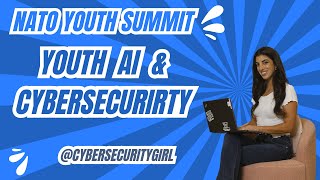
Caitlin Sarian (Cybersecurity Girl) delivers an introductory talk to a panel on innovation and emerging technologies, arguing that AI and cybersecurity are rapidly advancing and must be taught to youth in an empowering, curiosity-driven way rather than through fear. She shares her personal journey from aerospace engineering to cybersecurity, highlights misconceptions about who belongs in cyber, and describes building a large social media platform to demystify cyber careers and reach younger audiences.
Chapters
Now we're going to move on to a particularly exciting session that will explore innovation and emerging technologies. This session brings together bold voices from across sectors to examine how we can ensure these technologies serve our shared values, strengthen security, and empower the next generation. To kick things off, we'll first hear an insightful introduction from Caitlin Sarian on, also known as the Cybersecurity Girl. Following that, we'll move into a panel discussion moderated by Daniel Akinmade Emeyulu, technology and sustainable development consultant. I'm looking forward to hearing more. So, Caitlin, the floor is yours.
Thank you so much. Like she said, my name is Caitlin Sarian and I'm actually the world's leading cybersecurity influencer and educator, which if you asked me five years ago, that's what I would be doing. I would have no idea what you're talking about. So I'm honored to be introing this panel of beyond the Firewall. So let's just jump in. We are living in a world with two massive revolutions going on. We have AI advancing faster than anyone could ever imagine, faster than any regulations can keep up with. And we also have cyber security, which honestly, cyber security has been around since the 80s, but for some reason in the last five years we've just massively gone towards cyber. And that's because we have deep fakes, misinformation, disinformation, data collection practices, surveillance, and of course cyber warfare, which is nation state against nation state and all of which you can't even understand or grasp or most of it see. So AI privacy and cybersecurity are so essential and something that needs to be taught, but we've actually never been taught and it's so important that the youth start learning from the beginning. This is not a skill that you could, should maybe have. This is a skill that everyone should be taught from the beginning. We've been introduced to AI in cybersecurity from a fear based approach through Hollywood and hackers and scariness. But we've never been introduced to AI and cybersecurity through empowerment and curiosity. We've been taught posting on social media and all of the cool things that you can come of it, like becoming an influencer. But we've never been taught what happens when you do post, what happens to your data, who has access to your data, who's monitoring you. We give kids tablets before they can even speak connected to the Internet and we've never been told or taught how it works. And all the attention around cybersecurity and AI is really fear Based. I mean, when was the last time you heard cybersecurity in the news as like a fun thing? Has anyone heard fun? Because last time I heard it was a data breach. This is a thing that's going to happen. All hell breaks loose. Fear everywhere. So that's the disconnect that we need to fix. Because when something feels scary, we do not want to even attempt to try to figure it out. We don't want to build from it, we don't want to touch it. We don't really believe that we should even be a part of fear. But innovation doesn't thrive on fear. It thrives on curiosity. So I want you to imagine yourself as a little kid who was super curious and innovative and making up make believe plans and all that. Anyone? Yeah, pretty much everyone in this room. Same with me. But what happened when we grew up? We stopped innovating and stopped being curious because we were trying to fit in this box that we felt like we needed to fit in. And in that box there was fear of judgment, fear of rejection, fear, just all the fears that you could ever imagine and you started walking in the straight line that you thought you needed to walk in. But what happens if we start teaching AI and cybersecurity to the youth? And I'm not talking about our youth, I mean, we're very youthful, but I'm talking about like kids. What happens if we make AI and cybersecurity fun and get them curious about it? Next time you're with your niece, nephew, little sister, brother, I want you to start asking them things when they're on their iPad, like maybe things about the games they're playing or the funny filters that they're putting on their face. Maybe say, hey, how cool is it that someone created this AI filter for your face? And that's something that you can do. Cybersecurity and AI doesn't have to be scary. We don't need to be intimidated by it. We want to make it playful and fun. And I know it seems weird to say cybersecurity and AI and being playful, but that's what it needs to be in order for us to be innovative. And these topics need to be approachable to the everyday public. So just a quick bit about my journey. I loved math and science in high school and my mom wanted, my parents wanted me to be an engineer. And, and my immediate gut reaction was absolutely not. That is a man's job. That is not what I'm supposed to be doing as a woman. And I went into school as an elementary education major. I then switched six months later, realizing that my parents were right. Did not want to admit that my parents were right, but they were right. And I went and I changed to aerospace mechanical engineering. I graduated with my master's in that as well. And when I was applying to be a technology consultant, someone asked me, hey, would you ever be interested in cybersecurity? And I had that same gut reaction again of absolutely not. There is no way that is a man's job. It's a hacker in a hoodie. It's like introverted people. I was pretty extroverted, but I noticed that same gut reaction was the same I had in high school. And I decided to sit in that fear and say yes. I immediately blurted out, yes, I'd be interested in learning about cyber. And that yes completely changed the direction of my life. So I went from aerospace engineering to cybersecurity and I learned everything on the job. And something that I learned about cyber is it's not all technical. Like I thought I was going to have to learn how to code. I have not touched a piece of code. And I've been in cybersecurity for 12 years. So that was one big thing I learned, is that we need every single type of person because cybersecurity is not technical, it's a human issue. So we need to people that can relate to other people. And then the other big thing is that cyber security is taught to us by Hollywood. And again, it's fear based. It's not realistic. And because of that, I started the cybersecurity goal channel. I wanted to change that narrative. I came up with an innovative way of saying, hey, I'm going to start a TikTok where I can reach the next generation and teach people what cybersecurity is all about. I wanted to be completely demystify what cybersecurity was, what a career looked like in cyber. And I also wanted to see women in cybersecurity because I knew that if I had those immediate gut reactions of absolutely not, I cannot see myself there. There's only men, that every other woman was going to do that too. And to be honest, I started only on TikTok because I was a director at a large law firm and I was super embarrassed that anyone that I work with would find out that. So that's why I named it Cybersecurity Girl. It was not my name and I only wanted to do TikTok to reach the next generation. I sat in my fear and I did it. And it now is the largest platform, over 1.6 million followers and 46 million people reached every month. And it just shows how important cybersecurity and AI is to the public and how important being innovative and bringing your own skills to the table are so you don't need permission. This is like your reminder that you are so capable. Every single skill that you bring to the table, all of your good things, the bad things that have happened to you, even those gut reactions that have made you turn into a new page that you never thought you'd be, that makes you so unique. And that's what we need in cybersecurity and AI and building the future and building and innovating. Because your unique perspective is so, so important and why I'm so excited to intro this panel. We're not here to talk about problems. We're here to talk about all the possibilities. And to be honest, the future is not five years. The future of AI and cybersecurity actually sit in this room and sit in the rooms of people that are watching this online, because every single unique skill set you have, everything that makes you you, you bring that skill set, you innovate, you learn. And if you ask and are curious about the question of how can I build, create, do something and make this better.
More from Caitlin








White House scraps a rule to block data brokers from selling your personal data