ADHD Habits Keep Failing? Shame Is the Real Saboteur
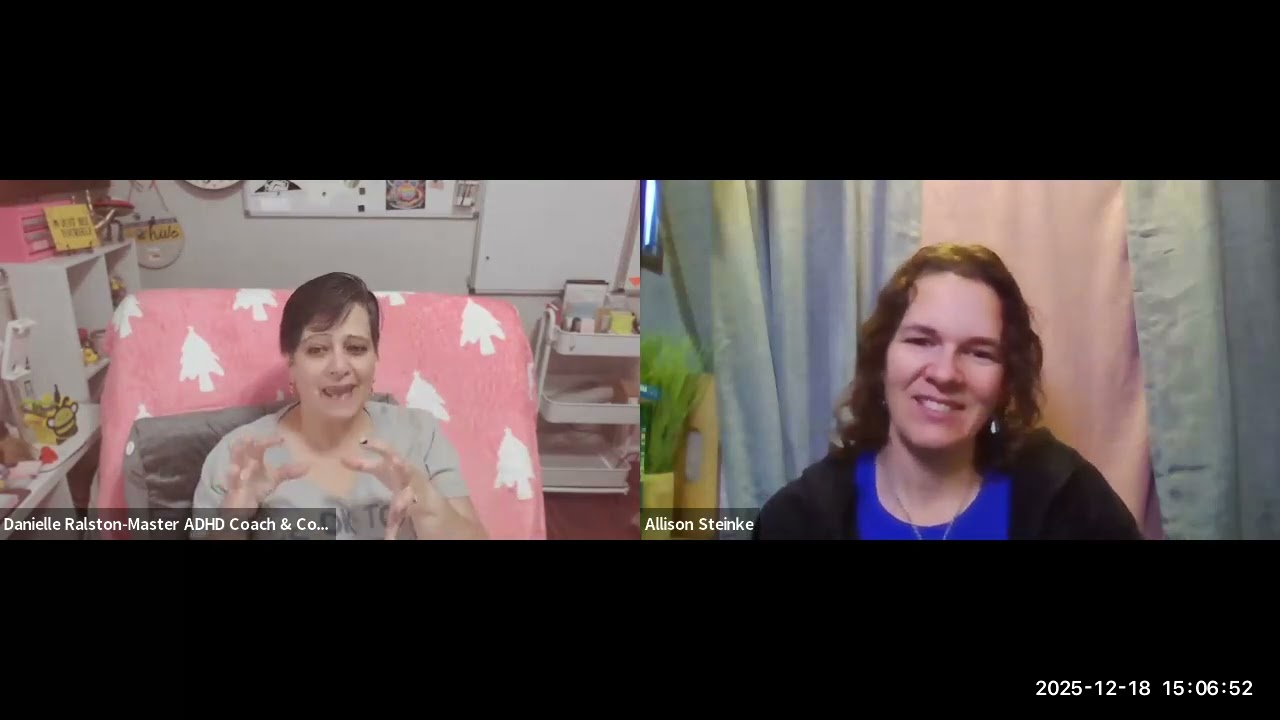
Danielle Ralston talks with health coach Allison Steinke about why ADHD habit-building fails. Shame, not willpower, is the real problem. Steinke's January challenge helps neurodivergent adults identify what actually drains their energy: sleep, nutrition, and emotional load.
Chapters
Hey everybody, this is Danielle with ND Hive, ND Out Loud, and we have Allison Steinke with us today, and she has a really cool program that we're going to talk about today. She is a certified health and wellness coach and a holistic nutritionist. She helps neurodivergent adults build healthier lives in a way that actually works for their brains. We all need that. We definitely all need that. And she She really, really has a heart for working with neurodivergent adults. So I really look forward to walking through what she's going to have going here in January and helping people really understand that nobody is really trying— I mean, there are a lot of people out there say they can cure ADHD, but trying to fix or cure your ADHD is not what you need to do. You just have to find your strengths and learn to work with your brain. And Allison, that is a core of what Allison does. Alison, you've got this really cool challenge coming up in January and I've been— you and I have been talking about it for quite a bit now and I'm really excited to see where this goes. So what finally made you realize that habits weren't the problem and shame was? Because that's a big thing that you talk through in your challenge.
Well, I was shamed for many, many years and was just told— well, my ex-husband had ridiculous expectations for me and I kind of beat myself up quite a bit. Um, I left him, um, nearly 2 years ago now. And one of the first things I did, well, I asked myself, what do I have to do to become healthy so that I can give my kids, be the best parent that I can be for my kids? And one of the things was I had to retrain my mind. Um, I would, I would default to shame. And I'd beat myself up. I said, why, why would I do that? Why did I say that? Why did I say it that way? Why didn't I do this? And so I had to learn to stop that. And it was a process. It took time. You know, we build pathways in our brains and things become habits, including the way we speak to ourselves. So it was a lot of work, but I worked at it. And, um, I made a lot of other changes as well, but that was a big piece, was changing my mindset and understanding that it's okay to be who I am. In fact, that's a good thing. And it's okay for everyone to be who they are. Everyone was made differently, and we're all beautiful the way we are. And, um, to work with that and honor who we are. And I also discovered things about, like, um, celebrating wins, enjoying the journey, enjoying the process. Instead of just having that idea that if I can't do it all tomorrow, then forget it, it's not worth it.
It's such a beautiful thought process. I know all of us that are neurodivergent always have those shame cycles. I love that that's one of those things that you really tackle at the front end of this to really talk about that. One of the things that I really noticed is when people say they want to change, and I saw this in your workbook, how often is it actually their voice versus outside pressure? Pretending to be motivation, that toxic positivity motivation thing.
Yeah. And that's one thing that, like you said, I address right away. Whose voice are you hearing? Like, what is your why? Why do you want to make these changes? And it is actually, is that coming from within you or is that something that society is putting pressure on you for? Or, you know, spouse or family or friends or whatever it is? Because unless it's really coming from within ourselves, Then it's not, it's not gonna carry that lasting motivation that we need.
So you also talk about starting this challenge with dreaming instead of doing. Why? Why do you start with dreaming? Because that's— I know for me, especially as somebody who is ADHD, dreaming is not something that's an easy concept for me to get, and it feels uncomfortable and kind of gross and sticky. So why do you start there?
That's part of the why. That's part of understanding what you really want. You know, what, what's your ideal? What are you aiming for? What are you trying to do? Instead of just saying, oh, it's January, um, I should be exercising, I guess, so I'm gonna exercise. Because that doesn't— again, that just doesn't carry that lasting, uh, motivation. So really having the idea of what you want and what that would look like in your life, what that would look like in your kids' lives, in your family, and the people around you. You know, how that would change. Um, and if we have that dream and that idea, that's something we can go back to as well. And we can go back and review when we are feeling down or stuck. We can go back and say, why am I doing this? What am I doing this for?
I really, I love that. Like, I really love that. So as an ADHD coach, obviously this is something I talk about, even though it's a concept I get stuck in myself. Still something that we talk about because we have to know why we're doing something to change ourselves. If we don't have a clear why, you have no clear direction. And we don't talk about goals around here either because goals are gross feeling, especially when you're a neurodivergent. So you talk a lot about seasons in this challenge. So how do we know what season we're in and when it's time to push and when it's time to stop pushing? Like, where do we— how do we figure that out?
It takes a lot of self-reflection, and that's why journaling is part of this. And also, we can ask other people around us, you know, what do you see? But if we look back on our lives, okay, when have I— you can ask yourself, you know, what's my energy like? Um, am I craving rest right now? Am I craving adventures? Um, what's my workload like? What's my emotional state like? What's my mental state like? Do I need goals that are more supportive, more restful, or do I need something a little bit more exciting? Do I need something that's more adventure? So understanding where you are is important because it helps you to understand what type of goals or habits that you can work with and build on.
Okay, I feel like I just got Called out a little bit. So I'm having a hard energy day today. Should I be doing anything? No. But am I?
Yes.
Not such a good idea. So what's one of those big energy drains that people normalize that's completely wrecking their habits and their follow-through?
Um, a couple that comes to mind right away. Well, okay, there's 3 that come to mind right away. One is lack of sleep. And people get this idea sometimes that, oh, I'm a hero, I'm a martyr, and I sacrifice my sleep for these things that I need to be doing. But actually, bring me back because I'm going to go on a rabbit trail here.
Keep going.
When I decided that I can't give my kids 2 parents, but I can give them one healthy parent, I asked myself, what will make the biggest impact? What do I need? And the first thing that came to mind was sleep. And, you know, we have a harder time losing weight if we don't sleep well. We have a harder time getting things done that we want to, having energy, having emotional regulation, all these things we need sleep for. So sleep was a number one thing that I tackled. Um, another big energy drain is the foods that we choose to eat and our eating schedule, making sure that we get adequate nutrition in, you know, enough times in the day, the right And then another one is emotional drains. Parties, events, social things, saying yes to people and social events that drain us. That's, that's one that takes, I think, wisdom and guidance, and sometimes we need each other to work through those. But being aware of what we can handle socially is huge, especially for those of us who are neurodivergent.
I think knowing that social energy, I think, is a really important thing, especially this time of year. So we're coming into this, this podcast, we're recording this week before Christmas, but it's going to be coming out next week just before Christmas and New Year's and all of the parties and social obligations and all of the things. I think it's really important to have somebody that can help us say no.
Mm-hmm.
Or say yes. When we need to say yes because, again, where are you in your seasons? What are you doing? So I love— this topic is a really big topic, especially right now. So what are— what is one of the biggest things that you want people to walk away from this challenge with?
So often people want to make healthier choices, habits. They feel a little bit lost. There's very often some shame, like you mentioned, brought up at the beginning. Um, and I want them to walk away with sort of a framework that they can follow, an idea, so they don't feel so lost. They're like, okay, now I can do this, now I can build on this, and now I can— you know what I love doing? I love losing clients because they figured it out and they can, and they can like, you know, I got this, I can do this. Um, I know how to build the habits. Doesn't happen super often, but I had one woman who was just a star at this type of thing. Um, and that's a beautiful thing to understand, like, okay, now I know I need to check in with my energy, I need to build habits, you know, one small change at a time, celebrate my wins, go back and figure out what changes need to be made instead of just— one thing that so many people struggle with is all-or-nothing thinking. Um, like, if you can't get it figured out right now and you don't do it perfectly, then you're a failure. And then you quit. And that's something that I struggled with a lot over the years, and I see so many women struggle with, and I'm sure the men do too as well. Um, that's a lot of us who are neurodivergent struggle with that quite a bit.
That's a big thing. So what do you want somebody to walk away from this challenge saying?
I want them to walk away with more confidence. And to feel like they at least have— they figured out to get how to get where they want to be. And that doesn't always mean that they're working on their own. Very like, we need community, we need each other, right? And that's part of— that's one of the steps in my workbook is organizing supports, getting people to encourage you, people you can go to when you struggle, that type of thing. Um, But I want people to have a better idea of how their brains work and how to build habits and to have the confidence that they know that they can do that.
What I'm hearing is you want somebody to go, oh, I'm not broken. I just needed help in the right area.
Yes. Yes.
I love that. I very much love that. If you want to check out Alison, we'll have all of her links below. Check out the challenge. It's going to be fantastic. I've gotten to spy on the workbook and all of the questions and everything that she's going to be doing every day, and I very much believe in this, and it's things that we teach here at ND Hive, ND Out Loud every single day. So I very much enjoy supporting other ND business owners like Allison. If you're an ND business owner like Allison, please reach out. I want to talk to you. I want to hear what you're doing, and I want to support you because that's what our world and our community is all about. Have an amazing day, everyone.
Thank you, Danielle.
More from Danielle

Why Disney is what you need as an ND human #Neurodivergent #disneyadults #disneyscience #disneyworld



Follow along if you want to watch me finally finish what I started… #adhdcommunity #bodydoubling

The last 3 months I … wait no … all of us here at The Hive have been rebuilding from the ashes… we

The last 3 months I … wait no … all of us here at The Hive have been rebuilding from the ashes… we



What if the silence didn’t stop you because you never lived life alone? Katie Karayianis

What does getting ready for a road trip look like for you with adhd? #adhdcoach #ndhive
