How to Make Events Neurodivergent Friendly: A Real Checklist
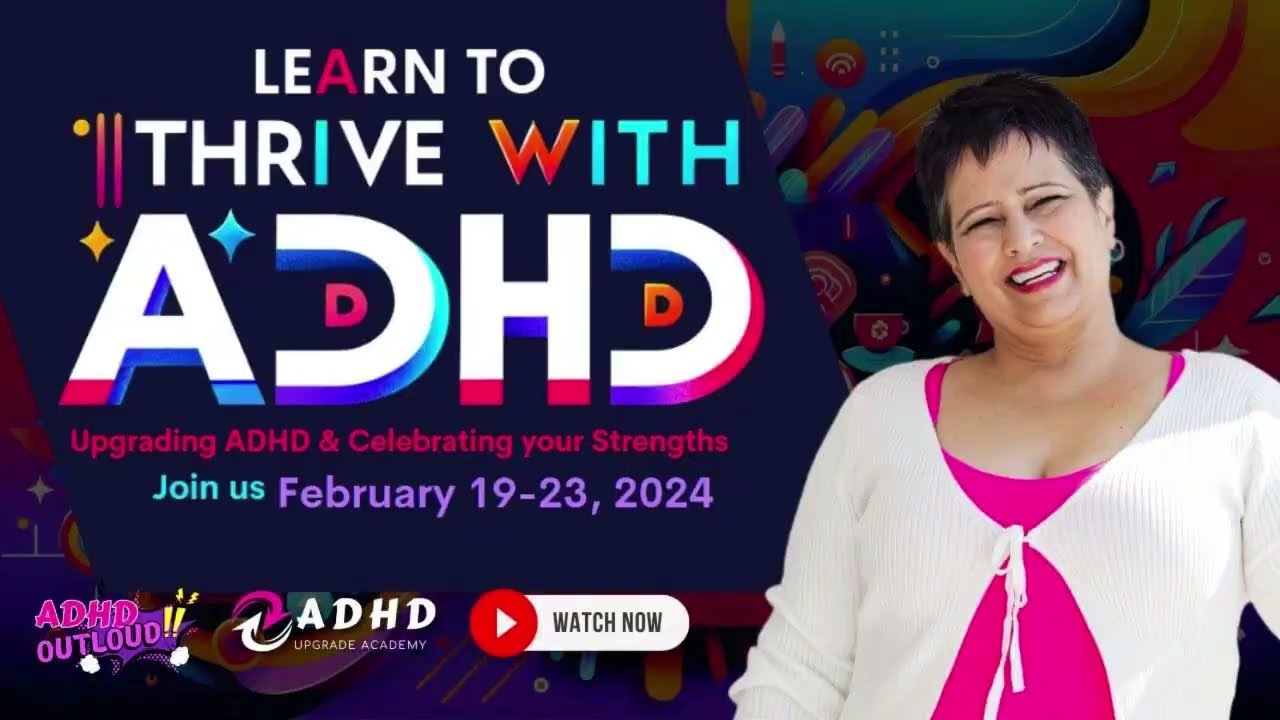
Danielle Ralston and Vida Carey break down what makes events actually work for neurodivergent people: low-stim rooms, good audio, transcripts, and enough transition time between sessions. Their Thrive with ADHD summit runs Feb 19-23 with a fully neurodivergent team, free 7-day access, and lifetime recordings for $47.
Chapters
Hi, this is Danielle. And this is Vida. And we are from ADHD Upgrade Academy, the original ADHD coach, and we have a summit coming February 19th through the 23rd, and we wanna talk about how to make summits more neurodiverse friendly.
Oh yeah. I mean, I, I've been to a lot of conferences in my adult life and as a teacher, as an administrator, as an ADHD coach, just things in the industry. And there's lots of push to make things more neurodivergent inclusive, but I'm not seeing it practically applied. And there are some very easy things that people can do to make them more neurodiverse inclusive.
So part of why the summit, I mean, I've wanted to do this summit for a while because so many summits, especially in D world, are aimed at psychiatrists and psychologists and therapists or parents, just the parents. There's very few summits that are informative, helpful, and cover everything for an ADHD adult. So many ADHD adults are finding themselves late diagnosed that there's just, there's not easy resources for them or they're not affordable because some of these conferences are massively expensive, even if you do wanna go to them. I went to one last year that cost me between the ticket and the travel and all that, it was like $2,500.
Yeah.
And that's just not accessible to most people.
No. And then even if you go to an online conference where you can do a lot of accommodating for yourself, a lot of them are still very expensive.
They're still really expensive and they're, and you have to make your own accommodations, which means you're missing things. You're just not attending in a way that makes sense to you or you can process and do all of the things. So we decided, like most ADHD, especially as ADHD women, that, okay, let's just do it ourselves.
Right. Yeah. I mean, things are, let's see, let's talk about things that you have seen at other conferences that could have very easily been turned into a neurodivergent-friendly atmosphere quickly.
So one, being able to know for sure I can get into one of the trainings that I wanna get into.
Yeah.
You go to a training, it, the room gets full, you can't get in, or the room is so overly crowded that there is no being able to focus on it. There's no being able to overcome anxiety to be in the room. There's no room to move, there's no room to take notes, right?
So, okay, from a teacher perspective, like, this is, you know, because teachers do a lot of trying to fit people into rooms and make it into a better learning environment and things like that. So from an organizational standpoint and from a teacher perspective, there needs to be accessibility to every single talk, every lecture, whatever. If the rooms are small, Then can you stream them somewhere so people can go find a comfortable spot and watch them? Are they just chairs in a room, or are there chairs and a table or a desk or something where people have stuff to lean on and they can take notes? And then time management-wise, is there enough time to move from one lecture to another lecture and make it there on time? Because I saw a lot of people leave lectures early only because They were trying to get to another lecture that they really wanted to go to that really just butted up against it. So then there's anxiety because you're gonna leave early. People are gonna look at you. There's all that. And then when you go to the next lecture, you're probably gonna be a little bit late. People are gonna look at you again. So those are things that can be very easily fixed. So if you have an in-person conference, just some simple scheduling and the possibility to stream, and then look at your rooms. Like, I get it if you have all of these lectures scheduled and you don't know which ones are gonna be like the big attended ones, but still that's where your streaming option is there. Because if you have 5,000 people in attendance at your conference, you need to plan for worst case scenario that everybody in the world is gonna like one speaker.
Well, and then in the same vein, make it auditory. Yeah. Because there were so many rooms that I was in that unless you were, even though they had microphones and stuff, you could not hear well. The sound quality was terrible. The volume was terrible. And I'm a sound person. There is no excuse for that at all. Yeah. For $50, I can make the sound better in pretty much any room. So there's really no excuse for that. And that— and I don't care what kind of conference I've been to, that's been a problem at every single conference is terrible sound quality. But also have access, don't have the goofy apps. So many conferences are using the apps now that don't actually work. I have been to so many conferences with these apps. None of them have ever worked correctly.
No, they're super buggy. And like, I think the one that works the best honestly is like Eventbrite, but it doesn't have all of the things that these conferences are trying to put in it. Like they're trying to put a community aspect, they're trying to put all this stuff, and I get what their overall goal is, but the vehicle with which they're trying to get you there is crap.
And I'm gonna tell you, as somebody who has a tech background, start a LinkedIn group for the conference. So that people can connect there because that's your promo before the conference. That's your promo during the conference. That's your promo after the conference. I mean, there's so much available just right there and you don't have to rethink the wheel. The other part of this in the community aspect, in volume and all of that is provide recordings, video recordings. An audio recording for neurodivergent people is not enough. I need to be able to see somebody move. I gotta be able to see what is up on the screen, even if I can't see the slide fully on the video because the angle or whatever, that's why you have this like slides available for download so I can download it into a PDF. That's fine. But if I can have a good reference point to see, oh, it's, oh, if it's this one and I'm on track and I'm in the right place, helps so much for me being able to use those things completely. Just having audio after a conference to follow up, I'm never buying those again because I've learned over time I'm just never going to listen to them. I'm not going to get anything out of them. So there's no point to them.
Right. You know, so you have to really think about what is your goal for putting on this conference? Are you trying to get information in people's hands or are you trying to make money? And I think a lot of people can't figure out if they're trying to make money or if they're trying to get things in people's hands. And I'm all for people making a profit, but if you're gonna make a profit on me, I want stellar service. Like I want to be able to go to whatever lecture I want to. I want the sound to be good. I want, you know, your vendor hall to be good. I want things to be convenient. And well-planned. And I think for many neurodivergent people, because a lot of us see, like, we see when things are not as they should be, we're drawn to that. Everybody is, but it grates on us to a degree. So I need you to think in, in your 5 senses, right? How does it look? How does it sound? How does it feel? Like, what is the energy of the conference? Like, are there places to go, real places to go? For low stim, like if people are overstimulated, is there a low sensory room? Because I've been to conferences that say they've had a low sensory room, but it is just an empty room. Like there's not even chairs to sit. There's not even, I feel like, oh, a high school teacher could come in and make this so much better just because at least you could put like headphones and charging cords and stuff in there and some tables so people could just sit and listen to music or color or whatever. Yeah.
And just having earplugs provided, because you want to know how many of us forget to bring our earplugs with us?
It happens.
We've lost them in the luggage somewhere. We can't find them, whatever. Having earplugs available for me, even if those, those goofy little foam ones that actually, from a sensory standpoint, drive me insane when I'm overstimulated, I'll take it. Cold water to drink, a coffee pot. I mean, just that, a table and a charging station is all. It's not, that's not, I'm somebody who's put on conferences. It's not a big investment. We just need places for that. But we also need to have a good Literal map of where everything is and the walking distance. If you're in one of those big conference centers or a hotel, what's the average walking time between the different sections?
Needs to be a map like that, and there needs to be an agenda. Like, come on, people. If I have to look consistently and constantly through all this information, you're going to trigger enough anxiety that by the second day I'm gonna stop going to lectures and I'm gonna hang out in the hall. And there may be one that I'm like, no, I really, really want to go see that one. And I, against all odds, I get myself there, and guess what? It was full and I couldn't go in. So again, I just went in the hall and I networked with people. Like, that was great, but the information that this conference was trying to put in people's hands was really not accessible.
And unfortunately, most conferences, again, after just give you the audio files— also not accessible to a neurodivergent person. An audio file is not enough for any of us, and I don't care whether you're an auditory learner or a visual learner or anything. These audio files tend to have all the background noise in them. They're not produced— there's a million reasons why they don't work, and they're not providing transcriptions of them either.
Right. And like I said, I know that a lot of this comes down to dollars and cents, but, you know, tell people these are the things that we're going to provide for you, and this is where the cost is. And I'm telling you, people will pay for that, you know. And then also have an online option where if you're already recording and if you're already like doing these high-quality recordings, you should be able to allow people the online option because there are people that are sick, there are people that are— I mean, Immunocompromised. There are people that cannot handle crowds of that size. I mean, I know Danielle wasn't supposed to go to the last one that we went to because she was immunocompromised, but yet she was stubborn and still went. But if there had been an online option, I would've attended every single—
I would've gotten to attend everything. And if there, even if there wasn't an online option, but there was even now, if I would have the option to get all of the videos. I would have paid almost the same amount again to get access to every single video. But again, like most conferences, they only provided audio files, which is not awesome.
Yeah. And I don't know that there is an industry out there that has figured this out, but it is because it is a big undertaking. They farm it out to these event planners and these companies that put on these events and the people that put on these events are not doing it with the neurodivergent person in mind. They're like the Nike of, of event planners. Like it is a great product, but it's a one-size-fits-all and neurodivergent people don't fit in that category.
Absolutely not. So what are some things that we are doing for our conference to make it as neurodivergent friendly as possible? So one, the women organizing it, there isn't a person on my team who's not neurodivergent. So that is a big plus. 2, we created a Typeform for every person to fill out with all of the information. We asked them exact questions that we wanted. Then we gave them a Calendly link to schedule their time to make it super, super easy, not just some randomized thing. Then we're providing them, every speaker is getting provided their recordings.
Yes.
When you speak as a speaker, you very rarely get that.
Yeah, that was disappointing at the last conference that I attended. The person putting on the presentation. Paid for their own ticket, paid for their own way, had all those expenses, and then they didn't get a recording or anything of their own presentation, which I felt like, you know, at the very least they should have had a recording of their presentation.
So we're new. This is our first year we're putting this on. We couldn't afford to pay our speakers, which bothers me immensely because I think every speaker is absolutely worth their value. So as an event provider, like we're providing the system. All of those things. We are splitting profits on the paid tickets. We have a free ticket and we have a paid ticket. We're splitting the profits 50/50 with every speaker because we want to see the speaker get value out of it too. We are letting anybody who know who signs up for the email list for this and is signing up and all of that, that these speakers are all going to get access to the email list.
Yeah.
At the end of this conference. And number 3, they're getting access to their videos. We are recording every speaker's video, obviously, just like this via Zoom and things like that. And we are giving them access to their own videos with a transcription and with a summary.
Right. And again, we don't think that we're going to do this insanely perfect the first time, but we're open to feedback and we'll fix it. So it's like if, if there's something that we didn't do, obviously there might be a technical glitch or something. We are actively trying to fix it and make it inclusive for everyone because guess what? We're neurodivergent and we need certain accommodations. We need certain things for ourselves. And if we need them, someone else needs them. So we're trying to put this together with all of these things in mind. And then maybe if it gets bigger, we'll tackle trying to have it in a centralized location. And then that will bring on a bunch of other things to consider, but. I think we build it really well online first and make it super accessible. And then the price, the price is the other problem. Like some of these places, it's almost as much to buy the recordings as it is to attend the conference.
We tried to make even the free ticket as accessible as possible. And you're like, but it's free. So of course it's accessible. No, we're giving, they have a free ticket. It's inside a Facebook group. We're going live and then they will have access to everything for 7 days for free. After the conference. So for a full week after the conference, and honestly, it may be a little longer than that between when the neurodiverse girls who are exhausted after the conference eventually get around to pulling them down, but they'll have access to them to go listen to them, to grab the transcript for them. Even the free people can grab the transcript. So even though they won't have the videos for lifelong, they can still have the transcript. That's our free version. And then we do have a paid version, which is just $47, and that's for lifetime access. And we're giving them a few other bonuses that go with that. Just because we wanna make it accessible. And part of how we're making this super accessible is there isn't a person speaking who isn't neurodivergent themselves. So yes, we have a few therapists speaking. They're neurodivergent and they're neurodivergent therapists. So they're neurodivergent themselves and they work with neurodivergent people. We have experts and we went to people who you all know, TikTok experts. And, and people that we trust, we're not, we didn't just pick random misinformation people. We were people who are actually good at what they do and very knowledgeable and stuff. And we looked at them to speak because we aren't speaking at you. We are speaking to you and showing you that it's possible as an ND person to thrive with ADHD.
Yeah. And that's, I mean, it's Thrive with ADHD Summit. That's what we put together because so many neurodivergent people have a tendency to sink into themselves. And they become a silo. They become a lone person on an island all by themselves. And there are so many of us that if we would just look around and communicate a little bit more or have someone organize things like this, puts us in a place where we find other people that's like, oh gosh, I'm not alone. And that for me is worth so much.
It's so much. And we have people speaking on so many different things and we specifically have a couple people coming in. They're neurodivergent. Specifically, again, neurodivergent speakers. And we have people coming in about being neurodivergent in the corporate workplace, and they're talking to us about interviewing techniques as an ND person. And we have somebody else requesting workplace accommodations. So we expect adults to come in who just need help in their day jobs, and they're needing help with that. And we've actually got 2 people speaking on that, and they're both fantastic. We got Pasha Marlowe, who is amazing and talks about neurodiversity in the workplace and how to make things ND-friendly. And then we have Dr. Jessica Hickstead talking about the same thing, but how to request those accommodations and how to do those things. And they're not the only ones. Uh, we have—
Right.
So many people coming and talking about all of the things that affect us as ND people. We have people talking about being parents and how to parent an ND kid and being an ND parent with ND kids. We actually have Vida, Brit, Sulkin, and myself, we're gonna actually be talking about how core people working in the corporate world, how they can benefit from having an ADHD coach and how an ADHD coach can help them. Because so many people look at ADHD coaches as this weird entrepreneurship thing, side thing. But if you have a full-time job, having support for you as an ND person can help you with all of the things that you need every day, whether you work in the corporate world or small business world, or you're a plumber or whatever working in the trades. Having a coach on your side can help you be more successful in your day job.
Yeah. I tell people all the time, I'm like, so you come to a coach, we're not gonna unpack your emotional baggage about everything, cuz that's what a therapist does. But if you need to know how to shoot a layup, I'm gonna teach you how to shoot it and then we're gonna practice it and then you're gonna go put it in a game. So yes, I'm not really gonna teach you how to shoot a layup, but I'm going to teach you what kind of coping skill you need to work with your ADHD, and then we're gonna practice it and then you're gonna go put it into action in your life, and we're going to talk about it. And that's why I think coaching honestly offers a lot of people more immediate relief on those things that are overwhelming us because coping skills are surface level.
And so many of these things, because the original ADHD coach, ADHD Upgrade Academy, we have a mission. And our mission is to bring ADHD coaching, thriving with ADHD, ADHD support to down to a level that can be available to most everyone. And that is our mission for everything. So the summit just folds right into that again with a free ticket, the $47 ticket, and again, making it possible for the, the speakers to earn money doing something like this where they rarely get paid for doing these things. We want to make sure that this is available and accessible to everyone. And that's what Vida and I do with Original ADHD Coach because so many people look at, again, ADHD coaching as this unreachable thing and it doesn't have to be.
Yeah. It's, you're not alone and whatever's going on, whether it's the mountain of laundry that's currently on my couch and probably on yours, or the mile-long to-do list that you can't seem to tackle, like we can help you with that.
Not only remembering experiences, remembering to have breakfast, remembering to send that email, overcoming the anxiety and the RSD and the executive dysfunction to send that email. We understand. Because we deal with it every single day.
Yeah. And you know, in true neurodivergent fashion, we can fix other people's problems.
Yeah. Can't fix mine. We can problem solve.
We can problem solve. We do have trouble fixing our own, right? So that's why sometimes I, I call Danielle and I'm like, hey, coach me on this for 5 minutes. But it's, it's challenging.
It's why I surround myself with coaches because I need them as much as they need me.
Yeah.
So I hope you join us. If you have questions, if you would like to put on a summit and you would love advice on how to do that for an ND person, DM us. We absolutely can help. I have actually done very, very large tech conferences in the past, so I know how to do it. But I actually have a couple people that are speaking that would be fantastic resources. So you could ask a ton of questions of us and help build a summit that is really open and diverse and inclusive for everyone.
Yes. And, and that's, that's what it's all about is making sure that as many people can come and participate as they want and as many people have access to the information as they want. Absolutely.
And it's not all about having great speakers because it's the speakers are actually this much of what your conference is really about when it comes to that. It's the results that those that attend get. So we hope that we can help you do better and have better and just expand What you're able to do. And when you're able to expand who you can include, you can make more money at it. So it does become a money thing in the end, but you've gotta just put the time and effort in. We hope that you attend Thrive with ADHD Summit. Again, it's February 19th through the 23rd. You will have a link below this video so that you can get access and get in. And if you have any questions, again, DM us. We're always happy to answer. We have Vita Carey and Danielle Ralston.
More from Danielle

Why Disney is what you need as an ND human #Neurodivergent #disneyadults #disneyscience #disneyworld



Follow along if you want to watch me finally finish what I started… #adhdcommunity #bodydoubling

The last 3 months I … wait no … all of us here at The Hive have been rebuilding from the ashes… we

The last 3 months I … wait no … all of us here at The Hive have been rebuilding from the ashes… we



What if the silence didn’t stop you because you never lived life alone? Katie Karayianis

What does getting ready for a road trip look like for you with adhd? #adhdcoach #ndhive
