It's ADHD Awareness month: Living with ADHD and the things we need professionally to be successful
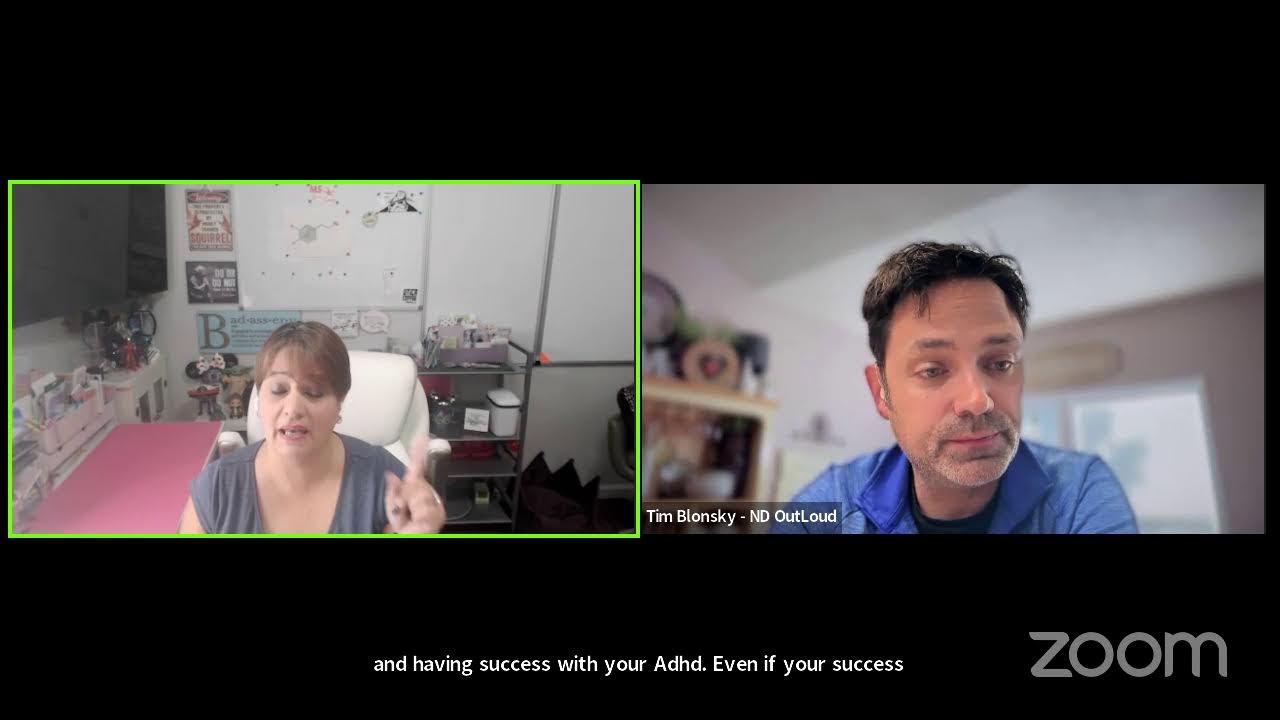
Danielle Ralston and her brother Tim share what helps them work with ADHD: body-doubling, second-brain notebooks, and managing sleep and caffeine. They're launching an interview series featuring successful neurodivergent people across different careers, and explain why ADHD is a brain difference, not a behavior problem.
Chapters
Hello, hello, hello. This is Danielle with ND Out Loud, and we have Tim here with us just like we always do on Wednesdays. So we are talking— it is ADHD Awareness Month, which Makes me really excited because, because I can talk about this way more than I normally do, which is 100% of the time, and I can get away with it without people getting annoyed with me.
Right. Yep.
I'm actually doing a whole entire series of articles this month every single day on LinkedIn. And Tim and I have a cool project that we're kicking off this month, and this month is gonna be around ADHDers specifically. But we're going to expand it to all of those with all sorts of disabilities after this month is over and expand all of that and what we're gonna be doing, 'cause this is an ongoing series that we are going to be doing. Tim and I are going to be interviewing people and finding out what they do and how they have found success in their life and created accommodations for themselves. Because I don't care what your disability is, whether you're ADHD, deaf, dyslexic, Blind, whatever it is, we all create success for ourselves somewhere in our lives. Uh, whether you're a stay-at-home mom, I wanna interview the stay-at-home moms. I wanna interview the students. I wanna interview those with full-time careers, the entrepreneurs, everything, because everyone has success in their lives. So we're gonna be talking a bit more about that at the end of this. But we're talking about living with ADHD today and how we've created success professionally for ourselves. Both of us have a very non-traditional way of how we've Ended up where we are.
Yeah, yeah. You know, like, I kind of want to start off with, you know, myself as a deaf person. And really, you know, Danielle and I were actually siblings. So, you know, and we don't, you know, really promote that that much. But like, we are siblings. We grew up together. And, you know, the reason why we're partnering as much as we have over the last couple months is because I just randomly called you one day and I'm like, hey, I have an idea.
Why aren't we doing this?
Yeah. And because, like, I truly feel— and I've seen this and I've had a lot of conversations with deaf and hard of hearing people that also have ADHD. And, you know, generally speaking, deaf people in the United States and worldwide are in a lower socioeconomic background. And It's sort of, you know, kind of a socially acceptable thing where like, well, it's because I'm deaf and so therefore there's some limited job opportunities because of my disability. And I've always kind of like bucked against that trend throughout my life. You know, obviously would be me being hard of hearing with the fact that I can speak well. You know, major props to the program that Danielle and I grew up in, in Keswick Central School in literally the middle of nowhere in upstate New York. And like having, having all of that really kind of the best of both worlds with the access to American Sign Language and the fact that I, I'm also able to really rely on my residual hearing, reading lips, signing. So, but like generally speaking, I see so many deaf people that are like, yeah, because I'm deaf, I can really only work in the local deaf school or, or You know, like because I have communication barriers and all that. But I feel that there are so many deaf and hard of hearing people that once they kind of realize what it is that they have and that that could potentially be a reason why you don't feel as productive as you could be and you don't feel like you could take on that job, that oh, that that's above me because I'm I won't be able to do that. I really want to come in with a paradigm shift and say what. you can do that. There are simple tools that you need to follow. And so going to my story now, keeping in mind that Danielle and I grew up in the same house and it was kind of a crazy upbringing. And Danielle and I have many, many stories that we can share, some that maybe we don't want to share, but we've had an interesting upbringing. But so Danielle obviously has ADHD. Our father definitely does. Our mother has other things going on, a lot of environmental things related to her upbringing. Our younger sister and younger brother also have different forms of ADHD. I always have been, in our upbringing, have always been, I don't know, maybe different than my other 3 siblings in some way, but that was just the message that I was told all the time. But then I've come to a place in my adult years of like, wait a minute, the reason why this and this happened is probably because I didn't realize that I'm struggling with ADHD. And it really came down to a very dear friend of mine. Her name is Erica with a K. I really have to emphasize this, with a K. She and I were on a hike about maybe 2 years ago, and she was talking about like how she has a service where she does body doubling with some of her friends to help them with completing tasks. And body doubling is simply you have a presence of another person that just happens to be in the room or on a screen or anything, and they're not necessarily helping you with whatever task you're trying to complete. They're just there. They're simply there. And you, the other person with ADHD, can be more successful or can complete that task because they have a presence next to them. And as she's talking about this, the light went off in my head. I'm like, Wait a minute. All the times that I've been successful in my previous jobs and current work is when somebody just happened to be across the table or in the next cubicle over, or because somebody's there. When they're not there, then I'm all over the place, and I can't really kind of like figure out like where— What I'm doing. And I do a little bit of this, and then I stop that, and I do this, and I And then that doesn't get done and I go back to this. And then now it's been 8 hours and I haven't really accomplished anything. And so that really was kind of like my, hmm, maybe there's something to this. And I started really just kind of looking at stuff. Now, I have not officially been diagnosed by a medical professional in this capacity, but it's pretty obvious that I have it. And that kind of—
In my professional opinion, where I don't have my full PhD yet that I can diagnose you, But I'm telling you, you are ADHD. I grew up with you. Hello. I didn't realize until I was an adult. I, I have had my ADHD and multiple learning disabilities. I have 5 learning disabilities that impact me very significantly. Dyslexic, video, audio, spatial, all kinds of stuff. And it, I knew this all through school. I've known it my whole entire life. I was very late to do almost every milestone when it comes to learning through school until 5th grade. when Mrs. Donovan got ahold of me in the hearing impaired program in Dundee. But for me, when I was an adult and had a child, I had— something was up with him. We had to get him diagnosed. And I'm checking off all the boxes for autism for him and went, oh, oh, oh. And I am AuDHD, which is autistic and ADHD combined, which then also explains all of the learning disabilities. While some of them may be comorbidities that I, I Most of them are autism things, and it made a huge difference for me to know that and understand that. So even if you don't have a diagnosis, understanding and finding out and going your own path to figuring those things out— I do have diagnosis now— is a huge deal. It's a huge deal to understanding and having those light bulb moments and being able to find better ways to adapt yourself.
Yeah, yeah, absolutely. So, you know, so this is ADHD Awareness Month, um, So let's bring up some facts about ADHD and, you know, just some things on this. And now I admit that I'm fairly new in this field, but, you know, the tools that could potentially be used to help a deaf and hard of hearing person or really anybody are not that complicated. And, you know, we'll talk about that further. But there's actually like a really good history in this. This is actually very interesting for me as I was kind of prepping for this conversation that The early mentions of ADHD-like behavior started in 1798. So it's interesting to me that autism really has been talked about since maybe the mid-'70s or so. And there's some vagueness in the time period, but it's a fairly new concept of understanding autism. But Initially, it was called a hyperkinetic impulse disorder as of 1960, around that time. Then it was really added to the diagnostic criteria of the DSM-III around 1980. Within the same realm of autism, they've been parallel with each other. Looking at the studies that have been done, The fact that this is a diagnosable condition. I hate to say it's a condition because it's not like— I can't think of something else that would actually be a condition, but it is like, it is something that people do struggle with. And there's so many people out there just like myself as of 18 months ago or 2 years ago. You know, like with that light bulb going off in my head, I'd come to realize that in a previous relationship that I had, my now former marriage, I was always told, like, oh, Tim, you're not good enough because you're just all over the place and you can't focus on cleaning the floor, or the fact that I left the crumb on the counter, which is that, you know, because there's some extreme stuff in that. But, you know, like, there was so much of me being told constantly by these people that think they're better than other people that it wasn't just the particular person that I'm referring to, but the whole environment that surrounded that person is I was not good enough because I couldn't stay focused. And like that, that would— that put me in a place of some pretty severe depression. I now have another failed relationship because I wasn't good enough. And I wonder how many people out there are struggling in their relationships, or even like when it comes to things like their sex life or intimacy of any form, there's more to it. They might have ADHD. I really want to help maybe be in a place where we can help other people realize and help that light bulb go off in their head, and then they could start taking steps to address it.
ADHD affects everything. One thing I want to state, and I want to state very clearly, is ADHD is something that is scientifically diagnosed. If they do a brain scan on somebody who has ADHD, You can see it. It is not— it affects mental health, but it is not a mental health disorder. Unfortunately, it was for, for most of my life until like the last 10 years maybe, has been considered a behavioral issue. It affects behavioral issues, but it is not a behavioral issue. It is a brain disorder. It is a disability. No, I mean, obviously it has its own unique key statistics to it and things, but it is no different than being diagnosed with diabetes, blindness, deafness, paralysis, any of these things. They can see it on a brain scan. Autism is also anything in the neurodivergent spectrum they can see on brain scans. Now, can we all get brain scans to see it? No, because don't get me started on our mental health, our health system and why we're not doing these things. But we can see it in a little child, a little, a newborn, we think. We haven't done— nobody's done things back that far. From 2 years old on, they can see it on a brain scan. It is not made up. It is not any of these things that has been a myth about ADHD for so long.
Yeah. And, you know, you— we've heard this, uh, all before. That ADHD, again, like, you know, you just need to focus better and you'll be fine. Or, you know, it's sort of like, you know, it's like, for example, my girlfriend is gluten-free. And she is very gluten-free to the point of if she even looks at a piece of bread, she's going to have a reaction. But there's so many people are like, oh, you know, that's just a fad. It's a choice. And ADHD is not a choice. It is, it is something that is an actual struggle for people. And like, you know, there's a stigma that's attached to it that we need to, need to address.
Very much so. So ADHD is something that a lot of people— I keep hearing right now is, well, you're only ADHD because you think you are because you saw something on TikTok. No, I've known I was ADHD since I was a child. It is not something you can outgrow. Nobody outgrows ADHD. You can learn to adapt to it and accommodate yourself with it, but you never outgrow it. It is always there.
Yep.
So the big thing to know here is one, I think 7.2% of our population in the United States, not the world, the United States, And that, that's, that's a big number. And they think that there's at least another 3.5 to 8% that are undiagnosed.
Yeah. And like, I, I would imagine that the number is probably a little bit on the low side. It's probably more than that.
Oh, I would, I would think so. Because when we do things like with the Widespan, survey, and Jessica, Dr. Jessica that's on our team, uses her WIDE survey in a workplace. A workplace, I think she has less than 2,000 participants in the study. 73% were neurodivergent, had a hidden disability. 73%. And that's out of 1,000 people. So that tells me that those stats are not right.
Yeah. Yeah. And, you know, one thing that I would love as, you know, the workforce nerd that I'm, that I'm at, is if we could ever find a way to find numbers on How many, how many are underemployed or unemployed due to ADHD? You know, that'll be a really hard number to find, but I would love it.
I guess the one statistic I do have is 90% of entrepreneurs are ADHD or otherwise neurodivergent. So ADHD, autistic, one of the neurodivergent spectrum, 90% of us that are entrepreneurs.
Yeah, I believe it. Like, I'm a business owner myself and I've felt the most success in that. But, you know, at the same time, I feel, and there's probably a lot of people that are in the entrepreneurial space that have ADHD that still struggle, and they're probably not into the success level that they want to be because they're still struggling with that, which is why services that are offered by NDI Loud can play a big role. Simply having a service where you have someone on another screen that you just have for the body doubling piece, Um, and, you know, to have peers to talk about that, like, yeah, I know you probably have some people there right now. Um, and like, it's something so simple like that, having peers, having, having that, that, that presence, um, can, can be a key in that. And there's other things that NDLR does as well in terms of workshops, um, helping employers kind of understand ADHD, uh, from the perspective of supervising an ADHD depression, ADHD people within your teams, and creating a culture that brings a lot of acceptance to that so that then your ADHD employees, who also may be an employee that you hired 5 years ago that now started to realize they have it as well, and now like you have more productive teams, you know, we do that as well. Sorry about the barking dog. That's huge.
Oh, it is. And understanding— I think one of the biggest things that it took me, and it took me years. So because I was raised in the era of just get a planner, just try harder. If you just stop procrastinating, you could get things done. If you just, just, just— I mean, the list goes on and on. And, and I will tell you, my parents were not a help to this because they didn't know.
Yeah.
My grand— my grandmother, not a help at all to this. I love the woman, was amazing, but she was very much just get— she would buy me planners to help me get organized. It didn't help. Um, but once I learned to create accommodations, and it took me until I was in my 30s before I finally figured these things out, and about 90 coaching certificates later to really figure out how to hack into my own brain. But Once you learn how to do that, the success— there is no limit to success. So let's switch to talking about how to accommodate yourself so that you find success in life. A lot of us do very, very non-traditional things. 90% of entrepreneurs— and entrepreneurs, only 5% are successful, okay? So I want to put that out there. Only 5% of entrepreneurs are actually successful making a good living. But many of us find ways to create the life we want and not stress ourselves out with work so much, or whatever it is that we need, by working for ourselves.
Yeah, yeah, because you're not, you're not having to conform to rules, especially in a corporate setting, and expectations that are— there are expectations that probably shouldn't be there to begin with, but expectations of culture and how do you have an image that you need to put out when you're, when you're there in person and all that stuff. And that, you know, like a lot of people with ADHD that are also entrepreneurs, probably deep down inside don't realize that that's the reason they were probably pulled into entrepreneurship was because corporate America has a very specific ideal that you must follow in order to be successful in those settings. So, you know, which I think is an interesting point. But let me, let me talk about this. And I want to do this in such a way That maybe we could take a clip of this and put it up on TikTok to talk about, about this from the perspective of ADHD Awareness Month. Let's put out like, what is ADHD? Like, just from the standpoint of me when I was on the hike and to start talking about body doubling, then suddenly I'm like, oh, wait a minute, I may have it. So here's some things about ADHD and how It could be a challenge to your living or professional life. So time management struggles, difficulty prioritizing tasks and managing deadlines, procrastination and difficulty maintaining focus on long-term projects, impulsivity, impulsivity in decision-making or conversations, sensory overload in busy working environments or busy environments of any kind. That's anywhere from Disney World to just a lot of commotion for the new office. The emotional burden or the fear of being perceived as disorganized and unreliable.
That's called RSD, just for those that don't know. Rejection sensitivity dysphoria is a huge part of that.
Yeah. Those are the 5 key parts of ADHD. If you have one of those, you probably have some form of it. Now, Danielle, explain to me because you're more of an expert on this than me on this. Is there like a spectrum of ADHD? Is there like a—
Oh yeah, absolutely. So if you've met one ADHD person, you've met one ADHD person. If you've met one autistic person, you've met one autistic person. There, we used to have a spectrum of autism and they've shrinked that spectrum just for diagnostic purposes. But I will tell you, the, the rainbow doesn't even begin to describe ADHD, autism, any of the other forms of neurodivergence. We are a huge Spectrum. Now, I will tell you that I, some days, being ADHD and autistic together, some days my autism wins over my ADHD. Some days my ADHD has ADHD who's also on steroids. It just, day to day, you could be very different. And this is something I talk about, is it depends on your energy levels, your overwhelm levels, your stress levels, your hydration level, your sleep level, your protein, getting enough protein and food in your body. All of these things affect. How much your ADHD affects you every day.
Yeah, yeah. You know, it's interesting that you talk about diet and other things like sleep and even like, you know, circling back to like relationships and how you function with your significant other and how that all kind of plays into it as well. It's so huge. And then circling back to deaf and hard of hearing people, like, I just— I'm imagining that there's Hundreds of thousands or tens, tens, tens of thousands, hundreds of thousands that are struggling with this, and they just chalk it up to, well, I'm deaf and it is what it is. And that breaks my heart.
Well, I'm ADHD and I can't. I hear that so much. Or I'm autistic and I can't.
There is—
I mean, are there things that we, we struggle to do? Absolutely. No matter how hard Tim tries, he's not going to ever be able to hear things perfectly. End of story. However, no matter How hard I tried, my executive functioning is never going to be per— it's mostly executive dysfunction, not executive function. Um, but can I have success in life despite that? Absolutely. Something that was a big deal, and Tim is going to understand this, we grew up and part of living with a mom with some serious mental health issues and trauma, um, was we lived in a house that was akin to living in a hoarder's house. All of those hoarder TV shows that you've seen, our house very much looked like that growing up. I struggle with keeping spaces clean. I actually love clutter. I've learned that I actually love clutter, and I love the chaos of lots of things behind me and stuff. My husband does not. But it's struggling to keep my home clean and not being embarrassed to have somebody just walk into my house without me doing a panic clean for 5 hours. And I'm not kidding, 5 hours. has been a thing for me my— almost my whole life. And it took me a while to learn that, one, I like clutter, and clutter is okay, but it needs to be contained chaos. How do I contain my chaos? How do I make things better? Now anybody can walk into my house anytime. Is it perfectly clean? If somebody laid on the floor, would they get covered with dog hair? Absolutely. But my house is not an embarrassment to me any longer because I've learned to create things that work for me.
Yeah. Well, you know, it's interesting because, you know, we grew up in the same upbringing, and I would say in my early adulthood, I was a very cluttered and dirty person. Never to the point of the childhood that we had. That was like hoarder is really the perfect way to describe that. But like, I was in that place, but then as my adulthood evolved, I came to a place where I hate clutter and I hate things being dirty. Like, I'm to the extreme. Like everything's got to be like perfectly clean, especially, especially my kitchen, because I would, I would, I think there's a lot of trauma from my childhood of just really, really dirty cooking.
Yeah.
And then the sickness that was involved in that. So, you know, so like that, we're the same, we have the same genetics, but like we're kind of the opposites in that way.
Yeah.
You know, that shows you that it's not like ADHD is not like a cookie cutter sort of thing.
Even in hereditary lines, it's definitely not. And my house is never, never dirty. My kitchen is never dirty. Are my dishes always 100% washed and in the dishwasher? No, but my counters are clean. You can eat off of my counter. It's fine. All of those— there are things that I can't handle, like, at all. My counters being dirty and my dishes— can't do it. Again, I have my own trauma. But—
Right.
Something like this drives everybody else, my husband especially, insane that I have stuff everywhere and pile. I love piles. I love piles. But I have contained chaos because if I don't have contained chaos, I feel confined and not able to be creative and not able to be myself. But I had to learn that about myself. But contained chaos doesn't mean that we aren't functioning.
Yeah, yeah, exactly. Now, one of the other things I think that we need to talk about, that's just something that kind of popped in my mind now, is from the medical intervention perspective. Like, you know, the key in this is that you need to find the right type of medical provider that kind of understands what not everyone does. So that's one. Two, that, like, you know, certain medical interventions are okay. I don't think someone like myself really needs medical intervention. Maybe I do. Maybe that's something that I'll investigate later on in life. But certain people do need the medical intervention. They do need the—
Absolutely.
The medications and blood levels and making sure they have your blood work done on a regular basis to make sure that your levels are okay. There are other things, other medical issues that can be kind of coexist with ADHD in terms of the medications that you may have to take for that might interact with the medications that you're taking for the ADHD. So you need to consider those things as well.
And medical intervention, there's zero wrong with doing medical interventions. I am not on anything for my ADHD from a prescription standpoint. However, I manage my diet a very, very specific way. Caffeine is a medication for me. And it's a good excuse to have as much as I want. It's— and supplements and things like that. It's— we have to— you have to learn what works for you. Work with a doctor. You— it is a hard time. It is hard to find the right doctors. I have a whole entire list all across the country. Let me know if you need one. But medical intervention is a big deal. And most of us that are ADHD or, and/or autistic or on the neurodivergent spectrum also have some chronic illness issues. I have MS and EDS and some other things that, that I really struggle with, and I have to be careful how I eat for those things too, and how I sleep and my energy levels. And not allowing my ADHD to take over and be in optimum energy levels can crash me from my other chronic illnesses. So understanding yourself from a medical, physical standpoint is essential when you have ADHD, I think.
Yeah, it absolutely is. You know, I'm, I'm really interested in the diet page because I, I want to like look at my diet and see what I could potentially change. And, you know, my girlfriend has ADHD as well. So I'm curious, like, are we doing the right things or not? Like, I'm, I'm— thank you for bringing it up.
We'll have a conversation here one week about, about diet and ADHD because our diet needs— our brain needs a very different energy Sources than a neurotypical person. Like, very, very different. So it's— I love that I'm a health coach too, because I went down that route because I needed to figure this out for myself.
Got it.
Because no doctor was helpful with that to the right level because they look at everybody as a box. We're all in a box. We all belong in the box. We're all the same, and everybody goes in the box. And that's not true, especially when you're neurodivergent. So what things have you found to accommodate yourself for finding success so that there's less chaos, less problems?
So the body doubling piece of tools, I think. So my girlfriend and I, who also has that, we have specific times that we set aside every week for body doubling. Well, now we're working on current projects together, but there are other things that she's working on that I am. And, you know, so sometimes we— our work doesn't really interact, but we literally sat on the kitchen table or in a coffee shop for 4, 5, 6 hours because we're both deaf. We turn off our hearing aids and there's no outside noises, which is, you know, that with ADHD, that could be a thing where there's a way that you can block sound. With me, I can be very selective about it. I could turn off my hearing aid and I'm done. And that's always— that was always a joke in our childhood because whenever we'd have an argument, I would just like take out my hearing aids and that was it. You know, I had made the decision that you can't communicate with me any longer. So, but like, that's so really, that's kind of like a key. And, and then just when it comes to, you know, just very much just having the understanding that I have ADHD has really helped me with Just like, okay, so I need to complete this task. I give myself the allotted amount of time that it takes to complete this task. And usually, because I'm sort of a procrastinator just by nature, I feel okay given the fact that I have this period of time. I know how long the task takes. And so, like, I don't feel like a high amount of pressure if the time period had kind of evaporated a little bit, but I still have enough time to complete the task. I'm okay. And then I always do, like, I complete it and it's fine and it's done. And then, you know, electronic calendars have been huge for me and making sure that all of my calendars are merged in one place is really big. So, you know, the, like, tools out there that I've put down some, you know, things like Asana or Trello or Pomodoro timers are really good at managing time effectively. So I really make sure that I have electronic calendars and that all of them are synced in together at the same time. So that, that those are really kind of my main thing. And but I think I may be on, on kind of the lighter end of the spectrum with ADHD, you know, because like you said, there is definitely a spectrum.
So for me, I need a lot more accommodations. I am definitely more severe with ADHD. There's no doubt about it. Anybody in my family knows that. I'm, I, I am the, I'm the, the, my brain is always going. It never shuts off person. So I've learned accommodations for me are body doubling. Body doubling. I discovered body doubling like 20 years ago when I worked in IT and when we had Skype, people only had Skype to be able to communicate. We body doubled, my team and I, we were all neurodivergent. We body doubled to get client work done. We could all be working on different clients. We could be on the phones. We could be doing a million things, but we body doubled almost all day long. That was huge for me to learn that this is— and I'm the one that started that because I had, I had somebody who worked for me, this very autistic kid who, who couldn't— if I got off the phone with him, he would never get anything done. But if I stayed on the phone with him, he'd get something done. So we learned very quickly, and the whole entire team learned that this was fantastic. And now obviously I do this for a living. It's part of what I do is I provide body doubling for ADHDers. I've got a handful of people on down here on my other screen right now on body doubling now. And a space to, I wanna say commiserate, but it's celebrate, vent, commiserate, all of these things every single day for all those things that are bothering us. Because one ADHD brain is only as good as one ADHD brain. I am very well educated. I have a college mental health I'm getting my PhD in mental health. I have hundreds at this point. I, I think 83 at this point certifications around being neurodivergent. And I still learn from my ADHD clients every single day who just learned their ADHD because they have an accommodation that they've created from themselves. They've done this thing, they've tried this thing. My son teaches me new things every, all of the time because he is adamant. That his ADHD is not going to take over. And so there are things I learned from others. So community is my second piece. Without that community, I would not be able to process and remember to get myself supported. Having a place to be safe, seen, heard, and ask those questions of— don't do it on my own. And that was a huge thing is I got so stuck in my shame and my frustration for a long time. That I was trying to do it on my own, and I can't do it on my own. When you have accommodations and support and scaffolding around you at all times, your, your abilities are limitless.
Yeah.
And scaffolding can look different for everybody. For Tim, it looks like having hearing aids and having closed captioning on and, and those things. For me, it looks very differently. And the other thing for me is learning that I needed a second brain because my brain is unreliable at best. It just is. So I write everything down. I like Post-it notes, I like stickers, and I have one notebook, and my notebooks go everywhere. I haven't— this is my last one. I'm starting a new one right now because I finished off my last one, and this goes everywhere with me. I went on vacation, this was in my purse, and it weighs a ridiculous amount when I put it all together with all my stickers and all that stuff. My husband's like, why are you carrying this on a plane with you? And I'm like, because if I leave it behind, I will forget things.
Yeah, yeah, yeah.
It goes everywhere with me having this. And then this is a system that I teach all of my clients now, and I actually have a big training and they're asking for more and more on creating a second brain for myself because a digital calendar is on my phone and I hate reminders and I'm going to forget about something.
Yeah, well, I, you know, like even with all the reminders, I do sometimes forget things as well on the electronic form. I just I can't really put myself in a place of having a physical book. I just— it bothers me for whatever reason. But maybe it's something that I need to push through and have because maybe it would help me with that specific thing. But, you know, like you brought up the key though, like, you know, the whole concept of it takes a village. You know, it takes the community really. So like bonding with other people, other peers that also struggle with it, who have also like You know, they've come up with strategies and then you could adapt those for yourself and you've developed strategies, you can help them. And that's really where NDLR comes in. It's like it allows you to get access to a community that helps in that way.
Absolutely.
Being—
having a community is how we're supposed to operate. I've talked about this and I know Coach Britt and I that meet on Tuesdays have talked about this many times, is having a third space. We in the US don't have a third space, but almost all European African country, almost every other country except for ours has a third space. What's a third space? A third space is the local coffee shop, the local square, the families that get together every single week and have a huge dinner together. Like, you know, those commercials we see of huge Italian families on a table that's 50 feet long with 800 people sitting at it. and throwing stuff at each other and the kids are running around. We don't do that in the US. That is something that we have lost. And I will tell you that having that is huge. It is huge to my mental health. It is having that third space to my mental health, to my success, to my growth, to my humanity to have that third space. In the US, we just don't have it. Our culture is such that we just don't have it. And that's why I created ND Out Loud, is that is a third space for those of us with neurodivergence.
Yeah. Yeah. And I, you know, I'm very proud to be a part of that. So now let's, I mean, I think You know, I'm just sort of like thinking out loud here in this spot. I think like, you know, talking about like workplace accommodations with ADHD probably should be a separate conversation. And we've already talked about it, but like in the backup of ADHD Awareness Month, I think maybe a conversation later in the month, it'd be good to talk specifically about that because there's so much to how you as an employer can create an environment that your individuals that are current employees or new hires can really thrive and kind of having that awareness and developing a mini community within your team or your office or your whole company to be in a place in which now you have highly successful people because ADHD is a superpower. The ADHD brain is the brain that's always thinking, it's creative, It's, you know, coming up with ideas that would have never been thought of in someone that's like more a cotton guy who doesn't have it. So like as a team and as a company, you could potentially be making a lot more money or even have even a whole new branch to your business as a result of an ADHD mind or an ADHD team coming up with the thing, whatever, whatever sector of the workforce you're in.
Yeah, absolutely. And I actually had a conversation with somebody yesterday who was looking to hire me for herself. As a one-on-one coach. And now we're talking about going in and bringing me in and ND Out Loud in as a whole entire team of coaches for them as a team, the managers, to understand how ADHD works and how to support their employees better. And then so that their employees have permission to join us for body doubling.
Yep.
Because they, they are remote workers. They're, they're all over the country. They need support. So body doubling. She joined for just a couple hours yesterday, and she's like, I got more done in these 2 hours than I've done in the last 2 weeks.
And how much money was saved with that?
Oh, yeah. She spent $20 for the month for us and got more work done than she's done in 2 weeks.
Yep. So, you know, I, again, I think, you know, we could probably have a more deeper dive in worker accommodations, which again would make We might be repeating some things that we've talked about before, but I think really specific to the fact that this is ADHD Awareness Month, that we could probably, probably do that. But I think this is probably a good time because we're— wow, we're, we're like 45 minutes in.
Yes, we have. We've talked tonight. We have so much passion for this and we really, we really want people to hear that you can be successful with ADHD. It's absolutely possible. So what we're announcing, and I'm going to drop this down in the comments Underneath this video so that you can check it out. We are starting a series, and this is gonna be like an ongoing forever and ever, I think, thing that we're going to do. This was Tim's idea. To do a bunch of 3-minute or less videos talking with successful ADHDers, profoundly deaf people, all of that. This month we are focusing on ADHDers, whether you're an entrepreneur, a stay-at-home mom, A, a grandma, a— having a full-time job. We want to talk to you about finding success and having success with your ADHD. Even if your success is you're just starting to discover it, we want to talk to you. So I'm going to drop a link. You can, if you are deaf and want to do an interview with Tim, or you want to talk about workforce development, or just want to talk to a guy, you could talk to Tim, or you could talk with me. We will both, uh, be open to doing these interviews. We want to— we will be putting them on our LinkedIn. They will go on our TikTok.
Yeah.
They will go on our YouTube channel, they will go on our Instagram. And if you own a business or anything, we will share all of your links, all your social media links, links to your website, your bio, all of that. So please, we want to promote you in this if you so need that. We are happy to do that. So give us information. I will drop the links below. You could pick Tim or I, and there's a quick form to fill out when you sign up to do the interview. So we get all of that information from you ahead of time. And we're just going to ask 2, 3 questions on this video. And Tim, tell why you came up with this idea and where you had the idea from.
So I've seen the TikTok series called Salary Transparency Street, where this young woman basically just goes around large cities like Boston or New York or Denver and randomly asks people, how did you get your job? What education level did you have to complete to get this job? What is your salary? As a way to kind of create transparency about like what people make in certain parts of the country. and what, what, how they got that job. Like what, what, what skills did they build to get the job that they have? Are they happy? Are they not happy? And it's just very transparent conversations that are usually, they're usually like maybe 90 seconds, maybe 2 minutes long. And I just kind of got the idea that like, well, what about raising awareness about successful people with success with, with any kind of disability? What was successful? What was not? What would you like in a perfect world? What would you change? As a way to really help employers understand that there is an incredible talent pool out there that employers are not tapping into to the level in which they should, and to help encourage people with disabilities to understand that you too can be successful just like this person that's being interviewed. So it's really going to help both sides of this equation. And so I'm really excited about doing this.
I am too. I'm thrilled to be doing it. It's a fantastic idea. So I'm really excited to be offering this. I hope that we get thousands of people, that there is no limit to this. And like I said, we're going to be doing it way beyond ADHD Awareness Month. I'm actually hoping to do some on the fly at CHADD. I'll be at the CHADD conference in November in Anaheim, California. I'm hoping to do a bunch of these interviews while I'm there because let me tell you, there are a lot of successful ADHDers there, therapists and psychiatrists and psychologists and teachers and all of that. So we will, we will be doing tons of these interviews and I think Dr. Justin I think Jessica will help me do some of those while we are at CHAD as well. So I look forward to hearing your stories. We want to hear your stories. Let us know. Click the links below. Let us know if you would like to be interviewed. We would love to hear from you.
Yep. Awesome. Yep. Look forward to that.
And I do too.
Yeah. Have a good week, everyone. I think this was a great conversation. We got some other ones coming up throughout the month.
More from Danielle

Why Disney is what you need as an ND human #Neurodivergent #disneyadults #disneyscience #disneyworld



Follow along if you want to watch me finally finish what I started… #adhdcommunity #bodydoubling

The last 3 months I … wait no … all of us here at The Hive have been rebuilding from the ashes… we

The last 3 months I … wait no … all of us here at The Hive have been rebuilding from the ashes… we



What if the silence didn’t stop you because you never lived life alone? Katie Karayianis

What does getting ready for a road trip look like for you with adhd? #adhdcoach #ndhive
