Job Market Outlook 2025: A Call for Equity and Inclusion in the Workforce
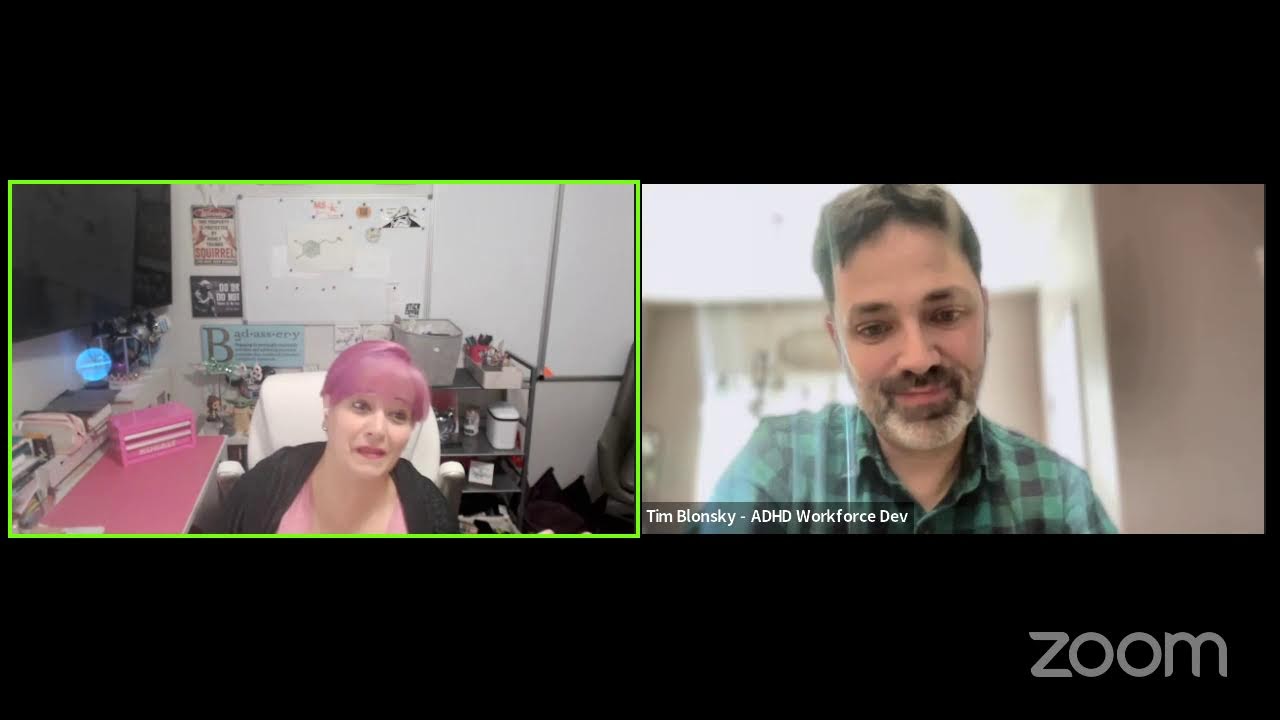
Danielle Ralston and Tim examine why equity and inclusion matter for the 2025 job market. Disabled workers face roughly double the unemployment rate of non-disabled workers, and 73% of working adults report an invisible disability. Companies like Dell, Google, and Microsoft use flexible schedules, remote work, and specialized interview departments to tap into this talent pool as 10.5 million workers prepare to retire.
Chapters
Good morning, everyone. I hope you're having an amazing day today. Today is the day before Thanksgiving. I can't believe that we are that far into the year. Like, where did the other half of the year go? I missed it somewhere.
Yeah, that's crazy. You know, like, Danielle, I think you and I started really directly working with each other in July or August of this year, or maybe And, you know, just, just that amount of time had gone by and we've accomplished some great things and we've got some great things coming up in the future as well.
Yeah, we got a lot going on right now, actually.
Yeah.
Okay, so today we're talking about, um, the job market outlook for 2025 and why equity and inclusion. So many companies are removing DEI. Walmart just removed DEI. Harley removed DEI. SHRM, which is the top HR, like, government entity, or I don't know what you want to call them.
They're a private organization, but they provide a advisory role for HR professionals throughout the United States. Kind of like a professional repository of—
Thank you.
—publications, training, conferences. They're very well known.
Yeah, they are. And they're getting rid of DEI. And I understand because there's a lot of political divisiveness in the title DEI. But we need DEI for those of us that have invisible disabilities, physical disabilities, mental disabilities, all of those things. And removing DEI is not the right move. And it's going to hurt businesses if they don't start looking at the equity and inclusion pieces of that specifically. And we're going to talk a bit about that today. We obviously talk about this all the time. We talked about it last week with skills-based hiring, and it's something that comes up a lot for us that we talk about this a ton, actually.
Yeah. And I, you know, I don't think we can, you know, talk about that enough. And I, you know, we're gonna have a lot of conversations about this in the future. And yes, while we do not want to get political, I think it's maybe a little bit safer to get into the— wade into this area, given the fact that the election results are final. It is what it is. You know, nothing's gonna change that. But we full well know that the policies that are being promoted are ones that are going to affect the economy. Some may say for worse, some may say for better, but we know that the landscape in 2025 is going to change whether we like it or not. And the, you know, the whole idea of DEI has obviously been misunderstood, and we've talked about this quite a bit, that it's got a stigma that's been attached to it that did not need to be. But in the end, DEI was a way to really help employers create the culture that was necessary to be able to tap into this incredible talent pool that most employers are not tapping into. Now, let's look at that from a data standpoint, because Danielle and I, we're always going to look at that specifically from data. So this is not opinion. This is not, you know, like what I feel, what you feel. It's just pure numbers. So we know that the unemployment rate for individuals with disabilities has been generally about the same for quite some time. So it's basically about double what the number is for individuals that are non-disabled or neurotypical individuals. So we know that that's a fact, and we know that there are government programs out there that try to address that. And I think that if those programs were to just disappear tomorrow, then the unemployment rate would probably really spike. So we're in this place now where, now more than ever, and we're going to talk a little bit further why, as to why we really need to tap into individuals with disabilities. So let's not call it DEI. Maybe we can come up with another term. Maybe there's—
Yeah, well, it's equity. It's inclusion. Equal opportunity. And it comes back to that equal opportunity thing that they started talking about in the '80s. And really now with 10.5 million people leaving the workforce in the next 5 years retiring, like those are just 10.5 million people retiring. That does not include people who have to leave the workforce because they're taking care of aging parents or there's a million other things that can happen. aging themselves. Um, and did you know that currently, right now, and this is based on a survey that our own Dr. Jessica Hickstead wrote, 73% of working adults have some form of an invisible disability?
Um, I, I am not surprised by that at all. No, they don't even realize themselves have it. And then those that do, they're just in that journey of figuring out, okay, Now, what do I do? And how does this affect my relationships? How does it affect my career? How does it affect me as a parent, as a child of an older adult? So it's an interesting mix that we're in. And but, you know, like going back to the fact that, you know, like we're seeing these policies that are about to be enacted. It's under the idea and concept that is not driven by data at all, that we need to be in a place in which we're getting rid of illegal immigrants or getting rid of, you know, deporting all these people and all that to give Americans jobs. And there are, there are more open jobs than there are people to fill those jobs in the United States. And then that's the part of it as well.
And part of it is because companies have hiring practices that exclude those with disabilities. We've talked about, we talked about last week skills-based hiring, and we've talked about that stuff a few times, but just hiring, like interview practices, and we've talked about that before, are such a huge barrier even to a lot of neurotypical people. The The way that resumes are submitted and people— how people go through the application process is insane at this point. AI is not working well for this.
No, it's not. And but like Danielle, let's say every single disabled individual that's unemployed or underemployed was hired into a full-time role in the United States, there would still be open jobs that employers cannot fill.
Yeah, absolutely.
So, so like, and if every illegal immigrant, and that's all the discussion, would still be employed, and every individual with disability would still be employed, and then, you know, the unemployment rate currently in the United States is about 4.1, 4.2%. So if all 4% of those individuals are also employed, there would still be open jobs in the United States. So like—
Yeah.
There's a worker shortage happening across the board, and you need to have these hiring practices change so that you can tap into who's left in the talent pool. And then like on top of that, you need to talk about automation and maybe implementing AI to maybe replace some jobs, and that would never replace all of them. But, you know, because we're in a place in which there is a worker shortage, and as you know, 10.5 million people are gonna be leaving the workforce over the next 6 to 8 years. And so that's a part of it as well. And so the bottom line is that Danielle and myself and the whole team, Dr. Jessica Hickstad, who's incredible, we are your ticket to kind of figuring out what policies you need to enact to be able to tap into these talent pools.
Yeah, I mean, and so there's the urgent workforce challenges, obviously. Something I had conversations because I was at a conference recently about hiring and companies forfeiting just through their hiring, the application process, is they're not taking into account adaptable workforce things. And we've talked about what that looks like. I mean, flexible work schedules. Unfortunately, we have a lot of companies who are saying we have to go back to the office, back to the office, back to the office because we can't work from home. Yes, that's a whole, that's a whole entire episode right there for us to talk about work from home. But sensory adjustments allow somebody to wear the headphones that I already have. Ooh. Remote work obviously is something. But having better hiring practices is where that all starts. And you're creating barriers for people who don't live in the US. I've heard from people who want to be to the US who are highly skilled, highly educated, maybe even educated here in the US, go back home to Europe and can't get back into the US because the hiring practices of applications and all of that are a barrier to someone. And again, these are neurotypical people. Then you've got barriers to access because of language issues, auditory processing, all kinds of things that come with invisible disabilities. All of those things. And all we have to do is adapt. It's not like we have to change. We don't have to completely revamp anything. We just have to adapt things and put humans back in place.
Yeah, and exactly. Uh, you have the, the human aspect to it. Um, you know, well, I'm big on that. And, um, uh, you know, things, things like, you know, making sure that— so there's obviously two sides of it. So the employer side and like what they need to do, and then the, uh, the job seeker side and what they need to do. Yeah, and on the employer side, you know, bringing back the human component is huge, especially— and I've seen this happen where there are some large employers that had worked with vocational rehabilitation programs on the national scale that had done that very thing, where large employers like Dell in Texas or HP, which is in Texas, Boise, California, And, you know, Google, Microsoft, all of them, they have specific departments in their hiring departments, if you will, that they have face-to-face interviews for individuals with disabilities. So if you check off on a box when you apply for that, whatever that role is, and that you are someone with a disability, you then get put into this department that then actually handles the interview in person or over Zoom or or something like that. So they have specialized departments to handle neurodivergent or other individuals with disabilities, and they have been incredibly successful. So we're seeing larger employers do this. So when we talk about the fact that we need employers that do this better, we see a lot of employers that do. So there's a lot of best practices out there that we've studied that we can then help with. Let's say you are not the size of Microsoft, you're something that's much smaller and you may not have the bandwidth to be able to handle something that large. That's where we can come in and say, well, let's take this best practice from, you know, the 14, 15 employers that we know of and scale it down to the size that you need for your company. And then we can help you with implementing them.
Absolutely. I mean, between the 4 main of us that come in and would talk to a company, we've got Dr. Jessica, who has a PhD in organizational psychology. We have Tim, whose education is in labor intelligence and working with an adapting workforce, uh, uh, supports. I've got an operational background and a management training background and a sales background. So I come in and bring all of the pieces of your management team in and help train your management team to do all of these things. And that's just with the top 4 of us. There's 4 other people on the team that also have expertise who are here to help with the individual things that We do. And we do this from a data standpoint. Again, data, data, data, data. This is no feelings, no political stuff. Data.
Yeah, we are the dream team. We are.
We are. We absolutely are. And we come in with some very different backgrounds. We've got Jessica, who has a very high-level corporate background. I have a corporate background in tech. Tim has a corporate background working in labor intelligence and hiring practices and all of that. Um, and then we have, we have people who are trained therapists and psychiatrists and psychologists on our team, which, and behavioral modification specialists, all of that. We really try to bring you everything as a company. And we work with companies, tiny little companies. We actually, uh, a couple of years ago worked with a team that was only 5 members and helped them adapt our hiring practice. They're now 50, and over 80% of their team is has either invisible disabilities or physical disabilities because of things that we helped them put in place just in their hiring practices. Yeah. They were a fantastic team, and we didn't have to train them on how to adapt their workforce. They knew that they're really amazing at it themselves. But we came in and helped them with their hiring practices of hiring these individuals. And now their, their company has grown 87%, not just in hiring who they've hired, but In profit.
Yep. Yeah, absolutely. So, you know, we, we, um, yeah, and we're not in this necessarily to, um, you know, like, we're not in this to be rich. We're in this to really help people. That, that's really— it's a passion project. Um, you know, like, yes, it's backed up by data, but we really just want to help people. We want to make a positive impact. We want to, um, you know, because we know so many individuals that are Neurodivergent, ADHD, and individuals with disabilities. I'm someone that's hard of hearing, so like it's really a passion of mine to really help deaf and hard of hearing individuals. I'm the president of the Idaho Association for the Deaf, and I see that deaf and hard of hearing individuals in the United States are in a lower socioeconomic background, and they don't need to be. And, you know, we really, we really just want to help people, but then we also want to help employers. And, you know, we just, we really take pride in that. So, you know, I just wanna put that out there.
Absolutely. And obviously I work with those with hidden and invisible disabilities, neurodivergence, diabetes, single moms. I put them in that invisible disability category sometimes 'cause we're exhausted. Single moms are exhausted people and they need a little extra support. But all of that goes together and we're here to help companies really look at that and again, really talk about how equity and inclusion is a big part of how you have success with everything that's going to happen. Tim wrote an article last week about how the tariffs are going to change our hiring landscape in the US and what that looks like. That means manufacturing is, in theory— we put this in theory because nobody actually knows right now— in theory is going to increase product production here, increase jobs in the US at the same time where we're having some of our workforce deported because they're illegal immigrants. So we've got a lot of things going on. And unfortunately, that just puts companies at a disadvantage for hiring people. You've got companies also laying off. You've got Ford who just laid off 1,000 people just before Christmas because they're shutting down some of their EV stuff. So we've got some manufacturing things that just not going the way people thought they were gonna go as well and laying people off. So we've got people being laid off, but we got way more jobs than people that are laid off currently. But unfortunately, companies aren't hiring properly. So even people who are getting laid off aren't necessarily looking for work. They're looking to start their own businesses. As somebody who's a business coach, I'm seeing a ton of new businesses start and new people start new companies new service-based businesses and new consulting companies and things like that because companies aren't paying attention to equity and inclusion.
Yeah, so there's 2 thoughts for that. One, I've talked about this before, but I just feel like I need to kind of put this in there in this conversation that we're seeing on an international scale that countries like China and some other Asian countries are in a place in which they have an aging workforce as well. And some of that manufacturing is moving back to the United States and Mexico. So we're seeing this happen. It's called reshoring. It's an official term. So that's happening where manufacturing has been scaling up in the United States since really 2012, 2013. But, you know, it takes many, many years for a factory to reopen or to be built to then start up that production. So that's kind of what we're seeing, what we're seeing happen right now. That's one. Two, in terms of the hiring practices and the fact that you have so many people that are you know, be it because of a layoff or because they're just, you know, they're tired and they're burnt out. You see a lot of people that are opening their own businesses because they're tired of the American corporate culture and they're tired of like what's happening on that end in terms of just how corporations have become a place in which they just manage numbers rather than people. And, you know, what we're seeing that's happened with those, there's an adjustment that needs to happen. And we're seeing a lot of employers that are understanding that and they're starting to kind of really understand that they need to have a holistic approach in the retention of their current employees as well as the hiring process. But we're seeing that happen where, you know, a lot of those 4.1% of people that are unemployed are individuals that are just starting up their own businesses because they're just tired of the corporate setting. So I just wanted to put those 2 things out there.
Oh yeah, absolutely. And it's a big, again, equity inclusion, accommodation, having these conversations out loud about your company that you do offer equity and inclusion and be a human and not a robot workforce that's sacrificing your workforce. Take a look at your— and I'm not suggesting you start telling everybody we're a big happy family. That's a red flag to anybody hiring. Do not. I don't. Okay, Tim. So Tim is my brother. I don't want to work at a company that works like my family, thank you very much, because they have issues and I don't want to work like that. So don't start— that's not the direction we need to go back to. We need to go back to a company that's willing to listen to their workforce and support their workforce. So we want you to really start thinking about this because this is going to ramp up come January. I mean, January, February, March, we're going to look at a changing hiring landscape. We're going to look at a changing workforce landscape. And there's a lot of companies that are worried about that and And I think something that we're going to see that we saw in the early 2000s, 2008, 2009, is companies who are looking to those that are going to be leaving the workforce the next 5 years, buying them out and having them retire earlier because companies are worried about this landscape, which is not going to do them any favors for hiring. So how do we as consultants and how do we as people in the invisible disability community take a look and help come step up alongside these companies and help them hire the right new workforce as people age out, retire, buy out, all of those things.
Yeah, yeah, absolutely. And that, you know, like that, that's a cultural shift that needs to happen. And it's not a, it's not a cultural complete landscape change. It's a state shift. So shift is the key word in this. And we've worked with several employers in my previous role and as well as Danielle's and our, and what we're currently doing is helping employers kind of understand what that— what you need to do to make that shift happen. So it could be things like having support groups within your company to help neurodivergent, ADHD, you know, making sure that, you know, like having that support system kind of already built into the company. It's just something very simple that you can do. Respecting cultural differences within your Workforce. So you have individuals from different cultures, you know, make sure that you, you really kind of understand them, make sure that you, you hear them and that they feel heard, you know, simple things like that. And so that's really what we would recommend. Do an assessment, do a survey where it's an anonymous survey. So, you know, the employee does not need to worry about like what, what's involved in that. And then we bring those numbers to you. Again, it's all about data and, and help you understand what little shifts you need to make to be able to create that culture. Then when you start on the other end, you know, you're hopefully you're revamping your hiring practices as well. And then you're now in a place where you have that full picture.
Absolutely. So if you have any questions, if you need any help, if you're looking at 2025 going, oh my gosh, how do we handle— I've got 12 people retiring in the next year, how do I handle this? Reach out to us. We absolutely can help you make better decisions, hire a more dedicated work staff too. And I think that is something that people tend to ignore when it comes to the hidden disability population, neurodivergence, profoundly deaf, whatever it is. They tend to ignore us all because we aren't going to be the best employees. Hire an ADHD person, neurodivergent person, profoundly deaf person, You hire us and actually support us in whatever the onsite needs are. It may be just wearing earbuds at work. Hello, this is easy. And turning a desk around so you don't get startled by somebody walking behind you. Easy, easy, simple things. You do those things, we will become your best, most loyal employee.
Yeah, the, the— and there are actual numbers behind that as well. Yeah.
Absolutely. So if you have questions, if you need any support in this, let us know. We are absolutely here to help, and we look forward to diving in and helping you create a better workforce, more equity, more inclusion, and be hiring better talent just because you're willing to have these conversations.
Yeah, and I just want to add, this is probably maybe a good final thought. You know, maybe Danielle, I'll let you have the last word, but I think that's just a good final thought from my end. And, you know, we talk about this landscape change that's going to happen in 2025. It's not going to be a gradual thing. It is going to happen immediately. So really, employers need to start having these conversations now before January 20th. And it's not political, just it is what it is. So it's an immediate change that's about to happen. And are you ready?
Yeah, most companies aren't. And I know this from data that most companies are not ready for this and haven't started thinking about this. I don't care if you have 5 employees or 10,000. Actually, we could go much larger than that. Or if you have a million employees, we are here to help, and we are here to help you change that landscape. If you have any questions, please message us. You can DM either Tim or I at any time. Have an amazing vacation. Have an amazing Thanksgiving.
Yeah, Thanksgiving tomorrow.
Well, yeah, I know. Can't believe it's Thanksgiving tomorrow.
More from Danielle

Why Disney is what you need as an ND human #Neurodivergent #disneyadults #disneyscience #disneyworld



Follow along if you want to watch me finally finish what I started… #adhdcommunity #bodydoubling

The last 3 months I … wait no … all of us here at The Hive have been rebuilding from the ashes… we

The last 3 months I … wait no … all of us here at The Hive have been rebuilding from the ashes… we



What if the silence didn’t stop you because you never lived life alone? Katie Karayianis

What does getting ready for a road trip look like for you with adhd? #adhdcoach #ndhive
