Rejection Sensitivity Is Not a Personality Flaw (RSD & School)
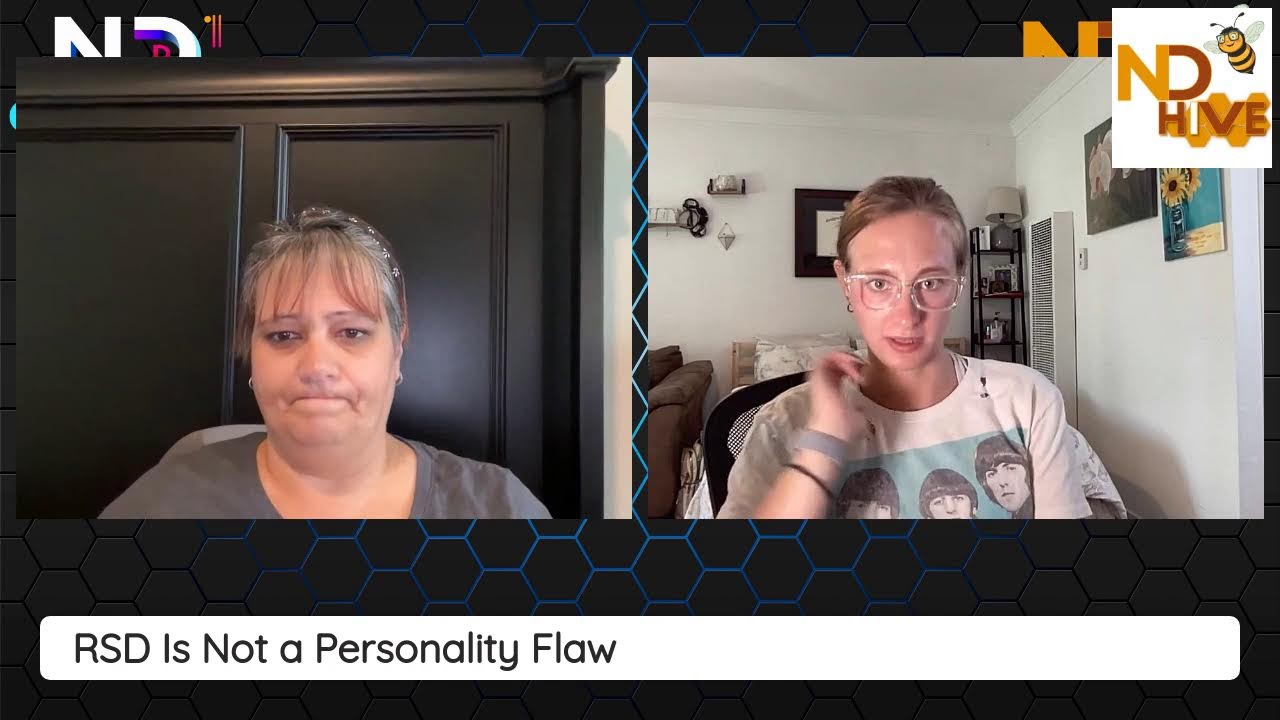
Danielle Ralston and educational consultant Katie discuss rejection sensitivity dysphoria in school settings, from elementary through college. They share personal stories of educational trauma, explain how RSD shows up in classrooms, and cover IEP accommodations and advocacy strategies parents and students can use.
Chapters
This is Danielle with ND Hive, ND Out Loud, and we are talking all week, we're talking about RSD, rejection sensitivity dysphoria, not being a personality flaw. And because Katie is our educational consultant here, we're gonna really approach it from dealing with going back to school.
Yeah.
Um, so many of us, including both of us included, have past educational trauma. Because again, we hear 20,000 more negative words than our counterparts. But I think in school we hear 15,000 of those pretty often. Even as college students and in post-grad work, I'm a PhD candidate and I had to get into a major argument last year about my accommodations. that are documented with my advisor because I spelled one word wrong in a paper. I'm dyslexic, severely dyslexic. I spelled a word— like, I got the word so wrong that Grammarly and everything that I am allowed to use, it's part of my accommodations, didn't even catch it. And then spent a month advocating for myself.
Yeah.
We all have stories like that and much worse. I've got worse stories than that. But even at, again, post-grad level, we're still having to argue for our accommodations and stuff. Now, when you're a parent trying to get your kids what they need the first time around, that is a whole other issue. And that's where Katie comes in. I support the parents and I help them, but Katie comes in as an educational consultant to help them get IEPs and 504 plans and all of those things in place. So let's talk about how RSD can affect your, your high school student, elementary student, college student. Yeah, just because of past things that we've had to deal with because of our ADHD, autism, whatever.
Yeah, I mean, definitely if you It can definitely affect— I'm thinking the first thing that's coming to mind is your advocating skills, right? And so, or whether you advocate or not. And so if you need to advocate as a young child or even a middle schooler, high schooler, whoever, and you have negative reactions to that advocacy for yourself, Well, then you're probably not going to want to advocate.
Oh, we just lost her. Hopefully she'll come right back. If not, we will jump back in later and try again. So something that I want to bring up with this, we all have stories, like everyone on my team, we are all neurodivergent ourselves.
There she is.
Okay. She's coming back in.
There she is. Sorry. No, I apologize. I don't know what happened. I was here and then I wasn't here.
Internet.
Yeah. So, for example, if maybe a little— no, I mean, this happened to me. try to accommodate or advocate for myself, or teachers would say, you know, use your accommodations, you know, whatever. And I just, I, I didn't like being pointed at or being associated with— I, because I thought like disabilities were bad, and I just didn't— because of the way others chose to advocate for me. And didn't take my feelings into consideration, you know, that caused me to be shameful of advocating for myself. So even when it came to be, you know, when I came to be in middle school and I could, you know, just use my own accommodations, like when the teacher says, okay, everyone put away your calculators, we're gonna have a test.
Oh, we lost her again. Hopefully she'll come right back. The joys of going live some days is you're gonna have technical issues.
This is odd. This is odd.
It is what it is, and we're not gonna worry about it because this is real life with even our internet is ADHD today.
Yes, but no, like to the point where you know I have to when the teacher says play your calculator or take away your calculators and I have mine. And I have to hide it in my lap and other teacher and other kids point me out for cheating. And then the teacher goes up to the front of the classroom and says, oh, don't worry everyone, Katie has an IEP and she has a disability because she gets numbers confused in her head and she needs to use a calculator to whatever, whatever. And just look everyone in the eye and, you know, IEPs are confidential, so that's legal. And that's why she got fired. But, you know, and she thought she resolved it by putting a mini— a Fun Pack size of M&M's on my desk and just said, good luck on your test. I didn't write a single thing on that test. I didn't write my name. I didn't answer any of the questions. And—
Fuck you.
And not only did I have to worry, you know, was it, you know, that shame in front of the entire class, but I was bullied by that person that um, you know, said teacher, teacher Katie has her calculator in a lap. I was bullied by that person for 6 more years to the point where we actually got in a physical altercation in senior year because I told him, stop it, this is ridiculous. And so no wonder people with ADHD have RSD.
Absolutely. I mean, I've had teachers bully me. I mean, I come from a time where calling some being diagnosed as mentally retarded was very much a thing. They didn't recognize autism in young girls back then. Um, but I would have teachers pick on me for that. I have multiple teachers that, oh, Danielle's just retarded, she can't do anything, which should have never— again, to your point— ever been said in class. But, well, Danielle can't help it, she's not smart enough to do that. Like, we've heard these things so often. So when your child starts expressing what you consider over— you're being a drama queen, you're being too sensitive, chill out, it's not that big of a deal. Yes, it is that big of a deal.
Yeah.
And we need to, as the parents, as the ADHD coaches, as the therapists, as the teachers, we need to be taking that into consideration and stop being ableistic, first of all. And second of all, really hone in on what does this child need to feel safe and not in a shame loop over this, because they're not going to do well in school if they're stuck in that shame or their executive function, well, dysfunction has taken over and there is no executive function because they feel bad getting their calculator out. This is why I really am more of an advocate and there is a plus side and not a plus side to this is removing. Said child that has to have accommodations that other children in the classroom don't get to another room to take a test or schedule tests for after school or before school, which is probably even the— depending on how your child does first thing in the morning or late in the afternoon, wherever their executive function is at its best, because some of us don't do well first thing in the morning and others of us are much better in the afternoon, whatever. Accommodating those things at different time periods.
Yeah. So yeah, I think accommodating it— I think accommodating— I know, accommodating them at different time points and also knowing that that might not also work for some families.
Absolutely.
You just have to get creative. And I think also understanding that ADHD and autism, neurodivergence, not only affects in the classroom, it affects outside the classroom too. So it affects before school when kids are interacting. It affects in between classes when, you know, you get into middle school and high school. It impacts lunch. It impacts after school. It impacts interactions in classrooms. You know, say when a substitute teacher's around and teachers aren't, but it impacts all of these different things. And so it very much does.
It very much does. So I actually want to talk about that a little bit more. Some kids, and I actually am working with a parent right now, not working with their child, but I'm working with a parent. Who has— she already has an amazing teacher this year. They've been in school exactly like 3 days.
Okay.
So they've been in school 3 days and the teacher was not going to be in school on Friday. And this teacher reached out to the mom because of this child's IEP and said, you might want to keep your child home or prepare your child because I will not be in the classroom half the day today. I have to do something, whatever, whatever the reason was. And this teacher prepared the parent ahead of time. So that they can prepare their child. This same child does not eat school lunch, and therefore by the end of the day they're dragging because their stomach doesn't feel well because of their ADHD medicine. This is a reality for many of our kids. I know you've actually talked about that before, that you didn't really eat during the day at all. You waited till the end of the day and then were ravenous after school.
Yeah.
Because you just really couldn't do that. So those things that we have to take into account. And also as a mom of a neurodivergent child, he's almost 30 now. So been a while, but he would, on days that they had gym, he could not cycle back down and come back down after gym for like an hour.
Yeah.
And he tried to not do gym because he knew he would get in a lot of trouble on gym days after gym. So he tried to not do gym and then he got in trouble in gym. And parents and kids and teachers and aides and all of that really need to look at these kids very differently and explore what is triggering this. What's triggering this behavior? Why is this behavior happening? Especially if it's a behavior that's not always happening for this child.
Yeah.
So when—
even if it is, or, you know, it's a behavior that only occurs in certain circumstances. Stances. Sorry, laundry.
Um, love the ADHD timers. Good job.
And but, you know, it's all environmental, or it can be environmental, circumstantial. But yeah, get a little bit curious, be a little detective.
Be curious, ask. Because I will tell you that even some of my 5-year-old kids that I've worked with, and my son when he was that little, Will tell you why he doesn't want to do XYZ. I don't like how that paper feels. I won't work with that. And you want to know what the paper was? They were working with that foam, the foam stickers, and he didn't like the feel of them. Wouldn't touch them. Okay. So give him something else to do because he doesn't have to do your— there are a way, a lot of other ways to do that same skill. And I'm talking at the kindergarten level. Why don't you like that?
Yeah.
Just ask the question. Maybe they can't express it and they might not know. Yeah, but then you might make them think and they may tell you later or the next time.
Yes, because that's— oh my gosh, that's something that— oh my God, people with disabilities, neurodivergences, oh my God, kids in general, parents get so wrapped up in this, this gentle parenting and like, oh, you know, I don't want to have to make myself my kid think? Or if I take away iPad, then they're gonna scream. And oh my gosh, kids, A, will be kids, but 2, you can push your kids. I'm not saying push them super, super hard, but oh my gosh, you can challenge them mentally.
And you can even challenge a sensory issue, which I know very much goes against a lot of what's out there right now. Even challenge their sensory issues. And yes, might now, it might gonna be trigger some RSD and stuff in this moment. But if they don't try to touch the glue, if they don't try to touch the sticky thing that they may not necessarily like, they're never going to know when they can touch something that they might like.
Well, they're never gonna know how to recover from that, right? Start teaching it when they're with you and they're with their home safe space. That is the best time to challenge them, wherever it is. But make— but challenge them with you first, so that when they go out into the world and the world might not be as accommodating as with you, they're able to, you know, either process those emotions internally or maybe have those emotions with someone else, but be able to get over it.
Absolutely.
Continue. Be resilient.
And something that this brings up, and I've had this conversation so many times, the world is a mix of neurodivergent and neurotypicals and people with disability, physical disabilities, mental disabilities, visible disabilities, invisible disabilities. In the world, the workplace cannot accommodate all of them, not naturally. Can they do a better job, workplaces, than they are now?
Absolutely.
That, that's a very different discussion. However, they're not going to automatically accommodate you. You have to learn how to adjust and self-regulate in moments when you can't get the accommodations you need.
Yeah.
And you also have to learn to speak up for yourself in a positive way, not just exploding and things like that. And RSD is one of those things that can make us— even, even as an adult, I have moments where I have a hard time holding that in when I'm having a really, really bad day. I've peopled too much today. Now I can't. function and I hate everyone and hate everything. Okay, but that doesn't mean that we can treat others around us with the results of that internal feeling. So we need to start showing our kids how to deal with this now. And again, safe spaces at home. So if your kid doesn't like to touch the glue at school, great. Let's make a mess at home on the weekend and teach them it's okay and they can go wash their hands every 2 minutes if they need to, to help get rid of that feeling. Great. Start teaching them to—
or they can wear gloves, or, you know, or give them tools to be able to get— give them tools that are able to get them through the world.
Exactly. So what are you doing and how are you creating safer spaces for RSD to happen and teaching your child Yourself, if you're in college and you haven't learned, we're here to help because it is hard. It is so hard to overcome that rejection sensitivity and the past trauma that brings up RSD a lot of times, even at the college level. Excuse me. We are here to help. Let us know where you are right now and we will let you know how we can help you. We have one of the cheapest ways to come get help. And Katie is running some of our coaching calls now. I'm so glad that she's able to do that. And just come get help. We're one of the— we are the cheapest ADHD coaching program that exists, and we are on full-on coaching as well as group coaching and a community and unlimited body doubling every day. So we are here to help you. Please let us know how we can help. And get curious about yourself. If you don't know how to help yourself, get curious. Have a great day, everyone. Bye.
More from Danielle

Why Disney is what you need as an ND human #Neurodivergent #disneyadults #disneyscience #disneyworld



Follow along if you want to watch me finally finish what I started… #adhdcommunity #bodydoubling

The last 3 months I … wait no … all of us here at The Hive have been rebuilding from the ashes… we

The last 3 months I … wait no … all of us here at The Hive have been rebuilding from the ashes… we



What if the silence didn’t stop you because you never lived life alone? Katie Karayianis

What does getting ready for a road trip look like for you with adhd? #adhdcoach #ndhive
