When 2 ADHD Coaches Chat
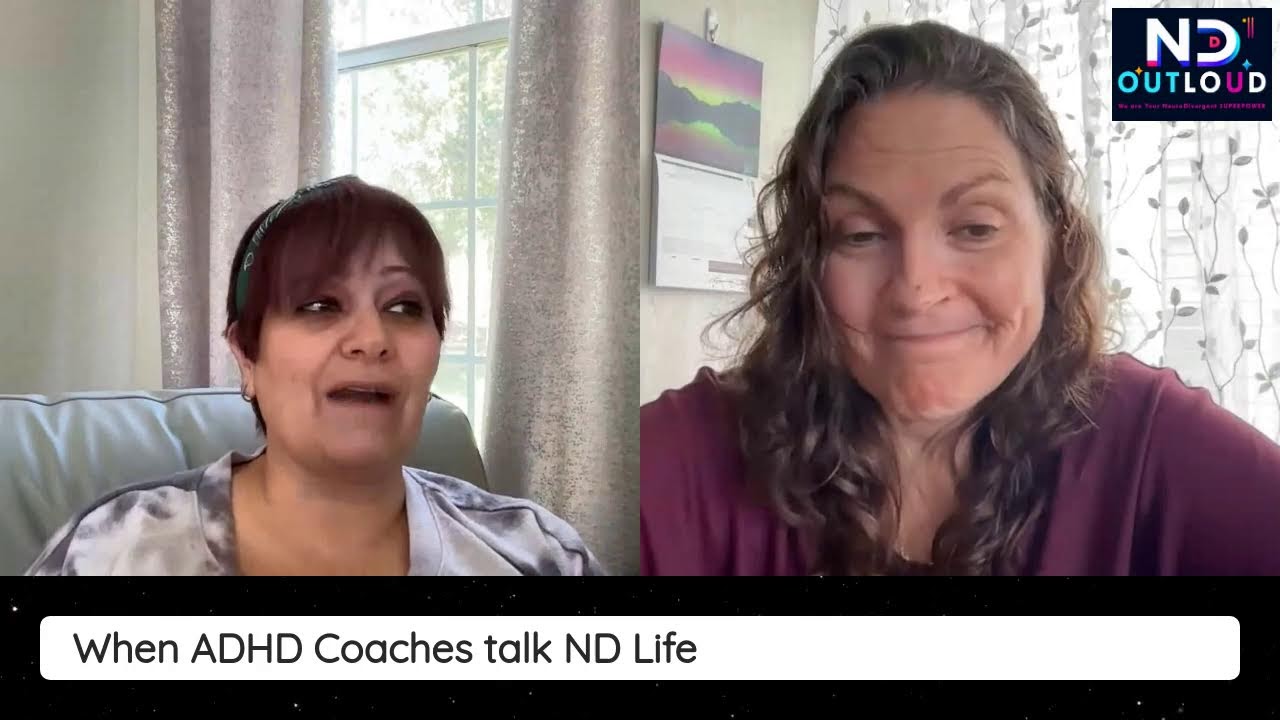
This content was created by Danielle Ralston. This content was uploaded by Danielle Ralston. This is a YouTube episode titled "When 2 ADHD Coaches Chat" (created 2025-03-18) featuring Danielle Ralston and Shay — two neurodivergent/ADHD coaches — in an informal, diarized conversation. They discuss ADHD and autism as disabilities and strengths, practical tools and strategies (toolboxes, BLAST, executive dysfunction supports, dopamine mapping), relationship and communication tips for neurodivergent partners and families, and promote an upcoming neurodivergent-focused training/event at Disney (ticket deadlines, deposits, professional development offerings).
Chapters
Is it working?
There we go. Good morning, everyone. I hope you're having an amazing day today. It's Danielle and Shay with ND Out Loud, and we're just here chatting again today because everybody seems to really love just our chats. And we are getting so close to Disney. We are getting so— I'm making all of the reservations today and buying all of the tickets today.
Hey!
And I have a daily countdown on my phone and we're 58 days away from our event.
Now, why does that not surprise me that you have a countdown on your phone?
Because I'm excited. And I get to do some things that we all neurodivergent people like. I know every single one of us is excited about Disney. Unlike when I took my husband who hates Disney and he was not excited to be there. He— that took some of the fun out of it. So I'm excited to go with a whole entire group of people who love all things Disney and can't wait to be there.
I'm just excited the fact that I can just sit and relax and have fun with other people that get me.
Yes, there will be no apologizing. There will be no having to explain why you're thinking the way you're thinking it. There will be no apologizing for randomly dancing for absolutely no reason whatever, or singing along out loud as loud as possible. Even if you can't sing with the songs, and there will be no, no judgment, no judgment, and all kinds of learning going on. I'm really, really excited for what we're gonna— we had a team meeting last week talking about all of the training we're gonna be doing, and I'm so excited.
I also learned something in that meeting: don't volunteer a topic unless you know the topic.
Yep. Shay said we should talk about this, and I said good, I can't wait to hear you talk about it. And she's like, wait, what?
I was like, hmm, okay, I guess I've been voluntold here.
But we'll all jump in, those of us that are all of the coaches and stuff. We're excited. But, but I'm really excited to finally get to do the Disney Science for focus, productivity, and to decrease your overwhelm because it's something I use with most of my clients already and have been for years. And I use it every day. It's how I get done everything I need to get done.
I am excited to learn this because then I can implement it for myself. And I will say that there's been a few weeks lately that I've just struggled just with doing something. I mean, Saturday, Saturday is like a cool day for me because I don't worry about anything with the coaching and I don't worry about anything with the other business that I'm doing. I can just do whatever I need to do or want to do. And my husband was gone in the morning, which, you know, that's always kind of fun. But I could not get started. It just was a day I could not get started. I sat on my butt for like 2 hours going through emails and just going through stuff, and I couldn't do anything. So finally I got off the chair and went and cleaned my bathroom, but it was just like I could not do the mental stuff on Saturday. Give me anything physical or anything like that, I could rock it. Like, I got the laundry going, I got my husband cleared out some stuff in the garage. Anything physical, good to go. Mental, not so much.
It did— nope, just wasn't happening.
No, no.
But that's okay.
That is okay now. It didn't used to be for me. I used to beat myself up for it.
Oh, there's so much shame for that for me for years. So much shame that went with that.
Me too. But I'm glad I'm getting over it. Can't say I've completely— Oh yeah.
I mean, we all, I mean, it still happens.
Yeah. I think that's something that a lot of, a lot of people that I've worked with, they don't realize that it's still going to pop up. Even though you've created tips, tools, tricks, whatever, there's still going to be times where it comes up. And a lot of times I have to remind them, hey, you know, sometimes we level up in the things that we're doing or things that we're taking responsibility for. And, you know, like starting a new business or starting a new job or moving to a new area, you're leveling up in some ways. So your brain's going to be like, We gotta protect you. So we'll have to go through that same thing all over again, but not as bad because you already have tools and tricks.
Yeah, well, once you have the tips and tricks and tools and you have a whole toolbox— because I tell my clients that you need a toolbox for every single thing that you do, not just one, one toolbox for like all of the things. Every single thing needs a toolbox of tools because what works today may not work tomorrow, may not work the next day, and you may have to switch. How you do things often.
Yes.
And once you have that toolbox, it's kind of sitting there, even if it's just mentally sitting there, so that when we do break something or fail or whatever, we're like, oh yeah, I have the tool to fix that. So that shame cycle is this big and not the size of Texas. Yeah, I get— I can't do— there's not enough camera width. I'm like, before it was like Days, years, like, long. And now it's like, dang it, I didn't use my freaking tools and I should have done that.
Well, and it's also recognizing where is it coming from. So is it coming from you're just physically tired, you're bored? I have what a prior mentor taught me. It's called BLAST. So you go through all the letters, bored, lonely. A is, I can't remember A, angry. Angry, S was stressed, and T was tired. So that, that's another tool in the toolbox. Am I dealing with any of those 5? And like Saturday, I was tired. I wasn't like physically tired, I was mentally tired because of all the decisions that I had been making all week long. So I was in a decision— I can never say that really fast— decision fatigue in one day from the prior 5 days. We've got to be able to recognize those. And so having just something even that simple, saying, okay, blast, run through it in your mind. Am I any of those things? If not, then, you know, okay, I need to look at outside of this. Is it a belief? Is it something else that's coming in? Is it an outside circumstance that I have no control in? You know, those kinds of things. So I think it's just being able to use some of those tools can help us snap out of it faster. Or move through it faster.
Yeah. And I think that's the big thing is it's the move through it faster.
Mm-hmm.
Because we're still— you're— everybody's still going to— I mean, I'm still ADHD, I'm still autistic, I'm still going to experience the roadblocks and the disability pieces of my disability. I'm still going to experience every single piece of the— because it is a disability. And when I talk about ADHD and autism being superpowers, What makes them, what makes them superpowers is all of the tips, tricks, tools, and structures that I have. Not, I mean, being autistic and ADHD is a disability. It is absolutely a disability, but it doesn't have to be disabling and, and cripple my life at all times because of those support structure things. Yes.
And I think we get locked in on the disabled word. And I'm not— this is not devaluing any of the disabilities of it at all. What I'm saying is, is that once we hear that, it's almost like we think we're less than. We're not good at this. We can't do it. The reality is, is that we are disabled in this aspect. But what if we're more abled in another aspect?
Mm-hmm.
And, and I agree, our, our diagnoses aren't who we are, but they are a thing that we can use to create the, the tools, the tips, the things to be able to fill our toolbox and be able to go forward. We are not our circumstance. And that is something that I think people really don't recognize right away. And because they're getting all that emotion in, you know, we're getting all that stuff.
We hear the negative and we focus on that negative instead of focusing on, okay, now I know. I know what's going on. I know why this happens to me and why I struggle with fill in the blank.
Yeah.
But why is this piece? And now we've got the who, what, where, when, and how that we can fill in and create things around.
Right. Well, and it's, you're right about all that negative bombardment. I mean, if we look at social media, A good preponderance of it is all about what we can't do. I have ADHD, so I can't do this. I have autism, so I can't do this. Or here's all the symptoms. If you have these symptoms, you're this. No, no, no, no. It's saying instead, why aren't we putting more out there that's saying, okay, yeah, you have ADHD, but look at this cool thing. Yeah, you have ADHD, but look at how you've done this. Yeah, you have autism. Look at how you create this. I think there's been so much focus on the negative aspects of all the diagnoses out in the world to turn it from here's a diagnosis to here's my identity, that there's a huge part missing of what, what can I be grateful for in this? Like, what can you be grateful being ADHD, Danielle? What can I be grateful having the ADHD and then it compounding from a car accident? Where are the little bits and pieces? That create our true identity of who we really are, not the diagnosis that we have.
Yeah, because again, it is a disability. Can it be disabling? Hell yes. Even after 20-something years of training in this, and I can help anybody else with it, I still have days where I can't help myself. And that's okay. But again, now my, my RSD and recovery period is this much, maybe 2, 3 hours versus days, weeks, years of shame and frustration and allowing it, having it, not just allowing it, having it because I didn't know better.
Right.
But now that I know, it's that knowledge piece. It really is that knowledge piece.
You know, that's one of the things that I'm very grateful for with the ADHD is being able to recognize it a lot faster, not just for myself, but people around me. And people that don't even realize that they have ADHD, but being able to talk to them in a way that's not saying I'm diagnosing you, or I'm telling you you have ADHD. It's more like, hey, have you considered this, this idea? Have you considered trying it this way? Have you considered looking at it in this aspect and helping them to be able to figure things out on their own, but yet have a tool belt with something in there instead of them just wandering around trying to figure out what it is that they need to do different or what's wrong with them.
Yeah. I, and I think that's something that, that is a big thing and it's why we have the community here at NDL Loud to help people with that realization and that knowledge piece. Because so many live in the I'm broken.
Yes. Yes. You know, we've walked it.
We don't have to. We can live in the, okay, there are absolutely things I cannot do being ADHD and autistic. There are things I am not good at and I am totally like epically bad at them.
I think we all have those.
Even a neurotypical person. Tends to have that, but when we operate in community and in our knowledge, there's less that we're broken on and more that we can accept, that we can live out loud about and be loud about the fact that we're darn good at these 5 things. These 5 things I am better than, than your average person at because I'm smarter than your average person.
Right. And that's cool. That's awesome. I mean, it's, it's like this. Somebody explained to me one day, you wouldn't walk into an operating room and operate on somebody without having an MD, PhD, or whatever it is that's necessary, right?
Mm-hmm.
So why would you assume that you could do everything? There's going to be things you're not good at. I am not good at going in and doing a surgery on somebody. I know that. And there will never be a time that I'll try that, right? But I also know that I'm not necessarily good on staying on task, and I'm not necessarily good at getting a task completed or remembering to turn something off before I get billed for it again. In fact, that just happened today. So see, I'm still doing it. But the reality is, is that, okay, I'm aware of that, but I'm not broken because of it. I'm aware that I'm not that great in certain areas, but I compensate for it. By saying, "Hey, I know you're good at it. Can you please take this responsibility? And I know you're not good at this side, so I'll take that responsibility." That's where this figuring it out and not stressing over it and creating even a more of a mountain out of a molehill, so to speak, and being able to find where are your strengths. My son keeps telling me, you know, not lately, but when we've talked. In the beginning when he had his diagnosis a year, a little over a year ago, it was, Mom, it's all these things on social media telling me how bad I am, telling me all the negativity, all the things that I'm going to suck at. And I feel like I have to put this mask on and I feel like I have to do this and do that. And I said, whoa, whoa, whoa, whoa, whoa. Just because it's on social media doesn't mean it's true, first of all.
Yeah.
And that's a whole other topic in the world. And second of all, just because they're saying it doesn't mean you have to accept it. You don't have to accept all the negative. And if you are dealing with all the negative in your own diagnosis, okay, then it's time to start reaching out to people that have moved forward in it. And maybe— I read a book a long time ago, it's not in print anymore. I'm really mad because it was a really good book. But it was a gentleman who had ADHD. His brother had ADHD, twins. And he wrote a book and he talked about— he called it Addicts and Millionaires. And he talked about the fact that you have to have your complementary person. You have to have the one that can come in and be all the strengths that your weaknesses are, or some of them, maybe not all. And you're the strengths for their weaknesses too. But they keep you accountable in a gentle way. So that was the beginning of when I started understanding for my younger son, not the one that just got diagnosed, but the younger son. And that's what built our relationship to be a lot better, because then I was willing to look at where is his strengths, where is he struggling, what is it that he's struggling with, and how do we adjust to that to create a strength?
Exactly, exactly, exactly.
You just gotta work with it.
Yeah, again, it's, it's, um, It really is about finding again your compliment. What is your compliment?
Yeah. And the more that people know that, the better that they can teach their own, like their own kids, their own spouse. Well, maybe not spouse. Spouse can be hard sometimes, but relatives and people that are around them. You can just give them that little nugget for a moment. Nugget and another nugget. And that was the beginning of my son and I's relationship changing because I realized he wasn't doing it on purpose. He needed a compliment person. Sorry, I cut you off.
No, that is— it's huge. It really is huge when you understand that.
And our relationship has been so different since then. Like we can talk openly, but I also know what buttons not to push. Yeah, we're good button pushers, aren't we?
Oh, we're very, very, very good at that. So in understanding your compliment, how does that like tie into your relationship with your husband?
Actually, he is my compliment person. We are so different in some aspects, but there are some things that we're not. He's very business-minded, logic-minded. And this is the funny thing about ADHD. Everybody's like, ADHD is so emotional. ADHD is so off the rails. ADHD is this and that. My husband is not your typical ADHD. Yes, he's super ADHD, but he also does things very logically.
Mm-hmm.
But he also at the same time does logic. He also does it on, I know this is right. I think we've mentioned that before, that there are some traits with males that tend to think that they're right and stay there. And that's okay. In some aspects, that's great because when he was running his business, he knew what he needed to do and he did it. Okay. That's something that I'm not the greatest at. Okay. Give me the logic, help me figure out, give me the steps that I need, and then move me forward. Me, on the other hand, I'm more of, well, tell me what's going on. Let's walk through this. Let's talk through this. So we complement each other in that aspect because he can bring in the logic and I can bring in the compassion or the emotion side. Not like out of control emotion, but hey, let's look at some of the emotion. So we're very complementary there, but You have to learn how to communicate together based on each other's you know ways of thinking. Like when we first got married, he would say, "Honey, I need to talk to you," and that would send me into high stress.
Uh huh.
Just like you did. The eyeballs going oh yeah. And it took him a little while, but I finally sat down with him and I said, "You cannot say I need to talk to you later." And he's like, "Why?" I said, because that sentence sets me up automatically to be, I'm in trouble, I did something wrong. And so he now prefaces it, you're not in trouble, you're not— I'm not upset, I just want to talk to you about something later, is that okay? And so just by changing the verbiage, our communication is a lot easier and flowing. And we've also learned how to have words or signals for each other. He's a very intense person. Very, very intense. Like when he gets animated and stuff, he gets loud. For some of us, loud means you're in trouble. So I just go like this to him and he knows. Oh, okay. I mean, you've got challenges too, Danielle, with you being ADHD, your husband autistic. So how do you guys— how do you two work together with communication now?
After 30 years, 30-plus years, communication is fairly easy. There are still times that we knock heads because we're both fairly pigheaded.
Um, yeah, we got that problem too. I just didn't bring it up.
We understand how to talk to each other now. And part of that is because we are willing to learn the other person's strengths and weaknesses and accept them.
Yes, yes, big one. That's a big one right there.
Learning to accept that my husband is never going to be super romantic and remember about to do something extravagant or anything to recognize a birthday or an anniversary or something like that. He is never going to remember that.
Right, mine too.
If I want to do that, I better do it myself. Or, but then he will drop everything to go get me new chocolate or, or, or—
Right.
Last week I needed Red Bull like you wouldn't believe, and he stopped what he was doing to go get me some.
Well, and I think that's, that's their love language is different.
Yes.
So if we can recognize that by that communication and recognizing not, not that, oh my gosh, he's not romantic. And be more like, well, he's not romantic, but he will drop everything to go get me something that I need. That's his love language over here. How do you incorporate that into the relationship? You know, this back and forth communication and love.
And I think the other thing is accept and don't try to change how he communicates or what he does. It's not my job to change him. If he wants to change something about how he communicates, he needs to do that, and I can't force him to do I can't teach him to do that. I can't coach him. He needs to learn those things on his own. And I think the same thing for him is he couldn't force me to be an extremely meticulous housekeeper. That's not me. I'm chaos and clutter. And he's just learned to accept that he's cleaning up behind me.
But that's your compliment.
Mm-hmm.
Your complement person. So how, how do you teach that in— excuse me— in relationships? First and foremost, they have to be open and willing. Second, they've got to be willing to look at themselves first before looking at the other person saying, you should, you should, you should. If there's a you should, you need to stop shoulding on anybody.
Mm-hmm.
So that's kind of how it works. And if there's an expectation that you have in the relationship and you're not really talking about it, then that's your own unfulfilled expectation, which will then create unhappiness. Which would you rather have?
You have to be— you can't be upset with your partner if you don't tell them what you want or expect or need, right?
Right.
But not in anger. The minute you share those things in a crying fit or Yelling, screaming, hollering, or being accusing, you're not going to get it.
You know, it's interesting how you hear a lot of people getting into a lot of arguments with their spouses and stuff. And the funny thing is, is, I mean, we've all had that, right? We did not have our first, like, big blowout argument fight until we were married for 2 years. And a lot of that was because we were still learning how to communicate, right? And we were still trying to leave the baggage with The last person we were married to. But it came to a head then because we were both in fear because it was during COVID That's when we had our first, like, blowout fight. We've had a few since then, but most of the time, I would say probably 80 to 90% of the time, we don't fight. We communicate. We may not like what the other person's saying, but we will, like, agree to disagree, and we will tell each other, you know what? You can believe that. I'm not that comfortable with believing that myself. And we do have very different opinions. A lot of people are like, how do you guys get along?
You're like so opposite.
And I said, that's how we get along, because we accept who each other is. Like you said about the romance, he's not very romantic. Once in a while he is, and that's great, but he doesn't— he doesn't pick up on the social cues like a lot of people do. Right? And that's okay. So now that I've learned that, how do I help create something for him to be able to step into if he wants to?
That's the big thing. You can't put somebody into those positions, or in even sharing the expectation of what you want and need. That should be done way back at the beginning of a relationship, not trying to marry the guy because he has The best car or whatever the thing was that caught your attention, because looks and material things are not going to last a long time. People ask me, because we've been married 31+ years now, how long— how have you stayed married so long? 1, be willing to fight. Be willing to resolve the fight.
Right.
3, be willing to accept them the way they are. And 4, tell them what is on your mind without emotion.
Yes, that one's hard. That one's super hard, especially if you're an emotionally driven person. You're like, I need to have my word right now. And they're like, I don't want to talk to you right now because right now is not a good time. But we're push, push, push, push, push, and then it just explodes. So it's— yeah, that, that is very difficult to do.
It's really difficult, but once you learn and are willing To learn to do that. And maybe you can't do that verbally. Maybe you have to write it down and hand them a letter. Great. Or text.
You can only text when you're that mad, you know, and then you have to drop it after, like text back and forth. Because texting, there's emotion, but there's not— it's a little easier to take things when they're coming in on a text, but it's also easy to take it wrong. So you have to be What's the way that works for you to discuss things or argue or have a disagreement on, or however you want to put it? And then be willing to allow them that space. That's creating a safe space for them too.
Exactly. Very much exactly. This conversation went a totally different direction than I thought it would go today, but no, it's awesome. If you want to learn more about relationships, if you want to learn about how to communicate in your relationships, And as a parent, a teacher, a therapist, a coach, whatever, you still have a chance. Friday— well, tomorrow is the cutoff. Our prices go up $500 per person on our tickets if they don't purchase by tomorrow. Um, and we are only keeping the tickets open until next Friday, and then that's our cutoff completely. Oh my God. So it's gonna go up $500 tomorrow if you don't purchase, if you were thinking about going. And next Friday is your last chance. We would love to have you. If you are a coach, a therapist, a teacher, whatever, we are offering professional development certificates on all of this. We do not have CEUs yet, because we are waiting for that licensing to come through. But all of the things that we are teaching, we're teaching the science behind focus, productivity, in decreasing overwhelm, how to control chaos in a multisensory situation with Disney science. We're creating neurodifferent— neurodivergent-friendly workplaces, um, multisensory calming techniques, how to understand the health and wellness needs of someone who is neurodivergent because they are vastly different than a neurotypical person. And our kids are even more different than the adults. Um, how to build habits the neurodivergent way. So you're constantly bringing dopamine in, how to do behavior modification and conflict resolution, because that's a really big deal. Because again, with this relationship piece that we're talking about. Mm-hmm. If you don't know how to do conflict resolution, your marriage is going to suffer. Your partnerships are going to suffer. Business partnerships, marriage, all of those. Big deal there. We're going to be teaching how to dopamine map so you can map your dopamine so you don't have to think about how to get dopamine when you need it. And you're not going to TikTok and YouTube and playing video games and things that are unnatural and not great dopamine hits because we get sucked into those. We're going to also talk about overcoming overwhelm and burnout because they're so hard. Once you hit burnout mode as a neurodivergent, it's so hard to get back out of that burnout cycle. So we're going to teach you how to do that. We're going to do some executive dysfunction support systems. We're going to— Shay is going to be teaching us some of those things and how to navigate being neurodivergent and come in the accommodations we need in both home, because yes, we need accommodations at home that That find your compliment is part of that, but we need them in school, we need them at work, we need them with friendships. So what are those accommodations that we need to build into every piece of our life? How to de-escalate.
Mm-hmm.
All kinds of situations, whether you're a parent, teacher, therapist, whatever. And also some relationship stuff. And relationship— you can hear that relationship stuff is all the way through there. And we're in Disney World. Hello! We're gonna actually do training inside of Disney World, not just In a hotel room or in a conference room. We are not doing that because we are doing this the neurodivergent way and we are going to have fun doing every single piece of this.
Oh yeah, I'm excited. This is my first time doing this with you guys and I'm excited to find out all of these ideas, tips, tricks, techniques, everything, because even one thing could change your life. Absolutely.
Just one of them. And we're gonna actually do audio, maybe video recordings of all of these. I don't know how, because of how we're doing it, I don't know how awesome it's going to sound, but we are going to attempt to record all of these as well. Um, so I hope you all enjoy and I hope you join us again. Tickets go up by $500 per person tomorrow. So if you want in, you got to get your deposit, just your deposit in. Your deposit is $500. If you get your deposit in, the rest of the payment will be due April 1st. So you have a little bit of extra time to make the rest of the payment. A week or two. But, um, we are looking forward to this and we are, we cannot wait. And I hope you join us. Have an amazing rest of your week. And if you have questions about anything we've talked about today, ask below the video.
More from Danielle

Why Disney is what you need as an ND human #Neurodivergent #disneyadults #disneyscience #disneyworld



Follow along if you want to watch me finally finish what I started… #adhdcommunity #bodydoubling

The last 3 months I … wait no … all of us here at The Hive have been rebuilding from the ashes… we

The last 3 months I … wait no … all of us here at The Hive have been rebuilding from the ashes… we



What if the silence didn’t stop you because you never lived life alone? Katie Karayianis

What does getting ready for a road trip look like for you with adhd? #adhdcoach #ndhive
