Where Disney Falls Short for Disabled Guests—And How to Do Better
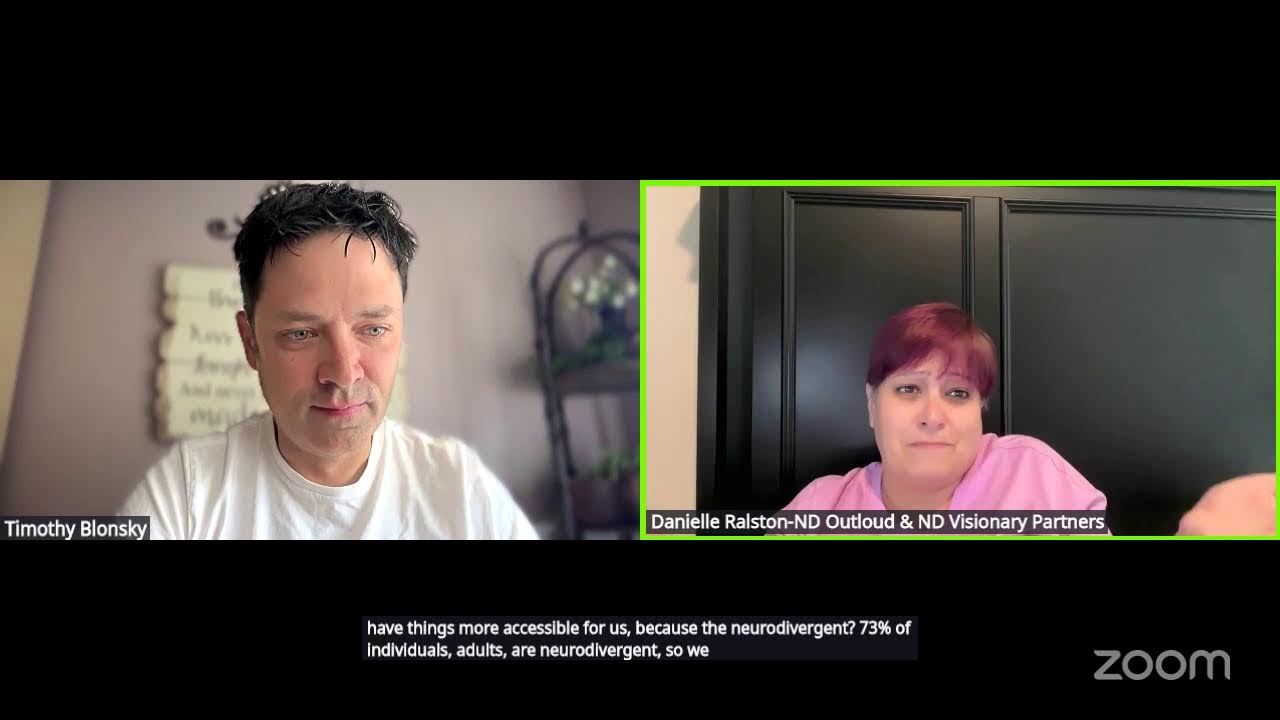
In this conversational video, Danielle (host of the neurodivergent NDL Loud retreat) and Tim (a deaf advocate) reflect on their recent three‑day disability‑focused retreat at Walt Disney World. They acknowledge Disney’s overall strength in physical accessibility—wheelchair‑friendly bathrooms, the Skyliner service, and many helpful cast members—while detailing concrete shortcomings that affect neurodivergent and disabled guests. Key pain points include the absence of closed‑captioning on rides, the bulky Disney‑provided captioning devices, confusing and hard‑to‑find accessibility menus in the Disney app, limited DAS (Disability Access System) eligibility, occasional negative staff attitudes (e.g., a bus driver’s rude treatment of a wheelchair user), infrastructure issues such as cobblestone pathways, and moving‑platform ride elements that are unsafe for wheelchair users. The speakers propose a practical, technology‑driven solution: Translate Live, a QR‑code‑based, real‑time captioning and translation service that works on guests’ own smartphones, eliminates the need for heavy devices, protects Disney’s IP, and can be customized per ride. They also discuss broader implications—how closed captioning benefits autistic and other neurodivergent guests, the importance of staff training, and the role of their own corporate‑training program (NDL Loud) in helping companies improve invisible‑disability accessibility. The conversation ends with a call to action: Disney should listen to this feedback, adopt the suggested tech, and expand the retreat to more participants, while the hosts continue to distribute “pixie‑dust” kits and offer further collaboration.
Chapters
Good morning, everyone. I hope you're having an amazing day. Uh, we are coming back from— we're 3 days back from an amazing, amazing— I hope you're having an amazing day. Amazing trip. Amazing trip. I, I just can't say that enough at this point. The trip Was amazing. We did a retreat for neurodivergence in Disney World for all of last week, and many of us also have other disabilities. I have the most visible, as I'm partially in a wheelchair. Tim, obviously semi-visible with wearing a hearing aid. But we had some things that were Not so Disney magical about our trip. And every trip has some of that. So I don't want to attack Disney because I will tell you from my standpoint, with the exception of a few issues, Disney does disability access in a way that no one else does.
I—
Disney is one of the most wheelchair accessible places in the world as far as I'm concerned, because the bathrooms are like— everything is accessible to me. There were a few attitude issues that I had. But Disney World, for the most part, was extremely accessible. I think my funniest interaction was I was getting on and off the Skyliner. And one of the Skyliner people that helps with wheelchair access to getting on the stopped carriages spent the whole entire time picking on me and talking about my bad driving skills and trying to help me. And it was all in fun. And he made it so fun. And he also gave me tips and tricks on how to do it better. Oh, my gosh. And make it easier on me each time. And we had so much fun with him. We actually pixie dusted him and gave him— we had little pixie dust bags with stickers and keychains and stuff in it. We gave him one. He ended up— it ended up happening enough times that we had the same guy, and we all were forgetting his face. He got 6 pixie dust bags over the days that we were there. She said, I passed them out to other team members because they needed the love too. But, but we had this one individual was so fun to deal with and really was so helpful to deal with. And it, it, it was just really, really good. But not every interaction was like that for us. And, and we wanna talk about not just complaining about it because I see so many people on TikTok and on YouTube and stuff complaining about these things. Without offering solutions.
Yeah, yeah, yeah. We're definitely going to do that. But I want to piggyback off of Danielle and say that, yeah, the trip was incredible and that I think that Disney World is a place that tries to do everything they can to make everything as best as possible for its guests. And it does a really good job of that. And I'll tell you, when I— prior to the trip, I was like, okay, I'm going to Disney World, you know, kind of cool or whatever. And as soon as I got there, I just got fully immersed into the magic of Disney. And it's an actual thing. It's not like a punchline or a way to advertise what they're trying to do for them to make money. It truly is a magical place. They do an incredible job of that. And I will say that when it comes to accessibility for deaf and hard of hearing people, which we'll go a little more in depth later, they actually do a pretty good job of that as well. They could definitely do better, and I'm going to touch on that a bit as we go further on this. But Disney truly is a magical place, and I'm looking forward to going back. So this is not going to be a podcast of Disney, we're not going to come back until you do this, this, and that. It's, you know, absolutely not. We're looking forward to doing the same thing next year.
And already planning our next trip. We are already planning the next trip.
So Yeah, I think we're 50 weeks away from the next one. Yeah.
Disney, even with the issues we experienced, Disney was still definitely offered the most accommodations for anything that needed. And even a couple of the accommodations we're going to talk about for Tim specifically, there all are alternatives available. They're just not— I don't want to call them accessible alternatives. Because while they exist, they're still not— I don't know what the really other than accessible. I can't, I can't explain how difficult some of the things are, would be to use some of the items that they do have.
Yeah. So let me speak to that. So as a deaf individual, I'm deaf and proud of that. Most deaf people are in a And kind of category in which they have experienced language deprivation in their life. So when it comes to how Disney advertises its accessibility features, so let's say, for example, within the Disney World app. So let's say you're a Disney World guest and you've downloaded the app, but not everyone has. And when you go on the app, you go through several different menus and then you go into a long paragraph that describes all the different accessibility features that you have. That's not necessarily something that a deaf person would generally do. So that's step number one, like getting to the area within the app that describes the accessibility features is a challenge in itself.
Well, and I think something to consider is also that where those menus are, one, they're hard to access. You have to know that they exist to even know to access them. And Disney does a fairly good job with some of that, like letting you know. But I will tell you, you, most people with one disability have other disabilities that go with it. And I think that's something that Disney doesn't necessarily take into account, that somebody that is profoundly deaf or hearing impaired may also be dyslexic or have executive function issues or, or other learning disabilities, or just the fact that they have language deprivation makes reading long paragraphs Tiring. I will tell you, as an ADHD individual, an autistic individual with dyslexia, that looking at some of the paragraphs, trying to read through some of that disability access stuff is just overwhelming. And therefore I didn't read it all.
Yeah. And you're definitely not alone in that. So Yeah. And then the thing that we found out in our first day, we went to Epcot, just Danielle and I, and we went on a ride and the ride did not have any kind of any sort of closed captioning because Disney does a really good job with doing like some stories that kind of play into the ride. As you know, dialogue between characters on these screens all over the place while you're waiting in line. And Yeah, I couldn't understand any of that. And Danielle, you know, being a sister of 2 deaf siblings, you know, she's very used to doing what she can to fill in the gaps. But that's not her job. You know, like, her job is to enjoy the ride as well. But like, you did that, and I appreciate it.
But I also have auditory processing disorder. So how much of that did I miss before communicating it to you?
So I'm only probably going to get a tiny bit of whatever I'm missing because— yeah. But yeah, so that happened. And then we're like, oh, let's check to see if Disney has technology to help with that. So what did we have to do? We were literally on the opposite side of EPCOT, which is a huge park, and went all the way over to the guest services line at the— At the entrance. main entrance to Epcot. And we didn't enter the main entrance to Epcot. We did the Skyliner entrance to Epcot. So we're literally like— it's got to be a mile away, maybe a mile and a half.
And not only that, is if we hadn't asked, we wouldn't have known it existed because the guest experience thing is tucked way around, like hidden, especially with all of the Flower and Garden stuff. You definitely can't see it easily. And even with directions, we still had a little bit of a hard time finding it.
Yeah, and Danielle's been around Epcot a few times, so like, you— yeah, so yeah, so we were able to go there and we've come to find out that they do have these devices that are kind of like maybe slightly smaller than an iPhone that—
But they're really thick and heavy and chunky. They aren't like— you can't put it in your pocket. You would definitely have to have a backpack. And I can't imagine— and then And the only way to use it is to hold it up. So if, if Tim wanted to watch what was going on with characters, he'd have to hold this heavy, chunky thing up in front of the screen and hold his arm up the whole time.
Yeah. Yeah. And, you know, like, I've had experiences with the devices like that because sometimes movie theaters had similar devices. And yeah, it doesn't really make the movie-watching experience that fun to the point that I just wait until the movie comes out onto streaming services and just watch it from home. home because I don't go to movie theaters anymore for that specific reason. So yeah, and we had to pay, I believe it was a $20 deposit in order to be able to get this device, $25. And it's only park-specific. So you could only get it for Epcot for that day. Then we'd have to return it that day and then go to Magic and then get it from there as well.
And a logistical issue that I see with that, one, it's heavy, it's clunky. You have to hold it up all of the time to be able to do things. And where this came in is we went to Canada. And we watched on the beautiful round screen all of the landscapes in Canada, and none of that is closed captioned. And I was thinking Tim would have had to for like, what, 25 minutes hold this thing up? So—
Yeah.
Yeah, that, that would have been bad. But the fireworks have us at Epcot— well, even at everywhere— have a story that go with them. And you'd have to use— I, I don't know if it even works for the fireworks. First of all, I would assume it does. I'm assuming it does. But even so, you wouldn't be able to enjoy the fireworks that much if you're constantly reading the screen. And 2, can you imagine in the fireworks crowd trying to get that device back to where it had to go all the way across the park? Because we were in International Gateway. All the way across the park.
Yeah, the over 100,000 at the end of the night.
Yeah, there's no way. There's no way you would have been able to do that, and you would have lost your deposit. Yeah, and you would have had to try to get back into a park the next day to return a device.
Right. Yeah, so, you know, I, I give credit to Disney for thinking about this to a degree, but at the same time, because of my other things that I'm involved in, I know that there's technology out there that is far superior that would, would address that issue.
Now granted, Disney has probably had this option for a while before some of these technologies have existed, because a lot of these new things have come out over the last few years. So, so I, I do really want to make sure that we give Disney credit because they do offer the option, and there are so few places that even do that, that it really is amazing. But There are other options. And I think the coolest option that I've seen, and obviously I know of it because of Tim, is Translate Live. Explain how Translate Live would change the lives of someone like you in all of these situations.
Yeah, yeah, thanks for bringing that up. So basically with Translate Live, it's the main crux of the technology is a QR code that you would be able to scan on your smartphone. And pretty much anyone has a smart device to do that. I don't really know of anybody that doesn't have one. I especially know of no deaf people that does not have a smart device because it's a main line of communication in the world. So it would be simply scanning the QR code, picking your language. The language can also include American Sign Language if you so choose. And from that point on, Translate Live can even make it specific to the ride where they can make sure that the dialogue on the Guardians of the Galaxy, where the characters are going back and forth, you know, kind of like leading up to the story of the actual ride itself, They'd be able to customize it specifically for that. And then, you know, you follow along with your smart device, which is less clunky than the device that Disney has. And, you know, from that point on, you then, when you're done with the ride, you just exit out of that in your browser because you don't have to download anything. And then you just scan the next QR code for the next ride that you're on. So like, it'd be a very, very simple way of doing that where you could just use your own device. And again, it's not something that you have to download. Or, you know, you don't have to turn on or off your microphone. It doesn't access anything in your phone except for the browser. So that's just something that I know definitely would work where you could just have a QR code per ride and then you're set.
Well, and I want to talk about something that this does that would obviously, as a business owner, this is something I think it was the security of the IP of Which is intellectual property, for those that don't know, intellectual property of Disney while using something like this.
Yeah, right, exactly. So like with that, as soon as you end that conversation with that dialogue through the translation, it's gone. It's not stored in the cloud, not stored on the device. It's gone. So like—
You can't screenshot it. You can't save it. It's not something that somebody can steal from Disney in that process, which is, I think, really cool. Well, I'm looking at using this app For a conference next year in 2026. So I find that very cool that we can have all of that and not worry about security with that. Because obviously, that's going to be a big worry for us in a major conference. And I know Disney is very, very careful about those things. So that would make every single ride accessible.
Yeah, and I want to add that there's over 200 languages and dialects can be translated in real time through this. You know, people visit Disney World from all over the world. And so like any language would be represented through it. So it's not just accessible for deaf and hard of hearing people.
But I think it would be cool to be able to go to Disney World Paris and be able as an American, like allow those in Paris to not have to necessarily speak English or whatever, speak in French and me be able to just communicate with, even with cast members that I have to communicate with, be able to do it very, very easily as an English speaker. That would be fantastic to me.
Yeah. Yeah, it really is something that I definitely stand behind. Like, I'm absolutely not a salesperson, but I love this company and the tech that they have developed that is really about changing the lives and increasing accessibility for deaf and hard of hearing people, but then it benefits everyone else as well.
And I will say that as somebody like, I want to take it from somebody who is neurodivergent and has learning disabilities and auditory processing disorder. And I'm also autistic. And having closed captioning for me, I mean, part— I found out in the last few years I'm not the only autistic that uses closed captioning for everything. I thought I just did because I grew up with it because I had hearing impaired siblings. But apparently it's a thing across the whole entire autism community to help us process language. better. So it's not just deaf and hard of hearing, it's autistic individuals, which— Disney, 90% of the people that come to your park that are Disney adults are neurodivergent. Let me tell you, because we found our community while at Disney. And I do every time I'm there. I was standing in line in January to get a crown made because you guys just released having crowns made at Magic Kingdom. And all 4 of the other women in line with my bestie and I were all ADHD, and we were all either ADHD coaches, therapists, teachers who worked with kids with ADHD and autism, all 4 of us.
Yeah. I'm not surprised. The amount of people that we touched throughout the, you know, with the really, really bright pink t-shirts with our, with our group on it. Yeah. I mean, there's so many people that really, we really resonated with because of what we were trying to do there.
Yeah. And we had so many amazing conversations because of our t-shirts. We went to the pool one night and talked to a mom for 2 hours. I think it was almost 2 hours that saw our teachers t-shirts throughout the day and just came right up to us, and we had really amazing conversations with. So Disney, your core core ideal client is neurodivergent individuals who need the closed captioning and who need more accessibility ourselves. Even though we adapt a little bit better than somebody who's hearing impaired or has another disability like that, we still want. More access, accessibility to those things. So me as an autistic individual, be able to scan a QR code, done.
Yeah. And I, I would have to say that once, let's say Disney does implement something like this and it gets advertised to the community, you're going to have more people at your door because they know that it's more accessible.
And for us it was frustrating. Like I tried to use Zoom a couple times and I tried a couple other things that did translation. One of our other attempts Attendees found an app to use on the Carousel of Progress for Tim, which was not by any means— I was watching over Tim's shoulder and it was not by any means correct, but it was better than the other couple things that we had tried. Um, and it, it helped, but it wasn't great, where Translate Live is very accurate.
Yeah, it would be, um, just about perfect. So, and again, though, they would be able to tailor specific, uh, rides and make sure that the dialogue is perfect. So, you know, there would be some, uh, some trial and error, but then eventually everything would be perfect because—
Well, and, and it has AI. Everything has AI built into it now, so everything adapts and learns and things like that as well. And honestly, I know Tim was super grateful for that app that Tara found for us— for him. Well, I was using it too, uh, for us, because It made it better than it was, and I couldn't easily communicate the whole entire thing. It was dark in there, so it made it hard for you to read my lips, and a lot of rides are dark, so you can't necessarily do that. The other thing that I think where this would come in handy, and we all experienced those of us riding with Tim, like, uh, not the cast members who are giving instructions for people to get on a ride. Like Tim didn't know what direction to go, where, what to do. Pull on the yellow tab on your seatbelt. There was a couple cast members outright yelled at you, and I know you missed that, and you could probably tell from their expression maybe. But those of us with you were like, what the heck? He can't hear you. Tap him on the shoulder to make sure he can hear you, and your back was to people a couple times. And that's very Frustrating. It was frustrating for me as your sister to see cast members treat you that way. So I think some more— now, not every cast member did this by any means. I do not— it was just a small handful. And I do understand cast members working in customer service, you're dealing with people being stupid and not listening to you all day and people being rude and all of those things. So I do want to give a buffer to those poor cast members too, because I can't imagine dealing with people like that all day long either. But I think that there needs to be less of an expectation that everybody can communicate with you the way you're communicating and that there needs to be more acceptance, I think, or more flexibility in that for people and for the cast members.
Yeah, absolutely. I think maybe some periodic training in how to work with deaf and hard of hearing customers would be ideal. Yeah. And that's something that I'd be happy to do. I know a lot of groups that work on that as well, where they do professional development training in that realm. Yeah. But, you know, piggybacking on what Danielle said, we're talking a very, very, very small number of cast members. All of them are just incredible except for just a few. And speaking to that, Danielle, you had an interesting experience on a bus going to Magic Kingdom, I believe, that day.
Yes.
And so want to maybe touch on that a little bit? Like, it was pretty, pretty bad. It was the exact opposite of what we normally deal with.
Oh, it was actually fairly bad. So I am a mobile wheelchair user. I need to be in my wheelchair 99% of the time because it allows me to be in Disney World. The wheelchair is the thing that allows me to go. It is my mobility device because I do need it. But I can stand and walk a little bit. And I have learned that getting on the buses, some of the buses, it's just so much easier depending on how busy it is and all kinds of things for me to get out of my wheelchair and push it manually. And I have to disengage the motors and do all of that. And the bus driver pulled up, saw that I was sitting in my wheelchair when she pulled up because I was waiting for the bus and I can't stand for very long. And when she put down the ramp, I got out of my wheelchair. And had, I think it was Jessica or Tamara Shea, somebody behind me disengage my motor so I could just push my wheelchair up the ramp. And she gave me— I'm not going to go into the full conversation. She gave me a lot of attitude for being one of those wheelchair users who doesn't actually need it. And she doesn't like people that whatever. And she was very rude to me the whole entire time. She was strapping my wheelchair down. She didn't understand why I had to sit in the wheelchair. Like, she was giving me attitude the whole entire time. And it was— she was very verbal, and verbal enough that a whole entire group of one, a profoundly deaf guy, and a whole entire group full of people with auditory processing disorder heard the whole thing. So it was repetitive enough and pronounced enough that my whole entire group of 11 people heard this, and then other people getting in line because I had other people get on the bus. Apologize to me on behalf of this bus driver that were not with my group.
Yeah, yeah. And, you know, to the credit, you went on the app and, um, you know, contacted the chat feature within the app and was able to file a complaint. And I guess they are going to do some, um, some retraining of that bus driver.
So, you know, um, and I don't want this person to lose their job. I just want them to do better so that the next person does not experience that. Because I will tell you, in January, that I was new to being in that wheelchair when I was there in January. If I would have ran into that bus driver in January, it would have ruined my whole entire day. I would have been crying. I was already frustrated with my body and myself for not being able to do things. And I was learning to use my wheelchair then, too. So I remember in January while I was in there, God bless the guy, the first bus driver I had to get on the bus in my wheelchair. And I sat in it and did it. And I was still learning to maneuver. I was so bad. I was so, so, so bad. And the dude lifted me and the wheelchair up to get us where I needed to be on the bus. Like, he was really great about it. He picked on me the whole— and like, it was a good interaction. There was no complaints for that. But if I would have ran into this person in January, I really would have— it would have ruined my day because I would have fallen apart because I was struggling so much. And I don't want that to happen to somebody in that situation. And some of that is just awareness. People need to be aware. You don't know what somebody's situation is. Why I'm in the wheelchair or how much I'm in it, or if I choose to walk behind it or whatever, is none of your business. It's none of anybody's business. But how we treat somebody, especially in the disability community, when we're struggling with, my body's starting to fail me, I'm losing my mobility, and I had I don't remember where I was. Everybody on my team left me alone at some point, and I was trying to open a pop bottle. I was left alone very little. Okay, so this is like one of the— and I was trying to open a pop bottle and could not, and the cast member came from behind the counter and opened my bottle for me.
Yeah, that's awesome.
And they asked if I needed a cup with a straw to make it even easier for me so I didn't have to open and close a pop bottle over and over again.
Yeah.
That's the kind of— that's normally what Disney gives you. But there are a few people that just need a little more training. Um, and, and that's all it is. It's better training, better awareness, and, and teaching people not to judge based on— don't judge a book by its cover because you don't know.
Yep. And then, you know, and then so going back to the tech piece of it, it's like some of the tech that they have for accessibility is pretty good. But you could already tell that it's on the older side and they need to start innovating a little bit more. And it doesn't really cost that much money in relation to what Disney makes and like how it could potentially make them more money as a result of being able to increase accessibility.
And I do have a complaint outside of the Pop Century Resort. Tim knows what I'm going to say here. As I was coming up behind Tramp and Lady and the Tramp in the '50s buildings, There is cobblestone. I love how it looks, Disney. It looks amazing. Please fill in all of the cracks with some concrete because we rattled loose bolts. And going over that as a wheelchair, I cannot imagine being a manual wheelchair user going over that because it literally, it shakes really bad. So that is my one complaint that I have. Very little. My husband's in construction. I'm going to tell you to fill it in with concrete. I don't know if that's the right option there for a solution. But oh, for God's sake, please take wheelchair users into account when you're building things like that because that cobblestone is absolutely horrible. Tim recorded a video of it because it was so bad. We laughed about it. To be clear, we laughed about it every single morning as we were leaving the hotel and every night when we came back. So it did give us a giggle every day. But even in the parks and stuff, there's some pathways that aren't as accessible. accessible, but Disney still does a good job with making them— it's still more accessible than pretty much anywhere else in the world. The one thing that I would say is there are a few rides that have moving, like, belts and things like that. And that would be the one thing that I'd say, Disney, can we have a few more options for those of us that are not stable on our feet when we are out of our mobility devices? Because like the Skyliner, they stop for those of us that are on in wheelchairs and things like that, and you can pull a carriage out. And yes, it takes a little longer, but it's well worth it for the safety. Um, Kali River Rapids, I would have ridden that. Soaked me. I was soaking wet for the rest of the day, but I would have ridden that one more time because it felt so good to be cold and wet, uh, for a little bit. But that, that moving turntable made it really, really difficult for me, and I definitely was terrified to do that again because I don't think by the end of the day I could have. Um, but Disney does this. It really does disability access well. We saw a couple things as neurodivergent attendees. We're getting DAS passes. There were some of us denied DAS passes because we weren't disabled enough, but we're still disabled. We still have autism. We still have ADHD. Waiting in many lines and crowds and stuff is very, very difficult. Thankfully, one of our more severe attendees was able to get it for her and her son. Both her and her son are autistic, but not everybody was. And that would have made— that's one thing that I will say. And I know Disney is taking a lot of flack right now for their DAS system, which is Disability Access System. And it is the system that allows people to not have to stand in lines, a little bit like Lightning Lane, but for people with disability. You don't even have to go through the lines really in some cases, things like that. And I think that's one, one area that Disney— and I know Disney has changed their original rules because of people taking advantage of it. And I absolutely, as a business owner, I absolutely understand that there are people abusing that. But I would love to see Disney put some more, more, more, more changes into effect for that DAS system. I definitely, I still, even with these complaints that we've talked about, we are still bringing another group next year of neurodivergent individuals into Disney. To do our trainings and to do the things that we did and pass out.
I—
we miscounted, Tim. We had 175 pixie dust packets that we handed out. Oh, wow.
That's— I believe that. I believe that. And I didn't even have a chance to hand out any, which, like, I was there the whole time. But that all— like, wow, that's amazing.
But we were able to bring a little joy to 175 people, which is amazing to me. And I loved being able to be part of that. And we were so excited to give out our pixie dust to people. And they were just stickers and fidgets and things like that. Nothing major. But being able to say thank you to those cast members that were just amazing to us and say thank you to the attendees that came running up to us to give us hugs because of the t-shirts that we had on and to hear the stories of other individuals that are neurodivergent or have a neurodivergent child or whatever. And that gentleman that was in the wheelchair behind us on our last day doing training— Tim wasn't there because he took somebody to the hospital that got hurt on our trip. We had a guy in a wheelchair that was like in the shade but way behind us, and he kept moving up a little more to hear our training. And I gave him some pixie dust at the end. So if you're listening, I hope that that gave you— His smile, he lit up and he put one of the stickers right on his wheelchair while we were sitting right there. He was so excited. I want to do more of that, and I want to bring more awareness to those of us that are neurodivergent because we all have other disabilities. Ehlers-Danlos syndrome, I have multiple sclerosis, we have profoundly deaf, we have auditory processing, visual processing, all of that. I mean, in so many— I'm— I know that there was way more within our group. Those are just— okay, those are all the ones I suffer with, uh, except for being deaf. Um, I want to bring more of that into Disney because Disney does do better than anyone else. I just hope that Disney takes this and listens to us a little bit more and allows us to help show you how you could do better for communities like ours.
Yeah, yeah, I absolutely agree. I really hope that with the 175 examples of pixie dust that went out, that maybe some of those people are going to be attendees next year and are going to be treated next year. I fully expect that to happen.
I hope so. And we are opening up more spots. We only took 12 people this year. We're hoping to take 20 total next year. So I'm hoping that we can make it amazing. And, and if we have to do 2 separate trips to make it fun, okay, gee, what a shame. I'll have to go to Disney Toys next year. So I hope that Disney really does listen. Disney, I really do want you to listen. I really want you to hear us. And I want you to see what just even some simple changes can do to making Disney even more magical for the rest of us.
Yeah, the good news is that we can help with the accessibility and with the potential solutions because, again, we started this conversation by saying that we don't want to just complain and not offer solutions. Like, we have them. We can provide that feedback that is constructive.
Awesome. And we obviously, we do corporate trainings. We do have, while we're talking here as NDL Loud, we do have NDA Visionary Partners where we actually go into companies and train on disability access and how to help specifically those with invisible disabilities, but all disabilities, and how to use technology that does exist and the things that are out there. If Disney, if you want to hear about Translate Live, please let us know. Message Tim. I'm going to drop his information below this video so that you can message Tim and talk to him. Awesome. Talk about that because that's not my department. But Disney, if you want to know more, I'm I'm happy to not even to just do a Zoom call with you and to share information and share how we would love to have things more accessible for us because the neurodivergent seventy-three percent of individuals adults are neurodivergent. So we would love for that to be even more accessible. Have an amazing day. If you have questions and want to know more about our retreat next year, if you want to take part in our retreat next year, Disney. You want to hear more about what we're doing and why we're doing it, I'm happy to talk to anybody. Have an amazing day, everybody, and I hope you join us more.
More from Danielle

Why Disney is what you need as an ND human #Neurodivergent #disneyadults #disneyscience #disneyworld



Follow along if you want to watch me finally finish what I started… #adhdcommunity #bodydoubling

The last 3 months I … wait no … all of us here at The Hive have been rebuilding from the ashes… we

The last 3 months I … wait no … all of us here at The Hive have been rebuilding from the ashes… we



What if the silence didn’t stop you because you never lived life alone? Katie Karayianis

What does getting ready for a road trip look like for you with adhd? #adhdcoach #ndhive
