Why ADHD Adults Need Other People to Function
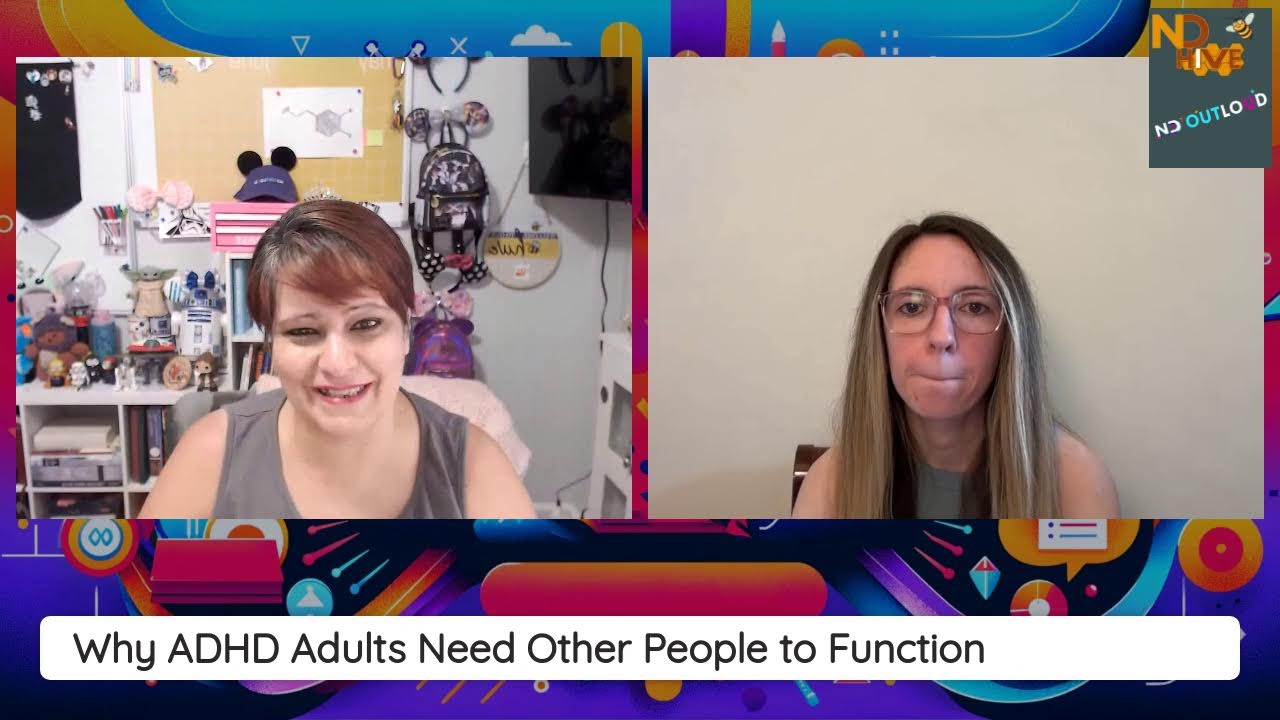
This content was created by Danielle Ralston. This content was uploaded by Danielle Ralston. This is a YouTube episode titled "Why ADHD Adults Need Other People to Function" (created 2025-07-01). It's an informal two-person conversation between Danielle (the host) and Tara (a therapist practicing in Florida and Virginia). They discuss neurodivergence (ADHD, autism, AuDHD, TBI, PTSD), explain self-regulation vs co-regulation, and describe how body doubling, community, gentle accountability, and building confidence help adults with ADHD/AuDHD function and avoid burnout. The hosts give examples from their community, explain their membership/coaching and daily body-doubling offerings (~$19.99/month), and end with a call-to-action to join and schedule a free call.
Chapters
Especially for the, like, lag.
Because there is a huge lag.
Always.
The joys of, of using software for these things. I've got to connect to multiple platforms, and that's part of it, is it's got to get to connect to all of the platforms.
You would think in 2025, though, that there would be less of a delay.
Good morning, everyone. This is Danielle and Tara from ND Out Loud and ND Hi, I'm so excited to have Tara. I think this is the first time we've done just a one-on-one because we've been here for like Shay and when we all came back from Disney World. But this is the first time we've been able to do a one-on-one, which I'm always excited to have new people on the show. So today we're talking about why ADHD people, especially adults, need other people to function. And this is for all neurodivergence. Yes, we always Kind of fall back to ADHD, but both Tara and I are AuDHD, um, and a lot of people in our community are AuDHD. We have ADHDers and AuDHDers and people with just learning disabilities, and I say just, it's no different than those of us with ADHD and autism, um, people who have TBIs, PTSD, CPTSD. So all of the things neurodivergent. But we tend to focus on ADHD because one, I'm not dumb, and for marketing purposes, it's good to mention ADHD constantly because that is the hot topic of the day, of course. But today we really want to talk about co-regulation and self-regulation and why being with other people like us is such a big deal. Um, so there are 2 types of regulation. Can you walk us through what co-regulation and self-regulation are?
Yes. Um, so self-regulation is what you're able to do on your own. It's, I'm in a panic, I'm able to take a deep breath. It's, you know, as a therapist, what I call the cognitive reframing. Um, and I work a lot with clients on this of, you know, reframing how you talk to yourself, what you're saying, um, all of the little coping strategies that you have, your little fidgets, coloring books, Journaling, music, all of the things that you can do on your own, that is self-regulation. Co-regulation, which I have recently learned is what really makes me thrive, is when you have other people around you that can say, hey, you know, I can see you're having a rough day. Why don't you take it a little bit slower? Or, hey, your pain level is low today, so why don't you, like, not overdo it? Mm-hmm.
Um, that was a conversation we had this morning because I woke up feeling good, like low pain level for the first time in a year today. And I was like, oh my gosh. And I'm like, uh-oh, I better have somebody help me co-regulate, otherwise I'm gonna overdo it.
Yep, yep. Or, you know, it's the, hey, I can tell you're burnt out, like maybe not take on that extra thing today because like, can't that wait until tomorrow? Because being autistic, ADHD, AuDHD, OCD, all of the neurodivergent things, you know, there's so many things going on in our mind that sometimes it's hard for us to just have that thought of, maybe I shouldn't do this, because our brain is just going in so many different directions. You know, I always refer to it as the hamster on the wheel that just won't stop spinning. And so sometimes we need somebody else to tell the hamster to, like, Hey, like, chill a little bit, you know, it's okay. Um, so co-regulation is that it's somebody else alongside you helping hold you accountable gently. Um, that is the keyword here, is gently. Um, you know, helping hold you accountable, helping to see the needs that you may have when you may not know them yourself. Um, how many times have we told each other like, hey, have you eaten today? Nope, better go do that.
Oh yeah, have you eaten today? Coffee is not a meal. Um, all of those things. So what— you are new to body— fairly new to body doubling. I mean, I know you've known about the concept. Tara is a therapist, y'all, in Florida and Virginia. Uh, and you've known about the concept of body doubling, but you've just started putting it into practice for yourself.
What—
how quickly did you see changes when you started body doubling?
So very quickly. Um, I have said in the past— when did we get back from Disney? A month and a half ago. What in the world? Um, so in the past month and a half, I've been more productive than I think I've been in the past year and a half. Um, and I had tried body doubling a couple times prior, um, you know, in other platforms and groups. But there's one thing that was missing from those, um, and that was like actual connection. You know, there's ones that you can go and be with a stranger for 45 minutes or whatever, but it's that connection. And it's a dopamine hit also, um, because like these are my friends now. So not only am I around people you know, that are calming because they're also doing what I'm doing and the science behind that of like the mirror neurons and all that. But I'm getting a dopamine hit of, of being able to talk to my friends while I'm working on the million things on my to-do list that I didn't want to do.
Because we all have a million things on our to-do list that we don't want to do, especially— I, I think especially as As, uh, ADHDers who tend to have a higher level of burnout. So 72% of us, especially if we own our own businesses— Tara owns her own therapy practice with how many therapists do you have working with you?
3.
3 therapists working for her. And then obviously I have the full team of coaches here and, and consultants and all of that that we have going on around here. I have no idea how many people— I think we're up to 12 people on our team. I don't know. I quit counting and lost count. Um, But we are, we tend to be 72% more likely to burn out. And I will tell you that, I mean, I've been, you've heard me, anybody who's followed me for any length of time, I've talked about body doubling and how body doubling is one of my major keys to success as a business owner. And yes, absolutely. But I will tell you, since coming back from Disney, I have gotten even more out of it because there's so many new people coming in and they're getting regulated, emotionally regulated, physically regulated. Um, their businesses are getting regulated because you're staying on top of things. We have Shay, who was live with me yesterday, is doing a huge vendor event this weekend, and she has had to print— I think it was 5,000 stickers. She does custom stickers and magnets and pins and stuff like that. And she had to, in the last 3 weeks, make 5,000 stickers. And watching her be able to use body doubling and our community to help stay regulated in an extremely high stress time— she's had 2 printers die, she had her magnet press thingy break, was broken on arrival, uh, she had a vacation, a mini vacation with family, which is always stressful whether you love your family or not. Vacationing with family is always stressful. And like all of these things are going on, she's like, and I feel self-regulated. So what are, what are some of the things that you tell your clients in therapy to help with that co-regulation piece?
So one of the main things is find community. Um, find community that accepts you for who you are. You know, that you don't have to explain why, you know, that one specific task is stressing you out, whether it's basic or not. You know, find the people that accept you, that embrace you. And we really focus on building a support system, you know, and then tapping into those interpersonal skills of like, okay, well, how do you find a, you know, support system? And what does that look like? What does a healthy relationship look like? You know, and, and it's not saying that, you know, you can't have co-regulation with, you know, neurotypicals, because it's not neurotypicals versus neurodivergence. You know, it's about finding those people in your corner, in your community that really accept you. And there's something to be said about lived experience and being around other people that just get it. You know, it's why support groups for anything Work, um, you know, because you're, you're getting people together for one common thing, whatever that thing may be. Um, here it happens to be neurodivergence, and that support is imperative. Um, so in therapy, I'm always preaching, like, find a support system. And of course, as a therapist, like, I'm part of that support system for them, but my job, you know, is to co-regulate with them in the session, but also teach them the skills to then be able to go out and self-regulate, um, without, you know, having to depend on me, um, because that's not the goal of therapy. So.
So for you, as an Autie HD adult, what is, what is your keys to success? Not just right now and discovering body doubling and stuff like that, but what have been big things that have really helped you get regulated?
So community, um, has been really, really important. Um, self-esteem and confidence. Um, because what I found— and I, I know you said besides body doubling, but this really, it all ties back in. I feel like it was like just like the magic piece to everything. Um, and it, I think, is the fundamental building block for success because the body doubling then leads into, you know, you know, motion that just keeps on going and it increases self-confidence. Um, and so doing body doubling and being able to accomplish the things that I've needed to and the shame that I had held for so long about not doing those things, which We all know the shame loop. Um, you know, being able to get past that and be confident has also been one of the biggest keys to success. You know, my husband and child see it, my employees see it. Um, I'm sure my clients see it, just the way that I'm showing up, you know, now more than ever. Um, is just the confidence, you know, and believing in myself. So I think those are the main 2 things. You know, if we believe in ourselves, and then we have a community behind us that can believe in us on the days where we're struggling to believe in ourselves, you know, I think those 2 things are really the, the 2 biggest pieces to the puzzle.
Absolutely. So anytime anybody asks me what my 3 keys to success as a business owner, I'm going to always tell you body doubling, community, And accountability. Accountability is a huge piece, but that is what community and body doubling are for. But it's gentle accountability.
Yeah.
Like, that's— I think that's one of the big things is because we, we, especially for those of us that are neurodivergent who have heard before we're 10 years old, 20,000 more negative words about ourselves from other people, we tend to think of accountability as this harsh, horrible discipline type thing. And accountability doesn't have to be that. It has— it can be, oh my gosh, I have a low pain day today. It's amazing. That's awesome. And Shay and Tara going, set a timer so you don't overdo it today. And, and it was emojis and just reminding me the things that I tell my clients to do, by the way, like They both know I'm always telling clients, set a timer to do those things so you don't exhaust yourself, you don't overwhelm yourself. But having somebody remind me of that very gently or jokingly is awesome. Or having somebody send me a meme or a GIF or something like that are ways that you can get accountability without feeling like you're being told what to do. Because I will tell you, my PDA will definitely kick in if somebody tells me not to do something.
Yes. Yes.
So yes, if you're looking for help and support and fun, hello, because we don't want to do anything that's not fun. We have 2 body doublings that we do every day and they're all day long. Well, not all day long, because right now I've had some issues with Chatty Body Doubling because my iPad is updating and I haven't been able to turn it on yet.
No.
But We have a body doubling where you can talk everyone's ear off or at everyone, or we had somebody talking to her dog for a while yesterday, and that entertained all of the rest of us, and we were all getting things done. I wrote 3 blog posts listening to that yesterday morning. Um, and then we have a completely silent one if you need head-down focus, but you need to be with people for that co-regulation, because co-regulation is very, very, very important, and it's something that Here in the US specifically, we're missing in a lot of places. Come join us. We are less than $5 a week, very slightly less because it's $19.99 a month. We have 4 group coaching calls where you get one-on-one coaching in a group setting, um, every 4 days a week. We have 4 coaching calls where you can talk to Tara and myself and Shay and Rebecca. We're all there to help, and all of the other community members, because we all have amazing brains and we all have ideas and things that can help. We have body doubling all day long, every single day of the week. And we even have pop-up body doublings on the weekends where we clean houses. This weekend, poor Rebecca's toddler son dumped out all of his puzzles in one pile.
Oh no.
And Rebecca spent, I think, an hour and a half on body doubling with me on Sunday afternoon, putting all the puzzles back together to clean up the mess. And, and we— I joked and picked on her. I was Working my website and doing some things, and and we got things done together on a Sunday afternoon. And we offer that support to one another inside the community. Hey, I need to clean my kitchen. Hey, I need to clean out my closet. Hey, I need to do something. Who's ready to get body doubling? Somebody's always willing and able to do that. Come join us. It's less than twenty dollars a month, and we are truly there for each other because we're just like you. We get it because we are you.
Yes.
I hope you join us. If you have any questions, click the link below, join our website, schedule a free call.
More from Danielle

Why Disney is what you need as an ND human #Neurodivergent #disneyadults #disneyscience #disneyworld



Follow along if you want to watch me finally finish what I started… #adhdcommunity #bodydoubling

The last 3 months I … wait no … all of us here at The Hive have been rebuilding from the ashes… we

The last 3 months I … wait no … all of us here at The Hive have been rebuilding from the ashes… we



What if the silence didn’t stop you because you never lived life alone? Katie Karayianis

What does getting ready for a road trip look like for you with adhd? #adhdcoach #ndhive
