Create Your Best Life With Rex
Dr. Sujata Ives and Sandra J. Horton discuss their leadership workbook Activate Success, which uses four self-discovery questions and 27 practical activators to help people build self-awareness and authentic leadership. The book centers on three pillars: perspectives, environments, and self-leading, with guidance on goal-setting, leadership styles, and conflict resolution.
Questions this video answers
June 20, 2024.
27 activators.
Amazon, Barnes & Noble, and via their website (activatesuccess.com).
July 9 (five consecutive days, one hour per day).
Chapters
Hello, everybody. I'm Rex Sykes and welcome to create your best life with Rex. We've got two incredible guests for you today. So if you're watching live right now, go ahead and share this out, invite others to join you and, and join us. And the replay will be available once this broadcast is concluded included and it'll be the very same link that you're using to watch it live so you can share it out. You can ask questions during the live, you can leave comments during both the live and the, and the replay. But go ahead and share it. My two guests are the authors of this incredible book. It's at the workbook and it's Dr. Sujata Ives and Sandra J. Horton. And before I bring them on, we're going to bring my co host Danny Walsh on.
Hey, Rex, doing good. Always a pleasure. Wednesday is coming round round again. We've got some exciting stuff for this show. Always a pleasure to, to be here. How are you doing?
Well, I'm doing fantastic. And what the audience doesn't know is that normally you're in England and it's 9 o' clock at night, but today it's 4 o' clock because you're on eastern time in the United States.
Indeed. I'm traveling around again and helping people, building out the business. So I'm actually in this most amazing farmhouse that I've, I've got to myself. So I'll make the most of this. But wherever you are in the world, hopefully you're having an amazing day morning, evening, noon or night. Rex, we've got two wonderful guests. We're in, in the wings if you want.
Let's bring them up right now so that they can enjoy being here. I'm trying to see where we're broadcasting on Facebook and it doesn't appear to be live in, in the group. So let me.
All good in the group. Everything's working. I'll bring our guests on. So four of us on the screen. Rex, how's everybody doing?
Good, thank you.
Two thumbs up, Danny and Rex. It's going to be an awesome conversation. We get to connect with you today. So I'm excited.
Well, thank you. And that's Sandra J. Horton and you can read underneath her picture. And then there's Dr. Sutada Ives and they're both authors of this incredible book, activated success. So Dr. Sujata, would you, would you like to lead off and just tell us a little bit about yourself?
Yes. Thank you so much, Rex. So hi everybody. Thanks for tuning in. I am and award winning certified Counselor and workplace global consultant that has had 25 years of experience working with world leaders. I am current president of the Maryland Career Development association, the chair of the programming committee of the Asia Pacific Career Development association, and the chair of the International committee of the American Counseling association, as well as the coordinator for the World Council on Intercultural and Global Competencies, UNESCO. So we needed a book that was written by females in the leadership niche and that's what we did where Sandra and I got together and we wrote this book by females.
Wow. Well, very cool. You know, I've known Sandra quite a while and I've known you quite a while and I was so thrilled when you both connected and decided that not only to connect and be friends and, and do business, but to write the book that you wrote. So that's very cool. And Sandra.
Oh, thanks, Rex. And awesome introduction, Sujata, to an amazing light in this world. So I'm Sandra Horton and I'm known as a wonderful, amazing. Because I love this piece because I love to create change and I'm a success change catalyst. And I have 25 plus years working in sales in healthcare and transforming innovating across the healthcare spectrum alongside. I started my consulting business when I got my MA leadership and have been doing that since 2014. I'm certified in change management as pro SCI practitioner, EQI, certified practitioner as well for emotional intelligence. So again, my ethos is really truly about creating pathways of change for leaders and organizations. And I'm happy to be here and bringing that positive energy because I really admire your show and I'm excited to dive in and explore where we can, you know, share with all those who are out there listening right now.
Well, that's beautiful. That is absolutely beautiful. Hey, and Danny, you know what, if you can't tell yet, I'm big fans of both these, these powerful leaders and, and I'm eager to get into it. I want to say hi to Ashkan. I see who's here. And Darlene and Chico and some of the other people who are showing up. So fabulous. And again, go ahead and share this out and ask questions and, and leave comments and, and also subscribe and hit the, the like and, and the notify buttons. But anyway, so I am a huge fan of both of you, but I'm also a huge fan of your book. And what would you say? I mean how, how would you sum it up for the person who has no idea what the book is about? What does activate Success mean to the reader?
Do you want me to go first?
Oh sure. Go Sujata, you're gonna point it out.
You're gonna have to. You're gonna have to do the battles of the. I get to talk now.
Okay, I'll go first. So, you know, this world was in such utter chaos during the pandemic, and we just saw people scrambling for answers because they had never been through a historic crisis of this magnitude before. And we saw incredible strides in technology. The technology piece just jumped up sky high to get people on virtually, get them engaging, getting them doing their jobs. But we noticed during the pandemic that human values changed. They changed drastically because people lost their loved ones. People died because of this virus. And so, you know, just getting together with Sandra and saying, let's put this on paper. We've got to help this world figure this out. But what makes our book so different is it's written by two females, certainly, you know, immigrants, at least for me. I'm an immigrant from India. Sandra's in Canada. And thirdly, I'm a leader with a disability. My vocal cords don't close. So it's written from a different perspective altogether because most leadership books are written by Matt. You guys just have dominated that market. But we have to bring our perspective to, to take. Thank you, Sandra.
Yeah. And, and you know, answering, answering your question, Rex, what's unique, what's different? What can you take away from this book? It's the power to go through our Ives Horton model. And what I want to say this is this very clearly everything. And Rex, you have informed a lot for me as well. It always starts from within, doesn't it? And our book takes you through self discovery to know who you are through four essential questions. You answer those, guess what, you're going to know yourself. And as a leader, coming out of the post Covid kind of pandemic, what was the other thing that was showing up? Change. How much change is happening right now? We help the reader to go and easily go through change. And at the end of that, learning about yourself, transforming, bringing yourself and others you're self leading, you bring others through that change, you can make sustainable impact. And that's the ultimate thing, is to create change that's going to be sustainable, that's going to help others, our society, long term. So as we go through this beautiful evolution, this change, we're changing, we're impacting others. So the book helps you go through it and then apply it in your own leadership. And so we help them do that. And then at the end we have all these beautiful different ways of bringing in leadership. Styles because not one leadership style is going to be enough. We need to be able to be adaptable, flexible, and be able to know how to use these different leadership styles more effectively for effective communication and resolving conflict. Because there's so much conflict right now in the world. So that's really, that's it in an essence, Rex. Plus the 27 activators that if you bring these activators into your life, there you go.
Well, I love it and I love you guys. And before I pass mic to Danny, I wanted to ask or make an observation and ask. You know, some people don't get started because they procrastinate and they put things off. And other people don't get started because they go, I don't know how, I don't know what to do, I don't, you know, or some just don't start because they just don't start whatever the reason is. And part of goal setting is know what you want, be clear on it, know, and then be able to initiate it, be able to start it. But then some people lose steam, they give up, they quit, it gets hard, the going gets tough, you know, whatever, and, and they, they opt out instead of pursuing it to the conclusion of the benefits and success that the outcome that could be theirs. So you have this process that is about initiating and maintaining or sustaining it so that you get to the results that you intended to get when you began. So can we talk a little bit about how you initiate that process through the questions and different things that you, that you do and how they can sustain it and ultimately get to the benefits?
Yes. So the book is cut up into two parts. The very first one discusses three pillars that are extremely important for the foundation of being a human being. The way that we approach it is through perspectives, environments and self leading. You have to know who you are, where you're going, how you're getting there, and how you're going to stay there. So we bring these four essential questions right from the beginning for people to answer. Once you start writing the answers to your story to these essential questions, you will very quickly understand that you have certain perspective in certain environments. And that's what causes you to self lead the way that you do. See, if you don't know yourself, if you can't self lead, how can you effectively lead other people? So we're asking you to introspect, inspect how you tick, what makes you tick before you start, you know, pointing fingers and looking this way. We're asking you to look this way instead. Now, what you said was so relevant because there's an antecedent to everything. Where do I start? If I start, I'm petering out. How do I keep my energy level up to the goal setting? We have a goal setting chapter in this book, too, that strictly, you know, talks about nothing but how to meet your goals. But there's antecedents to everything. And that antecedent, right, is commitment. And that goes back to childhood. When we're children, we can. If we don't like soccer, we can quit. If we don't like swimming, you can quit. If you don't like, you know, baseball, just quit. So we're being conditioned very early to give up.
Up.
So we're encouraging. You know, this book is for everybody. We talk about families, we talk about everything. So if you're raising your kid out there, if you're encouraging a teenager out there, look, if they sign up for swimming, they're going to finish the year. If they sign up for soccer, let them finish the year, because you're giving them the. The gift. The gift to cultivate life skills such as commitment. And that's so important to the. Stick to itiveness and goal setting.
So, Sandra, wow, I appreciate that. And. And I want to welcome Paul and Lorna and again, some of the others. There are those people or those children who do live with parents who don't let them quit, that force them, you know, in. In unrealistic ways, you know, to stay the course. And. And some of them suffer at the hands of their parents. And other people learn very important lessons about sticking with it in spite of, you know, what they originally considered discomfort. I want to ask, and I guess I'll ask Sandra this, but you both could answer it, obviously. But Napoleon Hill is famous for, you know, the. The story about we burned the boats. You know, the warring warriors show up on the island and the leader says, look back. See that smoke? I burned the boats. We either do or we die. And you shouldn't, you know, and. And what essentially saying is, don't have a plan B. And yet when I grew up, everybody was saying, have a fallback plan. Have a plan B. Have in case it doesn't work, you have to be able to do something else. If you can't make it as a singer, a musician, a poet, an actor, whatever it is, you better be an accountant or a banker, a doctor, a lawyer, you know, so they always have this plan, you know, in case you fail, which maybe is not bad, but. But too many people opt for the plan B before they are able to Fulfill. So, so how do you encourage somebody to stay with something when. Or. Or how would you encourage people to say with it when it appears like it's not going to happen the way they hope it would and they're. They're ready to go? Okay, I'm throwing in the towel. I mean, you understand how important it is for people to. To at least have some kind of completion.
So what say, you know what? Great, great question, Rex. And, and I saw Lorna's comment there. Thanks, Lorna. I love when there's engagement. Appreciate that very much. So there's kind of two prongs that kind of pop up for me. The first one is it's just learning. It's learning to understand that in any moment we have a choice, and we have a choice in how we want to look at our present where we are. And it's interesting if we think back to our own childhoods. Right. How did your parents actually show up? And I go back to a fixed versus a growth mindset. And one of the greatest aha. Moments I had was even though my parents were well educated, they were loving and supportive in some ways, they were very fixed. And this may resonate for those who are listening now, perhaps, maybe they were very perfectionistic. They were professionals. They wanted you to do the best. But you were born into a certain way of being, and that was the expectations. And there was no possibility that if you didn't fully succeed, well, then you failed. Well, that's a fixed mindset that needs to shift. And I'm very mindful of the words that I'm saying right now because when I was able to awaken, and this is where I think it's a powerful lesson to learn. Gina Hayden's work is amazing in the fixed versus Gina Hayden. Sorry, I'm having a moment of forgetting. See, Daddy, remember the lovely person who does the fixed versus growth mindset.
Yes. That's Carol Dweck.
Dweck. Thank you. Thank you. See, we work together. So Carol Dweck, in reading her book, was absolutely life changing for me. And this is what we do with live shows. Like this is we have to be open again. I could look at what just happened and go, oh, gee, I forgot. But no, it's a learning. It's like, hey, this is all good. We share. We ask someone else to come on in. So when we are looking at ourselves and our family history, a growth mindset says, hey, I'm learning from this. There's lots of possibilities and opportunities. So when you're in your leadership Right now there's been situations that are going to come up and there may be expectations. You have to say, oh, I know I can do this, but perhaps you fail or perhaps there's less than the results you want. Just take that moment of observation and say, I need to learn from this versus I have failed. So it's opening ourselves up to that growth, mindset and in change. And answering your question, Rex, key for leaders today, there's so much that we get asked to do in any single moment. How can you expect. And again, this goes back to our beliefs and a lot of those base assumptions that we have around expecting to be completely competent, have capacity to do everything at 100%, no one can. And I think this is the lesson that we come back to, is that it's learning, it's knowing your values. Who, who are you and how can you grow from this moment, like open yourself up to vulnerability to, to show what is working and what's not working. I want to be respectful of that question, Rex, but I hope I'm, I've answered that piece because I think that's the powerful place of keeping. To keep going is to learn is to see it as an engagement opportunity and then choose how do I want to course correct. What are new ways to look at things, seek feedback, know that you have free will and, and grow in your own self awareness. You know, there's, there's pieces we talk about in the book about, you know, how to do that. But that's where I'm going to stop there and maybe shift it over to Sujad. Any thoughts on that?
Yeah. First I want to address Lorna because Lauren has brought up a point. She said, I believe we are all programmed wrong as children. Okay, Lorna, I agree with you, but let's give our folks some grace too, because if they knew better, they would have certainly done better. Now having said that, as a counselor, I also want to say this. Wounded people raise wounded people. So not only is it that you can gain much from this book, but your parents can gain much from this book. So because nobody gets a how to, like, you know, here's your vacuum cleaner. Okay, here's your how to. Here's your Tesla. Here's. Here's your how to. But you, you pick up the baby and you go home and how do I raise this thing and am I doing it right? You know, and so it's all by what they know and it's all through what their schema is, how they were raised. So, you know, this is why we Talk about environments in the book because you're being influenced. Since the day you brought home from the hospital, you're being influenced. So going back to the learning, guess what? You also have to unlearn what your parents have taught you.
I'm going to pass the mic to Danny, but I. I brought this up, by the way. Let me say hi to interpret. Welcome. And Crystal, welcome to you. And. Awesome. I brought that up because we talked about initiating and then sustaining in the follow through. And a lot of people, I mean, you know, I think there's a point where people can say, okay, you know, I'm cutting my losses and I'm doing something different. But too often and going back to what Dr. Sujata originally said about the kids not being able to finish things is that at the first hardship, you know, they go, okay, you know, this is too tough. It's too hard. And people bail without, you know, without sticking with it. I always tell people, if you're, you know, Napoleon Hill would say, make a quick decision and be slow to change it. And too many people are slow to make a decision and then change it very quickly. And that is a problem for people. So. But I would argue that if you're deciding to quit, quit. If you're deciding to give up, says, throw the towel, at least wait one more day. You know, that's the decision to sleep on it, be slow to change that one and investigate the options and the. And the provisions that you have have so aptly, you know, shared with us. Because people don't like hardship. And yet that's where we learn so much, right? And that's where the breakthroughs occur. And that's where, you know, you go, oh, my God, had I not stayed with it, you know, I wouldn't be doing what I'm doing today. So, you know, what an amazing. Thank you for all of that. And, Danny, I know you have lots of questions that are eager to ask and talk.
It's so good. And it's, you know, the. The amazing careers and journeys that folks have been on, right? You've been on this tremendous journey and you've connected at the right point on your journeys to now go out there and change a big bunch of lives. So sort of hats off and. And congratulations for all the success. I'm wondering when it comes to. We're talking about activating success, right? And we also talked about change. So does the change come before the success or does the success come before the change? And there's like. Is there any kind of, like, thinking around that because people are like, oh man, how many times do I need to change before I'm successful? Or once I'm successful, can I then make the change? And it's like, ah, that's kind of how my mind works. But it wants to take that.
Yeah, that's a great question.
It's a great question. Go ahead, Sujeta.
Yeah, that's so super. Because. Okay, so you know, in physics we say change is constant. Now this book talks about this world in three left holes. The individual, the group, the team and the company. So let's take the individual. The individual is the one that has the thoughts, the 74,000 thoughts that go through your head, your brain every single day. Let me tell you, that is change going on up there in your head. So jump into the self discovery at the individual level. What thoughts do I want to give my attention to? What thoughts do I want to discard? What thoughts are coming from my back brain, this primitive brain, emotional center versus this frontal lobe where these executive functions. Okay, fast forward to now. I have to adapt to change within a group, within a team. So this is the lesson that we want people to take from this pandemic we saw. This whole world came together as one whole group to help each other. Now take this lesson into the workplace. We don't want people to tattletail and gossip behind people's backs anymore. If somebody is causing you at the individual level to have some feelings, ask yourself first, what is resonating inside of me that's causing these feelings to come up? And then go to that person and ask them if they need help. Because like we said before, sometimes people get stuck, they don't know where to start. They understand that you have a team project and everybody's saying yes, yes, yes while the manager, the leader is sitting there. But then when you go back to your desk, it's like, where do I start? Start. So help each other. This is our message here. And we bring in for the third level for the company. We want the organizational company culture to adopt a, an empathy ethic. This is critical in this day and age.
Yeah, and, and, and thanks Sujada. And, and you know, kind of back, back to you Danny as well. In terms of activator success, is it the chicken and the egg? How do, how do all these things work? So, so for, for exactly what Sudyada was saying is that the word success, you define what success is for you. That's the key thing. It's based on our, on our values, it's based on our beliefs. And, and who we are in this moment. But if we have true awareness of ourselves, who we are, that could be defined as success. So you know, I'm going to just link back to Rex for this moment because, you know, Rex and his substantial, you know, background and all the work that he does is always says you have to be it, do it and have it well bring it into, you know, fast forward even into the work that we're doing is you must be it. That's why we start with success. Being defined as, as for you as an individual, go within. So that is actually your activator. The first activator is self awareness. It's knowing who you are, where you're going, how do you get there and how do you stay there. And so your success could be defined even just being in that self awareness piece. That's success. And so you activate yourself. Once you're aware of yourself, you know where you're going, how you're thinking, you're mindful, you're present, present in this moment, you're conscious, which is key, then you can make informed choices how you want to lead yourself, how you want to be able to observe yourself and go through change, which then impacts others in those different levels. And so for me, the activation piece is all of those power value words that we can bring into our choices now. So how I'm speaking to you. So go ahead Rex, jump in.
I want to kind of throw a wrench into this.
Go for it. I love wrenches. Go for a wrench.
No, everything. I agree with everything you say here. Here's why. You know, hey, Lynn, when we say that everybody has their own definition of success, I agree with you. But I would also argue the point that Larner made that said we programmed basically wrong. So oftentimes our, our definition of success is something that we've co opted from someone else and it's not really ours. It's not based on our true values, our authentic self or, or who we are or an awareness. It's what we grew up thinking success was. That meant I have the trophy spouse, I have the car, I have a certain amount of money in my bank account, I wear certain clothing, I'm, I have a title or this or the, you know, I mean, in other words, so much of the success is defined by out their stuff as opposed to inner stuff. But you are addressing that differently. And what I want and which I love and I appreciate. But for the person who's like going, yeah, well I think success is, this is the first step, then Reevaluating. I mean, really reflecting and looking at who you are and what you're saying. Success is for yourself so that you can come to a better understanding of not only the stuff that you bought into that may be preventing you from being truly successful, but also to get free to be who you are, to choose those important things that are important to you.
Yeah. So Janet and I are nodding our heads here. And, and it's like, you know what? It's. It's so powerful, Rex. This is the power of this moment because just look like. Imagine yourself right now. How. How are you showing up for yourself? I want to share a little bit of a story because I love. I love stories and it's. And it's shared in. In the book. And, and. And perhaps this will resonate for. For your. For your listeners as well. Is this may be you. Because this as an example was me. I lived my life numb. I was so externally focused and so in my mind, not connected to my heart, that I lived with repression. I lived externally focused, financially motivated, numb to everything else except that external world like you're talking about, Rex, until I made that moment of. Of making a change of saying, hey, wait a second. There's something inside me that isn't. I just. I'm feeling something, but I don't know what it is. Many people, especially coming through that pandemic, are feeling like this getting. Because they've. They've been in this state of overrun. They're externally focused. We need to stop and go within to look at that internal dialogue, that internal mental models, all those. Those ways of how am I looking at things? And then that moment of self awareness, that beacon of light emerges because you connect back into your heart, connected to your mind. And as we talk about the essentials of Maslow's hierarchy of needs, if those. For me personally, having gone through trauma things, I realized now that that sense of belonging, I had had a journey that was too external because I couldn't go internal until I made that choice. And many, many people out there, your listeners. This may resonate if you've gone through a trauma, any kind of trauma story, which we all have gone through recently, this will resonate for you. And so I really feel very strongly from my heart to all of you, is to take this moment and reflect and look at yourself right now. What story are you telling yourself? And then make that choice to change, to go within, to know who you are, where you're going, how do you get there and how you stay there. That is the first Fundamental step of awakening self, awakening, and then you can go into the other aspects of it. So I'm going to land my plane on that, as we say. But there's so much more we can dive into.
I just want to thank all the people who are making and leaving comments and if you have questions and likes and shares and all of that right now, both live and during the replay, the replay will be available on the very same link you're watching live so you can share it out for your friends and family. Because this is an important discussion that we're having. And Danny, I want to turn it back to you to, to continue asking those great questions you have.
I think just listening to the discussion right now, there's a lot of thing about internal belief and external belief, right? So the stuff that we tell ourselves and that could be dangerous and then the stuff that society tells us and we've mentioned the pandemic and the, the sort of big change that was kind of forced, right? Natural, nice change that's evolving and understood is great. But a big force change is like, ah, that in itself can create trauma. Internal and external beliefs are still beliefs. And unless there's actual certainty that there's always doubts around that, right. We say I believe this thing, but until you actually see it, this is still a bit of a doubt going on, right? So how can people tackle those internal beliefs and external beliefs to try and break through those barriers that they might actually be putting on themselves or the media's put on them or their employers put on them. And it's like, ah, where do I turn? How can we break out of this?
Yeah. So good. Dan is such great questions today. Just wonderful. So the way that we put it in this book is you have to understand by telling your story of who you are, where you're going, those it's essential questions, what's gonna come out? There are some of these childhood memories of who you are and how you became the person that you are today. Now, earlier I said wounded people raise wounded people because they, you know, our parents were also dealing with those same internal, external issues that we're dealing with. But they just dealt with it by putting it underneath the carpet or not, you know, addressing it. So what people will say to me as a counselor is, don't worry about the kids. The kids are resilient. Well, no, they're not. They're distracted because there are toys around and they have growing up to do and they have go to school and they have to go to baseball and they have to grow up. So it's. Let's not confuse the resiliency with the distraction. So what happens is, yes, kids get distracted with their parents, wounded signals, those behaviors, those conditionings. And when they grow up, guess what? They become wounded adults that have to now sort out this internal and external experience. Right. What's working for me? I did it this way to please my parents. I did it this way to please my teachers. But now what do I want? What do I need in this life that I have been divinely given? The last point I want to make, Danny, is the attribution to, or the inability to attribute success to your internal capacity is called the imposter phenomenon. That is doubt and uncertainty. So you have to cultivate this ability to, yes, thank your external factors for helping you to get there. But certainly you have qualities inside of you that came out and. And helped you to get there.
So good. So good. And such an impact. There's lots of people in the comments who are picking up on this. Pass it over to Sandra for your. For your take on this as well.
Yeah, you know what, Danny, I'm going to ask you to reframe that question. And the reason I'm asking that is I just want to give enough space because that was really well said by Sujata. So is there a way you can reframe that for me? And then I want to answer maybe a little bit differently.
Yeah, sure. I think internal and external beliefs are certainly things that we have to. For example, in a sales environment, right. We need to sell a book, and. And people have beliefs around the subject matter that they want to read, and they also know that the novel is kind of where they're going. Right. Or the fiction is where they're going from the external factors in the media and the advertising, just to sell them your book, I would have to reframe their internal belief about the content that they want to consume. And I would also have to reframe the external belief what the media has told them is a good book. So if you take those beliefs just into the simple context of selling a book, how can we get somebody to kind of agree to make a change in that now? No longer are they consuming the fiction. They're now going to consume, activate success. That's.
Yeah, I love that. That's a really. That's a really good question. Danny's really good at questions.
Rex.
I love that. That is awesome. You know, a couple things, again, kind of populate, and I always ground into to the essence of what comes up for me in this Moment. And a couple things that I think are really powerful is understanding. Like, first of all, the words that are coming in, you're receiving those words and then you're interpreting them. So the first thing that I have found with change is understanding. I call it the stacking effect. If you're, say you're an individual and you're going to want to sell this book, but this, take it to the workplace. Because I think the workplace is important to talk about more than we do recently is, let's say you're, you're in, you know, your workplace, you've had lots of change and now your new leader is wanting you to take on a new, a new way of doing things. Well, let's just take a moment of breath first because that person may have had to go through two or three other leader changes. There's things that can be perceived as being forced upon you. So one of the things that we can do as a leader is to first stop and check in with the individual of how their readiness to change, how much change are they experiencing right now? What are they feeling, feeling, what are they experiencing in their current state? Because if we don't understand where someone is, how can we actually connect with someone? How do we actually know, like what Rex may need or what Danny needs or what Sujata needs? So we need to just stop in that moment and ask them, like, what impact is what I'm asking you having on you? What could we do differently? How could you receive this information in a way that's going to work, work for you? And I find in the workplace right now, leaders are directing, directing, directing at people to change, but they're not understanding the impact of the words on the people. So I would have a one on one conversation with the person, say, hey, you know, how is this showing up all the things I just asked you? And then we need to raise the awareness of why we need to change. And that is a key piece to get people to change. If they don't know why they should change, change or why, like you said, why they should buy this book, well, then they're not going to. This book like or in leadership will take you through a pathway, a roadmap of how to change starts with you. You go through this process, you awaken who you are. You define who you are through the four essential questions. Then you say, okay, this makes sense to me now. The desire I want to change. I'm tired of being stuck, forget this. I don't want to be told what to do all the time. I want to choose what I want to choose. So then the desire. Okay, now what? Great. Okay, well, I'm going to go buy the book or I'm going to talk to my leader and say, I want to do this differently because this isn't working for me. So you get clear and then you gain the knowledge. What knowledge do you need to have in internally to be able to change? Well, maybe I have some little limiting beliefs that need to be, you know, ditched out. They need to be changed. Maybe I'm more negative. I'm focused on the bad stuff, not the good possibility, having gratitude. You know, Rex always talks about that, right? That's an important piece in change. Knowledge is powerful. So surround yourself. Who do you need to connect to? And then the ability go and practice. What are there some new things that you could try and know from that openness that, hey, I may learn, I may fall forward, but at least I'm still learning and growing and, and then reinforce the change. These are powerful pieces of change that will help people to go through change. So just like the book, give the awareness, give the desire, the knowledge and the abilities. That's why we did the workbook. You got to go do the work. And that's where we started off this whole conversation about how do I change, what are my motivators, the power words, and then how do I sustain the change? That's what kind of comes up for me.
Where do they get it? Where do they get it?
It's at odds on Amazon, it's in Barnes and Noble and you can get it at on off our website to learn a little bit more. Www.activate hyphensuccess.com and we just really appreciate this opportunity and it's, it's a great, again, it's a great opportunity. I just. Thank you so much.
We're glad to have you here. We're very glad to have you. You're providing in a much needed service and a much needed book for the world at large. So very cool, very happy that you're here. So for those people who are afraid to change and they have every excuse in the world why they can't change or what's wrong about the world and about them, what, what might they do? And, and in terms of using your process to understand that, you know, everybody's afraid of something, it's not that big a deal, you know, I mean, in other words, to move in spite of your fear or to move because of your fear or to build it with your spear, you know, but to move.
Go ahead, Sujetta.
Yeah, this is so key because honestly, Rex, the people who need to change, they're not changing because they're unaware. And you know, it's, it's like the light bulb joke. How many people does it take to change a light bulb? And the answer is zero, because the light bulb has to want to be changed.
Okay?
So that's what it comes down to. And so, you know, those people that are buying the book are trying to do the good work work and do want to change to move into their potential, you know. Kudos. Yes. Applause. And what you'll have to do is you'll have to adapt to those people in the workbook that. I'm sorry, workbook in the workplace that just, you know, are going to continue that behavior, that, that ill behavior. And it's really unfortunate. But that's why we have the great resignation, that's why we have retention issues because people don't leave their jobs, they leave people.
Yeah. And Rex, I just want to jump on that because I think that's a real powerful part of this book. And, and I get really motivated and very passionate about this piece because as a leader now, being aware, having conscious, like being, being conscious of yourself and how you're showing up for your people is so fundamental. The old way of being like my way and the, you know, the, the, the top down approach, autocratic, it's not working. It will not work anymore. More in our new normal phenomenon, it won't. We need to pivot, we need to change. And that's why we brought all the different styles of leadership that you can learn. Try on like step right into it, take it to your workplace and go, oh wow, this does work like conscious leadership. Creating a we, not an I. Being able to understand how to work with egoic leaders. How many of us, for all those that are listening now, are on replay how many times, and I'm leaning in on this one. Have you had to work with someone who, their head comes in the doorway before their body? How many? I have. And it's like, oh my gosh, what am I going to do with this egoic leader? In the book we talk about strategies on how to work, manage, navigate, pivot to around that. And Rex, I know you're going to jump in this one because the egoic, the ego way has a purpose, but we can do a lot with mitigating the negative impacts in today's work world for sure.
Well, I, I want to ask this because, because, and you know me, but without going into any Detail. I'm going to ask you to define leadership because there's so many people today who call themselves leaders and they may or may not be, or they use that as like some kind of badge. Like I'm a leader, I a thought leader. I'm a, I'm a political leader, I'm a religious leader, you know, I mean, you know, and, and so what is leadership? I mean, what is authentic conscious leadership? Because I mean, you know, the people follow cult leaders, they follow, you know, idiots they follow, you know, I mean, anybody, you know, I mean, so how, what, what makes a difference? What is a good leader versus a not so good leader? How, how can you tell the difference? What's authentic conscious leadership? What qualities or traits or characteristics might want to know about?
So people are calling themselves leader because it's a title for them. They're using the word for the title or for the power or for some sort of credibility or something. On a Resume or on LinkedIn, we're using the term leadership as being as somebody who has pre prepared themselves, who knows themselves inside and out, who is a good follower or knows how to take instructions well, knows how to work with a team well, who's been in the trenches.
Can, can I interrupt while you're doing that?
Yeah.
So it's not just the person in the front of the room or has got the platform or has got the TV cameras on them or who's put out the audio cassettes or whatever it is. It's. And continue.
That's right. It's you. You. All four of us here are self leading in, out at work and in our personal lives, we, everybody is a leader. Okay. But in order to, you know, put it out there on your resume or put it out there in LinkedIn, what we're asking is make sure that you have done the good work. Make sure that you've been in the trenches and have the experience and have the credibility and have the certificate it. But most of all, a great leader to us is somebody that helps other people to grow.
Yeah.
So there's a difference between a leader and a boss or a leader and a genius or a leader and a. Huh?
Leader. A manager.
Thank you.
Yeah, there definitely are differences. I mean, managers manage tasks, leaders lead, they inspire, they set the vision. They're different tasks, different approaches. But the fundamental truth, the truth is we each within ourselves have this beautiful, amazing leadership story. And it's awakening to our own and owning our greatness, owning the best version of ourselves and being able to navigate the change. And how do you do that. Self discovery. Making a choice now to change.
So I'm going to pass the mic to Danny in a second, but I would say so a crappy leader. There could still be hope.
Always, always have hope. And we have a hope leadership chapter on hope.
I want to also say one thing before I do pass it on to Danny. I'm an author of a book and you're authors of a book. And somebody, I think Alice has said, I just bought the Kindle in the comments.
Oh, thank you. Awesome.
Wherever you bought the book, whether it's Amazon or Barnes and Noble or wherever the books are sold, read the book, leave a review, rate it, you know, because authors, everybody thinks authors get rich and everything is great because they've written a book. The point is, is that so much of the Internet is driven by ratings and reviews. Always rate and review the books that you get that you enjoy, you know, and be kind to those that you don't. But, but be honest. And with that, I'm going to pass it over to Danny.
Thank you. It's great to, to hear the discussion and it's, it kind of triggers more thoughts in my mind because you have to get people who are, they are leaders naturally, but they're afraid to stand out. Right. So I don't know if you ever, you're in the boardroom or wherever you're at work and somebody says something and you really want to contest that, but you stay quiet or you write an email and you know it's a great idea, but you don't send it, you delete it. You've got the big idea and the boss says any questions and everyone does the zoom nod. People have got that in them. And there's folks watching this right now. Oh man, that's me. I do that. How do we just take that one little step just to, to raise the end at that the critical moment because the boss ends the meeting or the email never gets sent.
Right.
So it's that just that. What is that little thing that you do just to put your idea out there and see what happens? I think it's the. What is going to happen that's the, the blocker. Right. What's, what's, your thoughts on that?
Such a great point. And that's one point that we really stress in this book. A good leader and a good manager is going to get to know their people. This is a very important step for leadership and for managership because that team has been brought together, has been hired based on their job specific skills, but they are so much more than that. You are a set of behaviors when you walk in through that door. And it's the manager's duty job really, to get to know what those set of behaviors are because we. You can't let people slip through the cracks. You have people that are introverted, that are extroverted, that are ambivered, and you've got to get to know them so that you can utilize every single skill set that these people bring to your table and to your team and to your company.
Yeah. And I'm just going to jump in. I know we're almost at the top of the hour, so I want to respect your time on. On this. But thanks, Allison, for your great comments. I really appreciate them. And Lorna actually put. I'm still digging, work in progress. Just turned 60 while I'm 61 and just turned 61, actually. So welcome to the 60 Club. And I love how you have a better understanding of yourself and, and just imagine what it could have been like if we were younger and we went and did this early work. I can only speak for myself from my own perspective, you know, back to you, Danny. And that question really is so powerful. If we knew what we know now back then, wow, would our lives have been different? Yes. How could I speak up in and around a boss who is perhaps got that ego, egoic way, who is strong, who's built this culture of. Of not a nice toxic kind of environment? Well, you can change it. The choice you can make is either choose how you are in control of your behaviors and how you can work around that one, or you can choose to leave, because again, people are going to leave based on different sets of circumstances. But for me, the power, what you can do is find out, meet with that person, find out new ways, how they like to best communicate. And so maybe perhaps there's a way that you could write them an email. Maybe they want a written note. Start writing the notes, elevating your conversations with them in different ways where you can support and you can work with others within that team. We have infinite potential and opportunity to be informal leaders, meaning we lead ourselves. So open your door, invite people in, build trust, know your values, know what people need to feel safe, build that psychologically safe space. And guess what? Sometimes, and I think it's always okay to challenge, to actually say, here's an idea, Start with a positive, sandwich it in with something that's maybe not working so well, and then leave it a positive. That's the way we can start to create the change that we want to see. And ultimately, if you really are in a destructive, negative place, then take your beautiful skills because you have great strengths and go somewhere else where you can actually enjoy it and apply all the good gifts that you have to give.
Wow.
Wow.
We are at that end point. And I want to thank everyone who's watched, who's commented, who's who shared, and who will continue to do that in the replay. I think this has been a very important and powerful conversation to have and I want to thank both of you. I'll let Danny close as well and give you the final word. But I really do appreciate that you're here and, and I want to just say keep changing the world and keep, keep being the voice and keep being authors because you've brought a really important work together by being together. And, and if we can support you in any way, we can certainly want to do that. And that's why you're here and at least as part of it. So thank you.
Thank you. Thank you.
Thank you so much. Rex.
You guys are amazing. Maybe the next book is sustained success and you've got to get back to the writing. I don't know.
We should have part two.
Yeah, exactly. We've activated it now let's, let's sustain it. But clearly success is abundant if you're in the right room with the right people. And being in this room today has been, has been a pleasure and an honor and long mate. Continue. So good. And some great, great questions, great answers, great discussion. Keep doing what you do. Activatesuccess.com folks in the chat. We appreciate you as well. Any, any closing words, any, any closing statements from, from you guys?
Well, you know, we have to have a part two because we didn't even touch on, you know, great big part of this book is conflict resolution and relationships.
Indeed.
So we'll have to do a part two for that.
Yeah. And, and thank you. And in closing to honor that hour, one of the greatest. The gifts that we can give is to give of ourselves fully and wholly. And so know yourself, go within, connect your heart, your mind to a higher calling and consciousness. And you can make an infinite and amazing change in anything in all parts of your life in your profession. So just know it. It's within you and you can do it now.
Wow. Very, very beautiful. And, and everybody who's watching, we're, Danny and I are going to stick around. Sandra, Dr. John are gonna go, but wanted to say go to activatesuccess.com and, and be sure that you do check it out and and you'll be glad that you did. I can tell you. You'll be glad that you did.
Yeah. Thank you so much, you guys.
Bye for now.
Bye. Bye. Thank you for being here. Much love.
Bye.
Bye. Thank you.
So, Danny, Danny, what did you think? That was pretty powerful, huh?
Yeah, amazing. And I know we're at that time and we've got to go, Gotta go. But we've actually got something special that.
Before we do that together, I'm excited. But before we do that, before we tell them that, who's our guest next week, but Mr. Eric, Mr. Awesome Swanson. That's on the 26th. The next show is Eric Swanson. He's going to be here. And then after we've got another guest, powerful guest, the next week will be Bill Walsh. Now, the reason why I bring this up, Danny, is, as as many people know, I'm going to be with Bill Walsh in Chicago Sunday through Tuesday. That's the. The 23rd through the 25th live. And if people want to know about that, they can go to my profile wall or whatever on Facebook and elsewhere. But. But Bill will be here the following week. Mr. Eric Swanson is going to be here next week. Now, Eric and I spent some time together in Temecula. We just recently, recently did one of his mastermind groups with Brian Tracy. So there's a lot of stuff going on. And, and then on top of that, Danny and I got some news for you.
Yeah. So there's something amazing, and it's great that we've had this book theme throughout. Now, there is one particular book, Rex, that you have studied throughout, you know, your life, and you've come back to it on, on many different occasions. And we've always talked a lot about in the Napoleon Hill world in particular, we talk about think and grow rich. Right. But there's. There's actually another book that's had such a significant impact on the lives of folks and that is outwitting the Devil. And we know this has been annotated by Sharon Lecter and it's been kind of is an audio version. And then there's the printed version as well. I've had people saying, oh, you know, I didn't even know this thing existed. You put something special together. And people have been signing up to this all day, which is, which is kind of cool. Talk to us a little bit about what you've got planned for two minutes, Rex, before we wrap this up, and then we can give everybody a link. You're gonna love this.
Absolutely. Absolutely. Well, I'm very excited about this. I've been reading Napoleon Hill since I was 6 years old. My mom read Think and Grow Rich me along with other books but Think and Grow Rich and I started reading, you know, I always say 11, but you know, as soon as I was able to read I started picking up some of these books on my own. I can't say that I understood a lot of them at a young age, but they've been, they've permeated my life and I've and admitted study of Napoleon Hill laws of Success. And each of every book that has come become available from Napoleon Hill. I've studied and one of my loves is to be able to synthesize the work of somebody like Hill because it's not just one book, it's the body of work in which you can look at and one of, but one of those books that so many people know the story that he wanted to publish but didn't and his, his wife didn't publish it either after he died for a long, long time because they were worried about the title Outwitting the Devil. And now this is an amazing, amazing book because it's a conversation that Hill has with the devil about what holds people back and why they aren't a success and what needs to happen for people to break through and be able to live the life of their dreams and, and to be fulfilled and to be satisfied. And so we're starting a five day book study. It's going to be one hour a day for five consecutive days beginning on June 9th.
July 9th.
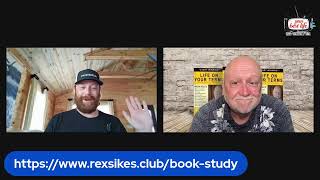
I'm sorry. Thank you so much. July, that would be our past. Yes. July 9th. Into the future starting on June. July 9th. So that means you're done with the 4th of July weekend holiday, you're back at work or whatever on the 8th. If you live in the United States and you can begin the book study on the 9th. It's five days an hour a day and, and there's all sorts of stuff we're gonna have Danny tell you about. But that's the link. Rexychs Club Book Study right there. Click it, click it, click it, click it, click it right and join because it's free.
Yes.
You don't get Rex for free, right. Unless you watch this show. So we're live every Wednesday. In the words of John Landis, we'll see you next Wednesday. But this is the www.reites.club book study. You can sign up to that right now absolutely free. You can join Rex on a live like this, but it's not going to be on Facebook. It's not going to be on YouTube. It's going to be in a closed room. There's a VIP option on the next page as well where you can ask Rex questions and a bunch of other stuff. You can take that if you choose, but it's free. It's me five days. Kind of like a challenge. But by the end of that, even if you just learn one fragment of that book or take on one principle or one piece of learning from the great mind of Dr. Hill and Rex and maybe guests as well, there's some surprises and twists in store that's definitely worth signing up. So let us know in the comments if you signed up to that. Allison's here and Lauren is here and a bunch of people. A big thanks again to our guests who I'm sure will be signing up to that as well. We've emailed this out. We're going to put it on Facebook and share it all over the place. But, like, we need you guys to like, well, sign up. Juliana signing up. Make sure you do it. Put the www. Otherwise it might not work because I need to do some DNS sometimes Facebook.
Facebook takes out the WWW and the links don't work. So if you come up with something that's not working, make sure that you've got the exact right thing that you see right there on, on your screen. And also, why don't you invite a friend to join? You invited a bunch of them because it's free. Now, obviously in five days, we're not going to read the entire book. What we're going to do is look at the important pieces, the components that, that are crucial for you to begin to understand or to apply so that you can live the life that you want to do and outwit that devil. I mean, because that, that's what this is all about, is to help you and, and those around us out with that devil so that we can do what we want to do in life and, and to enjoy it the way it ought to be enjoyed.
100% pleasure as always. We've got a hard stop at 5 and it's time has passed. I'm on eastern time. Rex is thinking five, you crazy. But yeah, that's the link and we need folks to hit that sign up. Let us know wherever you see that link, share it. A big thanks to Julianne and Allison and Lorna, Rex, your good self, our amazing guests this afternoon. Evening, morning. Wherever you are in the world, let's keep it moving. I'm looking forward to next time.
So everybody, you know, if you consider something a problem, it's a problem. If you consider it a blessing, it's a blessing. Oh, by the way, there's a book behind you that you ought to get. Yeah, always. I forget to sell my book and tell them about that.
There's a link on the thank you page, so when you sign up, you can get Rex's other book in the meantime. So it's all on there. You need to do is put your name and email. We'll take care of the rest. You'll get an invite in due course. And yeah, let's work to outwit the devil and live a life on our terms.
And meanwhile, celebrate everything.
Yes. Right, you guys, thank you so much. We're out of here. It's been amazing.