Create your best life with Rex
Jamie Nieto, an Olympic high jumper, talks about recovering from a 2016 spinal-cord injury that nearly left him paralyzed. He used visualization and affirmations to walk 206 steps before his wedding, then built a career in acting and producing while founding HelpingOthersTriumph to fund rehab for others.
Chapters
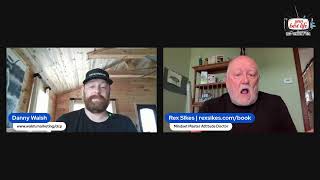
Foreign. Hello everybody and welcome. I'm Rex Sykes. I'm the host of Create youe Best Life with Rex. My co host is Danny Welsh and today we have a really exciting discussion coming up with somebody I really do love and adore. He's, he's a great guy. I consider him a good friend. His name is Jamie Nieto and he's a two time Olympian athlete. He's an actor, a writer and a producer and he's a three time all American athlete who's earned his spot on the 2004 United States Olympic team in Greece and then again in London in 2012 as a high jumper. His career has taken to over 40 countries. He's participated in three World Championships, three Pan American Games and won four National Championships. I mean Jamie is one of as known as one of the world's best high jumpers and he's ranked in the world's top 10 numerous times during his career. In 2009 Jamie appeared in his first feature film the Encounter, which is ranked again in the top 10 faith based films. Jamie gets up there, it's really pretty cool and but he pursued his love for movies and acting and producing and writing and has reoccurring roles on bounces TV's family time as a bartender in Netflix Sci Fi called Away, playing Travis Barker opposite Josh Charles and Hilary Swank. And currently Jamie has a reoccurring role in the stars hit Raising Canaan where he plays a retired gangster named Demo who's now in a wheelchair because in 2016 Jamie suffered an injury which left him a quadriplegic and doctor said he'd never walk again. But he defied those doctors prescriptions and to walk his bride Siobhan 150 steps down the aisle unassisted. Their emotional wedding ceremony was shared around the world by various media broadcasts and an ESPN special feature. Jamie's passion and his drive for success is uncanny. He's developed several original pilots including a gritty crime drama that he wrote and started called Blood Brothers. And I love that, I mean that's we met and I saw that when we first met and it's really a really wonderful series that he did. And he currently writes for one of the number one rated shows on Bounce called Family Time and another show called in the Cut. And he's continuing his road to recovery while living his dreams of acting, writing, producing and he's not letting anything get in his way. He, his wife is also an Olympic champion and on top of that she sings and was on America's Got Talent so I'm going to have Danny come on, and Danny and I are going to bring Jamie on, and you're going to love this conversation because Jamie is somebody that I truly adore, and I think you really need to hear from him.
Hey, Rex, how you doing?
I'm great. How are you, sir?
Doing very well. This is going to be a really good show. And speaking to. To Jamie, just backstage, listening to some of the things that he's done in. In his career and how, I guess our life has its way of testing you, right? And to be able to see the resilience and the story and all the rest of it. I can't wait to get into this. I know you can't. And if it's okay with you, let's. Let's bring Jamie to the stage.
Jamie. Jamie.
Oh.
And so if the audience doesn't know, I also, I write about Jamie in my book life on your terms. The one behind me, I'm going to turn that off because I'm traveling and I don't have a screen and I'm in somebody else's place, but I'm going to turn it off so that it's not distracting. But Jamie shares a prominent part of life on your terms because of his attitude, his faith, and his dedication to not only being his best, but also helping other people be their best. That's right.
Hey, so I think listening to the intro, and it's like, I wasn't familiar with. With the story. Jamie, forgive me, because what an amazing story. Rex covered a lot in that intro. And I think for anybody who just doesn't know you and really to sort of go back to the early days of. Of your career, how. How does one go from being. Being a young man ready to face the world to Olympics to TV and acting and all these things, and it's like, well, that. That's a. That's a story, right? What's. What did the early, early days look like? What was. The things that were sort of driving you as a young man? Did you ever believe that you would get to where you are or what's the. What's the. The early years like?
Yeah, yeah. I don't know. You know, like, I started out kind of late with track and field. I started out high jumping when I was about 16 years old, and I was a junior in high school, and a friend came to me and said, hey, you know, I was trying out the basketball team, but I didn't make the team because I had a bad grade in geometry. And so I wasn't going to do any sports that year. And I was kind of bummed out. So a friend was like, hey, won't you come out for the track team? By the time you get your grades up, you'll be able to, you know, run track. And I was like, I don't like running, so no. And so he was like, well, okay, well, it's not just running. You can do the high jump, you can work on your jumping ability, and then next year you'll come back for basketball and you'll be dunking on everybody. And I said, oh, that sounds appealing. I said, okay. So I went off to the track team and started jumping and had a lot of fun with it and, you know, something that I could rely on myself to do. And I like that it was a co ed sport and we could travel and, and all that good stuff. So I had a lot of fun with it. So after that season, I, I ended up jumping 6 4, which pretty much was my height at the time, and still. And, and I made it to the state meet, the California state meet. And so I just, I just had a blast with it. I. It was me and two girls who made it to the state meet. And so my friend who had encouraged me to get on the team or try out for the team, he had been running track for a long time, like almost all his life. And so I was like, wow, well, if he didn't make it to the state meet and I made it to the state meet, we have a team of about 60 people, I must be pretty good at this. So. And obviously I was having a lot of fun, so I was like, I'm definitely going to do this next year. And so I did it again my senior year. And that was kind of the beginning of the journey for track and field. But, you know, prior to that, I grew up in Sacramento and single parent household and my mom worked odd jobs and we moved around a lot and, you know, it had its ups and downs, you know, and so for me, when I saw that I had a talent at high jumping, I thought that this could be a way for me and my mom to have a better life. Wow.
Well, you know, I've. I've been fortunate to know Jamie for at least 10 or 11 years, maybe a little longer than that. And what I've always known about him is when he puts his mind to something, he makes it happen. He makes it happen. And we did the podcast, I mean, originally Rex Dike's movie Beat, where we talked about your commitment as an athlete and how you brought that to the movie business and how you used what you knew to do as an athlete inside your head and how you conditioned your body to do that for success for yourself. I want to continue with this for just a second, but it just occurred to me that, you know, we're live, and if people are watching, there is a chat room, and they can chat and comment and even ask questions while we're live. Obviously, in the replay, you can only leave comments, but you can like it and you can subscribe and all that. But do take advantage if you're watching live to. To ask or ask questions. So do you mind if I just jump right to the kind of elephant in the room?
Yeah, wherever you want to go.
For those who don't know, I mean, we mentioned that you had this accident in 2016, which was April, and I think I found out in October or November, and I called you up and I left a message which essentially said, you know, if anybody's going to, you know, overcome this, it's going to be you. And you responded back, I think through Facebook or something, said, well, as a matter of fact, I am seeing progress. I am doing these things. And it might have been that year in December, when we met at the restaurant, and that was the first time I met Siobhan. And. And so you were. I'll let you describe it, but, I mean, you were injured, and then from there, you were on a. When a ventilator where you. I mean, you had no. You what, you could move your left pectoral muscle or something? Couldn't do anything. And they. And they said if you were lucky, you might be able to feed yourself. I mean, it was very dire.
Yeah, so.
So not all of us are faced with things like that of that consequence, you know, but many are. So. So when. When. When this happened and you found yourself in that situation, where did you go? What did you do? How did you do it?
Oh, okay. So, yeah, when I was competing, I. I always like to, you know, have fun, as I would hope everybody would. And after the competition, I always like to try to put on a good show because I always thought of, you know, sports as kind of. It's entertainment, and you want to put on a good show for the crowd. People pay their money to come out and see you. You might as well put on a show for them. So after I would finish jumping and competing, I would do a backflip, and I'll wave to the crowd, and I'd walk off. So I retired in 2013, and then I started trying to. I moved to LA. I was living in San Diego at the time, but then I started, you know, really kind of pursuing my acting, writing, producing. But while I was doing that, I was also coaching on the side. So I coached it like UCLA as a volunteer coach. And then the next year I was an assistant coach at usc. I got actual job and then, then the next year I decided I did. You know, being a D1 college coach is a lot of commitment and it's a full time career. So I wanted to be able to have time to be able to still pursue my acting, running and producing. So I felt like, you know, just coaching post collegiate athletes was a better route for me. So. And then 2016, I was coaching, we were doing drills and I would train with the athletes a lot just because I just wanted to stay in shape. And you know, I always felt like it's kind of a healthy lifestyle choice. And so we're doing drills and we were doing some somersaults and I was on Smasher turf and I did a somersault and then I was like, let me try one more. And so I tried one more. When I did that, my foot slipped and my feet kind of splayed out in the air and I went from my feet to my head and I hit my head and then the rest of my body kind of toppled over. And I was laying there and I heard this voice that said, don't worry, you'll be okay. You just gotta go through this. And I was like, what, what, what, what is. And then it was almost like my life just kind of started flashing before, before my eyes. And it was like I'm seeing different things in my life and I was seeing like people who I knew who broke their neck or I got injured and got back up again. It was like, it was just so many random different thoughts. And then, you know, like one of the athletes came into view and I was like, hey, I need you to call 911 up. And hurt really bad. And I couldn't breathe very well and I just couldn't feel my body. I couldn't, I couldn't move anything. And so the next thought was like, please God, don't want to be paralyzed. So eventually I was. The paramedics arrived and I was medevacked out of there to LAC usc, which is the hospital in Los Angeles. And it was, the diagnosis was that the disc between C3, C4 slipped and bruised the spinal cord. So they had to do surgery right away to take the, the disc off of the spinal Cord and then fuse C3 and C4. So we did that. And then they said after that, is this a recovery time? And the doctor was hoping to see more movement, but she wasn't seeing the movement that she wanted. And so her guesstimation was that I probably. I would probably get around 30% functionality back, which they thought was probably maybe feeding myself. And at the time, after the surgery, I could kind of like shrug my shoulders. Like, everything from the chest up felt normal, but from the chest down felt like I hit my body funny bone, you know, like you have the funny bone on your. On your arm, and your whole arm kind of tingles up. But, like, my whole body from my chest down was tingling. And so I told the doctor and my, My fiance at the time told our girlfriend at the time, told the doctor, no, we don't believe that I'm gonna get 100 functionality back. And, you know, it might take some time, but I'm going to get there. And so I was in the hospital for about two months. And, you know, it was. It was a lot of hard work. A lot of things that I didn't realize I was taking for granted. Just, you know, waking up in the morning and getting out of bed and walking to the bathroom, using the bathroom yourself, you know, like, so many different things that we as people take for granted, that until you can't do it anymore, you don't realize, you know. And so I had a different outlook on life and what I wanted, and realizing that, you know, tomorrow is not promised tomorrow doesn't mean that you're going to be here. So, like, I literally could have died that day and that would have been it. So now I felt like it was a new opportunity to defy the odds again, as I had did so many times as an athlete. You know, in 2012, I was the second to. Last year, my penultimate year of track and field before I retired. Like I said, I retired 2013, 2012. I was 35 years old. And I, you know, at the beginning of the year, I wasn't picked to make the Olympic team, you know, mainly because of my age, you know, and I've been jumping. Okay. But nothing that they were like, oh, yeah, this guy's gonna make the team. So, you know, it was kind of a wing and a prayer. But I, I, you know, I, I did a lot of visualization, I worked hard, I stayed positive, and I just kept going at it. And in 2012, I ended up winning the Olympic trials and becoming the oldest American high jumper to ever make an Olympic Team, oldest male American high jumper. And so, you know, after doing those things, the hard work and the dedication and the visualization and the prayer, like, you know, that let me know there that anything is possible. So I translated that and transferred that idea and knowledge to what I'm going through now into like, hey, it makes. Take some time, you know, but I'll get there. I, you know, the Olympics didn't make me. I made the Olympic team. You know, it was Olympian in my mind before I ever made that Olympic team. So it's like, I gotta see myself walking, running again before I ever am able to walk and run again, you know, And I'm getting there slowly but surely, you know. You know, being Olympian didn't come overnight. It took time, so.
Well, no, I love that you just said that being an Olympian didn't come overnight. And it does take a certain amount of time. And I want to come back to the. The, you know, that you visualized into the affirmations. And certainly I'm going to do this. But when we. When we had the. Our first. I guess it was lunch after your accident, and we. You arrived at the restaurant. I was in the restaurant, and I saw you come in, get out of the car, and you. It took about a half an hour for you to get from the car into the restaurant to the table. And you with Siobhan and another. And I was in complete awe. I didn't want to interrupt the process or anything. I just watched. I felt a little awkward because I'm not running out to say hi, but you came in and you sat down. But what impressed me was the fact that here's a guy who I got to hang out with. We got to go around movie sets and do different things together and never ever once thought about walking or anything. We just did it. And then I'm watching you, and you've got a walker and you've got people standing near you, and you're like, having to deliberately move all the muscles in your body in order to move yourself forward and to bring yourself from where you were into the restaurant. And I was just blown away by the. That level of commitment and effort, you know, and desire. And you were coming to see me, and I'm sitting there letting you walk for half an hour to do it, as opposed to running out and say, well, maybe we just have a sandwich out here, but that is the guy that you are now in May, we were together, and we walked in and out to the car together. So the progress that you've made in the Years, but also talk about. And then Danny's got a lot he wants. But part of your commitment was to watch Siobhan down the aisle. When was that? 2018. Was that the year?
17.
17. Okay. So I thought it was a year later, but I wasn't. And, you know, and to do that unassisted and. And for those people who don't know what all that entails and what that means, but that purpose that you had to do that, and then they televised it. You know what I mean? I mean, but you succeeding in that.
Yeah. Yeah. I don't want to give people a false sense. I'm still working to get back to full fully walk normally. I walk with forearm crutches now, and I can walk a little bit without anything as well, as long as it's a controlled environment. I still have issues with anxiety and wanting and making sure I don't fall and things like that, which I think is all totally natural. But, yeah, you know, I had. I had a goal after I got out. You know, like I said, I was taking things for granted, even taking people for granted. And I had planned to marry Siobhan that year. She was also training for the 2016 Olympics, and I was going to propose after that. I didn't want her to have to think about anything while she was preparing. And then when I got injured before the Olympics, it was like, what am I waiting for? Why am I wasting time? She's a beautiful person. She's standing right here by you at maybe the lowest time in your life. And then, you know, one day while I was in the hospital, she said, yeah, I decided I'm just gonna retire and I'm gonna give it up. No, I was like, sad like, no, I don't want to be the reason why you stop competing. You know, I don't want to be the reason why you now retire. You can't go find and chase your dream, you know. And so, you know, I proposed to her that day. I said, hey, if you're ready, I'm ready. Let me. We can get married right now. She said, no, let's get you out of the hospital first and get you back on your feet. And so I said, okay. And so then, you know, later that year, I think it was, I got out of the hospital and see, I went in in April, and then I got out thinking July, and then October, November is when we decided to go start looking for rings and stuff like that. And then I was like, when are we going to get married? She's like, I think a Summer wedding would be great. So I said, okay, so that's my goal. Let me start working towards that. And so as I was doing rehab still, I was barely able to like walk two or three steps on the aisle. Like, I literally was stumbling, falling three steps. Like, I didn't have hardly any control at all. And so I was like, well, you know, I'm thinking, you know, it might take about 150 steps to get out of the church. So that'll be my goal, you know. So I just started working on it and working on my walking, and those three steps got better and got coordinated more. And then, you know, a couple weeks later, I took like six steps. And you know, a couple weeks later it's like 12. And it just kept compounding and pounding and compounding and compounding more and more and more until, you know, maybe a couple months before July, I said, hey, I did it. I took 150 steps. She was like, oh, okay, great. Now do 200. So I was like, okay, so, so I ended up doing like 206 before the wedding. And then I just gave myself a little time to rest and, and, and, you know, get, you know, just get, get some rest and get mentally ready for the, for the wedding. Kind of in the same way I would do for, you know, a big competition for the Olympics or something like that. You know, you take two weeks, you. You start kind of de. Escalating your training and so you can be fully rested and ready to go and peak at the right time. So that's what I did. And, you know, thank God I got there and she came singing down the aisle. My eyes are watering up. And I didn't want to stand there with anything, so I just stood there. I didn't have anything that I was holding on to. And we had the. I had a cane just in case, you know, for whatever reason I needed to grab it. I could, but I didn't want to do that. So I just stood there and I was trying not to cry, but my eyes were like watering up and I'm like, oh, if I can't see, my balance is going to go horribly wrong. So, so I tried not to go. I couldn't look at her. And then she made it down. And then we, we got married. And then we walked very slowly back down down the aisle and outside to the limo.
Wow. Well, one, one last thing. And that is, you know, you said, you know, the anxiety of falling and this and the other thing. And, and we certainly don't want people to, to have the impression because you know, that somehow an Olympic athlete, a two time Olympic athlete and all the stuff that you don't make you superhuman, you know, you still have the same, you know, things that humans face and yet you also have your own discipline, your own mindset discipline, you know, your emotional discipline, your physical discipline and all those kinds of things that assist you. And that came at a cost. It wasn't like you waved a wand and suddenly had condition and dedication to all of that.
Yeah, I literally started like from zero with no strength at all and had to work to where I'm at today. And you know that, you know, like there's a lot of people who get injured and the doctor says you never walk again and they just accept that and they don't do anything so they don't get any better and they just stay where they're at. But I didn't accept that. I decided, hey, I'm going to work hard. If there's an opportunity for me to get better, Even if this is 1%, I'm going to go for it, you know, like, what else do I got to do, you know, so, so I, I just keep working and keep working hard. If it takes 10 years, then it took 10 years, but now I'm back. But if I never started, I would have never got there, you know, if you never start the race, how are you going to finish? You know, so.
It'S a tremendously inspiring story and we've got comments from Melissa and Sandra and other people in the chat as well. Everybody here saying thanks for sharing your inspirational story. When I started, I sort of took you right back into how you first started in, in this entire process. And then Rex has kind of fast forwarded us to, to this point throughout both of those sort of stories and different points in your life goal setting visualizations, the desire, the determination, not quitting, all of these things. It's kind of like painting a list of ingredients of what makes up, you know, good self. Right. Are there any other things that you would say make up that list of ingredients that, that make up the man? Because there's a lot of power in your thoughts and the sheer determination and focus and to not accept these things that other people would just say, oh man, that's the end. What are some of the other ingredients in your opinion that that met you?
I would say discipline, you know, definitely discipline, prayer and faith, you know, resilience. I think those are some of the things that, you know, helped me to get back to where I'm at today and just Never having a. Never give up attitude, you know, those things. You know, I think those things helped me out a lot. I truly believe that. Like I said, you know, people who've been injured, if they just tried more, you know, I'll tell you a story. When I was in the hospital, they met. They had these people who had been injured prior to being in the hospital. Some been injured for years, you know, and one guy I met, he had been injured for 10 plus years. And these people are called peer mentors. You guys still there?
Yes.
Okay. So these people called peer mentors, they're kind of there to help you. You can talk to them. They're there to help you adjust to new life in a wheelchair and stuff like that. You know, things that they went through and, you know, give their testimonials and stuff like that. So this one guy who I met, he, he, he. He was a really nice guy. He was. He would see me often in the rehab facility and I was trying to, to walk. You know, like every time I was going to the, to the rehab room in the hospital, the doctor or the physical therapist would ask me, you know, what do you want to work on today? And so every day it was like, walking. I want to work on walking. I want to work on walking. Like, it's not going to change. Let's work on the walking. So they would put me in this big machine. It was called a light gate and looked like a big, like, bouncer for, for, for a toddler or a baby, you know, not a toddler, but a baby, you know. And it had straps that kind of went up on the side and a big harness that kind of went around my body. So as I tried to walk, if I had stumbled or fail, it would catch me. So. And then I had two physical therapists on each side, and they would, like, help my feet to move or legs to move forward. So this one particular particular day, after doing this, I don't know how many times, you know, how many weeks in a row in the hospital and not getting any movement or, you know, barely anything to move, my right leg started moving a little bit, but the left leg was just really, really stubborn. It wasn't moving anywhere. And so this one particular day, I really wasn't in the mind frame that I was going to. I was going to do anything. I was, like, pretty upset. I, like, got a uti. Just felt like things were. I just wasn't happy. I was, I was very upset about my progress. And so when I went in the doctor's, like, hey, what do you want to do today? I said walking. You know, it was like walking, but I really didn't want to. So they put me in the light gate, and I'm. I'm standing there, and the peer mentor is there, and he's watching, and, you know, okay, Jim, whenever you're ready. So I move my right foot. I try to move my left foot. Nothing's happening. I'm, like, fighting with everything. I got to push my left foot forward. Nothing's happening. And then so the doctor, when the physical therapist pushes it forward, so I move my right foot forward again, and I'm trying so hard to just. It's like, I got tree trunks for legs. I'm trying with all my might to move my left leg, and it's not moving. And so the physical therapist moves my left foot forward. And at this point in time, I'm starting to get angry and upset, and I'm like, I've been here this long, and I can't even move both my legs. And I'm like, I'm starting to get very, very disturbed and angry and like, like, enraged. And so in my mind, you know, I always thought and I've always read and learned that I am is the most powerful statement that you could ever make. If I'm about. If I'm getting ready to high jump and I say, I think I can clear this bar, or I'm gonna try to clear this bar, nine times out of ten, I probably won't clear. But if I say I am going to clear this bar, and I believe it in my heart 100%, nine times out of 10, I'm probably going to clear the bar. So using the words I am was, like, powerful. So I just started telling myself, I am going to walk. I am going to walk. And that visceral, like, fear and anger and tears start coming out, and my left foot just slightly move forward, forward, and then I push the right forward, and then I'm fighting. I am going to walk. And then I push the left foot forward, and it's starting to move, and I'm like, I am going to run. And I'm, like, screaming now. And everybody in the rehab facility is, like, looking at me like, what is going on here? And I'm yelling, I'm gonna run. And, like, snot and tears is coming. I. And each step is, like, getting bigger and bigger, and I'm taking more and more steps. Now I'm, like, out of the physical rehab place, and I'm going down this hallway, which I had been Visualizing myself walk down this hallway for weeks now. And I'm just trucking along, going to walk my feet and just plunk, plunk, plunk, plunk. And the. The physical therapist on each side, like, trying to keep up my legs. I'm going to walk. I'm like. And I get about halfway down the hallway and the physical circus says, jamie, stop, stop, stop. And I stop. He says, wow, that was great, Jamie. I couldn't really keep up. I'm sorry, I had to stop. And, you know, that was amazing. And he said, stay here. Let me, Let me go. Let me go get a chair so you can sit down and rest. And I'm like. But I'm like, tears and it's, you know, like I'm like so upset and like, just like fighting with everything I got my. And Siobhan is. My wife is there and her aunt is there, and they're tearing up and they're crying like they can't believe they just saw me do this. And then the pure mentor, he was out in the hallway too, and he looks at me in my eyes, and he says, I never tried that hard.
Wow. Wow. You know, well, geez, I, I mean, I hope that everyone. I, I mean, I really do. If, if the world. If every 8 billion people could see what you just described, I think we'd have be better off because there are so many people who. What you just said about the mentors say, I, I haven't tried that. I, I didn't do it. The, the level of commitment, you know, people, People complain, but they don't get off the couch. You know, I mean, it just, it just is what so many of us do. And yet you do that for walking. You also did that for being an athlete. You also do that for your film career, you know, and the way you help people. So before we go too far, I do want, I don't. I don't want to segue out of there too much. But I also want to say that you have a foundation that you created and have you talk a little bit about that so that people who are watching right now understand not just what you're able to do, but who you actually are. And then.
Yeah, yeah, thanks. Right. So, yeah, we have a foundation because when I was in the hospital, I didn't have any insurance, I didn't have a job. I was side coaching and trying to act right and produce. And so when I got into the hospital and my wife started to go fund me and a bunch of athletes, people from around the world came Together and donated to help me with my rehab and get me back on my feet, which was tremendous. You know, that these people came together and helped me out. So we wanted to start a foundation where we were able to do the same thing. So we're. If you donate to the foundation, it's called helping others triumph.com helping others try foundation. And I think Rex had put up the website, but it's so. It's so we can take that money and give that opportunity to other people who have been injured or had spinal injuries to be able to get an opportunity to. To do rehab as well. So that's. That's what the foundation is all about.
We've put the link on. On the screen and, you know, we've got comments coming in in different places on social media and on YouTube. And I think just listening to that story is just like Rex said, if 8 million, 8 billion people got the message, if one person got the message, and I guess that's what you. You're trying to do with the foundation and being able to help folks because they say you've. You've got to have been there. Right? And clearly you've been there. What are some of the success stories that you've had from your work doing the foundation?
Yeah, we've just basically taken some of the money to give people some physical rehab. We've had some who've done like, massage therapy work and stuff like that. So I think just getting back into it and doing the rehab and doing it is a triumph within itself. You know, like I said, it. It's one step at a time, one day at a time. Just keep pushing, keep going, and you'll get there.
You know, there's one thing that just keeps coming back, and I mentioned it in sort of the last segment that we sort of. We led into that amazing story, this notion of being able to visualize things. You visualize yourself walking down the hall. You visualize that weeks before this moment happened. Yeah, you visualize so many things in. In just. In this last, you know, 35 minutes we've been talking. How does that work in. You know, how do you describe the. The. The process? Is there a process? Where did you learn this stuff?
Does.
It's like, can anybody do this?
What's.
Talk to me about this visualization thing.
Yeah, anybody can visualize. Anybody can visualize. You know, I think it's just a way of retraining your mind. You know, I mean, like, if you start. If you tell a kid from when he's a baby until he grows up that he's done every day of his life, he's probably gonna think he's dumb. But if you tell him he's smart, more than likely he's gonna think he's smart. So if we can condition our brains like that for children and growing up, why can't we condition, condition our brains like that now? So it's like, if you keep telling yourself, I am going to do this, I'm going to do this, you start visualizing, you start seeing yourself, you start reprogramming your mind, thinking, maybe I can do this, maybe I will do this. And eventually, at some point, if you keep telling yourself enough, you will start to believe it and then it will come to fruition, you know, so. So that's kind of the process, you know, are there's things that you can do. Like when I was an athlete, every night before I went to sleep for like 10, 15 minutes, I would visualize myself, you know, going to the Olympic trials, seeing myself jump in, rain, wind, heat, whatever, you know, just so I can be prepared for whatever happens that day. And at the end of it, I would always see myself clearing bars and winning the competition, you know, which could be a hard thing to do because when I first started doing it my last year, I didn't see myself winning. I see myself on a second or third place podium and I just thought, maybe I'm being realistic or that's all it's going to take. I just need to be in the top three. But then I started thinking, what is it going to hurt me to visualize myself in the first place podium? So after about a month of visualizing myself on the second and third place podium, I started visualizing myself on the first place podium. And then fast forward, you know, 12 months later, or not 12, seven months later, at the Olympic trials, I end up winning and being on the first place podium. I've been seeing myself do that the whole year, you know, and so, you know, now, you know, after I got injured, it was kind of the same thing. Sometimes I would just go to that hall and I would look down that hall and just kind of visualize myself walking down the hall. And you know, sometimes at night I'd visualize. Sometimes I just watch people walk by and kind of visualize myself, myself walking as they are walking, you know, so it's always kind of in my head that until it doesn't need to be anymore.
It's such a powerful notion that, you know, maybe people might feel strange looking at themselves through that eye and seeing Themselves, you know, jumping over the bar or walking down the hall or getting the job or whatever it is. Right? What. What could you do to encourage people to trust in themselves and trust in the dreams and. And be able to not give up and say, I am. It's so powerful, what you're sharing.
Yeah, why not? What do you got to lose? What else? Well, I mean, like, you've been thinking this one way your whole life and nothing has changed, right? Why not try a different thought? It's that easy. It's that hard, but it's that easy. You know, it's like just. Just change your mind. You know, we can solve hunger and homelessness and all that today, right now, if we all just change our mind and agree to do it. If we all said, you know, we're not gonna let anybody else be hungry ever again in the world, everybody would eat.
Right?
But we don't all think that way, you know, gotta change your mind.
You make a really important point. Completely agree. And that, you know, if you stop yourself from. From getting the results that you want to get, you will always stop yourself from getting the results you want to get. But if you move through that, you can also do what seems to be impossible. But. So let me ask you, because some people, this comes up for some people, they. Well, when I see myself doing what I want, I feel bad, like, I don't think it's going to happen. I go, this is a fantasy, you know? Yes, well, that would be good. But, you know, it's never going to happen. So they have this thing that they want, but when they think about what they want, they don't feel, oh, this is really great. This is me. I'm doing it. They feel like, oh, yeah, if only, you know, how do you. I mean, you know, you said, well, I was. I was seeing myself second or third place, and I decided I'm going to be first place. If. If you did or didn't, what do you. What would you say to encourage those people who doubt or who fear or who worry that they're wasting their time doing this and that it's not going to come true, that somehow they're setting themselves up for failure and so instead of feeling committed to it, they pull out of it.
Yeah. Yeah. You know, the thing about it is nobody's going to know. You don't have to tell anybody. You just tell yourself, you know, so. So there's no reason to feel any type of way about, you know, or feel bad about life, and it could be hard. So what you have to, is you have to combat those negative thoughts. If I'm going out again to the hydro vapor and I'm thinking, I don't know if I can clear this today, I would then say, you know what? Actually, I feel great, and I will combat it with 10 positive affirmations. I'm going to jump really high, actually. This is a great day, actually. You know, like, I would just keep telling myself that. So now that one negative affirmation or that one negative comment or thought is now being combated with 10 positive thoughts. So it's just a way of retraining your thinking. You know, you can be that. Why not? Because your mom said you can't do it, because your dad said you're not good enough, because your coach said you'll never be this. You know, who cares what they think? And even if, if, if. Even if they. You let them penetrate you, you got to be able to say, look, I can. No matter what. There's people, like, we live to make history. So there's people out there who's never done something that's never been done before, but they've done it. That makes sense, you know? You know, so what if they're thinking, hey, nobody's ever been to the moon before. Who thinks. What makes me think that I can go to the moon? You know what I mean? Why? Well, maybe I can. Let's try. Let's see. And again, it's nothing that you need to be telling people, if you feel that way, to start telling yourself. That's where it starts. It starts with yourself, not with telling all these other people, because you might not believe that, and they might not believe that, but they don't need to know that. It's not until you believe. And I always feel like, you know, actions show way more than words, you know, if I don't need to say anything, just look what I did, you know.
Well, let me just follow that up. And then what, Danny? The so many people over complicate stuff. They overthink it, they over worry it, they overwork it, they. They get tired, they get burned out, whatever. And what you're really saying is, it's really quite simple. Notice that you did something like made a negative statement and then change it and, and, and make the affirmative statements and then do it multiple times. I mean, it's not, it's not rocket science to do that.
Right, right. Exactly. And anybody can do that. You know, you. You might not be Olympian, but you can have an Olympic mind frame. You can think like an Olympian. Why Not. There's nothing different from my brain, from your brain, from some. Somebody else's brain. Yeah, we have talents in other places, but when it comes to a thought, anybody can have a thought, right? Why not make it a positive thought? Why not make it something that can change your life?
So, so good. And I think folks are, like, listening to the story. So far, we've talked about Olympics and, And the athletics, and we've talked about this transformation, this journey, the ability to walk, you. You get to the altar to do the thing you've got to. All of these things. Resilience, the ingredients, everything. And then we've got this other segment, this. This acting, and. Oh, there's just this bit. Talk to us a little bit about the. The acting and, and the tv, the film, the things that you're working on right now, because this is like, whoa. And all of this is stemming from this positive mindset and this exactly what you're talking about. Talk to us about what's going on in the. In the acting world and the writing and the film and all this cool stuff. Yeah.
Yeah, for sure. So I think it was probably 2017. I was, you know, doing some rehab, and a guy came into the rehab facility I was working out at, and he's like, oh, yeah, just book this commercial. I was like, oh, that's cool. He's still, like, acting, and he's doing it from his wheelchair or something. That's also. And I was like, hey, man, what, you know, what's your agency? He said, kmr. And I was like, oh, actually, it's ironic. I actually had a meeting with KMR before I got injured. Like, literally two weeks before I got injured, I had a meeting with him, and he's like, yeah, they have a, you know, great diversity department, which now has been dispersed, but they, they've moved on, to say the least. But, but, but. So I was like, okay. So it kind of got me encouraged. Like, well, I mean, if he could do it, it's something that I always want to do. I don't know. I was always kind of thinking, well, maybe once I get back on my feet, I can start trying to live that dream again. But why did I need to wait that long? If, you know what, we don't know what's going to happen tomorrow, don't take this time for granted. Go do it now. So I was like, okay. So I went and took the meeting with the agency, and they ended up signing me, and I started, you know, auditioning and kind of getting back into it again, which is a little nerve wracking at first. But then eventually, you know, things started coming together and I booked a great role on a TV show called Away with, starring Hilary Swank and Josh Charles. And I did three episodes of that. And then, you know, most recently I did a TV show. Like, you know, you talked about the intro called Raising Canaan in the Power Universe and that was amazing. And I'm also, you know, with acting you can't just. You can, but if you're, if you're just an actor, you're always waiting for somebody to give you a job. So I always want to be proactive. And so when I started taking acting classes way back in 2008, my teacher was always like, hey, make sure you write as well because Hollywood might not always write a role for you. And so you need to be able to learn how to do, do things yourself. And so started writing way back then and working on producing and trying to get those things out. And so most recently I just produced not something that I'm in. It was just more of a production kind of thing that I wanted to do. I produced a barbershop talk show that's going to come out. I just sold the show. It's going to come out on Aspire TV September 4th. So I'm excited about that. We're to going just getting the marketing and promotion done now. And it's basically barbers in the, in the shop, celebrity Barbies and they're cutting their celebrity clients here and they're doing an interview with them pretty much like this. And, and you know, they talk to them about, you know, whatever, you know, it's not just, you know, hey, what's current event and what's this and what's that? You know, so the conversation go anywhere. So it's a really fun show. We have a lot of fun. And so I'm really excited about that. And then I'm also writing, I'm writing my scripts and stuff like that as well and trying to think, I'm sorry.
And well, we'll talk about just because you, you got some news right before we were doing this show and you have a commitment for a couple to tell them. You don't have to say what it is, but I mean, you've got a project that, that you need to have done by Friday.
Yeah. So yeah, I've been working with this production company since2015 and writing with them and doing a little acting with them as well. And then so every year I probably do two or three projects with them. So this year they did a faith based family sitcom called Highly Favored. And I wrote a script on there and acted in it as well. So that was fun. And then that was actually last week, so we were doing like 12 hour days on set. That, which was cool, but it was a lot of work. But it, but it was fun. So. And then, and then they're like, hey, we want to shoot something else real quick. Let's write this other story. And so they're like, hey, how fast can you give me a script? So I'm like working on a deadline right now. So I just kind of took out this time because we had this schedule, you know, weeks in advance. I was like, let me make sure I do this and then I can get back onto my writing.
But, but that right there, I mean, you, you're keeping a commitment to a time frame and not letting the time frame overwhelm you. You're here, you're present, and when it's done, you'll go back to what you're going to accomplish. And again, that, that is intentional and deliberate. And again, it exemplifies who you are. I want to draw a point here too. So typically when shooting a scene, how long does the average scene last? Say 2 minutes, 4 minutes, maybe 30 seconds, sometimes 10 seconds. Sometimes maybe it goes on like a master shot for five minutes. Right. I mean, but a pretty small time. Right. And so when you think about it, you, you spend all this time learning to act, you take all these acting classes and prepare for years and years and years and you get to the set and maybe you, you know, your whole scene is a minute long.
Right, right, right.
As an Olympic athlete, how long does it take you to go from start to the high jump?
Oh, you know, less, less than 10 seconds.
I mean, like less than 10 seconds. So. And the Olympic. No, I'm sorry I cut you off, but every four years is the Olympics. So for that you spend four years preparing for 10 seconds worth of performance. But not just the four years, but an entire lifetime to be an Olympic champion.
Right?
So I mean, and people go, well, you know, it's too hard. But this guy, this guy has spent his lifetime so that he performed 10 seconds and then maybe another 10 seconds, if he's lucky, he gets another 10. So you know what I'm saying? I, it's, it's not, but, and I hope my point is being made without me having to make it any further than that. Same thing with the acting. You know, you, you spend a lot of time preparing and the performance is Actually quite short, but it's truly rewarding and it can be outstanding. What comes from it.
Yeah, definitely. Definitely.
So good. And I think we are coming to that towards that time, towards the top of the hour. And we always give folks an opportunity on this show to share something that we might not have covered or that you might want to get out there, something that's coming up or a different website or maybe a different part of your story that we might not touched on. If you've got anything like that, Jeremy, that you do want to share, folks would love to hear what, what's the. What's in your mind right now, apart from man, I need to finish this script.
Well here. My son's crying in the background, so sorry about that. I have two babies now, three in one. So, you know, being. Being a husband is great and being dad is amazing as well. So. So I, I have that. And, and you know, people can always just keep up with me on, at my website, Jamie mieto.com or, you know, find me on Instagram, Facebook, x, you know, LinkedIn, all the social media platforms and you can continue to follow my journey there, you know.
And you have stuff on YouTube in different places and, and you get shows and, and before, before we go too far, you know, I asked you about the Roberto Covente movie because you started Roberto Clemente, right?
Yeah, yeah, the Roberto Clemente film was fun. I got to play Roberto Clemente and that. You know, when I auditioned for it, the. The director was like, he, he found a lot of great actors, but not a lot of great actors that had an athletic background. So it was just when I was holding the bat and stuff like, like he had me hold the bat in the, in the, in the audition and that kind of sealed the deal for him. So, you know, it was a fun experience. I got to learn a lot about Roberto and yeah, I hope people enjoyed the film.
So good, so good. I think there's a lot of people inspired by everything we've shared today and certainly inspired me. There's some folks in our Facebook group that don't show in the main comments. I've got to give shout out to Erin, to Darlene in there as well, to Christine Rogers is in there. She said mic drop not long ago. I'm not entirely sure which mic drop segment that was, but we've certainly had a few, uh, throughout this. Sean, it's been a pleasure, um, sitting here listening to the story and you know, when you do hear people who have got things going on in their life or the, the Face with adversity. You know, coming back to this show, this segment, like Rex says, if 8 billion people are one person, take a message away from this, there's certainly something in this for everybody. So from me, Jamie, I just wanted to say thank you personally for being here, and I know, Rex, you'll have some other kind words as we approach the top of the hour.
Well, Jamie, I. I appreciate that you. You. You are here. You're my friend. I'm a better person because I know you.
Oh, thank you.
I truly, truly. I mean, whatever else I may be, I benefit from knowing you and, and you're inspiring to me, and I appreciate you and I appreciate Siobhan and, And to see you with your children and, you know, and. And to. To have been. I didn't go through anything you went through, you know, but. But, you know, I'm just. I'm just better off because of you.
Yeah. Thanks, Rex. You know, we all have our challenges, and it's just about, you know, how you react to them. Are you going to use that challenge as an opportunity to do and make things better in your life or you're not? You know, so I just want to encourage. Encourage everybody to, you know, keep God first, You know, keep staying positive and go after your dreams. You know, the only limitations of what you believe in, the Be right.
Absolutely. Absolutely. And I encourage people to go to Jamie nieto.com and to the hothletics official.com foundation and, and help you do the good work that you've been doing because people helped you and you. You turned it around and you're helping other people as a result of that. So if you're watching anywhere in the world at any time, live or replay whenever, if you can give. Give. Check it out. You know, check out Jamie. Check into what he's doing. He's, He's. He's. He's continuing to build his career writing and producing and acting. And. Thank you. Thank you for taking the time. We'll let you out a couple minutes early so you can take care of the family and get back to writing.
Right. Thank you. Thank you. Thank you, guys.
Thanks so much. It's been a pleasure.
Right.
Rex? Wow. So good. And every single week, we have a story. This has been one of the. The most powerful. And I think just listening to, I don't know, we had Jamie on. On the screen, kind of soloed out for that moment, and I didn't see where that was going until it started going. And I guess there's a message in that somewhere Right. For. For everybody. And if people are just joining us right now, this is definitely one to watch. And go back to the beginning. Big thanks to, to Jamie for joining us on, on the show and taking the time out of a. Of a busy schedule. I know Jamie might be in the, the green room for a little while in, in behind the scenes. So if you're still watching, still listening, I appreciate you, Rex. Next week, what's coming up?
What's the plan before. Before we get to next week, I just want to say that, you know, part of what Jamie said is positive inspiration, but he also talked about how he used his own anger and the intensity of his emotions to make himself, you know, move the way he wanted to move. And, you know, he discovered as he used his own energy and his own intensity, the, the amazing power that he had within, you know, and then they have the other guy, look at him go, yeah, I never ever thought to do that kind of thing, but, I mean, it is so. It's. I hate to say it, but that's endemic of our world. People just go, you know, I didn't think I could do that. So I never, it never even occurred to me to do it. And so what I hope people take away from Jamie's thing is if you have a goal, you have a dream, whatever that may be, you have a physical condition or something that you need to get over or want to get over, heal and, you know, to use the power from within and the assistance from without, but the power from within to, as he said, you know, the only limitations are the ones that you have in your own mind and to get through it however you can best get through it. And the power of positivity doesn't mean that you don't use your anger. It means that you use it productively as opposed to what most of us do. And we hurl things at the wall and we get mad. We, you know, we lose it. He directed it. And, you know, whether it's positive energy, I can do it, or damn it, I'm going to do it. You know, he did it. And I just think it's such a powerful lesson. As to next week, it's a surprise right now whether you and I are going to do it solo so that we can catch up. And important things that we haven't been doing because we've had some guests and we do have other guests, we've got, I will say next week is the 24th. After that we've got Jeremy McDonald.
Correct.
And then some other guests that are. That are into, into, in the, into August. But Jeremy McDonnell is a, is a great guy. I've known him for a while and we've done a lot of stuff through the Tribune. He does symposiums, he takes cruises, he explores metaphysics. And so he's on the 31st next week. Surprise week. Danny, me, maybe somebody, maybe somebody not. But also, you know, the other thing, Danny, is they can go back because this is great, your best life with Rex. And they can look like last time. We had Satish. We've got Bill Walsh, we've had Eric Swanson, we've had Suzanne Lyons, a film producer. We had Doug Stewart who wrote Officer and Jail. So we have, you know, great, great guests. I'm very pleased with the, with the guests that we've had because they all in some ways have either, you know, they're inspirational at the level of personal development or professional development or career aspirations, whatever you might have.
Yeah, 100 and, and so many good shows, all on YouTube, all available on social media but also on www.rexsych.tv. everything's on there and we'll keep that updated, what's coming and all the rest of it. There's blogs and there's lots of different other things going on. And you've just finished the book study as well, Rex. Right, this, this the Outwitting the Devil, Napoleon Hill, the book study that, that you've put together over this last sort of week. We got the book and just wanted to say thank you to folks who joined us on that and took part in that. We've had so much good feedback. There's going to be more to come and I guess this is some of the stuff we're going to get into on our show next week. But I did want to touch on one thing that I know you do have which kind of ties into what we've just been discussing with, with Jamie just, just now when it comes to attitude and I notice you've got the attitude doctor under your name and all this, you've been doing this stuff for years. But you do have an amazing product, Rex, that we, we often, we mention this and we often share this around. Talk to me a little bit about the attitude activator because I know we've got a few minutes left and I just want to pre frame what we're kind of going to be talking about a little bit next week. But I know that there's this thing and when it comes to activating the positivity, is this something that might be able to help folks?
Oh my God. Oh, my God. You know, I'm very pleased. I mean, I spent. Attitude, first off, is the number one predictor for success in all areas of your life, whether it's health and healing, happiness, relationships, your finances, wanting to do whatever you want to do in terms of career fulfillment or athletic fulfillment. Attitude is the number one predictor because if your attitude sucks, then everything else behind it pretty much sucks. But if your attitude is powerful and positive and optimistic, it doesn't mean just being pumped up. I mean, that's the thing that people think, oh, it all means rah, rah, rah. No, it doesn't necessarily mean it, but it does mean that when your attitude is right, you're congruent, you're aligned, everything is working as it should be together, as opposed to combating odds. Because when your attitude isn't right, it's like you're standing on a dock with one foot on the dock and the other foot on the boat, and you're going back and forth like this. You want to be in the boat or you want to be on the dock, and you aren't really sure. But when you know what you absolutely want, when your attitude is right, you just get in the boat and go to your destination. So I have a program called Mind Design. And part of the whole mind design program was to get. Get people to be able to activate their attitude easily with fun and to take what seemed to be hard for most people and make it. And make it delightful and make it easy. And so I created this audio program. It took over a year to write it when I did, you know, and scripted. And it has dual voices. It has a number of different, you know, whole brain learning approaches and devices to help you get into the positive state first off, and to be able to visualize and be able to affirm and to be able to direct your mind in a positive way. So in some ways it does all the heavy lifting for you, but what it does help you to do is to reprogram your mind for the right attitude in any situation. Because sometimes you want to be peaceful, sometimes you want to be playful, sometimes you want to be powerfully positive, and sometimes you want to be persuasively, shoot, whatever. So attitude is the way that you develop your attitude is you wear this with headphones, you listen to it, and it's designed to do away with itself. So you learn a process whereby, for example, Jimmy was saying, you recognize when something isn't working and you change it. You shift and you go to the other direction. So the Attitude Activator helps you do that. And the website right there, recsites.com. if you go just to rexites.com and you didn't even put in the rest, it will. You'll scroll down and say attitude Activator which is this link. Get the Attitude Activator. I cannot, I cannot recommend it enough. It's highly recommended by all the people who've ever used it. It's a best selling tool that you can use to, to really claim your life and make a huge difference for yourself in how you move forward. And if you want to move forward, get the attitude activated.
So good. And, and top of the hour. Time flies when you're doing amazing interviews and amazing shows. Rex. Right. We are excited about next week. We'll talk more about this stuff and maybe there's another book study coming. Who knows? You have to join us next week but we are also going to put the replays out of the previous book study. I've got a bit of technical stuff to do on that but we will email that out. If you're not on the mailing list you can go to Recsites TV and you can sign up. You find us on social followers and all the rest of that stuff. But we will be back next week and we've got an action.
Well, absolutely. And there are people who did sign up for the vip so there are people who. That will be forthcoming as well. I'm traveling right now but next week things settle down a little bit and the book study I love doing that bookstore is very powerful. It's very. It's amazing. So people get access to those videos and the people who are in the just.
I'm.
It's good stuff. It's really good stuff. So yeah. I appreciate you Danny and thank you for being here.
Thank you. And big thanks to Jamie as well who are always waiting in the wings for everyone else. We're going to wrap up the show right now. We'll see everybody next week. I can't wait. Rex, pleasure as always. Everyone else, we'll see you very soon.
Celebrate everything.