Create Your Best Life With Rex
Josiah Begin breaks down a framework for scaling businesses by focusing on profit margins and delegation. He uses a product-ladder model: burgers are high-touch and costly, fries are mid-tier group offerings, drinks are low-touch digital products. The drinks tier, though cheapest, often generates the largest profits because it scales.
Chapters
Sa. Sam.
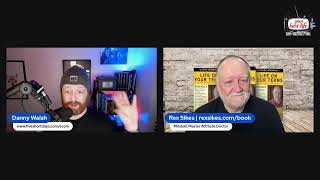
Hello everybody. Hi and welcome to another episode of create your best life with Rex. I am Rex Sykes. I'm your host and my co host Danny Walsh is with us today and we've got an incredible guest. His name is Josiah Begin and you've got to listen to him. He's done so many marvelous things. Let me, let me just tell you a little bit about him and then I'm going to bring him on and Danny for he's going to give us a little bit of a presentation first and then we're going to ask some questions. So if you're watching live, you can ask questions or comment in the chat and if you're watching a replay, well, you can still comment and share. So in just a second. In primary school, Josiah sold snacks to his friends and their families. And in middle school he built and sold websites and tested programs. And in high school he ran a family's friends multimillion dollar amusement park. And after graduating he skipped college and started his first seven figure business at the age of 19. And since then he's helped his clients generate hundreds of millions in sales. He's been the social voice of celebrities and he's written for multi billion dollar companies and top selling magazines and branded and developed multimillion dollar Silicon Valley startups alongside executives who've made massive tech giants like Microsoft, ATD and Nvidia. His client list includes Hollywood directors and celebrities, New York squares, massive visual ad firms, television advertisement agencies, billionaires, entrepreneurs, Fortune 100 corporate executives, angel investors, digital and it goes on and on, gurus and thought leaders and he's a partner in over a dozen successful companies and he mad and he mentors entrepreneurs and business people. So I'm going to without any further ado, we're going to have Danny come up, we're going to bring Josiah up and he's going to talk to us about how he has done what he's done and how you can maybe do the same thing if you apply some of the principles he's going to share. So Danny, can you. You're here. How are you sir? And there's Josiah.
We do, we're doing good. Hey, what an introduction. I'm just gonna get straight into this. I think it's like so many accolades, so much cool stuff and from such an early age and all people are dying to hear about this and congratulations on all of your achievements. I can't wait to hear more.
And before you just manages to get a word in edgeways, we could put him center screen for his presentation.
Too.
So. All right, comments will flash up on the screen or questions. And, Josiah, how are you today? Oh, you're muted.
I'm muted and fabulous. And now not muted. It's a beautiful day in sunny California. It's. It's hot. You know, I moved from LA or from Florida to la, and it went from hot, humid, which I actually love. A lot of people don't love to hot and dry, which I feel like is aging my skin.
But we're.
We're here for it. We make it work. It's nice. It's beautiful. How are you today?
I'm fantastic. How about you, Danny?
Doing good, Doing good. We've got a presentation loaded up, ready to rock, and I can't wait to. To see this. It's going to be amazing. If you're watching live or on the replay, let us know where you are. Let us know in the comments if you can see us, if you can hear us. We're on YouTube, we're on Facebook, we're in groups, we're all over the place. Appreciate everybody who's joining us. This is going to be awesome. I'm happy to bring up the slides if you guys are.
Yeah, absolutely. All right, so this actually is a talk that I have quite often about magic in the margins, and it's kind of a little bit of background of who I am, because every time I hear that bio, I feel like it goes on and on. I'm like, all right, that's a lot. That's enough already. But I find myself adding more and more to it. Just recently, I started working with a local restaurant that is also a nightclub, and we were doing the walkthrough for Katy Perry to perform on Friday. So meeting with all of Katy Perry's teams, awesome. And dealing with all of that has been interesting. So I always feel like there's always something more to add with the bio. And it's just like, at what point do you stop, you know, at what point do you stop just buffing your resume? You know, where. Where does it end? But this. This one is really special to me because it's actually helped quite a few different types of businesses and people. It's helped a ton of entrepreneurs, but it hits. Doesn't really matter where your business is. This hits you in a certain space, and it helps you learn to bring things to a new level, really. So this talk specifically is called Magic in the Margins. And it's the secret to scaling. And the reality of thing of scaling is most people believe that when you scale, it's just more. Just get more clients. And that's how you scale. But there's so much more to scaling than just getting more clients. It's how you do deliverables, it's how you tend to issues. It's how you run your team. But today, specifically, we're going to talk about margins. And so who better to bring up margins in? Actually, that's a slide ahead. So this is me, actually, if you guys wanted to know. This is. This is innocent me before the world got to me. No, I'm just kidding. But this is me back in the day. I was homeschooled. I was very, very nerdy. I put myself in books as much as and often as possible. And it got to the point where I was in, I believe it was third or fourth grade, where my mother was just like, I have no idea what you're reading anymore. Good luck. I'll buy you the books. Just like, do the books. At the end of the year, we'll go through the answer key and kind of grade you. But I just fell very quickly into knowledge and learning about people and learning about things in the world around me and how it worked, and I loved it. And then there's a few slides here that I'm kind of just gonna breeze through because they're a little bit different. I had a strong intuition of people and things around me. And so as a kid, I ended up going to a lot of my brother's games and ended up connecting with a lot of the cheerleaders and having deep conversations with them about their lives and giving insight as like a fifth or sixth grader that they're like, who are you? And how do you know this about my life? Or where is this insight coming from? It was really random to them. So before I knew it, there were like a ton of girls that were. Would be at me at all these games. And I just spent a lot of time in my head and thinking and observing. I love to observe so much. And you can just learn so much in life when you observe. We all feel this need to talk, talk, talk, to perform or to show or to be the one that's being looked at. But you do the most learning, really, when you're observing more than anything, even. Even in teaching and coaching, if you observe what you're saying when you're speaking it, you're like, that's some pretty good insight. And you're, like, giving it to someone else. But it's because of the situation that you're in that you're meant to Give that insight. And then observing that just. It's great. So. I just got to a space where there were a lot of people who would come to me for a lot of different insight. And I ended up opening stores and kiosks when I was 19, and we had stores all across America. We hit seven figures and then we had eight figures in just over three years. And eight was a ton of work. But it was a lot of fun and there was a lot that we really put into it. But you learn about people, you learn about sales, you learn about marketing, you learn about the business development side of things, you learn about politics. Because let me tell you, if you never had something in a mall, negotiating with management and mall is a whole other level of negotiating in general. They just. If you come in there and you just pay what they want you to pay, like you don't have a business, you have to negotiate with them right off the bat. But there was a side of me that I didn't quite understand. I. The intuition of things was like a whole different level. I learned that I could sense I had like an extra sensory thing through. This is really weird. I could taste through my hands and my feet, and I thought everyone could do it. And then I found out it wasn't a normal thing to do. But then that kind of opened up the door for me to realize that I was very sensitive to a lot of different things. Not just being able to taste through my skin, but being aware and being able to observe and being able to connect with people at a deeper level, understand where they're coming from is really the place where you need to be, where you can serve them at a whole other level because you can really understand what they truly need and how to get them to a certain spot. So there came a time where I was. I think it was around 2018. I was a workaholic. It got to the point where I was just like, I feel like there's something. There has to be something beyond what our understanding is of things. And I got into a really deep meditation and I kind of just zoomed out of life and went into what I call the abyss or the void. And it's just everything and all things all in one space. And it was almost like I got an immediate download for everything that I ever had a question for and stepped out of me and I. Which is a whole other conversation we can have another time. That's like four podcasts in itself, four talks in itself. But this is kind of what changed things for me. I was doing A lot of transformations in people. You know, our skincare and our hair care. I would do makeovers for women and I would just bring them from a point where they were feeling really low about themselves, kind of give them a little shrink session while they were sitting in the chair and then also have them leave with like their makeup and their hair done. And they'd have these huge transformations. I started consulting other business owners, right pretty soon after we launched, probably about a year, because I had so many people asking me for help and they were friends of friends. And then someone eventually was like, hey, can I pay you to help me? And I was like, sure, doing it for everyone else for free, so why not? And that's how the consulting started in that space. But it was really the experience of seeing a transformation in people that made me shift gears and what I really wanted to do from a young age. I always wanted to help people. I always want everyone. I talked to so many people and everyone says they want to help people. I just want to let you know that literally everyone says that. If someone doesn't say that, I kind of am scared they might be a psychopath or something. But everyone always says they want to help people. And my next follow up question is great. How do you want to help people? And the space that I really love and adore to help people in is getting themselves in order and getting their businesses in order. Because a business is an extension of who you are really. If you work with a client, if their business is not doing well in profits, but they're doing amazing in revenue, they're usually a generous person that gives a lot more than they should and it reflects that. If their business really unorganized, you're more than likely can go into their home and their home is really unorganized or their mind is really unorganized. So working with business owners is kind of like a third door entry to work with high performing entrepreneurs on themselves, which is why I love it. So that's why I got into that and kind of stuck with that. I started traveling full time and I was petting cows in Colombia and also taking calls for consulting. Like I'd go inside and take consulting for just massive multi million dollar companies. And I learned that I could do from anywhere and I started speaking and it was great. It was really great. So my main obsession with what I'm doing and business and life. One of my favorite people is Da Vinci. And when most people think of Da Vinci, what they think of is going to be drawing or painting or sculpting and what people don't really realize is not only, not only do we have the good old Mona Lisa and leave it over here, but when you really find out who da Vinci was, he was a polymath. He literally did everything. There was not an inch of life that he was interested in that he did not explore. And he didn't only just explore it. He explored it at an insane level. There's things that he learned about blood and the body that physicians didn't learn until over 200 years later. And he was just doing it. He had cadavers on his table just exploring it. If you look at his sculptures, he actually has certain things in, like muscles in his arms where like a pinky is raised. And that muscle is literally only for your pinky. And he's one of the only sculptors that you'll see that will have this like, line right here in their arm because the pinkies raised. But he used art and science and combined it and just created at a level that was insane. And so I basically, I have a mastermind that I run. I have quite a few different products that we programs that we go into, into mindset. But a majority of the stuff that I do has a basis of living like da Vinci and exploring like da Vinci. And that's why I love him so much. So these are the principles for the development of a complete mind. Study the science of art. Study the art of science. Realize that everything connects to everything else. So the deeper I get into business, the deeper I get into working with high level, high profile people. It's all the same thing. It all connects in a way that we don't realize or recognize if we don't step back and really observe it. So today, since we're talking about margins, who better talk about margins than Warren Buffett looking for companies with high profit margins? So Warren always says, like, if you're going to invest, look for a company that has a high profit margin. So in the concept of observing and observing all things within your business, when you start to observe and take notice of what's really happening, you can start making changes. And the biggest thing you want to make changes to right off the bat is going to be margins. So why does Warren Buffett talk about, he doesn't say look for companies that have amazing products. He doesn't say look for companies that have amazing brands. He says look for companies with high profit margins. The reason why is when you have a higher profit margin, you have a lot more space for growth. Without profit margins, you do not have Room for growth. So it doesn't matter how much you sell of something if there's no profit margin in there. I have clients that when I first started working with them, they were outselling all of their competitors, but they had no profit margin. So they were in the red and they had no idea why. They're like, I don't understand what's happening. And I'm like, where are your profits at? They're like, terrible. And I'm like, what are your margins? They're like, oh, so that's what we're going to talk about today. There's three main things that I look at with entrepreneurs when it comes to building margins. The first one being value of self. So if you are a coach or you are an entrepreneur offering a service, what do you value yourself as? Where do you really see yourself when you look at yourself and you look at your competitor? Is there an issue there with like, imposter syndrome? Is there a challenge for you to find your pricing because you feel like what you offer is so intimate to who you are. Such a piece of who you are or what you have is the best to offer. So really figuring out what the value is of yourself and making sure that you look at your value of self from an objective standpoint, not from a first person standpoint where you might be insecure or have different challenges that you're dealing with, really look at it as a third person. And the best way for you to do that is if you are going to take yourself and replace yourself in your business, what would you pay yourself to fulfill that position? And this is an amazing tool to use that most people don't do. Because you have no idea what you would charge to do your job, because your job is to make the business work right? So when you're looking at what you need to make, there's so many books out there that talk about paying yourself first as a business owner. And so many business owners use their business account like it's their personal account. And that is not how you should run your business. You should pay yourself like you are an employee in your business so you understand what the value of that employee is. But your value goes beyond that because you're not only the employee in the business, you're also the creator of the business. So don't get down on yourself for saying, like, I would hire someone and I would pay them this much, but I feel like I'm worth more than that. That's okay. If you're worth more than that, that person wants to work for you, they don't want to start their own business. So there's a reason why there's different roles in life, right? So that's value of self, finding the value of yourself. The second is belief in growth. So growing a business if you've never done it before is really scary. There are a ton of things that you have to look at. There's always fires to be put out. There's always people that need things. Maybe you have a fear of not knowing where the next income is going to come from, where your leads are going to come from. If you're going to be able to deliver the thing that you just sold last Saturday, that's like way beyond anything you've ever done, right? There's a lot of things in fear of the unknown, but if you believe in it, then you're going to be thinking about how you're going to deliver things and how to get it done versus if you can get it done. So shifting your belief in not only yourself, but also the ability of the growth of your business, once again, if you put your business in a third perspective. The secret to all of this really is looking at things objectively, which comes back to observing in the beginning that I was talking about. When we think about things, majority of times we think about them through our emotions, not from an objective standpoint. You thinking objectively from a third person does not mean you're a cold person. It means that your business is going to be able to run whether you're having a good day or a bad day, if you want to talk to people that day or you don't want to talk to people that day. But your strategy and your plan needs to be objective. It needs to not have your emotions attached to it and then use your emotions to sell and to attract clients, but not to structure your business, right? So in belief and growth, understand what your cost is to acquire a new client. So if you're getting a new client, where are they coming from? Are you only networking? Are you using different sources of acquisition? Are you using meta? Are you bringing people in through speaking opportunities? Are you bringing people in through your social platform? Do you have a brand? Are you collabing with people? Where are your leads coming through? How much does it cost to acquire a lead? It's very challenging for you to understand how much it costs for you to deliver a product if you don't understand how much it costs for you to acquire a customer in the first place. Because your cost of acquisition has to be worked into the cost of your product. Because if that's not worked into your margins, it's a massive variable that can throw off your whole entire numbers. And numbers are really what make a business. Okay? So you have to know your cost per acquisition. And the last one is faith in others. You have to have faith in your team. If you want to grow and you don't want to have a team, you're going to have to do some magic with AI or something. Because let me tell you, as a perfectionist, do it all. Back in the day, I wanted to do all the things by myself, and it capped me from the growth that I really could have had. The growth that I had was quick and we just did it and we got things done. But had I trusted more people with more in the beginning, I probably would have grown faster than what I did. So understanding that you can invest in a team, investing in a good team can be scary too, because you're like, okay, I can be inexpensive and hire the people that are inexperienced, or I can invest in another space where I'm going to get great people that are going to give great results. So it's really understanding who to put where, which person you need to invest into first. But understand that you need to understand what you can and cannot do, what you should and shouldn't do, and how to delegate. And that's really how you're going to scale properly. So I'm going to get into Rex's favorite part of this presentation, the burger, fries and drinks. And we're going to kind of just run through it. This is a model that I use people, I help people use to build out what their product ladder looks like. Right? So there's three different types of products you can have. There's a burger, there's a fry, and there's a drink. And people are always like, okay, they get hungry a little bit when they see this presentation, but also they're like, where are you going with this? So a burger is going to be the thing that attracts people to your business. So if you think about a burger, a lot of times it will be. Sometimes it will be a loss leader where the burgers are really inexpensive, but it gets people in the door and they're going to buy other things while they're there. Right? But the burger is really the thing that brings you to that company. So if you think of McDonald's, most people go to McDonald's to have a meal or to have a burger. And McDonald's is just, it's McDonald's. So that's why I Use it as reference. But you go to McDonald's and you normally think of whatever sandwich you're going to have and that's the main thing you're drawn to. It's like the meatiest part of what it is, right? You don't Normally go to McDonald's to get like a soda unless it's like a dollar soda or something. I guess some people do, but for the most part you're going there to eat a meal and the burger has. You can always find out what is a burger in your business? Sometimes people have all three. Sometimes people only have burgers, sometimes people only have drinks. You'll be able to identify what you have after this. But a burger is going to be something that has a higher price point. It caps early, meaning that the amount of people that you can deliver, the amount of work you can do, the amount of services or product of this type that you can provide is, has a much lower cap, meaning you can only serve so many people. It's also harder to replace the people that are working in that space. So if you think about it, if you're in a McDonald's, the burger is the most complicated thing for the person behind the stand to make. They have to make sure that the meat is cooked properly all the way through so no one dies of salmonella. They have to make sure that the bread is toasted properly. They ought to make sure there's two pickles on there. I don't know if anyone's ever seen the Founder. Great film. You should go watch it if you haven't. It's about the story of Ray Kroc and the McDonald's brothers. But they have to put all the different pieces of that and then they have to put it all together and it takes the most amount of time to make because you got to cook a burger, you got to assemble it, you have to make sure that it's wrapped properly and then you have to have all the people in place that are trained on those things, right? So it's a lot harder to replace someone to cook meat properly than to someone to fill up a drink cup, right? So when you're looking at the burgers in your business, this product is going to be more challenging. This could be your one on one. Maybe you do coaching one on one. It's a lot harder for you to replace yourself and your knowledge one on one as a coach than it is for someone to answer email. Right. So your burger is the biggest one. Okay. Then the next one. Oh, there's a burger picture the next one that we have is fries. So fries is in between a burger and a drink, right? Fries. It's still kind of complicated. You can't. You have to have the fries in there for a certain period of time. You can't overcook them. You can't undercook them. They have to be golden and crispy. Right. I mean, if you've had McDonald's fries, I could go on a whole thing about that because I'm not gonna go on that. This one, there's. There's a whole thing about where they get their potatoes from and how long they have to store them before they could even go in. And. And also fries from McDonald's have beef flavoring. I didn't know if you. I don't know if you guys knew that, but that's part of the, the addictive nature in it. But the fries after, they're not warm anymore. They are a completely different experience. Right. So when you are cooking fries, you have to get the proportions right. You have to get. You have to chop them up too. I don't know, they might. They probably come frozen. But normally at a restaurant you have to chop fries and then you put them in. So there's a little bit more of a process. Right? Not as much as a burger because you're not having to deal with salmonella and meat cooking and all of that, or the cheese or the. All the specialties. But you still have to put them in, make sure they're not overcooked. So a great example of this would be like group coaching. You can have a bunch of people within a group and the price point is more mid, and it doesn't cap as much because you can make a lot more fries than you can burgers, because you just throw them all in there and then you just kind of wiggle them out. See how many fries you can fit in the thing. Sometimes you have a heavy pour, sometimes you don't. Right. And those people are not as complicated as a burger to replace, but they are more complicated than someone who's going to fill up a cup. Okay, so there's your fries, and then the last one that we have is your drink. So a drink is the least complicated, it's the most replicable. It has the easiest deliverable possible. So these would be things that you've pre recorded that people can just click and buy. And it's all automated. It's very hard to even cap this because I'm sure a lot of us has seen ads for. There's only seven More spots for this downloadable program which I find so entertaining because it's literally just a program that you could copy infinitely. So I don't know how there's only seven more spaces. But it makes people buy things because they see that there's a need to take action. But having a digital product that's pre recorded is amazing because you can have an infinite amount of it and it never caps really. And you don't really have. Once you build it and you put it there, there's very minimal oversight. Maybe someone has a tech issue, you have to fix something like that. But more than not, it's very simple. So you have your burger, which is your one on one program, you have your fries, which is more of a group program. And then you have your digital product which is just like right off the bat something that you can just sell over and over again. And you could sell it to thousands of people. And doesn't take any extra time really for you in your workload during the week. Very little. So that being said, I want to go into which one of these is the most valuable product because most people don't understand. Most people see a burger and they're like, that's the thing that's going to make the most. So if we take a burger and we, we are just going to take the average employee that's working eight hour days and we're going to break everything down into how many they could make, how much it costs, how much it costs for us to make it and pay them, and then how much we're making out of it, right? So for a burger it takes about 10 minutes to make, let's say I'm just keeping it kind of basic numbers to keep it simple. That person is probably going to get paid the most. So we put $20 an hour and they can work eight hours a day, right? So six burgers in eight hours is 48 hours at $8 a burger, $384. Eight hours of work for $20 an hour at 160 the food cost, let's say the food cost is at 40%. So the total profit that we are making on the bottom here is 384. We're making 384 in gross minus the 154 and 160. So 154 is the food cost. I don't think it's on there for some reason. I think it's cut off. But 154 is the food cost. So once we take that away, we've made $70 in profit, not a ton of profit. But that's our loss leader. Right? So that's going to be the thing that brings us into the business that gets people interested. So then we have the fries. Fries about five minutes to make. We can make 12 an hour. This employee is going to make less. So like 15 an hour. And like I said, these are all just kind of generic. Just to prove a point. The max in eight hours is that you can make 12 fries in eight hours. So you make 96 fries during the day at $4 is $384 for eight hours of work, 15 an hour. We are spending 120 on them. And the food cost is 77. So if we look at this, it's three hundred and eighty four. So we have the same gross, but because the cost of food and the cost of labor is down, we're making more profit. Right. Same amount of time, same amount of people, different product. So with a drink, it takes about 30 seconds to fill a drink. So you can make 120 drinks an hour. The employee is only $10 an hour. With eight hours a day, that's 1,280 drinks. A $2 drink. So if we look at this, the total profit would be 2000 or gross would be $2560. The least amount of labor and the least amount of cost. So the number's not on there. I'm gonna do really quick. 24, 80, 20. You're making like $2200. So the. I don't know why it's not there. Oh, it's on the bottom 23.52. I don't know why it wrapped back around. So look at this here, 187 here, $2,352. So really, when we're looking at this, we're thinking this thing is the cheapest thing that we're selling. This thing is like no one. It's so overlooked. No one thinks about this because it's on the lowest of our ladder. But if you can make your drinks be your bestseller, you will make the most amount of profit because it's the least amount of time from you, and it's the least amount of knowledge that's really needed in order to deliver the product. So having one of each is great. You can have more of one than the other. But understanding where your business is and what your business delivers will give you a better idea of the ability for it to grow. So that way, if you're looking at burgers and you just sell burgers, you're missing out so much money if you don't sell fries and a drink. There are places that only sell drinks. Look at Starbucks. The margins are insane. They. They sell food too, but they sell drinks more than anything. I live in LA. It cost me $10 for a latte downstairs. Outside of. It's really crazy. It really is. But the margins in the drinks, and that is what I have for you today.
Well, that is just awesome. I mean, I love that because unless you're like a da Vinci thinker, you know, there aren't a lot of people who probably think this way about their business, about their products and about, about the, I mean, some people get the idea that there's a cost for doing business and profit margins and all this kind of stuff, but I, I just absolutely love the way that you have laid it out in such a, an easy to grasp manner. So my question for you, and then let Danny ask a question, you know, is when people think about their business, can you give an example of what a drink, a fry and a Coke would be in, in different forms of business? Because I think some people aren't sure what that means to them.
Yeah, absolutely. So if you have a SaaS platform, for example, this, the. So SaaS is subscription as a service, so services subscription one or the other. But it's basically like if you have a platform where people are paying for memberships to use it, there's different levels of that. So the drink is going to be just the initial level and then sometimes they'll have enterprise clients where they're interacting and engaging with the client. That's definitely a burger because then you have to have team members on it. Whereas the first one you can just kind of surface a ton of people and not have to worry about it as much. A great example is when PayPal first came out, they were very much a drink because they gave no attention to clients. There's actually a story about how you could answer any one of the ringing phones and there'd be an angry customer on the other end screaming about customer service or something not working. But because at that time it was the main way to use purchasing online without having to do bank or transfers or anything like that. Everyone needed it, so it was needed. It was something that they didn't have to put a ton of energy into. And obviously they've developed a lot more and brought out a lot more things. But if you look at the amount of work you have to put into something, you can decide whether it's a drink or a fry or A burger. And if, if your burgers are not profitable and you're spending all your time on your burgers, maybe you need to create a few drinks in your business. But yeah, sauce is a good one. Another example would be if you have like a dance studio. I'm just picking random things. Now, obviously a class would be a fry because you can fit a certain amount of people in it. A burger would be one on one private. And a drink would be like an online subscription where you create dance classes. And then they just sign up for it and then it's all recorded. And maybe you add more stuff every week maybe. And so it's a little bit of upkeep and you just wanted to add to it, but you don't really have to interact with those people. They just pay for it.
I love it. I love it. Danny, up there, what say you?
Yeah, this is all sort of up, up the street as, as they say, great, a great work, great presentation. It's great to break that down for businesses to kind of understand and, and look at that business. Because sometimes the, like, the drink machines broke, right? So there's times in the business where you, you can't, you can't deliver everything. But you talked about the cost of acquisition, and this is one thing where you say, hey, what's your, what's your cost of acquisition? And you get that kind of like that blanket stare at you. But you've been there, right? You got that. Like, what do you even mean once you fix that part? Do you get into that? Like, what is the lifetime value of the customer? Because I guess that's something that maybe you didn't touch on as much in there, but that's something that I think is that more crucial? Is that more important? So you've acquired your customer. It's like, how long do you keep them for? Because, you know, go back to McDonald's, these guys are giving Happy meals out to the kids to secure that, you know, 50 year, 60 year relationship. Talk to us a little bit about that lifetime value of a customer and like, how's that important?
Yeah, that's great. That's great, actually. So when people come in as far as margins from the get go, you have to have those there before you even look at lifetime value. But it's extremely important to look at that. Which, Talking about the PayPal thing, obviously people with very poor customer service may not want to work with you for forever unless you're the only choice on the market, which won't last for very long, right? So the first Thing you want to do is make sure the margins make sense for that first sale. But after you get that first sale, then you're going to look at how do I keep my customers coming back. Some places just literally put addictive ingredients in their food and then you go back to them and that works for them.
Right.
For some of us, we don't necessarily have that. So what you're going to want to do is if I deliver a product, is that product complete in itself? Because usually when you deliver a product, it brings up more challenges afterwards. It solves one problem and then more problems arise. In life, we grow. If we don't grow, we might as well be dying. It feels like we're dying, we're depressed, we're chilling, right? We're hiding somewhere. As you up level in business, your challenges get bigger, but you grow. So they don't really feel like they're way bigger. It just feels like you'll look back and you'll be like, oh yeah, I was doing that way back then and I'm doing this now. And you don't notice it because you're growing with the challenge. Right? So the same thing with the customer. A customer has to grow with you. So if you don't have anywhere for them to grow and you just have a one off product, then put some addictive ingredients in that stuff because otherwise you're not gonna have something for them to come back to. No, but you want to grow with them, so you want to give them an opportunity to take the next step. How and that really goes into brand development then is how do you create and adapt that brand to bring more of what your clientele wants or your customer wants? So once you have an understanding around what your margins are, then you can go in and say, okay, am I going to resell this product or am I going to sell? Am I going to upsell another product or am I, am I going to go, am I going to repeat? Am I going to go up or am I going to go to the side? So if I'm repeating it's the same product. If I go up, then I'm upselling to like the next thing. Maybe I'm bringing them into a new experience or a higher price point product. If I'm going to the side, then I'm delivering something alongside of what they already have experience that might add to the original thing or it might not. It might just be something else that they need. So a great example would be, let's say that you own a marketing agency and your Marketing agency specializes in ads, so you have an ad agency. So in an ad agency you're going to want to have a repeat. So you're going to want to have a retainer. Your upsell is maybe you manage more ads or more ad spend. So then you're going to upsell aside would be maybe you have someone that you partner with or maybe you buy another business or maybe you start another business. Let me tell you, running a business and starting another business, a lot of work. It's a lot easier to just buy a business or partner with someone who already has a business. But then you have this other business here that complements the ads. So maybe the business over here has landing pages or something marketing that adds to the ads. Right. Maybe it has SEO where the search engine optimization is in there. Maybe it has PR where you're helping them with press releases, but deciding where you want to go from that first product after you find out the margins and then make sure that the next product still has good margins because you don't want to upsell something that has bad margins because then you're doing extra work where you could have just resold this first thing again and done less work.
Well, I, I love it. I, you know, I, I think this is so valuable. By the way, if people are watching live, they can ask questions or they can have comments in the chat. While, while we can with. Since we stream to multiple places, we don't always see everybody who's leaving comments or chatting, but as well as in the replay, people can always leave comments and let us know your takeaways and, and how you're applying or what you're learning. So this is a very noisy world, some would say, and there's a lot of competition. Or some would say there's competition. How does someone. And you know, we only have maybe about 15 minutes left, so I want to also be able to give you time to talk about what you're doing and other things. But, but how do, how do people. How do people. Is there an effective or something in kind of a nutshell for branding or making yourself get more of a market share, reduce the noise and have a larger, more visible presence?
Yes. A lot of people tell other people to do what everyone else is doing, which I think is probably the worst advice you could give someone. If you're just starting something and you just need a bunch of sales and you need fast income, sure. Do what other people are doing because they're getting sales from it. If you're wanting to create a lasting brand And a business that stands out. Do what works for you and what works for your customers. So for example, I have a very nonchalant, easygoing energy and everyone always points it out. They're always like, I don't know what you're doing over there in la, but you're just always kind of extra chill. But that's, that's my energy. It doesn't matter if I'm working with. For example, I was telling the guys before we came on that I was working on something this week with Katy Perry's team and it was crazy having to go through and do like a run through for three. And when you're yourself around everyone, people see you as a person rather than a performer. And I feel like a lot of times when people are building a brand, they feel like they need to become this performer. And we're so kind of brainwashed by the social media to look perfect all the time and that just doesn't work anymore. So being vulnerable and being honest and being true to which, keep in mind, your brand doesn't have to be your personality, but it does have to represent its own personality if it's not yours. Right. So I have a client that I work with and her beliefs are a complete opposite of mine, but I know how to get into her personality and I know how to work her brand. So understanding how a brand thinks, how a brand speaks and acts and creating its own living thing is the best way for you to stand out. A great example, which I don't know who's all watching this, so I don't know what all we could share, but Duolingo is an amazing example of this. So if you look at Duolingo's X account or Twitter account was once called Twitter before Elon. It's ridiculous. Like the little character they have flirts with celebrities. Like, well, they'll repost things about celebrities. They'll flirt with celebrities. Even if you have Duolingo on your phone, they'll call you out and tell you that you're slacking for not doing things. They're like your brain is rotting and they're really bold with what they say. It's very much like they're picking on you in a way that they know they're holding you accountable and you're going to laugh about it. And it's a very specific brand. And if they were just to do what everyone else was doing with language programs, they wouldn't stand out. Their brand has nothing to do with language. If you look at their brand, it's Almost like you'd think they were like a gossip column or something. You'd think that they were pop, something to do with pop culture. But they've learned that their audience is in that range where a lot of these people are involving themselves with pop culture and they're involved, that sort of thing. And they're people who are addicted to their phone. So they need to do something interesting enough to get them off of everything else they're doing on their phone to get to do what they want to do on their phone, which is. If you've ever built an app, is very much a challenge. But that is a great example. If go do research on duolingo and what their. Their socials are. They're so ridiculous. They have. They did a whole entire fake Duolingo on Ice where they're all singing. It's like a musical and it's not even a real thing. They're just like, it's funny. It's a parody. You should go watch it. But that's. That's a great question, because when it comes to building a brand, you just have to decide what the personality is and then just commit.
Cool. Danny.
It's. It's so good. And I think we are picking up Comments on. On YouTube and in the various groups, lots of people just commenting things like, brilliant. So clearly there's takeaways coming from this, which is amazing. And I guess when it comes to that sort of brand and sort of finding their voice, right, we often talk about brand voice. People are like, oh, and like you say, you can default into becoming something that you're not. And I think there's a big thing about authenticity, right? About people say, oh, you've just got to be authentic and you. And you'll be fine. Dig a little bit more into that. How that actually works in practice, especially if you're a new. Like, hey, man, we just started and I need to be authentic now. What?
Yeah. So people who are starting a newer brand are afraid to be controversial because they are. They want to represent who they are and they want to help everyone. Everyone just help everyone do everything. And at that point, you're going to attract no one. The benefit of being controversial, which.
I.
Did crisis PR for a while, so some people would be cringing when I'm saying this, but you can be controversial to a point where you're not damaging a brand. The people that you wouldn't want to work with in the first place aren't coming to you, and the people that you want to work with are supporting You. So by being controversial or standing on certain ideals or concepts, like I don't think that super conservative families would want their kids to be on Duolingo's X. Like they're not going to want that, but they're attracting a very specific market, right? So don't be afraid to be controversial as long as there's an intention behind it. If you're just being controversial, be controversial. It's kind of like anything. You can do things just to do them. If you're doing, for example, viral post right now, if you mix some of your reels with what you're doing with some of the things that are viral. One trending thing is my Gen Z assistant edited my video and it's just a bunch of people with all the outtakes put together and none of the actual information from the video. So it's just people that are like, well, but. And it's trending and you can use that to pull attention and then you can put that right next to a video that has to do with what you're really doing. So don't be afraid to commit to something because you can always shift it if you need to. If something doesn't feel right, shift it. It's okay if you don't take action because you're afraid to commit and you just stay general, you're failing. So it's better to choose who you want to work with and then choose how they communicate. Choose how you want to communicate with them and how they should desire to be communicated to. There's a line of which I've still never been to these restaurants. There's a few restaurants where you go there and they just treat you terribly. Like they just cuss you out. They'll like, they give you. Yeah, yeah, yeah. And it's because people want to have a ridiculous experience. Just like how we have comedians who roast people. So just figure out what you'd like to invest your time in because it's going to be you investing your time in the brand, right? So figure out the people you want to work with because those are the people you're going to be around servicing. And then figure out how you want to communicate with them. And that's your brand voice. It's really simple. If I'm at. So we have a lot of house parties here. We have people who have houses that are bigger than like schools and it's ridiculous. And there's certain people at these parties that are different than people at like a networking event, for example. So at a party, I'm Going to go around and I'm going to interact with people as like a human to a human at a networking event. Everyone's trying to sell something. So I'm going to stand out by wanting to help people more than wanting to sell them or just wanting to build a connection. Because networking is like, it's interesting, but it's your audience. Like, who is your audience and where are they and how do you want to communicate to them? Because some of those same people that are at the networking events will go to the house parties and they'll be acting completely differently. So that's where brand voice comes in.
That's great. That's wonderful. So we have a few minutes left, so I'd like to just open it up for you to share some of what you're doing or what you're enjoying to do right now because you do so many different things. You do Katy Perry and.
Yeah, this is. It's hilarious because the host of the show is Carmen Electra, which I haven't even heard her name for so long, but I was like, okay, here we go. I also have a client that does film production, so I've been working on the universe a lot for the last year, and we just moved over into Paramount as well. And it's been really cool to be in a space where Lucille Ball had her whole entire portion of her house rebuilt there so she could take interviews on the lot so she didn't have to go back and forth in between home. So, yeah, there's some. Some films that are being produced, but a majority of the spaces where I love to stay is really just working with either people who are already high achievers or people who are really desiring to be high achievers and wanting to. To get more out of life, whether it be personal and business. And the more you are clear on who you are and what you want to do, the more those people kind of just run to you. And that goes back to brand voice. You're. You're always your brand voice all the time. But, yeah, so I'm working on some films. I'm gonna be going to Italy, which will be fun. I may possibly be acting in a couple of them because I used to act before I started business. I love acting so much. It's performing. I'm a performer. I love to perform. So, yeah, films and business. There's a rehab that we're doing for a massive restaurant over here. That will be fun. And. Yeah, yeah, yeah, yeah. Scaling a sales business, that's been fun. Lots of salespeople. It's like going back to my first business all over again.
Wow. Well, I just. I want to thank you. You know what? I'd love to have you come back multiple times, if you're willing, because there's a lot of things that we could discuss at different times. When do you go to Italy? Are you going to be around soon or going later?
That's going to be in November. So we got some time.
We have some time. So maybe in September after, after the Labor Day weekend and stuff, we could have you back if that works for you.
Yeah, sounds great. My birthday is in a week, so I'll be a year older by then.
Oh, well, happy birthday. Happy birthday in a week. That would be fantastic. Pardon me?
I said, well, thanks for having me. It was great. I feel like I just talked the whole time.
Oh, this is wonderful. I'm thrilled that you were able to be here today and we shared what you shared and I love listening to you and, and we'll sit down somewhere in the neighborhood and we'll talk acting because I've been doing. I've been a Screen Actors Guild member since I was 18 years old and I love it. And it's one of those. One of those beautiful, you know, now Hollywood. So we got a lot in common.
But yeah, yeah, absolutely. There's a lot of stuff that's in development being pitched too. So that would be fun conversation.
Yeah, it'd be great. Awesome. And. And for other people who don't know, you know, like, one of my last shows was Doug Douglas, a Stewart. He wrote Officer and a Gentleman, who's been a friend of mine since 1970, 80, something like that, Director Peter Foley, producer Suzanne Lyons and others. So, I mean, we're all in good company. We've got producers and thought leaders and people in business. And so you have just helped us up our game and given us more to aim high on. And I appreciate that, Josiah. I see Mr. Eric, Mr. Awesome Swanson in the house. So very cool. Josiah, thank you so much for being here. We'll be in touch in just a few minutes, but thank you so much, Danny.
Been such a pleasure. Great to have an interesting conversation. Awesome how many folks that you're actually able to help. And yeah, looking forward to seeing the. The new projects. Looking forward to seeing you back on the show. Enjoy Italy. Enjoy the birthday. Thank you so much.
Thank you all for having me. It was great meeting you.
Thank you, but.
Awesome. Been awesome. Hey, Rex.
Well, Danny, I mean, that's another. Another fascinating conversation. I. I feel so blessed that we've got so many incredible guests, both like Josiah, who's here today, and others in the past and people coming up and Josiah's coming back and you, you know, and so it's. And. And people who are watching and listening are. Are always a treat. And if you have watched and you want to share out the show, there's a replay. You use the very same link or you can go to YouTube. Create your best life. Yeah, Rex, the YouTube channel. You can share the link and share these shows for your friends and your family and. And people who you want to deliver goodness to. And we'd appreciate that because you help us reach. Because we can't reach everyone without you. We're glad we're connected.
I think what we find as well is towards the end of the show, folks start to sort of pile in as they get notified and things, and then the replay kind of gets a lot more. So if you're on the replay and you've not been able to ask a question live, still drop that question. We'll still do our best to maybe include that in the next show or certainly get that to the speakers. If you go to www.rexychs tv, you'll see all of the. The previous shows. And Rex, you just mentioned a few of the amazing folks who we've had the pleasure of speaking to over the last weeks and months. Mr. Awesome in the chat, as always, and it's great to have your support, but also featuring on one of those interviews. So good, so cool. So, Rex, what's coming up next time and what's coming up in your world? Because I know you're working on lots of exciting stuff and we don't normally have this chat. Give us the. Give us the lowdown.
Well, we've got an exciting project coming up that I think people are gonna. Is gonna knock their socks off. We've got some incredible minds working together as a team to help people personally and professionally move to the next level. And we've coordinated some major moving parts in order to be able to do that. And I'm thrilled. I can't wait until we can make that available. So that's exciting. And you're a major piece of that, Danny.
Yeah, Coming soon. We've got some, like you said, great minds. We'll hopefully release this towards the middle of September. I would imagine that everything's kind of coming into place. But before that, Rex, you'll be working on the. On the book study. You've got the. The thing, the outlets in the devil.
Think and grow Rich, the book study is amazing. We're, we're live right now and we're doing a few more Q A sessions and, and people are getting extreme value and, and some people are doing videos and sharing it and, and talking about what they're getting from it. But it's, it's a way to go deep into the concepts, not just the work of Napoleon Hill and Notwitting the Devil, but the, but the concepts surrounding how you study, how you apply this, how you are able to compare his different works and then put that all together in a way that makes sense for you to, to up level your own skills and your own business and your own life, if that's what you choose to do. So I'm thrilled. And, and soon we're going to be offering that as kind of like, as a, as a burger, you know, where people can come and get the burger. Right now it's insanely affordable because you're part of the live group, you know, you're part of the, what we normally would call a VIP session. So if people want to come in, it's $197 and go to Rex if you want to put the, the, if you have it. There you go. Outwitting the devil. They come on in, you got access to the videos that have gone before and you can participate in the Q&As that we have. We're putting together all the PDFs and the book studies and the sessions and everything is all being, it's all being made for you. But the price is going to be going up. So as soon as we finish these live Q A sessions, which will be about the middle of September, then the price will go up. But for now, people get in that at a, at a low, low price.
So yeah, so links on the screen and yeah, we are doing the PDFs for that, which is kind of a cool exercise because I think in total we're going to end up with like 10 detailed pieces of information that all go together into this sort of like it's a, it's a work of art, it's a book in itself and it includes the Q&As, it includes all these different bits and pieces we did in the first sessions, really digging deep into Outwitts in the Devil. And as that concludes, then we're going to move into this next piece that we've just mentioned. Super excited about. But there's lots going on and the links are actually around the video. So if you look in there, there's a bunch of Links in, in, in the descriptions. We will be back next week. Look out for information of, of what we've got coming up because I know we've got a good one. Rex, right?
Yeah. We got Scott Shilling coming up. I, I was like trying to wreck my brain. Like who do we have but Scott Shilling? He's known as the authentic connector. He's going to talk about how you can, how you can maximize your connections and add value to other people so that you add value to yourself because what you put out comes back to you. So if you put out the best, the best comes back. And got his. A speaker shared the platform decisions with lots and lots and lots of big name people. So he's going to be here and sharing that with us and, and then just keep. You know what, just stay tuned, you know, because we have surprise guests. We have a community that you can join too if you'd like to join the community. That's a possibility. We got guests and speakers and other things that are going on and other book studies and other programs. So you know, the way I think about it is we're family. You know Danny, we got great family members. We got an extended family, we got a worldwide family. And, and, and we all come together. We have this marvelous time together and increase the value, you know that each person you know can, can have and participate in. I just love what we're doing and the show is great. The guests have been great. So share it out. Go check out the other shows. Oh and by the way, in that outwitting the books did we tell them that there's some bonus material and think and grow rich that they, that they're going to really want to have.
Yeah, you need to get into all that. Look around the video. There's a big bunch of links. Give it a share www.rexychs tv as well. For all of those replays. That's a like a mindset session in itself. So many amazing people. We have gone over time a little bit. I know we've, we've got folks waiting in the green room. So gonna go say goodbye. But Rex, pleasure as always. We will be back said time next week. I will be stateside next week. Rexel will be kind of on that time zone again. So super excited. Big shout to everybody in the chat. But from I guess from both of us.
Celebrate everything everybody.
Let's go.
Bye bye.