Create your best life with Rex
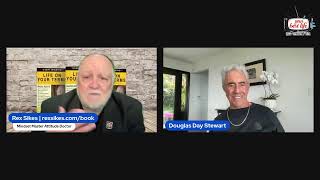
Douglas Day Stewart, who wrote An Officer and a Gentleman, talks about his shift from screenwriting to novels and his new book An Officer and a Gentleman's Daughter, coming June 25. He discusses the rewriting process, why he adapted his own work, and his next project, Wings of Giants.
Questions this video answers
An Officer and a Gentleman's Daughter
June 25 (year referenced in the interview: 2024)
84 years old
An Officer and a Gentleman
The Boy in the Plastic Bubble; The Scarlet Letter; Thief of Hearts; Listen to Me
Chapters
Foreign. Hi there and welcome to create your best life with Rex. It's another Wednesday and I've got a fabulous guest in store for you. He's somebody I've known for, jeez, maybe 50 years or more. And he's one of the good guys. But it's not only one of the good guys. He's a talented good guy. His name is Douglas Day Stewart and he is best known for his original screenplay of An Officer and a Gentleman, which is based on his own experiences as a naval officer candidate undergoing rigorous training while dating a local factory girl. Now, the film earned Doug an Academy Award and a Writer's Guild nomination for best original screenplay. And what you may not know, and you should, is that officer is one of the top 10 highest grossing love stories in cinema history. Doug's other writing credits include the Emmy nominated the Boy in the Plastic Bubble, which starred John Travolta and launched his career, the Scarlet Letter, starring Demi Moore, a thriller thief of Hearts and the controversial 1989 film Listen to Me. He also directed those last two features. Now his Officer and a Gentleman, Doug converted to a musical and is currently in its second tour of the UK And a version was performed in Japan by the. By the famous, and I'm not going to say this right, Takaratsuka all female troupe. Now, other versions have been performed in Australia and across the USA. And on June 25th, that's June 25th of this year, Doug's first novel will be in bookstores. It's An Officer and a Gentleman's Daughter. And it's a father and daughter love story that takes place 35 years after the first story. Now he's also hard at work on his second novel, a love story that Blakes paste. I'm sorry, that takes place during the Tiananmen Square protest. I've known Doug a long time and you may be familiar with his work through film or otherwise, but it's time for you to meet my friend Douglas Day Stewart. And here he is, Almost serious. And here he is.
Hi, Rex.
Hi, Doug. How are you?
I'm just great. Nice to be with you.
It is nice to be with you. You know, the audience should know that we did a two or three or four series on screenwriting back and they can find it on Spotify. It's at Rex Sykes Movie Beat. And you were on, I think three times. We had your son Sean on with you one, at least one time during that time, back about 10 or 15.
Years ago, if I remember.
Indeed. Indeed. Well, I gotta say I am thrilled to to be with you. I think I, we met in acting class back with lillian chauvin in 1980. 81. Somewhere in there, I think.
Yep, I remember that very well.
Doug was, Doug was writing and do. And, and you had done, I think Blue Lagoon at that time and, and Boy in the Plastic Bubble had been out and I think Officer and Gentleman was coming up shortly or had come up at that time. And, and, and you were with Lillian and, and talking directing and, and making movies. And I was very fortunate to get to know you because you're just one of the good guys and you, and you, you took an interest in some of us in the acting class and, and allowed us to kind of collaborate with you a little bit, you know, for things. And, and I just. Very fond memories of you all this time. So.
And I have you.
Thank you. So, so let me kind of dive in and say first because before we get to the novel, which is really exciting and it's coming out on the 25th of June and we're going to have a link up for that in a little bit. But the process of having a career as a writer or a director in Hollywood, or for that matter somebody who wants to act or be a cinematographer, what is the kind of things that somebody needs to know about that industry so that they can more successfully navigate a career?
Well, you've got to be pretty damn tough. That's one thing. As a writer, you'll have to protect your material any way you can. And I've learned to be kind of an expert at protecting my material. You have to be on the set, you have to ingratiate yourself through the process. You have to seem unchallenging to the director and be a secret weapon for him or her that they can take credit for anything they want to. But they should listen to you in the process because you can't expect to have your work survive the process without being there the whole way. So be prepared to jump in and be very hands on if you're a writer or if you're involved in the film industry in any capacity. It's a very challenging business. People can be very tough. There's a lot of greed, there's a lot of theft. So be prepared to be a tough guy.
Well put. So one on top of that, you just need to persist and keep at it. Do you recommend, like, I know people who, for example, they've written a screenplay and then they want to shop it, they want to make it and they get a lot of rejection and people say no and then they may often, if they're interested at all, they may say, do you have something else? And some people say no, and others say, well, yeah, do you have some advice for that writer who's trying to make an inroad that way?
Well, I don't think you can give up ever on your work. It took me forever to sell some of these projects and to convince people to make them into film. You know, in retrospect, people think an Officers and Gentlemen giant hit. Must have been a studio planned from the beginning to be this big hit. Truth was, nobody wanted it. Nobody wanted to take on the, the challenge of doing a military story. The military was a forbidden subject after Vietnam. And it took a synchronicity of events to get this movie made. I can tell you that it was touch and go. I was shooting the Blue Lagoon in Fiji, and my manager and agent from William Moore's Marty Khan and I were talking on a little crank phone that they had, was the only form of communication we had on Levu Island. And he said to me, I don't know how to get this made unless we just sell it away from Don Simpson to force him to make the movie. And so we sold this to Lorimar, and then Don suddenly realized what he was going to lose out on, and then he came aboard. You know, it's just the most difficult thing in the world to get a movie made, and you can't count on anything until it's happened. You cannot cash that check until it's arrived.
That is stellar advice, that's for sure. You know, the. I mean, it is, it is an interesting thing because it's not just that people face rejection. You know, my wife used to say, how come you're not excited by something that's happening? And I go, well, when it happens, I'll be fully excited, but in the meantime, I just want to wait and see, you know, and she just didn't get it. And I couldn't explain it as well as you just did, so. But I mean, it is true. It's a, it's a. It's a difficult business to navigate and negotiate, and it has lots and lots of moving parts. How do you keep your head on straight?
Well, you know, it helps to have a, a good life. And I have a really great life. I have. I'm married for now, 20. Well, I've been with my wife for 22 years. We've been married for 15 of those years. And it's just a solid, rock solid home life. We're very, very centered. We don't allow any kind of craziness to enter into our thinking. We just navigate our waters very, very carefully and keep each other's feet on the ground. And I think that's what you have to do in the film business. It's a very gravity defying world and if you're not careful, you can get to it and you can buy into egotistical journeys and senses of being an auteur or you know, you could just overinflate yourself so quickly. You just have to kind of remember that all you are is a craftsman. You're, you're, you're an artist just doing your best and, and your job is simply to be honest with your own heart. Wow.
I love that. And that's true whether you're in front of the camera or behind the camera. I mean, you know, people think I oftentimes say, you know, celebrities are only celebrities because they can put know seats in theater seats or butts in theater seats. And so they're paid big bucks and they get all this attention, but really they're just soap sales people who happen to be, you know, also good at pretending, you know, and, but I mean when it, when it all boils down to it, you know, I mean as an actor, I mean if celebrity people get paid money because of, of what they can fulfill, not so much because of their talent, I mean, you know. Right. I mean the business side of it.
Well, I, I think you can't, you can't separate talent from that equation right there, there is something unique to talent. It usually means to me a true voice. You're not trying to pretend that you know something that you don't know. You, you only go into, into waters that you know you how to swim in. And so that, that's kind of critical in your, in your approach not to get, not to get crazy.
Well, and that's sage advice. So we're here because you have a novel coming out on, based on Officer, New Gentleman and, and that's gonna be the 25th of June. And, and we'll put up a link in a little bit, you know, but they can go to Amazon and pre order. But you also took Officer and Gentleman, which was a hit movie, as we said, one of the top 10, you know, all time grossing love stories and converted it from a drama romance movie to a musical. And I remember when you told me that you were going to be making it into musical and I was like, wow. I mean I couldn't even almost wrap my head around that. So what is it like for you as the writer, the progenitor, the person whose story is based on. To take and take your dramatic work and make it a musical.
You know, it was a real thrill. Rex Justice. You know, the musical theater is such a wonderful place for an uplifting love story like An Officer and a Gentleman. You just can't believe how well it plays on stage. All of those feelings that you feel when you're watching the movie are exaggerated when you watch them do the same thing on stage because of that personal connection, you get to the actor. It's really kind of exciting. I've been able to. To relive the joy of that success of that movie for 20 years now, watching it perform in all over the world. And the chances are it's going to be in the. Playing in some part of the world forever. And part of the joy that I got was that, you know, there were the old fans that came out, and many of them came out in uniform, but there were, you know, to see the musical, but there were the young fans who had no idea whatsoever about the movie and just embraced the Cinderella theme as if they discovered it themselves. And that was an awakening for me in the process of doing the musical. I mean, it was so exciting to be on the, you know, working with these actors and all these different places. You know, what a thrill. And you do get more respect in the theater world as a writer than you do in the movie business.
Wow. Well, in taking a drama and then adding music to it and knowing where to add the music to it and to, you know, that you work with a. How do you. How do you. How do you make that conversion process? Do you just go, okay, I think a song is here. And you, you write the song, or somebody writes the song, or you work with a musical director. How does that process unfold? Because that sounds very complex.
Well, each one of the productions has been different in its origins, when the very first performance was by this all female troupe, the Takarazuka Troupe. It's a very respected theater entity in Japan. And they did this all on their own. They put their own music in. They just invited me to see how they handled my story. And it was really a beautiful experience. I mean, really, really a thrill. But then we developed this with. I took on a partnership with a woman named Charlene Cooper Cohen, who had had some experience in theater. And we developed it with Robin Lerner and Kenny Hirsch as our musical people, our lyricists and our composer. And we did an original score for our Australian production. And it was a terrific score. It was Just beautiful. But somehow we didn't quite become the hit we wanted to be in Australia. We were a bit sabotaged by the press. It should have been just a, you know, a process where people supported you in the development of your musical, but they were out to kill it because it had come from being a movie. So in the next incarnation, it became a jukebox musical. And we did our first United Kingdom tour a few years ago, and working with director Nikolai Foster, he did most of the musical selection, though I had some role in picking some of the songs. And it was thrilling to hear the anthems of the 80s, you know, underneath this story. Then it came to the United States, and the producers thought, okay, we're going to hire a veteran New York playwright to come in and write the book and direct the musical. And this toured for a year, last year in the United States. And I think it was a decent production, but it was not at all on the level of what I had done when I was doing the book myself in England. It just got watered down and became Officer Light. It just didn't quite have the same grit as my original story. But the United Kingdom went back and did a second tour, the touring right now, touring for a whole year. And this is back to my book. And it's just wowing them. It's very, very exciting.
I'm very happy for you and I'm pleased. It must be kind of amazing to see your work based on your life translated into so many different incarnations, from screenplay, drama, screenplay, to different forms of musical, whether. Whether it was your cup of tea or not, you know, just to have that experience of having your work be varied in that way and alive in that way.
No, it is. It's been a thrill. And I've often wondered why this one story of all the stories that I wrote should be so dominant in my life going forward. But I think it's really because this was such a personal story that, you know, it just resonated so deeply with me in terms of my life and everything, my philosophy and. And then seeing the way it influenced people's lives over the decades, I couldn't believe the way people would come out of the woodwork to say, oh, I got married by picking my wife up and carrying her out. I took her to the. To see the movie, and then I lifted her up in my arms and carried her out of the theater and asked her to marry me. And, you know, I had dinner with people who would say, oh, we dressed up as officer, and, you know, to. To get Married and this. And, you know, it's. It's. You know, it's. It's. It's a film that has gained its own classic identity over time. And it was bigger than. Than anything I could have imagined doing in any other form, although I think some of my other films have been just as popular. But it, it has such a personal aspect about my life.
Well, and it holds up. It says watchable today as it was when it came out. I mean, you know, it is. It is, in my opinion, I think it's timeless. And it's. It's because the story is good. You know, you. You enjoy the characters. And for those who may not know or who have not yet seen that, it stars Richard Gere and Deborah Winger and Lou Gossett. And is there anyone else you would like to mention from the cast that.
Well, David Caruso. Anyway, I've brought back all of these characters with the book and just aged everybody 35 years. I love it.
And I want to get into your book because. And let's dive in now. But before we do, let me say that in the chat, you should see a Facebook group, and it's Officer and a Gentleman. There's a Facebook group. And if you're not in the group, go join it now or, or after we finish our discussion. If we can get that up on the screen, we'll put that there. It is up in the screen. Facebook groups, Officer and a Gentleman and sir, fans and friends of. Of Officer and the Gentleman. And if you haven't seen the movie, you definitely want to see the movie. And in this case, we're going to talk about what Doug has done since you went from being a screenwriter and someone who's written the screen, screenplay, play in musical theater to a novelist. And your book is now the Officer and a Gentleman's Daughter. Is that the correct title?
Right.
I want to make sure I got that correct. And it's about, obviously, the daughter of. Of the lead character, the officer.
That's right, Richard Gere's daughter, Shannon Mayo, and she's the center of the story. But what makes this different from the original is that it's a father and daughter love story. At the heart, there is a young love story that is also part of the story involving a factory guy who pretty much is the Paula character in this story. But it's mainly about a father and a daughter and how they can finally come back together after falling apart on the death of the mother. And it's quite a journey. And there are. There's a mantra that Zach gives to all of the people that he's teaching in jet school. He says there could be no secret in your heart if you want to fly my plane. And this becomes the running theme of the book. We have secrets in our heart that we can't even. We don't even know what they are. They hide from us. But until we address them, we can never be the person we are meant to be.
Wow. Wow. Well, I'm going to do this while I can. It's a long link, but I'm going to put it in the chat because for people, they can go right now and actually pre order the book from Amazon, correct?
That's right. That's absolutely right.
So this is a slightly long, but they can search Officer and a Gentleman's Daughter and. Or your name? Douglas Stewart. And they will come up with the book. And I heartily recommend that you look into Doug's work as a novelist. And as we continue to discuss the book. Tell me, we were talking a little bit before the show, the difference between what it was like to be a screenwriter and now a novelist, how that process for you unfolds, I think that's a great question.
Being a screenwriter was. I put 40 years into doing it, and I had some decent success, but I never felt respected in the way that I thought that a writer should be respected. Everyone can take credit for your work in film, and they often do. Directors are famous for it. Actors will say that they made up their own lines. You know, somehow it just kind of eluded me that I was not really, you know, getting the credit that I thought I deserved. I had grown up in a world where I was reading Hemingway and Steinbeck, and I kept thinking, I want to be in that league. I want to write memorable stories like those people did. But I would. Would never get that kind of respect. So this. This forced me to become a director. I used my cachet from. I had three big hits in a row with the Boy in the Plastic Bubble, Blue Lagoon, and then An Officer and a Gentleman. I was able to use that as cachet to direct my next film, which was Thief of Hearts. But I found that, you know, I think it was a decent director, but I don't think I was a great director. I just kind of had to do that in order to try to claim some of the credit I felt I was not getting as a writer. So this is what young writers have to deal with, is that it's a very, very tricky, tricky road. So I'm now in my 80s. I'm 84 years old and I. It took me all this time to finally evolve into the writer that I kind of started out to be. And that's the excitement of having made that leap in maturity that only comes when you maybe face your fourth chapter and you have to look yourself in the eye and say, have I really done the work I was put on this planet to do? And I've had to say, no, I haven't. I haven't scratched the surface yet. And I. It forced me to get down into business and write the book that I'd been putting off forever. And I realized one of the reasons I had put it off forever was that it was too daunting to go into something that I was being told was a classic. And then I'm supposed to come in with sequel. How do you do that? You know? But at my age now, I've raised three children and the third one was a daughter. And finally gave me the experience of a father daughter relationship, which is a very unique and amazing relationship that very few people have written about and explained the uniqueness of it. And suddenly I had my story. I was facing my final chapter, and so was Richard Gere. And so, you see, this is just how much I really appreciate being the freedom. Having the freedom of being a novelist. It just. I get up in the morning with more excitement than I've ever felt in my life writing. I feel like I'm. I've regained my youth through the process of kind of claiming my identity as a writer.
Wow. I'm very happy for you. That sounds. That's really. I mean, that is so cool to hear that and to say, I'm doing what I want to be doing now. I'm 84 and I found my. I'm in my stride, I'm in my element, and I love doing it. That's very cool. That's very cool for a couple of reasons. One is because I think it's never too late for anyone. And that should be a message we all say, especially as we all get a little bit older, you know, but. But, you know, it's never too late to go after your dream and make it happen and find success with it. I want to kind of segue back a bit and back. Back in those days, in those 80 days between officer and Gentleman and Thief of Hearts, you. You and I and a couple other actors would get together at your studio in the Hills to. You would script things and then we would act them out. Do you recall those days at all?
I do, yeah.
And the reason I Say, that is because what I. What I appreciated about you at that time, also giving us as actors an opportunity to work with a director and a writer like yourself. But was the idea that. That you were writing and then, like, watching to see if. If. If. If it was authentic, if it. If it resonated, if it was, like, real, or if it. Or if it needed improvement or tweaking. You know, there's the resilience there that you. Or flexibility there that you had. Or an honesty there that you had to try and get, you know, to the dialogue and the. And the scene work and everything else, Whether. Whether we were successful at conveying that or not. You know what I mean? I mean, in other words, it was your process independent of what. Whether we did a good job or a poor job. But that's the kind of guy I think you are. You're, you know, you're inquisitive, You. You search the truth. You. You. You try and do better. You know, you're interested in making it good, that kind of thing. How does that differ from the internal world of a novel with the characters? Do. I mean, is there that same kind of process? Do you run it in your head? Do you just trust now, after many years of writing, that you have a sense of what resonates or what.
I mean, I've learned, Rex, from the start, that you're only as good as how often you're willing to go back and rewrite your own material. A lot of writers feel very sacred about their work. If I did, I would just be horrible because my first time out of the box is always awful. And, you know, the process of being a good writer is to understand the role of point of view and not just shine a light on top of everything, but take on the point of view of a certain character in this shaping of that narrative. And it takes me draft after draft after draft before I ever get even close. And the same was true with the book. You know, it just was impossible to kind of figure out what was the heart of my story. It was so easy to say, gee, you know, Richard Gere, he's facing retirement. We'll follow up on the success of the first film. But now it's been 40 years. You know, the real heart of this story is the girl. And this is a modern young woman. And to try to finally understand her centrality to my story just took drafts and drafts and drafts. And, you know, I was rewriting it right up until when it went to the press. And I just. I never stopped looking for ways of making my work better. It's the only way that you can have any hope of leaving a lasting message.
Well, that's powerful because that was what I was trying to convey when I was describing the process that we went through. I mean, you said it best, but I mean, the idea that you were willing to go back and rewrite and to explore where I have experienced writers or authors who go, you know, if it comes out, out of my fingertips on the typewriter the first time, it's gold. I mean, then they just don't, aren't willing to change and they. So that's, that to me is an awesome. It's, it's, it's a humility and a, and a, and a, a way of looking at oneself with the idea that I can be better or this can be better and the willingness to do that because not everybody's willing to do that and they're not willing to risk themselves enough to be better.
I remember one story that proves your point. When I was directing Thief of Hearts, I was working with David Caruso, who I had met in his role in Officer and the Gentleman as the guy that bilges out on the Dilbert Dunker. And now he's my sort of evil thief in Thief of Hearts and the heart of the drum of the suspense elements. And he's a very, very talented man who would come with his own version of his speeches. And of course, being an actor, those speeches would be twice as long as the one I had written. But there was genius in his work and he understood his character in ways that I could not ever get, get that close to. And so I would say, okay, we'll rewrite it, but, but we have, you have to agree that it come back in the same size as the, as what I did. We have to be able to cut it back from. And so I would get, I would get a five page scene and I'd mark it down to a two and two page scene and we'd go back onto the set. So, you know, you have to be prepared in, in the film business more than any, I think, to listen to others. It's just so critical and you've got to put your ego aside as a writer and just, just, just be humble and listen to your actors and listen to your director and, and learn.
Wow. Can I, you mind if I share something a little bit about that that we were talking about earlier? I, I don't know how fresh your memory is, and I'll let. But back at that time you had introduced me to the director, Taylor Hackford and Richard Gear and Deborah Winger and said, I want Rex for this part. And Taylor and I kind of seemingly knew each other from somewhere. And he looked at me and I was wafer thin and didn't look at all like a military person. But, but you exuded faith and confidence in me and, and talked very highly about me to the director. And he looked at me finally and said, we leave for filming. We start shooting on Friday or Saturday, whatever is if, and if you got the part, you'll be going with us on Friday. Well, on Friday I was still in la and I knew I didn't get the part. Yes, I was disappointed, but we had also then worked on Thief of Hearts and when Thief of Hearts came out, who had the part, you know, that we had worked on? I mean, that was David Crusoe. And the thing that was a huge lesson for me was that I love David Caruso. I've always said he's got my career, but jokingly. But no, I mean what I did was I could, I, as a younger actor, I would look at things and go, well, I could have done that better. I would do this. But when I watched David do both parts, I was like, wow, that's impressive. And it taught me to not be so full of myself as an actor and to understand that everybody gets what they get and it's always right, you know, so he, he, he filled those roles in ways that I could never have done it. And I wouldn't even pretend to say that. And so he is those roles and, and for me. But what I'm trying to say is it was a great lesson and it was a great opportunity to be able to do that. And I, and to this day, I'm ever grateful for, for getting to work with you back then. If, if, if, if we can, I'd like to get the COVID of the book up so that people can see the book that we're talking about. And I do want to say as well that I love this. My entire life changed when my daughter was born almost 26 years ago. I have a son too now and, and in both cases it changed. But boy, life turned. It's. Douglas Day Stewart is a bold and fearless writer. Richard Gere An Officer and Gentleman's Daughter by Douglas A. Stewart. It's available at Amazon to pre order and I think you want to do yourself a favor and go and pre order it. The chat has, there's a link you, you may not. You can copy it or re. Do it on, you know, replaying this, by the way. Share this out, share this with other people like it. Subscribe, do what you do with the shows like this and make sure that your friends and family and even strangers see it. Join the Facebook group Officer and a Gentleman and, and, and be connected to Doug and, and the book and the material in that way. I'm so pleased to have Doug here. I can't wait to, for the books release to, to see it out there. And, and so if. Oh, there you are, Doug. I was looking at the book cover going, we got to get Doug back, but you're there. So the difference between handing a screenplay to somebody you know, in a, in a meeting room and having a book published, the difference in that feeling must be really, really cool.
Well, it really is. And it's a little early to be announcing anything, but we have major interest in doing the film. And I've been in dialogues with my good friend Richard Gere, and he is excited at the prospect of reprising his role. And just to talk to him on a couple of occasions to get him over the hurdles of his decisions about whether he wanted to take this on was like a trip down memory lane. We had, we had so much fun in the making of the original film. Every night we had dinner together with the producer, Marty Alphond, and tried to keep that film on track step by step. And he remembered my role as I was associate producer, but there I was, protecting my work in the way I was describing earlier. Find a way to do it, direct it yourself, produce it yourself, whatever you have to do. So he and I both remembered the collaboration we felt on the first one, and I know we're both looking forward to that collaboration again.
I actually think that it's quite thrilling to see Richard Gere as the father in Officer Gentleman and his daughter. I don't know how many times something like that has happened in history where you get to come back, reprise a role all the years later, you know, and, and add a new, you know, new character in this way, I, you.
Know, I believe that Richard is one of the greatest actors of our time. And I've always felt that. I think he's a mesmerizing presence on screen. And I know that he's a very deep man. He's a really deep family man. And he wants to bring a dimension to this that's far beyond anything he could have done in the original because, you know, like me, he's facing his last chapter and he never stops wanting to do the best kind of work he can do. He's a pure artist. So, yeah, it's a thrill to be talking to top producer, one of the biggest producers in Hollywood. And, you know, I'm excited to think about casting the movie and, you know, getting the right director aboard. And most of all, I'm looking forward to the casting of the girl. You know, this can be such a dynamic role and it's a character that you'll find so exciting because she mirrors the father. She's a martial arts expert, she's lived on the wild side, she's not a team player, she's all the things that he was in the original. But she does that in the terms of a young woman and in today's world. So she's a great character.
Are you, are you also writing the screenplay?
Oh, yes, I plan to do that.
How cool. How cool. Is there anything in addition to just what you said that you want to tease us with regarding the, the book where, I don't know, lead us down a lane that doesn't end. So we have to read it?
Yeah, absolutely. There are many moments in this that mirror the original film and yet Stand Alone. The role of Sergeant Foley is critical because he returns in this narrative as a 80 year old plus curmudgeon who wants nothing to do with helping this girl. But she's turned to him because her father used his name as the boogeyman in her life to, you know, if you don't brush your teeth, I'm going to send you to Foley. And so all of a sudden she feels that the only way she can succeed in her impossible mission, and her impossible mission is she would be the first person ever to have been a drug addict who would then go on to fly jets. I mean, what an ambition. To take on that kind of journey requires a lot of character. And the story builds in a very interesting way because a lot of it takes place in the cockpit. A lot of it is taking place in an action format. So the characters are forced to face each other in really dynamic terms. So what you're getting is the experience of flight. Not like Top Gun Maverick, but an officer and a gentleman in the cockpit. It's character driven. And yet the action sequences are as exciting as the action sequences were in the original film. Wow.
And on top of it, she's an addict who's overcome addiction. Is that.
That's right. That's what makes it so challenging and kind of digs into the problem. We see so much today as a 16 year old, 15 year old, she loses her mother and then by the time she's 21, all the efforts to kind of hide her guilt for the mother's death finally add up. And she gets a tennis injury in college and is given a bottle of OxyContin and that changes her life. And she goes down this rabbit hole. And because the Navy's laws say you cannot, you know, have had a drug pass and fly a jet, she hides this. And so both she and her father are taking a giant chance when he agrees to give her this chance. He doesn't think she's worthy of flying a jet, but he warns her that he'll kick her out before she's ever behind the controls. Still, they are now both felons. They're both, you know, potential felons. He can lose his. He's been a war hero all his life, a Top Gun type of, you know, jet pilot hero, and he's going to lose all of that and his pension and everything else if this all blows up in his face. In his effort to redeem the love of his daughter. You can see that there's some, some good, good drama here going on.
Well, yeah, I'm very touched by it because, you know, the opioid crisis has been one that has touched almost every probably family in the United States in some way or another by the friend or relative or, or something. But also that, you know, the father is, is depth of his love is to cover for his child so that she can get straight or be straight and is willing to put his own whole reputation, career and, and freedom, I guess, you know, on the line because he, because someone he loves. I mean, that is very touching and very deep. I mean, I don't want to, you know, I just am very touched by that. I think it's amazing.
I think people are going to really come to this with a fresh eye and then they'll want to go and see the original. And then for all of the wonderful people that, from my generation that embrace the original, they're. They're gonna have another thrill ride, so.
Well, that's cool. I mean, I mean, right now people could probably go and find the movie if they haven't seen it, see the movie and then get the book and then find out what happens, you know, from the movie to the book. So again, it's in the chat and we can put it up. You can get it at Amazon. It's a pre order. I encourage you to do that today if you can, while you're watching, also share out this show and be sure to join the officer and gentleman Facebook Group that is right there. But you know, do it, do it, share it out, put it out and, and get a good read. It's just about a month away and you can have that book now. Is it coming out in, in, in all fashion like paperback hardback and, and in Kindle or is it coming.
It'll come out in the beginning in hardback and in audible. Oh, and Kindle of course. And then, then the, I don't know the exact timetable for when the, the soft cover will come out and I don't know exactly when the, the movie will be announced, but it's all coming. It's all going to happen.
Wow, that is exciting and it's exciting time. So I don't want to, I don't want to shift too much away from this. But you're also writing another book or you have written another book.
I have. I'm just getting ready to send it out to publishers to hope for another sale. And it's in my mind the very best work I've ever done. Really follows up on the thoughts that I was sharing with you earlier about coming into my own finally. At this age I feel like I'm, I'm able to tell a love story on a level that I couldn't touch in my 40s because I was too young and too shallow in certain ways to be able to grasp a love story on a deeper level. I think I hit some, some nice notes in my 40s and 50s, but I think what I'm doing with Wings of Giants is really quite unique and I think that this is the one that will establish me as a full on novelist. It won't have the, the tie in of the movie to the book which will always keep this book from being, you know, the, the Pulitzer Prize winner because it's a, it's a, it's a tie in in a way it's a, it follows up. It's going to be a movie. It's, it doesn't just sit there as a book, but Wings of Giants will just be a incredible deep love story read and I can't wait for it to, to hit the market.
Is there a difference in, in representation from having been represented as a screenwriter to being represented as a novelist? Is there a difference? I mean because you talk about the difference in how people respond to an author versus a screenwriter and in the, in show business is the same hold true with the literary agents.
Yeah, it's gotten to be very exciting to enter this new arena. I have my old agent Martin Kahn who is the One who successfully got an officer gentleman made, as I told you, talking to me over a crank phone on the island when we were shooting Blue Lagoon. He remains this powerful influence in my life now as my manager. And it's with his help that I was able to find a top book agent in New York, Matt Bialer. And he's my expert in terms of novels, and he's quite an addition to the team. But then we also have a Hollywood agent who is representing our efforts to make the movie of the book, and that's Rich Green. And so I'm well represented. Wow. Wow.
So, again, the difference between the structure of a screenplay and the structure of telling a story in a novel is. Is, I would imagine, night and Day, because. Because of this. Of the structure of each and what you can do in one or not doing or do in the other that you don't do in. You know, I mean, they're different beasts. How. How would you describe the. The difference for yourself or the freedom for yourself to have, say, you can still go back and write screenplay, but to have left that screenplay behind and then be able to. To go deep with the characters and their innermost feelings in a novel or thoughts that. That you. You don't typically see in a screenplay?
Well, this is a very good question. I was just recently asked by these producers I'm involved with to give them a. A vision statement of how I would take the book and make it into a movie. And it forced me to go back and put on my screenwriter's hat and think, oh, yeah, I'd have to adapt this. This is not the easiest job in the world. It's not the same beast as you said. But in thinking about it really carefully, I realized that it was all. It's all there in the book. It's just that you have to rely on those intense moments of drama to communicate so much that you're able to write about at length in a novel and go into backstories and flashbacks and live as much in the past as you live in the present. Well, in a movie, you're living in the present with very little flashbacks as possible. And that. It's just. It's a whole different way of going at it. But one thing that I. I took heart from was when I was talking to Richard Gere recently about this, he said, you know, you'll have to take away a lot of that backstory. I said, oh, I know that. And he said, but every one of those stories will inform the actor about their character in a way that you'll never get from just having the screenplay.
That's quite fascinating. I mean, quite powerful, you know, and quite accurate. Doug, we're at that point where we're almost gonna have to say goodbye. And when we do say goodbye, I'd like you to stay in the green room for just a second now when the show will end and, and, and I'll come join you before, before we officially say goodbye. Okay, great, Rex, thank you. But again, I do want to remind.
You, you are, you really are a great interviewer.
Oh, well, thank you kindly. It's, it's, it's great to have good guests. That's, that's, that, that makes that happen. What I wanted to ask or what I wanted to say is in, in, in closing, you know, again, people can go and order the book from Amazon today and the link is in the chat room. They could. And there it is. And, and we could put the book cover back up just one more time maybe. And by the way, I want to thank this Danny Walsh. Danny Walsh is actually on vacation and in the middle of his vacation is doing the tech work by his phone that, you know, we would be doing together. He'd be co hosting, he'd be asking Doug questions and, and having part of the conversation. But he's dedicated to being in the background today and, and doing this stuff for us. And I just gotta thank you, Danny. I appreciate you. I love you. And, and Doug, I love you too. So go audience. Go to the officer and gentleman. Also, this show is in replay, so please share the replay to your friends, to your family, to strangers, post it on social media so other people also can benefit from listening to Doug, watching Doug and, and, and learn about the movie and the, the musical and the new novel and the new novel and the potential coming up movie. So there's a lot there to, to share and to, and to make available for other people. And so thank you. Thank you, Danny. And, but in closing, Doug, any thoughts that you would like to leave us with in any way, shape or form that I didn't think to ask or to talk about that maybe beyond your heart that you'd like to say.
I think we touched on it earlier, but I would really love to send a message to people of my age or even younger who would have ended their journey in some way with not being satisfied with what they have done, that this life can go on and on and on if you have the right attitude and your best is yet to come. You know, we don't praise the older generation like we need to this is a real crime. We put down people for being 80, and you know who I'm talking about. It just. It doesn't mean that we're not at our best. We are perhaps beginning to fail a little bit physically. I mean, that's just the process of life. But mentally, you know, you've got your best work right ahead of you, pal.
Absolutely. I. Well said and poignant and powerful and necessary to be said. You know, as a kid, I hung around with people who were 35 when I was, like, a teenager, and I thought they were ancient, just absolutely ancient, and. And yet they were the most profound influences on me. And then I became 25, and they were close to 50, you know, and then I became 35, and they were close to. You know, I mean, in other words, it is such a difficult time for people who grow older and become invisible. Women and men become invisible to younger generations because they don't understand in our culture as much as they do in some other cultures just how much wisdom and experience and value people who've lived longer than them have to offer. And what you said that is so true is that the best is yet to come. So, Doug, I have been honored and humbled and deeply happy that I could call you a friend for all of these many years. And I'm delighted and thrilled to have you here right now and to have you have this book coming out and the movie and all the stuff that you're doing. I love you. I adore you. Thank you so much for that. I thank you, Rex. We'll say goodbye.
It's a pleasure to be with you.
Well, we'll do this again. We'll do this again.
Okay.
And also to love to you and to Sean, your son, who's a friend of mine as well, and to the rest of your family, I want to say have a beautiful day and keep up all the great work. This is thrilling. And thanks for being here on Create your best life with Rex with Danny and I and making yourself and your book and everything available to. To the friends and the fans of this show and to the people who we have yet to meet. So thank you, sir.
Thank you.
So hang out just a minute. I'll close out the show and then. And then I'll be meeting right up with you.
Okay.
All right. Thank you. All right. So that was, for me, just a total thrill and a delight, and I hope it is, for you, too. I'm sure it will. Is. So please do share. Please do get the book. Please, please do join the Facebook group. And, and have yourself a great time doing so. Also, my next guest, so, you know, barring any changes, is Ben Gay iii. He is the last living protege of Napoleon Hill. He and I have been involved in a project for some time. We're going to talk to you about that, about other things. But that's the very next show. And after that we've got another film producer and an inspirational person who's, who's crossed both paths as, as I have where we offer inspirational, motivational and life changing transformational programs and workshops as well as work in the film business. So I'm very delighted with the next couple of guests coming up. So stay tuned. Help. Jamie Nieto is a good guy. He, I just saw his name flash up on the screen. He's an Olympic champion. His wife is an Olympic champion. We just got together last week when I was back home in la. And you write about him in his book life on your Terms. So Jamie, great to see you. And all the people who've said something or shared something or those I haven't seen, I love you. I appreciate you. You know, if you consider something a problem, it's a problem. If you consider something a blessing, it's a blessing. And that's why I always say celebrate everything. So until next time, my friends, we'll see you at Create your best life with Rex. Go and create your best life.