Create Your Best Life With Rex - Episode #3
Rex Sykes and Danny Walsh discuss what makes leaders effective and the real challenges they face. They cover qualities that separate good leaders from the rest, and preview the upcoming LA Leadership Week event.
Chapters
Foreign. Welcome to create your best life with Rex. I'm your host, Rex Sykes, and in a moment, I'm going to introduce my co host, Danny Walsh. But I want to tell you, I am so happy that you're here, whether you're here live, which I love, because then you can comment, we can interact, you can ask questions, and we can answer them. But also in the replay, you can do the very same thing, and then we'll look at, you know, what happens after the show and try and answer your questions to get back to you. But I'm so pleased that you're here. This is the brand new format, brand new show with a brand new co host, Actually my first co host. And we got some really important topics to talk about. We got some really good upcoming guests and a lot of goodies and, and stuff to give away. So you stay tuned, watch the show, like the show, comment, ask questions, subscribe to the show, all that sort of stuff. And I'm going to now bring on my co host, Mr. Danny Walsh. Danny is a maverick and a guru in Internet marketing and beyond. And I'm so lucky. I'm blessed to be working my show with Danny. How you doing, Danny?
Hey, Rex, how you doing? Good to see you. As always, a pleasure.
And.
And what an intro, right? Hopefully I can, I can live up to that name. It's a pleasure to be on here live with you, as always. And yes, as you said, we've got a really interesting, exciting shot, so I'm excited, man. We kind of ended last week talking a little bit about leadership and we showed the LA Tribune Leadership Week, right? And this is developing a big, a big speed. So we want to talk a little bit about that, but we want to talk about leadership in different sort of perspectives, right? From different angles. So that's kind of a little bit of a topic that's emerging, but also thinking about, man, if you're leading the family, you're leading a business, you're leading a company, whatever you're leading, you're leading yourself. There's also this, like, digital new era that makes some things a little bit more difficult to navigate, right? So lots to talk about. And like Rex, like you said in the comments, let us know where you are, what you're thinking, what you're feeling. Ah, let's get into it.
Beautiful, beautiful. Well, you know, I think the thing about leadership, the thing that I always say, you know, a true leader never calls himself a leader. They don't have to. The people who follow the leader call them leaders and and what. So what that tells me is that the leader is secure in the leadership position. It's not about ego. It's about service. It's about having the interests of the people around you in your heart. If that's family, friends, colleagues, associates, workers, customers, strangers, or whomever it might be, you know that. That the goal is to help uplift and edify and help people connect with their resources and make good advantage or take good use, make good use of the infinite possibilities and opportunities that surround them. And. And oftentimes what happens is that there are what we call good leaders and not so good leaders and those people who have an ego and they're in it for the wrong reasons and they're just there to try and collect followers and stuff. So we're not so much interested in that leader, but we are interested in helping people understand the difference and how you might also notice the difference and what to pay attention to. So first and foremost, for me, again, it's a heart thing. It's about service, and it's about the leader leading by example and walking their talk. For example, Danny. And you can talk about this too, because you have some small children, and I did at one time. Now they're adults. But kids absorb. We all do. And we watch and we observe and we take our cues from the people around us. It's not just the fact that we see media and that we're instructed in school or that we read different things, that people are always trying to ban books or do this or that. It's who are the people around you and how are they behaving, how are they acting, what are they saying and doing? Because those young children are absorbing that. Now. The same thing happens with adults. Have you ever gone to an event? I sure have. You go to, like a black tie event. You don't know what fork to use or you don't know what the appropriate etiquette is. What do you do? You look around for the person who looks like they know what they're doing and you follow what they're doing. You know, so. So it's really, really important to understand that we set examples by. By who we are and what we do. And. And because you're a more recent parent than I am, maybe you'd like to talk a little bit about that.
Yeah, I think being able to set the example is a skill that not everybody's got.
Right, right.
It's something that. Where does that come from? Because what happens if you didn't have an example to follow in the first place you've kind of had to make it up as you go along. How do you know that you're on the right path? So there's always going to be a degree of, of learning in that journey. But there's also got to be, I think, some principles that underpin your actions and what you do and, and you can transpose that across, you know, leadership of a business, leadership of a company, leadership of a team. There's, there's lots and lots of different elements, but I think leading a family sometime is uncharted territory and sometimes you can potentially get that wrong. But at that point, if you realize you've got it wrong and you're able to reflect and hold yourself accountable, hopefully you can steer things in a direction, the right direction sooner rather than later. And I think there's a degree of mapping the journey yourself as well as seeing what other folks might be doing and learning and knowledge. But having that ability to hold yourself accountable, I think is one of those principles that underpins leadership at all stages, all, all levels. That's kind of like the direction you wanted to go down. But I know as a dad, you know, I've got four kids to look after, two are bigger one, two are small. That trying to lead a family, especially in a modern 2024 era, is not easy. And I know some people are potentially struggling with that and some people are looking for that example and they just can't find it. So there's, I guess, a blessing that I'm able to hold myself accountable and able to try and chart the road based on experience and knowledge and common sense. It's what can we do for the folks who might not have that clarity and see the way? That is something that I think we can out with on this show. But principles, I think are the fundamentals and that accountability is one of those that screams out at me like, oh man, you might get it wrong, but it's the action you take at that point. Does that make sense?
Oh, absolutely. I mean, I think what's happened in, with some people or many people in, in, in the modern day world is that accountability seems to be lost. And, and you know, it's, I kind of live by the motto, you know, the buck stops here. So if I want my kids, if I want my students, if I want my customers and clients, my people around me to excel and do better, then I need to first excel and do better so that they have that as a role model. And so, you know, some of the principles would be, you know, you know, you know One, be able to lead yourself, Be able to manage your thoughts and your thinking and your emotions and take charge of your own life so that it's not. It's not, you know, leaking out the contrary messages that, that. That you don't want to. To be leaking. I mean, in other words, there are people who just don't know, for example, the. How they sound. And they'll say things like, well, I told you I love you. Don't you know I love you, damn it. You know, I mean, and if they, if they, if they can't pay attention to what it is that they're doing, then they can't. They should understand that if their children start doing that or people start yelling at them, they're only following the example that was set by them. By the way, I see that Sandy is here. I want to acknowledge Sandy. Sandy says Rex and Danny. And parenting is tricky. Not being like your parents and trying to do things different. Absolutely, because we're all amateurs when it comes to parenting. We all do it. We become parents without having been parents before, and we kind of learn on the fly. And I gotta say that, you know, my hat is off to really everybody who becomes a parent, because there's no book that can really prepare you for parenting. You know, have to have the experience. And it is trial and error and it is experimentation, but if you, if you, if you kind of get your ducks in a row and you get your heart in your headspace. Right. Then it makes everything a whole lot easier for those to follow you. And some people, you know, maybe ought not have children, maybe not ought have customers, maybe not be in those positions, but. But unfortunately they are.
Yeah. And I think leadership can come by surprise because like you said, you don't walk in and go, hey, yeah, you know, I'm the leader. Well, we all know how that worked out. Right?
Right.
It's. It's being able to step up at that time and have the actions that speak for themselves that people naturally gravitate to. Like you said, you don't know which fork to use, which knife to you where you're gonna start. You look around, he's like, ah, that. That person knows what they're doing at this point. And leadership is a similar thing where sometimes people can literally fall into the role and then find that they're actually very good at it, but they're only good at it by. At the level that the judged. Right. So if other people, they, oh, man, we followed this guy for five miles now, and he's clearly no clue where he's going and which direction we're going. And now we're all even more lost. Folks soon realize the error of the ways. Right? So leadership is one of those things that you can accidentally find yourself in that position, in that role. But there's a thing about how you sustain that, Rex. Right. And how you grow into that role. Because if you, you know, you're not actually aware that you're leading. Oh, man, there's all these people behind me, right. Where did they come from? And now they're following me. There's a lot of power in that. But the. Actually having the awareness to realize, I guess, is another fundamental thing that underpins good leadership. Right.
Well, I, I mean, I think, you know, in order for us to change, we have to be aware of. We have to become aware. And awareness is always the first step. We either have to aware that something is painful or something is pleasurable and then. And decide what we're going to do about it. We either want to enhance it or we want to eliminate it. And so awareness is the first step. And for us as people who are in the position of potentially being a leader, whatever that means, I mean, you know, I mean, it's not just the person in the front of the parade or the politician or, you know, that are leaders. It's. It's people in your community who are. Who don't have leadership positions, but take charge when, when. Or step up to the plate when. When that's needed and necessary. I like what you said, because there are those people who are first responders, for example, in emergencies. They're fire, firemen and women and, and EMTs, and, you know, emergency responders. They have cultivated and, or have been trained and, or are also blessed with certain personality traits that allow them to assess a situation calmly and collectively and make the wisest decisions based upon the options that are available to them. But they can't panic, they can't get overwhelmed. You know, they have to stay true to what their task is, and that would be to rescue or to save or to, you know, prevent further damage. Having that presence of a professional EMT is something that everyone can cultivate without being a professional, you know, and that is to have developed the attitude and the mindset and the skill set that allows you to calmly assess things, to be able to look at things objectively as much as possible, to. To be able to seek to gain accurate information about what's going on, and then to be able to decide what to do about it. And if you make a decision and then follow through and execute it or have other people assist in that. If it's the wrong decision, then you're accountable and responsible for it, known up to it, you know, and don't blame, you know, and, and, and take what's, whatever you need to do. And if it's the correct decision in the case and it helps, then, you know, you also could be accountable and responsible for it. But you also want to share credit for all the people who helped you. I mean, I think that's something that distinguishes, you know, many people and that is you give praise and encouragement and, and share the, the goodness around you. But if, if, if you're responsible for something tanking and going down the tubes, then you take that on you and you don't blame the other people. You, you know, that's true or was true at least in the military at one time the head of the troops was the one who was responsible for whatever the troops did because they were in command. So they were the ones who were addressed. Yes, some of the underlings and the troops might also be punished or something if they disobeyed, but it was the commander who is responsible for his or her troops. And that's not a bad way to think about it because too many people want to be, they want the good part of leading, but they don't want the downside of leading, you know, and, and you have to be willing to take both 100%.
And, and we were fortunate enough recently, last year to be at a conference and a chap called Jocko Willink was talking and you may have come across Jocko. He's a former SEAL team leader, commander of, of of military units. Right. And he now focuses on teaching companies how to get their leadership right. And the big word that comes out of, of Jocko's mouth in all of the presentations throughout, over and over and over again is this notion. Exactly what you've just said is about being able to take ownership.
Right?
So yes, we can all ourselves accountability, but can we actually own it?
Right.
That, that's different. Right. And being able to take that ownership and accept that it's not the computer's fault that the team didn't get the, you know, the, the supplies what they needed. It's your fault. Right. But also encouraging that culture in the department or within the team or within the family. So others say, well actually you didn't get that because I didn't turn up on time to give you that thing. So we're all taking ownership, we're all taking responsibility and if the leader does that, surely that will cascade down, right? That's the, that's the thinking. Very powerful, you know, watching Jocko speak. And I know there's lots and lots of other folks like that who are very accurate when it comes to laying down the, the principles and actually underpinning that. But we've got some words that I've wrote down. Responsibility, ownership, awareness, accountability. These are very important whether you're in leader in the family, leader in the, the battalion, leader in of the school, leader of the church, leader of wherever you are in life. Right. The business, whatever it is. And I think trying to unpick some of these principles is something we, we might not do too often. It's something that often gets left. Rex. Right, it's like, huh, we going to look at our level of accountability today or are we going to do stuff? These are discussions that we probably need to be having more.
Oh, absolutely, absolutely. You know, it's, I've been in the field of, you know, personal and professional development for about 50 years or longer really. But, you know, and one of the things that I say, and a lot of people don't appreciate it fully is that is I can get up and present things and I can, I can suggest what you do and provide you exercises and a safe place to do those exercises. But if you don't do them or you do them half heartedly, you know, I can't, for example, take your hands and make you write things on paper. I mean, it's just not appropriate first off. But I mean, we just don't do that. So a teacher, a trainer, a presenter, a speaker, somebody who's there to inspire other people, their job is to kind of pass the torch and help other people take the correct actions, but they can't do it for them. I mean, you have to walk your journey and I have to walk my journey even if we're walking together. And so there's a responsibility and that is as a trainer, as a speaker or a teacher, I have to do the best I can or we have to do the best we can to, to deliver a clean, cogent message to people so that they can readily understand and appreciate it and then begin to apply it. And then if you're a coach, you know, or in the, you can assess their progress and troubleshoot and correct and adjust and those things so that they develop the skills that they're hoping to develop. But the participant, the trainee, the mentee, the coach person also has responsibility and that is to absorb it, to do it, to practice it. To apply it as best they can, and then to seek additional help or coaching or feedback so that they know if they're making the right adjustments or not and moving forward in the way that they'd like to move so that they can accomplish what they want to accomplish. And there's a reason why I say this is because taking charge of yourself in developing the right attitude and the right mindset and the right skill set and the right heart set and the right words puts you in a position of power and puts you in the driver's seat of your own vehicle so that you can move forward in life and do whatever you want to do. If you're sitting in the backseat of somebody's car, you're the last person in the bus or something like that, you're going for whatever ride there is. So if you want to take charge of your life, or especially if you want to encourage other people to take charge of their lives and be a leader, you need to be in charge of yours. You need to be able to lead yourself to make changes as necessary and to be able to adapt and adjust to whatever the situation calls for as. As best as you're able to do. And realize it's an ongoing, lifelong learning process. You're never complete, you're never done. As long as you're alive, you're continuing to improve. As they say, you're either either growing or you're withering. So applying the principles and putting them into action is a very important step. But first you have to understand that, hey, I need to make this change. I need to do this. I need to enhance this area. I need to eliminate these things that are holding me back. And, and so that requires an honest, an open, a transparent reflection about where you are and, and what your capabilities are.
So, so people will talk about, hey, she's a natural leader. He's a natural leader. Is this something that's built over time through experience, self awareness, self correction, your ability to lead yourself, or is this something that comes naturally? Rex? Hey, they're a natural leader. And that's. Is that real? Is that a thing? What's your thoughts on that?
That's a great question, and I don't know that I have the definitive answer, but I would say no. There's probably no such thing as a natural leader or a natural born athlete. There are people who have tendencies or proclivities towards doing certain things, whether it's singing or acting or writing or playing sports or perhaps leading or finances. I mean, all of that is potential. But are possible. But at the same time, you also have to understand what was the environment that they were raised in. Who. Who was surrounding them when they were a child. Are they deciding? Had they decided, I will never be like those people? And so they sought a different set of role models and behaviors that they could then live their life from, or were they around people who encouraged and nurtured those very things that make them appear to be a natural at what they are? You know, Tiger woods was playing golf from the time he was, like, three years old or. Or younger, you know, so it makes sense that he became a very, you know, skilled golfer. So if you've been around people who exemplify leadership and quality of thought and. And practice, then you have an opportunity for doing that. Whether that. Whether that's born or not isn't really the issue. I mean, it's. It's the fact that they're doing it, and if they're doing it, would you want to also find out, you know, what. What are. What are the ingredients? How did you do that? What are the steps or the methods or the principles or practices? What. Who are you around or who should I be around so that I can develop, you know, my skill set the way you've just, you know, yours. If they're just born to it, then there's not much hope for the rest of us.
Quite. And I think what I'm getting from that is that a natural leader is somebody's opinion. It's kind of like looking at the tip of the iceberg, right? So he's like, oh, some.
There's.
There's all this stuff that goes underneath. They're a natural leader. You've just seen the tip of the iceberg. It's the values. It's the mindset. It's the environment where that person has. Has grown or studied. It's the choices that they've made, their ability to reflect on them, the goals. Like, has this been driven out of necessity? Has this been nurtured? Is it based on the situation, experience? And it's almost like there are so many different layers to this that you need to unpick.
Absolutely.
It is a topic with a lot of depth. And, yeah, like you said, we might not have the definitive answer.
No, continue. I'm sorry, my. I'm just looking at my microphone. It's not working. I don't know if I'm. You can hear me.
You're coming through.
Okay.
Loud and clear. Loud and clear. It's fortunate, Rex, that coming up on in May, early May 1st of May that there's actually a whole week dedicated to leadership, Right?
Absolutely.
And I think it'd be cool to talk a little bit about this because you're hosting and somehow I've managed to land a slot in there speaking. But it's not just about you and I, right? Who knows how that happened, right? It's not just about you and I. Talk to us a little bit about this, this thing that's taking place in May.
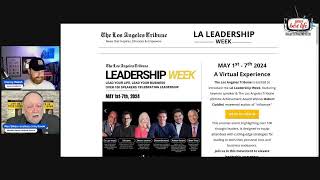
Well, I'd be happy to. Well, you know, I have for about four years now been partnered with the Los Angeles Tribune. Mo Rock is the CEO, publisher and as the LA Tribune and most goal has always been to not only be a newspaper, a news source, but to be a positive news source and to promote leadership and inspiration, you know, and positivity around the world and to enlist those speakers and authors and practitioners as well as the audience who is interested in this and to benefit the world and help everybody up level. And so to that end we've done a number of different programs to help people with their mindset and their, their heart set and their skill set and, and, and different areas of their life and practices. And so what's coming up now is the Leadership week. It's from the 1st to the 7th of May and we've got I think over 100 speakers and yes, I'm, I'm helping produce and, and, and hosting along with some others and, and, and we've got an incredible lineup of guests besides yourself. There's Russell Brunson, Tai Lopez, Brian Tracy, Sharon Lecter and geez, who else? I mean there's a whole bunch of people. You could probably scroll through some of these and. But there are people who you will know and not know. Dr. Joe Vitale and Robert Cialdini who wrote the book Influence. So there's many people and they're going to be talking about their personal and professional views on this topic of leadership. And so I'm very pleased to be part of this and to be able to share this with you. I'm glad that you're sharing that on the screen. Some of the previous headliners that we've had our names that you would all recognize. Let's see, there's Bob Proctor and we've got Michael Beckwith and Dennis Waitley and Dr. John DeMartini and Jack Canfield and Mary Morrissey. So I mean they're Donald Neil Walsh. So there's many different people who you know, have been part of this. And here's the cool part, there's a link on my website or somewhere. It's LA Leadership. What is the link? Can you, can you share it somewhere?
Laleadershipweek.com laleadership and folks can go on there and, and sign up. But is there a fee for this?
Rex no, it's absolutely free and it's seven days. It will be live. And, and the cool part about it is, is that when you reg. So thank you for doing it. When they register, they register for giveaways and gifts and goodies and there's a, a special networking session where a number of people come together and network with the others who are part of this, this weekly, this summit that we're doing. So it's cool all the way around and, and then there's a replay. So you're going to want to register and I encourage you to do it right now when you're watching this so you don't forget or as soon as we're done, write it down.
So, you know, for me, a pleasure to be part of such an amazing lineup. But there are things that all of these folks, leaders in every area of, of of business, every area of, you know, commerce, areas of life that people, you know, aspire to be like these folks, right? True leaders in, in digital marketing, authors, you know, doctors. There's people of all walks of life here. But there are wreck some common traits, almost like a golden thread that connects these folks together, right? And we've been talking about the principles of leadership and we've got lots and lots of different things that we've taken into, into account. Right now ll leadership week.com is going to give you a chance to hear from 100 or more speakers from all these different disciplines, all different countries, all parts of the world. Russell Brunson's on there. Like you said, Dr. J's on there. There's a big bunch of folks, right? All got their own different place in different industries or maybe they're writing books or they're helping people in whatever way. There are some commonalities that run through all of this, right? And it'd be cool to kind of unpick what are the common traits that these folks all share. So there's got to be something that every single one of these folks has got that common thing because if we can grab that and people could say, ah, maybe that's something to focus on, I think would be very useful for folks right now.
See, you know, it's, it's, it's, here's the, here's something that I think people should know. I mean I'm, I'm what's known as a modeler, you know, in terms of building models. Now I, I don't care so much about the formal models that, that you know, some people are familiar with. But you know, I've done this for well over 30, 40 years and that is in presentation and in teaching people how to speak and present on camera or live events to be more effective that way and to, or stand up comedians and, and people, different people. Attorneys to be better attorneys and, and politicians to be better politicians. One of the things that you want to do is you want to get a sample of people who are really good at what they do. So for example, let's say we were talking about jugglers. You'd want three or four different jugglers. We're all very good at juggling. And maybe they came to it different ways and their different rates know and everything. But you then look at them and you compare and you see what do they do that is similar? What experiences did they have in the past? What, how did they practice, what it, what was their mindset like? Where is that similar, where there's overlap between them. You know, do that with speakers, you do that with attorneys, for example, you do that with leaders. And then you want to look at where are they not alike, where are they unique? What do they have that might be absent in someone else, but that may make them stand out from the other people? So you compare and you contrast. You want to see what they have in common and what they don't have in common that make them good leaders. And then from that you can extract. So you need at least three good models. Well, here's the cool news. You come to this program right now and you've got a hundred different leaders. And some of them are very well known and some of them not so well known, but they're all there. They're going to be sharing and talking about. You get to interact with them in some, in some cases, especially if you network and stuff like that. But you get to absorb from them and you get to compare. What do they say that's similar? How do they behave that similar? What kind of things do they share that might be similar? And then what are those things that set them apart? And you build your own model, you build your own set of practices and principles that you can apply to your, to, to you? In other words, you distill it down, know just three or four things that you can then do that help you be that better presenter, that better leader.
And we did a piece of Work. Some years ago, Rexy, I worked for local government and what we did is we got the different elements of the local authority, so we looked at the police, we looked at the ambulance service, we looked at the fire service, we looked at medical staff, we looked at teams, we looked at, you know, the, the hospital, we looked at all the different elements, we looked at the councils, we looked at all sorts of different things and we drew out the leadership framework, the principles. Yeah, and that was doing exactly what you've just described. So we looked at the things that were unique, we also looked at the things that were also kind of like what's working right now. And we also looked at the things where there were this contrast, where there were similarities, and we tried to get it down as what was the golden thread that ran through all of the forks that were classed as leaders. But we also looked at the different levels of leadership.
Right.
Because there are, in what that piece of work found, levels of leadership. What's. What's your thought of what the. Those levels of leadership potentially could be, maybe might be? What does that look like? Because are you a leader or are you a leader at a certain level? That's the question. Because there's always room for growth, right?
Oh, absolutely. Well, you know, like I said, nobody's ever finished. So, you know, it depends. You know, somebody may be the. The king of a country or the queen of a country, or the prince or princess or the president, and you think, well, that's the top position, you know, worldwide. They're the leader. But one, they could be a good or bad leader, and two, just because they're leading in that capacity with that doesn't mean, I mean, you know, there are. There are people in sports who are leaders or people in religion who are leaders or people are, you know, in all walks of life who are leaders. The effectiveness of somebody is not how popular they are or the fact that they just. They got elected, I mean, you know, or. Or assigned a position. There's a principle, you know, that people are oftentimes promoted to their level of incompetence. It's called the Peter Principle. There was a book that came out in the 60s, it was Peter Principle, that people keep getting, you know, promoted and promoted and promoted until they're no longer good at what they're supposed to be doing. They get promoted outside of their. Their talent range, which is an interesting, you know, premise and concept. And. And unfortunately, oftentimes that is accurate. It's true. You know, because they've been successful in one area, they get promoted, and then they have no expertise or experience in the level. And the skills that they had served them well in the level below, but they don't serve them well in the level above. They need different set of skills. And you have to know that both as an employer or, or somebody, you know, making assignments, but also for you who are leveling up, you have to know, am I in or outside of my area of competency? Or how quickly do I need to become competent in order to be able to carry out the tasks that I'm supposed to carry out? So, you know, it's not as, it's often not as cut and dry as people would like to think it is. The. Here's another area that you think so you could be great leading in one area and bad in another. You could be a great financial leader, for example, and suck in sports. You could be, you know, great in helping people be parents but not be good in business. You could be wonderful in, in terms of helping people solve problems, but not, not, not overeating. I don't, you know, you can, you can and can't judge a book by its coverage. There are people who are overweight or emaciated who should probably not be talking, you know, saying that they're leaders in, in food management unless. But they, you know, and, and what's popular today is to say, well, if you're two steps ahead of someone else, yes, you know, just turn around and teach them. And I say, well, that's great, unless you're headed over a cliff, because all that means is you went over two steps before they did. You know, a tour guide looks for the pitfalls as well as, hey, look out for that. Watch out for that. Hey, there's something over there you want to know as well as all the beautiful things. So, you know, there's a part of the practice that says it's okay if you're not perfect, but if you're going to assume a leadership position, be willing to address your flaws, be willing to be transparent, be willing to be available. It doesn't mean that you have to confess and, hey, look, I know nothing about this, but you could. But what I'm saying is it means that there's a certain amount of humility to understand that we're all people and that leaders oftentimes are just that person who's in front of the group making the decisions because somebody has to. And so sometimes people are put into positions of leadership where they may or may not be qualified. Now, if you are qualified, you still want to be humble. You still want to be sensitive to the people around you. And you still want to say, you know this, you know the saying, if you're the smartest person in the room, you're in the wrong room.
Yep, yep, yep, yep.
You have to, you have to be willing to go, I don't know this, okay? But I, and I need somebody who's qualified and help me out here. A leader also has to be willing to listen. And you don't want to be surrounded by just yes people who praise you and kiss your butt because you'll never get good quality feedback. You need to know when you're on or off base. And people have to be able and not be afraid to tell you that. So you have to be open enough to allow for that. And that's why, you know, you've heard these horror stories of parents who are so stern that their children are terrified to come to them when something's wrong. You know, and to imagine living under that stress would be very difficult. And yet, and yet many do.
So, so I'm kind of getting this. There's, there's leaders who have to be leaders at that moment. There's leaders who want to be leaders, and that's going to work out in a way. There's leaders who are forced to be leaders.
Yeah.
But there's also leaders who are actually wanted by people at large.
And I think that's the, the best leader is that when people say, this is the person, for whatever reason, is the person we want to guide us or, you know, help us. Now, that said it, there's, there's a lot of problems with that too, because, you know, you can go, majority rules, and the majority can be wrong. So it, it's, it's, it's consciousness that's important. That's why awareness is so important. That's why almost the notion of common sense is important. You have to be, you have to be open to the fact that we're not infallible and we can make mistakes and, and, and understand that oftentimes there's an agenda when it comes to leaders and leadership. You know, the person who just always wants to lead. I, I, I would see this in workshops all the time. I've been doing workshops for well over 50 years. People would come in, they count heads, they do it mental math thing, and they go, oh, this is a great way to make a living. So they want to be a seminar leader or a workshop leader. They don't care about the people. They don't care about transfer of skills. They don't care about helping other people. They just go, I. If I could get 50 people in a room and charge them $5,000, look at how much money I'd make. So it's not about the quality. It's not about the people who, who they want to help or serve. It's about themselves. This is the kind of narcissistic, egotistic, you know, wannabe that's, that's potentially dangerous.
You know, and they're kind of my want to be a leaders then, right? So from the, this realization, I've got this, this paper emerging in front of me right now on my other screen is like, so we've said that there's leaders who have to. Leaders who want to, Leaders who were wanted. Lisa's are forced to. There's this, this person who comes in, wants to be the leader. What is the motivation of that want?
Right?
Is it a financial motivation? Is it an ego motivation? Is it, is it true to say that no real leader ever wanted to be the leader?
I don't know that. I don't know if it's. It's true that no leader ever said the true leader wanted not to. But I think that there's something to be said about the reluctant leader. You know, it's, it's kind of like. Or, you know, I mean, I help people improve their lives and their business, and I've always done that, you know, for most of my life, and I want to do that. But that position comes with an awful lot of responsibility in the sense that I need to deliver on that and help people and coach them to the best of my ability. And then those people who want that can find me as someone who can do that. I'm not necessarily for everybody, you know, and, and not everybody's necessarily for me. And I, and I'm only using myself as an example in this moment to say I'm doing. I'm, you know, I mean, some people could say I'm a leader and I go, no, I'm not. Don't call me a leader. That's not, that's not what. I'm a guide. You know, I want, I want that position of a guy because we're all in it together. I want to walk with you to help you make the change, not in front of you to make the change. I, I'm not trying to lead you somewhere. I'm trying to go with you someplace, you know, and if I see further than you do at that moment, fantastic. There's going to be another Moment when you see further than me, you know, the whole, the way I look at what a coach does is like run a relay race, you know, at some point I pass the torch and the other person crosses the finish line. And what a good leader or a good trainer or good coach wants to do is have the student or the trainee or the mentee or whatever it is, or surpass them to go on to greater things in the same way that you want your children to do better than you. If the whole thing is about accumulating followers who never get better than you are, who never surpass you, then that's kind of a dangerous thing. If you're always the best, always the top, you know, never infallible, everything is always great because of you, then, then I would, I would run away. Because there's a lot of people out there who are popular and who are in positions of, of being able to lead or to guide or to share things who probably ought not to be doing it. I call them empty suits because they have wrong information, their heart's not in the right place, you know, and all those kinds of things. But they're popular and people flock to them and some life them and some don't like them. And you know, but that's, you know, kind of like the way things.
We're building up like a bunch of stuff here, right? So we've got a reluctant leader, we've got a popular leader, we've got the forced leader who's like, ah, like you have to do it right now or else you've got the leader that's actually wanted and demanded. You've got the leader that wants to lead. I must be the leader. You've got the leader who has to in the moment. But I guess you've also got the right leader.
Right?
This is like that. Does that role change? Like you said, Some folks can get voted out of this or they can, they can run out of skills and at that point they're no longer the right leader, right? So it's like you get to this, like, ah, I'm no longer the right leader. Do people acknowledge that?
Well, you know, hopefully they do. I mean, hopefully the leader does as well as the people who are following the leader. I mean, you know, for example, the United States, we, we supposedly change our presidents about every four years and some of our politicians every two years and others every four years. But some are career politicians. They've been in there for 30, 40, 50 years. You can't do that as president, but you can do that in other branches of government. And, and so that creates a, maybe a good thing or it could create a lot of problems. And, and, and certainly the problems, you know, are, are becoming more well known, you know, in this day and age. But the, but the thing is, is that, you know, not, it's not like a one shop fits all. I mean, somebody might be great at one thing, but not so good at another. There's plenty of people that I would go to if I wanted to learn, say, money making, okay, but not if I wanted to live a happy life, if I wanted to live or have a romance that worked out in my life or to have a marriage that was wonderful. I mean, there are people who I would never go to who are really good and effective in other areas that I might want to go to for those other areas. So, you know, not, not no one person necessarily is, is the end all, be all or be all end all of it. And, and there's nothing wrong with having, you know, multiple mentors or multiple teachers. And in some ways, even the worst teacher in the world can be a godsend to you in the same way that our hardships are God, our godsends to us. You know, when we have problems and difficulties and hardships in our life, whether with people or circumstances or events, those are the very things that get us to move. I mean, you can either collapse and wallow and whine and go down that rabbit hole, or you go, enough of this. I'm not going to do that anymore. I'm going to learn a new way of being. And you shift into being more resourceful and you take advantage of the opportunities and possibilities that are in front of you, but it's a kick in the butt. It gets you out of your comfort zone. And sometimes, you know, the people who are around you, who are not good leaders, who are not good teachers or coaches or trainers or parents or whatever, are the very impetus. They're the catalysts. They're not the reason. They're not the, they're not like, you know, here's a great gift. But they're the catalyst for all sorts of personal and positive transformation. So it's kind of like the universe never wastes a move. But we do, you know, people do. We try and figure it out, you know, and all that kind of stuff.
It's very powerful stuff. And I think finding the right leader or leaders and being the right leader is kind of where I'm arriving with this. But there's still. Is, is it right for you to do that? Is then a Next level of, of sort of like determination. Yes, people want me, but is it, am I right for the role?
Well, again, that's where it comes down to being level headed and honest. Both honest with yourself and honest with others. Something I say, I want you for this. And you have to say, wow, this is great. They're going to pay me all this money or they're going to do all this stuff or this means world fame or whatever, but I'm not the right person for that. So are you really a person of service and an honest enough to say I'm not that guy, I'm not that gal. I need, you know, I'd be better off over here, you know. Thank you for your interest, but no, thank you. Knowing where you fit in things is an important piece, you know, and knowing what you can't do is just as important as what you can do. I, I've done a podcast for many years called Rex Sykes Movie Beat and it's what to do and what not to do in navigating a filmmaking career because it's just as important to not do some things as it is to do other things, you know, and so you're not right for everything and you need to know that. And the wisest people are the ones who, who can say that, you know, the ones who, you know, they don't get promoted out of their level of competence.
Yeah.
So go ahead.
A wise leader, a wisely.
Well now also just so people know, and I might have said it already, but you know, on YouTube, create your best life with Rex. YouTube I have a three part series on leadership as presented by Napoleon Hill back in the Laws of success and think and grow rich. And so I do talk about the traits and characteristics of what, what makes a good leader in that series and people certainly I invite them to go and, and to look at that. Oh, by the way, and while we're talking about this, go and subscribe. Subscribe to this show. Like hit, you know, the, the notification bell, that kind of thing. Subscribe and then share, comment, ask questions. There's somebody. Lori, it says I'm watching but I don't see a chat or I would comment. Now I don't know how to tell her where the chat is because I don't know where she's watching.
So, so there should be a chat on, on Facebook, should be comments in the group. I know that Facebook's been playing up today. So if, depending if you're on Facebook or on YouTube there should be comment facility around. Unless of course you're on LinkedIn which may not have that functionality.
Yeah, that's true. I don't know about that. That's a good, good point. Well, even there, there should be comments, but I don't know if it has a chat room. So Laurie, I can't, I can't help you that if you're still watching and, but you know, we should, we should also tell people a little bit about what's coming and what's going, you know, I, part of what, you know, we're going to be doing is having authors and speakers and leaders in their own right and, and people at the forefront of their field and their industries and as well as some that aren't so well known. We're going to have actors and celebrities and filmmakers and you know, and people who are topical and we're booking those and we're doing it. This is our third episode and you know, I'm pleased to be able to have this discussion with you and Danny's been so incredible in terms of putting things together and creating the new website for us that. Can you give them a sneak peek of it?
We can indeed. We're actually looking at bringing out because you've got these three part series here and you've got all these videos and you live 2 million times and some of this stuff's been pushed down over the years in the archives. Like if you want really good quality content, stuff that you can listen to while you're out and about or you can watch as, as you sat at your desk wherever you are. Rex has got a lot of stuff and this stuff is important that it's, it's preserved. It's no good set up on a YouTube that, you know, you might not be aware of and it's under a bunch of other things. So what we're trying to do is put together an archive which is going to live on www.re.tv. so it's not the dot com, it's the TV. And we're starting to build up an archive of links. So there's our last show. We got the book on there. We got some quotes and different things. You can join the newsletter for that site. But we're building out an archive. Les Brown's on there. So you've got Grandmaster Eric Lee on there. You, you've got more rock on there from, from the Tribune we just talked about a minute ago. Life's milkshake moments. I don't know what some of this stuff is because I haven't watched it yet because I didn't know it existed until I started going through Rex's incredible journey over. In some years, you know, we were live at secrets of success with it, with just inventing. Like, these things are important because they all carry and convey messages that can help you live life on your terms, live a better life, learn leadership, learn all of the cool stuff that Rex does and do that with a smile. So, like, literally amazing content. And there's more and there's more and there's more. And I want this categorized and I want this available. I want you guys to check it out, right? So it's dead simple. It's www.rex.tv now. We've just getting this set up and we're figuring out the domain and all the rest of this stuff. There may be some glitches on the page, but it's looking good. It's. It's working. And, and we've just, we've started to put this together today. We want to combine all of Rex's content with stuff that we're doing at the, the Leadership Week and all these other things and, and give you an opportunity to go on there and consume this in a, In a meaningful way. Rex.
Right, absolutely. And I, and I appreciate you, Danny, for sharing this and putting it together and, and, and being the architect for it. I mean, I, you know, this is, this is where I guess I'm, I'm very blessed and lucky to, to have someone who's got such great skills and the ability to do all this. And on top of it, he knows how to market and sell and do all these wonderful things.
I think it's important that this is kind of like what we call like a funnel hub, right? And you think about it like a central train station where you can arrive here, but you can get one line that goes to such a place and another line that goes to another place. And you've created and curated so much amazing content that sometimes it's difficult to get on the right train at the right time. And this is early days, right? We've got a page and we're already, hey, you know, you've got Les Browns on there and, and, you know, you've got Mark Victor on there and all the, all these amazing guests that you've. How many times a week do you go live, Rex? Right? So if some folks don't know, they're never gonna know, right? So if we can bring this to folks and we can educate folks, and we do that through this show, through all the other outlets that you've got, there are gems in here. And it'd be cool to hear from people in the chat right now. If you're watching live or on the replay, what kind of things would you like to see? But what kind of things would you like to know or learn? Because there's a good chance that you've already talked about some of this stuff, Rex. Right.
Well, if, yes, it may be, but. And also if I can help or assist you in any way, you know, let me know. I mean, because, you know, we all start somewhere, no matter where we are in our journey. Some are neophytes and just, just getting started, other people are halfway through and others are far more advanced. But, you know, it's, it's, it's, it's wonderful because we have a community as well. I've had a community of people since, I think I mentioned this in one of the early shows from the early 90s called Idea Family, which are people who have done my programs, who, my promise to them was for whatever program they took. And if they took three or four of them, promise exists through three or four of them. As long as I'm alive, I will help troubleshoot or answer any questions or help move you forward regarding the content or material of that program. Obviously, if you've done one, but not the others, I can't address the other ones because you haven't done the program yet. You don't know. It wouldn't make sense. But the point is that my commitment is to you, in terms of delivering to you the very best that I have so that you can find the very best in you or enhance the very best in you. You know, some people already know what it is. They just want to do it a little bit better, you know, and, you know, I, I have been blessed that in my life I've managed to hang around with a lot of the top people in different industries, top attorneys, top even politicians, but top speakers and authors and magicians and filmmakers and actors and celebrities. And I get to hang around with these people. And one of the things that I find by hanging around with the people who really get to advanced levels is that they don't think that they're really that hot crap. You know, they just, they understand that they've come a long way, they've done a lot of good things, and they know that they can still be better. You know, sometimes the larger you are, the bigger you are, the more humble you are, the more, the more you understand how incredible it is that, that you've even gotten as far as you have. So, you know, While some are trying to step on the heads of others to get ahead, oftentimes the people who are way far ahead are very quiet, reserved. They're not, they're not out there, you know, chanting their name or, or trying to claim a part of the marketplace because they're securing themselves. So that ability to be secure in yourself, that ability to know who you are, to be your authentic self, not some facade that you put on for other people, but that to fall into your throat, authentic self, that person who you are without all the conditioning is truly a marvelous thing.
Indeed it is. And I'm hoping that we get some comments up and we can, we can put some of these upon on the screen or get these on the replay. But this is the beginning, right? And we've got a long way to go. We've got sites in development, we've got events coming up. And we've also got your amazing book Rex, which I know is, you know, I've been reading this. Like there's a lot of takeaways in the book. It's behind Rex. You check this out. We put it on the screen. What, so you got the book? We're not here to sell you the book, but you need to buy the book. It's kind of important. And if you look beneath rex, it says rexychs.com forward slash book. You can also find it on www.rexites.tv. but I also have this other notion that because you've got so much amazing stuff, if it's all right with people, that we could put together almost like a spotlight on, on some of your best works and bring that out over the next weeks and months so folks have got a chance to just go to one page, one place where they can, they can focus on, on what, maybe what I consider to be some of the best stuff based on what I've seen. And I could help you curate that. You obviously going to say, h, I think this, I think this. There's so much stuff, we're going to get it down to the best of Rex Sykes. And if people are interested in that, let us know in the comments, let us know in the chat. And, and we know what to put together, right? So there's, there's thoughts and things and stuff in motion, but we want to do that with purpose. And when we put something out there, we want it to be the right thing. So if you're watching this, you're enjoying it, you like and subscribe and share and tell people about it, make sure you join us every single week. Same time, we've got guests, we've got celebrities, we've got goodies and giveaways and more and a big bunch of content as well. It's super excited to do this and we know we're getting lots of great feedback. There's a lot more to come and I'm super excited about Leadership Week. We put that back up on the screen as well. We are going to come to the end of this very, very soon. But before we do that, leadership, we've been discussing around this today and we were talking about the wise leader, the honest leader, the authentic leader, the. The not right leader, the reluctant leader, the. The real leader, the correct leader, the right. All these different connotations of leadership and what it might look like and feel like. How can we wrap this up, Rex, in a way that's actually helpful to people?
Well, I, I did want to say one thing before we do that, and that was that tonight. And, and this is relevant for those who are watching today on this Wednesday. And by the way, we're, we're having the show air live every Wednesday and then we booked it out through the year. So, I mean, we're doing, we're, we're going hog wild in this. But I wanted to point out that there is the AI meets mental health symposium that I do with Dr. Fred Moss and I'm trying to find the link to tell people to go to. And I'm having difficulty finding that link, but it is AI meets Mental Health. But it's on my Facebook wall. You can find it there. I have it on LinkedIn and different places. Maybe I should try and go to LinkedIn and find it. But because this is. If you're interested in how and how different leaders in, in this arena of mental health and AI and everything view what's happening in the world as, as we embrace or not artificial intelligence and what that has in. In store for us when we do. Let's see here. Now. I think if I go here it is. Of course LinkedIn would give me a LinkedIn. Nope, it just takes me to the zoom. I can't, I can't get you the link. I'm sorry, I can't do that.
We'll post it in the comments. Right? We're gonna post it up in the comments. But there is this amazing thing that is going to be happening. But AI itself, Rex, is a whole new topic. Right? And I guess that's something we want to get into and want to start talking about.
Yeah, absolutely, absolutely. And do. And do attend Leadership Week. Because, you know, you'll have different voices, different people who've been around in different areas of the different industries that, that may be your industry. You know, it may be something like you're into marketing or you're into sales or you're into helping families, or you're into education or you're into, you're an attorney. I mean, you know, the, the, we have very powerful people, very successful people from all different worlds walks. We're going to be discussing this concept of leadership over seven days on the Los Angeles Tribune, Leadership Week. So do, do join us in that. It is a virtual experience and there's every reason for you to want to register right now so that you get the giveaways and the takeaways and also the networking experience. Should you attend 100%.
And I can't wait for this. And, and there's a few comments coming through on my side that I'm just answering privately where folks can't comment. I think they must be on, on LinkedIn. They're asking me how can they comment? We'll make sure we check that out and fix it. But certainly LA Leadership Week register next week. We've got more goodies, we've got more surprises, we've got more things in store. All of these videos will be shared and syndicated. Check out Rex on his Facebook and his LinkedIn for that link. For the AI and mental health too. Very important topics, Right? So there's lots and lots of things going on and there's something in this for everybody. I can't wait to keep this moving and to see this grow. We've got the website coming and more exciting times, Rex. Right. And a pleasure.
It is indeed. And, and right now I'm talking with a friend who's the star of a very popular TV series or one of the stars, a very popular TV series about joining us. And he was like, well, could I do it next week? And I'm like, yeah, if we can, if we can lock you in, you know, if you, you know, so it could be that next week we have him on, on the show or may, he may have to schedule a different time, but we're working on that and other people as well. So I'm so glad that you're here. And we've got a great community of people who love the work that we're doing. And, and we love you and, and, and however we can help you, let us know. And this guy over here, I should say this guy over here, I adore him. He is so cool. He is so very cool. And if you don't know who he is and because we didn't talk about him this time, go back and watch our first show and. And obviously future shows. But the man who Walked Away From His Dream is the title of that show. And so you're going to want to go find that on YouTube and learn more about who Danny is, because Danny's done some remarkable things and he continues to do them, and he's got children and he works day and night but still finds time to. To be with his kids. So it's really cool.
Yeah. And it's. It's important that we get the balance right. So that's another topic for another show. But right now we're on time. Rex, it's been a pleasure and I look forward to seeing you. Very soon, we'll get the site up and all these things register for Leadership Week. You guys are awesome. Rex is awesome. We'll see everybody on the next video. Make sure you subscribe. Bye, everybody.