10x Your Sales With This SIMPLE Strategy (Do This Now!)
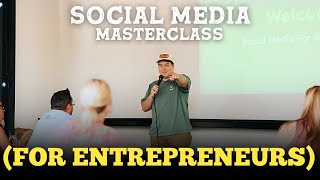
Darren Pacheco walks through a social media strategy to drive sales using the AIDA funnel and a 9-1-1 posting method: nine value posts, then a hard sell. A real-estate agent made $2M from 11 short-form posts; a chiropractic podcast generated $1.2M in future value. Post at least three times weekly using affordable tools like Canva and CapCut.
Chapters
I'm glad y'all are here today. I really wanted to really just kind of give you a good overview of social media, how it works within a business. Because the more I talk to people, especially business owners— how many of y'all are business owners? Business owner? One day? The more I talk to business owners, the more I realize they just don't really know what to do on social media. And I never thought about it like that because I grew up with it. I'm a young buck according to the millennial generation. So that's what we're going to be talking about today. Let's go ahead and move on to the next slide. Sorry if it's a little hard to read. This is— I built the slides and they're supposed to be black, but they're a little bit blue with the projector. So hang in there with me. Before we dive in, I just want you guys to be open. I want you guys to The whole point of this is I'm trying to rearrange some of the furniture in y'all's heads to kind of figure out how to do this thing in a modern way. And there's people out there making lots of money utilizing social media content and these strategies. So be open. The next slide, I want you to grab a notebook. Obviously, all you guys have it if you're watching online. Grab a notebook, make sure to sit down and write down anything that sticks out to you. Let's keep going. There is an opportunity beforehand. I wanted to see if it's okay with you guys. There is an opportunity at the end of this presentation of all this free value and information I'm giving you guys. There's an opportunity to eventually work with us. Ultimately, that's why we do these things and put these things on. So is that good with you guys? If you're in the chat on Zoom, put a Y in the chat saying yes. All right, today what we're covering: social media basics for business. Um, has anyone heard of a funnel before? Funnels in business. Do y'all know what a funnel is? Like when you're pouring oil into the oil area of a car. I'm not a mechanic. It's a funnel. So we'll talk about that some more. We're gonna talk about what content do you actually post? We're also going to talk about how to actually do it. So let's go ahead and get into the first examples. So, okay, I forgot about this part. Here's a couple real life examples of social media being utilized. Um, there's 3 people. The first one, it's me. This is me 11 years ago. It's hard to tell on this projector, but that's me 11 years ago. I was in, I know, the 6th grade, 11 years ago. Don't hate me. I put out a video. I put out multiple videos. They were me dancing, doing Lip Sync Battle vibe things. But to say that that got 235 views, that's dope. Me 11 years ago. And today I'm still making videos and I figured out how to do it in a way to convert these views into people who actually want to buy. And that's how I started this whole business, which is Howdy Media. And all these wonderful people around here, we got Kenzie, Garen, Naomi, and my wife over here. We all do different things amongst Howdy Media, working with our clients, et cetera. So that's Howdy Media. We do video production and content strategy and consulting. We've helped over 200+ businesses grow with content, especially through video. We're big on video. We're big believers in video. We have over 2 million plus views on social media, and we're counting, and still making videos 11 years later. Let's go to the next slide. This is just a quick snapshot of what it looks like. I think this was in February of 2025. So this here on the right, that's my personal Instagram. And if it's hard to kind of see, we got 422,000 views. This is just Instagram here. Real screenshots. 7% of those views were followers. 92% were non-followers. So we're getting in front of people who don't even know about us. Then that was just within 30 days. So let me ask you this. If you had 400,000 people beyond what you're already reaching, would that change you? Would that change your business? Our YouTube channel, if you don't subscribe to us already, make sure to go subscribe. We're putting out videos like this all the time. So it's just Darren Pacheco. Let's go to the next slide. Another example, we have wonderful Naomi over here. Not only does she work for Howdy Media, but she's also a real estate agent. And Naomi started not that long ago. She was struggling to get deals, and one day she decided she was going to go in and all in on content. And so she posted 11 pieces of content. And the reason she was able to do this so effectively is because that's what she does over here at Howdy Media. And we teach people how to do it this way. And so she posted 11 pieces of content, short-form content, which is Instagram, TikTok, Facebook, no YouTube. This resulted in 15 very strong leads and 5 of them closed. Is that right? Last month, over $2 million in volume in 2 months strictly from posting on social media. So that's just another example. The last one I wanted to bring up, they are chiropractors here in town. They're our clients. They are members at our podcast studio here, right here downtown, 2 blocks that way. We have a turnkey podcast studio. And so they've been putting out 2 podcasts per week. They're about 5 minutes long, 5 to 10 minutes, and they've been posting consistently on their short form pages like Instagram, TikTok, and Facebook. And so their whole mission and their whole goal, and, and that's why I like to talk about different industries and like what your goals on what you're doing and who you're trying to attract. So they posted 2 podcasts per week and consistently on their short-form platforms, and they found 4 highly qualified chiros to partner with because their goal, I think it's like a 5 to 10 year goal, they want to have 300 chiropractic offices opened by the time they're finished. And so they've already found within the last year 4 highly qualified chiropractors who are coming to them because they're seeing content. They found them on YouTube. And they're like, we need help with our practice. We want to partner with you. And so I, and these are numbers from them, like I didn't fluff these numbers or anything. This is going to add over $1.2 million in future value through this content. So if filming a podcast for a year converts into, I mean, couple mil, that's not too bad, right? So that's another example. They've absolutely crushed it. They've killed it. Online. Let's go to the next slide. And this is where we're gonna talk about kind of the meat and potatoes of what we're doing. So if you're online, get your notebook ready. So this is the beginning of the content funnel. Also, if you have any questions amidst this, there is gonna be a Q&A time at the end. So write it down and we'll, we'll do that at the end. You as well, Zoom. The first step is gonna be creating awareness. So what does that mean? Awareness is making people aware that you exist and that you solve a problem that they have. Now, what does that mean? This is just getting in front of people. So the more people that you can get in front of, the more aware your potential client is that you exist because you already have something that they want to buy, but it's your responsibility to get in front of them and let them know about it. So this type of content includes Instagram Reels, TikToks, Facebook posts, YouTube videos, and even LinkedIn posts. This is how you get out there, and we'll talk a little bit more about what kind of content, what you need to do to figure out, okay, what kind of videos do I actually make now? So that's the first step. The next step is going to be creating an interest. So once they've discovered you, they become aware of you, now you make content that creates an interest. It, it intrigues them. What is this? Educate and engage. Now that they know you exist, give them a reason to stick around. So if you're scrolling on Instagram or Facebook and somebody posts a video that you like and you're like, man, I'm gonna follow this person, you follow them. The next day, if they're doing it right, they're gonna keep making stuff to keep you engaged, intrigued, and that's through providing Education content, entertaining content. Those are the two main things that you wanna be making, cuz nobody likes a salesman. Let's just say that. All right, the third step through creating this interest, you're gonna then move to a desire phase. So they've found you, they've become interested in you and what you have to say, what you offer, and then you're gonna show them, hey, this is how I can solve your problem. This is why you should choose me over the other barbers. This is why we are the person to come to. And the type of content that you make here needs to build trust. Don't be salesy. Build trust and show proof of things that you've actually done. Social proof is one of the strongest ways to build a brand. How do you do this? The type of content that you need to make, client testimonials, case studies, Say, hey, we took this guy from point A to point B in X amount of days at a better price than anybody else can do it. Results-driven YouTube videos. If you make a YouTube video, how many of you make a YouTube video ever? Have you ever made a YouTube video? I'm going to encourage you this week, try to at least make one YouTube video. Try to put it up. We'll talk about some strategies on what to actually make here in a minute. Another thing you could do, day in the life videos. Vlogs, a video log, day in the life video showing what it is that you actually do on the day-to-day basis. And then story-driven brand films. I threw that in there at the end. We make these videos called brand story videos, and they are, they're a hot commodity around here cuz people, it's finally an outlet for them to share their story. And so things like that, even if we don't do it, get a friend, get an iPhone. Put a microphone on you and just tell your story. That builds trust. And over time, the more that they see that, the more likely that they'll buy something from you. There's an interesting stat from Google came out in 2024. You have to, in order for somebody to trust you enough to buy something from you, say we've never met before. I haven't ever met some of you before today. They have to watch at least 7 hours of content in order to, before they'll buy something from me. And so that's the first thing that you need to do if you don't have any content out there. 7 hours of content is going to be your first goal. The last step of the content funnel. So we have awareness. Awareness is getting in front of people, creating interest, intriguing them, keeping them engaged. Desire, creating a desire for them to buy your product by showing them how good your solution is. And the last step, this is a step that a lot of people forget about. It's the action step. How many of you know what CTA stands for? CTA. Have you ever heard of that before? Call to action. Calls to action. If you've ever seen— if you follow me on Instagram, you've probably seen this in the bio or in the description of the post. I'll say something like DM me the word video for a free strategy call. It's small, it's subtle, but it's something, an opportunity for them to sign up and take the next steps with you in whatever it is. So make sure to have a CTA. And there's two types of CTAs. There can be a soft version where you don't even mention it in your content, but you throw in a link at the bottom to book a call. That way they're watching your stuff, they're, they're not being sold to, but if they see that, they might click on it. And then there's a hard CTA. A hard CTA is you blatantly coming out saying, hey, we have 2 spots open. Would you want to take this spot? If that's you, hit the link in the description. It gives them an opportunity because you can get all the views in the world, but if they don't take any action, for a business owner, it's useless. You can get a million views and you'll have $0. Like, it doesn't matter. So CTA posts. And these are also— this isn't just pertaining to social media, 'cause whenever you think content and video, you think of social media, right? There's also these things and you can utilize these strategies to do direct reachouts, like utilize video. I've done countless, they're called VSLs, video sales letters. And this is something that is very personal. Some of you here, I sent a kind of like a VSL, a customized message asking, hey, what is one thing that you want to learn about at this training? And so that wasn't on social media, but it's still building trust because video— there's nothing else like video when it comes to building trust online because people want to know a face. They want to follow a personality. They don't want to follow a logo. Hot take. All right, let's go ahead and go to the next one. And then after they take the action, you're gonna move 'em into your sales process, which that's up to you. This isn't a sales training, but you're gonna get on a call, close 'em, do your thing, and that's whenever they become a client. And so in simple terms, that's it. No, you're good. That's the content funnel in the most broad way that I could put it. Awareness, interest, desire, action, client. Okay, let's go ahead and move on. This is a general guide. Each industry is a little bit different. If you're a barber, you're going to utilize this different. If you're Cheryl, you're going to utilize this different. And so every industry, it depends on what you sell. Do you have a consulting service? Do you help people learn how to cut hair? Do you have a free course? Do you have a mentorship for upcoming barbers? Whatever it is, you gotta get creative in thinking about what it is that you can actually sell online. And especially if your current product has to be physical, like a physical location. So another little stat that I like to throw in there showing why content is probably the biggest thing that you could go all into. And showing content is king. Here's another screenshot, February. I only have 1,408 followers at this point on Instagram. My dashboard here, 437,000 views in the last 30 days. My bio, you can see, DM me the word howdy to book a free call. To put this in comparison, 'cause I hear people talk about billboards, I hear 'em talk about local newspaper ads, theater ads, all the things. To put it into perspective, If I were to put a billboard up, this is the population of Abilene, 129,000. If I were to put a billboard up, I don't even know how much it costs. I've never bought one. I would never be able to reach almost half a million people. And so if you're not doing content, there's 5 billion people on YouTube every single month. And so you gotta go where the people are. You gotta go where the consumer is. And one of the important things to note is to Well, I think that might be in one of the next slides. We'll come back to that. Okay, so here's a statement that I want you to think about and write down, because the first time that I heard this statement, this is really what changed everything. It says, you don't have a business problem, you have an awareness problem. Everybody's business would be better if you had more awareness, because you wouldn't be worried about where the next sale is coming from, where the next client's coming from. And so you don't have a business problem, you have an awareness problem. Our goal at Howdy Media is to figure how to create as much awareness as possible. All right, let's go to the next slide. All right, here's some tips that are practical and some frequently asked questions. The first thing that we always hear, and I'm gonna break these down right here, I have no time to create this much content. Okay? So normally we recommend, and this is on another slide too, we recommend at least minimum 3 posts per week on the short-form platforms. What is that? Instagram, TikTok, Facebook. That's what we suggest. Some tools to combat this— say, okay, I don't have enough time to put out 3 videos a week, I don't have enough time to put out 10 videos a week on every, every platform. Excuse me. Some tools to combat this are: one, you can batch create. Have you all ever heard of batch creation? If you've watched any of my YouTube videos, you probably have. Batch creating. What is batch creating? You sit down, let, let's, let's line out a normal week of making content. You get your tripod, your phone, your lights. You sit down once a day, film a video. It takes you 30 minutes to get the video ed— filmed, edited, and posted. You do that 30 minutes every day, 7 days a week. How many hours is that? 3, 4, 5, 3 and a half. However many hours, if you batch create, this is whenever you're set up on every Monday, whatever day you want to choose, set up for an hour while you're set up, have your ideas already ready and just hit record. Record one after the other, after the other. Record 10 videos in a row. Like you can knock out as many as you want within this hour. Take the next hour, chop them up on CapCut. Chop them up on Canva, on Instagram, whatever you use, and then schedule them out using the platform schedulers. This is the most effective way. It's not working. It's all good. I mean, we can try to restart it, but this is the most effective way to get this much content made because if you try to set it up and film every single day, that's not possible for a business owner. And I know that because I am one. I don't got time to be making that much content every day by myself. And so another tool that you can use, how many of y'all are scared of AI in this room or on Zoom? Let me know. Scared of AI? You scared of AI? I talk about AI a lot and there's a lot of good things that come out of AI. One of them includes AI video editing. Tremendous help, tremendous time saver. One of the tools, write this down if you've never heard of it, it's called Opus Clips, O-P-U-S. CLIPS, Opus Clips. I think it's like $15 a month, something like that. But it's an AI editor. And what you do, you just throw any video in there. It'll give you a cut-up video full of captions and it will track your face as well. So make sure to use AI tools. And then the last thing is to make sure and utilize the scheduling features in the apps. So whenever you go to post on Instagram, before you hit publish, there's going to be another option that says schedule for later, and it's on all the platforms. You can use a third-party software to do this that goes to all of the platforms at one time. There has been some studies that show it's not as effective, so try to do it in-app because whenever you edit and post natively in that app, Obviously they like you using your, their app, so it's going to push it a little bit more. The next question is going to be, what type of content do you make as a business owner? A lot of business owners treat their social media accounts like a newspaper or a magazine or a website. And so what I've been trying to spread throughout Abilene and the internet space is it's more than that. It needs to be your brand. It needs to be your personal brand. And you need to create the content for the consumer instead of yourself. So take yourself and make content for them. Don't make content for yourself. A lot of people like to hear about, or they, they like to make videos about why we are so good, why we're blah, blah, blah. They just talk about themselves. Whenever the videos that are actually doing well, it's content that is created for the consumer. It feels like you're talking to them because you're giving away free education. You're, you're making them laugh. Nobody gets on social media to be sold to. And so once you can figure this out and flip the switch in 2018 on Instagram, for example, just posting photos of your business or your logo would've gotten likes. TikTok came around in 2020 and completely changed everybody. It literally manipulated every, every single person's brain. Now they just want to get on social media, doom scroll, and if they don't see something that is halfway interesting within the first 3 seconds, they're gonna keep scrolling. And so do everything you can to create for the consumer and stop the scroll. Write that down. Stop the scroll. There's a method because like I said earlier, nobody likes being sold to. There's a method that I, I wanted to share with y'all that has been successful and it's easy to follow. So this is called the 9-1-1 method. Easy to remember. 9-1-1. This is 9 pieces of content and this is whatever you post, videos, photos, Carousels, 9 pieces of content that is strictly for the consumer without asking for anything. What does this do? Yeah, you're good. This builds trust with your audience because they actually enjoy watching your content. If you think about the people that you watch on social media, how often are they saying, hey, buy this from me, buy this from me, buy this from me? They're no, you, you're interested in what they're doing and they're just making content for you, the consumer. It's content that they're willing to share with their friends. And so make relatable stuff. Don't be super professional all the time. How's it going?
Sorry, I'm gonna get Jeremy.
It's all— hey, it's all good. We're, we're not that— yeah, we don't have that much left anyways. Create content for the consumer. That's the main thing that I want to talk about there. The next frequently asked question: where do I post? So where do you guys post right now? I want to know here in the room and on Zoom. Where do you guys post? Facebook. Facebook. Facebook. Facebook. Okay. Do y'all ever get onto YouTube and watch videos like on your smart TVs maybe? Okay, so I'm going to encourage you and challenge you. If you're listening to this, try to post on the most familiar platforms that you know. So if you're familiar with Facebook, keep posting there and add one more at the beginning. Once you start doing it for a while, you need to be on all the platforms. But once you're getting started, start with the one that you're most familiar with and don't overthink it. See the type of content that you like to watch and just remake that same type of content within your context. So if you're familiar with Facebook, try Facebook. And I highly encourage YouTube, highly encourage YouTube. I said this out earlier, but there's 5 billion people on YouTube every single month, which is double TikTok, which is the largest short-form platform in the world. And so YouTube is kind of like the grandfather of all the things. People get on YouTube to learn. They're looking for a specific type of video. If you ever see a recommended section on YouTube, That means the algorithm has you figured out and it's feeding you videos that you want to see. So if you're ever like, dang, how did I just spend 30 minutes watching YouTube videos? That's why, because they figured you out. Okay, let's go to the next one. Do I only post videos? You're good. Okay, you're good. Okay. Okay. Do I only post videos? So there's a lot of different things. Whenever I say the word content, in my brain, it immediately goes to video. But there's all sorts of different content. Okay, so there's videos, there's photos. Have you ever heard of a carousel before? Do you know what a carousel is? Oh, you come in, you're good. Do your thing. You're not Jeremy, are you? Oh, I get it. He's coming for the projector or something. So there's videos, there's photos, there's carousels. Carousels are the things that you have to swipe to the left on Instagram and Facebook. You gotta swipe to the left to keep reading what the content is. Usually people make those just a simple Canva graphic or whatever, but don't limit yourself just to those things. There's a lot of tools that you can use including ChatGPT, but don't copy and paste directly unless it sounds actually like you. ChatGPT can take those videos, convert them into text, And then you can write an email campaign. You can write a blog if people still read blogs. You can do a summary of whatever it is you're talking about. You can write LinkedIn posts. You can write Facebook posts from your short-form videos. So don't just think of content as video. It's all of the above. The reason I was able to get people here in person and online was because of a Facebook group post. That was pretty much all of it. I posted a few times. And so that was just text with a link, which is the call to action that we talked about earlier. And so don't limit yourself to video, but it does need to be 90% of what you do and post online. That's why if you've been on Instagram or Facebook in the last couple years, they've tried to copy what TikTok is doing. Because that style and video is just taking over in 2025 especially. All right. How many times do I post? I talked about this earlier. How many times do y'all usually post right now? Do y'all post once a week, once a month? Let me know on Zoom as well. Are there any comments, Garen? Okay. How many times are you posting? It's okay. There's no shame, I promise. Zero. Twice a week. Okay. Okay. So realistically, I said this earlier, but your starting goal If you're posting less than 3 times a week, I'm going to say post minimum 3 times a week and use tactics like batch creating to do this. And so do this, or as much as your schedule allows, because we are business owners, you do a lot of things. If you can't find somebody else to post it for you and make the content for you, as much as your schedule allows, that's what you realistically need to be doing. So 3 short-form clips. If you want to get fancy, throw in a long-form clip, which Long form is like a YouTube video, longer than 10 minutes. And that's— you can do podcasts, you can do a vlog, you can do a tutorial video. If you can do one of those every 2 weeks, I think would be a good starting goal because those take a little bit more. But I also don't want you to overthink this stuff and think that you have to edit everything. There have been brands that have built their whole company off of livestreaming because they don't want to figure out how to edit. So they just go live and that's it. And it— but when they hit done, it's posted. You don't have to edit, you don't have to worry about it. It does make you have to communicate a little bit better and clearer, but don't overthink that. What tools do I use? Okay, so here are some of the main tools. Some of them are free, some of them are paid. The tools that we use on a weekly basis Canva, there's a free version of that. You can buy the pro version. I recommend just buying the pro version. We have CapCut. CapCut is, is, it's trying to be like Canva, but it's more targeted towards video editing. That is also free. There's an app on your iPhone or smartphone called Captions. This app not only puts captions on your videos, say you're Working outside, you film a quick video of you talking to the phone, you upload it into Captions, it'll ask what you want the font to be, you hit go and it's done. There's also a lot of AI editing tools within that app as well. Opus Clips is the one from earlier. If you have a 10-minute long YouTube video, upload it into Opus Clips and it will cut out the most quote unquote viral moments of that video, and then you can just post it directly from there. ChatGPT. How many of y'all use ChatGPT or Grok? Y'all use Grok? Does anybody use Grok? Elon Musk's version. ChatGPT. One of the cool things that we offer our consulting clients is we have trained our own GPT. Basically, instead of asking regular ChatGPT, you go to the same app, the same website, but it's called Darren's AI Clone. And so this is basically like you're talking to me because I have trained it on hundreds of hours of my YouTube videos, of my books, all the things. And so it's like you're talking to me. That's a cool thing that you can also do. You can figure out how to train your GPT for whatever it is that you're doing. That's a whole other, whole other training. You can also use the social apps. You can use the apps like Instagram and TikTok, YouTube, Facebook. They all have their own version of an editor inside of them that's free, comes natively with the apps. Some other tools that are physical, which we are doing a giveaway at the end of this to one of you lucky people. We're giving away a microphone, which is a wireless mic, goes into your iPhone. We're doing a tripod and a ring light. These are the 3 main tools that need to be your first things that you buy. A wireless microphone is very underrated. If you're scrolling on Facebook and you see a video that looks a little bit out of focus, it's not the greatest lighting, but you can understand what the person is saying, you're way more likely to stay and listen than if it was the opposite where they can't hear what you're saying, but you look Great, because they don't— it brings no value to them. So audio is more important than video a lot of the times. So get a good wireless microphone. If you need recommendations, let me know and I can give you one within your budget that you want. And then obviously your smartphone is going to be your biggest tool for all of your content creating. So use your smartphone. We have multiple people in our Facebook Insiders group who are from Abilene who have built audiences of over half a million people using an iPhone 12. So there's really no excuses. And it's hard for me to say that because we do high-quality video production, but it is true. Like, it happens. There's ways to do it for the average person like you and I. And so one of the statements that I like to say to, to our consulting clients is don't just make content, be the content. So whatever it is you're doing, be the content. Set up your phone in the corner while you're doing your thing, cutting hair, do a time-lapse, record as much as you possibly can. Because to you, what you do every day is normal. It's your everyday life. You don't think about it, but it's interesting to people who don't do what you do every day. They're like, oh, what is Jimmy Dale doing? Like, he's out in a field. Like, what? I'm in an office. Like, what am I— what am I missing out on? And so whatever you feel like is normal, cleaning your clippers, like, I don't know what that looks like. It would be interesting to me. And so this all takes time, and I don't want you to think that in 3 weeks that you're going to completely change your whole personal brand. And grow a massive following. It does take time. I've been working on mine for the last 4 years, and I'm finally, finally seeing some fruit of it. But there are people who, who do it 6 months, a year, and they start seeing— even within the first few months, they'll start getting leads. Because you don't need a massive following to utilize social media. You just need to know how to do it in order to reach the people that you're trying to reach.
Okay.
So that pretty much wraps up everything that I wanted to teach you guys. I hope it was digestible. I hope it was easy to understand. I am going to do a few Q&A opportunities here. So if you're watching on Zoom, leave it in the chat and we'll get your question answered live here from Grain Theory. All right. Wireless microphone recommendations. So you can, if you're looking to spend under $20, go to Amazon. Type in wireless microphone, choose the one— they're like little, they kind of look like little black rectangles. Choose one that plugs directly in your phone. If you want to get a little bit better of one, there's options from, uh, Rode, Rode Wireless Go 2 mics, and there's options from DJI. You're going to spend a couple hundred bucks on those. And then there's one about $110 called Hollyland Mark II, I believe. Hollyland Mark II wireless microphones. Any microphone is better than no microphone, so just get a microphone. It doesn't matter.
I'm outside all the time, most time on horseback. We've tried to shoot video and you can't hear me or the wind's blowing. Is there like a microphone that would buffer the sound of the cattle bawling or the wind or something like that? Is there an attachment?
Yeah, so a lot of the microphones, normally the ones that are a little above $100, they'll come with a little windsock that clips on. And so it's like a little fuzzy ball that sticks out on the end of the microphone, and that eliminates— yeah, yeah, just like that. That eliminates a lot of the wind. So make sure anytime you're outside, have some sort of windsock or like fuzzy ball that goes on the end of the microphone. That's the best way. And then within, like, if you're going— if you're editing in CapCut, there's a lot of new features where you can enhance the audio. So you'll just basically— it uses AI now. You just hit enhance and it makes it sound like it's coming through a studio mic. So you use that. Keep the microphone close to your chest and/or mouth. Today I forgot to wear a button-up shirt, so I had to clip mine right here. Usually I'll clip it right here. Some people clip it on their hats. That's something you could do.
But yeah. Daniel said, do you have any tips for a client who doesn't like to be in front of the camera?
Do I have any tips for a client that doesn't want to be, doesn't like being in front of a camera? Okay, so nobody really likes being in front of a camera. How many of y'all in this room like being in front of a camera and then hearing yourself talk after. I don't really know many people that do that. And so for the normal people, um, I'm going to encourage you to do it for the brand and not for yourself. Do it for the brand, not for yourself, because ultimately, if you're a business owner wanting to utilize content— like, if I didn't have a business, I wouldn't be on social media. And so do it for the business. You're gonna get people, no matter what you do, that don't agree with what you're doing. They're like, they're, you're gonna get asked, oh, are you trying to be an influencer? Say no, I'm trying to build a business. And so, yeah. And also reps, just do it. The more you do it, the more comfortable that you will get. I've made— that's a good point. She said there's a lot of, uh, content ideas that don't even require your face in it. There are a lot. Um, one of the big things that we see is getting what we call B-roll, which is just video clips of you doing your thing throughout the day. And then at the end of the day, you put the clips together and you do a voiceover saying, hey, we did this, and it shows you're doing this. Hey, I cut this many heads and you show you're cutting this many heads. Doesn't even require your face to really be in it. Those are called faceless channels. People have grown massive millions of followers using faceless tactics. Barley Cooper's Espresso. She does a mixture of both. If you go look at her Instagram, she does a great job in general. She does a good mixture of faceless content showing stuff about like what she does, setting up the coffee truck or trailer. Sorry. But she also does like talking to the camera type stuff. Reps. Reps is the biggest thing. I've made thousands of videos at this point. I still don't feel comfortable in front of a camera. But eventually it doesn't look like you're uncomfortable on camera and you're going to be your biggest critic. So just make the video and go to the next one. Yes, good catch. I did— I didn't say it. Okay, 9-1-1 method. I think that's when the projector was giving us issues. I just forgot. Um, so the 9-1-1 method of posting, this is for your schedule. So 9 pieces of content that are valuable, which value means entertaining or educating. Are they laughing? Are they learning? Anything but being sold to. The, the, the one, the first one stands for, I believe it is personality. So like this one needs to intentionally be something that shows your personality and that's specific to you. Show something about a hobby that you're doing. If you like fishing, make a video about fishing. It doesn't even have to be anything about your business. The, the whole point of this is to show them that you're a human too, and people connect more with humans than they do logos and, and businesses. And so that's the first one in the 9-1-1 equation. The last one is going to be a hard call to action. At this point in the process, you have made 10 posts that are not asking for anything, and they have soft seed CTAs, just a link. You're just trying to get in front of them. This 11th post ideally needs to be like, hey, I'm inviting you to this event. I would really— we're hosting this event. Hopefully we provided enough value from our last post for you to trust us to come to this event or buy this product. It's like, hey, we've been working on something, because after those 10 posts, they're not thinking, hey, whoa, it looks correct. After 10 posts of creating content for the consumer, you have now earned the right to ask for something one time. That's the biggest way to not feel like a salesman on social media. Sorry. Thanks for bringing that up, Cheryl. All right. We'll do a couple more questions. Any more back there, Karen? Okay. Couple more questions on Zoom. Let me know.
See a lot of videos faceless. What kind of cameras?
So he asked, what kind of cameras are they using? For faceless videos? Um, there's a lot of different options for the cameras. The first one I would recommend starting with is your phone, honestly, holding it right in front of you. They make accessories, so like if you want to put on a backpack or a helmet or whatever it is that you're doing, you can use your phone for a lot of things. There's also other options that include 360 cameras, a few hundred bucks, and you can get a camera that films 360. In very high resolution. That's good for point of view style stuff. If you've ever seen the videos of photographers going up to random people on the street and being like, hey, can I take a random picture of you? That's what we do. What they'll use is either glasses that have a camera in them. I think they're the Ray-Ban Meta glasses, or there's also a little It looks like a little pill. It's by Insta360. It's a necklace that you can wear. It's like literally 1 inch long, but it shows a good point of view.
Basic tripod, phone to get started.
Yeah, a good tripod, a good phone.
Yeah.
Don't underestimate car videos either. If you're sitting in your driver's seat, pull— if you have a thought, pull out your phone, record it, post it. You don't— don't be driving. I've done that sometimes. I haven't wrecked. I haven't wrecked yet. All right, we got time for one more. One more question. Thanks for coming, by the way, guys. Hope this has helped some. Hooks. All right. What are some good hooks or examples of hooks? What is a hook? A hook is the first 3 to 5 seconds of your videos. This is probably the most crucial part of your videos. If they don't, if they aren't entertained in the first 3 to 5 seconds, they're going to keep scrolling. And so how do you stop the scroll? There's a couple examples. The first example that I like to give is one that I use in majority of my videos. I like to include a random object that is not necessarily normal to be in the video, but I don't even talk about it. For example, I have a like little like stuffed animal duck thing. It's like I got it from like the dollar store or something. It's bright yellow. You can't miss it. What I'll do is I'll leave it in the background and I'll tie it to like my curtains and it's in the frame and it's just like hanging there. And so it's bright yellow, so they see it. Just create something for, to make them stop and think, what is going on? And that I have to figure out what this video's about. So that's one thing you can use random objects cuz then that also allows them to comment and they're like, why is there a duck in the background? What does that do? That helps your algorithm go up, shows more people. The other thing you can do is don't leave any dead space at the front. If you're going to be talking about a specific subject, if you're going to be talking about, here's how I cut 30 heads of hair a day, start the video like that, like something that creates intrigue and interest and like curiosity, create curiosity, and then go into what you're talking about. So. What's something crazy that you would do, Jimmy Dale?
Bucked off pretty often.
Bucked off? Okay. Yeah, I mean, that you could— if somebody— okay, so there's a couple ways. Um, I just broke my arm getting bucked off. Whatever it is you're doing, you can either say it, that's crazy, something crazy that happened, or if somebody happens— if you happen to get a video of it, that's even better. I know, I know, I know. But if you have a video of it, make that clip of you getting bucked off the first 3 seconds and then cut to you talking about it, and they'll watch.
Getting bucked off when they're watching the whole entire video waiting to watch it. Oh, I'll put it at the beginning. Yeah.
Or you can say, watch till the end to watch me get bucked off. Yeah, something out of the ordinary, and it's going to be eye-catching. So absurd, like, statements.
Follow her.
Go follow Naomi. She does a good job.
Um, and I thought I had it set up. I, like, packed some stuff and I had my phone in my chest pocket and everything was great. And I was narrating, like, how you pull a calf for first-time people. And I get the calf out and I'm covering all the stuff And then I'm like, oh, that video is good. And I'm watching it inside of a pocket.
Yeah, that would be good though. How long does it take? How long would that video be?
That was just a bad situation and then it took like 45 minutes. Okay.
Okay. So like a normal one, how much, how long would it be normal?
Hopefully they just do their job. I don't have to help.
Okay. So if you like that, that alone, if it's like 15, 20 minutes, just, I mean, you don't even have to edit that. Put it on YouTube, like straight up post the file, the whole file on YouTube. Don't even edit it. And then you could throw in Opus Clips, get 20 different pieces of short-form content with captions, and then boom, you have content for the next 3 months or whatever. Um, but people watch that kind of stuff. All right, is there any more on Zoom that we need answered? Okay, we're good. All right, um, thanks for coming today. I think there's a couple more things. There is an opportunity Um, that's what we do. Obviously we do consulting for content strategies and that kind of thing. And so we basically build a custom tailored strategy and plan, and we're, we're your long-term partners. Like we're your coaches cheering you on. We're telling you what to post, how to do it. We don't post it for you, we just teach you how to do it. We like to teach people how to fish instead of giving them a fish. So I think there's a QR code on the next one, um, so you can scan this here. This, this is going to be an opportunity for you to book, um, it's just a, a meeting. So it's a 1-hour discovery call directly with me. Usually it costs— today, since you're here, we're waiving the fee for the first meeting. And it's basically, we're going to discover what it is your goals are, what are you wanting to do, What do you need help with? All of the things that you want us to solve for you. And we'll, we'll go from there.
More from Daron







Entitled Woman Tries Suing Man For LEAVING Her Mid Date, Instantly Regrets It


This Is Why More People REGRET Buying Their Electric Vehicle Than Ever Before