How to Build a Business in a Town Where Nobody Knows You ($0 To $1Million In ONE YEAR) | Full Ep.
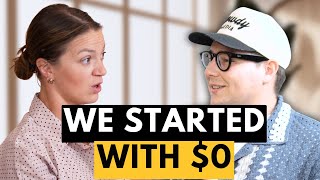
In this full‑episode podcast, Dr. Alejandro Elias and Dr. Emily Elias, co‑founders of Victory Spinal Care, recount how they launched a chiropractic clinic in Abilene with no local connections and grew it into a multi‑clinic brand aiming for 300 locations. They describe a 90‑day launch plan that combined relentless door‑to‑door outreach, handwritten follow‑up letters, and systematic email‑list building. Community immersion—joining the Chamber of Commerce, Lions Club, Kiwanis, and countless networking events—served as the primary client acquisition engine when they had no marketing budget. Financing was secured through a mentor who provided $300,000 after numerous SBA loan rejections, and the brothers‑in‑law leveraged a “Shark‑Tank” style pitch. Operationally, they adopted daily geographic planning, used GoHighLevel for CRM, and delegated clinical time to focus on business growth, establishing a weekly schedule that balances patient care, meetings, creative work, and family. They emphasize employee well‑being, checking on personal life factors to maintain performance. Their long‑term vision of 300 clinics is inspired by the biblical story of Gideon, aiming for generational health impact across families. Content marketing includes newsletters that educate on niche chiropractic benefits (pregnancy, migraines, epilepsy) and active social‑media presence. They recommend "Traction" by Gino Wickman for systems and Alex Hormozi’s books for offers. Mindset advice centers on releasing self‑imposed timelines and acting on coachability, while they track metrics like CAC, LTV, and cost of inaction. They also mention an upcoming book on building businesses from scratch.
Chapters
I think the more you constrain yourself to a short amount of time, you're actually limiting your growth.
We're so obsessed with what we're doing that it becomes part of our life.
A lot of just close family friends were like, go, it's going to be life-changing.
So email lists, I feel like, are underrated. How helpful has that been, having an email list?
We went literally door to door as well, door knocking when it was 100 degrees. We're here, we want to be coachable, just tell us what to do. And he said, okay, you need to like set day by day, you have to plan for the next 90 days.
We want this to be more of a generational impact versus—
Today we have Alejandro, Dr. Alejandro and Dr. Emily Elias on the podcast today, and they have built a tremendous brand, at least from my perspective and Evelyn's perspective. Um, they are actually members of the podcast studio here in town, and so we help with the production of their episodes, and it's been an honor to get to work with you guys. Um, and so let's go ahead and get right into it. The first year y'all were in business in Abilene, y'all didn't know anybody, right? And so tell me about that first year, and how did you guys build such a strong brand so quickly with being brand new to a place? Because that's like unheard of.
Thank you. You want me to start?
Sure.
Yeah, I think there are some advantages and disadvantages of coming to a place where you don't know anybody. Obviously, have you guys ever seen Undercover, um, Billionaires?
No.
Okay.
Oh wait, is this Grant Cardone?
Yes.
Yes. So they basically drop a billionaire in a place, they give them a fake identity, they give them $100 in cash and a cell phone with no contacts, and they're like, take off and you have to build a million-dollar business within 3 months Within 90 days, that's kind of like what it felt like for us, although I didn't even know the show at the time. But we're like, okay, how can we basically build up a network of people? Because we knew it was going to take people in the community to help us build this thing. We can't— we literally need clients and patients. Like, we can't just build this thing by ourselves. So we went to every single networking event you could possibly imagine. We joined the Chamber of Commerce. Every single event they had, we were there. Any type of like Lions Club, Kiwanis Club, like we went to everything. The more we showed our face, the more people started recognizing recognizing us and they're like, oh, what do you do again? And then we're like, I'm so glad you asked, like, here's what we do. And I think that was the biggest thing, was just getting involved in the community because we were broke at the time. We had no money, all we had was time. And so we're like, how can we spend our time in the best way possible? And that's how we built up kind of our network, I'd say.
Yeah, and it took us literally 90 days to start the office, so we had a lot of time. We could have spent it sitting on the couch, laying in bed, waking up at 12 PM, but we didn't do that. So we said, okay, how can we set ourselves for success? So we went literally door to door as well, door knocking when it was 100 degrees. Like, hey, Dr. Alejandro and Dr. Emily, we're opening a chiropractic clinic here. Uh, can you help me? Is the town growing? And people ask, like, people ask questions, people help you answer the questions. Like, people here were super friendly. But it's something that I want to share because we always share the wins. I want to share the mistakes. It was that we stopped that in month 2 after we opened the clinic. So we had a great month 1, Uh, so we say, oh, we're comfortable. We stopped that on month 2. Okay, we had a decent month, and then month 3 we were on the negative. We were not in the greens, we were on the black, and we were like, oh shoot, like we need to keep the momentum that we had. And gaining the momentum again kind of sucks, so we had to go all over again and like meet the people, meet the community, and like get more involved.
Yeah, yeah. Um, did we mention y'all were chiropractors? Did I just say y'all were doctors? Um, they're chiropractors, amazing chiropractors, Victory Spinal Care. Um, their mission is to open how many?
300 clinics.
300 clinics. And so tell me a little bit about why 300 clinics.
Yeah, so this goes back to the biblical story of Gideon and his army of 300 and how God kind of uses less to do more. And we just love that, that story. We have a business partner involved in all this who helped us actually get the capital to open our practice. And he's got stake in our company and everything. And he's been a wonderful mentor. Everything we know business-wise is pretty much because of him. So got to give credit where credit is due. But he basically had this dream and the Lord came to him and said, we need to start 300 Victory Spinal Care clinics. And we just happen to be Victory in Abilene. And so since that conception of, of Abilene, we now have 5 Victories around the US and hopefully continuing to expand, which is awesome. And that's been a whole different journey. But sticking with Abilene and the community, of course, um, I think the biggest part of that mission is we're reaching people in the community where we can help families. And that's kind of like our niche, our target market, if you will, is helping moms and dads and their children and their grandparents and so on. We want this to be more of a generational impact versus just, oh, I've got neck pain and back pain. I want this to influence the entire family, because when your nervous system is aligned things go a lot better in your life. Pregnancy, amen, having baby, like everything, right? So that's kind of our main mission.
Yeah, I wanted to talk about our experience with them as us being the patient. Yeah, you've had a good experience, so absolutely.
So 24 years old, terrified to go to chiropractor my entire life. Um, I've always thought they were gonna break my neck. I was just terrified. And so Darren was like, hey, you've got to go, because just found out I was pregnant. And then a lot of friends had recommended them actually, like, a lot of just close family friends were like, go, it's gonna be life-changing. And I can attest, it's been life-changing. And we even bring our brand new newborn to come get adjusted. Is that the right term for a newborn? Same thing, same thing. Seems like you give them a cute little massage, basically. Yeah, but yeah, Livy's doing great, Mama's doing great. You're stressed, it's helping.
Oh no, yeah, I've had a great experience as well. So I want to talk about those 90 days before y'all opened.
Yeah.
What, what were y'all doing? I know you mentioned door knocking, but like, yeah, whenever, like, did y'all have to completely start from scratch or did y'all have some help in that area? Like, how did you decide which systems to go with?
That's a good question.
Yeah. So our mentor, and that comes back to the $300,000. So our mentor, we did our internship with our mentor and we went to the SBA, we went to every bank to get a loan. And chiropractors' debt is $250,000 per chiropractor. So we have half a million here in debt. From school?
From school.
Which, how long is school?
3 and a half years.
Yeah.
Okay. Yeah. So it's kind of a scam, but you know, it's the only way you can get the diploma. So by saying that, we went to every single place that we could get a loan, and they were denying it because chiropractors usually don't pay their loans. So with that, we did like a pitch to our, uh, our mentor about like a Shark Tank, like, hey, can you invest on us? And, you know, like, you get a percentage and let's go from there. And it's like, okay. And the best thing of that is, is that we had literally like, if we win, he wins, if we lose, he loses. So he gave us the whole system that he does, and he had a great clinic that time. He was making $2 million, and that's not common in chiropractic, and he's helping a lot of people. So we said, okay, just tell us what to do. You know, we're here, we want to be coachable, just tell us what to do. And he said, okay, you need to like set day by day, you have to plan for the next 90 days. So we went to Google Maps and we said, we circled the communities with different colors and businesses with different colors and say, okay, so day 1 will be here, day 2 will be here, day 3 it will be hard, we still need to get going. And you know, like, it was super mental. And he gave us the goal of 100 door knocking per day and 100 businesses per day, and we actually did it.
Yeah.
Hey guys, I hope you're enjoying today's episode. Today's episode is actually sponsored by Brand Builders, the community. This is a community for builders who are business owners and creatives who are wanting to maximize their content to create as many clients as possible and build the biggest brands that they possibly can. In this community, you're going to get access to weekly live Zoom calls. You're going to be able to access our Howdy team as well as multiple different influencers who have gone through the thing And so if this interests you at all, there's going to be a link in the description to check out more. Hope to see you in there. Let's get back to the episode.
And after that, we got home after every single day. We got home at night and we wrote those people handwritten letters. When we say we was Emily, because my handwriting is terrible. So Emily wrote the letters. I just sealed them, placed a stamp, and let's send them. And next day in the morning, on the way to the gym at 5 AM, we dropped them on the mailbox. That way those people could get in 2 to 3 days. And every time we saw someone at an event, they were like, thank you so much for your letter. Like, it meant a lot, whatever. And we were like, oh wow, so it actually matters. And we thought about that every night because it kind of sucks doing that at night. You're tired, long day. But just hearing the people say thank you for that, it's like, okay, so we're out there, our names is out there. Let's just keep doing it.
Yeah. And I'll add to that, every single person we met, every business that we went around to and door knocked, we kept on a spreadsheet. And so I'm building like our email list, I'm building our kind of like pre-leads, right? So we now have these contacts to email. And so when we open, when we have our grand opening, all these people are getting invited. And so our grand opening was like huge.
Okay, so email lists, I feel like, are underrated.
Totally.
How helpful has that been, having an email list?
It was super helpful.
Yeah, especially when it comes to opening, like the grand opening that you guys know how small our office is. It was— I mean, it was busting out of the seams. Like everybody was—
it is every day now almost.
Where do I stand? Like, where do I go? And we wanted to have food, like, we want to make it a cool grand opening. And there it was, just packed, which was amazing. We're super, super grateful for that. But, um, I think for opening, that was like the biggest thing. But then continuing to nurture these people— so we send out monthly newsletters, we talk about spinal health, we talk about some things that is helpful that chiropractic can help with that people may not know about— migraines, epilepsy, pregnancy, like stuff that people aren't— they don't connect that with chiropractic. We send out newsletters like that, and we often get people who come in who are like, I had no idea that that I don't know if that helped, but I'm here. Like, I have that. And then they share that with their family members and friends too. So it's not just about getting people in as new clients, but education as well, which we're super, super about. Like, I want people to know in the community what it means to be actually healthy.
And I feel like y'all do a phenomenal job with your social media on that, is like bringing awareness to those things, because I had no idea. Like, I was thinking pregnant women, they can't lay on their stomach, how are they going to get adjusted? Like, and I just, you know, I never really associated chiropractic with helping me. In that season. And so y'all do an amazing job of educating. I've seen that just on your socials. I don't even know if I'm on your email list, but—
but you need to be.
But I need to be, I guess.
After this one. Yeah, that's funny.
Okay, so y'all are entrepreneurs, y'all are creators, content creators, and y'all are chiropractors. Chiropractors. It's a hard word. So how do you balance? Because I know for me, we are a service-based business and y'all are a service-based business. And so how do you balance like being the service provider and being the business owner at the same time? Do you all have to like time block or how do you—
That's a good question. We actually met Tuesday morning with the creator of GoHighLevel. Really? Yeah, we went on a Zoom call with him with our mastermind and he said, I love coding. But I don't do coding anymore because if I do coding, my business— no, it's not gonna move forward. So now he needs to work as CEO, and it's basically where more work, more on the business. So the less he's— the less time he's spending at the office of GoHighLevel, the more the business grows. So by saying that, we noticed that when we pull hours out of the clinic from seeing patients, it was when the, uh, when the clinic grew. So right now I'm working 2 days a week at the clinic adjusting people, but the other 3, 4 days I'm literally like trying to see how can we grow this more, what other ideas can come, you know, because I'm not the best at marketing, but if I come with an idea I can move it forward to the marketing team and say like, hey, what about this, would this work, you know. So it was pretty humbling, say, uh, like noticing that I cannot do everything, you know, I'm a chiropractor, that's it. When it comes to marketing and all that, I need to start delegating that because it's not it's not going to move forward. I'm not going to go to a dentist that tells me like, I'm a marketing specialist. Well, I want to go to a teeth specialist, basically, you know. So it's the same thing. So when we pulled ours out, it was when the clinic grew.
Wow. Yeah. And I'll kind of add to that, like, I love adjusting babies. I love adjusting pregnant women. That is my— that's like where I get my dopamine and where I get my energy. But I realize same thing. The more I'm in the clinic, the less we grow. And being humble enough to know that there are people who can do what I do just as good, if not better. And so if I'm really good at creating and growing clinics and helping open new offices, I need to do that because our impact will be that much greater. And then, of course, still go in 2 days a week, get my fix of my babies and my pregnant women.
And to answer your question, though, Mondays we see patients all day. Tuesday we have that Tuesday for all the meetings of the clinics because we don't want to have it like Monday one clinic, Tuesday one clinic. So on Tuesdays we have 7 meetings with all the clinics and then with our main clinic as well. Then Wednesday I see patients the whole day. Emily's just the morning. Afternoon she's working on the business. Like, what can we do to move this forward? Like, I've noticed this is decreasing. How can we increase that? Thursday I'm off the whole day. That's my creative day. And Emily is just mornings off, afternoon she works. And then Friday we're all together. And Fridays we were going to use it to work on the business. But as Luca keeps growing, it's like we want to be present, to be honest with you.
So we all spend time with Luca.
Family time. Yeah, Friday.
And if we want to work on the business, then we wake up early. Earlier, like at 5 AM, we get on the zone. And then when he wakes up, we try to—
I feel like that's awesome that y'all even have the option to do that.
Yeah, for sure. We didn't have that option before, and that's the option I want to have for Bryce and Jimmy, that they're in the clinic as well. I want to have that option for them. Like, Emily came to the clinic 3 weeks after giving birth because she had to. She saw I was miserable. I went to the clinic a week later and I was miserable seeing 120 people by myself per day. I was not too happy. So I don't want Bryce and Jimmy to suffer with that. I want to give them 1 month, 2 months, 3 months, 4 months, whatever they need. Yeah, for they can like enjoy themselves with the baby and all that. And then once they're ready, they can come to the clinic. We didn't have that opportunity, so I want to give them that opportunity. It's things that we're learning. Yeah, that we could do for all the clinics.
And so that's one thing that I've been reading about more is like treating your employees and the people who work for you like Amazing.
Let me interrupt you there. That's funny how you say that. I observe everything. I'm super observant. And two of our girls this, uh, Monday came to the clinic and I could see them, they were not too present. And the first thing I do is look at their, at their ring. I'm always looking at people's ring because that says a lot. And one of them didn't have the ring and I called her out. I'm like, what happened to your ring? Why don't you have it? Oh, I forgot after showering. But you always wear the rubber one. That's not an excuse. Is everything good at home? Yeah, okay. And then the other one, I went to her and I was like, why do you have your rubber ring and you don't have your diamond that you're always wearing? Why do you notice that? Is everything good at home? No. Why do you even ask? Well, because if you're not good at home, you're not going to be 100% here, and I want you 100% here. But in order to be— give your 100% here, you need to be fully 100% at your home. So how can we help you? If there's anything we could do for your house, like, what's going on? You know, so I care more about their personal life 'Cause if they're doing good in their personal life, they're gonna be good here. But if they're just doing good here and not good at their personal life, it's miserable.
Yeah, if you take care of your employees, they'll take care of your business.
Mm-hmm, yes.
And your clients. And so I think that's huge. Me and Katie were talking about the fact that both of y'all are doing the business owner thing and y'all are married and have a kid. And so what was the thing that we wanted to ask them about?
Yeah, the question was how do you guys balance being business partners but also life partners?
For me, I don't balance it. Yeah. And it is, and it probably is not going to work for everyone, but it's just like we're so obsessed with what we're doing that it becomes part of our life. So we say, okay, date night, we're not going to talk about business. The first thing we do when we sit on the table is talk about business.
And it's right off.
Yes. So it's just, it's just like we love it, you know. There's times and places that, you know, we're not going to bring it. If we're, you know, watching a movie, I'm not gonna like, hey, what happened this time? No, like Obviously it's just common sense, but it's just, I think just being obsessed with it has helped us a lot. What do you think though? I think you have more of a better balance.
I feel like we just know each other really well. And when it comes to that, it's like, I know when to bring things up about the office and I know when not to bring things up. And like, I feel like balance is truly a myth to answer your question. Like there really is no balance. Like there's time. We really do a good job of leaving our personal life out of the business. I think we are pretty good about that. But we don't really leave our business life out of our personal life, if that makes sense. Like, like you said, when we're on vacation, we go to Puerto Rico often to visit his family. We talk about business pretty much the whole time we're there because we're like, this is our time to be creative and like get new ideas and like expand and all that stuff. But also knowing when it's 10 PM and we're in bed, it's not the time to talk about it.
And I would say as Luca keeps growing, when we're around him, we don't bring the office. And we never planned on this. I think it's the first time that we actually talk about this, but we never plan on it. It's just when we're around him, we don't even bring it up. Because I remember one time on the way to the clinic, we were talking about business and we were driving to the daycare to then go to the office. And like, we were just having a conversation. All of a sudden we heard, hi. And it was like, oh wow. Like, he feels out 100%. So ever since then, like, we just literally without talking, we don't talk business around him.
Yeah. But it's fun. Like, he's my person. I have so much fun. Like, he's my best friend. Why would I not want to work with my best friend? And yeah, there's times where we disagree on things. But knowing also like what role he plays. He's the visionary and I'm the integrator, and we do really good at sticking with those roles. Like, I can always bring new ideas, but at the end of the day, like, you're the idea guy and I'm the one who's going to be like, okay, how do we get that done? So I think knowing our roles in the business is super important too, and so we don't overlap.
And your goals too. I feel like y'all are on a mission to reach the same goal.
Yes.
And a lot of people don't have the same perspective and goals and like end target that they're reaching for.
And don't get me wrong, there's always going to be— to answer your question, there's always going to be things that are like, that was messed up, you know. There's always gonna— I was reading a book and it talks about two metal things. When you have two metal things close by, there's gonna be friction, you know, and friction is not great. So how do you fix that? Like, if we're all day together working, seeing each other, working, working, working, there's gonna be friction between us. So they say with manners is how you avoid that. When you have two front— two girls on the front desk, there's going to be friction. So just have manners that way, avoid the friction. With us, it's just have manners, have love, be present for each other, you know, like when we're on the dinner table at night and Lucas around, like, let's try to leave the business behind. Let's talk about how did your day go? What can I do better to serve you? Whatever. So that's kind of like what we could bring to avoid that friction between metal and metal.
That's good.
That's good. Okay, so you mentioned books. What would be— if somebody listening right now, because we have a lot of business owners and creatives, what would be the number one book that you would each recommend them read?
See if we think the same thing. If they're a business owner, they're opening— Traction, without a doubt. Traction by Gino Wickman completely changed the game for us.
That would be mine. If not Alex Hormozy, any book from Alex Hormozy, any book from him. $100 Million Offers, $100 Million Leads.
Dude, the $100 Million Offer book has completely changed the way I think about It's all of his content I would recommend. So Traction, like if you had to summarize into like 3 sentences, what is it about? Because I've never heard of that.
Um, it's have systems. It's how to lay out your systems, how to have an effective weekly meeting or quarterly meeting, whatever it is, but how to lead team. It's how to run a business in, in a short book manual. It's like the playbook on how to run any business. If we open a car wash business tomorrow, I'm reading Traction again and I'm going to figure out how to implement what we do into Traction. And that's like what's really cool about being an entrepreneur, as we've learned, is like, okay, let's say our building burns down tomorrow, we lose the ability to practice chiropractic. We talk about this all the time.
Okay, cool.
We'll just open another business and we'll do this again because this is something that we've grown into as people, is learning how to run a business and operate it successfully. It doesn't matter what it is, we're going to do it really well because of a book like Traction. It helps you have the systems to be able to do that.
So would y'all consider yourselves more chiropractors or more entrepreneurs?
Oh, I actually think about this often. It's crazy.
I—
this has evolved greatly because when you come out of school, you just like think you know everything and you're like so diehard in your craft. 4 years ago, I would have said I'm a chiropractor through and through. And I think today I would just say I'm an entrepreneur.
This is the first year I feel like entrepreneur.
That's awesome.
Yeah.
Okay, so we'll go ahead and wrap it up with this last question. What's the greatest piece of advice that you have heard or that you've learned up to this point in y'all's career that the listeners could take away?
Release the timeline. So there are so many constrictions that we give ourselves, like we're so young, like growth is going to take a long time, whatever. Time is really a concept. A construct. Like, you don't have to wait 50 years to retire. You don't have to wait 10 years for your business to double or triple or whatever it is. Like, release the timeline. And that can also go the opposite way. So we want to have whatever, let's say 4 kids, and it's going to take 12 years. I don't know. Release the timeline on things and it actually really helps things. Obviously, like, we want SMART goals and realistic, attainable, whatever, timely. But I think the more you constrain yourself to a short amount of time, you're actually limiting your growth.
It's a limiting belief.
Yes.
Yeah.
So for me, it would be like we're always calculating like lifetime value. Customer acquisition is the cost of inaction. COI. So just put things into action and be coachable. A lot of the times we go to seminars, take notes, and nothing gets done. So just, you know, put it into action. If you make a mistake, then it's— you can fix it any time.
So cost of inaction and cost of ignorance is something that I've also learned.
I like that. That's huge.
Yeah.
Do you happen to know off the top of your head what else CAC is? Your CA, your cost to acquire?
I know it for all the clinics except ours. Okay. 67 and 87.
You have homework today.
That's good. Yeah, that's great.
It is.
We were talking about the other, the other day on the first episode, and I think for this year, I think ours is like 92.
That's pretty good.
With an average spend of like $3,600. That's pretty good.
That's pretty good.
That's really good.
And so We haven't spent hardly anything in marketing this year, which you need to do better at. Yeah, we spent $2,300 all year.
Wow.
And so that means I'm doing a lot of the work.
But yeah, anyway, that's fair.
Thank you guys for coming on.
Yeah, thanks for having us.
Um, where can people find you? Where can they connect with you guys?
Go for it.
Okay, we're on Instagram. He's got @pathofvictorypodcast is your Instagram handle. I think mine is Dr. Emily Elias. And then we've got a website, it's called pathtovictorychiro.com. Um, the Wonderful Howdy team helped us set that up. And then we're on Facebook. Um, yeah, we're just— you can find us anywhere, really.
YouTube channel.
YouTube channel, how could I forget?
Dr. Alejandro Elias.
Yes.
And we are working on a book that probably next year will be out.
I'm sorry, did you say a book?
Yeah.
I'm stoked.
That's awesome.
It's the first time we say it, but yeah, hopefully next year.
Like, can you give us any little sneak peeks or—
yeah, yeah, we don't have the title yet, but it's basically how to open a business from scratch. Things that we talked here.
Is it specifically for chiropractors?
No, for every business owner.
That's so awesome hearing. I've never heard the part of your story where y'all were door knocking and doing all that. It's a whole nother respect.
Thank you.
Because the groundwork, like, that's what people don't talk about. They want to see the instant success And so that's why we felt so passionate about opening the Brand Builders community is talking about these honest things and like the hard times where you are knocking. Like when you were doing real estate, we were hanging door hangers and walking around and talking to people. Like, I get that. And so thank y'all for being honest about that.
And having negative months. You brought that up earlier. Yeah, I talked about that the other day. We had like 2 straight negative cash flow months in December and January. After having the biggest month of the whole business. And I was like, we just bought a house, like found out we were pregnant. I was like, we're like, what are we doing? And so anyways, thanks for sharing all those tips and stories. I hope you guys found some value out of this episode and we'll see you on the next one.
More from Daron







Entitled Woman Tries Suing Man For LEAVING Her Mid Date, Instantly Regrets It


This Is Why More People REGRET Buying Their Electric Vehicle Than Ever Before