How to Build Wealth on Any Income
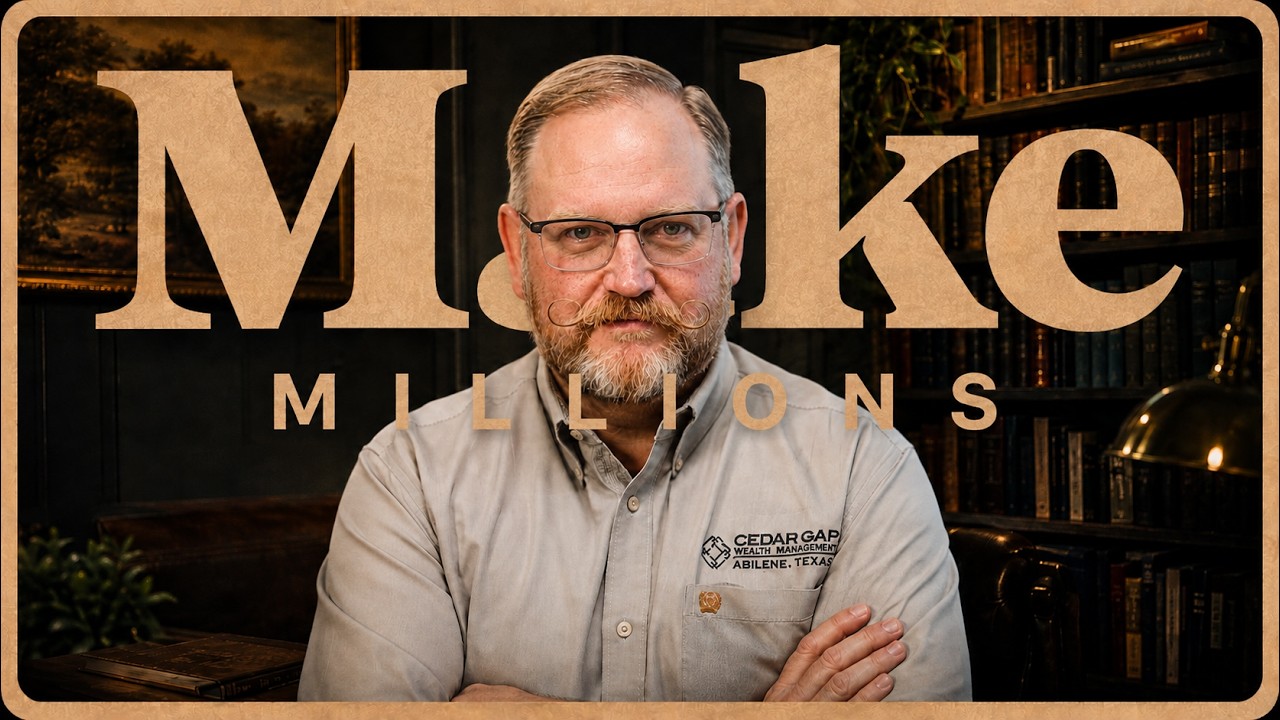
Michael Hull, co-founder of Cedar Gap Wealth Management, explains how to build wealth on any income through his 10-10-80 rule: 10% tithing, 10% saving, 80% living. He charges 1% in fees, aligns his incentives with clients' outcomes, and believes basic money skills should be taught in schools.
Chapters
I think really learning how to set goals is the key to all of it.
The typical business school doesn't teach you how to run a business. Yeah, they teach you how to work for another business.
Everybody wants a shiny watch or a brand new car or whatever the case may be. I mean, this is what's beat into our head growing up with all this wonderful marketing that has been taking place in the last 50 years, really, you know. And so you just pick up these little pieces from all these different people and then you start implementing that into— Brand Builders Podcast.
Today's episode is sponsored by Empire Management Group. Whether you're a business owner looking to improve employee benefits, strengthen your insurance coverage, grow your sales, develop your leadership team, or build long-term wealth, Empire Management Group provides practical solutions all under one roof. That's right. Their team helps businesses attract and retain top talent, improve operations, and create sustainable growth. Plus, through premier partnerships like Aflac, they offer career opportunities for individuals looking to make an impact in their community. Learn more at empire-management-group.com. Let's get to the episode. Pimento cheese.
That's key to everything.
Everything. Okay. I eat a lot of food.
I'm just kidding.
It's like, hey, that's a lie.
Eat more beef. That's what I would say.
Hey, yeah, eat more steak. That's a good saying too. Yeah. Well, Michael, welcome to the podcast.
Glad to be here.
Glad to have you on. You are one of the founding partners of Cedar Gap Wealth Management here in Abilene, Texas. And so we talked about it a little bit before, but for those of our listeners who have never kind of explored the path of wealth management or are looking for wealth management options, kind of tell us what that involves.
Yeah, so, uh, we are a privately held company, uh, here in Abilene. Uh, we manage people's assets and we help them, you know, reach their goals, whether they're short, medium, long-term goals, whatever the goals are. A lot of clients are like, we don't even know what our goals are. And so we even help them figure out what their goals could be. But as an independent advisor, we're here for our clients. We're here to help make sure our clients are reaching their goals with the least amount of risk and volatility possible. And that's what we're here to help them do.
Heck yeah. So how did you get into the whole industry?
Yeah. So, you know, really thought that I wanted to be in the banking world growing up. I was like, you know, I didn't grow up with money or anything like that. And really thought I wanted to go down that ag lending route or path and be an ag lender. Growing up in Rotan, that's kind of what you looked up to was like, oh, look, you know, if I could just work in that little First National Bank of Rotan, that'd be exactly what I'd want to do as I got older. So went to Texas Tech, got a degree in agricultural and applied economics, worked at some banks in Lubbock while I was going to school. Uh, got out of school, graduated, went into banking, and then kind of realized unless you don't own the bank, you're probably not going to make a whole lot of money working at the bank. Uh, and so anyway, so kind of switched paths and ended up on the investment side of it and, uh, have really enjoyed it ever since.
So you worked at a bank and then where did you work after that? Did you open up immediately into wealth management or?
No, actually, uh, went from banking went to work for Johnson Johnson in pharmaceutical sales, actually. So I did that for about 4.5 to 5 years, somewhere in there, and then decided after that, that instead of traveling a lot and moving all over the place, that I wanted to try something different. And so went back on the finance side, but went into wealth management and went to work for a larger firm here in Abilene. Did that for 15 years. And then in March of 2021, Ben McAnally and myself opened up Cedar Gap Wealth Management., and here we are 5 and a half years later.
So why did y'all decide to open your own? Is it the same thing with banking? Kind of, you got to be the owner to—
That's part of it, but we really felt for the clients that we deal with that it just gave us more opportunity for them. Uh, as we are 100% fiduciaries for our clients, which means everything we have, we do. Has to be in our client's best interest. Uh, and we felt by being an independent advisor, being a fiduciary on everything that we do, which we were not in the previous firm, could really show our clients that we're there to make sure that what they're doing is what's best for them. Uh, and then it just opened up the avenues, you know, a little way from that corporate world back into, you know, what's best for, you know, our client in Abilene or Roatan or Clyde or wherever they're from, you know, how do we make sure that we're getting what, what they, what they need? Yeah.
So what has been one of the biggest things? It's been what, 5 years now?
Yeah.
What has been one of the biggest things that you have learned along the way with entrepreneurship?
Man, I think it's, you know, you, you really put your money where your mouth is, right? And it's all about relationships. You know, 100% of what we do is a relationship, whether it's the client that we deal with, the other investment firms where we're getting investment feed from, you know, it's all about the relationships. And that's what we want to make sure that we continue to grow is those relationships.
That's awesome. Your network is your net worth. That's literally why I love podcasting. Because it gives us an opportunity to sit down, even if we've never met before today. No. But hopefully after today, we'll have some sort of relationship where I can text you and ask you something more and vice versa. Podcasting is huge. What were some of the hurdles starting a business, or have y'all had many hurdles along the way?
Well, you go from, hey, I'm a financial advisor for these group of clients, but I really had no access to back office or some of the other stuff that goes on, right? The accounting side of it, or, you know, now I pay all the bills. You know, I didn't do that when I worked for the previous firm. You know, I didn't do payroll. I didn't do, you know, the tax return for the firm or any of that kind of stuff. So that's been a little bit of a hurdle figuring out, you know, okay, I need to make sure that this is taken care of and this is taken care of and this is taken care of, you know, all at the same time that we're making sure our clients, which come first, is taken care of before any of the other stuff. And so I think that's probably one of the biggest hurdles is just like, how do you piece it together? How do you make sure these things are getting done? What teammates do you bring into that, that problem?
Yeah.
You know, how do— who do you use to help facilitate some of those things for you?
Yeah, the risk in starting a business.
Yeah.
Way more than you— like, if you've never ran a business, take what you think it's going to risk you and then like multiply that by like 50.
Yeah.
And that's about right.
Yeah, we were—
Trust is the foundation of every single great business, and the Better Business Bureau exists to protect that. So the Better Business Bureau helps consumers find businesses they can trust offers scam prevention resources, and supports local business owners through accreditation, networking, education, and visibility opportunities. Brittany Brown, she's the CEO. She's been serving the big country, and she says, strong communities are built by strong businesses. Whether you're trying to grow your business or make a smarter purchasing decision, the Better Business Bureau is in your corner. Visit BBB.org to learn more.
We were very blessed, uh, with the clients that chose to move with us after we moved. And in this world, it's really, uh, there's certain ways you have to do things when you leave a firm and you start your own, or you go to another firm. Like, you can't tell people up front, you can only— you can't take certain information. There's just certain ways to be legally, you know, bound by the previous firm that you worked for to make sure that everything works the right way. And so you hope that you've got those good relationships, right?
Yeah.
And so when you leave and then majority of your clients move with you in a short period of time, you know, at least that kind of, kind of takes some of the, whoo, okay, now we're, we're good to go.
Yeah.
And, uh, but yeah, it's a little scary for sure.
So on that transition period from the old one to the one that you currently own, what did that look like? Was it just you and Ben, or did y'all bring a team with you?
Yeah, so there was, uh, there was actually 3 of us. Okay. We had an assistant with us, uh, and then Ben and I, and then the compliance team that we use now, our broker-dealer, uh, we had access to their back office, and so they helped do a lot of stuff with us, uh, during that transition period.
So what were some of the first hires that y'all made?
Uh, well, we've hired another assistant. Uh, we've hired more, you know, advisory staff. Uh, we've hired marketing. Uh, we've hired like brand ambassadors. Uh, and we're continuing to grow kind of on all those levels going forward.
So y'all's first one was an assistant.
Yeah.
Why?
Just to make sure that things were getting done in the right way that we needed them done. Yeah, I mean, the bigger you get, the more you grow, right? Uh, and the more you grow, the more things could possibly fall through the cracks. Uh, and so we saw a need to make sure things were done the right way. Uh, and so instead of hiring on the sales side to begin with, uh, we wanted to make sure that we were capable and had everything underneath our world. And actually, we kind of hired a salesperson and that at the same time. Yeah, or pretty close anyway. I don't know really where the dates were. Yeah, uh, but anyway, yeah.
Okay, so y'all did that and then sales. So like, what does sales look like for a wealth management company?
Yeah, so we hired a young man, uh, by the name of Landry Burns. Landry grew up in San Angelo, a really good kid. St. Angelo Central is where he went to school. Then he went to Ole Miss. He came and interned with us for a summer while he was at Ole Miss. And then when he graduated with his master's at Ole Miss, he came back and worked for us, and now he works for us full time. So he's fully licensed financial advisor, just like we are. But his job is to go create new business and get clients and, and do all that on the— what we would consider a sales job. Yeah, for the most part, but he is more than that because he's a, you know, financial advisor to his clients.
Yeah. So whenever it comes to, I guess, getting more clients, is that y'all's main stream of like, is it referrals or is it just sales or social media or how do y'all get most of those clients?
It's all about, you know, how do you either A, grow the clients that you have, or B, grow the number of clients that you have, right?
Yeah.
So you can either grow organically to where your clients become bigger and bigger and create more opportunities, and the assets that they have continue to grow, right? Or you got to bring more clients in. And so that's, you know, I think every financial advisory firm out there, whether you work for A Merrill Lynch or you work for Cedar Gap. Yeah, you know, your goal is to grow, and that's the number of assets that you manage, uh, and whether that's by internally growing existing clients or externally growing new clients, it doesn't— it shouldn't matter. Yeah, to some firms it does.
So, so how does that work? Is it like a percentage of like the profits that y'all help make, or how do y'all get paid on that stuff?
Yeah, so, uh, do a couple different things, but we're what you call, uh, asset-based pricing. Uh, so we're a fee-based pricing, which is, you know, if we manage an asset, if you got $50,000 that we're managing in a retirement account, then we're going to charge 1% a year to help you manage those assets. And so that way we're on the same side of the table. It's not a commission-based You know, we're not charging to buy and sell things. We're just charging based on your total amount. So if we can double your assets, go from $50,000 to $100,000, then we doubled our fee and you're happy about it because you have twice as much money. Yeah, right. And so that way you don't have to worry about, oh, are they calling me to do this because Ben needs a new shotgun or are we calling to do this because this is the right thing for the client? And so we always— we took a lot of that. Stuff away just to make sure that our clients understand that we do the right thing for them and we're all on the same side of the table.
That's interesting. Do most, uh, management companies do that?
I think you see more and more do that now. Uh, there's still some that don't. There's some that kind of do both.
Yeah.
Uh, we're not a mutual fund company. Like, I don't sell mutual funds. I don't use mutual funds. I think, uh, upfront fees and mutual funds are probably not a good thing, uh, in my opinion. But there's a lot of firms that do that, and it just depends on how are they taught, how are they trained, what they think is the right thing.
Yeah.
Uh, but every advisor, no matter what firm they work for, uh, should just be making sure they're doing what's best for their client.
Yeah. Okay, so let's talk about different investment types real quick. Crypto.
Yeah.
What are your thoughts on crypto?
I mean, I think for the right client, the right people, the right risk tolerance, the right cryptos, I think it can make sense. You know, I think there's still a lot to be learned about it. And I think there's just, you know, there's very few people that understand it completely. But, you know, it's just like anything else. You know, if you can get in at the right time and the projections look correct and the risk tolerance is right and you know the risks, associated with it, and your advisory team as well as yourself feel like this is a good opportunity and I'm accepting this risk, then I think you're okay with it.
Yeah, which I feel like it's so risky. Yeah, crypto. It's funny because that's how— so I got my real estate license in like 2021 while I was in college, and I didn't, I didn't have any money. Like, nobody has money in college. And so I had bought like $100 worth of Bitcoin, like at the beginning of that year. And for some reason it went like crazy up and I made like $800 or $900 just off of that initial investment. And that was the only way that I was able to get my real estate license. I was like, thank you. But then like a few months later, it plummeted down right back. So you just never know.
And that's where you get into some of those kind of investments. You know, I think you have to have an exit strategy as well as an investment, as part of your investment strategy, right? You know, and so, yeah.
So, okay. So, so for entrepreneurs, when would be the right time to start investing their money?
Yeah, it all depends on their goal, right? You know, I think with— we— I talk a lot about, or I talk a lot about how do you start saving and how do you start an investment strategy. I really think one of the key things with us and what I feel is our role as investment advisors, uh, is to educate. And so I don't care if it's 13-year-old kids in the 7th grade or 8th grade or whether it's people in college or people right out of school or 80-year-old people, doesn't matter, right? If you can educate people to help themselves out in the future, then I think we owe that, whether we make a penny off of it or not. So I talk a lot about this 10-10-80 rule, and this is just something that I've kind of thought through. And, you know, the first 10% of every dollar you make, you give to God. That's what the Bible tells us to do. It's tithing. I think that's what you should do. The second 10% on that 10-10-80 rule is pay yourself. The other 80%, live with how you need to. Do with as you please. Make your mortgage payment, make your car payment, go on a vacation, help your kids. But that second 10% to where you're setting 10% of every dollar you make for the rest of your life aside from your long-term wealth plan, there's no way you can't save a significant amount of money. Yeah, right. And so I would tell that to an entrepreneur, just what your question was, you know, look, as soon as you can get to that point, start it as soon as you can start it. Now, how do you do that? Do you start a retirement plan within the company that you now own? For your employees and for yourself? Do you do it as, oh, this is more short-term savings in case we need it down the road, not in a retirement plan? Well, that's where you're going to have to figure out what you need and what your goals are. It's all about goals, right? But I think as soon as you can get to that point, uh, I was on a different podcast with someone we both know the other day, and they asked me, well, what about a business owner? You know, 10-10-80 rule is great for someone that works for McDonald's, for instance, and I use that example a lot, but it doesn't matter who you work for. Uh, but what if I'm a business owner and I've got debt that I've established to grow this company or to build this company? How do you pay off debt first versus building a financial plan and growing these assets? Well, I think you could take you know, that could be split into a 10-10-80 rule, but it looks different, right? 10% towards debt, 10% where you're growing your net worth in these investable assets, then 80% for the company.
Yeah.
You know, and so I think you've got a— you got kind of a fine line for entrepreneurs.
Yeah.
As to what's the most important thing you can do. You know, if it was, oh, we're borrowing money at 3% like we were a few years ago, I'd tell you not to worry about it.
Yeah.
But if you're going to the bank, you're borrowing money at 7, 8, 9, 10%, then I think you do want to start paying that stuff off as soon as you can. And that could reduce how much money you've got or cash flow you've got to put into your investment strategies.
And being a business owner, I feel like income is so— at least at the beginning, like you don't know how much you're going to make really.
Right.
Some months you might make— have a great month and make $10,000, $20,000. The next month you might make $1,000. So So I think finding that balance, at least for me, has been probably one of the biggest challenges of like, okay, what do I need to do with the money that I've made so far so that even if we have 2 months of where we have no business, we would still stay afloat? Yeah. Because I've ran into that before. One year, I think it was like 2024, we had a couple good months and it was, we were able to buy our first house. We moved in, spent like $10,000 on remodels, blew all the money. We had a house that we liked and loved and it was remodeled, but the next 3 months we had like no business come in. And I was like scrambling because then what? What are we going to do? And so now like I've learned, okay, set stuff whenever you're busy, set stuff back for the slow times and vice versa.
Yeah. That's why I really like using a percentage, right? Because if I'm setting 10% of what we make, whether it's revenue or profit or whatever that number is, aside, well, there's months that you have that are better months than others, right? That's how business owner— that's how this works. And so when you have really big months, I mean, if I owned a retail shop and my busiest time of year was December because of Christmas, well, then I'm setting more aside for January because nobody's buying anything in January because they got it all in December.
Yeah.
Right. And so if I'm doing a percentage of setting things back or building up my nest egg, well, now good months you're setting more aside, bad months, maybe you're not setting any aside or you're setting really low amounts aside. And so that, that's why I really like using that percentage.
Kind of averages out. Yeah, it does. Throughout the year. That's awesome. So whenever somebody comes to you Um, and let's talk about kind of sales for a second. Whenever somebody comes to you, what, what is the conversation that is had on the initial one meeting? Yeah, I think, um, how do you approach sales in general?
Yeah, most people come to us for a reason. It's either they were referred to us by an existing client, or maybe their accountant said, hey, you really need to figure some of this stuff out, or whatever the case may be. And so really our first meeting with a client is, why are you here? What are you trying to do? And what is your goals, right? And if we can kind of figure some of that stuff out on that initial meeting, then we can put some plans together so that that client or that person can figure out if this is a fit or if this is not a fit. Yeah, you know, it's not You know, we're, we're trying to make sure that we can help the person in the way that they need it, because sometimes we can't. Sometimes we have to tell them, like, look, what you're needing isn't what we do. What you need is something else.
Yeah.
And so it really just figures out if this is going to be a good fit for you or is it— and is this going to be a good fit for us?
Yeah. So do you have to turn people away?
We have.
What, like, what would be an example of like that?
You know, we've had some people like come in that are like, man, I really need debt consolidation help or I really need, you know, I want to talk about, you know, maybe it's legal stuff or CPA type stuff. Well, we're not tax advisors.
Yeah.
And I'm not an attorney.
So just wrong.
It is just in the kind of the wrong place.
Yeah.
Yeah.
So has anybody ever come to y'all and be like, okay, I have $1,000. Can y'all turn this into a million by the next 6 months?
Yeah. So I remember a cartoon that I saw one time and it was hanging on the bulletin board at our previous firm. And it said something to the fact that like, okay, now's your chance, Mr. Financial Advisor, to become a hero. I've got $1,000. I'm retiring in 6 months.
You know?
And so, you know, you get a lot of that. And so that's where the education part comes from, right? If we can as an industry, if everyone that we dealt with that does the same thing that we do, I don't care whether it's schools, I don't care what it is. If we could start teaching people at young ages how important it is to save for their future, then we don't have these conversations for the most part, right? And so that's where, that's where we spend a lot of money. Yeah, we spend a lot of time, we spend a lot of energy trying to educate people to keep from having these mistakes down the road because money was not something that we were taught growing up.
Same. Yeah. No, they don't talk about it.
We didn't. My parents didn't sit down at the dinner table and talk about, well, are we on track to reach our retirement goals? You know, they didn't talk about whether they were struggling or whether they were fine in front of me and my sister. Yeah. And so that's where I think you really have to have these conversations in front of young folks.
Were they entrepreneurs?
Nope, they were not.
So do you have those conversations? Do you have kids?
Yes. Okay.
Do you have those conversations with them?
Yeah, we talk about different things like that because I think it's important.
Yeah.
You know, I think, uh, you know, I don't know how this would ever work, but how do you get this type of a curriculum inside of the school system?
A life curriculum, right?
A building wealth curriculum. Yeah, like how important it is, because what are you gonna— you're gonna tell your 6-year-old kid today not to worry about it because Social Security is going to be around in 62 more years? Yeah, I don't know that's going to be around in 6.2 years. Yeah, right. You know, so, and so there's, there's these conversations that I think a lot of people should have Yeah, with everyone.
Yeah, it's not talked about in the school system. We were talking yesterday, I had a meeting, um, with one of our clients. We were talking about— and they basically help businesses— and so we were talking about how in the school system they don't— even if you go to college at a business school, they teach you how to work for another business. Like, they don't necessarily teach you— and there's a few classes, like some entrepreneurship classes that they have now, but the typical business school doesn't teach you how to run a business. Yeah, it does not prepare you. And so we were like, man, it would be awesome if we could somehow have like an actual real-life business school where it teaches you about taxes, what profit and loss is, where you should save your money, how you should delegate.
Like my wife talks about this all the time. Like, what if they taught you how to file a tax return?
As simple as that.
As simple as that. Or how to balance a checkbook, right?
And it makes me sad because if you don't do it, you're going to prison.
Yeah.
But like, hey, let's not teach them how to do it.
Like, you don't have to teach them the tax codes. Yeah. But you could teach someone how to simply fill out a 1040EZ.
Yeah.
You know, and now there's some online things that make it fairly easy, you know.
Yeah.
But, you know, but there's things like that. That would be far more beneficial than let's teach advanced calculus. Yeah, well, guess what? Anybody that needs advanced calculus is doing it all on a computer now anyway.
AI, you know, is doing calculus.
And so I think, I think there's some life lessons that should be taught in public schools, uh, as well as private school. Yeah., that I think would be really beneficial.
Have you got to go speak at any schools or anything?
Yeah, I do on occasion.
How does that go?
Usually it goes good. We just talk about, you know, always talk about like, who here wants to be a millionaire? Right?
What a great opening statement.
And so everybody raises their hand and then I talk about, okay, if you're a doctor, how many people here think a doctor can be a millionaire? And every single person raises their hand. And the next question is like, okay, How many of you think someone working at McDonald's can be a millionaire? And nobody raises their hand. Well, then that really brings up time value of money, right? And so you talk about no matter how much money you make, that whole 10-10-80 rule, if you can save 10% of everything that you make going forward from 18 to 60 years old, it's really hard not to be a millionaire.
Yeah. And it makes me think of say a doctor, say they make half a million dollars in a year, but they spend $490,000 on random things. Yeah, they're not making any— like, they're more broke than the person working at McDonald's. Like, how you spend your money is just as important.
Sure.
As making the money.
And we all have things. I mean, look at the society we live in, right? Everybody wants a shiny watch or a brand new car or whatever the case may be. We want the right clothes, the right shoes. I mean, this is what's beat in our head growing up with all this wonderful marketing that has been taking place in the last 50 years.
Really good marketing. They're getting super good at it.
Yeah. Now they're getting— yeah. And now you can't open your phone to look at a text message without getting it right. So it becomes very direct to consumer. They know what you're thinking, they know what you're looking at, they've already figured this out. And so you've got to, you've kind of got to beat it in people's brains that before you do any of this fancy, shiny, cool stuff, this needs to be fancy, shiny, and cool too. And look how cool it would be to have this money in savings. Yeah. And so that's where we got to try to figure out how to take this, right? How do you take this to where, hey, this is cool and this is fancy and this is shiny? Yeah, but keep it quiet. Don't tell anybody you've got it.
Yeah, you know, and I feel like most of the time people that like flaunt what they have, most of the time they don't actually have it. They just want you to think that they have financial stability or whatever. Sometimes it depends on the person, obviously.
Sometimes this person buys a $450,000 Lamborghini because he just made $12 million.
Yeah, right.
And so you just don't know.
Yeah.
And so that's the key, is nobody knows. And I would tell you, whether you've got $12 million to buy a Lamborghini or you've got $12,000 to buy a Mazda— yeah, not knocking Mazdas— then it's okay to keep everything close to your chest.
Yeah.
You know, to keep keep money tight and confidential with your trusted advisors.
Yeah.
And let it— let everybody else assume what they assume.
Yeah. So let's get— I want to kind of get to know you a little bit more outside of wealth management. Who is Michael Hull?
Man, I'm just, uh, I still like to tell people I'm just a small-town kid, but I guess I'm not a kid anymore.
Uh, with the stash.
Yeah, I'll be 50 in a year, a little over a year.
Uh, but shout out to today's sponsor, Gray's Craze, Abilene. If you haven't seen one of their charcuterie boards in person, you're missing out. Madeline and her team build these gorgeous handcrafted boards and boxes for everything— client gifts, corporate events, birthdays, you name it. They're in the Chimney Plaza off South 27th with free local delivery on top of pickup. Order online now at grayscraze.com. Avalon-texas.com. Here's the best part: mention this podcast when you order and get 10% off your next one. So go check out Gray's Craze and let's get back to the episode.
Uh, but yeah, I grew up in Roatan, uh, where I'm from. Great parents, great family. My dad passed away last October. Uh, he worked for the local John Deere place there my entire life. My mom worked for the hospital in the business office my whole life and retired a few years ago. To help take care of my dad, uh, had everything I ever wanted. Never knew whether we had money or not. Uh, they did everything they could do to give me and my sister everything we ever wanted or needed or any of that kind of stuff. Little did we know it was basically everything that they were making. Uh, but, uh, my wife Natalie, uh, we've been married a little over 9 years. Uh, we've got a 13-year-old Tyler Uh, and then I've got an 18-year-old son, Luke. Uh, but yeah, we're just, you know, for the most part, good-hearted people. What do you do for fun, man? So at Cedar Gat, we are— this is different— we are the official wealth management partner of the PRCA.
Okay.
And of the National Finals Rodeo. And we sponsor about 10 different professional rodeo athletes. Uh, so I think for fun I spend a lot of time going to rodeos. Uh, I've never rodeoed. I don't— well, I guess we do own a horse now, but I was going to say I don't even own a horse. Yeah, but we bought one for my son to start learning how to ride. Uh, but yeah, we, we do a lot of that kind of stuff. A lot of friends are in that world. Uh, so yeah.
So why did you decide to go sponsor in that world?
It— I liked it. Yeah, you know, if you know that whole saying like, hey, if you're having fun every day at work, it's not like going to work. And so we really felt that that was a market that wasn't being saturated with finance. Yeah, but we really felt, you know, these, you know, rodeo athletes or even the fans of rodeo farmers, ranchers, all the people like I grew up with need all this help figuring this financial world out. And so it was really our way to, to kind of take this to a bigger, broader audience, uh, not just in the big country, yeah, uh, but really tap into the rest of the state, other states across the country. And so it's worked really well. I mean, uh, We now have clients in, I don't know, a ton of states and a lot of people in that world. And we meet people constantly on, you know, because of all that.
Yeah.
And it just keeps, keeps getting out a little more and a little more.
So you've seen a return on investment for— oh yeah, from those sponsorships.
Absolutely. Wow. Yeah. And then following the kids around, uh, my son is 13 and plays football and all that kind of stuff and So that's when I'm probably the most happiest is when I'm around the family and watching the boys do things and all that.
That's life. What about fishing? You like fishing? Oh yeah, we—
I'm not a very good fisherman.
I'm awful.
My son and my wife are both way better fishermen than I am, and they make sure that I know it every time we go fishing because I'll sit there and never catch a fish and they'll catch all of them.
Yeah.
And so anyway, it's pretty funny. We went, uh, we went bull redfishing down outside of Louisiana on the coast, and I was so bad that one time I threw my lure in and the whole pole went with it.
So my wife doesn't let me forget that, and it's still down there at the bottom.
Well, we were able to get it, but, uh, anyway.
Oh my gosh. Okay, so we'll start wrapping up here. There's a couple more questions. If you were to go back 5, 10 years from now, before you became a quote-unquote entrepreneur, what would be something that you would tell yourself?
That the thought process that you can do this, to keep that. Don't let it go away. And I think when you work for a bigger company, I think there's a lot of things put in place to keep you working for a bigger company.
Yeah, they, they want to hook you in. They want to keep you for life.
Yeah, it's no different than if I'm a customer of this bank and they're like, hey, put your credit card here and your savings account here and your checking account here and your auto loan here and your mortgage here. Well, the more hooks they have in you, the harder it is to lose you as a client, right? And so I think that's what happens when you work for larger companies. The more hooks they get in you, the harder— the more incentives they give you, the harder it is to ever go do something for yourself.
Yeah.
And I caught myself thinking that to begin with, that, oh, if this ever got to this point, here's what I would do, to where I completely shifted back to, oh, I could never do this on my own because of these reasons that I was being taught. Are these reasons.
Yeah.
Thankfully, my wife made sure that I understood that I could do this. She was by far the cheerleader and the advocate of Michael.
Yeah.
And so because of her is the reason, you know, is the reason I'm gonna say that Cedar Gat went from a maybe a thought process to more than a thought process. Now it's taking a whole team to grow Cedar Gap, right? Uh, but just taking the step, uh, was really—
I love that. And so like, how important would you say it is to have a spouse that encourages you instead of pushes you in the opposite direction?
Oh, I think it's key to everything. There's not anything that I do that she doesn't push me. Now, there's a lot of things that I'm like, hey, we're gonna do this, and she's like, whoa, whoa, whoa, let's think about this, right? And but she's always got the reason.
Yeah.
Uh, she is a very smart woman, and she sees things that I don't see.
Yeah.
And, uh, I'm very thankful and blessed and you know, thank the good Lord for putting her in my life and me not screwing it up so far.
Yeah, I heard a quote the other day talking about that. It's basically saying a man will only be as successful as his wife will let him be. And so it's huge.
I think there's no— fuck, that ought to be on every billboard.
Yeah. Yeah. And there's really no limit if you have that support in your marriage. Because, I mean, that's been crucial to me. There's been multiple times where I had a stupid idea or wanted to quit or go do something else. And she just has to remind me, like, hey, I'm here supporting you. The Lord's put this on your heart for a reason. Keep going.
Yeah.
And then it spurs something in me and I just somehow keep going.
Yeah. No, I'm very blessed. There's a lot of times I really screw things up. Like, don't listen when she's talking to me. Uh, but you know, we all have our faults, but I'm very thankful and very blessed to have that partnership.
What are some— are you a big reader? Like you read books or listen to podcasts?
Some.
What would be like a podcast that you've listened to that has kind of changed your life?
Oh, that's a tough one for me because I don't listen to them near as much as a lot of people do.
Okay. Okay. Um, you, I mean, you could plug your own, just—
yeah, no, I don't want to do that either. Uh, but yeah, come listen to The Wealthy Cowboy. Yeah. Uh, no, I'm just kidding. Uh, and that's not my own, that is, that is Crockett's 100%. But you know, I think, I think maybe for me it's more mentorship.
Yeah.
You know, I've used more like being around people and looking up to people and trying to figure out you know, I see them doing this and how do I get there? How do I do that? Versus let me read a book. Yeah, that's something I really never did a lot of. Yeah, my wife makes fun of me for that, especially my 13-year-old makes fun of me. I'm like, the only book I ever read was Barkley Come Home. And so they're like, what?
Okay, so mentorship, did you specifically go out and seek a mentor or did it just kind of happen?
I think it just kind of happens.
Yeah.
And, you know, I've learned things from so many different people, whether it was good things or bad things, right? Like, oh, I don't want to be that way, but I really like that piece of what that person does. And so how do you build this together? I really like the way a guy that I worked for at Johnson Johnson, his name was Greg Otis. I really liked the way he spoke to people in a room. Right. But I really liked the way and my manager at Johnson Johnson interacted with everybody on a social standpoint as a team to bring the team together.
Yeah.
You know, and so you just pick up these little pieces from all these different people and then you start implementing that into, you know, your life, your success, your goals. But I will say this, I think really learning how to set goals is the key to all of it.
Yeah.
You know, what's your goal of starting a company? Oh, I'm thinking about leaving this company and starting my own. What's your goal?
Yeah, why?
You know, why? And really breaking it down even further and further and further. And I'm very much a generalist, you know, um, but my wife is like, why? Okay, but tell me more.
Yeah.
You know, dig a little deeper. Yeah, dig a little deeper. Right. And so when you can make yourself do that, then you really figure out that, oh, I wanted to do that because of this. And so I don't need to go all that way for this one little thing that I wanted to do.
Yep. That's, that's a conversation that I have to have constantly with anybody who's like wanting to start a podcast or wanting to grow their social media or make content or get a lot of followers. I'm like, why do you want to do this? And they think they want one thing, but actually it's completely different. It's like, no, you want following, you want views so that you can get more clients.
Yeah.
You don't just want to have— because having a million followers, getting a million views does nothing for you financially, hardly. You got to get multiple millions on specific platforms every month to be able to think about that. But it's like most of the time, because we're helping entrepreneurs, business owners, they want to get views to be converted into clients because that's what makes money.
Yeah. I mean, for Cedar Gat, for Michael Hull, why do I want to be on your podcast? Or why do I want to be on the Wealthy Cowboy podcast? Well, it's to create more relationships that turn into clients.
Yep.
Right. It is what it is. Yeah, you know, now do I think a large portion of what we have to do is education? Yeah, well, I want to educate people too. If I can create someone become a millionaire 30 years from now that would have not done it otherwise, then I'm happy. I don't care whether they did business with me or somebody else.
Yeah, right.
So, you know, my deal is 50% education, 50% company growth. Yeah, that's what I'm here for.
So is that kind of how your role is primarily now, or are you still kind of in the weeds helping with the management side?
Yeah, I mean, I'm still in the weeds. Yeah, 100%. But as our office continues to grow and our staff continues to grow and things start branching out in different areas, then, you know, I would love to be able just to go speak and talk and do all that kind of stuff. But right now, my clients still need me to manage assets. To find great opportunities for them, to help them reach their goals. And that's what we're here for.
Yeah. Okay. So goals. What's your 10-year goal for Cedar Gap Wealth?
Yeah. So I think we can double every 4 years. So, you know, if in 10 years we ought to be 2.5 times bigger than we are today.
Yeah.
At a minimum, which puts us you know, pretty good size. So does—
would that mean you have to open up more locations or just hire more people?
Uh, probably both. Yeah.
Outside of Abilene, because this is your only office, right?
Yeah, this is our only office for now.
Where would be the next expansion?
Uh, probably the west side of Fort Worth would be my guess. What is that, like Weatherford-ish? Alito.
That's a good place. That's a good place.
Fort Worth.
Yeah, that Alito, some crazy people there. So, well, thanks for hopping on the podcast.
Absolutely, thanks for having us.
Um, where can people connect with you guys?
Yeah, so you can go to our website is cedargapwealth.com. Uh, look us up on all social medias. Uh, we're in the Scout Guide here in Abilene. Scout Guide, we're right on the front cover. So when you open it up There we are. Uh, but anyway, yeah, we're right around, uh, feel free to reach out to any of us, uh, whether you need a conversation or you need help figuring out what your goals are or whatever it is, we'll be glad to help.
Sweet. All right. Go give them a follow, check them out. Hope you gained some value out of today's episode and we'll see you in the next one. Peace.
More from Daron







Entitled Woman Tries Suing Man For LEAVING Her Mid Date, Instantly Regrets It


This Is Why More People REGRET Buying Their Electric Vehicle Than Ever Before