How to Turn Your Podcast Into a Business w/ Crockett Carothers (The Wealthy Cowboy Show)
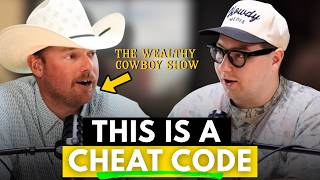
Crockett Carothers built The Wealthy Cowboy Show into a business engine over two and a half years, landing his first sponsor after 10 months and using it to launch a credit-card-processing business. He gets about 10k downloads per episode and repurposes clips on Facebook, where he has 130k followers. His advice: start now, accept rough early episodes, and treat the podcast as a sales and relationship machine.
Chapters
You—
there are so many different ways that you can drive revenue and build a business around that. So the podcast has turned into a business in itself for me through sponsorships and partnerships.
That's one thing that I realized, like, if somebody is watching your podcast and you don't have any sponsorships, they're like, oh, they don't do sponsorships. But if you have one, even if it's something random or free, Like you can go downstairs, ask the coffee shop, hey, can I put a free ad in my show? Yeah, I just need a couple of clips. They'll be like, yeah, 100%. And then that shows that you have a sponsorship spot.
Yeah, it's changed my life. My network is tremendously grown. I've built relationships with awesome people, got some awesome people in my Rolodex I can call on.
If you had one piece of advice to give to the person listening, if they're on the fence about content or podcasting, what would be the one? Piece of advice you would give them?
Um, I've heard people say different ways, but this is, this is a good one. It's like a real motivational clip if you look it up, but he goes, Brand Builders Podcast.
Crockett Carruthers, welcome to the Brand Builders Podcast today. So glad to have you on. Um, host of the Wealthy Cowboy Show. Yeah, welcome to the podcast.
Yeah, thanks for having me on.
Thanks for making the drive. I know we're filming a lot today, and this is the first one of the day that we're filming, so it'll be a good Good way to get going on the day. So I know you've done a lot with your podcast and it's kind of had some growth over the past years. How many years have you been doing the podcast?
We are about 2 and a half years in.
2 and a half years, and you started from scratch. Did you make any content before that?
So yeah, I started for probably close to a year I'm probably not that long really. Um, I was posting, I just made a deal to post every day to social media, which at that time was Facebook, and I started Instagram in there, uh, but I wasn't really active on it. I don't think I had a TikTok at all, uh, mainly, mainly Facebook. But I was like, I started learning about social media and, uh So in that, I figured out that reels and videos were the only way to attract new followers, basically. So I was like, I'm just going to make a video every day, um, just a selfie video on my phone, just come up with it on the spot, and kind of committed to that. And I was like, I need more, I need a, uh, something better, you know. It was just like, I look back at those videos and they're still up out there somewhere, but they're not podcast videos. Yeah, they're just selfie videos, me like, you know, like 30 seconds or a minute, you know, talking. And I'm like, we would get no engagement. I'd make some sales or something off of it every once in a while, but looking back, I'm like, those just sucked, you know. And, uh, and, uh, so I was like, I need something more. And I heard it one day. I listen to podcasts all the time, and this guy was like, he's like, we use our podcast because it's the content machine. It's the engine of the whole thing, because if you do a podcast every week, then you have content for the whole month or more. So that's kind of— besides being able to really get to know somebody by sitting down with them hours at a time on a podcast, as opposed to 30 seconds or a minute at a time, um, it's also all your short-form content. So that's kind of why I ventured into the starting the actual podcast.
I think it's a cheat code to making content that people don't even realize. And there's so many different ways that you can use a podcast, not just repurposing the content, but you can monetize it a lot easier than you could just short-form content, um, because of that relationship and that trust that you build with the viewer. It's a cheat code. So how would you say you're having a podcast? Because I'm a big podcast guy, obviously. Like, we run this podcast studio, we make content for all of our clients. And so how has having a podcast impacted your life, in personal life and business life?
Uh, there— I could, I could talk about it all day. There's so many positives to it. No drawbacks at all, I wouldn't say. Um, it's so when I started that pod, when I started the Wealthy Cowboy Show, it was at a time in my life of— I mean, I'm— we're still always building and stuff and learning, but we, we had nothing. My business was, uh, I was in the same business but I hadn't built anything up yet. I mean, pretty much just starving, no income.
Which was what? What business is it?
I do credit card processing.
Did you start this business?
Okay. I'm a sales agent for that, but it's kind of like an entrepreneur type thing, um, how that sales deal works. But, uh, so I had that and I was like, that was part of the reason I was like, I think this— if people get to know me, I can, I can drive more sales, um, which it has. So the reasons to start a podcast, I saw all of it, like it was going to be an opportunity for me to sit down with high-level people and learn. Because if you just reach out to somebody just cold and you're like, hey, I want to come hang out with you for 2 hours, I know you're really successful and I want to learn from you. Depending on how much time that person has, they may or may not say no. If they're busy, they're probably going to say no. Even, you know, I'll buy you coffee or buy you lunch or something. Well, like, but people, those people don't care about that. You know, they can buy their own lunch. Uh, but you get lucky every once in a while. But if you have a podcast or something to give back to them, some— something to offer them, it's a lot easier ask. So basically it's a way for me to reach out to high-level people that I want to talk to, I want to learn from, and I want to build a relationship with. I can reach out to them and offer them something that benefits them, and I basically just get to learn from them for an hour, hour and a half, 2 hours. And it usually progresses from there. We stay in contact, you know, we can call each other, communicate with each other. Um, so it's really, it was really a good way for me to learn and build my network, uh, besides having that content machine to post on the, across the socials, um, and drive you know, drive sales, build my brand that way. But I also saw it as a business, like you kind of mentioned earlier. I knew besides that, like, I mean, that was probably worth it for me just to learn and build relationships with high-level people that I wanted to, that I wanted to be a part of. But also I saw the business side of it. I've run some like coaching groups and stuff called Podcasting as a Business or Social Media as a Business. Because you— there are so many different ways that you can drive revenue and build a business around that. So the podcast has turned into a business in itself for me through sponsorships and partnerships. Um, it's presented me a lot of business opportunities, not like directly them paying me, but like an opportunity for me to go somewhere, meet new people, and build new relationships and make more sales and, and do things like that. Opens a lot of doors. So yeah, it's, it's changed my life. My network is tremendously grown. I've built relationships with awesome people, got some awesome people in my Rolodex I can call on, as well as it's helped my sales business in the credit card processing, and it's helped me start a business just around the actual podcast and social media.
Yeah, I love how you talked about just like the fact that you are getting to sit in front of these people, these high-level people. That is huge because like you're not only offering like you're like just going on a podcast, that's free marketing for them too and whatever it is they're doing. So if they have a product they're selling, if they have a service, if they have a business they want to shout out like that your audience is now exposed to them, which could then in turn turn into revenue for them and you from having them on the podcast. And so that I feel like if nothing else happens, especially with my podcast, like if anything else, like I get to learn from the people who I talk to. And if $0 was ever made, like your network has grown, it will grow everything else in your life from knowledge to your contacts to your business, everything else. So let me ask you this. Do you sponsor your own episodes with your business? If you're a business owner and you know that you need to be putting out content and videos, but you don't have the time or the strategy to do it well, well, that's exactly what we help with here at Howdy Media. We offer content strategy, turnkey podcast production, monthly professional video and content services, and access to to our state-of-the-art content studio right here in Abilene, Texas. More importantly, we help you create content that gets actual views, builds real trust, and turns attention into clients and customers. Because at the end of the day, that's why we make the content. So if you're ready to stop guessing and start using content to actually grow your business, go to www.howdy-media.com. Www.themedia.com or send us a DM. Hope to talk to you soon.
I do kind of sporadically, you know, it started out that way. I'd run an ad for my credit card processing or community or something like that. And I still do a little bit and it's, but it's gotten so competitive sometimes I'm like, okay, well, I'm gonna, I'm gonna help these guys over here out. But I usually— we talk about what I have to offer a lot too, so it organically comes up. And, uh, but it's been, it's been cool for people just to reach out to me. They're like, hey, I know you do credit card processing, like, we'd love to try to do business with you. Um, just organically reach out, you know. It's, it's— yeah, that's pretty cool.
So how does that whole world work? Because I've never I've never even really met anybody in that industry.
Yeah, that's part of the reason I got into it, because there's no competition. When I was looking for something to do to make more money, I have a cowboy background. That was, that was what I did for a living, for— that's all I've ever done pretty much, um, from college. So, uh, I was like, man, we're starting a family and stuff. I was like, I need to make more income, but I also don't want to quit cowboying. So what can I do on the side kind of deal. Most people like go into real estate. Like, I think most places are like this, but especially at home, there's like, it's a really small town and we've probably got like 10 or 15 real estate agents in that town. Uh, so I was like, that's pretty competitive. I don't want to do that. Um, another big one that a lot of people like me go into is like metal building and fencing and stuff like that. but I was never like really good at that. And it takes a lot of, it can take a lot of capital to buy the equipment and all that. So I was like, I don't have any capital to put up either. Um, so I don't want to do that. So I was just searching. I was listening to podcasts, looking for something else. I found insurance at first and kind of, uh, was in that for a little while and then found credit card processing. I was like, both of those are kind of like, there's more insurance people out there, but for sure credit card processing is like, most people don't even know that's an industry, don't think about it, definitely don't know anybody in it. So I was like, I think that would be good. And it worked out just with my network that I already had. I knew some business owners, so I got some, some accounts there pretty quick and I was like, okay, this is, this can be the deal. So that's what I decided to stick with. And I've been doing that for a little bit longer than the podcast, probably 3, 3-ish years or so. Yeah.
So would you say it's benefited that business more, or would you say the podcast has kind of been the main thing now?
They're starting to kind of rival each other. As much as the, the podcast has grown, um, for sure it was just driving— my main goal is to drive traffic to that is the main way to monetize. And then as it went on, the demand for sponsorships and people wanting to run ads and do different things on the show, uh, quickly started rivaling the credit card processing business.
So as far as revenue, what point did you get your first sponsorship for the podcast, or first source of income from it?
Right. Um, so I think that was— that's something that most people quit before it ever happens. Uh, so I committed When I started the podcast, I was like, like I said, I was broke and it was just sucking money from me every month when I had to pay that studio bill and time and energy, which was cheap, cheaper for me back then. It wasn't worth much, but, uh, I mean, I was struggling to pay, to pay that, you know, it was like pay my pickup payment or pay the studio bill, pay the studio bill. I can get by a few months on before they want to come get the truck. So I figured that out. Um, but it was, uh, I committed to doing a year and then I was going to set, you know, if I wasn't, if it wasn't growing and I didn't feel like it was going anywhere, I was going to quit it after a year. So at like, I think it was 11 months, 10 or 11 months, I got my first sponsor. And then the next month I filled up, uh, I think I had 4 spots. I filled those up the next month. And then since then, I've pretty much been full, or ha— I mean, I've had at least a couple sponsors the whole time.
So I guess, how did that work? Were you saying like, hey, we have open sponsorship spots, or were people just like, hey, I want to be a part of this?
Yeah, it's funny because at first I was like, like I said, I was struggling, so I needed it to monetize as soon as possible. And so I was, I was, I was reaching out a lot and trying, trying to get sponsorships, trying to get some kind of revenue coming in. And it wasn't really working. And then all of a sudden, like, I think somebody asked me about it. And then that first month that we ran that, and then maybe, maybe had 2 on there the first, that first month that I had sponsors, and then It just like snowballed, and now it's basically people reaching out to me.
Yeah, because they see that you have sponsors in the show too. Yeah, that's one thing that I realized, like, if somebody is watching your podcast and you don't have any sponsorships, they're like, oh, they don't do sponsorships. But if you have one, even if it's something random or free, like you can go downstairs, ask the coffee shop, hey, can I put a free ad in my show? Yeah, I just need a couple clips. They'll be like, yeah, 100%. And then that shows that you have the sponsorship spot. And so business owners who are watching who want to be a part and support, perfect opportunity. And then they'll be sending you DMs.
Yeah. And I would leverage like a credit card processing and be like, hey, if you become my client over here, I'll give you a free ad on the show. And so I would, I would use that as leverage a little bit. And still do a little bit. But like starting out, I probably did it— if I started over now, or somebody starting out now, I'd probably tell them at least, like you said, try to find something small, local, something like that. Maybe you can leverage your other business, you know, drive traffic to it. Um, or if you have a business, a sales organization or something like that, put your ad on there, or at least do like affiliate partnerships with a product or service that you really like.
Yeah, so how did you decide the topic of your podcast? Like, what made you come up with The Wealthy Cowboy Show?
Uh, so the name, all this stemmed from business podcasts. Uh, I got into podcasts probably— I didn't even know what it was. I think that would have been 20 or 21 maybe, and my wife was listening to one. I was like, what is this? And it was a, it was a Cowboy One, Cowboy One Cowhorse Full Contact. And it kind of a lot of cowhorse trainers on there and some older guys. And I just, I've always loved stories and history and storytelling and sitting around old, old guys telling stories and stuff. So that's kind of what this was. They're sitting down just having a conversation and telling about their life, telling old stories. So I was like 'What is this?' Like, she's like, 'It's on your phone.' And it's funny because I have this conversation a lot with people now. They're like, 'How do you get the podcast?' And I'm like, 'It's on your phone already if you have Apple.' And, uh, so I have to point that out. And so same, same, she did the same thing for me. And I was like, 'Okay.' So I looked it up, listened to all of those. I don't remember how many were out. Like, there was a decent amount out at that time. I listened to every one of those. And then, so I just searched cowboy or something like that. And, um, listen to some of the other ones that popped up and just listening to ranching cowboy stuff. And then I don't, I don't really remember how, I think it was like part of the algorithm or something, but this one popped up. It's called, uh, Dropping Bombs with Brad Lee. It just popped up in there. I was like, this kind of looks cool. And I clicked on it, clicked on episode, liked it, started listening to him. And his is all business and He's based out of Vegas. He has a virtual training company and started listening to all those, and it was just a bunch of entrepreneurs, like different walks of life, different businesses. And I started getting all this insight that led— opened my eyes to lots of different stuff. Um, one of those was Ryan Pineda. He's a real estate investor, and his stuff is called— he started branding his stuff The Wealthy Way. And so he— the podcast is— he still has it, it's called The Wealthy Way. And then he had like The Wealthy Investor, um, The Wealthy Kingdom, like a Bible study, The Wealthy Creator, which was a social media course. All this stuff was wealthy. And I was like, The Wealthy Cowboy, that would be cool. Because the story behind it was like, his whole deal is like not just chase money His whole deal is like he's all about family, he's all about God, um, he doesn't work on weekends, um, you know, he has kids. He's— so it's, it's about like the whole thing. It's not, not just go make a bunch of money and then act like a hoodlum type thing. So I was like, I really like that message. So I was like, and I started those social media videos, those Facebook videos I was putting out, I started hashtagging them Wealthy Cowboy. And I got to thinking, I was like, if I ever had a podcast, it would be called The Wealthy Cowboy, you know. But it was like foreign, it was a foreign concept. I was not planning on starting a podcast, but that name stuck with me and I started kind of using that brand name, uh, just because I like the message. And, and then so when it came down to, uh, this was, this was, I don't know, 2 or 3 years, that's all I'm listening to is podcasts. And I was like, man, I really wish there was like a Western business podcast where there's people like me wearing cowboy hats, you know, that are in the industry in some aspect, talking about how to make money, how to grow money, how to keep money. Like, what did they do? Basically what I'm listening to but related to our industry. And I kept talking about it and telling people about it. I'd tell creators and whoever. I was like, man, somebody needs to start this. Everybody's like, yeah, yeah. So nothing ever happened, and I'm like, screw it, I'm, I'm gonna do it, I guess. I'm very shy, introverted, not outgoing, um, so I never thought it was gonna be me, but I was like, I'm gonna do it. Like I said, I saw all the benefits of what could come of it, and I knew I needed to grow my network, all that stuff. So I was like, I'm just going to start it. It's going to be called The Wealthy Cowboy Show. We follow those formats of the ones I listen to where basically we— the guest gets to tell their story. They come on, tell their background, and then all of them, all of them are related to the ag or Western industry somehow. We have some ranchers on, we have some guys that build businesses in town, but they own a ranch or they rodeo or they own horses or you know, whatever, they're tied back to it somehow, but they're— they financially built a good business, um, in some aspects. So they get to tell their story, and there's, there's always so many lessons and talking points and, and life advice in those stories. And, and we ask life advice, you know, and tactical stuff too. So, um The whole goal is for people to listen to every episode that comes out because I'm going to bring— there's going to be something in there, you know, even if it's a lot of my audience really relates to anything ranching or horse related and those episodes will do better. But I'm like, man, if you would listen to these kind of business guys over here, they bring lots of insight too, even though they're talking about something a little bit different. But you can take those things and cross them over so well. Um, because it's all, it's all a business, it's all leadership, um, it's all, it's all intertwined together.
Yeah, that's awesome. And that's so funny that you mentioned, uh, so I've watched some of Ryan Pineda's stuff. Um, there was another podcaster who was out also out of Vegas who's doing something similar to what I'm doing now, and at the time I was listening to this podcast, I didn't, I didn't even know this was like a thing. And so like doing the whole content thing and treating it as a business, it opened my eyes the same way that you did. I literally had a revelation moment and I realized there was nothing around here that was like this. And so I was literally— I had been listening to this podcast, I was doing a devotional that morning, and at the time I was running this business out of my— well, I guess it was an apartment at that time. I had no room to store gear or anything. Like, I didn't have any overhead, which was really nice looking back.
Yeah.
Um, but I was like, man, I just feel like I'm supposed to do this. And so I put out a Facebook post. I was like, hey, Abilene, would you guys be open to a podcast studio or content studio? And I mean, there was about 150 comments. Turns out only 2 or 3 of them were actually serious about it. They're like, oh, you got to pay for it? I'm like, dude, yeah, you gotta like I can't be doing this for free.
Lots of people say yeah to yes for money.
Oh yeah. And it was so funny because some of the first conversations I had were, oh dude, I could just go buy my own equipment and do it all on my own for cheaper than that. And I was like, okay dude, just dropped $20 grand on this set, bro. Like, I promise you cannot do it at this level for cheaper because I've looked. And so, I mean, they can do it. It's possible, and people have done it. It's just going to look a little different. It's not going to be near as easy. Yeah, to pull off. Um, and so talking about that, you use a studio in Fort Worth. Tell us about that experience and how that has helped you along your whole journey.
Yeah, that was such a blessing too, and that was kind of accidental, or maybe it was fate, you know, maybe God had a hand in that. I don't know. But, um, it's funny, it's basically the same thing that you offer. It was in— it's in Crowley, south of Fort Worth, which is 2 hours from my house. But when I decided I wanted to start, I'm like, I'm gonna jump in. I realize this about myself, like, if I procrastinate and put it off, like, it's never gonna happen, like most people. So I'm like, We're getting past that. Like, I'm just going to execute, you know? So I just, I just, when I decided to start it, I was like, this was in the fall. And I was like, after, you know, in January, I'm putting something out. Doesn't matter if it sucks or not. It's, it's going to suck the worst that first one you put out. So I was just like, I accepted that. So I was like, it's only going to get better. So I bought some cheap Amazon stuff and, and, uh, I told you, like, the thing was I knew, I knew nothing about editing. Like, I can turn the camera on or something, and you can buy some pretty easy to operate mics and stuff like that, but I was gonna have to send it off to an editor. Well, we, we interviewed some editors and, uh, we're probably gonna go with one of those, you know, and ended up my buddy that lives around Fort Worth was like, hey, this guy I know, he actually has a podcast studio up here if you want to check it out. And so I talked to them. I don't think I even went up there, but, uh, I talked to him and he's like, yeah, here's the setup. You just come and sit down, we film it, edit it, we can release it, do all the stuff. And it was actually going to be cheaper than sending it off to get edited. Um, so I was like, yeah, that's fine. I was like, we're coming in this day. I had a guest lined up. I was like, this is when we're starting. And then when it was over, I was like, when can you have this like ready? When can you release this? And he's like, you know, like a 2-day turnaround or something like that. And, and I didn't have like— I didn't have a logo, I didn't have anything. And he's like, uh, he's like, you have a logo or anything? My wife is pretty artistic, luckily, so she like drew this logo up, and it's the Wealthy Cowboy Show logo today. Um, and she just drew it up in an afternoon, and we used that. He put together a cool background and some different things, and he helped me along. And, and it was like, it was, it was so good, and it made it so easy for me. But I was like, when can you turn this around? So we got it all together. It was like 2 days. And I was like, okay, every week we're releasing this day. And he handles all of that stuff. All I do is I book the guests. Of course, I now talk to sponsors and stuff, but the, the first thing was just booking guests, you know, and driving up there, which my mind, I'm always looking for more efficient ways to do stuff. So Even though I have to drive 2 hours, maybe I'll do 3 or 4 in a day or 2 in a day. And now I've started doing some other content stuff, so I'll, I'll spend half a day up there usually and try to be more efficient about it. But I told people, I tell like I've had groups and stuff and I'm like coaching groups and stuff for podcasts and social media. And I'm like, when you start, you have no credibility. So you want to get credibility as fast as possible. One way of doing that is having guests that already has credibility, so you borrow theirs. Another thing that you really need that most people aren't going to trust you if it's low quality, they're going to think this person is going to be gone in a couple episodes anyway, I'm not going to invest my effort into it. And so you need high quality equipment, high quality production, and You can borrow somebody's credibility with the guest, but that's the main thing that you're chasing is you have zero credibility when you start.
So everybody, everybody, yeah.
So every little— even somebody that already is like big in something else, you're stepping into a new arena with media or podcasts. So you could have a successful business in town and be a big shot in town, but nobody in the media world knows you. So you're starting from nothing. So you want to build that credibility as fast and as big as possible, like immediately. So one way to do that is high production quality. And another thing I've found is most people, we want, we want to procrastinate and put it off and wait till everything's right and all that stuff. So that's another thing. I'm like, just go to a studio. It takes all the hassle out. All you do is sit down and Your main thing is come up with good questions, do, you know, have a good conversation, find a good guest, or do it, you know, do it yourself, whatever your format's going to be. But don't let the technology hold you back. Just pay— everything in life either costs time or money. So you're either going to spend a bunch of time learning the technology part of it, and then you're going to have to buy the technology part of it, and then you have to learn how to operate it, then you have to learn how to edit it and learn how to release it and do all this stuff when the main thing needs to be just having good conversations and having a good format and learning how to grow the show. And if you can put all that other stuff on somebody else, it's going to be way easier.
Eliminate the friction is like— is how I like to say it. And that's one thing that we try to do here. Um, and so I love that you brought that up. So Whenever it comes to having a good conversation, did it take you a while to, to kind of figure out how you wanted your show to feel? Because I feel like even whenever I started, like, my show looked completely different. I started 2 years ago, it was a comedy. It was a comedy show, like legitimately a show that I wanted people to watch and laugh.
Yeah.
And so I did that for a few episodes and, and I was like, dude, I have no idea what I'm doing. And so I was like, okay, I started crafting like this, the Howdy Media stuff, the Brand Builders Podcast came into mind. I was like, I need to make this actually impactful and something that people can watch and gain value from and walk away and feel like their lives were made better by watching that thing. So I want to wrap up with a couple more things. First of all, what, what do your analytics kind of look like right now on your show? Like, how many viewers do you think you have every month? Um, and you said this was 3 years or 2 and a half years?
2 and a half, yeah.
So if you're listening to this, like, this is 2 and a half years of putting out consistent content every single week.
I think there's 100 you know, like 120-ish interview episodes out. And then I started doing, um, somewhere in there around a year in or so, I started doing a solo, like a medium form I call it, like a 5, 10, 15 minute episode of me just talking about whatever's on my mind, something impactful. I talk about brand building, I talk about social media for your business. I've done some book reviews, like just different stuff. And then now I've started another segment of with a co-host, and we talk about successful— being successful in life and business, things like that. He's kind of— he's a coach, so, um, we're always talking about being better. But yeah, there's very consistent— there's 120-something of those episodes, of the interviews, and then all the— I keep, I keep branching out and doing more stuff.
Yeah. How many viewers, or what does your audience size look like right now at this point in time?
I don't keep up with the— so my producer has the audio, the Apple and Spotify stuff, but I check in every couple months or so. Um, I, I see YouTube of course, and then my, my short-form stuff. Uh, I'm around 30,000 like subscribers and followers on the, just the podcast platforms, Apple, Spotify, YouTube, um, the probably average, average show's gonna get 10,000 downloads there in that first couple weeks. Um, all that stuff fluctuates a lot, but then Facebook has been like— I've had a lot of growth on Facebook recently. I've got like 100 30-some thousand followers on there. And then I'll have those clips usually do pretty good. Um, and then the other, the other short-form platforms I don't interact with as much. I try to focus, um, just on Facebook, which I tell people to do that too, is like, don't overwhelm yourself. Like, I have a presence everywhere if you search me, and I have content on every platform. But I mainly focus on growing one channel, and that's Facebook for me. Um, the YouTube and audio stuff, you know, which drives it all, is— that's the main thing, but I don't focus on that. I'm not releasing that, you know. Yeah, if that makes sense. I'm not having to worry about that. I only worry about Facebook, and then my producer worries about the other platforms. So, um, I try to make it as simple as possible.
Yeah, love it. Well, if you had one piece of advice to give to the person listening, if they're on the fence about content or podcasting, what would be the, the one piece of advice you would give them?
Um, this guy, uh, Shad Wright, he's an old Navy SEAL, and he's like a motivational speaker and stuff now, but he has this, this clip that's went viral, and he says— he's talking about being in the Navy SEALs, and now he uses this in his in real life. And, um, I've heard people say it different ways, but this is, this is a good one. It's like a real motivational clip if you can look it up. But he goes, execute, execute, execute, you know. And he was talking about when they're gonna shoot somebody or drop a bomb or throw a grenade or something, that's what they, they say it 3 times. And he's like, that's how you need to live your life. Like, you know, you need to do something, execute, execute, execute. So just Go do it. Like, I catch myself still, like, I'm conscious of it and I'll be like, oh, you know, I'll do that later. It's like, no, I need to go ahead and just do it, get the ball rolling. So I would say just do it. Like, contact Howdy Media right now and like book it for tomorrow, you know, book a spot for tomorrow. Even if you don't know what it's going to be, like, just go put something out there, get started. You're always going to— the more you do it, the more comfortable you're going to get. And the better you're gonna get at it, the first thing's gonna be the worst. So just accept that and know you're gonna get better, but you gotta get started to get better.
That's good. Thanks for coming on, Crockett.
Yeah.
Hope you guys enjoyed today's episode and it brought some value to your life today. Go check out some of the other episodes if you haven't already. We'll see you in the next one. Peace.
More from Daron







Entitled Woman Tries Suing Man For LEAVING Her Mid Date, Instantly Regrets It


This Is Why More People REGRET Buying Their Electric Vehicle Than Ever Before