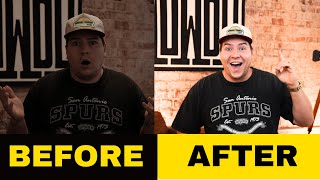
In this tutorial the presenter explains how lighting distinguishes amateur from professional video and podcast productions. He begins by urging creators to decide the visual style they want—either a soft, evenly‑lit look or a more dramatic, shadow‑rich look. He then walks through a three‑point lighting system: a key light positioned about 45° to the subject’s right, a fill light placed opposite to soften shadows (especially under a hat), and a backlight that separates the subject from the background. The video discusses soft‑box options, highlighting lantern‑style softboxes (e.g., Aputure) for broad, even diffusion and rectangular softboxes for more directional control. Colored LED lights are presented as tools for mood and storytelling. Natural light is addressed with advice to place artificial lights on the same side as a window, expose the background to avoid blown‑out highlights, and supplement window light to illuminate the subject. The presenter warns about reflections, recommending polarizing ND filters to reduce glare from glasses or glass surfaces. He notes that high‑quality lighting does not require an expensive camera; budget DSLRs or mirrorless bodies can still produce great results. A brief promotional segment offers a 24‑hour podcast‑setup service. The video concludes with a call to action, a promise of a future post‑production tutorial, and encouragement to subscribe.
Chapters
Today I'm going to be showing you how to take your lighting to the next level. Instead of looking like this— oh, this is rough. Please do not light your videos like this. I'm going to show you how to make it more like this. When it comes to creating your podcast or your YouTube videos or any content in general, the most important factor is the lighting. That is the biggest difference between amateurs and professionals. Today I'm going to be breaking down exactly what I use in order to get this clean of an image. So the first thing you need to do is ultimately assess what you're going for and what you want it to look like. Are you wanting more of a natural look, kind of like this one where all the light is spread evenly across the face? Are you wanting a more dramatic look across your face where there's harsher shadows in the nose? Now, using dramatic lighting isn't always a bad thing. In fact, many Hollywood movies use this all the time. Hey y'all, I wanted to hop on here really quick and remind you guys about our 24-hour podcast setup services. So if you have a space in your office, in your church, at your house that you want to transform into something similar like this, we've perfected the technique. We've got the whole list of everything you need. We'll personally look at your space, we'll do some interior design work, set up all the cables, make a trip out to your location and set it all up for you and train you how to use it. So if you're interested, I'm leaving a link in the description for you to check out. Hope to work with you guys soon. So whenever you bring lights into play, you can have orange colors, you can have blue colors, you can bring in an LED light that does any color. And this really sets the tone for what you're wanting. It evokes emotion, it evokes passion, it evokes a story. For this setup, the story, the emotion that I'm wanting to evoke is a professional level of clean production. And this is really what we use for all of our podcasts here in the studio. The first year and a half of running Howdy Media, I really neglected using good lighting. I tried to go cheap. I tried to buy the $50 ones off Amazon, and it worked for the most part, but it never really took it to the next level like I wanted. So that's why I'm making this video today, because I want you to skip that phase. I want you to be creating your content, showing up to shoots, filming your podcast at the highest quality you could possibly imagine. And here's a side note: you don't need the best camera to make your shot look good. So if you still are on a budget DSLR or mirrorless camera, you can definitely get a good frame and a good shot. So whenever it comes to lighting, there are 3 main points that you want to focus on. The first light is your key light. This is the light usually directly in front or on the side of the subject. In this instance, it's about 45 degrees to my right, and that's going to be lighting up my face. The second light you're going to want to set up is called a fill light. So your key light might produce some harsher shadows at times. So this is why having a fill light is important. It fills up all of the shadows on the face, all the shadows in the background, just the hair to make it look more natural. In this instance, my fill light is placed 90 degrees to my left, mainly because I'm wearing a hat and there's a lot of shadows right here above my eyebrows. So I wanted to fill it in. And so it's kind of at a lower placement where the light can kind of creep into that spot. The next biggest element when it comes to this kind of lighting is going to be the types of softbox that you use. There's a few different types, but the two main types I like to use is called a lantern, and Aputure makes a fantastic one. It spreads the light evenly across a big circle. This is great for podcasts and just filling a room in general when you don't want a ton of shadows and you want everything to be lit. They also make softboxes that are more of a rectangle shape, and they don't let light out the back like the lanterns do. The third source of light that you want to focus on is actually the backlight. So this is what separates the subject from the background even further. In this case, I have this lamp over here to my left. I have another lamp to my right and have two floor lights that I have on at all times that are out of the frame shooting up the wall to give it a little bit warmer of an effect. Once you make sure all of these three things and these three light sources are dialed in, it makes shooting on your camera 100 times easier. When it comes to natural lighting, you're gonna want to control as much as you can. You can also utilize the natural light if it's diffused and if it looks pretty soft. Sometimes it can be a pain in the butt and it's hard to use, but every situation is different, so make sure you know what you need to do in those situations. If I was sitting next to a window, which there are windows here but they're all closed, I would want to place the light source on the same side as the window because the natural light is what we call a motivating light. If you were to put the light on the opposite side of where the natural light is coming from, it's going to kind of clash not only with the temperature but the brightness, and it won't make sense for the viewer because they're going to be like, there's a natural window right there, but the light is coming from somewhere else. This is obviously staged. This is obviously in a studio. And if you're going for a natural look, this is exactly how you're gonna wanna do it. Place it on the same side as the window. So a common tip for your scenarios where there is some natural light being spilled into the room, you want to expose your camera to the background. That way the highlights in the windows aren't blown out. And then bring in lighting in addition to it to bring up your face, to bring up your subject. In the picture to make sure it's exposed properly. This is how you get everything to be completely even and not blown out anywhere. Another thing to think about is the reflections. If there's a lot of reflections, a lot of glass around you, you may want to purchase or have an ND filter that is polarized on hand. That way it can eliminate as many of those things as possible, because one of the worst things that happens is when people wear glasses and they look around and you can see all of the lights in the reflection and you can't see their eyeballs. So make sure to get a polarizer or set it up in a way where it doesn't directly align with the camera. Hope you learned a little bit more about how to light your podcast, how to light your YouTube videos in this video. If it helped out, leave a comment and a like below. We are almost at 100 subscribers and we're starting off strong, boys and girls. On our path to helping you create quality and engaging content for all of your community and building a profitable business and brand online. Everything beyond the lighting is in post-production, which I'll make a separate video on that in the near future. Again, thanks for watching. Don't forget to subscribe, and we'll see you guys in the next one.