Sony A7V Rumors (LEAKED INFO)!! | Gear Talk
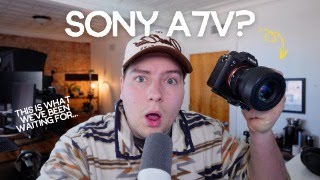
Howdy Media breaks down Sony A7V rumors: 4K 120p without crop, back-illuminated sensor, around €3,000. The host compares it to the A7 IV and FX30, then walks through real production workflow with budget lenses, drone footage, and post tricks like AI cleanup in Lightroom.
Chapters
We are live today. We're going to be talking about the Sony A7V. Now recently, we're going to get into more of the details and the information. We're going to be doing some studying here for the next probably 20 to 30 minutes. We're going to be talking about this, and this just gets me excited. I love every single time Sony comes out with a new camera. Because that's what we shoot here at Howdy Media. And oh, one, two, can you hear me? Let me know if you can hear me in the chat, boys and girls. One, two, three, four. Might need to turn it up on the microphone. Anyways, I love Sony cameras. I've been using a Sony A7 III and I haven't had to upgrade because it's been so just good. So let me know in the comments, what cameras do you guys like to shoot on? Are you, uh, Canon? If you're here, you're probably a Sony person, a Sony shooter. Um, let's see if we're good. Let's see if we're good. Yeah, we are good. So if you're here watching this at any point in time, you're probably a Sony shooter. And it just gets me excited. Let's go ahead and pull up, um, some of— let's see here, Sony A7V Google search. You should be able to see my screen here. Um, so whenever you search up Sony A7V This is what pulls up. Is Sony releasing an A7V leaked announcement? Thoughts on the Sony A7V will be released first quarter of 2025. Now this is Reddit. Oh, from Sony. Um, rumor is— no, I'm not from Sony, but I have the A7IV and love it. It's been a fantastic camera. Um, I wish it had a faster readout so that silent shutter was more useful and it could do 4K 60 full width. So I think there's a crop, there's a slight crop, um, if you're filming in 4K 60 frames per second, which is fine. That's what most cameras do. Um, the A7 III, the A7 III here, there's some downsides to it. And some of those downsides are not being able to record at all in 4K 60. So all I can do in this camera is 4K 30. And this isn't my primary video camera now. Now we're shooting on FX30s, um, and they're great. That's what you're seeing right now. They're fantastic. If you're just doing video, then I highly suggest even if you just grab one of them as a B cam or something We— they're good enough to where we use them as A cams and B cams, and they're fantastic. And so if you're doing video only, then I recommend getting an FX30. Um, but this A7V is kind of interesting. There's rumors that it can be shooting 4K 120 with no crop, which is insane. It's ridiculous. Have you guys heard about the A7V, the rumors coming out? One of the— one of our subscribers on the last stream that we did was talking about it and he asked me about it and I was like, you know what, I need to do some more research. And so that's kind of what we're doing today. We're talking about gear. We're talking about the, the possible new Sony A7V coming out. And so let me share my screen again here. Um, let's kind of dig it a bit further. Thoughts on the Sony A7V? Let's, let's get off of Reddit. What are you guys up to today? Where are you watching from? I want to know. I like going live here on Facebook. I don't know, we're not on Facebook, on YouTube. We have an Insiders group that we go live every single Friday on Facebook, and so I'm used to saying Facebook, Facebook, Facebook, but We're trying to get in that YouTube gang, you know. Sony A7V, there's an R5 obviously. Um, Sony A7V specs, let's see that. Next set of Y26 and it's professional work with it, so getting about double is going to be insane. Um, let's see here. 4K 120p, price close to €3,000. Now I don't know what the conversion is, $500. Um, okay, so the A7 IV came out in 2021, which is— honestly feels like it was just yesterday that it came out, but I guess, I guess not. The Sony A7 IV came out in 2021. Okay, so here, 120 FPS 4K, no crop. That's fantastic. Um, 35mm full-size back-illuminated CMOS image sensor. Um, a bunch of technical terms that majority of people don't know what they mean. Um, electronic first curtain shutter, rolling shutter function, moving picture mode, drive mode. Okay, man, man, oh man, might have to cop this one. That 120 with no crop is crazy. That I am like hesitant on is the fact that, um, I own a lot of APS-C lenses, APS-C size lenses. And so now that I'm kind of getting into that world of APS-C with the FX30, um, it's getting harder to get away from those lenses. Because they're so like, they're great, they're fantastic lenses and they're like a third of the price. And whenever you stick it on something like an FX30 or even a Sony a6700, the picture quality is going to be fantastic. Like right now we're using APS-C lens and it's great. Like nobody ever tells the difference. Um, and whenever you utilize a great APS-C size sensor, It's a great pairing. So the Sony A7 III is a full-frame sensor, which is great if you have full-frame lenses. It's fantastic. Dang, that looks clean, man. I always forget how good-looking these cameras are. Um, it's great, but whenever you have mostly APS-C size glass and lenses, then you go into, um, basically a crop mode, and it's not 100% the same qual— quality. It's still great, it's still fantastic, you still get to shoot in 4K, but you can tell the difference between whenever you're in full frame versus APS-C. And so that's something to think about. And then the lenses are obviously way more expensive if you're wanting to get into the full frame lineup like the FX3. That's been on my mind recently. The A7V that's coming out and honestly, the A6700 has also piqued my interest. Heavily because it has the same exact sensor as an FX30, but it's a great photo and video camera. It's a great hybrid. And so I don't know, it's been on my mind what this year is going to look like. I don't really necessarily need any equipment. I recently had to send one of my FX30s off to get fixed and it's currently in the shop. I don't know what's wrong with it yet. Um, but it's currently in the shop getting fixed, and I think, unfortunately, I think it's from dummy batteries. Um, I think it might have fried the circuit, but if they call me and say, hey, it's something else, it has nothing to do with the power that you were using, then I'll still be a great believer in the dummy batteries. So we'll see what happens. It could be either that, it could be a mechanical issue with like the IBIS, um, where the sensor's stuck. Sometimes screws come loose on the inside and don't let the IBIS do what it's supposed to do. It kind of gets locked up. And so I don't know, we'll see what happens. But, um, what kind of gear do you guys shoot with? Um, I have some friends who shoot on Canon. I have some friends who shoot on Sony. Some rare friends that shoot on Nikon, but they're kind of coming back. Nikon, with their purchase of RED cameras, is— is— that was pretty crazy. I don't know a ton about it just because I'm not an Nikon shooter, um, but I've, I've started with Sony and I've been doing Sony stuff for the last almost 4 years. I've always been a Sony fan, but specifically their cameras, they're just top-notch, especially the new ones they've been putting out. The, the color science has gotten much better since the Sony A7 III. Every now and then when I film on this thing, I'll get some weird like green hues on people's skin, and so what it just takes a little bit more editing in post to get what I need to get done. Um, and then whenever I shoot in— and that's mainly because it's low light situations— but whenever I shoot in any sort of log, if it's not exposed exactly right according to what the camera needs, it struggles. And a lot is that— a lot of that is because of that 8-bit the color float, I think it's called color float, but it's an 8-bit and not 10-bit like the camera that you're seeing now is. And you can't really push the colors as far or the highlights and the shadows even when you're in log. Like, like I said, if you're not exposed exactly right, then it, it gets very broken up. It gets very discolored and weird. Your skin becomes a weird green color. It's, it's not very fun. There's also a lot of noise that is involved, which if you've done any sort of editing, then you know noise sucks. But I recently just finished up, um, the most recent video I put out right before this live stream. I believe I put it up yesterday. That wasn't necessarily a YouTube video. That was, um, that was a project that we'd been working on, and I thought it turned out fantastic. If you haven't watched it, we'll watch it here in a second. I'll pull it up. But it was shot primary, 99%, on an FX30 with Sigma lenses that are $300 to $500, one Tamron lens. We used a 24-70— and no, it's not a 20, it's a 17 to— 17-70. Yeah, but we use a Tamron 17-70, and these lenses are sub-$1,000. If you were to go out and buy a Sony 24-70, you're easily going to be spending like $2,000 minimum unless you could find one used, which is why I don't buy the G Master lenses. Some people think it makes that much of a difference and it might. I've shot on some G Master lenses, but I really couldn't tell the difference. And that's even coming from somebody who's been doing it for years, who has a lot of, a lot of video time. Under their belt. But I'm gonna go ahead and pull up, um, hopefully you can kind of see. So it was this video. 15, I decided that after 22 years in education— so first of all, let's start from the beginning, um, and I'm just going to kind of go through and and go over some of these frames and how we set it up and came up with the idea, um, just to give a little bit more of a background. Let's see if we can go to theater mode here. Boom, that looks better. Okay, sweet. Um, but just to give you some, some background and insight into what we did for this video, um We— I know this is talking about the Sony A7V, but there's really limited knowledge as of right now, um, and I'm excited to get my hands on one and try it out. Absolutely. But in the meantime, with the cameras that are already out, I shot this video. Q Place on the south side of Abilene. We gotta let me know. Lunch only served lunch from Tuesday through Saturday from 11 until we sell out, which is typically around 2 to 3 o'clock. Uh, the shed originated in Wingate, Texas. My grandparents opened that place in the late 1980s. Anywhere from 20 to 200 people we can deliver. So all this B-roll, um, that you're seeing, all of that was shot in 60 frames per second in 4K. Now the FX30 does shoot 120 frames per second in 4K, I don't really need it, first of all. Second, I don't have the SD cards that you need in order to film in 120 frames per second in 4K. It also does a slight crop even further than this, um, because those SD cards, they call them CFexpress cards. They're— I haven't bought one yet. I haven't needed it. Um, they're very, very fast, and so they're probably like $700 or $800 are the ones that I've seen, but let's keep watching. We do a lot of doctor's offices and weddings and, you know, large parties and stuff. And then anything 200 people and above, we can do a full-service catering. And so, um, it just— that part of the business really keeps us busy, and we're, we're thankful for that. So we had two cameras going here. This was our B cam, and my buddy Mike was holding it. It wasn't on a tripod. As you can see, there's a little bit of movement, which adds a dimension of like maybe more personable. Like it's kind of more like documentary style and vibe. Like we're just recording it as it happens. It's not as produced, even though we brought in the lighting and the microphones and everything. Um, it's not as produced looking as if it were 2 shots on a tripod, which we did do for the other ones. But I love the way— and we think that makes a big difference. And you know, the recipes that his granddad used and had used, I mean, this is what— so those were all shot on the FX30 with— that one was a 16mm f/1.4 Sigma lens, and I don't remember, is probably a few hundred bucks for that lens. Um, and that's one of my favorite lenses that we own. And I recently bought a 10-18 as well, 2.8, and it's been fantastic. I do all our real estate stuff with that. But we have that A shot, and then we have this B shot, and then we do B-roll, put it all over the A-roll. If you don't know what the A-roll and B-roll means, the A-roll is this— voices down— it's the primary shot that has the main audio, um, with a picture or the video of the person talking. And then whenever it cuts to other videos of them not talking and it's like the store, that's called B-roll. You're on this far south end of Avenue The drone I used— this drone shot turned out classic. Um, I, I'm using a DJI Mini 3 Pro for this shot and put an ND filter on it because it was bright outside, and it turned out really great. I guess starting off, I'm a daughter first. Um, so born and raised She won the best real estate team in Abilene. And so we did it at her house. Her house was very nice and I knew that beforehand. And so I was like, you know, it would be cool since you're in real estate, might as well film it inside of a home. And so— originally, this is a fun fact, this refrigerator was covered in magnets and covered in paper and things that her grandkids drew. And so we went in just to clean it up a little bit. We went in into Photoshop, or I did think I did it in Lightroom, and took all of them out. I took a screenshot of the frame. I used the AI features and tools in Lightroom to, to erase all of them. And so I did that, exported the photo put it over the A-roll clip and just cut an overlay out. Like I keyed it out. And so it was just this, this AI-edited refrigerator over the frame. And then I nested it together and it became one clip. And now all of a sudden the refrigerator is clean and nobody— Florida and the military, the United States Air Force. So this was, um, this is one of my favorite shots. So the way we thought about it and the way that the, the technically correct way to deal with filming windows is like, for example, this shot, we have this window here in the background, which makes it pretty interesting. So you expose the camera to the window. That way you can see outside. Because if we were to expose to her without a light, then if this would all be blown out. And so you leave the light off, you expose to outside, and it's going to be a little bit darker, but you expose to +0 unless you're filming in log, then you expose to the correct one, like +1.7. And then you turn on the light and you bring in as much light as you need. That's why it's important to have nice lighting. We have two Amaran, I think they're 90Ds, and they don't change color or anything. You don't really need a different color. You don't really need a different color, but these have done me um, very well in my videos. And so it's like pretty much the exact color of daylight. And so this light that you're seeing on her face is not light from outside, it's light from the light source up here out of frame that you can't see. And the cool thing about it is if you put it on the side of the window, that's called your motivating light. And so it makes the viewer kind of forget that this is a video production, and it kind of just looks like the natural eye if you're in the room. But achieving that on camera is difficult at times, so you've got to know what you're doing. And my watch just told me to stand. I'm standing. But anyways, so that's how that shot went. And then I put the light on the same side of the window. Um, you film the contrast side of their face, so the shadow side, because it makes it, uh, it gives it a little bit more texture. So your B cam, your second camera, if it's a side shot, then you need to remember that, make sure they're looking in the same direction. The the whole time. Don't put a camera on her left and a camera on the right, and then she's going to be looking both left and right every time you switch the camera. That won't make sense. That'll make your viewer a little bit nauseous. Air Force decided my husband was going to fly the B-1 bombers, and that's how I got to Abilene, Texas. So we moved here in 2004, been here 20 years. Anyways, a Sony A7V um, in this situation would have been nice to have, um, just because— and honestly, it doesn't have to be the a7V, it could have even been an a7III or a6700, but it would have been nice to get some shots of behind the scenes, um, like very nice shots, photos of this stuff. And we could also use it as a third camera for the video if we needed. And so that's a big perk of using hybrid cameras is whenever you're on set, you can use it as a video camera or a photo camera, and they're both going to turn out great. So that would have been nice to have. We didn't bring it. The only thing we did take was the DJI Osmo Pocket 3, which we have behind the scenes footage of that as well. But we went to her office and got a bunch of B-roll. Wanted a change in my life, and so kind of following in my husband's footsteps, getting out of the middle. Pretty basic stuff, pretty basic stuff. But, um, this was a good shot. I really liked this one. I end up helping them purchase properties and then turn over, kind of like an education. And this was us. This was my segment, wearing the same hat as I am today. Nice. This was my segment in the video because if I'm putting in all this work, might as well let people know what we're about. But that was in our Howdy Studio here right behind me. And it's a small room, but we're able to make it look significantly bigger because of the angles that we choose and the lighting. And so every time somebody new walks into our studio, we, we get a lot of comments about, oh my gosh, you make this look so much bigger. On the internet. And I'm like, yep, I don't— I mean, I guess we tried to do that on purpose because we don't want you to feel like you're in a tiny little box filming your stuff. But we had one camera there. We do consulting, we do video. This shot was the Sony A7 III because my FX30 was— I had to send it off that day, and so we didn't have the Sony FX30 to do the shoot, unfortunately. But it's, it's fine. It's, it's whatever. We help companies grow their accounts, their channels, grow their reach online through social media strategy. So those are the only shots. This was the shot that I got. More of like a partnership as opposed to just getting this shot. That was the Osmo Pocket 3, and I've also done some review videos on the Osmo Pocket 3. It's a fantastic little camera. It struggles a little bit in low light situations. This is not the greatest picture quality. It kind of looks like an, like an older iPhone. But whenever you have great lighting and even if you're just on auto, like the camera is plenty— getting a video to get basic behind the scenes stuff. So we partner with you, of course, to do vlogs, which is what it's designed for, is creators, high quality videos. Of course we do great work. But that's my portion of the video. Um, let's move forward a little bit. Uh, this— we, we switch back and forth from 24 frames per second to 60 frames per second here, and it's because I wanted to get some more real action vibes. So obviously, like, the slow motion shots— slow motion shot, that's a 24 frames per second. 24 frames per second. 60. 24 frames. The action, it just feels like real. It feels natural looking. Um, and you, you can't slow down 24 frames per second because there's not enough frames per second to— in order to slow it down and make it not look choppy. But switch back and forth, use it creatively, use it wisely. 24 frames right there gives it like a natural motion blur vibe. The last one was this mobile coffee truck. Really quick, some drone shots, great shots with the DJI Mini 3 Pro. That was from a brand story shoot that we did with her not that long ago, and that was a sick setup. So that's going to be releasing soon. Be watching for that. Anyway, so that was it. I really going over that today, but that's what happens on a livestream. You just kind of go with it. Thanks for tuning in. If you watched any part of this livestream, if you watch this, this video, make sure to leave a comment. What do you guys shoot primarily on? Are you a Sony shooter? Are you a Canon shooter? That's what we're doing here on this channel is we're going to be talking about cameras, doing reviews. And doing a lot of things using this skill that we have, this video skill, in order to help people grow their online presence, help people grow their channels utilizing video. And that's because I'm a huge believer in the power of video and the fact that you can do one thing and make it feel like somebody's in the room with you and they can connect with you and they can trust you through this video. That is powerful. And, and whenever you're off sleeping at night, hundreds, thousands, even hundreds of thousands of people are potentially seeing your stuff while you're not having to physically talk to each and every one of them. So it's powerful. Um, I'm about to have to hop on to another meeting, but thanks for hanging out. I hope you guys have a wonderful day. I'll probably do a live stream whenever the Sony A7V drops. And who knows, we might get one, get our hands on one and do a review on it, because that would be amazing. So we'll see you guys in the next video. In the meantime, stay cool.
More from Daron







Entitled Woman Tries Suing Man For LEAVING Her Mid Date, Instantly Regrets It


This Is Why More People REGRET Buying Their Electric Vehicle Than Ever Before