The Silent Killer of Great Teams (It’s Not Talent)
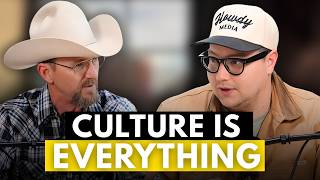
In this interview, host Darren and Pastor Cody Cochran explore why culture—not talent—is the decisive factor for high‑performing teams and churches. They define culture as the daily atmosphere people experience, stress hiring for life‑compatibility, and outline how leaders must own and repair toxic cultures through humility, repentance, and genuine relationships. Practical communication tools are presented, including face‑to‑face one‑on‑ones, the “compliment‑Oreo” feedback sandwich, and the “what‑why‑how” (Me‑We‑God) framework for sermons and presentations. Cody highlights the importance of knowing each team member’s love language, leveraging mentorship (Mike Harper and biblical figures), and casting a compelling vision, using analogies like the “purple cow” and the “windshield vs. rear‑view mirror” to illustrate distinctiveness and forward‑looking strategy. Preparation discipline is captured in the “6 Ps” (Prior Preparation Prevents Piss‑Poor Performance) and a preaching calendar. He also stresses that effective public leadership stems from strong private leadership at home, urging leaders to cultivate godly families where fathers lead spiritually, creating a home culture that mirrors the church’s mission. Finally, Cody offers advice on thick‑skinned leadership, handling criticism, and staying dedicated to the gospel while maintaining a proactive, future‑focused mindset.
Chapters
Culture eats strategy for breakfast every day of the week. Don't just hire somebody because they're good at a specific job. Like, can you do life with them? Can you go eat with them? Can you go on trips with them? Can you hang out with them? People don't care how much you know till they know how much you care.
Yeah.
And so let them know that you care about them, but also just be upfront and honest about what the struggle is.
And when he went to prayer, he didn't ask God for money originally. He asked him for wisdom and knowledge.
Yeah.
And whenever I read that, I started praying for the same thing.
If Darren has the greatest— if you're the podcast king in Abilene and in the state of Texas, but yet Katie Grace and Libby have an absent husband and an absent father that doesn't lead them and teach them and train them, then really your business means nothing. Brand Builders Podcast.
Welcome back to the Brand Builders Podcast. Today's guest, I am thrilled. I'm beyond thrilled to have Cody Cochran, pastor of Bethel Assembly of Anson, Texas. This is where I work. This is where I go. He's the pastor. He's a cowboy pastor, leader, and in my opinion, master communicator, master culture builder. And so that's some of the things we're going to be talking about today. So Cody, to get it started, favorite book?
Favorite book. Well, obviously, I guess I would say the Bible is my favorite book. That's good. Yeah, it's my job. But I mean, I love to read the Bible. I just think there's so much practical stuff. And when you talk about culture, when you talk about communication, I think there's so much insight in the Bible that's really helped me. But I guess beyond the Bible, like, I love— I feel like I'm a student of leadership. I love learning to lead and to lead better. And so there's a couple of guys that I really love to read, like Sam Chand is one of them. And Sam Chan wrote this one book called Who's Holding Your Ladder? And it goes along with culture and stuff. Like if you're the leader and you're going to climb the ladder to go higher, like who you got holding your ladder? You know, like at my house, sometimes we have to go up in the attic to get Christmas decorations down for my wife. And I'm like, my wife can't stay focused long enough. So Clara, come hold my ladder. And I trust her. And so I just think that's a, that's a cool book. And then another book is an author named Alan Hirsch. He wrote this book, The Forgotten Ways. And so those are, those are books that have really shaped me and helped me in my, my life and in my leadership.
Is that the Alan Hirsch one? Is it about culture?
It's a lot about culture. Yeah, it's a, it's a little bit, it's a little bit of a biblical leadership culture and a missional, like, what is your mission? What are you going to— Alan goes back and talks about in the Bible, like, these guys were missional. Yeah, they knew what they were going to do. They weren't just doing it to be doing it like Sometimes we do our business or we do our church, we get in this routine. He's like, what's the mission? Keep the mission in front of you. And so, yeah, it was a good book for me.
That's good. So I think pastor of what, 25 years now? Yeah, it's crazy leading an organization. I'm not even 25. Yeah, I'm just going to say that right now. But yeah, leading an organization from the ground up, quite literally. What have been some big things that you've learned over the years that is crucial to a culture, whether it's for a church, a nonprofit, a business, or any— anything that somebody is trying to build a brand for?
Sure. Well, I mean, I just— I just think I'm a culture guy. Like, I think culture is huge, you know what I mean? It just matters. Like, life is— life is hard enough, whether you're in this business or whether you're in the church business or whatever kind of business you're in. It's tough, man. It's a challenge out there every day. To, to keep climbing and keep growing and keep doing. And so I just, um, for me, always, like, in the church, like, I wanted our staff and I wanted our core team to just have this good culture, you know, where you got along, where you loved each other. And so to go back to what I said earlier, it's easier to do it with somebody that you love, somebody that you enjoy being around. And so, um, one thing we've always tried to do at the church is when we hire people Don't just hire somebody because they're good at a specific job. Like, can you do life with them? Can you go eat with them? Can you go on trips with them? Can you hang out with them? And so it just, it's just easier and it's more fun with people that you love and you get along with and that kind of have the same vision that you have.
Yeah. So what would you say culture is in your mind? Like if you had to narrow it down to like one sentence, what would that be?
Narrow culture down? I mean, I would say And one of my favorite quotes about culture is a leadership guy named Peter Drucker. And he said, culture eats strategy for breakfast every day of the week. And so you can have these strategies, but, but, but how's the culture while you're trying to make the strategies come to pass? And so culture for me, I guess, would be what's the environment? What's the atmosphere? Do you dread going to hang around with the people that you're working with? Do the people that are coming to work with you and for you, do they dread it? What is the atmosphere? And so for me, culture would just be the atmosphere, the environment that you— that you're working in.
And I feel like that's one thing that Bethel specifically has locked in. This is dialed in their culture.
Well, it's good to hear you say that.
And I've been working there for, I don't know, 3 years, 3 years, 4 years. Yeah, I've been going there for about 7 years, but I can definitely say that it is easy to see that you have taken the time to take these things into consideration. And so surprisingly, a lot of churches, a lot of businesses have sucky cultures.
Yeah, sure.
What would you say to someone who has a sucky culture right now that wants to flip the table, flip the script and go the opposite direction? What would you say like your biggest advice would be for that?
Oh, wow. Great question. I mean, I think the first thing I would say is, you know, what's the old saying? Um, before you can come up with a solution, you have to identify what the problem is. And sometimes I think that's hard for people to— because the leader is ultimately, in my mind, the leader is ultimately responsible for the culture. And so if the culture is sucky and you're the leader, you have to go, well, this is my fault. And so that's hard to do, you know. And so I just think when you realize that your culture maybe is not what you want it to be, you have to first You have to be willing to repent. You have to admit that you've done some things wrong. And so then go back and you— and I think it all is about relationship, man. That's for me. I'm a relationship guy. Like, you got to spend time with people. You got to talk to people. You got to communicate to people. You got to— you got to share vision. I'm— I love leadership stuff and vision is everything in my mind, you know. And so where there's no vision, the people perish, the Bible says. And if you don't have a vision for this great culture, I mean, it's a fight to keep the culture strong because everybody's aggravated, ticked off, mad about something, get their feelings hurt. So you got to be really upfront and push in that vision and spending time with people. Let people know you care about them before you care about the role they're supposed to play in the organization.
Yeah. Has there ever been a time where the culture wasn't what you wanted and you had to pivot? And what was that time?
Sure. I mean, I'm sure at the beginning, at the beginning it was horrible. Yeah. You know, when you went, you just didn't have a whole lot of help. You didn't have a team that you had handpicked and chosen. And so dealing with culture changes is hard because change is hard, whether we want to admit it or not, change is hard. And, and I just think when you're dealing with people, man, like, like for us, for instance, in the church, you have people that do something really good. But they're toxic to the culture. And so I think our first— we're full of grace and mercy, and the first thing we want to do is try to avoid it and go around it and not deal with it. And then I think you finally— sometimes you have to make hard changes, and that maybe can be changing in, in your staff and in your team and making those things. It just depends on what's most important, a priority to you.
So in my mind, like that example that you brought up, like with somebody on staff or even like a volunteer, Would you consider somebody that doesn't fit the culture to be more of a poison to the thing going on, or?
Yeah, I think it's 1000% because not everybody's going to fit into our culture. Now, does that mean they're a bad person? Absolutely not. Maybe they have a different past, they have a different history with a different kind of culture or whatever. And so I think it's toxic, it's poison. And, you know, you people get their feelings hurt when you talk to them like We've had to make changes over the years. And there again, not saying you did a bad job. I'm saying you don't fit our culture. And so that goes back to what we said a while ago. It's hard because you're trying to protect that culture. And so anything you're trying to protect is going to— you're going to have to do some things that maybe not be comfortable all the time.
So if there's somebody like that in the person listening's organization, what have you found to be most effective in approaching that situation? Um, and this kind of strays into the communication side of things too, and like, how do you communicate like what you're talking about, right, without destroying somebody's feelings or whatever? Um, so what are some tactics or strategies that, that you— and I know this because you've used these strategies on me before and they are effective. So what are some things like if you're having to approach a conversation like that, that you would say, okay, this is kind of how we would do this conversation?
So I mean, let's just use you for an example, just because we're sitting here talking. So if there's something going on, struggling with Darren— like, I'm a, I'm a one-on-one guy. Like, I know lots of, I know lots of people that are on staff at churches. We'll talk about churches a little bit. And they can't get into the office of their pastor. Like, the pastor's door is closed, you know. And, um, so I just always tried to take the approach of my door's open. Come talk. Let's sit down. Let's talk. And, and I think that changes lots of stuff when we can sit down and we can talk, we can be real, we can be honest, we can be authentic with one another. And so I think that's the key to everything is just learning to communicate, sit down face to face. I get it. We live in this world. It's easy, man. Pick this thing up. Let me shoot you a text. It's easy if the culture is not the best or you're a little ticked or I'm a little ticked for you to receive a text message in a wrong way or me to, you know what, me to receive it in the wrong way, email. And so I just think face to face, old school, sit down, let's talk about this thing. There again, let the person know that you care about them. Yeah, they got to know you care because what's that old saying? People don't care how much you know until they know how much you care. Yeah. And so let them know that you care about them, but also just be upfront and honest about what the struggle is. I think we live in a world where we're we avoid that stuff. We're afraid to talk about the tough stuff. We're afraid to talk about the hard stuff. And so, um, just conversations are, are huge. Yeah, in my mind.
No, yeah, um, I've heard of a strategy. I think— I don't even know if this is the term really, but like, uh, the compliment Oreo or whatever. If you have something—
elaborate.
Yeah, if you have something that you need to constructively criticize or like guide somebody who is not like— you're not necessarily kicking them out, but it's like, hey, we need a little correction here as a leader.
Yeah.
You start with a compliment. Sure. And then you go into like what it is that you wanted to talk about, and then you end with a compliment. Have you ever used strategy?
Yes, I mean, I have. I mean, I didn't know it was unintentionally. Yeah, I did it unintentionally.
I don't even know if that's the name either. That's just what I picture in my head.
Yeah, no, it's a good name.
You know, one question I get all of the time is, Darren, how in the world do your videos look and sound so freaking crispy? And so I want to let you in on a little secret. It has little to do with what I do and pretty much all to do with the type of gear that I use. And I've put together a document with all of the gear that I recommend. If you're looking into going all in on content this year, there's ways to do it on multiple different budget levels, and I'll give all those options within this spreadsheet. But if that's something that's interesting to you, click the link down below in the description and you can grab that for absolutely free. Hopefully it changes your life and you come back and watch more videos. Let's get back to the episode.
Um, because I do think you can't just go at people like, by God, I'm fixing to tear you up because you ain't been doing right, you know what I mean? I think everybody if you're on your team, you have them on your team because they do something well. And I don't care who we are, we all love to hear at some point, you're doing a great job, you're doing a good job. So I think when you have those awkward conversations with people and those uncomfortable conversations, you have to, you have to tell them what they've done good. You have to, there again, go back and let them know you appreciate them like you're doing a good job. But here's where we need to go and here's what we need to do. And so that's a great— yeah, you taught me something today. First thing in like 4, 7 years.
I don't even know what I just called it. Was it compliment Oreo?
Oh yeah, the sandwich. Yeah, something like that.
No, that's awesome. So have you ever been in a conversation where it completely went sideways and you were like, this is actually not even close to what I was trying to communicate, but they end up getting mad or quitting or leaving or something like that?
Yeah, sure. I mean, like, who hasn't? You know what I mean? Like, I've been in conversations and in the church where it got heated, you know what I mean? Because they took it wrong, because you said something wrong, you know what I mean? And, um, there again, I'll go back to this right quick, and, and I'll finish in a minute. But if you're in good communication with someone, they're going to know your heart, you know what I mean? And so oftentimes when situations go wrong, you avoid it, you put it off, you put it off, you put it off, and then it's coming to a head. And then you meet, and they're on guard, and you're on guard, and so then it explodes and blows up get into those tough deals where like later on you got to go back and go, hey man, I didn't— I'm sorry, I didn't mean it that way. And so thankfully I've never really had just— I mean, I've had some big blowups and some— and thankfully had somebody in those meetings with me, you know what I mean? To like David Hagin, bless his heart, he's like, I'm not going into another meeting with you. But, um, you know, usually I've never had one that just blew up.
Yeah.
And was a completely— complete wreck. Humility after that, going back, say, let's make this right. You know what I mean? This is about a job, really, or, you know, not about relationships.
So speaking of relationships, I know you talk about, um, love languages and figuring out how people kind of reciprocate, uh, how you show them love.
Sure.
And so when it comes to your staff and your family, how important to you Um, or how much do you take into consideration how they want to receive the love?
No, I think it's huge, man. And like, I love that book, and maybe I should have mentioned that book while ago, The Five Love Languages.
I didn't even know that was a book.
You didn't?
Nope.
Yep, it's a book. It's a book. And Chapman, I think, is something— Chapman is the, uh, is the author of it. But I think it's a great book because it just teaches us about how we— how people receive love differently. And so like Like, for my— like, I am not really a words of affirmation guy, you know. Like, people say things, oh, Cody, you did so good. Cody, that was so awesome. I'm like, well, yeah, by God, you, you had to say that, you know what I mean?
Yeah, that's how I am too, so I, I totally get it.
Yeah. And so, like, I'm, I'm kind of out of it, but my wife loves words of affirmation. A guy we have on staff, Cole, loves words of affirmation, you know. He just— he loves words of affirmation. And so I'm not good at it because I don't receive love that way. So I have to have learned over the years to look at people differently and say, how do you receive love? Like some people receive love through quality time. Let's go drink coffee. Yeah, you know what I mean? We don't have to talk about anything meaningful, just being together, which is one of my love languages. Another one is my wife. She's, she's physical touch. She wants me to put my hand on her back to pat her, and that speaks love to her. And so I think if you're going to be a good leader and you're going to create a good culture, You can't just love everyone the way that you receive love. You have to get to know them and figure out which way love is most meaningful to them and then learn to love everybody and lead everybody differently.
Yeah, that's good. So when it comes to communication, obviously you speak on tons of stages in front of a lot of people. To a lot of people, that's their worst nightmare. Yeah. And so whenever you got into preaching, and being a pastor and being in front of audiences, what were some things that you had to figure out along the way to help your communication from you to a whole crowd of people? And for like my space, yes, I'm on stages as well, but I do a lot more on video. So like the people on camera, and a lot of times people struggle more with a camera than they do speaking in front of 20 people.
Sure.
Um, even though there's nobody there, which is wild to me. Um, but how— what are some of those things that you had to overcome over the years that you figured out, like, man, this is more effective, or this is not effective when it comes to communicating? Sure.
Well, I think obviously people like you, you're gifted for this. You're gifted to communicate. You know, I think God gives— the scripture teaches us God gives gifts. And I've always been a talker. I've always been I love conversations with people. And so I think God gave me a gift of communication over the years. But thankfully, the Lord sent some people along in my life that helped me to sharpen myself, that would say to me— so I got this great friend, Mike Harper. Y'all all know him. Yeah. And he's— he used to say to me, he used to say to me, dude, you got to read the room. He's like, you go in this room and you have these people from one genre or one era, and you're just like wild and loud and crazy. And he's like, they're all sitting back in the seats and you don't even recognize that you're too much for them. So I think you have to learn. And in my, in my life, I've been blessed to get to go to different denominations. I mean, I've preached at the Baptist Church, Church of Christ Church, Methodist Church, Assemblies of God Church. And so I think you have to learn.
Do you, do you communicate differently to like, if you know you're going to be going to a certain denomination.
Yeah.
Do you think about that whenever preparing your sermons?
Sure. I think you've got to if you want to reach those people, you know, and I know some communicators and some preachers that are like, by God, this is me. This is who I am. I'm not going to change who I am. Well, I think it's important to know as a leader, you can't change your convictions. You can't change your beliefs, especially a guy like me that's preaching. I'm not going to compromise the word of God. But if I go to a church that is more laid back, I'm going to work really hard to slow down, which is hard for me. I'm a very fast speaker. I'm a loud speaker. But I have to learn that, you know what, if God has opened this door for me, I want to reach these people. You know what I mean? I want them to be impacted by the gospel or by what I'm, what I'm trying to teach them. And if I do it in a way that blows them back, they're not going to remember anything I said. They're just going to go, that guy was wild. It's wild and crazy.
Yeah.
Yeah. So I think if you— to be a good, effective communicator, you have to know your audience. You have to learn to read the room.
Have you— like, is there any resources or like books or anything that you've ever read or used or gone through that could help somebody become a better communicator? Or would you say Obviously experience is good, but is there anything that you can pair experience with to practice this stuff?
I think for me, you're asking me about all these books. I can't remember the titles of these books.
Come on, Cody, I'll look it up. Getting old.
You can put it in the notes, man. But there's— I just think watching other people, being a student of communication, you know what I mean?
I'm sorry, I should have told you before that I was like, I like books.
Yeah, no, and I love books too. Um, I'll look it up in a minute, but there's this, this one particular book that I— that really helped me with communication a lot. And, um, the name of it is, um, I'll look—
it's okay. Was it like more of— was it more of like a psychology of like how people think and receive things, or what was it like?
I think it was both for this book. This book was a was for kind of a preacher, teacher, communicator from the stage. And, and he had some theory. It was like me, we, God, you, we. And so what he was saying was when you start communicating from the stage, you need to say me. Let me tell you about me. Let me tell you who I am. And then the next step was we. So it's me. Let me tell you about me. Here's what I struggle with. But really, don't we all struggle with that?
Okay, so you're talking about like what you struggle with and not like look at me—
right? Yeah, no, no, no, no, no, no, no! Look at me like yeah I'm struggling with this or here's an issue that I face. It's something just to create common ground. You say here's where I am and then you go we but don't we all? And if you can hook them with the me and the we, if you can identify here's an issue for me, here's a struggle for me, here's a trial for me, and then you can say don't we all? Then boom, you got common ground. And so it's me-we-God. Well what does God say about this? And then so then you go back and it's me, it's, it's me, we, God, we, you. And I know that's, yeah, crazy, but it's me and then it's all of us, we, and then what does God say about it? You know, I'm, I'm a teacher of the scripture.
And so, so do you follow kind of that framework still to this day, or is it kind of just like embedded into what you do?
It's kind of embedded into what I do, I guess. I guess for me communicating from the stage like you're talking about, the thing that I have stuck with the very, very most is what, why, how.
Yeah.
So the first thing is, is what am I trying to present? What am I trying to teach? Why am I trying to teach you this? Why do you need to overcome this and how do you overcome it? Yeah. So if you, if you teach them what, but you don't teach them why, then they're lost. If you teach them what and why, but you don't teach them how to overcome it, then you've just left them sitting there and with no skills and no tools to overcome. Yeah, I guess that's my main thing communicating from the stage is always what, why, and how.
I think that's, that's huge. So write that down if you're listening, because this can apply not only to like sermons and churches. Sure. But it can apply if you have to make a presentation at work, if you have to make a YouTube video. The way that you package it and the way that you lay these things out is crucial to be communicated properly.
Agreed. And that goes back to the conversation you and I had a while ago of when you have these uncomfortable conversations with someone who maybe is toxic to the culture or not getting their job done, like, don't just go in there and try to rip them. Like, explain what, what, why, what, what's the purpose of this meeting? Yeah, yeah. Why are we having this meeting and how are we going to overcome this thing? Again, it always presents that that solution.
That's good. How important to you is preparation?
I think it's key.
I feel like there's a myth— just real quick, um, I feel like there's a myth that everybody just thinks, oh, he just gets, gets up there and talks. Sure. So sorry, continue. Go, go into preparation.
No, I just think preparation is huge. Like, I mean, I just don't think you can— there's this old saying It's the 6 Ps. I probably can't even say this on the show, but I'll say you can edit it out. The 6 Ps: Prior Preparation Prevents Piss-Poor Performance.
Yeah.
I mean, and I just— I think that's, that's so good, you know, like, for me at church, I need to be very well prepared for every meeting, for— I have especially have to be prepared for Sundays. But also within that, if you're going to be a good leader and create a good culture and a culture of example, a culture that helps others be prepared. So Connor is our worship leader. And so our theory is that I get my sermons for Sunday done 6 days earlier on Monday. I send my sermon for this Sunday every Monday to Connor. That way Connor can look at the topic of discussion and he can pray about it, and then he can prepare his worship set to go along with my sermon. And so if I don't prepare well as a leader, then I am just letting that flow down more and more to others. Then they can't be prepared, and they're going to wait, and they're going to be behind. And so I just think preparation is, is of number one importance.
Have you ever tried to deliver a sermon without preparation? No, like I'm talking like the morning of, you're like, oh, okay, I'll talk about this, this, and this. And then how did that go?
Well, horrible. Like, it went horrible. So like 25 years ago when I— when we first started the church, I had like 4 other jobs, and I was my— and I had a brand new baby. My wife was at home with the baby. We were needing finances. We were needing to work. And so I just spent all my time going and working and doing. And I'd be lying to you if I didn't tell you, in the first few years, the first few months, like I'm up Saturday night till 12, 1, 2, 3 o'clock in the morning trying to find something to preach on Sunday. And, and here's what I found out about how good God is. Sometimes if you're just— if, if I was just worn out and didn't have time, it's like the Lord would just anoint something and you could just get up and preach. And so then I made the mistake of, wow, that worked last time, I'm going to choose to go do something else this time. And then you get up in front of everyone and you're tongue-tied and don't have a clue what to say, and you look like an idiot. Then you walk off the stage going, I will never be unprepared again.
Do you think a lot of other pastors struggle with that side of things? Have you talked to many who—
sure, prepare, especially bi-vocational pastors, you know what I mean? I mean, like, it's, it's, um, it's hard because you have other responsibilities and you have jobs. I'm very blessed now, 25 years into it. I got this amazing team at church, got the amazing culture, and, um, I have the freedom now to spend more time doing that. But, but I do think lots of, lots of preachers struggle with managing their time because you don't have a time clock, you don't have a schedule that you have to keep, and you're going to visit here and you're going to the hospital and you're trying to do all these other things. Um, but I just know for me, when I finally made up my mind, like, you really just got to work extra hard Um, one week, if you can just get ahead, if one week you can do double the work and you can get ahead of the game and you can continually be prepared and you stay on that, on that schedule, you'll always be ahead a week. And preparation for me is so— it's freedom. I used to hate it, man. Like, I do a preaching calendar now. I do 6— first 6 months preaching calendar of the year, second, uh, 6 months of the year preaching calendar. And I used to think, man, that's so shackling, that's bondage. Well, it's not. It's freedom. Yeah, because I know now here's what I'm going to preach this week. Here's what I'm going to preach this week. And if I get my sermons done on Monday and something comes up throughout the week, it's freedom. I can go do extra work. I can go do fun stuff because I'm ahead of the game.
You're not worried about having to do that last week.
Exactly.
No, that's great. So when it comes to being a leader of an organization, Vision casting and having a vision, we talked about earlier, is crucial. And so what are some ways that you find that vision? Because I know I've run into— it's like you just try, sometimes you try too hard, and it's like you come to a dead-end road.
Yeah.
And so what are some ways that you go about or think about vision casting?
Well, I mean, obviously, I guess You get off into this vision thing, man, I'll get off in the weeds with you right quick because I think vision is a leader's greatest tool. Yeah, like you just have to know if God has called you to this. For me, it's to Bethel and Anson. Um, how do I know what the vision is? Um, I ask the Lord, you know, I mean, I really do. Like, what do we want to see out of this thing? Are we just doing this, this church to say that we're doing church so people can check the box and say I did my spiritual duties to the Lord. Like, like, what do you want to see? What do you want? What do you want people to encounter? What do you want people to experience when they come and be a part of that organization? And so I just think that, that once again, a leader cannot talk about vision too much. Yeah, like you got to constantly— most people, and I don't say this with any kind of— I'm not throwing shade. Most people can't see past the end of their nose. They want what's right now. They want what is this? What is this? What is this? And so I think God gifts us and gives us the mindset to be able to look beyond right now and go, here's where I want to go. Here's the way I want the culture to continue. Here's the way I want to communicate. Here's what I want people to experience when they're a part of the organization. So you've got to constantly throw that in front of people. You got to constantly share it and talk about it, because if you don't, you'll lose them.
Yeah, I've, I've heard the saying that good leaders think in decades, not months or years. Um, do you think in decades, or how far out do you usually think? Well, and I know it's very hard because obviously that's a long time, and the Lord is going to do a lot of things within that 10 years. But how far out are you looking? You mentioned a calendar like, okay, this 6 months we're doing this, this 6 months. So a year ahead. Yeah.
And I think like in the beginning of my time at Bethel, like I didn't have decades, you know what I mean? I think it's important to know that sometimes you sit down with people that are leaders and have led for 25 years and we go, oh yeah, we think a decade ahead. Well, that's not reality that when you're first starting opening up a business, opening up you know, something like you're doing, like you don't think decades ahead. You're thinking about how am I going to make this last a year?
Yeah.
How am I going to stay in this cool studio? You know what I mean? So I think the more that you do it, the further out that you begin to see. And, and I'd be lying. I'm 53 years old. I would, I would be lying if I now in the last year or two of my life, I'm probably thinking in decades, like, who's going to take this thing when I leave? Because ultimately I'm going to have to go at some point. We all— our time plays out. We get, we get older, our priorities change. So I think that that's— I never thought about it that way, but for the first time in my 25 years, I have thought about, yeah, what's going to happen in 10 years when Cody's 63, when his— all of his kids are gone? You know what? And so what are you going to do? So I do think it's important. Yeah, the further you go into it, the further you think ahead.
Yeah, because I mean, like, when I first started this, I was thinking literally one week ahead. Sure. Like, oh, I have this shoot, or I have to do this thing. I don't— I have tried like to think 10 years ahead. I'm like, you just don't know what you don't know yet, right? And so usually you have to wait till you're— there's some sort of exposure or limiting belief that's kind of thrown out the window.
Well, I think you have to use a little bit of discernment. Yeah. I mean, you know what I mean? I think the more that you grow, the— that we have greater opportunities to think differently. Which is so, is so huge. I think you can't think the same way. We've been doing what I've been doing 25 years. Well, there's things that worked at year 5 that we thought we were freaking bad. Hey, man, because this really works. But you know what? They won't work anymore. And at year 10, they wouldn't work anymore. So I think you always have to be looking forward. And I think you start slow. You're looking for a week ahead and then you're going, wow, this is probably something that I can do. And then you're looking 6 months ahead and then you're looking a year ahead. So I think you have to have— life is full of seasons, times and seasons for everything. And so I think there's seasons when you can go, I can look ahead a little bit more, you're more mature.
So what would you say to the person who is like, I have been looking and I can't, I just have no vision right now as a leader? What would be your advice to that person?
Well, um, a couple things. One is, um, I would say, just to be straight up, I would say, are you sure you're called to be a leader? Yeah. You know what I mean? Like, we all have seasons where we stall out on our vision. We, you know, you know, we just, we just do. There's times when you get tired. There's times when situations and circumstances arise and you don't have the greatest of vision. But like, if you don't have any vision at all in the beginning, I would say you need to take a hit the pause button and go, you know what, has God really called me? Because if the leader can't carry the vision, you're never going to be a part of a successful organization. The leader has got to carry the vision from now on, whatever season it is. But then there's other times, I think, when you hit that season of you're just— you're plateaued, you're struggling just a little bit. I think maybe that's the Lord going, hey, we're going to change directions a little bit. Open your mind, open your perspective. And, and, and, and because God's trying to change it from a way that it was in the previous season.
Yeah, that's good. I think the first point that you made is huge, and a lot of people don't think about it. It's like, is the Lord actually calling you to do this? Are you forcing this? Um, are you doing this thing like— why are you doing it? Are you doing it for your own— like, if you're wanting to be a pastor, are you just a pastor to be like— to have the title pastor?
Yeah.
Um, I think that's super important, especially to like we have a lot of podcast members and we produce a lot of videos and podcasts. And one of the first questions that I ask them is, why are you doing a podcast? Sure. If they can't answer that, then I encourage them to think about it and have a why. Because again, like going back to that, what is it in Proverbs? Where there's no vision, where is that?
Yeah.
Okay.
Yeah, yeah, I got it. It's in Proverbs.
I got a pastor right here. Let's go. But yeah, where there's no vision, um, the people perish. The people perish. And so I think that's huge.
So yeah, let me say something to that right quick. That's old King James: where there's no vision, the people perish. And I think that's true. Where there's no vision, it's going to die out. It's going to stall out, whether it be a podcast, whether it be a church, no matter what it might be. But I love what the NIV says in that too. It says where there is no vision, people cast off restraints. Which to me, I'm an old— I'm old cowboy, I'm a country guy. And so I think about— when I think about it that way, I think about how when the old-timers hooked up horses to a wagon or mules to a wagon, they put a collar on them and they had a single tree that tied all of the horses together. So if there's 4 horses, they all have a collar and they're all tied together. One can't duck off. Without bringing the others with them. They're all moving in the same direction. So to go back to an organization, if the leader's not casting great vision, then this one's going to pull off over here and try to do that. This one's going to go try to do that, and you're going in every different direction pulling against yourselves. So vision ties the team together, and if everybody can see the vision the leader has cast, then everybody will pull harder and work harder to take the wagon on down the road, if you will.
No, that's, that's good. I know you mentioned Mike Harper a couple of times. Is he, would you say, one of your biggest mentors, if not your biggest mentor?
Oh yeah, no doubt. 1,000%. He is. He's been the greatest, the greatest mentor, the greatest help. He's helped me develop. He's the guy that wasn't afraid to have hard conversations, to say, you didn't read the room then, dude. He'll say you were tied too much to your notes. I mean, he's always there. And maybe he goes back to the— your Oreo analogy.
Yeah.
He'll say, this was good, but this wasn't good. And so there's no way that I would have been able to stay 25 years without him and his advice. There's no way that I could be the communicator that I am now without him coming along. You know, it's the old— there again, iron sharpens iron. So one man or one woman sharpens another.
So how important would you say having a mentor is?
I just— I can't stress it enough. Yeah, I mean, I can't— I mean, I said I'm a cowboy. I say it all the time, you know, even the Lone Ranger had Tonto, you know. Nobody can— you just can't— you can't go alone, you know. You can't go without somebody that loves you enough, knows your love language, knows your vision, knows your heart. You can't go along without somebody coming along saying, hey, hang on, dude, you're struggling right here. Yeah, hey, I see this in you. To call out the hard things in you. So I think that mentorship is, is one of the greatest assets to any leader anywhere.
I heard this saying the other day that mentorship is basically wisdom without the wounds.
Yeah.
And so you're taking all those years of experience and you're skipping the wounds. You're just getting to go forward and start where that person is starting. Um, so if somebody's out there trying to figure out who that mentor should be, Who would you— would you say there should be different mentors for every area of life, or would you just say find that one person that you want to be like or model your life after?
And I would say that a little bit what I said we talked about earlier, different seasons in life. Like now, uh, when Mike came along, he was the only one I had and I needed him, you know. And the more that I've grown and become a leader, I'm not just a Pastor now, I'm not just trying to communicate, but I'm trying to lead a team. I'm trying to build culture, trying to do these things. I think at different seasons you can have different, different mentors to come along and help you. And so books again brought up books. Another book that came to my mind because for me, I led Bethel for probably 6 or 8 years before Mike Harper came along and I didn't have a mentor. I didn't have a spiritual father. I didn't have someone to disciple me. And so I think that's why I'm so strong on it now, because I know the struggle that I went through. I just wanted a father. I just wanted somebody to come along and help. And so, but I read this book, and it's by Wayne Cordero. It's called Divine Mentors. And he talked about how when he read the word of God, how those people that were born years ago and lived life 6,000 years ago became his mentors. And for me, it was that way. It was the— it was John the Baptist. He was a little bit woolly. He was a little bit wild. He was from the country. He didn't fit in in the religious world, but he knew his convictions and he was strong. So like, I read that and I was like, that's the way I want to be. And then there was Peter, who screwed up ultimately and got it all wrong and always was opening his mouth and putting his foot in there.
Yeah.
But he just kept striving and Jesus kept teaching and leading. And so, um, those were some of my mentors in the beginning. Yeah, yeah.
No, I think that's awesome. Um, another thing, leaders are readers, and I've recently, for some reason, I think it's because my cerebral— what do you call it— cerebral cortex is fully developing now. But all of a sudden, one day I woke up and I decided I wanted to start reading books. And that's been a new passion of mine for almost a year now. And so if you don't take anything else away from this conversation, leaders are readers.
Leaders are readers.
If you haven't read a book, try to read a book and make sure it's something you're interested in or else you're not going to finish it.
Sure. Yeah, 100%.
But yeah. Okay. So—
but I don't think it's an accident. I don't think— I don't think, you know, after all this conversation and what we're talking about, you said, I don't know, really know why. But I just woke up one day and decided I wanted to read. I think you are an example of what we've just sat here, talked about. Like, you're not some young kid that moved to Abilene anymore that said, oh, I think I can do this. Like, you've, you've put in the work, you've put in the preparation, and you're walking in your calling and in your gifting. And so now you're getting to another level where you're starting to mature and you go, can't just do this on what I've always known. I gotta read, I gotta learn, I gotta grow, because a leader drives the vision and a leader drives the organization. I think you're living the perfect example of that.
I think one of the unlocks that I had was actually, um, reading in Ecclesiastes, whenever Solomon was talking, um, or I think it was, it was one of Solomon's books, um, but basically, if you don't know much about Solomon, he's basically one of the richest kings ever live on the history of the planet. And when he went to prayer, he didn't ask God for money originally. He asked him for wisdom and knowledge.
Yeah.
And whenever I read that, I started praying for the same thing.
And sure enough, there you go.
Wake up one day, the Lord's like, hey, here's a book. I'm like, well, that's interesting. And then it hasn't stopped.
Yeah.
And I, and I just feel like there's so many good things that you can learn from other people's perspectives.
Sure.
That— because again, you don't know what you don't know.
Exactly. No doubt. And now you got all this wisdom and you're the podcast king and you're making all the money, raking in the bucks over here.
I haven't read a single book about podcasts.
Oh, you haven't?
No, I've been— no, I've been reading like psychology books about communication, this kind of stuff, um, leadership books, uh, books about the disciples. Uh, there's a book I really want to read. It's I think it's just called Paul. It's a, what do you call it, a biography over Paul's life. And so, well, it's a thick boy. But anyways, I have like 40 books. I've talked about this in my other episodes, but I have an addiction now.
Yeah, books.
And I'll start reading it and then I'll go buy another book before finishing the last one. So now I'm like, I'm reading like 15 books at the same time.
I love it.
Not a good addiction, but I'm learning a lot.
Yeah.
Um, so how— what were some of the ways that you persevered whenever you wanted to quit?
Sure.
Um, I feel like everybody, especially in the ministry world too, that it's not always like people getting saved, people falling out, getting baptized. Like, there are hard times. Sure. So what was one of the— what, what was the biggest thing that you relied on to keep going and keep persevering?
That's a great question. And I mean, I think, I think it's in the church, in ministry, or it's in anything. Because, you know, like sometimes, like you're doing this podcast, people will see your podcasts. Um, when I'm doing church, they see me on Sunday. But yet we forget, whether it's a political office, whatever, we forget like they have personal lives as well. And we have marriages and we have children and we have finances So, you know, you don't, you know, just see somebody struggling on the screen or on the stage like they, like they have real lives. And so it does, it becomes a grind. It's a struggle to be that leader or to lead an organization. And I just think for me, and I hate to beat a dead horse, but I'll go back to— I don't know how in-depth you want to go with this, but I just remember in the beginning stages of me at Bethel I told you earlier I had like 4 other jobs. We were broke. I had quit this ranch job up there at the Four Sixes, moved down here to Abilene, and my wife was at home with my baby. And so we were in between insurances, you know what I mean? All the things, man, that everybody— most people struggle with. And I had some horses I was trying to ride, some training. I had about 12 head of them. I had about 2,000 head of cattle turned out on wheat. I was working at UPS at preload, had to be there at 4:15 in the morning, trying to pastor this church. And I just remember one time I was riding a horse for a guy. The horse belonged— I remember the guy's name, he belonged to Harry Jones. He was a paint horse. And I was whining to the Lord, man. I was just like, what in the world? What in the world? Why am I going through this? The people at church didn't like me. We were broke. Was struggling. I was, why, Lord? And I just remember it's like, like the Lord said to me, and I mean not in just this huge audible voice, but like, Cody, don't you remember I saved you and I called you to preach the gospel and to help other people know the same thing that you know? And so like the Lord just took me back to vision once again. Why the why? That you use the word why. Why do I do this? Why did I say yes? And I just think it's so important for us to always go back. And you can't always look at results. You got to look at the why.
Yeah.
And if God called you to do something and if you felt strongly enough to open that business or to step out and take that risk, like, just remember why.
Yeah.
And the why should be what is what, what, what dedicates us to the call. Like, motivation sucks. Like, you know, you get into that deal too. Like, you can't just be motivated. Because motivation comes from an outside source. Oh, your podcast is good, Darren. Oh man, I'm so proud of you. That's motivating to keep going. But there's times when people aren't going to say that. The question, it really is this: are you dedicated to the call? Are you dedicated to what you said you would do? Are you dedicated to God? And so dedication comes from within, saying I'm not going to stop, I'm going to press on.
Yeah, I think so. I love that. And Having the discernment of figuring out that why I think is huge. And this morning I was reading in 2 Timothy and basically Paul is writing to Timothy. Paul's about to die. Some of his last words were like, fan the flame of what the Lord has given you. Yeah, I love that. I literally want to go get a friggin tattoo of it now. I want to get a tattoo of water.
There's a tattoo shop in here.
Yeah. Fourth floor.
Yeah. Oh, the fourth floor.
Water into wine because of that sermon you preached, and now I'm gonna get a fire tattoo. Heck yeah. Um, but it just goes back to like Timothy had a fire and a passion to be a leader and spread the word, and so he just said fan the flame, make it bigger, keep it going.
And it's our job to fan it too, you know what I mean? It just is. That's the— it's the way life goes. And all the— I think you're talking about leaders and communicators and all that stuff and even culture, it's going to be somebody that is almost a little bit aggressive, you know what I mean? I'm going to fan the flames. I'm going to fix the culture. I'm going to learn to communicate better. You got to be—
you got to have that dedication inside of you and know that it's your responsibility.
Yeah, sure. Because that's the world we live in. It ain't my responsibility. It's because so-and-so did this to me, or it's because this other podcast company came into Abilene because this other church—
victim mentality.
Victim mentality. I mean, at the end of the day, it's our responsibility and we have everything that we need to operate in the gifting that God's given us to be overcomers and to be effective in life.
So what do you think? Because that is a lot of America right now in the United States and really the world, the victim mentality. Mm-hmm. So what do you think is going to be that thing to flip it around? And I'm kind of setting you up here. I hope you freaking slam dunk this, Ali.
Oh my gosh, what is going to be the thing that's going to change it? I mean, like, this is horrible to say, I guess, but when we hit rock bottom— I mean, you know what I mean? When we finally sit back and go, you know what, I'm not doing this anymore. When you hit and you got nothing else left. And I think when— and I'll just go and say it— I think when, when men and women make up their mind. I'm not blaming anybody anymore. That we live in the greatest country in the world. We have a God that will walk with us and talk with us daily. When they make up their mind, they're going to do some things different. Renew your mind. So powerful, so important, so scriptural. But change your mind. Change your perspective. Quit. Quit being a victim. Quit blaming somebody else. The past really doesn't matter. And it's a leadership quote. The windshield is bigger than the rearview mirror. And half of us are driving around looking in the rearview mirror complaining about what somebody did or so what somebody didn't do. Look ahead, man. Future is bright. There's opportunities. There's opportunities everywhere.
Yeah. Yeah, that's awesome.
What would be—
and we'll wrap this up with the last question. We'll see where it goes. But what would be the best piece of advice that you've ever received as a leader?
The best piece of advice I've ever received. Oh man, that is such a great question because I've received so much.
Yeah.
Great advice over the years.
Or even just one of your favorite.
One of my favorite pieces of advice. I guess I've already said it, really. I mean, that, that quote, the— and I think Mike Harper is the one that said it to me— of the windshield is bigger than the rearview mirror. You know what I mean? Um, another piece of great advice. You know, I had another guy that was kind of— I said yes to the Lord under his preaching, and in the first few months, man, um, young, wet-behind-the-ears preacher met up with a 46-year-old congregation. It was like the clash of two worlds, and they didn't like me, I didn't like them. I was like, why again? You know, what are we doing here, Lord? And so I called this other guy that from, from Roaring Springs, Texas, named Ricky Lawrence. And I said, man, like, what's going on? Give me some advice. Give me something. He said, I'm going to give you the two greatest pieces of advice I've ever received. And I remember on the phone, I'm like, well, I was— it was an old bag phone. I was in the pickup on my bag phone and I was like, well, this is going to be good. And he said this to me: get thick-headed to your critics, and when in doubt, preach Jesus Christ and him crucified. And I thought, for the— for when I first heard, I thought that sucked.
What kind of advice?
But then I was like, wow, because if you're going to be a leader, if you're going to create this type culture and you're going to, uh, grow your team and you're going to communicate the gospel, like, there's going to be people out there that don't like to— like you, that don't like the way that you've done it. Like, my friends joke with me, Jake and Nate, they joke all the time, like, Cody has more enemies now than he's ever had in his whole life. Everybody loved Cody till Cody made a stand and start trying to lead an organization and, and create change in the world. And so people are just going to— and it's easy when people fire shots at you to take them in and to get depressed and to get down and out. But I go back to what Ricky said, you got to get thick-skinned to your critics. Yeah, people are going to criticize you no matter what.
Yeah, literally no matter what. If you do, if you save the entire world, like there's going to be haters. Sure, if you feed everybody a meal who's hungry, like, they're gonna hate on what you're doing. It just reminds me even more of the life of Jesus. He didn't follow the standard. He didn't go with the crowd. He went against it. He flipped the tables. He, he made a difference, and people didn't like it. Yeah, so they put him on a cross.
Sure.
And so I think that's also another thing that's good to know. Fight for the truth. And it hurts so many people because it is the truth. And people don't like hearing the truth.
You know what Harry Truman said about that, don't you?
He was—
he was one of our presidents. He said, people all the time ask me why I'm giving them hell. And he said, I told them, I'm not giving you hell. I'm just giving you the truth. And it feels like hell. No, it's true.
Very true. And like, to the point where, again, they put Jesus on the cross. And if we're not— if we're not going against the grain, like, like, in my mind, um, and especially working at Bethel, how are you going to make any difference in the world if you just do what everybody else is doing?
Sure, exactly.
And so people notice, and they're going to have an opinion. They, they either love Bethel, sure, or they don't like that.
They hate it. Yeah, just go ahead and say it. And so, but there again, we're trying to create— so you were talking about culture earlier. Between our team.
Yeah.
And we're trying to create a culture at Bethel. Like, why would we want to be like every other church? Why would we want to have the same thing? We're trying to create a different culture, a biblical culture, a family culture. People complain all the time because we have our kids in the service. People complain all the time because we have a big 12-foot skull on the side of our church. You know, like they're always going— but we don't want to create a culture like everything else. This is what God has called us to do. This is our vision. And when you do that, there'll be critics. Yeah.
Um, that just reminds me of The Purple Cow. Sure. Uh, for those who don't know about The Purple Cow, yeah, explain a little bit. I'd love to, because I love this analogy.
Yeah, it's a book. There you go. It's a book. It's a book called The Purple Cow, so check it out. It's a great one. Um, the, the main theory behind Purple Cow is If you're driving down the West Texas roads and you see a Black Angus cow, what are you going to do? You're going to keep driving. If you see a Red Whiteface Hereford cow, what are you going to do? You're going to keep driving. You see a Charolais cow, what are you going to do? Keep driving. But if you see a purple cow, what are you going to do? You're going to stomp the brakes. You're going to back up. You're going to get your phone out. You're going to take a selfie. You're going to send that selfie to your friends and say, here's something I've never seen before. You're going to post it on social media. And so, um, that's our theory at Bethel. Bethel wants to be a purple cow. We don't want to be like anybody else. We want to be one of those places where people experience the power and love of God through God's people in a way they've never done it before.
Yeah.
And so purple cow, that's with a podcast, that's with any other organization. Yeah. Why would you want to be like somebody else? Be you. God created you, you. God gave you a unique vision. Work to see that thing out.
Yeah, that is, that is so good.
Seth Godin, Purple Cow by Seth Godin.
Okay. Yeah, I need to read that one. Yeah, I've read it. Just add it to my list of 30 other books.
Yeah.
No, thanks for coming on the podcast today.
Great conversation. Can I say one more thing about leadership?
Yeah.
Just about leadership and about culture and about communication, because I think sometimes we get it crossed up. This goes back a little bit, cross-pollinates with the question you asked. What's going to be a change in our world. Leadership starts in our homes, and I don't think we talk about that enough. Because if Darren has the greatest— if you're the podcast king in Abilene and in the state of Texas, but yet Katie Grace and Libby have an absent husband and an absent father that doesn't lead them and teach them and train them, then really your business means nothing. And if I can lead Bethel for you know, 25 more years, 50 years, and it grows and has this great culture. But yet Tubby, Will, Jesse, and Clara have a father that's been missing and that didn't lead them because it's biblical for the men to be the leaders of their homes, especially the spiritual leaders of their homes. So I just go back and say that if you're going to be a great leader in public, you got to be a great leader in private. Yeah. And if you're going to communicate well in public, you have to communicate well with your circle, with your family. In private at home, you know?
Yeah.
And so I just think that it's so important that we sometimes— we're leaders or drivers, man. We're hustlers. We're, we're going for it. And sometimes the thing that we neglect the most is what's most precious to us is what's at home. And so at the end of the day, just remember, create a culture in your home. Yeah. Create a home where you want to go home, where there's love and there's harmony and there's joy. It's going to be some struggles. But create a place when your kids stray, they don't run from home, they come home. So I just think that it's so important for us to always remember, because I think— I believe the local church is the hope of the world. I really do. But I think the, the hope of the local church is godly families.
Yeah.
A father leading his wife, leading his kids, where they come and experience that culture of walking in the fullness and the power and the love of God. I just think that's important. So Just say again, home is most important.
Yeah, I mean, that's the foundation of everything.
Sure.
I forget what it is. The Lord created family before something— the rest of the world, I think. I could be completely wrong. I might have to check that out.
I might check your theology on that, but yeah, I got a finance degree.
I got a finance degree. But no, I think that is super important. And that goes for anything, whether it's leading a church or starting a business, whatever it is. You will be better and the people around you will be better if you have a strong foundation at home.
Sure.
Especially led by the man.
Yep. There you go, buddy. Go ahead.
Um, but yeah, anything else?
I don't know, I'm good.
The Holy Ghost hotshot got you right there a little bit. Um, but yeah, thanks for joining today's podcast, Cody. And thank you. Um, where can they connect with you, follow you on social? Do you have social media anymore?
I'm not that old, man. Oh, @CodyPreacherMan on Instagram. Cody and Jennifer Cochran Facebook. Yep, yep.
And then Bethel Assembly of Anson, if you want to watch any of the services, watch the sermons, um, it's all up there. So yeah, yeah, appreciate it.
Hey man, proud of you. Appreciate you.
Thank you.
Yeah, excited about your future too, dude.
It's gonna be good.
And your family.
Yeah, yeah. Oh my gosh. Speaking of family, Livvy took her 8-month-old pictures today.
Woo! You cried, didn't you?
Almost.
No, not almost.
Golly, she's cute. But anyways, thanks for coming on.
Hey, dude, thank you.
Yep. Have a good one.
Okay, love you. Bye.
If you've made it to the end of this episode and I hope you enjoyed it, I wanted to encourage you to check out the rest of our videos, the rest of our podcasts. There's tons of educational stuff talking about about building a brand. We bring in a lot of brands that are faith-based to dive deep into what it is exactly that is working for them, what is not working for them, just to encourage other people like you who are building brands. And so if this interests you, take a look at the rest of the channel. You will also see I'm sitting right here in our content studio. We're located in the middle of Texas and we film tons of content for business businesses, entrepreneurs, content creators all around the state. So if you're interested in looking at more of our services, our website howdymedia.com is available in the link down below. Check out the rest of our stuff. Send me the word loyal on Instagram in my DMs if you made it to the end of the episode so I know and I can personally thank you for watching. So hope you guys enjoyed today's episode and we'll see you in the next one. Peace.
More from Daron







Entitled Woman Tries Suing Man For LEAVING Her Mid Date, Instantly Regrets It


This Is Why More People REGRET Buying Their Electric Vehicle Than Ever Before