What Nobody Tells You Before You Become An Entreprenuer... Ft Josh Rader
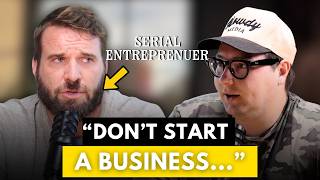
In this informal podcast episode, host Speaker B interviews serial entrepreneur Josh Rader about the realities of starting and scaling multiple small‑business ventures. Rader shares his journey building gyms, commercial real‑estate holdings, vending/bodega operations, moving and security companies, and explains how he leverages AI tools like Claude and ChatGPT for bookkeeping, finance, and operational efficiency. The conversation dives into practical marketing tactics—social‑media branding, QR‑code experiments, creative billboards, and community‑focused promotions for his Firehouse Fitness locations. They discuss funding routes, especially SBA loans and Small Business Development Center (SBDC) resources, and the importance of understanding loan terms. Rader reflects on work‑life balance, burnout, hiring challenges, and the mindset required to take calculated risks. The episode also touches on sponsorships (Howdy Media, Scout Guide), the role of local networks in Abilene, Texas, and offers candid advice for aspiring entrepreneurs about pitfalls, resourcefulness, and the hidden costs of entrepreneurship that are rarely discussed publicly.
Chapters
Yeah, most people shouldn't own a business. Like, it's my— my wife actually is a perfect example of that. She did not like being self-employed because if I can talk you out of it in one conversation, like, you don't need to be doing this.
It takes about 7 hours of somebody to consume your content online before they trust you enough to buy something from you. Really? So if you don't have 7 hours— a lot of people don't have 7 hours of content. And so it's like they'll put out 2 reels a month and be like, social media doesn't work.
I've started a ton of businesses that aren't going right now, by the way. Like, my wife I had to have the conversation like, you gotta chill. When I wake up one day and I'm like, I don't want to do this, I will not do this. Like, period. I don't mind. I'll shutter it all. Brand Builders Podcast.
Today's episode is sponsored by Empire Management Group. Whether you're a business owner looking to improve employee benefits, strengthen your insurance coverage, grow your sales, develop your leadership team, or build long-term wealth, Empire Management Group provides practical solutions all under one roof. That's right. Their team helps businesses attract and retain top talent, improve operations, and create sustainable growth. Plus, through premier partnerships like Aflac, they offer career opportunities for individuals looking to make an impact in their community. Learn more at empire-management-group.com. Let's get to the episode. All right, Josh Rader, welcome to the Brand Builders Podcast today. Thanks. Serial entrepreneur here in Abilene, Texas. Whatever that means, whatever that means, a bunch of side hustles.
If I'm like in an Uber and I want to— and I put happy to chat, you know, I check the happy to chat box in an Uber, I'm that guy. Uh, that's usually how I like introduce myself. I'm like, I'm— I either say I work at a convenience store, which is fair, it's bodega, or if I'm like, all right, let's dive a little deeper, then yeah, I say something like that.
Yeah, good. So do we have Ubers in Abilene? I don't even know. I've never taken an Uber.
Yeah, I drove Uber here, um, whenever my wife and I started our first business, the training studio. Like Firehouse? No, no, we had a personal training studio before that. Okay. Yeah, so that was like my first business.
Okay.
It was a terrible business. If you need like a blueprint for bad businesses, $10 businesses, hit me up. I got a million.
So, okay, so let's start there. Like, you, you've done a lot of different things and you started with that. So why did you decide to start a business in the first place?
Uh, so the first one was really like need-driven because we were founding a, a nonprofit. So my wife and I— it was Stephanie Phelps as well— founded Strength for Life, which is a foundation that does exercise rehabilitation for cancer survivors. So at the time, I was a trainer at Firehouse, my wife was a manager, and we needed a facility that was like clean. Not that Firehouse was dirty, but this is a place that like, you know, could be very well managed and maintained and made sure that like people that are actively going through chemotherapy have like a safe space to come and do exercise, um, because they have compromised immune systems and are kind of at different points. So we started this personal training studio knowing that we were going to pair it with that. And so it's called Strength Fitness with a 3 instead of an E, and I made up a story of what the 3 stood for. But in all reality, whenever we went to file our LLC of Strength Fitness, that was taken. So I'd be like, just throw a 3 in there, man, it would be cool. And I was like, it's for the 3 facets of health, really. Yeah, yeah, I lied.
That's, that's a good idea though.
Yeah.
Yeah, okay. So, so you did that for how long?
Uh, we did that for 2 years. Um, so I think it was like 2016. Sounds right. So we were 25 at the time. I know, old man. And, uh, doing the training thing was like, okay, you know, I kind of want to do this on my own. Be cool. Have this nonprofit, whatever. And then we did that and then realized like that's the type of business that you have to be— it's very time-for-money driven. Like if I'm not there, like if I take a vacation, not only am I paying for a vacation, but I'm also paying because I'm not there making money. Yeah. So I realized that that was a very flawed business model. Uh, so that's whenever we started looking into doing gym stuff. And so we met with the SBDC which is a small business development center there. It's a free service offered in Texas. I don't know if you know about this.
No, I've never even heard of that, dude.
It's sick. I, I think every small business owner should go and do it, at least have the conversations with them, because they help just make a business plan for you. Okay. And it's a pretty— it can be as simple or as in-depth as you want it to be. But, um, and the people that work there are really great, but they're not business owners, so they do look at it through a different lens than you do. But it just kind of shows you like just steps in your business and where you want to go and ask a bunch of hard questions. And it's, it's just helps you kind of navigate that world without like—
yeah, yeah, having to lose hundreds of thousands of dollars.
Yes, and it's free.
That's crazy. Yeah, like even if you go to college, you don't get that kind of—
no, I went to college for exercise, dude. You know how useless that is? It is. So I—
yeah, I went to college for finance.
Oh, that's, that's nice though.
It's, it's nice, but like, I've learned more from YouTube than I have, you know.
Yeah, YouTube rules.
YouTube's great. It's the only reason I'm here today.
Really? Yeah. This is all a YouTube—
pretty much.
No way.
I learned how to do everything on— and that was before ChatGPT was a thing.
So are you strictly a ChatGPT guy?
No, I don't use chat very much anymore. I, uh, I'm a Claude guy now.
I, I, yeah, I'm Claude in perplexity.
Claude, Claude rules as of right now. Yeah, they always have. 2026. Yeah, now, yeah, now 3 months from now, who knows? But like, it's crazy the type of things that it could do.
What, like, in day-to-day operations for your business, what's the thing that you're doing that you're like, everybody should be doing this?
I'll give you an example that I used 2 weeks ago, because as a small business— and this is why I think so many small businesses need to use this stuff— because I pay $20 a month for Claude, like the base, the base Pro plan. And I don't have a CFO, like I don't have a chief financial officer. I don't have the funds for it. I don't have the budget for it, obviously, like being a small business. So I am the guy. And so I can sit there and study all of the statements and trends and everything, but I was like, okay, what if I just upload— which, use this with caution, by the way, your data will be on the internet somewhere hidden in a server if you do this. So maybe on the edge of town, maybe hidden right there, literally a few blocks over. Um, but what I did was I uploaded my bank statements to Claude for like the last 6 months, and I had it act as a CFO, and it built a whole spreadsheet for me of like, hey, these are subscriptions that you're probably not using anymore. Um, these are charging you twice, you go check on those. Here's a game of action to, to make your overall financial snapshot healthier. And so a lot of it was really helpful, and it, it probably saved me an extra $300 or $400 a month that I didn't even realize was still pulling out because I don't sit there and I'm not a statement guy.
So having a degree in finance and not being a statement guy is like one of my favorite things that I've heard.
So like, I took a bunch of accounting classes, right? And so like, you have to look at all the things. I even worked— I had an internship for a little while in accounting, and I just, I hated it. It was— you have to have a certain type of brain to sit down and do that every day.
What type of brain would you categorize that as, just if you're gonna put a name on it?
The opposite of creative. Okay, logistical.
I just want to know because my wife is—
you have to have a very like logistical, analytical brain, which I have that in ways. Like, it has to, to pique my interest. Yeah, like, if it's something I'm interested in, like my business, then I'm gonna pay a little bit more attention. But for this cloud scenario, like, it saved me $300 or $400 a month on subscriptions. Like, Squarespace— I switched from Squarespace like 7 months ago, and it was still charging me like all this stuff.
They all do that. They're good at that.
Yeah, like, they just like slide it in there once a month. They don't email you. They don't do anything.
Now, as someone who has businesses that are subscription-based models, I hate to hear this, by the way, because it's good and bad.
Why is Josh charging me $400 a month still?
AI is going to be the death of me.
But that's like one use case scenario. Another thing, like if I have to schedule somebody to come in and do a podcast, like it's connected to my Google Calendar, so I can just say, hey, I need you to invite this person at this day and time. Here's their email address. Can you put it on my calendar and send them an invite? And it'll do it just right there.
Was that just through like connections in there?
Yeah, just like native Google Calendar connections. That's like the baseline stuff. Now you can get deep, and a lot of people have no idea. Like, brother, I'm deep, so we can, we can nerd out and all those things. And so For the purpose of conversation.
Oh, my bad.
If this was an AI podcast, we would. But how do you use AI within your businesses?
Oh, so many ways. Um, they're all kind of different. So I have never uploaded my bank information into there because I don't want AI to know how poor I am.
No, I don't give a rip. I'm like, I'm like, dude, they already have all my information. Like Yeah, the Indian people call me all the time. I'm like, I don't, I don't care.
Um, racist. Um, awkward.
I'm just saying a fact, bro.
Yeah, that fact is okay.
Sorry, listen, man, I also get calls from other races. There we go.
There we go. That's better.
Just the, the ratios are a little different.
Yes, yes. Uh, I get those calls too. Yeah, so Uh, with the gym, we have a pretty good setup with AI. I mean, there's a lot of like super standard emails that we get. It's like, how much is this? How much? What does this look like? We've done a good job to kind of automate most of that. Um, with the— also with like different training plans. So like if somebody is wanting some exercise guidance, like we've done a pretty good job in, you know, guiding. We use ChatGPT pretty heavily in the gym itself, uh, because you can really guide and build ChatGPT to talk to you however you want and off of different principles. And so, and it's the most simple to use. So that was one that was like, all right, like, we're not— we don't have launch codes here, so we don't really have to like overcomplicate this. It's pick stuff up, put it down, at different intervals.
So like you're saying you give them access to like what, a GPT, like a trained GPT, or, uh, so my staff, yeah, yeah. Oh, the staff, okay.
So like if somebody comes up, it's like, hey, what are some variations of this that I think that I should be doing?
And be like, do y'all have an app?
We don't have an app, uh, and it's mostly a lot of that kind of stuff is it's a me issue.
I hate apps.
Okay, I hate them. I, I don't want to download your app. Stop asking me. I hate it. Um, I'm sure that I'm super wrong on that.
I know that it's your business. There's no wrong or right.
There's totally a wrong and right because just all of the different stuff that you can track on people whenever you do that is like, that's, that's pretty huge.
Yeah.
Um, But I don't know.
The only reason I ask is because like my mind is like, okay, if I had a gym, you could build in like a virtual trainer basically where it's like, hey, for an extra $5 a month you get access to AI Josh. Yes. And it's like an avatar of you and they can be like, hey, I want to do— this is my goal. And you can have it trained to and just guide them along.
There's so many of those that are like super affordable for people who are way more qualified than I am. And that's kind of like, yeah, I have, I have a— maybe it's not, uh, like impostor. Yeah, yeah, I had a stroke when I said that. Maybe it's not like impostor style, but like, I— they can hear that from better people. And if they're not hearing it from them, then that— I would like to incentivize people to, you know, have human interaction at our gym. Like, we're a big community-based thing. So I, I kind of toe the line of like, all right, what is— what would make me the most money, which totally would be that, or like, how do I— like, I've got like all of our trainers are contract employees, so they— it's booth rent essentially, like a hairstylist. And so I'm like, all right, if I do stuff like that, then I'm actually like potentially taking money out of their pockets to where they can offer those things. And I do like help them, and anytime somebody asks me, or even when they don't, yeah, I guide them on how to get that kind of stuff done. So it's really like, I don't know.
Yeah, yeah, it's a fine line. So like, yeah, I feel the same way because we are seeing it so much, like with AI secretaries and AI customer support. Like, it's going to be actually a perk that you can market if you don't use AI. Yes, because people like a human connection. So like, there is that, that I have to keep in the back of my mind when I'm doing this stuff.
Very much so. If I call your business and you have an automated person, I won't call you again.
Yeah, like, which is how most people feel, like, and that's kind of how— I mean, that's how I feel too. And it's a pain. I had to call my mortgage company this last week and I had to go through about 10 different AI layers to try to get to a human being, and I was just like annoyed.
Yeah, um, it drives me up the wall. So like, yeah, the, the human interaction in all my business stuff, I try to keep like as real as possible. Yeah, that's, that's something that I just really— I didn't like it before AI became as sophisticated as it is. Like, I didn't like calling you and be like, press 1 for I don't want to do that. Like, yeah, just let me talk to the person. Yeah, it's not going to cost you that much. It's just like, to me, that is such a greed-based thing that people put in that I'm like, to save like $10 an hour. Yes. Yeah, like it drives me up the wall. So that's just me. I'll get off my soapbox. My bad.
Uh, okay, so finish.
I was gonna say, Bodegas, we really don't use AI very much. It's vending machines and concessions. So like, it's pretty straightforward. Like, that's— you want to talk about just the most simple business of all time. Uh, but real estate, I use it a lot. Yeah, yeah, like a ton. We'd have to do a whole episode on— yeah, I, I got a buddy that is like the biggest AI nerd and just went and we just worked on everything. And, and really, that was One of the reasons why I went— that I am a full-time commercial real estate agent now, as well as business owner, but, uh, like, I realized that a lot of my— uh, how do I put this without sounding like a jerk? Um, most people in town that do commercial real estate aren't as tech savvy as I am, and I realized there was just a big opportunity there for me to be like, it's something that I already love doing and talking about and all that. So I was like, what an easy avenue for me to get into that.
Yeah, yeah. So, and I think that's any industry in town.
Yeah, there's a ton of them.
Probably 80% of my conversations are trying to convince people and show them that having a Facebook page is worth it, which is so nuts. Like, yeah, if you drive 2 hours down the road east to Dallas, like, they literally look at you like you're living in 1950. Yeah, if you don't have a Facebook page, right?
Like, that's the— and it doesn't cost you anything, it's just effort. Yep. Come on, what are we doing?
So that's one of the things too Because whenever I started, there was a huge gap in this market— content, social media. Like, nobody was doing it, which is why I— plus, I love it. Like, I love storytelling. I love creating things from nothing. And so there was a huge gap in the market, and I quickly learned that if you just post more than everybody else, especially here they're gonna see you and not your competitors.
I, I get that legitimately all the time. So I'm, I'm at least 5-day-a-week poster. So, and people come up, yeah, I saw your thing on this. I'm like, I always, I make the same joke every time. I go, oh, you're the one.
It's dumb. Never comment, they just watch it.
I'm like, ah, you're the one, that's cool. You watched it, that's sweet.
Yeah.
Um, And usually I have no idea which video they're talking about because algorithmically, like, who knows where it fell onto their page. But no, that was something that, like, I mean, I can't think of— residential real estate is really heavy with social media, but commercial, next to none.
Yeah, I— the only commercial real estate content I've seen is yours.
Sick. You heard it here first. Let's, let's wrap this up. That's all I needed.
Okay, so, so you, you have— let's just kind of lay out everything that you're involved in as far as businesses go. So Firehouse Fitness, correct? Commercial real estate, vending machines, bodegas. Yeah, bodegas.
Yeah.
What else?
Anything? Uh, yes, so I do consultant work as well. Okay, like business consulting. Um, work with like a jiu-jitsu studio in town called Killer Bee Jiu-Jitsu, help those guys get started. Um, it's like probably my favorite thing that like truly gets me going is helping people do this. Yeah, like after you are self-employed, you realize how much it rules. It's sweet. Um, and if you have that that edge of crazy in you, then I try to help people find that. So I think that's, that's great. Um, so I work with them, and then my sister-in-law owns the Dive Spot, so help her with that as well. Um, it's a swim club. They do, um, like swim lessons and training and stuff.
Okay, so if somebody is listening and they're like, they've wanted to start a business what would you say the first step should be?
Uh, the first thing I say to people when they do that is I try to talk them out of it.
Like, are you sure? Are you sure you do— you want to work 60 hours a week instead of 40?
Yes, because if I can talk you out of it in one conversation, like, you don't need to be doing this. Especially if I don't know you. A stranger can talk you out of doing this. Like, that's, that's usually like my first thing, which I know is kind of rude. But I'm a hole poker right off the bat, which is really annoying. No one likes that guy. Um, but I try to do it in like a loving way possible, whatever. Uh, I'm lying, I just poke holes. Take that. Uh, but from then on, I'm just like, I tell people at the SBDC, you know, go make a plan, see if it makes— see if it makes money. Does this business make money? Like Period. That's the— that's question number one. Every— I get so many ideas from people that I'm like, how is that going to make— how do we make money off of this? Yes, how are we going to make money?
It's a cool idea, but it'll last 2 months because you're going to run out of money.
Exactly. So that, that's usually like step one. It's just go have a conversation with somebody, especially a free service like the SBDC, and yeah, build a business plan, check it out.
Okay, step one, go check out the SBDC. That's because they just have a website or something.
Yeah, uh, it's funded by like Texas Tech and the state, so.
Okay, yeah, shout out Tech.
Yeah, last name Raider.
So which one did you say you spend the most time on out of all those businesses?
Uh, it's commercial real estate is definitely been the thing that I focus on the most. Um, that's a— that's one that I can work on as much as I would until I'm blue in the face. So, uh, the gym takes up a little bit of time, not much. I've probably— like, my biggest strength in business ownership is people. I know I may not be the best manager, but I'm good at managing people and like expectations and things like that. So That's— they— all my businesses pretty much run themselves.
That's good.
Yeah, I get in the way a lot. It's pretty sick.
That's a good spot to be. Yeah. So, so how did you get started with your, like, Firehouse? Did you start that from the ground or did you purchase that?
Uh, so Andy and I purchased that. Yeah, we, uh, when we were doing the training studio thing, we just realized, you know, we were trading time for money and there was not really like like it was a— we had a pretty medium floor and a pretty medium ceiling, like, and what we could make. And we were like, that's not what we want for our lives. Uh, so we put together this plan. It was— we were working on getting an SBA loan, um, and we're gonna start a gym. So I went to Tim Smith, who owned Firehouse Fitness at the time. He's the one that started like 2013. And I was like, hey man, just letting you know, doing this. I'm going to be starting your competition up the road. I'm going to beat you. So sorry. He was like, why don't you just buy this place? Oh, I could. I buy this place? He's like, yeah, yeah, you can buy this place. And I— he threw out a number, and then I threw out a different number, and then he said yes immediately. And I was like, ah crap, I could have done it for cheaper. Dang, that sucks. Yeah, so we bought Firehouse and, uh, yeah, took it over from there. That was in 2018.
2018. So almost 10 years coming up pretty soon.
Yeah, time, dude, just goes. Yeah.
So you went and got a loan to buy the thing?
Correct.
Yeah, I got an SBA loan just from a bank or First Financial or something.
It was First Financial. Yeah, yeah. Um, so SBA loans, if You're not familiar with them?
I've never taken out a business loan. I feel like at times it would have been probably smart to do, but probably— but somehow I've made it this far without it, so— which is terrifying at times.
Yeah, I believe that. Uh, it, it definitely was scary, like waking up in the middle of the night being like, I owe I think, how much money? That's crazy, I can't even fathom that amount of money. And we've done that like a few times now to where it's like, wait, now we owe them how much? That's crazy. But we get them paid off, so we got rules. Um, and that's also a cool feeling, being like, oh man, got something that we're doing that is successful enough to pay off loans that— and employ however many people. Like, that's such a cool feeling. But Do you have those nights, by the way, where you wake up and you're like, oh my God, this will depend on me? Yeah, yeah, it never goes away.
It just gets worse every time something is added to the plate. I'm like, this used to be my goal of revenue, and now it feels like I'm making nothing, but I'm making more than that.
Yes, yes, it's such a weird—
like, then you have to make more to compensate for the expenses that you now have.
Mm-hmm. Over and over and over and over.
And now I'm like at the point of like, okay, do I want to keep going? Because it's like it gets more complicated. There's more things you have to think about, more people and teams you have to manage. That's the space I'm in.
Yeah, just keep that. Yeah, that's what I've done over and over. So it is, it's a lot. Yeah.
And the risk, I feel like people like online or that we talk to, they, the idea of having a business is great. Yeah. The, the bumps along the road are not great sometimes, a lot of times. Yeah. And so the amount of risk that you put yourself in exponentially larger than I ever thought was gonna take place.
Yeah, like, it's, it's daunting at times. And most people shouldn't do this. They really shouldn't. Yeah, most people shouldn't own a business because— I agree. Yeah, it's— we need worker bees. We do. Like, it's— my, my wife actually is a perfect example of that. She did not like being self-employed. Yeah, she hated it. And I was like, ah, come on, it'll be— come on, it's gonna be fun. But no, she didn't like it. So she has full-time job.
Yeah, she loves that. Which I feel like there's times where I feel the same way, literally. Like, I don't know if you ever do this anymore. So I've been— this is year 4 of running this, and so I did real estate like for like 2 years before this. I was like, I was like, I don't want to do real estate. Um, there's so many real estate agents in town now, so I was like, okay, let's find something where there's no competition. Um, which is honestly kind of what you did with the commercial world. Like, there's not a ton of agents. Yeah. And so if I'm gonna be spending my time and investing into something, I want it to be something that we can dominate the market. Um, but yeah, so like that, that, that feeling keeps coming back, the risk. Um, anytime we bring on somebody new, or like this, this space for example, this is over double what our old space would cost. Yeah, it was just a massive leap of faith. But it's— I mean, it's worked so far. It's like we're making more money, but like we're making less money at the same time.
Yes.
So, so, okay, so talking about the whole journey of entrepreneurship throughout these businesses, have— has there been a time where you wanted to just quit everything?
Uh, no. There will come a time. It will happen. And I, I— my wife and I have talked about that a lot. Like, whenever that time comes, I'm out. I don't know what I'm gonna do. Yeah, then what are you gonna do when I wake up one day and I'm like, I don't want to do this? I will not do this, like, period. I don't mind. I'll shutter it all. Uh, I'm kind of excited for that day. It's gonna be— I'm, I'm really interested to see, like, where mentally I'll be for that, you know, like that's going to be a cool hurdle because this has been like my identity for, oh, 13 years so far. So like, that'll be cool, be cool to see. Um, I, I will find something. I'll keep working on stuff.
I like, I like Ranger.
Yeah, maybe that would be awesome, dude. Uh, I No, I don't want to talk about that. Never mind. I was about to— I was about to get real, real deep, real deep for a second. But, uh, yeah, it'll, it'll for sure happen at some point. Um, we'll cross that bridge when it gets here.
Okay.
Yeah, yeah. But I'll move to like an island. I was a scuba diver. I worked at the Dive Spot whenever it was a scuba shop as well. And, uh, would go and like help with dives. That was cool. So I always wanted to do that. Uh, Lytle Shores, like the Lytle Swim Club over behind Shawway Stadium.
Scuba diving?
Yeah, there was a— where, dude? You name it.
Oh, like not here?
Yeah, no, I've done it here too.
Yeah, like the lakes.
Yeah, done the lakes. Um, did some dives for like ACU to clean their fountain. Yeah, that's gross.
Do you watch any of those channels? Oh yeah, they have like a GoPro on, they go dive.
And yeah, I would totally do that. That would be so much fun.
You could probably start a YouTube channel and just do that, and I would make a lot of money.
Truly love that. Um, and I like bartended for a long time. I bartended for like 10 years, waited tables and bartended. So I don't know, I always think that like maybe my retirement thing would be like own a scuba resort somewhere and just like Be a beach bum. That'd be pretty sick.
Would it be in Abilene or somewhere else?
No, I really am fascinated with the Isle of Crete. Yes, a big fan of Crete.
What is that?
Uh, it's an island off the coast of Greece. Okay, like, uh, you know the stories, like Greek mythology, of like the labyrinth and the Minotaur? It's where it was. Yeah, so it's just like a chill place. Yeah. Wow.
Yeah, just exit. Should build a software company, exit, and then you just go live there.
That's what I'm working on. I've started a ton of businesses that aren't going right now, by the way. Like, my wife had to have the conversation like, you gotta chill.
So what was the biggest differences between those and the ones that are still running? Like, why do you think they didn't keep going?
So the moving company— my friend Isai Sotelo and I started a moving company uh, during COVID So I was like, all right, I got this like factory of strong people and I can't really operate a gym right now because the government won't let me. Uh, so I was like, how do I make money? Uh, so started this moving company with him and it was wildly successful. Like, we did— we moved people from here to Montana, Chicago, Miami, New York, all across the country, all around Abilene and stuff as well. Like, we, we were super busy, made a ton of money. It was a great business. But anytime we'd go to like scale it, um, the people that— the employees that you attract that want to be movers full-time are not very easily managed. And so every time we'd go to like grow, something would set us back. And I was just like, you know what, man, let's be done with this. Let's offload the contracts we have to somebody else.
And yeah, yeah.
And then I did private security for a little while, a private security company. Um, kind of the same thing, which is like the scalability. Yeah. And just like how much I enjoyed it of the scalability side. Like, could I still be doing those things and making money? Yeah, for sure. But like, I just didn't like it. To make me happy.
Yeah, so I feel like that's something a lot of people don't think about, is the scalability. Trust is the foundation of every single great business, and the Better Business Bureau exists to protect that. So the Better Business Bureau helps consumers find businesses they can trust, offers scam prevention resources, and supports local business owners through accreditation, networking, education, and visibility opportunities. Brittany Brown, she's the CEO. She's been serving the big country, and she says strong communities are built by strong businesses. Whether you're trying to grow your business or make a smarter purchasing decision, the Better Business Bureau is in your corner. Visit bbb.org to learn more.
Yeah, like, well, this is a cool thing right now, but when it's— when you 10x it, when this is 10x, like, how are you gonna feel? Just how do you feel as a person? Yeah, like, that sounds terrible.
So that's, that's what I ran into with this because I started off as like a freelance videographer, really, for real estate is what I started off doing.
I think that's the first time I saw you actually, was that— that's whenever I met you at the studio over there. I just like came and knocked on your door one day.
So yeah, that's, that's whenever I start— I started like making content. It was garbage, like, it was so bad. Awesome in 2022 for the business. Um, but like, what were you saying? I was going somewhere with that.
I don't know, man, you're on your own. This is a solo journey.
I'm working through my brain here. Um, scalability. Yes, let's get back on track. 10x. So I, I was getting jobs, like a significant amount of jobs with zero overhead, which was like, I feel like the golden age of my company. I started thinking about scalability. Yeah, poor soul. So like there's goods and bads about it, but I was like, okay, do I really want to do this every day for the next however long? And I would be pretty capped as far as what I could make. Like you were saying, I feel like everybody runs into that.
And so, yeah, service-based things, that's like, yeah, that's a wall.
So I hit that wall and I was like, okay, how can I increase the customer experience and also start partially removing and delegating things to somebody else? Within the team so that I don't necessarily have to spend all the hours like editing podcasts. I think we're running 4 or 5 shows right now weekly. I could not do that. That's literally what Naomi and Case do every day. And so like, how can we make more money but not require more time from me? Yeah, because— and, and that's just with everything now. That's the decision that I'm trying to make every time I have a new idea. It's like, can— like you're saying, will this make money? Can I delegate it? Is it going to require 20 hours a week from me? Um, I would love to start a software company. Uh, I would love to start a trash clean-out company. Like, there's so many things that I want to do, but it's like, okay, how can we play chess and figure out how to And with a family especially, like, that's something that—
I mean, my wife and I don't have children, uh, don't want them. I always am amazed by people that own and operate businesses that have kids because I'm like, I don't know how you have any time for that. That's crazy.
Yeah.
So good for you.
I've had to set up— and she's only, she's only one, which I say that, but that requires a lot of time. And so my wife is staying at home with her And that's been really the only way we could do that. Um, but like finding that balance, there was a point for the first couple years we were married that I would work from, I mean, 7 AM, 8 AM to midnight, like, just because I didn't know how to turn it off. And it's like, as you mature owning and running a business, you have to figure out, okay, whenever you start to, if you get married, if you have kids, like where's the off button? You can't be in that mode all the time or it's gonna destroy your relationships. And I value my family relationships way more than I value this, obviously. So I'm like, okay, getting a space helped me personally. Like it may cost a little bit extra, it may add to the overhead, but it's gonna allow me to leave my computer at the office 5 o'clock. Yeah, go home and just be with them. Um, now having an iPhone makes that even harder nowadays because people will text you and call you. Yeah, 10 PM, and you feel obligated to answer them for some reason. But that's something that I've been working on too, is like, okay, just put my phone away for the night, and anybody that calls or needs anything I'll answer them the next morning.
That is a noble trait.
It's very— now I'm not perfect.
That's not what I hear.
But like, that in a perfect world, like, that's what I would do every day. Yeah. And whenever I do do it successfully, it feels empowering.
You said doo-doo and like just went right over it. So good for you. Uh, yeah, that is something that like I need to be better at. When I say that, I like— I'm a lot better at like the response time thing. Like, you still get a text back, I gotta get back to this person immediately. I've definitely like prioritized that a lot better recently. Sometimes too much. Sometimes it takes me a week.
Um, same.
Yeah, I'm like, I'll reply to that later. And One minute later, yeah, yeah. Uh, so I do have to kind of be a little bit better about that, but I enjoy taking my work home, which I know is really psychotic.
But, but do you feel like it's affecting your relationships?
Oh, my wife hates me. No, I'm just kidding. No, I, I, I balance that pretty well.
Okay, so then I feel like that works for you, right?
Yeah, yeah. No, it's— yeah, you definitely just have to kind of find your groove and all of that. But I genuinely love what I do, so that part helps a lot.
And that's what makes it hard too, because like, I love what I do too.
Yeah, so fun.
I love it. And every single day I'm like, how do I get to do this as a job? Like, it doesn't make sense. So like, all my family, they ask me what— like, they don't really know what I do. And I'm like, honestly, me neither sometimes. But like Okay, how do I sum this up? We make YouTube videos that bring people— clients.
And Instagram, are you gonna invest or not?
Yeah, yeah. Do you want equity or are you out of this thing? So yeah, it— so taking that stuff home is super easy to do.
Yeah.
And sometimes I do, like, I'll have to take a call or something, um, because we have— I have contractors like that are remote, and so— and some of them live overseas.
Ah, yes, Fiverr guy, huh? A couple of them, yeah. A little gig work.
Um, so like their, their time that they can get on our calls like in the evening for us, right? So that's really like the only time.
But so you're an international mogul? I'm speaking to an international mogul.
I don't know what that means, but I don't know. What is a mogul?
Uh, just like somebody who has like a large, uh, what would be the formal definition of mogul? Um, Webster's Dictionary says that a mogul— now, like, uh, somebody that has like an empire, like a, like a, like a large business reach and like a real like firm position in that business is like being a respected individual.
Now we don't do— my lawyer would not like me saying that. Oh, we don't do business out of Texas.
No. Oh yes, yes, of course.
No, let's just put that on.
No, no, never done it.
Um, but contractors, we do hire contractors all the time.
That's cool.
I like that. And which is handy for this industry because like if I need— if we have like excess projects we need edited, yeah, and we can't do it, then we can outsource. And I have a couple guys I outsource to.
Um, are you mentally past the stage in business to where you try to monetize all of your habits and hobbies and things? Because that's something that was hard for me to get over. Like I'd be doing something, be like, I could charge for this.
Like something random, completely different, completely random. Um, I, I find myself at, myself at times trying to monetize everything.
It's so hard to, but you have to just have joy in certain things. Like I used to like monetize video games, big gamer, big time. Uh, I'd be like, I gotta be making money on this, I can't just be sitting here playing this game. Like I need to do like Twitch and upload this and do this and that. And I started doing like consulting for exercise for esports teams. I did that. Like, I spoke at like a conference in Boston at PAX East.
Exercising for gamers?
Yeah, yeah. Because I was like, I need to be making money on this. Yeah. I was like, I don't— I need to chill. Like, I just need to enjoy this and like be cool.
And it's hard too because like I know how YouTube works now. And I know that you can monetize anything on YouTube. And I mean, you make a funnel, make a good landing page, whatever it is, and you can make—
do you have any like super cool YouTube things that like— do you have like other pages, like burner pages? I do.
Do you? Well, so I, so I have this channel because I'm a big, uh, I'm a musician and I'm a worship guy, so I lead a lot of worship. I work at a church. And so many musicians are gonna hate me for saying this, sick, but I created a YouTube channel, uh, specifically making— it's AI music. Awesome. The lyrics are just scriptures, like you go through the Psalms.
Oh, it's like Psalms 1-4.
Bang, dude. I make it into blues music like Stevie Ray Vaughan would sing it.
Man, everyone is gonna hate this so much.
The first video I posted got like 150 50,000 views on YouTube.
That's crazy.
I was monetized in 2 weeks. Dang. From YouTube.
How much money are we talking? Um, pocket watch.
I made— so, okay, so I'll guide you through this. So we made money from YouTube ad revenue. We probably made a total of $700. I started this in sweet November. Yeah, of last year. And I haven't posted since January.
You know, consistency is key. Yeah, yeah. I don't know if you—
but like, that takes like 2 hours a day if I'm Yeah, I'm just kidding. And so we do that, and then I decided, okay, what are other ways we can monetize this? So I started— I went, I found a third party, um, they, they produce CDs and vinyls, so like on demand.
Awesome.
So I uploaded 8 of these tracks to a CD because people— the people who listen to these blues tracks are like typically in their 50s and 60s. Yeah, Stevie Ray fans, right? And so a grandma, they're like, can we purchase this somewhere? Can we do whatever? So I made a CD and I think I charged like $13, $12.99 for the CD.
And when's the last time you bought a CD?
Never. Okay, I don't think I've ever bought it.
Yeah, that's great. How old are you?
24.
Oh, that makes sense.
I bought vinyls. I have a record player. Okay. I love vinyls. But sorry, but basically, like, I, I started putting a little intro at the beginning of every video of like, hey, if you want to support the channel, there's a CD for sale. Nice. The first one ever. And then I started getting orders. I was like, what the heck? And so I probably made a couple hundred bucks off of CDs. But that's like a burner. And every now and then, like, I'll get— I'll get paid like random $200 or whatever just from that, that are from videos I posted in November.
That's so cool.
Yeah, that was just a fun random thing. It's like at 4,000 subscribers and it's just kind of— I haven't posted, so it's just chilling.
That's pretty good.
Yeah, yeah. Just now, yeah, yeah. And any hobby now, I'm like I could do the same thing.
Dude, it's such a problem. Yeah, you gotta turn that off. Yeah, you gotta have things. I, I started playing Dungeons and Dragons recently. Yes, I know, big Dungeons and Dragons. I know, what can I say? Um, it's the cool— I know you didn't know you were interviewing the coolest guy of all time, the absolute coolest guy of all time. Dungeons and Dragons. Uh, and I like— I Dungeon Master, and I'm like, I could be charging people for this. Oh my God.
And they're like, no, Josh, how did you do that? What do you mean? Like, I don't even know what that game—
like, uh, a DM like myself, you know, I put a lot of work into this stuff. You, you— there's a lot of like background work that you have to do. So essentially like one person controls what's going on and like sets the world and does all the stuff, and then the other person— the other people navigate that world and try to like ruin your day pretty much. But so whenever I got started, I actually paid a dungeon master to come and do this for us. And you just pay them like an hourly rate.
Yeah. So they set up the world?
Yeah. So they set it up and then like— what? Yeah. Yeah.
So professional dungeon master.
Yeah. So I might add that to my— maybe how I introduce myself in— yeah. Yeah, it's fun though. It's very like creative-based, like you have to use your imagination, so that's nice.
Um, yeah, so like golf and, um, I'm big into guitar, like I play the guitar, so I'm like, I can make so much guitar content.
Yeah, golf channels too, dude. Golf channels blow up.
But like, do I want to?
No. Yeah, that's—
I usually like— I want to ruin it by making it a business.
And I always look at the people who do those things, and I know that sounds— I'm a Listen, everybody's judgmental. People that say you don't judge are liars. We all do it. It's human nature.
We have this right now.
Yes. Um, so like, I always look at people who do that full-time and I'm like, I don't want to be like that, so I'm not gonna do that. Yeah, it's a real burden.
Like something like golf full-time or what?
Yeah, like golf content creators. Yeah, like very rarely do I see one of those. I'm like, sick, that could be me. Yeah, so that's I don't know, the, the content world is crazy.
I— do you ever go— are you a coffee drinker? 7 Brew? You ever go to 7 Brew? Been there. The other day we went and they had cutouts of the Dude Perfect people.
Yeah.
And it just blew my mind because like, those are OGs. I mean, they started on YouTube doing random trick shots, like, and now everywhere, everywhere, dude. Like global. And so, and that's happened more than just with them. Like, there's so many examples of content creators and even podcasters. Like, podcasters are getting $100 million deals now with Netflix. Like, there's a whole section of podcasts on Netflix.
Who watches though? I saw that the other day and I was like, a lot of people. I would never— on Netflix, I'm, I might— I would never.
If there was somebody that I liked on there, that I would probably watch it, but I typically watch like business stuff. There's a couple business ones on there, but it's easier to just go on YouTube.
And I only watch funny stuff, like podcasts or just funny podcasts. If I'm watching TV, like Theo Von, I do enjoy some Theo. Yeah, uh, like Matt and Shane's Secret Podcast, that's one that I'm a big fan of.
What about the, like, if I'm Bobby Lee, I, I— what is that one called?
Yeah. Bad Friends? Yes, yes. Uh, I've seen some, like, I watched clips of that sometimes, but I never like sat down and watched a whole one. But I, I like to be entertained whenever I watch a podcast. I want to learn something. Don't teach me things on a podcast, like, please don't do that.
I like both.
I, I like to read that kind of stuff. I don't know what it's like, a mindset thing for me. I'm like, if I'm gonna be— if you're gonna teach me something, like, I need formal. Maybe come smack my hand with a ruler or something. Like, I need it to be just super formal. I don't know why. Interesting.
I'm weird. I, I watch both of them. Like, I'll watch a lot of Theo Von stuff because, I mean, his are a mix. It's like, he's hilarious, but he also like is a really good interviewer.
Yeah. Um, I, I guess I— yeah, like, I'll watch if, you know, somebody formal on there, I'll watch that. Like, yeah. So I, I— but it still has that like possibility that there's going to be funny things in there. Yeah, like you assume. So I, I do do that.
Dudu. So, so, and then I watch like business stuff and I'll listen to audiobooks. Um, I listen to honestly everything, like, except for probably gaming stuff. I don't really listen to gaming or like reality TV or gossip stuff. I don't really—
I listen to gaming stuff too.
I used to be a Twitch watcher back in high school.
Yes. Who's your Twitch go-to, dude? You ever talked about this on here? No.
Yeah, I, I don't even know if I could honestly remember. I remember back in the day on YouTube I watched, uh, PewDiePie. Oh yeah, I haven't watched PewDiePie in 10 years.
It's cool, brag. Do you need like a coin, like sobriety coin for watching?
Yeah, yeah, it's been 10 years.
Jones in for some PewDiePie.
But that guy, I mean, and he kind of, I feel like, pioneered that whole space. Yeah, very much so, which is crazy. And now he's done some crazy things.
One of my first employees ever was— is a social media content creator, like full-time. Yeah, yeah, like Alex Mo, who is the Macro Barista. That's— he worked at Firehouse, and that's what he does now, like just content, full-blown content. I mean, he's a few million like, uh, followers on Instagram. Like, that's just what he does. He signs deals with— I was there one day when he signed a deal with Guinness beer. They were making a coffee-flavored beer.
So you hired him to help with Firehouse?
So he wasn't just— he worked the front desk. Like, he just worked at Firehouse. He used to, yeah. Yeah, he lives in Austin now, but yeah, he lived at Firehouse, or worked at Firehouse, and lived here for— he was in the military, so Interesting. Yeah, super cool dude. So one of my friends.
So is that typically one of the first hires you think would be impactful for businesses? Front desk? No, uh, social media.
Uh, I, I think when you're getting started in business— I guess we gotta get back to business stuff.
Oh, my bad. Yeah, it don't matter.
My bad. I think when you're starting in business, you need to do as much of the things as you humanly can at the beginning. And I know that's not a really popular thing to say, but like, you gotta learn your business. You have to. You need to learn how these things work— social media, accounting, uh, management, sales, all of those different avenues. You need to have a good grasp on how those function and what is good and what is bad in your business and what you're good and what you're bad at. And what, what are the things that, like, I'm a big fill your cup guy, like, what's, what are the things that you do that you're like, man, What a successful day. So social media was one of those things that early on in mine I liked doing. I thought it was great. I had the energy to do it and edit it and do all that and watch them. Now I do as little social media as possible for myself. So I work with Texas Digital— sorry, my bad.
No, they're great.
Yeah, they're awesome. You could say Texas Digital Strategies and, uh, like Bailey and her team, they're awesome. And it like just makes the world— like, legitimately, I, I bet if I looked at my time spent right now on my phone, it's probably less than 30 minutes a week.
That's great.
So sick. So like, I didn't realize how into it I had to be, and I'd just be sitting there scrolling like looking for ideas and inspiration and stuff. And then, yeah, yeah, so that's something that I, I nixed, but that was within the past year. So took me 9 years to offload that.
Yeah, so, but you understood the game, like the game.
Yeah, but it is an absolute essential. That's the thing that it's like, and if you don't realize what you want your brand to be and what you want that vision to look like, then you'll just be like everybody else and, you know, copy someone being like, oh, you know, do something silly and put a thing over it. Yeah, like there's a million of those. You can get those Yeah, so just having like true-to-you content is one of the— like, you'll never see me dance in a video or mouth some words and be like, I'm not doing that. Like, I would much rather jump off this building. Yeah, yeah.
So yeah, well, that's good because it builds trust, authenticity. Yes, there's a saying that authenticity is the new oil. I've never heard that.
And who said that?
I mean, a lot of different people, a lot of different big— I mean, creators. Gary Vee, I think, was one of the first ones to say that. Um, and Gary Vee is— for some reason, he's on point on everything. It's so crazy. He's predicting like 15 years out. I'm like, dude, what?
Yeah.
Um, but it's true. I mean, especially with all the AI stuff and just making things. That's why I'm such a big fan of podcasting, is because I can sit down once a week have a conversation however long it is. Really, we don't edit much out. Like, it's just genuinely just the conversation. Yeah. And the more hours that you can get somebody to spend with you online, the more likely they are to trust you whenever you finally make an offer on something, or if you say a product is good, um, or if you give them an opportunity to come here. Yeah. Hey, we're doing a connection. 2-day workshop or whatever.
Um, I, I completely agree.
They're more willing to latch on and take that offer if you are constantly building that relationship. Because there's— I mean, I don't know about you, there's content creators who I feel like we're buds. Yeah, like we're friends. Yeah.
Um, that's— you need to talk to somebody. That's amazing. Yeah, yeah.
Well, there's—
I send them mail every week. I text every video.
I I text him all the time. He never answers me though. Yeah, no, like, there's a couple of podcasters who are, um, in the Vegas area, and I, I mean, I watch their stuff pretty consistently. Yeah, they have no idea who I am, but I know everything about them. Yeah, it's kind of weird.
It's got to be a weird feeling, but it, it works.
So like, there's so many times now I've, I've finally hit a point this last year where 9 times out of 10, any sales call I have, like, they already know what we do, they know what we offer, they know what to expect, they know who I am. It's pretty much just like, hey, it costs this much, do you want to do it or not, right? And it— and then every now and then I'll get one who has never heard of us before, and that's weird because I'm like, how do I Now I have to actually be a salesman.
Like, yeah, I do have a podcast idea for you, by the way. Hit me.
I know, right now or after?
I'll hit it right now. Somebody could steal this for sure. Um, I, I, I did it very poorly myself one time, um, but it was— it's a really cool concept. I think it was really fun. So, uh, I've got a bartender buddy, Daron Pacheco, um, And I've always thought that like having like a really skilled bartender serve drinks to somebody while they're having like, like thematic drinks that are, you know, like tastefully designed and have like an explanation. So you have like the ability to have sponsorship there with alcohol and mixers and stuff. So that's a cool like selling point in it, into it. But then you also have like a host and then somebody that they interview and you just like have a drink with them. Yeah, and sit there and, you know, you get that explanation and it's, it's like not cocktail Hot Ones, but it's just like that style of just like, oh, this is what we're having, this is a bold thing, this is this. What are the things that make you what you do bold? You know, like that kind of stuff. I think that would be really, really fun. Yeah, yeah, I, I, I've thought a lot about getting that off the ground. It's just one of those things that's like I really have time to do that whenever.
Yeah. And whenever you talk about doing like a podcast like that, you're making at least a show.
Yes, it would have to be. And that's part of it. Like when I did it poorly produced, I was like, this is really cool. But yeah, it's not like I see the vision and it, it worked super well, but I was just like, the execution.
Yeah. I feel like a lot of people don't realize that the amount that goes into something like this.
You got like 10 lights in here.
Yeah, it's in theory like you set up a camera, talk. Yeah, boom. But like, if you want it to look good, sound good, be edited well and enjoyable to watch and consume, there's like another factor and another level that you have to go to to do that. And so like, it's totally possible to do it yourself, it's just going to take a lot of time. Yes. And usually people who are business owners are drawn towards it because of the benefits that it brings, but business owners are often running a business.
Yeah.
And they don't have time to learn how to do that stuff. Um, but no, that's a great idea. I started off originally before the Brand Builders Podcast. We had the Howdy Podcast, which was way back.
Yeah, I remember that.
And that started off as a comedy.
Really? Yeah. Huh. Uh, didn't laugh. I didn't laugh one time.
Well, nobody saw it, so nobody watched an episode. So like, I'm a big fan of comedy as well, and Between Two Ferns was my favorite.
So good.
Um, and I was like, I want to create something similar. And there's been a couple who, uh, podcasts who have actually done similar things now that have grown, but I'm like How is this helping my business? Yeah. And so I scratched that. I did probably 8 episodes and then I scratched it and rebranded to the Brand Builders Podcast. And now it's like, okay, I genuinely want to help people in their lives.
Yeah.
In whatever way that is.
And what is like a viewership on something like this that you're happy with? Like, what is the number that you're like, if I— if this doesn't get this amount, this was not worth it for for me. Is that how your brain works in these things, or from like my podcast?
Yeah, um, my podcast, uh, I'm, I'm planning on doing it basically until Jesus comes back. So, uh, like the stock market, that's how I think of it.
Um, there's gonna be ups and downs, there's gonna be some flows with it. Hopefully there's some spikes here and there. Yeah, but there will be some downs.
And so Majority of the big podcasts who do well now, I mean, they got to do 100, 150 episodes before they even start to get noticed.
Yeah, it's just such a saturated market.
Yeah, at least at like a national or global scale, which is possible. You just have to be consistent, which is the hardest part. Yeah. And by the time— I think we're— this is probably like episode 37, I think, of The Brand Builders.
Sweet. And, um, I'll say probably you knew that.
You knew. No, I don't. I don't. I don't. It— I got a notification from YouTube like a few weeks ago that we hit 30. But I guess my definition of success is different than some other. It just varies from person to person. Some people just want to get followers, some people want to make money, some people just do it for awareness. Like, I'm kind of like in the relationship building, long-term trust, right, area. Along with that, I can funnel people to the business, I can get sponsorships, which we, we've just recently, like within the last couple weeks, got our first couple sponsors for the show.
Shout out to— who are they?
They'll be— you'll— they'll be— they'll see it on there.
Okay, sorry. Cool, that's sweet.
Cut in. Oh yeah, it'll be cut in. But like, so now it's generating revenue finally in this capacity. It's generated revenue in the past from people would see. So like, I'm going to post this on Facebook, we're going to collaborate, right? All your followers are going to see it, all of my followers are going to see it. And so I'll have people from your network probably reach out to me to do business and help them with something video. That's typically how that worked.
Oh, I see. You're being a parasite to me right now is what you're saying.
Sucking the life out of me. Gummit. I knew it. But it's free marketing for you too. Yeah, so like, dare you.
I would—
if I don't have a sponsor, I would sponsor my own episodes, right? Today's episode is sponsored by Howdy Media. We do this, this, and this. If you're looking to get help bringing clients with video and social media, hit the link in the description. Let's get back to the show. So that would be like an ad, right, for Howdy Media, because I want to get some sort of like— they may know, they may see my Howdy Media app, but they don't really know what we do, right? So if we can cut to it in the middle and give them a clear call to action, yeah, then the conversion rates are going to go up. Um, and if I can book a call, I mean, they already know what we do, like I said earlier, but it does something psychologically whenever they feel like they know you.
You.
Um, and I say this stat all the time, but Google, they put out an article saying that it takes about 7 hours of somebody to consume your content online before they trust you enough to buy something from you. Really? So if you don't have 7 hours, a lot of people don't have 7 hours of content. And so it's like they'll put out 2 reels a month and be like, social media doesn't work. Yeah. It's a lot more than that. And so podcasting, you can get there really quickly. Yeah, so because if you have an hour-long episode, I mean, you only need 7 episodes.
That's a cool stat, I like that.
And so the more you do that and the more it compounds and the more that, that goes up. And so my, my goals are to just continue to go, and I don't know what's going to happen if 500 people watch my show every week, that's great with me. That's 500 people I am helping in their business, in their life.
So I'd like to see a podcast that somebody like slowly transforms into like a monster. Like you watch like episode 1 and then like they get like a little bit of plastic surgery each time, and then by like episode 500, it's like, that'd be nice.
Like just like Michael Jackson. Yeah, wouldn't that be sick if you would have had a podcast? That'd be crazy.
I love that. Hey. Welcome. Hey guys, hey guys, my bad, we're—
this is evolving. Okay, Josh, where can people find you if they want to work with you or be a part of what you have going on?
Yeah, um, so for commercial real estate, you can go on to CREXi or LoopNet or any of those things, or my website, you know. Uh, you can also find water bottles at the airport. They have— I think they have a link. Oh no, the next ones have a QR code.
You don't have a QR code?
Next one QR code. Now, uh, they misprinted these. It was supposed to have a UPC and a QR code because you need a UPC to check out. That's why I'm drinking it. I'm not just gonna— yeah, throw away, you know, some of my paper. But no, this was free. Shout out to their mistakes. Um, but yeah, you can go there. Uh, I think I'm Brodovator on Instagram and Facebook. Um, and then Firehouse, of course, firehouse.fitness. And we're on South 7th and Elmwood.
Heck yeah.
Yeah, go check it out. She's downtown.
What's gonna be— what's gonna be on your QR code? Just to the website, or are you gonna do something like a cool video or something to send them to?
Uh, I was gonna go to just my Instagram, probably. Yeah, because that's where kind of covers all my bases there.
Yeah, I feel like So for this, the Scout Guide, um, we're going to be a part of that this year. And almost did that.
Yeah.
And we— I, I'm the only one in the whole book, I think, this year that has a QR code.
Nice.
Because I asked him for it and it sends them straight to a video, like a story video of us and Howdy Media. That's cool. But I, I've always wanted to do stupid things like a billboard or like put a big magnet on my car. But the video that it goes to is like ridiculous. Like something silly, just like me, like doing something random.
Yeah, that'd be cool.
Just to spark some curiosity. And the reason that made me think of the thing that made me think of this was I think it was like 2023, the Super Bowl. I don't remember. I don't know if you were watching it, there was a commercial where it was just a QR code, like, yeah, bouncing around. I think it was, uh, was it crypto.com?
Yeah, it was.
So like, it was just a QR, like, no logo branding or anything. It broke the internet. Yeah, like crashed the servers. Like nothing was even working. So many— because everybody's just curious. They just like, yeah, I want to scan that.
See, and I'm so opposite. I don't scan QR codes because you can— as a person that could do nefarious things online, I can steal so much information from you. Yeah, like I can lead you to a place that I could essentially steal your identity. Yeah, truly you can. I'm not gonna scan a QR code. But I also know that most people don't worry about those things. Yeah, they're like QR code. Oh, no way.
Yeah, but anyways, I was just curious what you're gonna put on there.
Yeah, that's, that's probably what I'll do, just leave it to like some Torp, some Torp, some type of social media. But maybe my—
and we'll link all that in the description as well, so go check out all of Josh's stuff. Thanks for coming on the episode today.
Yeah, man, thanks for having me. It was fun.
If you haven't already, go check out all the episodes before. There's lots of other cool guests that we have on and solo episodes if you like listening to me for some reason. Um, make sure to subscribe, follow our Facebook page, and we'll see you in the next one. Peace.
More from Daron







Entitled Woman Tries Suing Man For LEAVING Her Mid Date, Instantly Regrets It


This Is Why More People REGRET Buying Their Electric Vehicle Than Ever Before