Black Soldiers' Role in Ending Slavery & Winning the Civil War: History Most Americans Don't Know
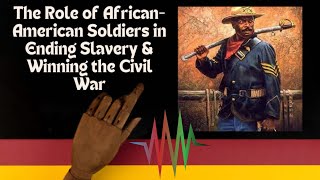
In this Wellness Musketeers podcast, host David Liss interviews retired Navy captain and Civil‑War reenactor Ed Gant, with Dr. Richard Kennedy as the interviewer. Gant recounts how he discovered the massive, largely omitted contribution of roughly 200,000 African‑American soldiers (U.S. Colored Troops) between 1863‑1865, describing his personal journey from a Black History Month museum visit to active participation in reenactments of battles such as the Wilderness, Cedar Creek, and Fort Pocahontas. The conversation weaves together detailed explanations of Civil‑War weaponry, the logistics of reenactments, and the historical context that kept Black soldiers out of the war until the Emancipation Proclamation and the creation of the Bureau of Colored Troops. Gant and Kennedy discuss the post‑war narrative battle: the Lost‑Cause myth, Confederate monuments, and the systematic erasure of Black contributions from textbooks and public memory. They trace the political compromises of the 1787 Constitution, the three‑fifths clause, and the failure of Reconstruction, highlighting the rise of Jim Crow, lynching, and the 13th‑15th Amendments’ limited impact. Throughout, they stress the importance of personal and collective memory, genealogical research, and open dialogue as pathways to correcting the historical record and fostering racial reconciliation.
Chapters
Hi, I'm David Liss, a DC-based consultant and journalist, your host for this series of podcasts, Wellness Musketeers, where we will discuss a wide range of topics ranging from health and wellness to history and economics, with some management thrown in as well. Our guest today is Captain Ed Gant. While not a professional historian, author, or researcher, He is someone who, when he started to learn history, was energized to read more and more, a user of the products some of these historians and researchers have developed. Even though the books are widely available, most people have no understanding of the contributions of Black soldiers to the outcome of the Civil War. Ed is a retired Navy captain, graduated from Howard University, and entered Naval Aviation Officer Candidate School. The place that was depicted in the movie An Officer and a Gentleman. The school was in Pensacola, Florida. He served 30 years of active duty in the U.S. Army and Navy in both services and a tour as a commanding officer of the F-14 Tomcat squadron, the aircraft that the movie Top Gun is based on. After retiring, he began teaching ROTC in high schools in the Washington, D.C. area. He also co-taught the Japanese language and AP government classes in various schools as well. He has been involved as a Civil War reenactor and speaker since 2014 with a focus on the contributions of U.S. colored troops to the outcome of the Civil War. Ed will speak about the relatively unknown involvement of nearly 200,000 U.S. colored troops between 1863 and 1865. Captain Gant will be interviewed by Dr. Richard Kennedy. Dr. Kennedy is an internist who has over 36 years of clinical experience, including the World Bank Clinical Services and private practice. He is currently a primary care physician in Washington, D.C. with MedStar. Welcome. It's a pleasure to be with you both.
Thank you for having us this evening. Captain Gantt, I just wanted to start by saying it is a pleasure to be here with you this evening to learn a little bit more, because clearly the topic you're about to speak about is something that we are aware of, but only because we have taken the time to look for it ourselves most of the time, because it wasn't taught in our schools with a complete degree of honesty and accuracy.
Thank you, sir, and thank you for your interest.
Oh, you're very welcome. I wanted to first ask, how did you become interested in the Civil War reenactments, and how did you become aware of the largely unknown role of the colored troops in the Civil War?
It was probably a two-step process. The first step was maybe in 2008 or so when the theme for the Black History Month that had been set by Carter G. Woodson's organization, the Association for Study of African Life and History, the theme that they picked for that year was African Americans in the Civil War. And I went to the African American Civil War Museum in Washington, D.C., and Dr. Harry Jones, who was an assistant curator or assistant director there, made a statement that I had never heard before in my life. He said, Black people won the Civil War. And— Wow. And I asked him, okay, What do you mean by that? And he said, you know, the 200,000 Black soldiers who entered the war in late 1863 and 1864 made such a tremendous contribution that it influenced the outcome of the Civil War. And when I heard that, I slapped my forehead because I had never heard anything close to that. And the biggest shock was every school I've ever attended was Black, from elementary school up to college. And I didn't learn it there, so I know Americans in other schools probably didn't learn it as well, that there were that many. I knew there was something called the 54th Massachusetts. Growing up in D.C., we learned about Frederick Douglass and the fact that he had two sons who were Black soldiers in the Civil War, but I had no idea that the order of magnitude was so great. So that was the first step. A few years later, as, uh, Civil War reenactors were preparing for the 150th anniversary of the Battle of the Wilderness down in the Fredericksburg area, I received an email that was forwarded to me from an Army friend, and it said, we're trying to raise enough Black soldiers so we can have a complete Black regiment, because back in 1864, the U.S. Colored Troops, Black soldiers, were a critical part of that Battle of the Wilderness. And the email ended with, oh, by the way, if we can't get enough Black soldiers, we'll fill in with white guys. And at that point I said, okay, all right, I have to be there. Yeah, I don't have a reason not to be there. Now that I know there were 200,000. So once I got out there on the battlefield, they loaned me a musket and a uniform, and we spent a couple of days learning how to drill and move into the battle formations. This is pretty interesting. But with each one of those days and each one of those events that I attend, I learn a little bit more and more. And every time I learn more, then it just develops 3 or 4 more questions, and I go in pursuit of the answers to those questions.
Thank you. That actually is a fascinating journey, and we're just starting.
Yes, there's more to the story that I haven't uncovered yet.
Yes. So what Civil War reenactment groups are you a part of now?
I'm part of two, two groups. Uh, the one that invited me is in the Fredericksburg area, Spotsylvania, and that's the 23rd Regiment, U.S. Colored Troops. Okay. Back in 1863, they were here in Northern Virginia. They were formed right near where the Pentagon is today. Oh, and by By the summer or the spring of 1864, they were part of General Meade's Army along with General Grant headed down toward Richmond and engaged in those battles north of Richmond, east of Richmond, the siege at Petersburg, eventual fall of Richmond, and on to Appomattox. They were part of the group that was there for General Robert E. Lee's surrender. 23rd had a couple of distinctions. One, they were the first U.S. colored troops to be engaged in actual combat against Robert E. Lee's Army of Northern Virginia, and that happened in May of 1864. And then they sustained the largest number of casualties at that famous Battle of the Crater down near Petersburg. Okay, the other group that I'm part of is more famous, Company B, 54th Massachusetts. And a lot of the guys in, in that group, they're here in the Washington, D.C. area, D.C. and Maryland.
Okay.
Some of the guys in that group were extras in the movie Glory back in '89, 1989, and that's what got them involved. Then they wanted to keep, keep the story going.
That's great. What does a Civil War reenactment consist of?
We just had one on the 15th and 16th out in the Shenandoah Valley. This was the Battle of Cedar Creek, and when the battle was actually fought back in 1864, there were no U.S. colored troop units at that battle, but I've joined in with some of the white units, it's good to have more muskets out there on the firing line. Sure. But the battle usually consists of first a planning group that sits down, goes over the details of the plan, because they really want to get as close to historical accuracy as possible. The guys who are involved in Civil War reenactments on both sides have studied, and they know what is supposed to happen in a particular battle. So when we get out on the field in a reenactment, we try to avoid rewriting history.
Okay. Does it happen pretty often in an accurate way, following history?
I think so. I think that every battle that I've participated in over the last 8 years now has adhered to historical accuracy, probably at the 90% level, and 10% is if there is a crowd, an audience. Yes, there will always be some things that you have to embellish to keep the crowd excited and to make it interesting, just as if they were making a movie about your life. Yes, and you'll sit there on the front row and shake your head. That's not what I said. I didn't do that. But you do that to keep the crowd excited. And the crowds come out for the Civil War reenactments that I've participated in.
That's great.
It is—
when you do the reenactments with the colored troops and the other soldiers playing the parts of the Confederacy, is there animosity toward the soldiers, or because many of them, I would suspect, um, may have some beliefs about the Confederacy.
If there is, I have not encountered. Okay. I was at a planning session for another battle just this past Saturday. That battle will take place in June, and there are Confederate guys across the table and We even talked about that topic because at this battle down near Williamsburg, the Battle of Fort Pocahontas or Wilson's Wharf, it stands out in that at the end of the first day of battle, we all sit down at the same table. An hour ago we were shooting at each other, blue and gray, and then we sit down at the same table and have this buffet dinner and everyone's having a good time. We We really do get along. Many of the reenactors serve in both roles. There are guys who will wear blue sometimes and then wear gray at other times, but I would say many more of the reenactors following in the footsteps of an ancestor, perhaps.
Can you tell us about the uniforms and the weapons used by the people in the reenactment community?
Yes. They're expensive, so you have to really enjoy doing this to put that, that much of an investment into the hobby. And it involves a trip. There are guys who, if you are a cavalry guy, you will hook a trailer up behind your truck or your car and you will tow it for 500 miles to get to a battle with your horse or two horses. The same thing for the artillery guys, and there's no payment for that. They're not paid by the folks who are sponsoring or scheduling that battle. There's usually a foundation for that particular battlefield, but the reenactors come out because they enjoy being part of the— of telling the history. Yes. And I would add that they pride themselves at telling the history accurately.
Yes, yes. And I would think that's actually really important, is to tell it accurately, because hearing the words 200,000 colored troops is still mind-boggling to me.
It's amazing that it was such an unknown into the 20th century. Now, when there were books that some of the Black guys who fought in those units wrote about it and published in 1887, 1888, 1890, uh, the story was out there available to us, but for one reason or another, we all learned about Robert E. Lee and Stonewall Jackson and, and the exploits of the noble Confederate leaders and had no idea that many of the Black soldiers who fought were probably as courageous or maybe even more courageous because they had a lot more to lose.
Without question. But I suspect that because of the type of weapons back then, Was there a lot of accuracy with the rifles that were being used?
You, you asked about the weapons. The two most common infantry weapons now, because I'm an infantry guy, I can speak from a little bit of experience on those. They have muskets at the beginning of the war, and the muskets are these long rifles. Not much different from what the Americans had in the Revolutionary War, the War of 1812. Muzzleloaders. By the Civil War, they got away from flintlocks and matchlocks, and they had a percussion cap that you placed on part of the weapon, and when the hammer hits it, that created a spark, and that spark ignited the powder inside the breech or the barrel. The.58 caliber, which means that the diameter of the muzzle was 0.58 inches. So the— or the projectile that came out had a 0.58-inch diameter, a fairly large piece of lead. Lower velocity than modern weapons, but with that large piece of lead and the power behind it, and the fact that they were firing pretty close range, if you were hit in a bone someplace, you're probably going to lose that part of your body. Okay, so there were two most common 58 caliber muskets through the Civil War. One was an 1853 British-made Enfield musket, and the other was an American-made Springfield from the Springfield manufacturers up in Massachusetts. Both were very similar. There were some others, there were some foreign weapons, but the Springfield and the Enfield were the two most common that outfitted both the Northern soldiers and the Confederate soldiers.
Okay, great.
But you fire one time and now it takes you— it takes me a minute and a half to reload. In the movie Glory, the colonel makes a statement in front of the new troops that a good man can get off about 3 aimed shots in a minute. I've never reached that level of proficiency. It really takes me over a minute to reload.
And you can't skip steps, I suspect, as well.
You can, and you can get caught up in the excitement and kind of lose track of what's going on, and you think you're doing it right, but you miss a step, then your musket is not going to fire. Ah, yeah, but you're surrounded by, by another thousand guys, uh, all standing shoulder to shoulder in most cases, and noise and confusion. And I'm describing what I've seen when I've been in reenactments, and no one died in a reenactment. Yeah, but you add that factor that the guy next to you just got half of his head blown off Yeah, and you still have to reload and be ready to fire the next shot.
Absolutely. Yeah. So how's the hearing? The doctor in me wonders what the hearing is like when those things are going on. Are you guys wearing earplugs?
Some guys wear earplugs, but my hearing was already gone from too many years in jets.
Oh, okay.
Yeah, there, there are sounds that I can't hear and haven't been able to hear for the last 15 years, probably.
Okay. So what does the reenactment event consist of?
For the majority of reenactments, there will be a narrator who describes to the audience what they are going to see and describes the battle as it actually happened 155 years ago or so. Uh, and based on the plan, there will be a time for one of the armies to move on to the battlefield at first. In most, there will be artillery firing from one direction toward the army on the other side of the hill, and then their cannons start firing back. There's no lead inside their cannons.
Yes.
So it's just noise.
Yes.
And that's a crowd pleaser.
Yeah.
I've only been to one battle where, whereas I'm an infantry guy back behind the tree line waiting to take the battlefield, and I see explosions up there in the middle of the battlefield, and it looks like the cannons are firing live shells. Oh, but that's a battle down in Florida. They have strategically planted, uh, detonating charges out there in the battlefield so that it looks like firing live shells.
Okay.
And once the cannons stop firing, then there's a cavalry charge from one side toward the other, and, and they'll meet out in front of the crowd and have a cavalry battle. Wow. With pistols or swords. Sometimes they'll have phases where they do the pistols first, and then as they get closer, then they have the cavalry sabers. They battle right in front of the audience, and when they move out of the way, then the infantry start to move up into position. And you will see, for instance, at the Battle of Cedar Creek two weekends ago, you will probably see 5 1,000 Confederate soldiers moving over the hill from one direction, opposed by an equal or slightly smaller number of federal soldiers. And we marched to within 25 yards of each other and start shooting.
Wow.
And which is the way it happened back there in 1864.
It must be pretty impressive visually.
Um, it's probably more impressive visually for the spectator.
Oh, sure. Yeah, absolutely, absolutely.
It's kind of scary and exhausting and confusing. But the first big volleys of fire where everyone fires at the same time, the place just fills up with smoke. And it's noisy and it can be confusing. And again, no one's died, but I can't imagine what it would be like in a real battle with lead flying in both directions.
Oh yeah, like just hearing about what happened in Gettysburg.
Yes, that's a pretty big battle and they do that one every year. Around the 1st of July to coincide with the anniversary of the battle.
Okay.
There were no U.S. colored troops at Gettysburg. There were very few U.S. colored troop units there in that early in 1863. Yeah. And as you saw in the movie Glory, the guys from Massachusetts were down in South Carolina at the time.
Yeah.
Getting ready to attack Fort Wagner.
Wagner, that's correct. Why were there no Black soldiers or colored soldiers before 1863?
That brings us to the Emancipation Proclamation primarily. We can back it up to maybe 1792 with the Militia Act that came out and said only able-bodied white men could serve in the army. Now, if you study any of American history, you know that there are times when they just ignored that prohibition. But as we got closer and closer to the Civil War, there were a few things on the minds of Americans, mostly in the South, but also some in the North. One, Haiti had a successful slave revolt in 1804, 1805, somewhere around there. The only successful African slave revolt in history where they kicked the French off of the island. So that's fresh in the mind of Americans. Nat Turner's Rebellion in Southampton, Virginia.
Yes.
Also on the minds of Americans. So there is serious reluctance to put weapons in the hands of Black people. Out of the 5 million who were living in the United States, 4.5 million were enslaved. At that time, at the beginning of the war.
Yes.
John Brown's another point where white America said, we probably don't want African Americans to have weapons. John Brown's plan was to raid the arsenal at Harpers Ferry and pass those weapons out and start a slave revolt. Yes. So that issue was debated. By both sides. And for a long time, both sides agreed that African American soldiers would not fight in the war. There were some efforts by some abolitionists and abolitionist-minded Union leaders, colonels in South Carolina, in Missouri, even in Louisiana, to arm Black people and create Black fighting forces. But when they came up in 1861, 1862, and early 1863, they were all ordered to stop all of the training and equipping of Black soldiers. Washington, or Abraham Lincoln in particular, was very concerned about moving too far in the direction of ending slavery. His concern was that he would lose the support of those 4 slaveholding states that stayed with the North. Yeah, those are commonly known as the border states— Missouri, Kentucky, Maryland, and Delaware.
Yes.
And if you look at a map, you'll see that if Maryland, which kind of teetered in both directions, pro-slavery, pro-Confederate, pro-Union, and back and forth, that if Maryland had seceded, then Washington, D.C. would be completely surrounded by the Confederate States of America. Yeah. So his concern, Lincoln's concern, was if he moved too far and too fast in the direction of ending slavery, that it would lead to those border states leaving the Union. So when he found out that there were Black troops being organized in certain places in '61, '62, '63, he ordered them to halt those operations. But then January 1st, 1863, he issued the Emancipation Proclamation, and although it didn't free any slaves, Right. It set some things into motion that eventually ended both the war and slavery. One, it had a provision that allowed the enlistment of Black soldiers into the Union Army. It also— that eventually led to the formation of something called the Bureau of Colored Troops a few months after the Emancipation Proclamation. And their job was to go out and recruit and then set up training for what would become known as U.S. colored troops.
Okay.
The other thing that the Emancipation Proclamation did was the word eventually got out to those who were enslaved and living in the southern states that if they could make their way off of the plantation and get as close as they could to to Union-controlled area where the Union Army was, they would be free.
They would be free.
And yes, so Black soldiers or Black men enlisted in the Army, Black civilians and family members walked off of the plantation, and the two of those things combined, I believe, brought an end to the Civil War. Without the manpower working in your fields, you probably can't— you can't sustain a war effort. Yeah. You can't harvest the crops that you need to feed your soldiers that are up in Tennessee and Virginia, for example.
Yeah.
And the number of Black soldiers was just so large. For example, In the last few months of the war, there were more Black soldiers in the Union Army than there were soldiers total in the Confederate Army.
Really?
Yes.
Wow.
And why is it that I didn't grow up knowing that? I don't have an answer for that question.
Yes, but it goes back to what you had talked about earlier, and that the information that was— has been taught in the school systems, as my mother would say, the people in power tell his story. And that was what was happening, is they told the story the way they wanted it to be perceived. And in many ways, I guess it's also a reflection that And I think you, you talked about this, or you were going to talk about the fact that it's the first war that the loser actually created a whole new dynamic about the loss rather than the winner basically leading and guiding the new narrative.
Yes. So here's my opinion. As to why that happened. If we go back to 1865, the war's ended, 700,000 American soldiers have just been killed, and that total comes from both sides, and a huge number who have been maimed, injured. So those troops from the North were able to go back home, go back to Maine, Minnesota, Wisconsin, Illinois, Indiana, Kentucky and pick up with their lives as much as possible. If you were a Southerner, let's say you lived in Atlanta and you went back to Atlanta, there was nothing that looked like Atlanta before, before the war, the antebellum Atlanta. So you couldn't forget it. You could go back to rural Pennsylvania, away from Gettysburg. And if you weren't wounded, you probably could, after a few years, tell yourself that the war never happened. It would take a much longer time if you lived in Atlanta or Savannah or Mississippi before you could ever convince yourself that it didn't happen. So there was a constant reminder. And if I were a Southerner and I've got kids or grandkids, I probably would try to come up with a story that, that would give them something to be proud of. Because as you look around with the destruction of your economy and your lifestyle and your infrastructure, there's not a lot to be proud of there. So I could understand how someone would get together and develop a narrative that is widely known as the Lost Cause today. So that came into existence in the late 1870s, '80s. United Daughters of the Confederacy, assisted by one of the Confederate generals, Jubal Early, created a, a counter-narrative as to why the war was fought, why the South lost the war. And that's where we grew up learning that the war was fought over states' rights and not over slavery. And we grew up learning about the, the noble cause that the Southerners fought to defend their land against Union aggression. Some of that is a fabrication. Some of it is modification of facts on the ground, but it was effective. The United Daughters of the Confederacy had so much influence that they could dictate to schools what information would be in their textbooks and what would not be allowed in their textbooks, not just in the South, but in most of the country.
Yeah, yes, without question.
Yeah. So that same group was responsible for that big push to erect Confederate monuments. Those monuments didn't go up right after the war, though. They went up on those— that 20-year period after the war. So yeah, as part of this resurgence of Confederate or Southern pride in that noble cause to defend the South. Now, it wouldn't take much inquisitiveness to ask, what is it that the South was defending? And if you ask that question objectively, you'd recognize that they were defending their state's right to maintain 4.5 million people in bondage. Yeah. The constitutions of all of those states broke away and formed the Confederacy. I believe each one of those constitutions specified the institution or addressed the institution of slavery. And then we see after the war, there are a number of things that came into being that were written into law to protect white rights and to uphold the supremacy of the white race. On into the end of the 19th century as the Reconstruction ended.
Yes, very true.
Yeah, and I would add that sometimes those efforts use legal measures, use the court system and the legislative bodies, and when those didn't work they resorted to some pretty violent measures. Intimidation was probably the least of the violent measures, but there were assassinations and lynchings. Yeah. There were so many lynchings, we don't even know how many there were total.
Yes.
And that went on all the way up into the 1960s, '70s.
Yes. Very true. Very true. Yeah, actually taking a trip to the African American Museum would actually highlight a lot of the things you just discussed of what happened. Although the Civil War is barely talked about. And, you know, in your opinion, what was the justification for the Civil War?
When I talk to groups, I pick a start point for the Civil War as 1787, the US Constitutional Convention.
Yes.
And the reason I picked that is because, remember that Three-Fifths Agreement?
Yes, yes.
So here's what happened at that Constitutional Convention as they are deciding to apportion legislative powers and Electoral College votes. And they say, okay, we base this on your population. That's reasonable for representation. More people you have, the more representation you get in Congress. For one reason or another, that convention agreed to allow the southern states to count 3/5 of those 4.5 million people who had no vote and no rights and no say in any aspect of American life. But they were counted to give the southern states additional congressional representation. Wow. As well as Electoral College votes, because the Electoral College votes are based on the number of representatives in Congress. Yeah. Yeah. So in my mind, that gave the Southern states more than their fair share in our Congress. Yeah. So when it came time to compromise, which is what the founding fathers had in mind, that we compromise so that you don't get everything you want and I don't get everything I want, but we come to some meeting in the middle. Mm-hmm. Uh, but if you got more than your fair share, if I've only got 3 cards and you've got 6, there are some things that you don't have to compromise on because you've got more cards.
Yeah.
So the southern states had what I think is more than their fair share of congressional representation given to them by the U.S. Constitution. And there are periods leading up to the 1860s where if we could have compromised or come up with a fairer compromise we might have avoided the war. But they didn't have to compromise, right? And in many cases, they did. So the South is getting rich off of the free labor, the institution of slavery. The importation of Africans from overseas is banned or outlawed early in the 1800s, but they continued to get around and import slaves and Yeah, and many of the ships that brought these people over were from northern states. Slavery could not have endured without the support of northerners, and there were northerners who were getting rich as well. But there were dissenting voices in the north. Yes, you will have a tough time finding literature that identifies a dissenting voice in the south. And I don't have an answer for why that is. I think it's not too different from today's world where there are states in the country where dissent and discussion and disagreement is a norm, and then there are some other places where they rally around an issue and everyone seems to be on board with that particular point.
Yeah, it's somewhat a reflection of the world we live in today in this country.
I won't say that because there'll be a lot of people who are upset at that statement asking, are you implying that we're getting ready to have another civil war? And that's not what I want to— no, to give any hints toward.
It's more about information.
But compromise is the thing that— recognizing that compromise is a good thing, and it keeps us from moving down a path toward armed conflict. And that's why I picked 1787, because, you know, the Constitution gave an unfair advantage to one side.
Yeah.
And as they became richer The folks in the North, those who weren't supportive of slavery, demanded more and more tax and placed more responsibility on the Southerners to support the federal government. Then the Southerners resisted. And there's still that abolition movement, the folks who just viewed slavery as an evil and, like John Brown, had sworn that they would get rid of it.
Yes.
So now we have the seeds of a really serious conflict leading up through the 1830s and the 1850s. And we end up with Congress passing the Fugitive Slave Act that requires the folks in the North to turn over people.
Turn over, yeah.
Yeah, if they suspect that person's a runaway slave, you're required by law to turn them over.
Yeah.
And that upset the folks in the North. Uncle Tom's Cabin came out around this time that kind of painted a really negative picture of the institution of slavery. Frederick Douglass is on a speaking circuit as an escaped slave, telling people face to face the horrors of that institution of slavery. Even if you're making a lot of money, you can convince yourself that it's not so bad. But when you come face to face with someone who lived through it, it's harder to ignore the institution that is evil. So we're on that path by the 1830s, the 1840s, the 1850s, and very little compromise, that real compromise, that gets us off of that path toward an open conflict. So by the time 1860, the election of 1860 rolled around, Abraham Lincoln runs for president. He's one of four candidates, which kind of split the vote and allows Abraham Lincoln to win the presidency without any votes from any federal Confederate States, any of the southern states. And South Carolina said, if Lincoln wins, even though he hasn't said he's going to abolish slavery, we know how he feels as a Republican, that South Carolina will secede and leave the Union.
Yeah.
And they did, not long after Abraham Lincoln was elected, followed by the other states that became the Confederate States of America. And Not unlike two men who have a conflict, it just escalates in small steps until you find yourself out in the street at high noon.
Yes, for sure. So how do we change the narrative going forward from that time? As you said earlier, the Emancipation Proclamation did not actually free anyone. Yet it became a law. And then 1865 comes along and the Civil War is over. The Confederates have conceded and surrendered. And now you have 4.5 million people. What were they to do?
Okay, so, so here's some things that could have happened. One, if Abraham Lincoln had, had lived, I think he probably would have implemented his plan, part of his plan. He didn't have a really detailed plan, but part of his plan for what would happen to that population of formerly enslaved who are now free, to be incorporated into to American life somehow.
Yeah.
Let's assume that Lincoln wasn't successful in relocating some of that population to another country. So Abraham Lincoln didn't survive, and his successor, Andrew Johnson, wasn't necessarily as enthusiastic about anything that looked like citizenship or equality for the freed man.
Yes.
Even though the Freedmen's Bureau was created in those years right after the Civil War, and their job was to educate those who had not been educated. So we see most of the historically Black colleges and universities come into existence around that time. The Freedmen's Bureau is involved in some of the churches, both Black churches and white churches, involved in establishing educational opportunities for those. And now, now this is the, the years immediately after the Civil War and into Reconstruction. Perhaps the thing that made it work for those few years that it did was Confederates were excluded from government leadership until they slowly reaffirmed their oath to, to the United States Constitution. So for a while, they weren't allowed to run for office. And, and that's when you see a lot of Black elected officials, Black senators and congressmen, Blacks in leadership in states and cities. But with Andrew Johnson's acquiescence, the former Confederates slowly rolled back on all of those initiatives through Reconstruction. But we do end up with 3 amendments to the Constitution. The first one, that 13th Amendment you alluded to a second ago, that made Lincoln's Emancipation Proclamation, which was just an executive order, made it into law.
Mm-hmm.
But that didn't get ratified until December of 1865. And then based on the behavior of those folks in the South, the Northern Republican-led Congress would eventually pass the 14th and the 15th Amendments. The 14th giving the rights of citizenship to African Americans, and then the 15th that gave them the right to vote. There was opposition from the South every step along the way to grant anything that looked like equal equal rights of citizenship or freedom to those who had been enslaved. But the Union soldiers were still in the southern states enforcing Reconstruction.
Yes.
And so there was some progress, not as much progress as could have been made if instead of Andrew Johnson, who was a sympathizer, uh, You had someone who was committed to the fair treatment of formerly enslaved people. Andrew Johnson was not.
Yes.
So whatever gains were made were slowly being rolled back. And by that Hayes-Tilden agreement, the one in 1877.
Yes.
That removed the Union troops from the South, that was the end of it. Because now we have the resurgence of white vigilante groups, the Ku Klux Klan and similar organizations that made sure that any Black person who felt that they had a right to run for office either changed his mind or disappeared.
Disappeared. Yes.
Yes. So we entered a really dark period in American history, and this is another part where Americans aren't that familiar with what happened in Reconstruction. And maybe the best example that I can offer is, um, in Mississippi, in one of those earlier elections. It might have been in '76, it might have been the one before 1876. 90,000 Black people voted. Okay. 20 years later, that number was down to less than 10,000. Wow. And it would get lower.
Yeah.
And what we had by the beginning of the 20th century was almost complete disenfranchisement of Black people in those former Confederate states.
Yeah. So although slavery had ended, The effects of slavery were still there.
For one reason, I think, and only for one reason, it's because the side that was supportive of the institution of slavery and was willing to fight a civil war to maintain that institution, that even after they lost the war, they were still unrepentant and hadn't given up on regaining that control. So while slavery ended, yes, according to the 13th Amendment, the 13th Amendment had a provision where if you were either convicted— I'm not sure what the language is, but it said something like, unless a court— you can't lock anyone up, you can't enslave anyone unless the court orders it. And that's exactly what started to happen in those years leading up to the early 20th century, where an example would be, uh, I have a, uh, a factory or a mill that hires Black people. You are the sheriff, and the sheriff approaches BSA. We need some more Black guys in the prison so we can hire them out to go and work in certain industries. You lay off 50 of your employees, Black men. The sheriff rolls up a day later and arrests them for vagrancy.
Wow.
And now they are in prison, and as a result of their being in prison, we can hire them out to go work work in the mines in Birmingham, Alabama, or work in the fields in Louisiana. And this is something that happened so widespread, and Americans don't know it happened.
Wow.
So it gets worse. We're using the word— it's slavery just with a different name. And then we move into to even more horrors at the end of the 1800s. Now you have a law that says you don't have to provide anything of equality, even though the law says separate but equal. But it never was equal. When you look at, you know, the Black water fountain and the white water fountain, you can look at the picture and see those things aren't equal. You look at the the Black section on the train and the white section on the train. But they were allowed to do that because I think that Northerners were exhausted trying to adjust the mindset of the Southern states in America, and they just were unrelenting with their—
they wouldn't let go.
That's right. So then, then we move into the 20th century And with the law on their side, we watch President Woodrow Wilson eliminate that large pool of Black civil servants. And the clock is turned back.
Yes.
50 years. 50 years of progress gone. Yes. And it was that way until after World War II.
No doubt.
Yeah, so American history has a number of really good things, I think, and it has some pretty ugly things. And if you have a book and you rip out all the pages that have ugly things that you've done and tell the story how all you've done are great things, you've helped here, helped there, and you built this and developed these things, but you are hiding those ugly truths, they will eventually come out. They always do.
Yes.
Yeah. And when they come out, then it leads to the next conflict.
Yes. You can't hide it forever because you can't constantly tell the same story all the time.
No, you cannot. And there are people in America who would attempt to tell you how slavery was not such a horrible institution, that they did good things for Black people and for Black families. At the end of the Civil War, there's a museum down in Montgomery, and in part of that museum, there are classified ads of folks searching for their families and But a typical ad would be, uh, searching for my daughter who is probably 16 years old now, last seen when she was sold to an auction that went to Louisiana. And they're just ad and ad after ad, people trying to get their family back together. And then on the other side of that same museum, they have big jars. I think they're probably half-gallon jars or so where they collected soil from the sites of lynchings, and they are on display in that museum. This is put together by the Equal Justice Initiative. It's worth a visit because that will, will offer some of the American history that frequently left out. Isn't that— those things? Yeah, Montgomery. You know, that those things that happened after the Civil War, this is after 200,000 soldiers had fought and felt that, okay, we fought for this union and now we should be treated a little bit more fairly than we are.
We are.
Yeah. Yeah. But we felt that after World War I, then we felt that after World War II.
Yeah.
But there's just an attitude among some people in part of this country that just refuses to accept the fact that you no longer are the supreme being in this sandbox.
The sandbox. Yeah. Yeah. What do you think some of the Americans think are the biggest myths about the Civil War and particularly the contributions of Black Americans during the Civil War?
The biggest myth or misconception is that the Black soldiers didn't do anything in the Civil War. And there are books that tell story after story of Black contributions to the Civil War. To the outcome of the Civil War. But the other myths are classic ones that were developed with that Lost Cause. Yes, that they were fighting for a noble cause to defend their homeland against Northern aggression, not that they were fighting to end slavery. But another part of that Lost Cause um, narrative is that the South lost the war because the North had more people and had a better equipped army. Those two statements are true, but they were known before the war started. There are 23 million people living in the North against 9 million in the South, and out of that 9 million, 4.5 million were slaves. Wow. Yeah, 90% of the financial institutions in the United States were in the northern states. Probably three-quarters of the manufacturing capability was in the north. When you line up all of those disadvantages that the South had, you would have to wonder, how did they expect to win this war? I don't know the answer to that, but there's some belief that Their cause was noble and that the Lord would lead them to victory, I believe. I don't know.
Yeah, in many ways they did believe that they were in the right all the time.
Yes, I've seen a picture of a lynching. It looks like a big picnic or something like that. There's two Black men hanging from a tree and the crowd This is one of the things that bothered me. There's no one in that crowd who puts their hand up to their mouth in horror. They all think that's a good thing.
Yeah. Uh, yes.
And probably because both Black men were accused of assaulting a white woman, which is a frequent thing, and therefore it's justified.
Yes.
Yeah, therefore it's justified. I have difficulty with that one.
You and I both.
Yeah.
It's hard to imagine because we're all humans and technically because we're all humans, there's one not better. And there's the distinction that people of color didn't have the capabilities to take care of themselves and that slavery gave them the opportunity to have a place to live and to eat and this and provide for their families. Yeah, their narrative was very meek and they kept it up. And then as long as you continue to say the same thing again, eventually even those who don't believe, people start say, yeah, maybe you have a point.
Now, think that there have been times when America has placed an asterisk at the end of that statement, we're all human. And the asterisk is we're all human except this group or these people, and therefore they have no claim to any of the humanity that we would grant to some other folks. At the end of the Civil War, Union graves were defaced in burial places in the South. If it hadn't been for African American civilians burying their Union soldiers, they would remain unburied. This is after the war. So that tells me that even after fighting a bloody war for 4 years and losing the war, that you still can't see that the other side is human.
Hard to imagine that exists But then do you think that places something in the fact that up until recently there were all of these monuments, roads, statues honoring the Confederate leaders?
They still stand in many places. I think that number that the United Daughters of the Confederacy erected around the country was something like 1,700 monuments and statues. Wow. Mostly in the South, but not all. And there was a woman who spoke to me. I was way down in Southern Virginia at a fall festival a few weeks ago, and as she walked by, she mentioned how angry she was at removing the statues. And I wish she would have stayed long enough that I could discuss that with her. I'm going to make two points. One is it probably was wrong for those statues to go up in the first place when they went up. Yeah. And that they really aren't in honor of the heritage and the sacrifice of the noble Confederate soldiers. They went up as symbols, symbols that if you think that you're going to move toward equality with the white person, we're going to put a statue right here in the middle of the town square or in front of the courthouse that every time you walk through here, you're reminded that this is still the Confederacy.
Yes.
Yeah. And we did the same thing in the years after World War II. We put that Confederate battle flag on so many of the southern states' flags.
Yes, sir.
And both times they were placed as symbols that if you think you are moving toward equality, this symbol is to remind you of how things used to be and how we think that they should be now. It's a challenge for us, and the challenge remains because I think as we teach more and enlighten more, we may move to a point where those who hold fast to the old ideas that are rooted in supremacy, that those will slowly go away, but I'm not sure. I don't know. Because I see some really hard feelings over issues that sound a lot like America in 1859 and 1860 leading up to this point. Where you just refuse to entertain that the other side may be right or have a good point. And the next step is you enlighten that asterisk on the end of the statement that we're all human. You make the other side so bad, evil, that you are justified in throwing a firebomb through, uh, through the window of their house.
Yes, yes.
Knowing that their kids are there in bed asleep.
Yeah. And that is sad that even though something ended in 1865, we're still revisiting the same mindset and thought process all over again.
In some places we sure are. And in other places we have a generation that's grown up with perhaps more enlightened than their parents were. And I think that we become more enlightened and more fair as we interact with each other. For as long as we are separated by a wall, a river, a mountain range, I can stand on my side of the river and I can tell you how evil those guys are on the other bank, and you never have anything to counter that because you don't interact with them. America is a place where we self-segregate. We line ourselves up with folks who agree with us, see the world the same way we do, and probably feel the same way we feel about the others, whoever that those others are. Yeah.
So do you think there's a solution?
I hope there are some solutions. I don't know if I have one to offer. Other than that, interact with us. But there's so few places in America where there's interaction across race, ethnic, social, socioeconomic. And I see that in my son. Nothing gets into his head unless he wants it to. He can select the channel, he can select the media that come. That if it was open-minded or disagreed with what he likes, it probably isn't going to get through his filter.
Yeah, yeah, that makes it a difficult challenge.
Yes. So my experience in the Army— I went in the Army in 1969, and for the first time in my life, I'd been around people who weren't all Black. And you start to learn some are reasonable Some are jerks, some are real buttholes that I don't want anything to do with. And then when you think about it, yeah, that's just the way it was back at home. Yeah, there were some that were okay, then there were some jerks, then there were buttholes. They lived two doors down from me. Yeah, so you learned that people are people. But America's not that same way anymore because there used to be a draft where You're forced into a group of folks that you would never come in contact with. Yeah. Now, now you can pick your group. Yeah.
Pick and choose.
Yeah.
One of the things you'd mentioned earlier was, uh, previous conversation was a quote from Joshua, and I was thinking about that. I don't know if you recall that passage.
I think that's something that we all should probably be familiar with, in that we can't control what happens outside of our doors. We can hear the hatred and animosity that goes on in the street in front of our house, but if you're a parent or if you're responsible for someone who's younger and impressionable, You have to recognize that your words and actions are going to influence that person's approach to getting along in a society. You can make another angry person who's ready to go out and throw another brick, or you can sit them down and explain how there are good people and there are bad people. You can't look at one and determine whether they are good just based on their face, their color, or where they came from, or their accent, which forces you to be a little more open-minded and a little more hesitant to come to a conclusion about that person's general nature, good or bad. So when you have a household responsibility, Joshua said that As for me and my house, we will serve the Lord. You control what's happening inside your house. You influence it. And sometimes that influence is by your example, only by your example. And at other times, it's your words.
Yes.
So if more Americans took that approach, I think hatred would be on its way out.
Yes.
I think we could remove that asterisk from the statement that we're all human. I think we'd get to a point where we would start to believe that. But we have too many people who grow up and pass on to the next generation their hatred of someone, something that they disagree with.
Yes, that is unfortunately very true.
Yeah, to make it even harder to believe is That's what happens on Monday, the day after they just sat in church and talked about brotherhood.
Oh yeah, oh yes, oh yes, that we're all, as they say, we're all God's children.
Yes, yeah, but then we walk out and out of the church and start to pick and choose and put that asterisk back on that, uh, the end of that statement. Wow.
We have a way to go, as you said.
With regard to Black soldiers in the Civil War, the 200,000, I have an opinion as to why most African Americans grow up not knowing it. It's at the beginning of the war, 4.5 million African Americans were living in the South. You enlisted in the army, you fought, you survived the war, and now the war is over, 1865, and you go back looking for your family. Where's your family? Your family's probably in the South. You are not going to walk down the streets of Savannah, Atlanta, Vicksburg wearing your blue uniform and proudly say how you fought for the Union Army. So you probably, as a Black former Black soldier, took it off and never told anyone.
Yeah.
And a generation later, that story is lost. And unless you read the books— Joseph T. Wilson, a Black man who served in the 54th Massachusetts and published his book in 1888, or George Washington Williams, who also served in that same unit, published his in 1887— if you didn't read those books, you didn't know that there were Blacks. Or, and you didn't know that your grandpa was one of them.
Yeah.
Whereas if you were a white Southerner and supported the Confederacy, grandpa's picture of him as a colonel in his gray uniform is sitting proudly over the fireplace. Yeah, very true. Yeah, very true. So I think I had ancestors who fought in the Civil War. I can't— haven't been able to prove it yet. I found the 4 guys who were in the, the 33rd United States Colored Troops, uh, back in 1864, who have my last name, and that's spelled with 2 Ts.
Yes.
So those 4 are probably related to me somehow. I'll get to the bottom of it eventually. When I found out that a third of that unit was recruited in Maryland and DC, And my grandfather was born in 1886. He had 8 brothers here in Maryland. So I think there's a connection there somehow, probably pretty close.
Yeah, close.
Yes, that's, that, that's probably the case for so many of us, too many of us. Every now and then I'll meet an African-American who knows their ancestors' past involvement in the Civil War, and I think that's great. But for too many of us, we really don't know. But if 200,000 soldiers were there 160 years ago, you could— you can draw the lines of progression to now and say we probably— every one of us has at least one ancestor who fought there.
Without question, 200,000. Yeah, without question. Give me something to look, to research.
Yeah, so one place you can start that research is at the African American Civil War Museum in Northwest DC. This is, uh, just a block off U Street. Uh, it's on Vermont Avenue, Northwest, I think the 1000 block of Vermont Avenue. And then The other place would be at the National Archives.
Yeah.
Fortunately, the Army kept really good records. Records that would show where each soldier came into the Army, where he said he was from, how old he said he was, and then it would indicate how that soldier left the Army. Whether he was killed in battle or died of disease or mustered out at the end of the war.
Okay, definitely gonna look that up.
So that becomes part of the American history, but also potentially part of the family history.
Yes. Oh yeah, absolutely.
I think it'd be good for the grandkids to know. Maybe we can put a painting of great-grandpa up on the fireplace.
Yes, absolutely. Yeah, I was gonna say, thank you. This has been informative, eye-opening, shocking, and reinforcing why we always have to always continue to be a student of learning, because there's so much information that is out there that we are unaware of, partly because they didn't expose us purposefully, it appears.
It's up to us to be critical thinkers in a constant quest for truth and accuracy.
Yes.
Yeah. And when we start following crowds and get riled up over a certain issue without asking why or what does it mean, I think we're headed down a wrong path. I agree.
100% agree with you there.
I'd like to thank Captain Gant and Dr. Kennedy for this opportunity, this recording, and this information. Thank you for joining us for Wellness Musketeers. Tune in for upcoming episodes. Please subscribe, give us a 5-star review, and share this recording with anyone you can think of. Please let us know what you need to learn to help you live your best life and send your questions and ideas for future episodes. To Dave Liss at davidmliss@gmail.com.
Thank you.
Thank you.