Learning to Overcome Grief and Trauma with Corbin Dooley
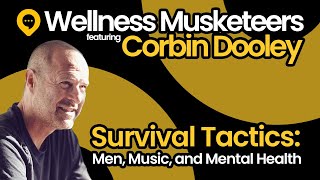
Musician Corbin Dooley talks about surviving his teenage girlfriend's death, his aunt's and mother's suicides, witnessing 9/11, and the Woolsey Fire. He credits journaling, songwriting, yoga, and meditation with helping him heal, and released an album called Western Trauma to guide others through grief.
Chapters
Survival Tactics.
Hi, I'm Dave Liss, a DC-based consultant and journalist, your host for the series of podcasts Wellness Musketeers, where we discuss a wide range of topics ranging from health and wellness to life lessons and history. Today on the show, I'm very excited to have Corbin Dooley, Corbin is a musician, songwriter, and producer who is most of all a formidable music lover. Outside the recording studio, Corbin is a music business entrepreneur, founder and creative director of the Los Angeles, California-based music production company Bikini Wax Records. With roots in Arkansas and Memphis, Corbin recently released an alternative country album called Western Trauma, where he collaborated with 6-time Grammy Award-winning producer and mix engineer Vance Powell. Today we will learn the inspiration behind Western Trauma and how his creative process has helped him heal through his traumatic experiences. We'll also discuss the stigma placed on mental health in men and hear some clips of his music. Without further ado, it's my pleasure to introduce Corbin Dooley.
Thank you, Dave. Really appreciate you having me here.
So Corbett, tell our listeners a bit about you and your life.
Well, and thank you for that introduction. I have been lucky to have lived in a few places. But as you mentioned, I grew up in Arkansas and then was raised around the Memphis, Tennessee area. Went to college in North Carolina. And Then my path led to some travel out of the country, overseas, and then always been focused around music, you know, growing up with lessons when I was young, piano and guitar and drums. So I found myself during my travels just really enjoying a lot of the different musical cultures and that aspect of being able to live in a few different places and now to be able to be able to have music as not only something that I have as a creative and healing outlet, but is my business. I'm, I'm just very grateful every day because of that.
Can you tell our listeners about some of the— your life experiences and the, the major trauma that you've had to, to live with and, and work to overcome?
Yeah, it's, um, you know, I always think that Everybody has trauma. And then it's about how you approach it. I say a lot to people around me, choose love. You know, you can choose a tactic, but when you have to face trauma, as anybody does, large or small, you'll recognize that some of the things that I try to do help me. And that really started when I was 16 and one of my first girlfriends was hit by a train and died very tragically. And coping with that by writing about it and journaling, and, you know, an uncle taught me a song, was critical to that healing process of that. So music was a factor in helping me to heal from that first, you know, very impactful piece of trauma of her death. Subsequent, my aunt, my mom's youngest sister, when I was 30 years old and she was in her late 30s, she took her own life. And so finding myself dealing with that again, journaling, writing music, writing songs was a really big way for me to cope with that piece of trauma. I was in New York on 9/11, about half a block from the World Trade Center, and was on the top of my building when the second plane went in. It was just really frightening and horrifying. And again, journaled, wrote songs. That was, you know, my go-to is journaling. I've experienced, you know, the Woolsey Fire in 2018 was really evacuating my house here in California, you know, middle of the night, couldn't see in front of my face. That was intensely traumatic. But again, wrote a lot about it. Some great songs emerged from that. And I would say, you know, the big thing that I've written Western trauma about, which you were talking about in the intro, that and a little bit of my first record, Affection, but really Western trauma has been written about the death of my mom. Who took her own life in 2016, which was, you know, being a, you know, just multiple-time suicide survivor, well, I just, I'm gonna write a song. And so I tried to choose love. It's hard at times for sure. And facing my own darkness about my own path made me realize that I wanted to choose love. And so So I wrote about it, journaled about it, and then started to talk to people about my feelings. And that was, you know, it's different points in my life, but when I reflect back on the consistent path, it was journaling. And then later in life, I felt more confident about just talking about it. I wish I could tell myself that, you know, younger self Dave, like, it's okay to talk about it. You know, but especially growing up in the South and as a man, you know, I was just taught to not talk about it.
How did all these experiences affect you after they happened one by one collectively and as you live your life today?
Yeah, I really, I would say, reflect on the idea of life is a constant aspect in finding the light in darkness. And that I feel like is everybody's choice, no matter who you are as a human, you can choose that. People choose darkness because they're affected dramatically by darkness. And I have been as well. And there are times that I err and find myself really challenged and facing all of the negative emotions. Anger was something that, you know, when my mom died, I really had to ask myself, you know, what was the point of my anger? And I really have come to the conclusion there just— there is no point. So each time that I've learned, I would say, as I've gotten older, more wise to the idea of trying to be mindful and practice my, you know, survival tactics. It's big for me to write them down and talk about it. So, you know, to answer your question, it's just so important to talk about this. When you have trauma, I don't care who it is, it can be a stranger, it can be your best friend, it can be a parent, it can be, you know, a distant cousin. Everybody has somebody in their life that they could talk about it with. It's just, we especially as men, Dave, we're just counseled to be strong. And it's not— it's meant to be a sign of weakness if you communicate vulnerability. And I just, I think that's a stigma that I want to try to dismantle. And talking about the trauma because they've me to say, do I want to choose light and love, or do I want to choose darkness and hate? And I want to choose the light, even in the midst of sometimes living in the darkness. My mom died in December of 2016. And so this time of year, especially coming toward the close, it's tough to think, and I just have to do another thing, and that's reframe it. What would my mom want? You know, and she would want me to choose love.
Do you have angry moments or things like that?
I think it's natural, and yes, and you know, I've tried to understand how to step back from them when they happen. And they happen in the times when I'm least expecting. And unfortunately, because I am lucky to work with such an amazing team, sometimes those are the people that bear the brunt of when I have a down, dark moment. They hear about it first. And so then I might, because anger is just, You know, it's just, it's all self-internalized emotion, anger. And so then it's like, if I get angry at anybody, it's, well, I'm just angry at myself for something that I couldn't do, you know. And so it's, but it's a lot easier to say than it is to practice, especially when, you know, there's a lot of hate out there in the world these days. And so it's just, it's a constant, constant avenue for me. I don't call it a battle, but it's It's an avenue to choose love. And I just really try to hold that mantra often. But yes, there are angry moments.
Is empathy a part of this? Or how does that relate to the way you think and the way you approach yourself and others?
Beautiful question. Yes, empathy is a key. Critical aspect, I think, to being mindful and to understanding how and what my role is as a human on the planet. And I have believed and also counseled from an early age, it is one thing, and that is helping others. And then it's what is your path to doing it? And I realize that music— I've been lucky in music in so many ways. And to be able to choose this as my path, well, now I can be able to then foster and help others by saying, here's what I can do to help you. And constantly be saying that to myself over and over and over. How can I be empathetic and understand somebody's situation and help them? And I try to do it every day with the people that I work with, I try to do it with my friends, my family. I feel like it's critical to do it. Well, my girlfriend and life partner Becky laughs because I am that person. If the cricket comes into the house, I try to capture it and take it out of the house instead of killing it. And, you know, it's just, I don't know, I think the Choose Love mantra for my life extends to a lot of different aspects, uh, including empathy.
You know, that's a great mantra.
Thank you.
I think it's hard for us sometimes.
Oh, isn't it though? I mean, I, I know that, you know, we face it. Um, I mean, have you, have you faced that, that situation of, of angry moments?
And yeah, I mean, I think we all have places and points in our life where there's something we can't understand, don't understand, don't know how to resolve, don't know who to talk to, don't know where to go. Some things, you know, you think, could I have prevented something? Like I had a woman I worked with and loved, really great family, and her brother committed suicide. And there are 3 sisters and their mother and father, the boy, and they each say that the hardest thing was Why didn't we pick this up? Why didn't we know? Why couldn't we tell that he had this challenge? And then we could— why couldn't we have helped him? We felt a big sense of guilt.
Yeah. And, and it's, you know, that, that really goes to the root of that, that they were empathetic, they wanted to be empathetic. It was the, the lack of communication. And I think that's, again, you know, um, just generally as a human race, women are thought of as more sensitive, more emotional, and better communicators. And men just, you know, I hope to think that, you know, if I could talk to my 18-year-old self, what I would say is be more mindful. And then I would ask myself, what does that mean? You know, saying it out loud. So it's, but it is, yes, it's it's, it's hard. It's also hard to be, you know, support somebody in that situation, Dave. Like, and it's amazing that you did, you know.
You just don't know how someone's feeling. I mean, that's, uh, when you, when you look at your experiences, what, what have been the most challenging parts of these events for you to deal with?
You know, over, over time, I realize what it is. The, the big challenge that comes from this is learning that something that somebody said to me not long after each one of these traumatic occasions is that time will help you. And it does, and it's just not easy to live. One of the key things I think I have said over the last few weeks is I've tried to distill a statement down that an author that I just adore said. It's really about living in today, learning from yesterday, not trying to think too hard about tomorrow. And it's— that is really in coping with trauma and coping with depression and finding myself in these own moments of darkness. I find that the big cue for me is to return back to, you know, that idea that I can find healing in different ways. You know, it's there for me to find. I just— I need to be able to look for it, and that, I think, is the biggest thing that I've found some. You know, we all have challenges. So it's in coming back to how to find it And, you know, I remember that the big thing for me was having vulnerability. That was, you know, just like a big thing that sometimes when somebody says it's okay to do that, I still turn away from it because—
Do you mean being able to talk about it or communicate it?
Because I feel weak and that I shouldn't do it because I've been programmed to think a certain way about being strong and determined and focused and all of these aspects. And that, you know, if I'm having a hard time finding courage, that I, that I can lean on the— again, now I understand them, what the survival tactics are, the things I try to communicate to other people that Help me find the peace. And that for me is that moment of right between sadness and happiness. It's just peacefulness. Because you're always going to have both.
What does rich mean in this context?
For me, at certain times, it was the will to want to live. The will and the courage to say, I want to fight to live when demons in my head and voices say things that are evil and terrible to me. And I have to tell myself not to pay attention and to find the— again, I call it courage, but something— I do it this way, but it's singing, it's in the diaphragm, or it's the Buddha rubbing the belly. It's the thing of intestinal fortitude, finding the courage inside to believe in yourself that you can be better. And that is that pivot point, because when you're down, it's hard to like realize, well, you know, I can't even get to zero. How am I going to get to 50% where I'm feeling positive. Well, that's, you know, the survival tactics, or, you know, again, that, that I say over and over and over to myself now that I understand what it is because I've just tried to work on myself and understand how I can reach those again, that place, the peaceful place.
How have your music and your creativity helped you kind of work through these things and express them.
Deeper connection to the trauma is very hard to do as an artist. It is something that is critical to the art, and that's just allowed me to— I can, you know, if I'm vulnerable, then I can live in it. And living in the, in the dark place is okay for a time. Okay, so Again, my girlfriend Becky, she would say, you know, it's okay if you want to visit the dark place, just please don't go set up, you know, a house there. And so I, you know, that's, you know, a big thing for me is, is that. And, you know, when it comes to music, over the years what I have found is that I, I do and can write and, and enjoy journaling, um, personally reflecting alone. So I, I can be comfortable alone once my idea— I realize once it's in my head that it wants to become a song, that next step I really like to, you know, collaborate with other people. It's just that, that process is so— fills me with, with serotonin. And so I, over the years, and, you know, luckily now I am just surrounded by, you know, a great core team of people who are amazing, as you have experienced, Dave, who are so, you know, not only talented, but just empathetic and precise. And, you know, they live their lives with kindness. And they're also just so creative. It's just, watching those escalations and the way that they flourish, those things and that music part of it, oh my gosh, that can help fight those, you know, the dark demons in a big way. And I've just done it my entire life. I don't really think I've been able to understand what it was and say that statement though until the last few years. Of just trying to understand, like, what I need to do.
What are the lessons that you've learned as a man and the things that you would want other men dealing with overcoming trauma and traumatic experiences to learn and to kind of embrace in their lives?
Yeah, well, that's, uh, I say it a lot, but it's, you know, communication. And, and don't be afraid to talk about it. If you're uncomfortable talking to somebody who's close to you in your life, have a random conversation with somebody. You can talk to somebody in your life who's spiritual. If you want to talk to your yoga instructor or your pastor, or if you want to talk to a friend or a cousin, or if you want to talk to a total stranger on the telephone, I just encourage it's okay to communicate. That's the biggest thing as a man. It's actually wonderful to be vulnerable and communicate. Because then once you've actually said the words out loud that, hey, I'm feeling sad. I'm not really sure why. But this is what's happened to me. Maybe somebody on the other end is saying, yeah, I know what that's like. And here's what's happened to me. And all of a sudden, you're like, wow, I don't feel alone. And maybe I don't even feel as sad as much. Maybe my sadness is You know, I've gone more toward the happiness place.
What are the steps that men can work towards talking about their feelings, expressing their emotions, and communicating their feelings? How do you get A to B?
I guess I am hard on myself. I've been told that, and I realize that's just something that, you know, letting things go is tough. It's a lot easier said than done. But letting go of, you know, some of those very intense moments when you're thinking about them and not being judgmental of the way that you feel when you're analyzing them in your head because you're thinking about them. Another big thing besides letting go for me is reading about somebody else who's had, you know, a path that has been successful. And, you know, that for me has been something that's allowed me to get to the next place, you know, which is journaling. Because then if I read, then I can, you know, emulate and say, okay, well, you know, this author that I really adore, wow, he's had some of these same thoughts that I've had. So I don't feel alone. You know, somebody else has written about them. I've said it, I do say it, but journaling, I just feel like is very critical. And, you know, whatever you want to call it, you know, it was my mom early on said, "You can call it a journal. It's a diary, Corbin, whatever." But it seemed like all of my women and girlfriends, I always heard everybody, all the women had a diary. Okay. And so they got to memorialize all their thoughts, but why weren't the men encouraged to memorialize all their thoughts. Well, my mom, to her credit, said, "Well, hey, just have this spiral notebook and here's a pencil and this is your journal." I'm like, "What?" And she's like, "Well, just write down how you're thinking. What are you feeling?" And she was the one who got me to start it. And that for me to this day has been a big thing. And I just, again, I go back to the piece of communication and reading about it. And, you know, I know we've said it a lot, but trying to be mindful. And that, you know, is the, you know, the Four Agreements. And I, you know, it's hard to, you know, live by those words. But Don Miguel Ruiz, who I just— again, amazing author who I reference, wrote the Four Agreements. And it's such a— it's a very easy thing to say. It is so hard to live these. And being impeccable with your word, always doing your best, not taking anything personally, and not making assumptions. I mean, my goodness, like, I, you know, I make those mistakes every day. And so then when I find myself reflecting, I try to say, well, don't be judgmental, Corbin. You have right now, and you have, you know, that moment to say, okay, well, I'm gonna just do my best and not make any assumptions and try not to take it personally when somebody says something that's mean, you know. And then I can communicate about it, and that for me says, okay, well, I'm trying to be impeccable with my word. So I'm honoring— I try to honor the Four Agreements in life, and then I've carried it over into my creative life, and then I try to carry it into my business life because I do feel like that it is a path that can be followed. That again, it's very easy to say, not so easy to do, right?
Yeah. I think what's the hardest thing is to start. And as you're thinking about that, what are the most elementary basic steps that someone can take to just start this, this process, this path.
Yeah. You know, it's that idea of the barrier to entry for a pencil and a piece of paper is very low. You know, most people can access that. And that for me is, you know, it's so it's very relatable that you can most anywhere around the world find yourself with a pencil and piece of paper to write down how you're feeling. And that can be private and you can keep it to yourself. You can keep it in your pocket. It doesn't matter the size of the paper. And that to me is a big part of what I consider journaling or memorializing my feelings. You know, the advent these days of technology is a put a computer into everybody's hand with their phone. And so it's so easy to hit a big red button on your phone and record your thoughts. And so the barrier to entry, pretty low. You do require that cell phone that has a big red button, but most of these days, a lot of people have cell phones and they have an app, a voice memos app that they can hit that red button and record their thoughts. And those are very concrete steps. You can write it down, or you can just say, I don't feel good into your phone right there. And then maybe you reflect on it a day later and you're thinking, do I feel the same? And then that can help you to understand maybe your next path. It's writing it down because that might be the way that you find your next, you know, your next survival tactic.
It's, it's not a novel, it's just a thought.
Yeah, because it doesn't need to be, in my opinion, uh, something that's verbose. It could be literally you write down a cue for yourself, like, I'm feeling sad, um, because I, you know, something, something occurred because my mom died. You know, and it could be as simple as that. And I'm thinking about my mom and where she is now. And that's a simple statement. You put it in your pocket, or, you know, for me, I close my journal. And then a couple of days later, I might go back to it and then put something underneath it, you know, about that same type of feeling. And I found that's really been helpful for me to write it down.
I work with that. I try and do that myself.
Ah, fantastic. Right on. When— how, how did the, the practice come into your life? Did, did somebody encourage you?
I, I've read different things over time about, just like you said exactly, the importance of journaling, the importance of acknowledging maybe it's success in your life, or on a regular basis, or maybe it's, uh, a struggle that you're dealing with. But like you said, exactly, that expressing these thoughts help you release these thoughts or work through them in some way. Not necessarily resolve them immediately, but there's a place for it. You're kind of putting things out in the world and releasing them from your head.
Very well said, Dave. Very well said.
As you think about all of this. What, what are the most important survival tips you would want to share with others?
Journaling. We're going to keep on that one. Uh, you know, communication, you know, that we've, uh, you know, telling somebody, a friend, a family member, a stranger, somebody in your life about your thoughts and feelings at the moment. Um, yoga has been in my life for about Coming on 20 years now, and, and it's just, I, my, my mom was a big proponent of what she just called stretching. You know, I do gentle yoga. You know, I do it, I practice, you know, by myself at home. And occasionally I, you know, I had a yoga teacher who I still have in my life who I talked to regularly who helps guide a lot of my practices when I feel unaligned. And she's so amazing. So it's, it's nice to be able to know that that practice, I think, has become a really critical part of my healing path daily. And yoga for a lot of people, and for me, has led to meditation. You know, the practice of yoga in itself is meditative, I find. And my yoga teacher's husband was the first person who really encouraged me. And he is an amazing meditative coach and encouraged me again, you know, nothing is wrong or right. It's just about you doing it on your own. Or you could do it when you're walking or sitting in an airport. We've talked about music creation is something that I feel very that was— it felt like my calling from an early age. And these days with technology, um, you know, you can use your phone to be a musician, which is amazing. And so the barrier to entry for software and hardware is just so low. And I love that technology has broadened music creation and allowed it to occur in so many different environments. So I find that be, you know, an amazing thing for me as well. I am a believer in cannabis and the very mindful use of the plant. And again, I journal about when I consume at the end of the day and how I consume. These days with beautiful regulation, and you can understand what you're putting into your body. And that is critical for me.
Is it to help help you think or relax?
Mood stabilization is, um, you know, finding so that, you know, you don't go too high and you don't go too low, and you can find a nice even path. And that, for me, is— again, I'm just very mindful about everything that I put in my body, and I've become very mindful now that, that cannabis is becoming more normalized. There are more choices for understanding continuous cycles of the plant, because that is one of the deterrents these days of the plant, which is that cultivation has not gotten to the place where it is consistent. It is, it will be there. And I'm looking forward to those days when it normalizes so that it can be prescribed just like a pharmaceutical drug. I believe that, you know, there's a reason that God put that plant on, on the earth.
So I mean, I have a friend and her sister had really dramatic and unpredictable mood swings and that for the first time in her life that through cannabis she was able to reach a point of stability for her life and her family.
Wow, I love hearing that. I love the stories about all of the incredible research that's been done with epilepsy and, you know, yeah, CBD from the plant and, you know, the hemp from the plant. It's not just the, you know, the psychoactive, you know, aspects of the plant that are beautiful. It's just— I, I find there's a reason for it, and I'm a proponent of it as a choice. So it's It's been part of my healing journey. I think I alluded to it early. I like to read both as another survival tactic, both fiction and nonfiction. I find them, authors to be, the ones that I gravitate to are authors that I would consider lyrical in however they choose to write. And I've recently been reading James Lee Burke, who is a fiction writer. He is 89 years old. He's just written his 40th novel, and he is well known. What's beautiful and amazing about him is he's had this career of just incredible highs and lows, and he wrote a book recently called A Private Cathedral, and that book, Dave, it really explores the idea about living in today, not in yesterday and not for tomorrow. And so I really just, I find reading to be something that allows me to escape, but also into my own world so that I can let my brain think. And it also then allows my brain to might be distracted from trauma. So it's a survival tactic that I like. I like to take long drives. That's something I've done for a while, even as a teenager, you know, in my non-fancy car. And it doesn't depend on having a fancy car. For me, it's just about the idea of rolling the window down regardless of if it's really hot or really cold. Not even really having music necessarily, but just allowing all of the sounds of the world to filter in. And then you realize, wow, there's a lot happening. And that for me becomes distracting and allows me to be out of the moment of thinking about trauma. And, you know, I think there's always solutions. You know, these days it's amazing to be able to have a rideshare and do the same thing. I know another survival tactic I talk a lot about with my friends is exercise. I exercised a lot younger, and I continue to try to do it. Yoga is a part of the routine. I tend to now walk a lot. You know, it's, it's something that you can do anywhere. I do like to hike when the environment allows that. I, I do like to I have a bicycle, I like to bike occasionally. And then we talked about, you know, this before, but diet and, you know, what is a balanced diet? And for me, diet, you know, started with basically, you know, being a meat and potatoes eater in the South growing up, that was just part of our diet. And that is what it was. And, and then in my 30s, I was introduced and somebody talked to me about, you know, being a vegetarian. And I really, I adopted that for quite a long time. And then in my 40s, I became a vegan. And I really enjoyed it. The thing that I started to notice, and it's, it's definitely changing now, was that going to— I love food. And my mom loved to cook and both my grandparents love to cook. And I really like to cook too. To. So I guess I'm a little bit of a foodie. And so the plating experience and having the experience of fine— what is called fine dining these days— of a beautiful plate with a gorgeous dish with some negative space around it. Oh, I just, I love to do that myself. And then I love to go to places to do that. And there haven't been a lot of those nicer vegan restaurants. And there are more and more these days. So I'm, you know, my dad calls me the cheating or the cheegan. You go out, you go out to the restaurant, Corbin, and then you have a little bit of bite of Becky's, you know, fillet or, you know, and Dave, I can do it occasionally, you know, so I don't limit myself. It's just about moderation.
There's a place called Sunflower near where I live in Virginia. But I had a guy who owned a restaurant, he told me that he thought that 60 to 70% of food was how it looked on the plate as opposed to how it tasted. It's a big part of me. If you think of that, it's a huge—
I think it's a huge thing for me because if it doesn't look really pretty, I mean, I want food to be, you know, as part of my survival tactic, not just— I don't want to be a chore, I want it to be something I look forward to.
You know, there should be some pleasure in it.
I would like that to be, you know, be my, my scenario, that's for sure.
So it should not be a miserable experience to throw all your, all your food. Um, are there misconceptions that about how most men or all people consider and deal with the trauma that they have in their lives?
Yeah, um, you know, You can be vulnerable. It's beautiful. You're not weak. You're just not. I want to destigmatize that. Men can be emotional, and that does not have to be considered weak. That for me is like— and I think there's a big strength in vulnerability, truthfully. And it's for me, the path that I've chosen to foster in more men that I know, you know, younger than me and older. It is interesting that, you know, I've noticed that especially in the last, you know, 25 years, my father has gotten very in touch with his feminine side. He will say it out loud. He feels very sensitive and he can talk talk about things, and it's amazing for me to see. Um, and that's wonderful and beautiful, you know, and lucky, because then it can show me that it's okay, you know. Yeah, yeah.
And you can have a better relationship with your father, and that's really important.
Oh, critical, because, you know, especially after the death of my mom, it was, you know, it was hard on him too, because they've been together for a long time, and his healing path was different than mine. And there's, you know, I'm not judgmental about any of those paths, but I did notice that it's been a beautiful kind of reconciliation with my dad and I because he's able to really support when I want to be emotional about my mom.
Is he doing well himself?
He is, yeah. Thank you for asking. I appreciate it. He moved moved. And I think what he did is he noticed that, you know, his upbringing, his career path, his choices in life, his values, all were very beautiful and positive. They were all just very different than mine. And so I wanted to honor his path and the choices that he made for his healing and continues to this day. And he's been so supportive and honoring mine. You know, and he even— Dave, you'll— I know that you'll appreciate this because, um, but my dad earlier this year came into the studio and sang on a song with me.
Really?
It was such a moment. I mean, encouraged by Don, which is so amazingly by Don, and, um, and recorded. It was just so awesome.
So he sang before, does he saying, is that part of your life?
Never. Never. I mean, you know, maybe as a hobby, you know, on the radio or in the, you know, in the shower, but never, you know, around me. And so it was just such a— it was a blessing.
And for our listeners who may not have had the pleasure, who is Dawn?
So Dawn Jordan, also Dawn Potter, also Dior. Is an amazing vocalist, songwriter, and producer who also happens to be the operations manager working with Bikini Wax and, and me. So it's just— she's been so pivotal in encouraging a lot of not only creative avenues in my life but also a great business. Acumen because she's an entrepreneur herself. So she saw the moment when my dad came to visit the studio of him being there and how he lit up. But she was really encouraging and she just was very persistent and allowing him to feel that it was going to be fine and that we would make him sound good. And he was— the encouragement is what he needed to come in there because he wanted— I know that experience with me, I think he was probably Maybe he didn't want to get in the way, if that makes sense.
So that's a beautiful thing.
Yeah, it was a— it was a—
these are moments that you want before people get to a place in their life where neither of you can appreciate it.
Oh my goodness. Yes. I mean, core memories, right?
Yeah. As you kind of look at your life, you know, how did How did music become a part of your life and stay in your life? I mean, I know lots of people that used to play the piano. Yeah.
Um, I was lucky to have those lessons, uh, you know, piano lessons first from my mom played piano. Um, my grandfather played, uh, jazz drums. And so those were big influences, um, in my life for sure. And then, you know, my mom encouraged the piano lessons, which I took, and then guitar lessons, and then drum lessons. And it was so nice to have and start those skill sets at a young age. You know, I had some playing around, I would call it, experiences with music in high school pickup projects, you know, whatever they were called, playing in garages, playing in you know, whatever. I don't know if I would call it a band, you know, at that point, but it was some people getting together and trying to play instruments together. That was, uh, that was fun. Um, my pivot— I had a pivotal moment in college, um, where I was on college radio. And, uh, so I just, you know, became a DJ in college radio and spinning. That, you know, led to me understanding turntables and spinning vinyl and what a, you know, a DJ mixer was, and then what being on air meant, and then understanding what the FCC was. So college radio led to a lot of the understanding of the creative and the business side of music. And then that skill set of college, of learning to DJ and beat match and key match, was critical to kind of understanding, okay, that's another skill set, just like you know, piano or guitar or drums are. The turntable can be an instrument combined with a mixer. And so it's just, it's incredible to see that that has really escalated over the last, you know, especially I would say 15 years. Um, and then I, I think because my parents were both very Type A and strong-willed, I had entrepreneurial spirit. And so I leaned in on, for me, after learning from others on the idea that I wanted to be an entrepreneur in music. And so I've chosen a few different paths that I wanted to say, hey, well, what will this be like?
And has it always been that music has really— music has shaped its life around you and you've shaped your life around music? Kind of thing.
Yeah, and using it for healing constantly and allowing it for, you know, whatever it was— the creative side, the technical side, the legal side, the financial side. I feel like I've been able to learn a lot of the different aspects of the business, of the, you know, the business of music. And that led me to the idea of always circling back to, well, I was an artist when I was 6 and wanting to play music that wasn't, you know, in the tab. And my mom really didn't like that. So play what's on the page, Corbin. And I would always find myself riffing off of it because I found that to be more fun because my brain was inventing. And it's same with the guitar, same with the drums. I, you know, I, I enjoyed learning the basics, but as soon as I learned the basics, I just wanted to make my own. And that for me was the, the big piece of how, you know, music just constantly was a creative force, uh, as you said, in my life, shaping my life.
And with overcoming trauma, was there— when blended in with that as well?
Yeah, just the, the constant idea of writing about it, of journaling first and then writing from that journal the song that then would be about my aunt's death or about my mom's death or about the Woolsey Fire or about 9/11 or about my first girlfriend's death, you know, whatever the trauma was. And those are the the significant ones, I would just lean in to writing a song and then manifesting with others to help get to the place where then I could realize that the healing path was the production of the song and the completion of the song, because then I felt catharsis. Does that make sense?
Yeah, yeah, it's a It's a vehicle.
Yeah, exactly. And, you know, I, you know, for me, it's, it's just that I keep going back to that idea of, you know, the trauma breeds fear. And, and, you know, it's natural that it does that. And so then it's, for me, then just about how I can overcome the fear. And that is, you know, music has allowed me to overcome fear. Here often. And I just, you know, again, the, the, the— in music, I believe in collaboration, um, and, and that for me is, is the support system that I look to for help and, and, uh, nurturing, because it can be very reciprocal.
What do you want listeners to want to take away from any of the songs or the— or from the album? Are there— there feelings that you want the listener to take with them? Is there— is there a message that you want them to have from the album as a whole or from some of the particular songs?
Well, quickly summed up by saying, there will be darkness and you can choose love and find light. That for me is the quick way to say that trauma and sadness, you know, they're gonna be around and they're gonna enter your life every day. And then I ask myself, well then, finding myself, how do I find You know, the peacefulness. And I keep returning to, you know, that for me, Dave, is the critical piece. And I just ask myself, finding peacefulness is— sadness can coexist with happiness. And in the Western trauma record, there is a lot of darkness and there's a lot of personal story of coping with trauma. Finding peacefulness is, is something that can be achieved. And, and that for me is the message that I hope can resonate in, in the songs.
That's beautiful.
Um, thank you.
What, what songs that you've written or songs that you listen to best express the trauma that you've experienced and the life that you have made in overcoming these, these circumstances, these events?
Yeah.
When you get to that dark place, what do you listen to to lift yourself up?
Uh, well, uh, the first part of that is, um, I wrote a song called Suicide Survivors Club. And that literally is about me saying back to myself, listening to that song that I wrote, that has been recorded, that has been released, when I'm feeling down, I'm a survivor. And I've been, and you know, some of the lyrics, keep your courage up. You know, that for me is just like a big thing that I can say back to myself repeatedly. Suicide Survivors Club.
Suicide Survivors Club.
There is a song that I learned after my first girlfriend died. And I was 16, and my uncle taught me the song "Last Kiss." And it was written in the late '50s by Wayne Cochran. About a tragic car accident. And so I learned the song "Last Kiss" on the guitar, and then on my first record, Affection, I did a cover of it and put it on the album because it's such an important song to me to, again, to not only play the original, and there have been a few covers over the years of that song, but my own cover of it, it's kind of dark, and for me it really fits the theme. It really just resonates for me so that I can go back and listen to my own song and say, okay, well, you know, I, I can reflect on the memory and try to find peacefulness in that sad moment, is, is what Last Kiss is for me. Also from the Western Trauma record, I wrote a song called "See the Light." This one, because it's so critical to me with a friend, Luke John is his name, an amazing singer-songwriter, producer in his own right. He was critical in being there to help me frame the idea of there's a lot of darkness, but how can we see the light? And literally not only say those words out loud, but even in the dark depths, can you see the light? And that's where, you know, the lyric went. And I was like, wow, okay, well, that is what I want to say. So I'm going to say that and then pay attention to myself when I'm having a dark moment and listen to see the light.
With you by my side, I see the light even in the dark depths. With you by my side, I see the light even in the dark depths.
Also, and the final, you know, the first song on the Western Trauma record is Suicide Survivors Club. I feel like that sets the pace and tells the story of hope and getting past trauma with that person. The 13th song on the record is a song called Survival Tactics. Yeah, and I wrote that song with Barbara Schuko, and, um, she's an amazing multi-instrumentalist, singer-songwriter, producer from Brazil, and she was critical in helping me formulate and bringing the lightness to the Survival Tactics, because I, I think I had understood that I wanted to be able to complete the record with a moment of saying, here is some light air of survival, and we are all going to survive together. And the song is, is for me the song with the most light, and so it concludes the record. So as an album experience, starting from Suicide Survivors Club and ending with the song Survival Tactics, for me, I am able to lean on Survival Tactics and say, I need to pay attention. What are my survival tactics? That's what I ask myself, Dave, when I'm having the dark moment.
Is that kind of the message from the—
It is. Of that there are survival tactics. You know, you and I've talked about them specifically. Each person has their own survival tactics. I'm trying to say you can find your own. That's what I leave— the record ends with, you can find your own survival tactics.
Feels like I need slow wind. Survival tactics. You, you, you find your own. You, survival tactics.
That's great. I mean, it's— that brings everything together. How did you end up in LA?
I, growing up in the South, one of the things that my parents always encouraged was me to read. And so I read about different places. And then I, one of the TV shows I loved growing up was Jonny Quest. And he always had these great adventures. He traveled all over the world. So as soon as I could save up some money to go out of the country, I did. And being able to have lived in a few different places around the world, and in the US, I really found that the environment that was the most conducive for me because of the weather. That's, that's a factor. Because of the proximity to other creatives and for the proximity to other people in my life, LA has become the place that, while I've lived some other places, it really feels like the place that is home for me and that will be the place that I live the rest of my years. It's a, a great combination of those things. And it's also a, you know, aspect of living around some other places that I realize I don't want to grow old in those places, you know. And the pace in Los Angeles, while it is active, maybe it's not as intense as some of the other creative hubs in the world.
How have all your experiences impacted the choices you make in the artists that you select to produce as part of Bikini Wipes Records?
I would say that, you know, some of the, you know, the biggest pieces for me related to the people that I like to work with are their mindfulness at whatever age. And, you know, that's depending on where, what stage they are and, you know, where they are in their life. Kindness is a huge thing for me. Empathy is another huge thing for me. And, you know, there are in Los Angeles, and, and, you know, these days you're connected with people so easily with technology. Talented— there, there are talented people, you know, they're all over. I mean, I feel very lucky to collaborate with people literally all over the world. And it's the factors though of kindness and empathy, honestly, is more important to me than talent. You, you can find talented people, and you will see that those talented people, maybe what they need is just a little guidance to, to blossom and, and to grow and then become the person that they were supposed to be. That, to me, is just a beautiful thing when I'm able to find somebody to work with, and I realize that I've made a helpful impact in their life to help grow their artistic career. It's the— I've helped them, which was, you know, what I'm here for.
That's it.
That's great.
That's— that's— praise Zen.
Thank you.
What does Western Trauma, your recently released album, what does it mean to you as an artist?
Telling my truth in a statement. When you listen to the Western Trauma Instrumentals, Dave, completely different experience. I mean, it has been, it has been reflected on to me so many people recently since the Western Trauma Instrumentals record came out, how personal the Western Trauma record is. And, and that to me is I'm— I was able to tell my own truth. And that is exactly what I think, you know, was the purpose of the record, was allowing me to let go, to heal, and hope to have that message that, hey, maybe it can help you as well. That's what I really, you know, wanted to come to over and over and over was how if I'm going to release the record, how can it help other people? If it can help somebody to not feel alone when they're thinking dark thoughts, that's a huge blessing. It really is.
So we, we talked a bit about journaling and the importance of that, and I understand that, that this album Western Trauma reflects a lot about journal entries about your life and about the trauma and circumstances you experienced. And could you talk about the work from writing to making music and what that felt like for you as a, as a man, as a person, to, to kind of translate those feelings into art?
Yeah, the, you know, the, the biggest piece, and this is, you know, it's surrounding— I surrounded myself with people that I trusted and realize that then I could communicate the emotion and they were not going to be judgmental. I don't think anybody should ever be judgmental, but if at least when you know somebody and you have trust in that person, you're going to think they're not going to be judgmental of, of you. If you— I mean, there are plenty of times during the making of this record I just was crying, you know. It was like really incredibly emotional and You know, that's, as you know, an older man, not something you see a lot. And so surrounding myself with people that I trusted was, you know, a huge piece. And ensuring my environment was full of self-care, you know, goes kind of to that second part of it. And, and it's, you know, just for me, that self— it's different, whatever it is, self-care for people. Some people, it's, you know, they want to have the squeezable lemon. I use that a lot, you know, uh, so, you know, because you always feel like you're, you know, at least for me, when I have a lemon and I'm squeezing it, I'm like, rather than a rubber ball, I'm like making progress, you know. And so I'm actually doing something. And so during those sessions of creation and writing, it always had a lemon that I was squeezing. And, uh, and just constantly allowing myself to know I'm making progress, I'm getting better, I'm healing, I'm writing about it, I'm feeling better. My yoga mentor, Shraddha Hilda Oropesa, came from out of town and, and, you know, was there to do yoga with me during the making of the record. And then she would offer to help work with other people doing yoga or meditation who were making their making the record as well. So helping to create self-care for others who are involved in making the record, because a lot of the themes could be very, very difficult, you know, emotionally for other people to deal with, these topics of death and suicide. And, and what I don't want to do is cause somebody else to feel sad. Also, Lynn Robotham, who is my therapist, Dr. Lynn Robotham was amazing and came to a lot of the sessions and was just there to listen to me talk, but also to listen to all the rest of the band and the engineers, all of the other people who were there to support, because it was a very emotional time, not only for me, but they wanted to know how they could support me, but then how could Lynn or how could Shraddha support the other people who were supporting me. You know, that was a really big— of ensuring the self-care was there for not only me but for other people so that we can have self-care so that when we go back to creating, we're going to feel excited about creating, you know, even if it's dark. Does that make sense?
Yeah, no, that is really great. I mean, I think because, I mean, well, you know, submarines have the best food. And the hardest circumstances. Something like that. I love it. It makes a huge difference.
Yep, I think. Yeah, it does.
For kind of wrapping things up and bringing things together, from your life experiences, what are the most important ideas that you want listeners to keep in, in their minds and their hearts from this podcast and, and from your album, from your work here, from Survival Tech?
You are not alone. That is the first one. There are other people who have had these similar experiences. You can talk about them. You are not alone. There is hopefulness in communication because you will realize others feel the same that you do. So that is a big part of of Western trauma and being here today, you are not alone. Secondly, you can find your own survival tactics and maybe some of the things that you and I've talked about today will work for you to be a jump-off point. You know, that's so critical for me that somebody can take away, you can find your own survival tactics. I say it a lot, but you can choose love. You do not have to choose hate or darkness. You can choose love. You can choose light. You can see the light. Even in the darkest depths, you can see the light. And one of those Four Agreements that we talk about, about always doing your best,. But I believe that if you try to live it every day, always do your best, of all of the Four Agreements, if you just try to do that one, your heart is in the right place and that you're trying as what you can, that you're— it's not about yesterday and it's not about tomorrow. It's about living in today.
Corbett, I just want to thank you and your team for this opportunity to have you answer these questions, to speak the truth that you've learned and lived, and to share your lessons with the world here. And you can listen to Western Trauma, the instrumentals and the remixes on Spotify, iTunes, Amazon Music, and all streaming platforms. To learn about all of Corbin's work as a producer and a performer, you can go to CorbinDooly.com or BikiniWax.com. And I want to thank all of you for joining us for Wellness Musketeers. Tune in for upcoming episodes to gain the tools to improve your health, work performance, and live a healthier, more complete life. Please subscribe, give us a 5-star review, and share this recording with your family, friends, and colleagues. You can make a contribution through the link provided in our program notes to allow this podcast to grow. Please let us know what you need to learn to help you live your best life. Send your questions and ideas for future episodes to daveliss@gmail.com.
Survival tactics.
You, you, you find your own. You, survival tactics.