#5 - Imposter Syndrome and Defining Your Brand Story with Dave Gerhardt
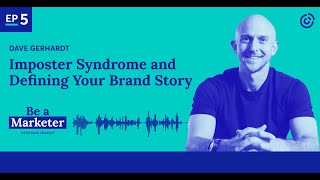
Dave Gerhardt talks about imposter syndrome and how he built his brand and business Exit 5. He shares his marketing journey, how to overcome self-doubt, and practical advice for marketers and small business owners trying to define their own story.
Today, on episode five of the Be A Marketer podcast, you'll hear from a business to business marketer that walks the talk when it comes to using content to build community and drive business. And I'm sharing some thoughts on imposter Syndrome. This is the Be A Marketer podcast.
Be A Marketer.
My name is Dave Shirest, Director of Small Business Success at Constant Contact, and I've been helping small business owners like you make sense of online marketing for over 16 years. You can be a marketer and I'm here to help. Well, hello friend, and thanks again for joining me for another edition of the Be A Marketer podcast. Today, I wanted to talk to you a little bit about something that is near and dear to my heart and probably something that maybe even you have experienced in your lifetime at some point, particularly when it comes to starting your business and marketing your business. Verywellmind.com defines imposter syndrome as the internal psychological experience of feeling like a phony in some area of your life despite any success that you have achieved in that area. And you know, you may have started your business and despite what you've already achieved in doing so, you may feel uncomfortable when it comes to actually promoting your business because, well, you don't believe you know enough about marketing. And I know one thing that you should know is that you're not alone if you have felt that way. Many people feel the same way. And it's something that I personally deal with all the time. I've been doing this game here for 16 years now and I often feel like when I'm creating something this podcast, case in point, no one's going to like it. It's not going to be any good. I don't understand. Although I've had many successes along the way doing the things that I've done. And on verywellmind.com and we'll include a link to this article in the show notes so you can check it out. It offers some ways to cope. And I want to note, of course, that I'm not a mental health professional. And if you do find yourself struggling, you may want to find a professional to talk with. But that said, I did want to share a few things that really have helped me work through it. And one of those things is focusing on others, right? When I find myself going down a particular path, I try to remind myself, why am I doing this right? I focus on the people like you that I'm trying to serve. By doing this podcast, for example, it starts to get me out of my own head and moving forward. So remember that focus on others and focus on who is it that you're trying to serve when you're finding yourself in these moments of self doubt and imposter syndrome. The other thing is really thinking about taking baby steps. You know, what do you need to do? And I ask myself this, what do I need to do today to move forward? And of course I'm setting a level of quality that I want to achieve, but I'm not going to hold up for perfection because really that doesn't exist. And as I'm doing these things, I also do it with an eye toward improving over time. And so it's really thinking about what can you do today, what can you implement to move forward and get feedback on something and so that you'll make improvements as you do that thing again and again. And then lastly, really, and I find this won't be a problem for many small business owners because I see this fire time and time again. But the last thing I'll say is refuse to let it hold you back. And I know that I usually have something to prove to myself when I'm doing a project or working on something in particular. And once I've committed myself to that thing, I'm really determined to see it through. And I'm sure it's the same for you and other small business marketers that I talk to also have that same type of idea and failing is just not an option. And so what goals can you set to drive yourself forward? Because really it's about the taking action and using all of these resources available to you to overcome this imposter syndrome and get you through it to reach those new heights and grow your business. Well, friend, today's guest is no stranger to taking action. He's known for starting podcasts at tech startups to drive business, and he's done the same for his own business of one. Our former marketing exec, Dave Gearhart is the founder of Exit 5, a community of B2B marketers. And in his most recent book, Founder Brand, Dave reveals how to build your brand by positioning yourself as the story, heart and soul of your business. Now, there are a ton of gems in this conversation, so you may want to grab a beverage of your choice, a pen and paper, and be prepared to hit pause when something strikes you to write down. And here's a bit of trivia for you as well. Dave and I used to work together at Constant Contact, so let's pick up the conversation where Dave shares his journey from working at Constant Contact to running his own business.
There's actually a lot of threads that are connected to Constant Contact for me in this story, and this is cool because I'd never shared a lot of this before, and I'm starting to reflect a little bit more as I think about what I'm going to do next and all these other things. And I think being at a company like Constant Contact, I got to meet a lot of more entrepreneurial type of people. And I saw that for the first time in my life, I think, like, work, and I wasn't that old, so I can't say, like, you know, for the first time in my long life, but like, early on in my career, I saw people that had a kind of related work passion, but it was outside of work. And so it might be like they worked in social media. And social media was really blowing up industry at the time, right? Like, Erica's team was such a core function of that kind of world, and Constant Contact had a big social media presence and that was a huge lever of their growth. But I think through that world, through social media and through marketing and through tech, I started to see these people kind of talking about what they were doing in a work related context, like outside of work. And so they might have a blog about social media or they might have a YouTube channel or a newsletter. And I thought it was cool to like, be inside of a company and do these things in my job. And then, like, I found myself, like, wanting to. I was reading, I was early reading. You know, I was into like RSS feeds and early podcasts, and I was already trying to follow, you know, it was such an interesting space being in social media in that time, like 2011, it was like, it was like early Gary Vaynerchuk, Chris Brogan, Brian Solis. Like, all these people in this kind of social media world were like blogging, and I just remember all these people's names and they started sharing stuff and I thought it was cool. There was what I happened to be working on. I was doing PR for Constant Contact social media products. And so I had to pay attention to TechCrunch and learn what things were launching. And Constant Contact had acquired a company at the time called Nutshell Mail. And I got to work really closely with this guy, Mark Schmulin, who was an entrepreneur and sold his company. And I got exposed to, like, that world through him. And so early on I had this feeling of I wanted to start a blog or something of my own, talking about marketing, because I saw all these people in my work life talking about marketing, and they kind of had their own things. And I was like, I got things to say, I want to do this too. And so I remember it kind of like the beginning of it was really wanting to start something, wanting to start a blog or start a newsletter. But I kind of like had a little imposter syndrome and wasn't, you know, didn't feel very credible yet. And so I kind of held off on doing that. I didn't fully execute on that until I went to start my Tech in Boston podcast a year after I left Constant Contact. But it all connects back to me. I remember specifically being at Constant Contact being like, man, I should start a marketing blog or whatever. But I don't feel like it's right for me right now. And I was kind of embarrassed by it. None of my actual friends are going to think this is cool. And now I've kind of just been able to scratch that itch. And I guess there's something deeper down where I like creating things. I like pulling things together, having an idea and being like, oh, actually, you know what, I could do that and sign up for a landing page tool and sign up for email and write the copy and get the page published and get the domain and, you know, get traffic to it. Like, there's something in there that I guess appeals to me as a creative and competitive type of person. And I think having my own blog was like, wanting to do that was a way to also scratch that itch. And then as I progressed in my career, I actually went to early stage companies where I got to kind of do those things. They're like, hey, you've never run a website before. Like, Constant Contact. It was like, do not touch the website. Like, yeah, you know, like, it was such a staple of the business. And there's, there's a team of people that work on the website and there's like 20 people on that team, right? And then I go to a company, we're like, oh, you've never run a website before? Sure, why don't you run our business website? The core function of this freaking company. And that was cool because that, I guess that to me that's at least like how I've needed to learn is like by doing. And so then I got to like go to startups and take this idea of wanting to start a blog and start a newsletter and apply it to a company. And so I'm launching content, you know, strategies. Now, looking back to me, it's just, I can say the word strategy now, but it's like we need some traffic, let's start making content. And you build a strategy as you go. But that's kind of always been a staple and I guess I got to do it at bigger stages like versus from myself to drift and some other stuff. And now I actually am doing a really similar thing with what I'm doing with Exit 5. There's a website, there's emails, there's social media, there's podcasting, and I just get to do it all. And I think that that all stems back to that time at Constant Contact.
Yeah, yeah. You know, you mentioned something in there. Imposter syndrome. I want to go there for a little bit if you don't mind, because I think that's one of those things that, I mean, I guess the question is this. I think it's something that all people, I was going to say business owners, but I think just people in general, right? It doesn't matter what walk of life or what it is that you're doing, whether it's just, you know, your everyday, you know, nine to five or whatever the case may be. And I mean I would say I've been doing this for a while. Like I still have it, right? Like there are times where I'm just like, I'll create something. I'm just, oh man, this is not good. Like nobody's gonna like this. Like, right? Like, do you still feel that in your day to day? And there are other times where I'm like, no, I'm, I'm really good. This is awesome. Like, you know, I mean, but there are other times where like that self doubt comes in and so like I'm.
Literally going through this as we speak. Like, okay, so I've been talking like I've been wanting to start my own podcast. Okay. If I have many, I have Exit five.
Wait, you do you do podcasts?
But I've wanted to just like have like the Dave Gerhardt podcast and just talk about like whatever I want to talk about. Like I like this format and I have learned so much like through interviewing people. And this would be separate from like marketing stuff. Like I don't work for a company now. I can just kind of do whatever I want. And I'm like, you know, I'm just, I want to make the podcast that like my friends are, my wife and my mother in law would listen to. Right. And I was like all set to do that and then I kind of just like was like, like there's so many podcasts. Why would someone listen to me again? I already have, like, Exit 5 podcasts, which is marketing stuff. So I. I go through it all the freaking time. Like, and I found that the only way through it is to, like, make some progress something and chip away at it. But, oh, my gosh, I have it all the time. Every day I have it. I have like, is Exit 5 going to be, like, too big? Is this too big of a. Like a. Is it generating too much? Like, am I. Can I manage this? Like, myself? Like, is this real? Did I fake my way to get here? Like, I really. Every day I have that conversation. Like, is this real? Like, can I do this? So, hell yeah. That's just a part of human nature. I feel that, and I feel it in many ways. Like, I love golf. Golf is my favorite sport. And I play golf sometimes and I'll, like, enter in a tournament and I'm on the first tee and I'm like, dude, what are you doing here? Like, go to work. Go to your real job. And then I go to my real job and I have imposter syndrome there. So I think it's a natural. Some must be something how we're wired.
Yeah, totally. I remember hearing a story of Anthony Hopkins, you know, the actor Anthony Hopkins. Yeah. Having a conversation with somebody else and, you know, asking how things are going, and his reply was like, well, they haven't figured me out yet. Right? Like. Like, he has no idea what he's doing. Like, you know what I mean? And I think I remember a key moment in kind of my life cycle, career, whatever you want to call it, right? Like, noticing that, like, oh, everybody's kind of winging it in some instances. Right.
I was just going to say that. Like, I was just going to say. The other thing that I learned with that matches with that is like. And I don't mean this as disrespect to anybody, but, like, yeah, I've been in rooms with, like, some very successful people, way more successful than me, and I'm like, they're kind of like, they don't really know everything.
They're kind of winging this too.
Or, like, I've seen really successful people, like, admittedly wing it in moments. And I'm like, that is so liberating to see also. And so, yes, I think there's going to be people who are just natural at X and they don't ever feel it, but I think for the rest of us, it's always going to be that way. And I think once you realize that other people are not that great, then, like, that makes it A little bit easier.
Yeah. I think the key lesson for people listening here is just like, yeah, like, we're all kind of figuring stuff out. You just got to do it. And it's through that doing, you learn what you're good at, what you're not good at, and kind of where you get to fill the gaps. Right? Yeah, yeah. And I found early on, if you just come in. Okay, like, so most people don't really know. And so if I could come in with a plan, people would go like, okay, yeah, that sounds good. Let's do that.
Yeah.
Right. And so, yeah.
Oh, I think the really smart people, though, that, like, don't know everything. They have a. They have a way of thinking and, like, a system for, like, how they would figure that out. And so I'm thinking like a GR Of a great CEO that I work with. Like a product. Product genius. Like, he was not a finance genius, but he was able to figure out finance because he had some kind of core principles, which is like, oh, when you don't know a lot about an area, like, find one or two mentors and expertise and like, you know, read these books and listen to these podcasts and focus your learning on this and kind of make decisions like this. And so he had, like, framework. So I don't think you can, like, completely wing it, but if this is not your thing, you can find ways to figure out how you're going to learn about that and have ways of thinking, systems for thinking.
So I want to talk about Exit 5 and how you get there and have you tell us a little bit about that and then to your point of kind of like frameworks. And I think this goes to, you know, your most. I think your most recent book, unless you're working on something I don't know about, but found a brand, right? Like, you kind of put this framework in place of, like, looking at that and how somebody else can kind of create that model to kind of grow their business. Right. And so talk to me first about Exit 5, and then I'd like to kind of go to founder brand a little bit.
Okay, so Exit five. So basically, about two years ago, I changed companies, and when I changed companies, I was going from B2B SaaS to more E commerce type of SaaS. And I had just kind of spent seven years in B2B SaaS, and I had started to build a following of people that were in that industry mainly through LinkedIn. And my LinkedIn content was like a. It was popular and got a lot of engagement. And in A way that I hadn't had any success with other platforms. Like, I'd been tweeting for 10 years and like my tweet responses were like, just from like you or something, right? Like, I don't mean that in like a district. It's like you get like one response, right? Or like, whereas, like, I would post something on LinkedIn and there's like hundreds of comments and I'm like, holy, okay, so something is happening here. So I kind of just focus on LinkedIn and I, I realized like, oh, there's a, for some reason, talking about marketing on LinkedIn gets a lot of engagement. It's really grown my content and not, not even just in a vanity way. But like, the more people that followed my page and engage in my content, I actually could drive like real results for that. And so like, if we would do an event for Drift, like a big ticket sales channel would be like me posting about it on LinkedIn or booking meetings for sales or driving people to content. And so like, I didn't just see like the social vanity metrics of it. I saw like the impact of having an account with engaged followers, like, could actually drive to. And so I realized like, oh, I have something here. When I change companies, I was gonna like launch a blog, like Dave's marketing blog or something. Because I was like, I still want to be like, perceived as a thought leader. This is the industry that I want to keep talking about. I expect to have a career in here. It'd still be valuable for me to be known in this industry. So like, I want to keep writing about this stuff. My wife Leah, she happened to be listening to this comedian that she listens to on Patreon. And it was, I had never heard of anybody on Patreon. And I'm like, what the hell is this? And she's like, Yeah, I spend $7 a month and I get like exclusive content. And like, she doesn't post this podcast anywhere else. And I was like, interesting. I'm gonna try to like monetize this. Like, I think there's an opportunity to do that. And so I want, I, I, and I didn't even have it like in a big fancy business sense way. I just, I'm into music, I'm into comedians and creators, and I see people in all kind of walks of, of life in their craft, like starting to charge for content and it seems to be working well. I was like, I'm gonna try this. And so when I left my job at Drift, it was like, pretty buzz worthy within like the B2B SaaS niche. Like, a lot of people are like, associated me with Drift and like, oh shit, he left Drift. Like, what's going on? And so I took that as opportunity to launch. I knew I was going to launch this site and it was going to be a private podcast. So it was behind the paywall. And Patreon is going to be a podcast and like, just continuing to talk about marketing, but just I figured people would pay for it. They could expense to their company, whatever. I recorded the podcast episode about why I left Drift and what I'm going to do next. And that was available in my Patreon only. And so I had a great hook to get people in there. I figured maybe 10 people will subscribe to this and it'd be nice, like another, you know, 100, $200 a month chip into my rent a little bit. Like, and it's a fun little project. I'm going to do it anyway. And all of a sudden I had like 300 members and 500 members and then within two months I had a thousand members and all of a sudden it's generating $10,000 a month from content. I was like, what the hell is that? Is? This is ridiculous. There's something like much bigger here. And I like, really committed to working on it. I'm like, I'm posting this thing all the time. I'm going to really focus on the content here. Fast forward about a year into it, right around the thousand member mark, I got a bunch of messages that were like, hey, there's lots of other marketers in here. We want to talk to each other. And I was like, oh yeah, this is not just about your marketing thoughts, buddy. This is like, there's a community here. People want to talk to each other. And so I added the community portion of it, which is a Facebook group. And initially it was called Dave Gerhardt Marketing Group because I suck at naming things. And it was like, so it's dgmg. And then like, I'd go to meet with my accountant and be like, so how's DPLQ doing? Like, it was like, it was actually like I was getting trolled by all these people. Yeah, yeah. And I was like, this name sucks. And I also wanted to move it from, like, I wanted to shift away from it being about me. I wanted to be like. I realized that there was a bigger trend which is like, oh, all these people are like, they're here because they work in marketing. They work in B2B marketing and SaaS marketing in some Capacity. There's, like, wisdom of the crowds here. Maybe I'm the one who is helping to bring them here, but they're here because they want to learn and connect with each other. So I want to remove the Dave. I wanted to unbundle the Dave from the branding. And so I came up with this story about Exit 5, which is a place in Vermont that my wife and I would go to on the weekends where her parents live and would just kind of, like, get out of the city. And I always felt like I would get unstuck on a work idea when we would go there. And I was like, cool. That's a cool name. The domain is available for $600. I bought it and rebranded it and called it Exit 5. Because I also, for me personally, I don't forever want to be like Dave Gerhardt equals B2B marketing. This is something that I've done, and it's a part of my career, but I see myself as, like, doing other things and more than that. And so I think also rebranding and carving out Exit 5 is like, oh, now I can be Dave and one of the properties in one of the businesses or things that I do is exit 5. But it gives me, like, the room to do other things. And then maybe down the road, if there was a world where someone wanted to buy or partner with Exit 5, it's a little bit easier to do that as Exit 5 as opposed to Dave Gerhardt Marketing Group.
Yeah. So it's really interesting when I actually saw you talking about or saw you post something about talking about the naming of the business, and I was like, oh, wow. I thought when you named it Exit 5, I was like, oh, okay. That makes a lot of sense to me. And I had, like, my own story again. I keep making up stories for you. Apparently, that's what I do. But for me, I was like, oh, yeah, Exit five. That makes a lot of sense because you're talking to a lot of founders within the tech industry, and oftentimes the goal is to exit within a period of time. And I was like, oh, Exit five. I'm like, that makes a lot of sense. So then when you said, like, no, it was the exit we got off in Vermont. I was like, oh, okay. I was like, oh, all right. Well, there you go. So sorry. Blew it up.
Blew it up.
A couple things I want to touch on here that I hear you saying as we're talking about this that I think are kind of like the key things that I think people need to hear, particularly as You're a small business owner and those types of things, right? Like, one of them, I think I hear you saying is, is focus on your strengths, right? Like, you found a thing that was like, hey, I enjoy this format. This is the thing that I enjoy to do. So I'm going to really commit to doing that, right? Like, focus on that and let that be the thing that kind of drives you. Another thing that I heard you say was inspiration from other industries, which I think is one that's often missed. Like you were watching musicians or you were watching things like applying these different types of strategies to what they were doing. And you know, I often hear from the small business owners or marketers that I'm talking to is that like, if you are very specific about what you're saying, they often miss tying it back to like, the example, like, or how to look at another industry and tie it back to what it is that they're doing. I was wondering if you could talk a little bit about that. Like, how do you find that inspiration from other areas, which I think sometimes just kind of gets us out of our own heads a little bit and allows us to open up a bit. But like, what's your point of view on that? I don't know.
It'd be. It's never been a thing that I've consciously had to like, turn on or off. I think I didn't take, like, I didn't really study marketing in school. I got a. I got a marketing degree because quite frankly, like, I suck at math. I had no interest in finance. I could write and communicate and there was a, like, you could get a marketing degree doing that. But I, I didn't like, leave college being like, I can't wait to go get my job in marketing. I think I've always been doing, like, looking back now, I've always been doing some form of like writing and communicating. As I can remember. Like, I gave the speech at my 8th grade graduation and I gave the speech at my high school graduation. Like, looking back now, I'm like, oh, there's definitely some. I didn't know, like, no clue at the time. I wasn't like, yeah, I'm going to be a marketing, but there's definitely some connection in there somewhere. And so I've kind of just always been like into just understanding, understanding people, kind of observing what gets a reaction out of people, you know, ranting to things about my wife. Like, did you notice that when this happens, all these being this. Why. I've just always been curious in that way. And at Drift, I work for a founder CEO, David Cancel, who was, like, very liberating and, like, that's how he thought, too. Was he. I saw him, like, just focus on all the things around him in his personal life, and he was like, don't study all that B2B. Like, don't, you know, he'd probably be like, against exit 5, he's like, don't join there. Like, don't listen to what everyone's talking about. Like, because that's where you can actually find all the advantages. And so he didn't want me to go to, like, B2B marketing school. He wanted me to go to, like, just, you know, understanding people school and, like, looking around. And so I've always had a better. I think I'm good at content and good at social media as it relates to business because I am good at, like, getting feedback and understanding what people want and try to, like, triangulate those things. And I'm, you know, much to, like, your. Your skill set too. Like, taking ingredients and putting them together and be like, oh, if we were to write an article, here's what I think it could be. Like, I'm good at pitching the idea for the video, the idea for the ad, the thing for this and that. And so I think that's always been just a more natural thing. And so I think it's just been turned on in my brain. And I got to work for, like, David at Drift at a formative time where he was like, I remember specifically very, like, in my first two weeks in the job, he was like, I don't care if, you know, CAC to LTV ratio or SAS metrics or this and that. He's like, you have something when it comes to, like, content and copywriting, like, let's double down on that. Be curious, like, focus on what people are doing and, like, don't worry about, like, what the industry best practices are. And I think I've. I mean, the reason why I'm able to move really fast now is because, like, I, you know, he pushed me to do those things and do fast in that environment. So now I've seen, like, oh, wow. If you. If I'm doing it just for myself and Exit 5, like, why can't I make this decision in this instant?
Yeah, I love that. You know, one of the things that I really love about what you're doing, and I kind of got started in. In this industry around 2006, is when I started kind of, like, getting interested in it and kind of learning and Doing a lot of the same things you're talking about. Like, for me, it was like, copy blogger was a big one, like, Brian Clark, like, those folks. And, you know, one of the things that I like that you're hot on. And I think this is important because it's. It is that understanding people piece that really drives everything that you do. Like, the technology is always going to change, and that's fine, but it's ultimately, it's about applying the technology to how you communicate. Right. And so, like, oftentimes, like, I'll see, like, you post something and you're talking about a thing, and I'm like, oh, yeah. I'm like, that's, like, not a new idea. Right. It's something that's been around forever, and it's just fundamental to who we are as people. And I think if you can spend more time understanding that, like, people always want to know, like, oh, when's the best time to do this? Or when's the. It's like, it doesn't really matter if you're hitting the right things. Like, you want people to be, like, people looking forward to. Right. Like, because they're connected to you in some human level. And I think that's. That's really cool with what you do and you put into practice and just even talk about.
I also think it's tough to be an effective communicator. You can't just, like, say it your way. You have to, like, make sure the message has been received. And I think that's. I actually learned how to do that less as a marketing skill and more as, like, an internal career skill. Like, I just remember having to, like, learning how to manage my managers and manage my boss. And in a way that was like, hey, here are the things that I'm working. Like, I've always been very, like, proactive as, like, an employee. And it's like, okay, you're not giving me a plan. Like, I'm gonna come up with a plan.
Yeah.
And I think that that has also now kind of played out into how I've done marketing.
Has starting your own thing always been something you. You thought you wanted to do, or how did that come along?
No, I would say the honest answer is no. I don't ever think I've thought about it. I'm not that person who is like, yeah, you know, I. I was. I'm a hustler. I. You know, I had a lemonade stand when I was in the fourth grade, and that's how I knew I was going to be an entrepreneur. Like, I don't have any stories like that. I've always been like a little bit. Not as good as like at following directions and following the rules or like, or I get bored with like, really? If you tell me like, hey, you have to do it this way and here's how it's going to do it. Like, my mind always kind of looks for like, but really there's not another way. And that's always kind of been baked into me. And I've always learned best by doing things myself and so myself. So I've always had to like have a lot of freedom in my jobs to be successful. But I didn't ever think about it because I never, I honestly never thought like I, I come from a great family. Like we're def, we're middle class, like well off family. But I don't have any money. Like I didn't have any other than what I've earned for my, like, I don't have any money that's coming from anybody. And so it was never real to me in that being in my 20s, like I had no money. And so I was like, well, I can't go. Not like. And to do a startup you always hear these stories like, oh, you gotta be, you can't take a salary for X months, right? Or even if you raise money, you got to pay yourself some salary. And so I just was never like, well that's not an option because I guess I could start a business, but it would have to like pay for itself. And so I had lots of ideas for like a business, but it was never anything that was going to ever get off the ground because I needed to make money. And I think what Happened was my DGMG Exit 5 started to become like that income and I was like, whoa, this is a business. And so I never like, was like, I'm taking the big leap. Like, you know, when I left my job, I had a business that was generating more than my salary already. And so there was like, no, there was no risk in doing that. And so no, I've never thought about it for, for that reason. And I think there's lots of stories I can tell myself now, like revisionist history of like, oh yeah, this makes perfect sense for things that have led me here. But no, I never set out to like be a business. I thought that I was gonna work at some, My hope was like work at some tech startups. Like, I seem to be okay at like doing marketing for B2B SaaS and find my way around successful Companies. My honest hope was, like, maybe one or two will have an exit or have a sale and we'll make a little bit of money, and then I can just kind of, like, figure it out for there. And what ended up happening is that did happen, but I also happened to build this other business on the side, and that's kind of like, that's where I'm at now. But I don't have more stories of being an entrepreneur. Yeah.
Well, how does that accomplishment, though? Like, this is working, this is doing. How does that make you feel?
I don't know. I'm still, like, processing it every day. Like, I still wake up and I'm like, oh, you don't have to. I'm not going to work today. Like, I have my office in my house, but I'm not like. Like, I don't have this nagging feeling of like, someone's looking for me or, like, this person needs me or I gotta do this. And so that. Yeah, I'm, like, trying to be real with you. Like, I. It's so very. Or I gotta do this. And so that. Yeah, I'm, like, trying to be real with you. Like, I. It's so very unique and rare that this has happened. And I am still in, like, this weird point in my career where, like, I can't. Like, I have a hundred new ideas right now because I, like, haven't accept. Like, is this what I'm doing? Like, it's crazy to me. So. I don't know, Dave. It's my honest reaction to that.
No, I think that's. That's interesting because I think. I don't want people to misconstrue. Right. When you say, like, oh, should I work today? Because the reality is, I mean, what you are doing and what you're doing in Exit 5 is a lot of work. Right. And it's because you're creating. I mean, it's comfortable for you, but you are actually putting in a lot of effort. So I wanted to maybe move us there a bit. Right. Because, like, one. I guess the big question is, you know, what is that process of coming from where you're working at a company where you probably have. Whether it's a small team, large team, whatever the case may be, you've got resources that. At least from a human level. Right. That maybe you don't have now? And so what is that transition like?
Well, first of all, because I. I do realize who we're talking to, like, yeah, not to take that advice is, like, I don't go into an office and do work, like, back to the point we're talking about with content. Like, these are just notes and things that I've written down in the last hour. Yeah. And so, like, I'm not physically, like going to work for someone else, but like, this is, I'm fully. This job, like, in running exit 5 allows me to like, play to my strength and superpowers, like in the ultimate degree. And so, like, it's a website, it's a podcast, it's social media. My brain is always going on like, oh, I should have this person on the podcast. Okay, I should have this person on the podcast. Let's get. Here's a good timestamp. Here's something I just said to Dave that would actually make a good video for next week. I got to remember to write tomorrow's newsletter. And so like, now we just have the freedom to, like, do those things all the time. And like, I think of like, I've now built a business around like a superpower of content creation and therefore it is easier as opposed to, like, I'm not a great manager, I'm not great at finance. Like, I'm not like banging my head trying to do those things. So that's a cool. That's a good connection. An observation. Sorry, what was your initial question?
The question is, you know, how does that, like, how do you get done basically, Right. I guess is what we're getting at is that, you know, you're moving from a place where you're not always doing the work like somebody else is doing that work. And now, I mean, do you have a team? Do you have people that you reach out to? I'm assuming you probably do, like freelancers and things like that. Like, walk us through what that looks like.
Well, so I think, I think I'm naturally like a competitive person and a goal oriented person. And so I think one of those things is driven by, like, I have some rough goals that I have for exit 5. And so, and I'm not, this is not crazy, like, I don't have an operating plan for Exit 5. There's no spreadsheet business. And that's how some people are. Even if they came from that they might have the whole, you know, spreadsheet to run the Exit 5 business. I don't, I don't have that because I don't need to do it. I can see what I need to see. But I have like, basically two bullet points of a, of a revenue goal and a content goal that I'm trying to get to. And Guess what? Nothing happens if I make it or not. But like, I like to use those as a benchmark. And I found that as a person I need those kind of regularly competitive things. Like I just got into running and my wife is like, you're 100% going to sign up for some type of race. And I'm like, no, no, this is just here I am, I'm now signing up. I signed up for half marathon in April. And that's just who I like. It helps me be productive when I have those types of goals. And so I think you have to be able to set goals if you're going to go and work for yourself. And so I have a clear business plan and goal for exit 5 in my mind. And the next thing that's really important is I think, just having regular routines and rhythms. And so like I am doing a lot with the Exit 5 podcast right now. And so I know that like from every, basically every Tuesday and Thursday from 1 to 3pm I'm going to be recording podcast interviews and that's my time to do that. I know that every Wednesday I send out my newsletter. I know that every Friday I do this type of thing. And so like I can kind of use those as guardrails for like things I got to build around. And so like, yeah, tomorrow afternoon, like my wife and I want to go out to lunch or I want to go do something else in the afternoon. That's great. I know that in the morning I got to spend two hours and get my newsletter done. And I spend two hours, you know, sometimes two hours, sometimes it's 30 minutes. I got to get that out. And so I have like having those regular systems and check ins. If I didn't have any of those things, it'd be really, it'd be really tough. And now I have, I have three sponsors for Exit 5 for the year. And so like I have commitments that I have for them. And that means we got to do this this quarter and this, this quarter. So I think having the schedule and for me just being somebody that operates off my calendar is the other thing. So I think goals and deadlines for me is the thing that drive action.
Yeah, yeah, that makes a lot of sense. I think, you know, we're just having this discussion. I'm actually talking to somebody later in the week about like goal calling a goal getting right. But that idea is that like if you don't have something, I always look at it like if you don't have something leading you in a direction, like I don't mean to sound woo woo, but like the rest of the universe doesn't know how to help put you in the right path. Right.
So your point about like how do you find inspiration and ideas like from outside sources? Well, if like that's the thing you're working on, it's like it just happens to find its way in there right now. And so like, yeah, yeah, you see it. And so like, oh, my goal right now is to grow members of Exit 5 from this. My brain is just going to be kind of like subconsciously working at that problem. And so I might all of a sudden sign up for something like golf community. And I'm like, man, that's genius how they do that. Oh, there's an idea that I can take. So I think, yeah, your brain, that is not too woo at all. I think that's so true about like having your brain turned onto that attuned.
Right? You're just attuned in a different way.
Just like on the goals thing, like, I don't, I'm not a crazy goal. There are people who talk about goals and they have crazy processes for goal. Like this is my goal is like a bullet note in my Apple notes that says like, because I should have a goal. And to me the goal, it doesn't always have to be like, I want to grow from 3,000 members to 5,000 members by this quarter. Like for much of last, for like six months out of the year. Last year my goal was transition DGMG to exit 5. And so what does that mean? That means I got to do the brand, I got to do the website, I got to relaunch the podcast, I got to find this. So there's like plenty of that helps me figure out what I have to work on. It's not, doesn't always, it's not always like a numeric growth goal. When I talk about goals, it's like that's how I chunk up like what I'm working on this quarter or this month.
What would you say is your biggest kind of business related challenge or challenge slash? Maybe it is or maybe it isn't. But what's something that scares you?
I think one of the biggest challenges is probably is growth in that. There's a lot to unpack in that actually. Because I think that, I actually think that there's a world where like Exit 5 can be a 10 or 20 million dollars a year business. I've seen it like with other businesses like Content Marketing Institute. There's lots of different. They're a little Bit different, but there's lots of comparisons for this. And I go back and forth on it because I'm not sure that I want to do that. If I wanted to work 100 hours a week right now on Exit 5, it could be a 10 to 20 million dollars a year business, no doubt. And that would require A, lots of hours of work that I don't want to sacrifice right now. B, it would require me hiring people and managing a team. There's a level of I could have gone all in and I could have a team of three to five people right now. Full salary, benefits, we'd have standups and one on ones and performance reviews. And there's a lot of things. So I know for sure that I don't want to do that, but I also want to grow it a little bit. And so there's like the like, okay, well what should that be? And so it's like, well, I could hire a freelance person and like have them grow my social media, but I'm not sure I want to like, seed control to that and I want to train them on that. And so there's also some things where like, I do like doing this and this is my little kind of project. And so I like, I like doing some of the things. And so I do. I read all the life hacker growth hacker articles about like automating everything and like, you know, I'm. I'm not a real boss because I should be outsourcing all this stuff to other people. But like, some of it gives me joy as like, I'm learning how to do these things and I'm tinkering with these things and it doesn't happen to take up 100 hours of my week. And, and I got to do something with my time. And so, and so there's part of it that, that. So I think like one of the biggest challenges is, is just like growth. Like, I was just having a conversation this morning with my wife about like, hey, I. And I like, bounce ideas off of her all the time for sanity because she knows that I'm very impulsive. I'm like, I think I want to, you know, do this thing and hire somebody for Exit 5. And she's like, well, but like, you change your mind a lot and like, you know, why don't you just try the experiment yourself and like, maybe do it for, you know, do it for 30 days, do it for yourself. And then like, if you want to hire them, you can do it. And so there's like little, just little decisions like that that add up. Like there's lots of things I could do, but it's the like decision factor of like, what do I want to do? What is worth my time? Should I do it myself? Should I hire somebody else to do it? I do have people that I work with, so I have somebody that I've met Chrissy, I met her through like an early DGMG member. Now they're married and Chrissy's just like been in the exafive community. She helps me with like just kind of support stuff and she knows how all my systems work. And then I have people that I work with on a freelance basis, like I need video, I need a design thing, I need a website. And I, I'm actually just working with an agency now that I pay them just like on a retainer to help with some marketing stuff. But I don't, I don't have any full time employees. So growth is the biggest challenge. Dave. Gotcha.
I want to shift this a little bit so we can talk about just, you know, from your expertise, particularly in the B2B space and marketing. Obviously we have tons of customers that are in that area. Like, you know, and maybe this kicks us into some of this founder brand stuff. But I'll let you, you know, drive where this goes. But what are the things that you see from a marketing perspective, particularly in B2B are the things that are, you know, in your. If I were to say to you, all right, Dave, you're starting from square one today, where would you start first?
The story, the company story. Like positioning. Like why, why does this company exist? How are we different and unique and or better, who do we serve and why? Like really nailing that. True, true differentiated positioning just solves like. So I mean, you know, this like solves so many of the minute growth, hacking, you know, challenges and that's where I would spend most of my time. And I also say that answer because there's lots of other implications there. Like the product that you're building and the customer that you're serving. Like you can't do great marketing without, without strong connection to that.
So you know, I just want to stay on that for a second because like I think this is one of the things like, you know, I'm always like, you know, the way you, it comes down to like the way you say something based on who it is that you're trying to reach. Right? Because like I would say like if you were going to explain quantum physics to your wife, your grandmother or a five year old. Right. Although it's the same thing because of the people, you know, who you're talking to. The way you're going to do that is a lot different. Right. And I think it's the same with the business. If you know who it is you're serving and what you're trying to do, the conversation becomes uniquely attuned to those people. Right. And I think that's really important that I think a lot of times, particularly businesses starting out, they don't want to or they feel like they're getting too narrow or pigeonholing themselves, like, oh, we're for everybody. But like, really, you can't be, because if you're for everybody, you're for nobody. Right? Like, and so it's an interesting thing there.
I also think it's much easier to like, build and be everything for everyone later if you first have that, that wedge and that niche. And you can like, you can add more things on. Like, the great coffee shop is gonna also be successful if, like, after people come there and they love the coffee, you add a breakfast sand, you're like, yeah, that place I go to, they have breakfast sandwiches now.
Yeah.
You know, then the consumer, like, the customer's not like, well, how, how do I brand them in my head? You know, like, are they coffee or are they sandwiches? It's like they're, you know, And I think you can do the same thing in, in B2B and whatever you're selling to, whether you're a small business, a tech company, whatever, being specific and carving out that, that niche and having that clear strategy has everything to do with how successful you'll be with marketing.
So, well, let's go there, right? You've got the story, you've got the positioning marketing. Where do you go from there?
Well, I think one of the big pieces of that is instead of even thinking of it as marketing, it's like, okay, now we have this story, like, where are our customers hanging out and how do we tell this story to them in a way on these channels? And I'm always a believer in, you can call it content, you can call it inbound marketing, you can call it whatever it is. I've always. My bias is towards wanting to build an audience and build owned traffic to my own thing. And so I realized that there's a lot you need to be doing with advertising and paid media when it comes to E commerce and direct to consumer brands. But ultimately, I think always the marketing advantages. I think content is the greatest marketing, is the greatest marketing channel. And so I come back to like, okay, well this is our story. How are we going to tell this story? Does that mean, and that can mean everything from like, what's the content of your website? To thinking about how do we get people to our website. I mean, I think today brick and mortar business or online business, like the website is going to be the most visited thing. Even if someone's going to come to you in person, they're going to check your website for hours and location and menu and all that stuff. So it starts with like, what's the content in your storefront, which is your website? And so how do you articulate that story? You can have a great strategy on paper, but if you can't articulate it into a compelling website that attracts readers and converts readers, it's going to be a tough challenge. And then I think a lot about the social media channels that we are like, look to yourself and most importantly, have a deep understanding of that customer and where's your customer spending a lot of time. Okay. They are in these groups on, they're in these subreddits on Reddit or they're not on Reddit at all. They're following these people on TikTok or they have no interest in Tick tock. They only find out about information from each other at these local events. And we got to be at these local events. Great. So like you can't be everything to everyone from a story standpoint and you also can't do everything from a marketing standpoint. And so I think like, if I'm trying to think about how to get marketing started, I'm looking for one or two channels that are going to help us bring eyeballs back to our website. And, or maybe there's a path where the website is still important, but it's not about traffic, it's about like, you know that quarterly meetup example I use?
Yeah. You know, it's interesting now particularly how when you think about a lot of.
Social channels have our website, I mean, I think today brick and mortar business or online business, like the website is going to be the most visited thing. Even if someone's going to come to you in person, they're going to check your website for hours and, and location and menu and all that stuff. So it starts with like, what's the content in your storefront, which is your website? And so how do you articulate that story? You can have a great strategy on paper, but if you.
I've changed. Right. It's a lot different from back in the day when it was like you could post Something you post the link up and people come to your website, the channels. Now obviously there's algorithms, there are things and they're also, they want the engagement on site. And so a lot of the content has to be there. Right. So how do you, I don't know, how do you, I guess, think through that?
I think you can't. It's tough to be successful on a channel without having a deep understanding of the channel. And so I think what you can articulate it into, compelling website that attracts readers and converts readers. It's going to be a tough challenge. And then I think a lot about the social media channels that we are like, look to yourself and most importantly, like, have a deep understanding of that customer and where's your customer spending a lot of time? Okay. They are in these groups on, they're in these subreddits on Reddit or they're not on Reddit at all. They're following these people on TikTok or they have no interest in TikTok. They only find out about information from each other at these local events. And we got to be at these local events. Great. So like, you can't be everything to everyone from a story standpoint and you also can't do everything from a marketing standpoint. And so I think, like, if I'm trying to think about how to get marketing started, I'm looking for one or two channels that are going to help us bring eyeballs back to our, our website. And or maybe there's a path where the website is still important, but it's not about traffic. It's about like, you know that quarterly meetup example I use?
Yeah. You know, it's interesting now particularly how when you think about a lot of social channels have changed. Right. It's a lot different from back in the day when it was like you could post something, you post a link.
Up and people can't do is you can't have one idea for content. Like, like we come up with a campaign like we're going to do, you know, this month the big thing that we're trying to promote is X and we come up with an idea for that campaign. Right. We can't just like make a video or make some content and then like post it on Instagram and post it on YouTube and post it on LinkedIn and send an email about it and like expect that things are going to work. Each one of those platforms need to be uniquely considered. And so like the LinkedIn content is going to be different than the TikTok content is going to be different than the Instagra content. And I think the people that do those things, well, like, you see this all the time with, like, TikTok creators or Instagram reels. Like, they're kind of on one platform or the other. And the reason that the content is working is because they're creating unique content for that platform. They use that to figure out that it's successful. And then they might start posting the same stuff to, like, YouTube shorts and the same stuff to Twitter. You're focusing on one or two channels, and I think you have to really commit to, like, creating original content for that channel. We're just in a different era than, like, if this was 2010, 2011, 2012. I would say probably the answer is, like, just being on those channels, like, if you were on Twitter, like, you could get more customers maybe than somebody else who wasn't. I think now it's got to be much more about, like, what is our interesting, like, what is our content angle? Is it educational? Is it witty? Is it funny? Is it serious? Is it, you know, what is it? What's the message? And then I would think hard about, like, one or two channels where you're making bets. I mean, and I think under your.
Website, the channels, now obviously there's algorithms. There are things. And they're also, they want the engagement on site. And so a lot of the content has to be there.
Everybody has examples of these things now in our personal lives of, like, somebody that you follow on some channel.
Right. So how do you. I don't know, how do you, I.
Guess, think through that panel and you ended up buying a thing from them? And I think that, to me is like, the best approach to thinking about marketing for your business. Like, how am I. I sell this widget, right? How can I be a great resource for things that the people who would buy this widget would be interested in online? Get them to follow me, get on my email list or something, and then I'll have a much easier time selling them that thing down the road.
Yeah, yeah, love that. Listen, we're coming up to end of our time here, so I want to ask you one last question, which is. Well, I guess two questions. One, what's the best piece of marketing advice?
It's tough to be successful on a channel without having a deep understanding of the channel. And so I think what you can't do is you can't have one idea for content. Like, we come up with a campaign, like, we're going to do this month. The big thing that we're trying to promote is X and you've ever received.
Or that you could offer someone. I'll stop there.
Oh, that's a good one. We come up with an idea for that campaign. Right. We can't just, like, make a video or make some content. I don't have, like, one definitive answer, but I just think of, like, the first quote that I thought that came into my head. And sometimes I tell this to people and they don't understand it. And so it might not be the best quote in the world, but it's from Roy Williams, the wizard of ads.
Yep. Yeah.
But he says that the risk of insult is the price of clarity.
Unpack that for me a little bit. What does that mean to you?
It means exactly what we were talking about earlier, which is like being specific to a core audience. So the risk of insult is the price of clarity. And then post it on Instagram and post it on YouTube and post it on LinkedIn and send an email about, oh, what the heck, you don't have this type of pizza here. What the heck? I'm pissed off now. I thought. I'm sorry, man. We only sell this. Yeah.
Okay.
The advantage that you be create from being and, like, expect that things are going to work. Each one of those platforms need to be uniquely considered. And so, like, the LinkedIn content is going to be different than the TikTok content is being so specific. Right. And so, and I think that advice can be applied from like, a customer targeting thing all the way down to, like, a website headline. Like, the amount of times in my career I've, like, gotten in an argument with, like, the head of sales or head of whoever about, like, well, this headline doesn't speak to this audience. I'm like, the risk of insult is the price of clarity. It might not, but for it's going to be different than the Instagram content. And I think the people that do those things. Well, like, you see this all the time with, like, TikTok creators or Instagram Reels. Like, like 80% were trying to appeal to this. Like, this is the one person. So I think just the more specific you can be, the more clear you can be. The risk of insult is the price of clarity.
Well, friend, I hope you got as much from that conversation as I did. And I want to highlight three things here for you that really stood out to me. Number one, don't be afraid to be specific on who it is.
They're kind of on one platform or the other. And the reason that the content is working is because they're creating unique content for that platform. They use that to figure out that it's successful. And then they might start posting that.
You'Re trying to serve. Now, you can always branch out later, but the specificity really allows you to speak directly to the people that you're trying to reach. And you're going to find that your marketing just works better by doing so. Number two, make sure that you're setting goals and deadlines. Now these goals are really going to keep you moving forward and saying the.
Same stuff to, like, YouTube shorts and the same stuff to Twitter. You're focusing on one or two channels, and I think you have to really commit to, like, creating original content for that channel.
Headlines are going to keep you taking action without both. It's really easy to let things fall by the wayside, and this is particularly true when they're things that may not show you an immediate benefit, but rather rely on taking consistent action over time, like marketing. And lastly, focus on one or two.
We're just in a different era than, like, if this was 2010, 2011, 2012, I would say probably the answer is like, just being on those channels, like, if you were on Twitter, like, two.
Channels to place your bets. Now, once you've got your story, you really want to focus on gaining a deep understanding of a particular channel so that you can get results from it without spreading yourself too thin. So here's what I'd like to leave you with here today as you go away and you have some time to think this over, really, I'd like you to ask yourself the question, who you.
Could get more customers maybe than somebody else who wasn't? I think now it's gotta be much more about, like, what is our interesting, like, what is our content angle? Is it educational? Is it witty? Is it funny? Is it serious? Is it, you know, what is it? What's the message? And then I would think hard about, like, one or two channels where you're making bets. I mean, and I think specifically, are.
You trying to serve with your products and services? What problem are you trying to solve and why now the clearer you are.
Here, Everybody has examples of these things now in our personal lives of like, somebody that you follow on some channel and you ended up buying a thing from them. And I think that, to me is like, the best approach to thinking about marketing for your business. Like, how am I. I sell this widget, right? How can I be a great resource for things that the people who would buy this widget would be interested in online? Get them to follow me, get on my email list or something, and then I'll have a much easier time selling them that thing down the road.
Yeah, yeah, Love that. Listen, we're coming up to end of our time here, so I want to ask you one last question, which is. Well, I guess two questions. One, what's the best piece of marketing advice you've ever received or that you could offer someone? I'll stop there.
Ooh, that's a good one. I don't have one definitive answer, but I just think of the first quote that I thought that came into my head. And sometimes I tell this to people and they don't understand it, and so it might not be the best quote in the world, but it's from Roy Williams, the wizard of ads.
Yep.
Yeah. He says that the risk of insult is the price of clarity.
Unpack that for me a little bit. What does that mean to you?
It means exactly what we were talking about earlier, which is like being specific to a core audience. So the risk of insult is the price of clarity. Oh, what the heck? You don't have this type of pizza here. What the heck? I'm pissed off now. I thought. I'm sorry, man. We only sell this.
Yeah. Okay.
The advantage that you be create from being so specific. Right. And so. And I think that advice can be applied from, like, a customer targeting thing all the way down to, like, a website headline. Like, the amount of times in my career I've, like, gotten in an argument with, like, the head of sales or head of whoever about, like, well, this headline doesn't speak to this audience. I'm like, the risk of insult is the price of clarity. It might not, but for, like, 80%, we're trying to appeal to this. Like, this is the one person. So I think just the more specific you can be, the more clear you can be. The risk of insult is the price of clarity.
Well, friend, I hope you got as much from that conversation as I did. And I want to highlight three things here for you that really stood out to me. Me. Number one, don't be afraid to be specific on who it is that you're trying to serve. Now, you can always branch out later, but the specificity really allows you to speak directly to the people that you're trying to reach, and you're going to find that your marketing just works better by doing so. Number two, make sure that you're setting goals and deadlines. Now, these goals are really going to keep you moving forward, and deadlines are going to keep you taking action without both. It's really easy to let things fall by the wayside, and this is particularly true when there are things that may not show you an immediate benefit, but rather rely on taking consistent action over time, like marketing. And lastly, focus on one or two channels to place your bets. Now, once you've got your story, you really want to focus on gaining a deep understanding of a particular channel so that you can get results from it without spreading yourself too thin. So here's what I'd like to leave you with here today. As you go away and you have some time to think this over, really, I'd like you to ask yourself the question, who specifically are you trying to serve with your products and services? What problem are you trying to solve and why? Now? The clearer you are here, the easier it becomes becomes to make marketing decisions I hope you enjoyed this episode of the Be A Marketer Podcast. If you have questions or feedback, I'd love to hear from you. You can email me directly@dave charestonstantcontact.com if you did enjoy today's episode, please take a moment to leave us a review. Your honest feedback will help other small business marketers like yourself find the show well friend, I hope you enjoyed the rest of your day and continued success to you and your business, the easier it becomes to make marketing decisions. I hope you enjoyed this episode of the Be A Marketer podcast. If you have questions or feedback I'd love to hear from from you. You can email me directly@dave.sharestonstantcontact.com if you did enjoy today's episode, please take a moment to leave us a review. Your honest feedback will help other small business marketers like yourself find the show well friend, I hope you enjoy the rest of your day and continued success to you and your business.
More from Dave



Asynchronous work isn’t a trend. It’s how teams actually get things done without burning out.

AI is changing product marketing. Here's how top B2B teams are scaling without cutting corners.

How Product Marketing Is Evolving in 2025: Lessons on AI and Leadership with Jennifer Cannizzaro

Why referral programs look different outside of SaaS (and why that’s a good thing)

The secret to scaling dual GTM? Give every marketer ownership and get out of their way.

From content to CMO: how Jess Cook made the leap (and built her first budget from scratch)

Leading B2B Marketing for the First Time: Strategy, Budget, Content & Team with Jess Cook

Most B2B advice is built for SaaS. But what if you don’t have demos, PLG, or lead goals?
