ABM and AI for Outbound with Trinity Nguyen, CMO at UserGems
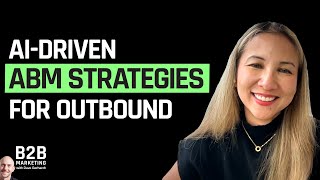
Trinity Nguyen, CMO at UserGems, talks about moving from product marketing to the CMO role and how the company uses account-based marketing and AI for outbound. She covers positioning, messaging, and getting sales and marketing aligned in a startup.
If you're already in business, that means you do have some product market fit. That means those buyers see something in you as differentiators.
My guest on this episode is Trinity Nguyen. She is CMO at User Gems. She joined the company five years ago as the first business hire and now she's cmo. After joining as head of marketing five years ago, she came up through product marketing. That was her background, that's her area of expertise.
I really like the strategic aspects of it. Shaping the product direction, shaping the narrative, creating competitive intelligence, all that stuff.
Today she runs a marketing team of 11 at User Gems and her company helps demand gen teams and sales leaders boost revenue by providing signals to intelligently engage with the buyers that are most likely to convert. We talk about her background in product marketing, the role of product marketing in a startup running an ABM playbook. At User Gems, they target 500 accounts per quarter. We talk about what that actually looks like and how they execute on it. And we talk about why she's completely changed her mind on the power of AI for outbound. Here's my conversation with Trinity. 1, 2, 3, 4. Exit. You know, it's funny, you were talking about Vermont, one of our, One of the Exit 5 members, this guy Dimitri, and he said when he was, he posted a picture from the airport flying from Chicago and he said, I'm heading to the B2B marketing mecca of the United States is Burlington, Vermont. So tell me about, tell me about User Gems. So you, you're a CMO at User Gems. What is Usergems?
We software for sales and marketers. Basically we capture buying signals to help you prioritize who to target when and why and then help you execute it too.
And give me a, like people like to get an overview so they can kind of see this in their mind. But like the. How many, how many employees roughly what stage is the company? If you can share any type of like company milestones, that's helpful because we're going to get into talking about like the marketing team, your views on marketing, how you do things. But if we can kind of set the stage for the company, it's helpful.
Yeah, we definitely start up. So we're at around 60 employees, 100% remote, spread out between Europe and US, the stage of a company. So we're past like we're around. I'm trying to think like what I could. So basically we're in the teens in terms of revenue, still growing. And yeah, we.
$15, right? Yeah.
$15. Yes.
Yeah, that's good. That's helpful. 60. 60 people, teens, you know, that's good. Okay. Okay. And you. And how many people are in the marketing team?
So marketing, we have both the SDR team we call adrs and the marketing. Marketing. So in total we have around, I say like 11.
Nice.
10. 11.
Okay. Marketing owns the SDRs. I just had Chris Walker on my podcast last week and he's, he's all his, his whole worldview is like, marketing.
Should own SDRs a hundred thousand percent. Yes, Chris, keep repeating it.
Well, let's jump into that. Let's jump off of the deep end now. And. Okay, so you got 11 folks on the marketing team. State. What was the state of the company when you, when you joined five years ago?
Oh, I was the first business hire. So there were two co founders and two engineers. So I was number five.
So did they raise, did they raise money?
No, it was 100% bootstrap.
Wow. And did they pay you in money? Did they pay, did you get paid?
I did get paid.
Okay. Okay.
Limited. Definitely. Definitely. Like it was fun time. It's definitely like pirates and romantics kind of thing. Right.
Well, where were you, where were you at, like stage of your career to do that? To decide to go and do that?
Yeah, this one is interesting experience. So I was a principal product marketing at a series B C startup before, so I would say like not early career, a little bit in. And then I decided to. To a break, like a big sabbatical because I want to take a break and I reevaluated things. And the thing is that after you're kind of like traveling over the world and your brain kind of rewired and rebalanced somehow enable you to take a lot more risk than you normally would. Because there was no way The Trinity of 2014 would have said that she would join that early of a company. And that's how it started.
And why, why, why not?
I think. Well, I think a little bit of the situation. So I was on visa, so the first generation immigration immigrant here just got my citizenship a couple years ago. So that put a lot of natural restrictions there. And then also it kind of inhibits you from taking a lot of risk because like you don't have the natural family safety nets in the U.S. yeah, yeah.
Wait, forgive my ignorance, but what type of restriction does that put on your ability to like join or not join a company?
Yeah, in order to. So you go to school and then you have some kind of like visa that can let you work for like an internship for a little bit, but actually to Work as an employee. The company has to sponsor you and to sponsors you do a lot of paperwork. You have to hire lawyers to like do the whole like red tape situation.
I got it. Got it.
Hopefully you will get the job. So a lot of companies don't want to sponsor international students because of that. So that's just kind of like put a lot of restrictions like who you, where you can apply for a job and then who you can hire. So.
Okay, and so did that, did that impact your decision to choose to choose a company? And, and you got your, you also, you also got your mba, right?
Yeah, I did my MBA in Kellogg Northwestern. Yeah, it definitely does. So that's why you don't see a lot of international students start a startup or join a very early stage startup. You always need to be sponsored by a company. Yeah, when I joined, I already got my permanent residence, so that's why I could do it.
Okay.
The bootstrap startup did not sponsor me.
I was gonna say, yeah, there's a lot of, there's a lot of legal and overhead. As someone who is building a company for the first time. We have six, we have six employees. And even just having one person who's in candidate, like all the nuances that I didn't think of, like, oh, I'll talk to my accountant, my, you know, finance person. I'm like, hey, we got this guy and connect. Nope, can't do this. Nope, can't do that. Nope, can't do that. Gotta pay him this way, gotta do it this way. It's, it's, it's crazy. And it makes you think about all of the, from a company side to start a company, how much, all the things that you need to have in place if you truly want to build a global company, you know, you truly can't just hire somebody from anywhere and put them on payroll and that's it. Right?
Yeah, I learned that too through User Gems. Initially it's like, oh yeah, we, we have tools, we have deals, we have like this tool, that tool. We can hire anyone and then finance, like wait a min. You need to be legally compliant in all these countries.
All right, so, so you, your principal in product marketing. Product marketing is your thing. While you're doing product marketing, did you have a eye towards like, I want to be head of marketing, I want to run marketing, or did you join User Gems with like a kind of product marketing lens to help the company grow?
The latter. I knew that I wanted to run marketing team at some point, but I didn't really spend that much time dwelling about it. I really like product marketing. I really like the strategic aspects of it. Shaping the product direction, shaping the narrative, competitive intelligence, all that stuff. I really like product marketing. So I just thought that, like, well, usage. I'm just started. My previous company was one of their first customers. So I was familiar with the product. And when I was like, you know, backpacking in Europe and got bored after three months of just looking at churches, I went to the website. And I'm like, this website is horrendous. There's no way you're going to be able to find any customer if your website stayed this way. So it wasn't Lisbon. I'm like, well, let me, you know, rebuild your website for you as a side project because I was so bored.
Wait, wait, wait. So, so they, they hired you as a contractor to build a website?
I volunteered. I was that bored out of my mind. I'm like, let me just figure out webflow and rebuild a website for you.
Okay, but how did you pick this company? How did you pick User Gems?
Well, I know the company already. I knew back then the pro, the company I was at was a customer of UserGems. So I, I knew the team, I knew the product. I did not see the website until that summer.
Got it. But you had been using the product. But they had no, they had no business people, they had no marketing, they had no sales.
Founder led sales. So the CEO was the seller.
That's crazy. Okay, so you be. I hope, I hope, I hope this improved the, the, the number of shares you have when you built their website for free in the early days. So you rebuild the web. You rebuild the website on webflow. Do you have design skills? How did you design it?
Heck, no. I'm like the worst designer ever. Yeah, but, like, I think that's the nice thing about when you take a break from your regular kind of like, hop off the hamster wheel. Then you felt more. You feel more free to try different things. And I'm like, well, I know how.
I feel about AI right now. Like, I, I think because I'm not a head of marketing, I'm just an entrepreneur. Like, you know, we got five, six people on the team. I have some freedom to do what I want. Like, I find myself playing more again and building a landing page and trying to do this thing with the video, and I'm having fun. Like, I think those things are so important. I think you got to, like, you got to stay in the game that way. And like, you know, as you grow in Your career as a marketing leader. So much of the job becomes like management of people and not what brought you into the job at the first place, which is like, no, I like telling the story. I want to make something. And so it's cool to hear you, hear you say that.
I love that. I'd love to see what you like, what you're doing with the website using AI in the video. Yeah, it's just so hard to, just so hard to keep up with all the changes and updates and AI.
It's too much. It gives me anxiety. Like I go to, I follow this one person, there's this, there's this one resource that I follow on LinkedIn and this person is amazing at sharing what's happening in AI. But every freaking week, man, it's like, boom. Google Gemini released this new update and you need to study it now because it's gonna blow your mind. I'm like, okay, all right. And then I, you know, spend a whole day reading that and then like the next day it's like, no, no, no, Claude. You need to use Claude. And I'm like, okay, all right, all right. And then it's like, chat. GPT 7.0 came out and have you and like, oh, it's insane.
It's so much. I simply don't know how people keep up with it.
I don't know. And then I, and then I like, and then I'll like be out on a walk or whatever. And I'm like, yeah, screw all that. Just trust your gut. Like you, you don't, you know, make a to do list of like, here's the 15 things like, I need to build my AI avatar. I need to do all this stuff. All right, anyway, so, so we'll talk about it. We got a lot to talk about. AI. So you, you build, you rebuild the site. They're like, this site is awesome. Oh my gosh. We have better product marketing now. Do you want to come work here full time?
That's kind of like what happened. And I said yes. But there were some conditions before I signed that offer letter. The first one is that I want the SDR team to be under marketing. The founder back then didn't know all these complexity of a revenue alignment, account based marketing. He's probably like, whatever, sure. Do you want to do more?
Was there even a, was there even a sales team at that point?
No.
No. So you're like, when we have a sales team, I want them to.
Exactly. I was the first SDR and the marketer, but I put that in the offer letter because, just because we went through a bunch of like, account base before, how to align sales team and SDR and marketing. It was, it was a nightmare. The team was great. It just really hard to align. And I went through that process. I'm like, you know what? This is not how I want to run the business. So I put that in there. And yeah, it was easy because there was no sellers.
Okay. And what was the. So you, you, you know, you, you decided to join the company. Your head of marketing, first business person at the company. What, what did you, what do you do? Where do you, where do you start? What or what did you do at the time?
Well, I tapped into my major, so product marketing. So trying to kind of figure out like the positioning and messaging winter didn't exist back in the day. So I just kind of used my own gut feeling being one of their customers and talk to other customers. So that's one thing. And then the next thing was trying inbound a little bit. And I'm, I'm going to be a hundred percent honest. I think I told Mark Huber too. Inbound is not my strength at all. I'm like an outbound marketer. I don't know what that means, but that's, that's kind of like how I was. So we tried to build inbound, trying to replicate HubSpot playbook. Didn't seem to work or at least didn't work as quickly as I wanted to and I didn't have patience.
And then when you say replicate the HubSpot, I'm assuming you mean like creating a blog, creating content, SEO.
Yeah. Yeah.
Interesting. Okay, hold on. We got to unpack some of this stuff. So I think what your skill set is like that this is the first, you know, people I get messages from, founders or whatever, and they're like, you know, who should my first marketing hire be? I almost always feel like. And, and look, this is marketing advice, right? There's so much nuance, it's tough to say. Right. However, for most companies, product marketing is kind of where you got to start, right? Because the, the. And like, the more that my career is going on 15 years and doing B2B marketing, right? I'm like, oh, it kind of all the features, the tactics, the AI, this comes and goes. The core fundamental skills, the way to like, you know, the thing that every company is always going to need is strong point of view, positioning, messaging, product marketing. Right?
Yeah. And it's always one of the last marketing roles that get hired in most startups. Because it's not measurable. It's not like a pipeline, not like, wouldn't break instantly. It's very fundamental and people are just impatient. So.
Well, the. So it. I think it is, it is, it is measurable and you know that, obviously. But it's, it's not measurable initially. But I do think that it just depends on your. It depends on your relationship with the founder, the CEO, whoever. Because if, like, the first measure of it is going to be like, oh, we had no story before. We have a story now. I feel good about our story. I feel good about our deck. I feel good about our website. Okay. We're starting to, like, attract more customers. We're starting to convert more people. Like, people don't like it because it's not some, you know, it's not. We spent $10,000 on AdWords and we got this number back. But, like, I do think it's like, you move into this house and it's very messy and everything is everywhere and like, oh, you have this amazing interior designer come in and like, everything is set up. It's like, oh, we can live here now. Okay, this is. We. We can work with this. On the product marketing side, do you have a, do you have a school of thought that you like? Do you have a positioning framework you like, what was the, the process you. You went through to kind of like wrangle product marketing for user gems?
I think back then it was pretty straightforward because the product was pretty simple. But essentially, like, who, like who. Who it is for and why they trying to buy your product? I think that one is usually pretty easy for most startup because they usually build a product for a specific Persona. I think the hard part is, especially now in this age is like, where do you play and why it's going to be you who win? I think that's the part that's really hard to get the right and objective answer. Because internally everyone thinks that we're the greatest, of course. But how do you make sure that what you communicate resonates with people who don't know about you?
Yeah. I want to read you this question because I got this question the other day from. I did a Q and A with a marketing team and they asked me this question. I want to hear your answer to it. How do you best differentiate positioning and messaging in a crowded and competitive market, especially with a lot of similar feature offerings?
So I would say, like, positioning for me is just simply like, who are you for and what do you do? So kind of like your frame of reference you are asked for. I think the messaging is like, why someone should care. And typically people usually talk about messaging like the benefits benefit. 1, 2, 3. I'm thinking of my Google sheet. That's a template we use. But in this day and age, especially with AI, can replicate almost every tool. The differentiators are a lot more important. So how do you marry your differentiators in a way that people care? Because everyone's like, every product will have a ton of different differentiators. Right. But not all of them matter. So how do you pick the one that matter and that becomes your messaging?
Yeah, I feel like I've been in discussions with product team or sales team and they're like, here are the seven ways we're different than this other company. And it's like, yeah, but that doesn't stick with somebody. It needs to be like one clear thing. And then also as a marketer, I feel like you don't necessarily own that completely. Doesn't it have to be a product? Like, isn't it like in the DNA of the company, like at a strategy level?
Yeah, it's a leadership level.
It's a leadership level thing. Right. So how do you, how do you, how do you come up with that?
Oh, my gosh. Every marketers like PMMs will tell you, like, this is the hardest thing because not even before you even get to the messaging piece, the first one is like, who do we sell to? Like, who is our core Persona? And almost every company I've been at, it's always a debate. Sometimes it's like a top 10 Persona. I'm like, oh my God. If you sell to all 10, like, who do you sell to? Yeah.
And it gets, it gets worse as the company grows. Right? You serve.
Exactly. Yeah. Different product lines. Right. So you got to wrangle that first before you get to the messaging. So data helps, but yeah, the reality is a lot of time you just hope that the leadership believes in the data more so than the gut feel or aspirations.
And do you feel like the like leadership team is like collab, like this is a collaborative thing or is like the founder lead this the head of product? Because it's, you think about the, the inputs into creating a differentiator. It's like, who do we sell to? What are our, what are our competitors doing? What are the feature, you know, what features do they have? What opportunity? Like, it takes, it takes vision, you know, it's not like you just put it in chat GPT and ask what the differentiator is and get it. It Takes like, it takes vision and belief. Like, hey, this is where we're going, this is where we see the market. And those are the types of founders that you want to work with as a marketer, right?
Yeah, it definitely has to come from the founders or at least get the strong support and buy in from the founders and then everything will cascade down. Every now and then you'll see that there's a strong head of products that is very visionary, but the founder needs to believe in that as well. Otherwise it's just, it's going to go everywhere.
How do marketers, how do you push on that? This comes up a lot in our community. It's like, yeah, we don't have a strong differentiator. I, I can come up with all the angles in the world, but it needs to be a leadership thing. How would you like manage up and push the leadership team on like, hey, you all, we don't have a different, we don't have a clear differentiator here. How do, how do we solve that problem?
I think the first thing I would ask is if you're already in business, assuming with a certain size of revenue, that means you do have some product market fit, that means those buyers see something in you as differentiators. So I would truly try to talk to people to really appeal the onion to see what are the differentiators that made those buyers pick you over someone else. Could be price, could be anything. It might not be the same list that the internal folks want to believe, but I think that's the first part. And then after that, trying to validate it with other prospects, close loss, close ones, that kind of feedback and then bring that data and insights to the leadership. Because if you start from internally, there are a lot of hopes and dreams internally, especially in startups. And also we, also internally, we are the most cynical ones. We're like, yeah, we're the same, it's just same, same. But unless you're just tinkering like, you know, at the very, very early stage of business, if someone's paying for you, you have something to offer, you need to find out what it is.
Yeah. And so that could even be like you have, Whether you have five customers or 500, there's gotta be some pocket of like, who is this for? I remember when I was at Drift, we changed our ICP like, you know, four or five times in the first year or two because it keeps building on each other. It's like, oh, we have a hypothesis of we think we're gonna be for this person oh, interesting. Like actually we can be for this person maybe not four or five times, probably two, two or three times, but you can keep building and making this more repeatable. And I think you, you eventually learn. Oh, actually where we started out selling to product marketers, but we are really for demand gen teams. Actually, no, it's a layer deeper than that. It's not demand gen teams, it's inside sales teams. And the marketer buys it to support the inside sales team. So the ICP is inside sales. Okay. And then everyone gets rallied around that. Right.
That's so cool. I didn't know that how the sausage was made and dripped. We were customers. I went to one of the hypergrowth conferences.
No, which one did you go to?
Oh, man, the one in 2019 in San Francisco. And I was blown away by how laser focused in terms of the product messaging, everything that drift was. It's very clear to me as a marketer that this product was built for me and my inside sales. Which is not the case with a lot of chatbots back in the day.
No, well, that was, I mean, that was a key part of the differentiation which was like, okay, look, everybody chat existed. Everybody knew, knew that chat existed. And so we couldn't come out and say like, no, no, no, we're, we're a different type of chat. We're better chat. It was like, no. And the opportunity that they found in the market was like, yes, everybody's used chat. We basically. It's a cool exercise in positioning because I think one of the strongest things you can do as a marketer is it's not, it's not necessarily about how you position your company. But what we did is we repositioned the competition in the minds of the people we were selling to us, like, oh, Intercom. Oh, yeah. Because everyone's like, how are you different than Intercom? We're like, Intercom. Intercom's great. That product is great. But it's great if you're using in app messaging and like all their content was for like product managers and about growth. And so we like, we exploited that by being like, oh, you know, they're really building for product managers. And so it's great for in app messaging and surveys, what we're doing is built for you, like the demand gen marketer who has the pipeline number on their back. And they're like, you know, people need a story, people want a story. And so when you can say, I'm building this specifically for you, that's why you get a couple hundred people out of hyper growth and saying like, oh yeah, cool. I mean it's what attracted me to HubSpot as a 25 year old marketing manager who had to build a marketing plan for the first time. And I'm like, you know, addicted to all of their content to help me do my job. It's the same thing. And so I think that was one of the things that we, we leaned into and on a positioning side of things, the positioning at the company that it was so easy because we had this vision of conversational marketing. Basically everything in the product roadma like fit perfectly under that umbrella. And so first it was chat and then we acquired this email company and it was like at most other companies you'd be like, how are we going to position this email company? Was like, we knew how we're going to position the email company because David and Elias, the founders are like, we're expanding the vision of conversational marketing. And so we're saying like email should be a two way channel to communicate. So it's conversational email. Oh, that's genius. And then it was like we acquired this like video tool. Okay, it's conversational video. And so I think it just speaks. It goes back to. The reason the positioning works so well is because at the roadmap and strategy level, like I knew as a marketer it was super fun because maybe that product didn't exist yet, the roadmap didn't exist yet. But if you asked me, hey, where do you think your product is going in two to three years? I could, I could tell you that vision and I think the marketer, the marketing teams who struggle with positioning and I've consulted with some of them, I've worked with some of them one on one. It's like when there is no vision, it's very hard to do good positioning and to, and do good product marketing because I don't know what's pot, I don't know what's going to happen beyond like where the product is is today.
Right. But did, did the vision change since you joined Drift? Initially? Because you, you said that the product changed in terms of Persona. Right. So the vision also changed. It's more like the company aligned on one Persona use case.
Yeah, but I joined like they were selling it. But I joined very early. I joined very early. Almost at like the stage when you joined User user gems where it's like first marketing person, they're selling it. It's kind of, it's not there yet. And it was basically a year or two of like they were selling this chat product, but we didn't call it conversational. You know, it wasn't even until like maybe a couple million dollars in revenue that it was like, oh, this is what it. Like this is the repeatability thing. And so I think there was a lot of flexibilities. Like we knew it was going to be a messaging product and chat and probably in the sales and marketing space, but it wasn't perfectly refined until a year, you know, a year or two even. If you look at, if you go back and there was like a series B press release. I know because I wrote it. We called it conversation driven marketing in that press release. We didn't call it conversation driven conversational marketing. It because we needed. We were doing this for a year or two. And then like one time a customer in an email said to us, like, oh man, this, this conversational way of doing marketing has really changed. And we were like, oh, that's it. And so there's this element of like the product marketer in you wants it to be perfect and wants a position to be like nailed. But there is some, like, you just kind of have to. You can't obsess over the name so much. You can't obsess over the. That what you call it so much. You, you just need to keep going and collect more feedback. You know, I also joined the company early when it was kind of basically still pre product. And so there was a lot of exploration and I think that's, that's an important time to, to gather all that learning in, in the, the phases of a startup, you know.
Yeah, no, I think Drip is definitely one of the best examples. When you have alignment in terms of vision, focus, Persona, how fast and how clear the messaging, everything would just cascade down the pipeline. Everything.
They also had, the founders had vision. Right? Like they, you know, they could have told you like, what do you think the product's going to be in 10 years from now? They could have told you what they thought it was going to be. And that's the fun thing. That's fun from a marketing standpoint. And I know there's going to be many people listening to this who like working at a company where like the pro, they can't even get the product, the head of product even tell them the roadmap. Like I saw a question in our, in our. We have this like CMO community called CMO Club and one of the CMOs in there wrote like, how do you get the product team to share the roadmap? And I was Like, I can't even, I can't even relate to that because I've just worked at a company where, like, the head of product wanted me. In those conversations, he's like, oh. He would literally come to my desk and be like, dude, we had this amazing meeting. Are you free right now? And I'm like, yeah. He said, come here, come here. We had this amazing level of, like, creativity and collaboration and he wanted to partner where there's other companies and they don't even, like, you know, they share it. They don't share anything with marketing. They don't want to be involved in marketing. And that was. I don't think this is. I wrote about this recently, but, like, you know, all the content on LinkedIn and stuff is about, like, sales and marketing alignment. I don't think there's enough about sales and product alignment and how, how, how important that is to the success of, of being.
Yeah, no, absolutely. I'm trying to, like, reflecting on our own journey as well. Like, I think, like, for us, like, we work really closely with the product team because we are their biggest customers, because we use our own product a lot. I think the challenge with our team is that we move the product team moves really quickly. So it's a good, it's, it's a great thing. But like, for example, you look at the product roadmap, when I put in the slide, right? I want to see like four quarters ahead. They're like, no, no, no. Things gonna change really quickly. I'm gonna. Which I get it. But I'm like, dang it.
Yeah, yeah, I got you, I got you. That, that part is tough. You're like trying to plan this thing you're doing next year.
Yeah, yeah, exactly. All the cadence for the launch, how do we sing the two team, all that stuff. But anyway, what's the.
Okay, so you got 11, you're in the teens of millions. You got 11 people on the marketing team. You said you're not an inbound lady. Outbound is your thing. Let's talk about the. What is, what is the mix? Like, what is your 11 person marketing team look like? What is working for you? How does user gems do marketing? That's my question.
Yeah, so on the marketing side, we have like, you know, typical demand product content, social, and we have events, we have a fractional event person to help us with that. And then the rest is the ADR team. So we have, I think four ADR and one director roughly around that. So the way we do we build a program is this is really weird. We like the opposite of almost every startup in terms of like how we build our pipeline. So I guess from the budget, I usually allocate between 80 to 90% on the pipeline activities of campaigns, programs, and then 10 to 20% on brand, depending on the season and the year, what's going on.
And just to pause on that because it comes up a lot when you say brand, like what's in that bucket? T shirts.
Did you say T shirts? I think it's just like different investment on like the creative side. Things that we know we can't measure. Yeah. A lot of things that we don't really put like an ROI on top of it.
Yeah. That seems to be like a common trend when I talk to CMOS. It's, it's a. It's basically that 80, 90% is the like true demand gen pipeline generating like we need to measure the dollars in dollars out of this and then there's maybe 10 to 20%. That is. Hey, we want to start a podcast. Awesome. I believe in that. I don't think we should measure that as sales. And so that's like we can spend five grand a month on that. And that's going to be in this brand bucket.
Yeah. I wonder if that changes if you talk to CMOs in like 100 plus million AR, because I hear that at that range a lot of their focus is on brands and communications and pr. Right.
You ever get off the airplane in Miami and the whole airport is like Cisco billboards.
Yeah.
And none of them even have like the website URL on it, you know, how do you measure that? I don't know. This is why I'm like a media. I've run a podcast for a living. I'm not like a, you know, enterprise cmo. But how do you even know how to spend that? Like, I don't know. So yeah, I don't know.
Brand sentiment survey somehow.
Somehow do a survey. That's right.
Yeah. But on the pipelines. On the pipeline side. So we built it. Basically the main program for us is account based, which is crazy because most people kind of like different like paid acquisition. We actually start out with account base is the core outbound. So we pick accounts that we know or think would be good fit to go after them.
Okay, so your marketing motion is driven off of accounts.
Accounts. Yeah. Yeah.
And how many, how many, how many are there? What's the universe of accounts?
The universe for ICP is probably around 15,000. Yeah. And yeah. And then we just kind of like pick 5, 600 per quarter to go after using all kinds of signals to bubble them up, reaching out. So that's kind of like demand and adrs work together. And then on top of that, those are different programs like clothes loss, nurtures, et cetera, et cetera.
I believe in all the brand stuff and the inbound stuff, but I do think, I, I think there's a lot of one channel. I, I just, I think this is such a, it's not, it's not for everybody. And what, what's like the asp of user general. Like what is a customer roughly around.
Like high 20, 30.
Okay, so you're not selling like, you know, a $29 a month like subscription. Right. So it's. So it's different. I think that world is more high volume, inbound. Right. But in this world, like I do think a lot of the kind of BS and the nonsense that we fight with sales and sales and marketing, alignment and da, da, da. And how do you measure marketing? Like, it's usually not an issue at companies that are account based and driven by accounts because alignment, you know, you're, hey, These are the 500 accounts we're trying to sell to this quarter. Let's, we're going to measure our success by like penetration among those accounts.
Yes.
Right. We're not like, oh, we wrote this blog post and you know, 15 people put their emails in on it. It's measuring, it's a much more tangible way to measure like the alignment of sales and marketing. We're working together to get into these accounts. No one's arguing over credit. Did marketing do this or not? It's like, oh, did, did we get a meeting at one of those accounts and like everyone high fives, right?
Yeah, a hundred percent. I don't know why. Well, I can, I don't know why not as many companies just adopt this. Many understand that there's legacy systems, incentives, that kind of structure in a way that didn't encourage this. But it's a company buying the product. It's the company's name on the docusign. Why are you fighting?
We fight because of internal metrics. It's like I don't get my performance bonus if, you know, 6,000 people didn't read our blog or something like that.
Exactly. Yeah.
Okay, so you got 15,000. You know, you got however, 15,000 accounts. You focus on 500 to 600 of them a quarter. What are the tactics of like actually going out and executing that? You know, there is Acme Corp and they are on your account list. Everyone's Always like so what, you know, what do you do? Do you just start calling them, you start emailing them? Like how do you, how do you do that? I want to maybe, maybe we can just use like a made up account as an example. But take us into like what do you, how do you do that?
Yeah, so, so kind of like the whole work stream, right. The first step is like how do we pick which accounts to go after when. So we use all kinds of signals to bubble up. Like do they have any like past champions? Just join any new hires? Are they fund just raised funding, Are they hiring? Da da da da. Basically all of that, right. We give those scores. So in the Salesforce report we rank all ICP accounts based on the total scores, the fit and the signals. And then we just, the ABM team would just grab the first 500 every quarter and then they would start focusing on the creative. So we do one to one abms a lot. So like all these accounts will have their own set of campaigns that they're going to be served.
Is the creative like you think of a hook that would apply to everyone. Like what's the campaign we're running for user gems this quarter or is it like account specific?
It's account specific. Oh, it's a mix. So each campaign we have multiple creatives, right. So we have like some mix of like highly personalized to that account and some is kind of like like one to many messaging but with that logo for example. So that's on the marketing side. And then while the marketing team's creating all those creatives, the adrs start preparing for the outreach. So in the past like every Friday the ADR teams will have like a prospecting hours that they would kind of go down their list of accounts and then select prospects. And because they know how the marketing team picks these accounts based on signal, they look for those signals in Salesforce. Basically grab all the people that most likely to buy, da da da da, add them into outreach. So since September last year we use our own AI to automatically grab all these people, put them into sequences and write emails for the reps as well. And that's it?
That's it.
That's it. And then we start tracking every quarter. Do they convert, do they not? What's going on, how the spend going and are there.
Sorry, what are the channels? Like so, so, so email.
So you're sending outbound email email calls l digital.
And it's all one, it's all one to one. So like I'm at, you know if exit five was on your target list of accounts. I'm going to go to LinkedIn and I'm going to see a ad creative for my company.
Yeah, it was like hey, exit five.
Yeah. What, what tool are you using for that creative?
Blood, sweat and tears. Just Canva and campaign.
And you're making 500 versions of that creative.
Oh yeah. With humans. Humans are great.
Yeah.
No, we, we've run this for almost six years. ABM was the first program that we, we started like generating pipeline way back when. So we have a very well oiled machine. It's just assembly line and then you templatize it and then things just. Yeah.
Is the company still bootstrap? Did you rate? Did they race?
We raised, we did raise in 21. Yeah. Series A.
But it doesn't seem like there's crazy like crazy high venture back goal. Like it doesn't seem like you're on this. You know you've been there for five for, for five years. Companies growing nicely. It doesn't seem like you have these crazy growth goals that make marketing like unattainable. I think or maybe, maybe you do. Says the person who's not CMO at the company.
I'm like look at all these like gray hair. No, I think when the, I think our leadership team and the board it's pretty reasonable. When the market was unpredictable in the last couple of years but before that we were tracking along with the, the typical you know, triple, triple, double, double, all that fun stuff. But I think the team like yeah, the leadership team is pretty seasoned and.
You know and so, so that, so, so the campaign you described to me is that the main, is that like your main motion and then are you doing other stuff to.
That one is now just one of the many. It was the main motion for a long time and now we have like the usual like paid acquisition throughout the buyer journey. Nurturing, retargeting, all that stuff. We retarget people during sales process too. So when they talk to AES we also help them multi threat to other people and then we apply all of those, those campaigns that we do in the pre sales also to post sales.
What about as far as like showing the product experience? Right. So you kind of. The main, the main thing you're trying to drive people to is to request a demo or book a demo. Right.
That's majority of our CTAs.
But I don't want to talk to sales. I want to see, I want to see the product. I want to have a free trial.
Yeah. The hard thing for Us like, like to see the product is something we're working on. I think for so long. Usergen's product is kind of like set it and forget it. We wanted to make it so seamless, so there wasn't much to show because it's just, you know, workflows, data. I think that that's already changed. So we're working on something that to show so people can kind of experience it, especially with the AI aspect. But on the second part is like the free trial. This one's a little bit tricky because we did test with this over five years ago. When we give people trials, it's a little bit hard because then your sales cycle becomes really long because people waiting to see how their own trial turned out in terms of pipeline and we couldn't influence it. And when it's free, people actually don't pay attention to it as much and put as much resources because for usergems to work, you need to connect to your CRM. So it's like a jet fuel for your pipeline.
You need the data. There's no way to show that without. Okay, you wrote just before this. You actually wrote we hit our Q4 targets. My proudest metric is this one. Pipeline grew 26% while our spend decreased 27%. We effectively doubled our outbound capacity this time last year. I was one of the biggest naysayers when it came to AI for outbound. Doesn't seem like that's true anymore. Let's talk about AI. Let's talk about how you decrease the spend and let's just talk about where does AI fit in your toolbox as a marketer and how has it helped you specifically with outbound?
Yeah, this one's for outbound specifically. Obviously the target always increase. So like the pipeline growing, that's a given. The spend. There are two aspects of the spend. One is the like the program spend and second one is just like the headcount capacities. Right, the program spend. One thing is because we want to make sure that the company can grow efficiently and have a healthy run Runway. Another thing is because I'm a crazy boss. So our team is extremely strong in paid. Too strong that like our ads are like really catchy. People love it, but we too good at it. It's really hard to wean the team off of it. But I want the team to figure out other programs and channels. So at one point we're trying to do it for a long time. Couldn't do it because it's so addictive to get the paid performance. So One problem like okay, we're going to cut this is, this is the max we're going to spend on paid, figure out how to hit the number. So that's part of it. The second part is constraints.
It's not, you're laughing about it but like constraints and guardrails make a big difference. Right?
It was very stressful for all of us, all of us. But, but yeah, I think you, you gotta, you gotta kind of like wean yourself off of it. Second piece on the ADR capacity piece. So we coincidentally, half of or many of our ADRs happen to have babies during September, October, November. So naturally the capacity was slashed in half. And then this was when we rolling out our own AI agent. I told the team I don't want to market something until I'm convinced I need to see that it works for us. So you can kind of see all the stars align in hindsight. So we use the AI to augment the capacity of adr. So we didn't have. And everything just worked out as if we planned it. But it was very nerve wracking to kind of see would it get there. So that's how we got to the Q4 result.
Okay, so it's a little bit of a forcing function which is great. I mean that's how this stuff happens. But it also is like a good lesson of like if you want to make a change in your team, you had a natural one but sometimes can you just, just force, you know, here are the guardrails. Go, go figure it out. Go make it happen.
And we uncover some like non paid channels that it took me a very.
Long time to look at you doing inbound stuff. It's not just outbound.
Right.
So what are you excited about in, in marketing right now for you know, for the company, for the team.
Gosh, everyone's like, of course you're going to say this is AI. But now I'm a believer because I'm like, it does work like as long as you kind of think about it through fundamentally and then set the guardrails and try to do it. So I'm really, really excited about this because I also we just did our planning for this year and then the pay team is like, yay, we hit our goal. Here's a new goal, like can we increase our spend? I'm like, how about now figure out how we can do it together without increasing spend first until this whole thing breaks and then we put money in it. So I'm really excited to try use AI to grow the team. Capacity. And then another thing is, like, how to bring AI into the workflows of the rest of the marketing team and the rest of the company. Not as in like, we have an AI project, but more like, think about, like the daily workflow. How do we weave it in naturally? And I think the outbound side's getting there, but the rest of the company is not quite yet. It's still kind of like a ad hoc one off.
Yeah, I think there's a lot of. There's going to be a lot of learning. It's like, it's like being like, I keep going back to, like, it's like marketers discovering the Internet. We got to figure out how to use it and how to use it in the right way and how to use it in a way that, like, if everyone's doing it, if everyone's doing the same thing, well, what's going to be the opportunity? So if everyone's blasting people with the same AI outbound messages, then of course it's not going to work. And so what is the opportunity to make it yours? And that is like the creative exercise as a marketer.
Exactly. I feel like, like it's very easy for people to see kind of like one step ahead. Kind of like, oh, everyone's going to do the same thing, but then how about we push ourselves to think about, like, two, three steps ahead of that? Like, how do.
It's always been true, though. Like, it's like, everybody, oh, start a podcast. Everybody's got a podcast. Start an email. Start doing email. Everyone's doing email. Start going to events. Everyone's doing events. It's, it's. Everyone's always going to copy what everybody else is already doing. So it's like, how do you innovate within that opportunity?
Exactly. But yeah, so I'm really excited about that. It's funny you mentioned that same thing with webinars. I try to convince the teams that, like webinars, I know it's not sexy, but it's just a medium. They're like, okay, boomer, no one buys anything from webinars or emails. I'm like, we only have limited channels to reach somebody.
I'll talk to them. But give me. I guess I'm a boomer, too. I'm 37. That would make me a boomer in this generation of how the people we work with, with. But a webinar. How is a webinar different than, than you watch YouTube, right. You watch TikTok. It's. It's an information source. Right. And like, you know, you're selling a product, right? So, so your user gems customers is like, what's your, who's your ideal customer?
Demand gen. Yeah, demand gen Sales leaders as well.
Okay, so, so you're, you're focused on demand gen and sales leaders who want to grow pipeline and increase sales inside their company. The best opportunity for user gems is to be positioned as like an expert in helping you do that. And we're going to do an hour session on helping you how to helping you do that. And so maybe a hundred people will show up live and that's great. Maybe 500 people will watch the replay and get it recorded later. It's also like a Trojan horse for creating content not to, you know, not to help you pitch the webinar to your team. But I just, I'm using this on this podcast as an example to just show like how it's. All these tactics and techniques can be timeless when you zoom all the way out and think about, well, are we caught up on the term webinar or are we thinking about what the delivery actually is?
Right, yeah, exactly. I should have talked to you like a year ago. The team's now bought in because by chance I figured out how to call webinars called a show. So like, like an Isaac show, an ABM master class show. Then like, oh, show's cool. It's still webinar. It's still a webinar.
We call them, we do them, we do them once a month for Exit five and we just call them live sessions. And, and I make a joke and I'm like, it's a webinar. You can call it a webinar, but they're, but they're good. I also think there's huge value in doing these shows, you know, shows, webinars, live sessions, beyond the direct sales roi. Because even just like I've been taking notes this whole time in this podcast, right? Anytime you do something like this, it's like having a sales meeting. It's like having a pitch, right? You're refining your story. And so like, even if people don't buy user gems because of the webinar, what if your pitch just got like 10% better or like you found something that you said on this webinar that was like, you know, chat like lit up when you said that. It's like, oh, that's a signal that we can use. It's like a stand up comedian, like testing their material in a way. And I think that's such a valuable piece of marketing.
I Love that. I'm going to use that analogy of stand up comedian. I think that will land very well.
Who is like, you got to keep.
Right.
I mean, think about, like, when you join User Gems, right? You're the first person. You're doing product marketing. You're just testing the messaging, right? And so, like, you know, right now you have this thing on your site, outbound AI that converts without cringe on January 15th. Great. Maybe that helps you accelerate deals. Maybe that helps you, you know, bringing new people. Maybe you just learned that, like this topic crushes it. And now we have a whole new set of creative and stuff we can be doing around this, like outbound, that isn't cringe concept. There's. There's a lot there. Anyway, Trinity, it was great to hang out with you. Good to see you. Good to have you on the podcast. I hope. Maybe we can get you to one of our events or. I don't know. We can if, you know, if you. Maybe we should. We need it. We need a mi. I know you're tired of Miami, but we need a Miami event.
Oh, my gosh. If you come to Miami, that'd be awesome. Let me know. I'll help you source locations. You know Jane Sarah from Dextra Woman, I don't know. Okay. She's also here as well. So we will help you put an event together.
Yeah, it's an awesome group of CMOs down in Miami. All right, Trinity, great to see you. Go check out userdems. Go follow Trinity on LinkedIn. That's my favorite is, you know, you've never been on the podcast before. My favorite thing is, like, after you put your episode out and three weeks later you send me an email and you're like, I didn't know you had so much reach. I got 15 messages from people on LinkedIn, so that's what I want. Maybe you go work with her. Maybe you could go buy User Gems. Just hang out. Just. That's the best type of feedback. So go find Trinity on LinkedIn and follow her. Okay. All right, see you later.
Thanks so much, Dave.
More from Dave



Asynchronous work isn’t a trend. It’s how teams actually get things done without burning out.

AI is changing product marketing. Here's how top B2B teams are scaling without cutting corners.

How Product Marketing Is Evolving in 2025: Lessons on AI and Leadership with Jennifer Cannizzaro

Why referral programs look different outside of SaaS (and why that’s a good thing)

The secret to scaling dual GTM? Give every marketer ownership and get out of their way.

From content to CMO: how Jess Cook made the leap (and built her first budget from scratch)

Leading B2B Marketing for the First Time: Strategy, Budget, Content & Team with Jess Cook

Most B2B advice is built for SaaS. But what if you don’t have demos, PLG, or lead goals?
