B2B Community Growth Strategies with Matthew Carnevale
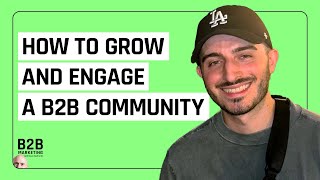
Matthew Carnevale from Exit 5 talks about building B2B marketing communities, keeping members engaged, and balancing community goals with sales. He covers how to run digital and in-person events that actually work.
You're going to spend a lot of time thinking about Facebook or Slack or Circle or whatever, but just start it and get people actually talking to one another because it's really easy for your community to turn into a ghost town. Maybe the best strategy is just focus on wherever those people are at. Like, if you most people have a Facebook profile, most people have a Slack account. Try and get them into there and see if you can drum up some engagement in there. I mean, in Exit 5's case, we were a Facebook group for a while, which had a really good engagement, and then we just moved over to Circle. And that was a big, risky play by Dave because, you know, he lost people in the process. But now we're at a point where we've recovered all the members and all the revenue and things are growing and better than ever.
Hey, I'm Karina.
And I'm Taylor.
And this is Direct, a podcast we created to showcase the creativity and hard work of Go Market teams everywhere.
We're here to share the stories and experiences of the hardworking, passionate individuals who make up Go to Market teams, ones who truly make the magic happen.
Taylor and I have been fortunate enough to work side by side in some incredible projects together, and now we want to put a spotlight on the unsung heroes behind some of the best Go To Market campaigns out there.
In each episode, you'll hear from individual contributors who have gone above and beyond to make a difference. They'll share their challenges, victories, and the lessons they've learned along the way, all to help you unlock the next step in your career. Get ready to be inspired, learn something new, maybe even share a laugh or two.
Welcome to Direct.
Welcome back to another episode of Direct with Karina and Taylor. I'm Taylor.
And I'm Karina.
And today we are joined by Matthew Carnevale. He is the marketing manager at Exit 5 and is here today to talk to us about how they're building community and how their own approach to it. Matt, before we get into this, can you set the stage for us? How do you define community?
That's a tough one. I get that question all the time. I think the way I look at it is there's a difference between building community and building a community. And really, you know, community itself is just a thing or a place that, you know, people rally, that people have a common interest in and rally toward a similar thing. So if we talk about building community, it's really about how do I, as a company or as an individual, talk about something or build something that People can rally around and have a common interest in. And then the other side is building a community, and that's like a physical space, like a Facebook group, Slack group. In our case, it's a circle community where people could actually join behind some kind of gated wall and interact with one another and talk about that thing that they have a common interest in. So I think that's how I define community, by breaking it up between, you know, building community and actually building a community.
That's super helpful context. And I'm curious, you know, you had such an active community prior to having this kind of gated circle community at Exit 5. What was the catalyst for you all to actually break that out into having that segment be part of what your community is?
Yeah, for sure. So you're referring to, like, why or why did we, like, go into an actual. Like an actual community versus just keeping it, like, on LinkedIn and places like that?
Yeah.
I think that's something I've seen you and Dave talk a lot about.
Right.
Is like, you know, it wasn't something that you had necessarily set out to do on the front end, but it kind of evolved for that. So what was the catalyst for. For having that happen?
Yeah, I think it was honestly just people who were big fans of our content or Dave's content at the time were asking for it. They're like, hey, like, we love your content and we love the stuff you're giving us, but we want to chat with one another and we want to meet one another. So I think it was really just people asked for it. And it's funny because that's something that I don't know, like, if you guys listen to Alex Hermosi a lot or read his stuff, but he talks a lot about even in his book, like, give until they Ask. And I think that's kind of what happened with Dave. It's just he kept giving good content, and eventually someone just asked, and then he went and built it. And I think that's part of the reason why it's successful is, you know, a lot of people, when they look to build a community, like, they have a motive as to why they want to build a community. And it's like, you know, we want this place where we can bring, you know, customers and prospects, and we want them to talk, and maybe we're going to nurture these leads, and eventually they'll, like, request a demo. And I think in Dave's case, it was people just asked for it, and people wanted it, and he built it, and that's why it's successful.
I love that. It's very similar to how we actually approached building community at Gong. It was something where we could have obviously done it. I think a long time ago the brand was super active. We could have used a lot of those metrics of like, okay, let's do this to increase renewals or let's do this to capture net new prospects. But to your point, it was something that people just wanted an avenue where the brand was the central location where they could come and, you know, collaborate with one another. So I'm curious, you've been posting a lot on LinkedIn about the typical slow months that you would see. And I think everybody in tech and SaaS is always complaining about this being kind of the downtime before we ran for the ever busy conference season that's coming up in the fall. Yeah, that's not been the case for you. You guys are at 4,000 members or over 40% are still active. How are you finding new and unique ways for your community members to engage with one another?
Yeah, so I think, you know, it's part of it is the work we've done in prior months to build a solid foundation of engagement. So I think, you know, crediting a lot of the work we've done prior, but something we're doing now, which we've, you know, started doing a lot in the recent months, is every month we have two events that we do for members only and, and these events that we're doing are teardowns. So, you know, an example of one is like a website teardown, so members can submit their website and then an expert from within the community will come in and review all the websites and give tangible feedback. So I think from our front, it's like, you know, can we give our members a reason to sign in and do something at least once a month? And in a case like that, I mean, you know, I was a B2B marketer before this and I'm still a marketer, just not B2B. But when I was, you know, I always wanted feedback on the site or I always wanted somebody taking a look at our SEO or ad strategy and giving feedback because it's going to help me do better at my job. And even though it's a slow month, I still need to produce some kind of results. And I think ultimately that's what we all want to do. So as long as we give people a reason to come in once a month, I think that's what's been driving a lot of engagement and Then another big one is we recently rolled out a member matchmaking program so will match like minded members one on one using this program called Matcha. And you know, it's not perfect the program but again, it happens once a month. So it gives people a reason to come to the community once a month. And you know, our billing cycle is on a monthly basis. So the way I think of it is like, if people are going to pay us every month, we got to give them a reason to come into the community once a month.
I think that's a really smart play that you've got there and making sure that they're coming in regularly. How are you guys? You know, obviously you're coming up with some really fun content, but how are you guys making sure that those people are logging in regularly beyond and maybe testing some of this different, you know.
Again, I think it just comes back to like giving them, you know, something valuable. It's going to be tough to, to please everyone. You know, some of the ways like we've kind of like forced done it is. And Karina, you've been an example of this. Like if there's a question in the community that is like specific to a topic, I'll go in and I'll tag people that I think are experts in that topic to answer or contribute. And I think what that does is it gets those experts in our community, you know, maybe once a month, once every couple months. But it also shows the people that are asking questions that the right people are going to be pulled in for the right questions so they'll get good answers. So it draws them like at least, you know, once a month or once every couple months to be like, okay, I know if I ask this thing, I'll probably get somebody who knows what they're talking about to, to give me a good answer.
And I was so impressed with that map that you were so thoughtful. I think it was like it wasn't even spammy. It never felt that way. It always felt super intentional. I felt like you knew me as a Persona and knew how I could help your other Personas in the community. But I'm curious. I mean, 4,000, that's a lot of people. How are you managing your time with something as unscalable as that?
Yeah, it, you know, it's not easy per se. Like I still go in the community and every single day I'll go and respond and answer to every single post. Even if it's just like, oh, this is an awesome post, I loved it. And that's Kind of how I stay on top of things. So, I mean, there's no real, I guess, way or shortcut. I'm just, I'm in the community every day for at least, you know, an hour or so, contributing. So I think that's how I do it. And then all the other stuff, like I mentioned, the events that we do, you know, once every or two a month, that stuff now is pretty much being fulfilled mainly by members of the community. So we've got this nice little loop where the members of our community are actually contributing to us, scaling up our content and programming. So I think that's the key is like, you know, the community is growing beyond me just being able to manage every single piece of it. So what I'm really focused on is like, how can we use our members? Not use. That's not a good word. How can we lean on and work with members to contribute to the community and hopefully, you know, give them some kind of value in return, whether it's monetary or status or exposure.
Well, let's hit on that because you're actually one of the few communities I've seen that actually offers compensation in return for their community members. Time. How did you guys arrive at that and how do you kind of see scaling something like that going forward?
Yes, So a recent example is we're doing a. And I hope this is what you're asking me, but a recent example is we did. We're doing an accelerator for B2B marketer. So it's a program where it's eight weeks live course style, where we're bringing in experts and we're paying them to. To speak, we're paying them to instruct. And I think for our case it was just like, you know, how can we get some of the best people and how can we justify them spending their time on it? You know, I'm sure, like some people want to be paid crazy amounts of money, but we just figured like, hey, like, you know, it makes sense for us to pay these people. They're coming in and giving away knowledge that they've potentially spent like 10 years curating, so they at least deserve something for it. And it's also part of building a relationship with those speakers too. Right? It's like, how can we incentivize them to come in the future and want to do even bigger things with us?
I do find that really interesting if you, as you guys started and decided to kind of incentivize these people to come in and contribute, obviously they want to be a part of a Community too. They enjoy networking. That's how you become an expert in this kind of way, talking to people. But how did you balance finding the right incentives for them to participate? Also understanding that, you know, some of these people are paid speakers, they go and they're sent across the nation to speak in large groups. How do you balance that?
Yeah, I think we're lucky in the sense where our audience and our brand gives people a lot of value for coming and speaking on our platform. So I think that while we may not match, you know, a series D company who will pay someone 50 grand to go speak on stage, what we can provide is exposure to our audience of very engaged B2B marketers. So I think that's kind of the thing that we've tapped into. It's like the right balance of monetary and exposure. And if someone doesn't fit that, if someone was like, oh no, like I only speak for this amount, then it's not a good fit for us. Like, you know, we're more of like a down to earth chill brand. So it's like we, you know, we compensate fairly and give exposure. And if that's not a fit, then it's probably not a fit anyway. You know, talk to us a little.
Bit about how you guys choose different mediums to both promote but also foster that sense of community. Obviously Dave has been doing podcasts for some time. He started during his time at Drift. He's elevated that to now this brand. You guys have also started to do some in person gatherings. You're going to do your next one or your first one in September in Vermont. How are you guys thinking about having that hybrid motion of both digital presence and then in person presence as well.
Yeah. So on the digital front, you know, thankfully Dave has, you know, a really strong audience and had a really strong audience before I even came on board. So we already had a lot of our workhorse channels, for lack of better words, which is we have LinkedIn, we have the email newsletter, we have the webinar and then the podcast. I think those are our big four. And we're not really veering too much off of those. It's more about just how do we get better incrementally at those over time and then the in person. So moving from not only digital to in person, we're doing our first one. I think part of the reason why we did it, and it's the same as what I said before, it's people were just asking for it, so we just did it. And sure enough, like when we Sold tickets, they sold that within 24 hours. So I think there's obviously something there about people just asking for things. But I think looking forward into the future, you know, we want to do not only like an Exit 5 hosted event, but also things like, you know, local meetups in cities. So, you know, it could be exit 5 meet up in Austin or exit 5 meet up in New York City or Seattle, whatever it is. And you know, part of the reason we want to do that is obviously people want to meet in person, you know, at least every now and then. And you know, like I was saying before, you know, our community is getting so big that there's only so much we can do. So there's only so much events that we were a team of five, there's only so many that we can host and do all the prep and planning for. So it's how do we lean on and work with members of our community to help us scale in person as well. And I think that's how we do it. It's we work with people in that city and say, hey, we'd love your help in hosting something in the city. And then we do the promo because we know we can get butts in the seats and they do kind of all the boots on the ground stuff.
I think that's a great perspective, especially for some of our listeners who are definitely going to be on teams that maybe don't have that founder led social brand. Like you guys clearly have an exit 5. What would be some other things? Like obviously you're in a great position to have such a presence with your founder. He's knows how to interact with people on social. He's not afraid of that. What would be your recommendation to teams that are looking to build something more scrappy from a community perspective, either based on what you've learned here or maybe in past lives too?
Yeah. So, you know, at a previous company I tried to, I was instructed to, you know, build a community because we believe that it was the next big growth channel for us. And the reason we want to do it is because we wanted a way to, you know, get more leads and get people into a community and to maybe funnel them into our sales funnel. And it didn't work ultimately because we didn't have the audience to send people into that community. So I mean, for me, if I were working at another company, like the first thing I would focus on is like, how do we get audience first and then how do we funnel that into the community? And there's so many different ways you can do it. I mean, if you have a CEO like Dave, you're really lucky because they're going to proactively go and post on LinkedIn and try and build their brand and it makes life much easier. But the reality is that not every founder or CEO is going to do that or not going to do it well. So, you know, if I was in that position, maybe something that I would do, and I've been thinking about this a lot recently, is like, can I create any kind of media asset that may not even be connected to the company that I can go promote? You know, an example I was thinking of is like, you know, I used to work for a company that sold marketing software to small businesses, and small businesses are traditionally really tough to, you know, connect with. Like, I'm talking like your local plumber, electrician, chiropractor, right? They're not on LinkedIn, they're not on a lot of social platforms. But you know, one thing they do care a lot about is jobs and talent and getting people to work for them because it's harder for them to recruit people. Right? So what if in that scenario, instead of trying to get my founder to post on LinkedIn, what I did was I created like a job board for small businesses and for people looking for jobs, right? That's a media asset that can, you know, I can reach out to small businesses and I can get them onto my job board, right? And I could get their attention that way and maybe I could, you know, get them to contribute over time and then, you know, they will see in the long run that, hey, we're connected to this job board, this cool company that sells software and maybe there's somebody that I'd want to do business with in the future. So, yeah, long winded way of saying I would find a way to create an audience and create some kind of media asset, even if it's not completely attached to your brand. And then once you have a solid base there, then try and focus on funneling them into a community if they ask for it, if that's what they want.
That's such a good example of really thinking about the long term versus short term. And I think that there's been so many good brands out there. CLU is one of them that I actually go back to a lot of. They created a whole community that was just around sourcing, like you kind of said, to sourcing jobs for people that would eventually, hopefully later be in their pipeline. But that's not what their solution or software particularly did. But it Was building from a really genuine, authentic place. And to your point, there's a lot of media assets you could do from that. How do you think people can balance this demand for, you know, immediate short term results versus obviously, I mean, in my mind, community is a much longer term growth lever and approach. You're not going to see the results right away. Taylor and I are both, you know, account based marketers and we know that, that those are not immediate results you can share right away. To show success. We always have to think about what are some short term wins. What would you say are some short term wins? Especially with that in mind of limited budget, maybe you don't have a big social media presence. What would you say could be some short term wins that people could show for? Okay, this is worth investing in in the future.
Yeah. So I think the first thing is like, you know, if you're, if your back is up against the wall, then I would not go start a community tomorrow, you know, unless you have some inclination that people are going to maybe pay you for some kind of community. But I wouldn't do it and I've been in that situation and I thought maybe it could do that and it didn't and I looked pretty stupid. So if you're thinking about building community and your backs up against the wall, don't do it. Wait until you have more of a solid base of short term wins like you said to get first. Like for me, I know it sounds like super basic, but it's like if I just needed some short term wins and short term wins and maybe I didn't have a lot of budget and I was a B2B marketer, I would just think of like, okay, what are some channels that have kind of worked in the past, are kind of working right now and can I just insert myself in them and go improve them? Like one that I always, will always try and attach myself to is like the sales process. Like yeah, so many times, you know, marketing is so removed from the sales process or has a little part to play in the sales process and it's like can you just go in there and rewrite some of their emails right now? Like can you give the big one? Yeah, it is, yeah, they usually stink. Sorry, sales. But so that's what I would do. I would try and get involved in the sales process or you know, try and do something with email because typically you have some kind of list that's, you know, there and stagnant and collecting dust you've done nothing with. So those are two that I would always look at in the past, obviously, if I'd budget, maybe I'd go turn on, you know, some paid ad programs. But if I didn't, I would go to the sales team and just say them, hey, I want to help you out as much as I can and let leadership know, show them that, hey, I'm working with sales now and we're butting up to go hit target together. Because most of the time a lot of CEOs are mostly focused on that anyways is the sales team hitting target and yada yada, yada. So if you're showing that you're attaching yourself to that process and there's more wins there, you're going to become more valuable. And then once you've got that solidified and the team's, you know, hitting target quarter after quarter, then it's like, I have this idea of building a community, and here's why I want to do it and why I think it'll help us do more in the long run.
That brings up a really interesting conversation, I think, around balancing sales and community. Right. Because I feel like a lot of brands start with a customer community and that feels safer and they can talk to each other about the product or service that you have and that sort of niche. But then when you're trying to build an audience that's not necessarily your customer so that it can become a lead engine, but with how do you balance that with not, you know, immediately pouncing on these people and really making sure that you're driving value first?
Yeah, I mean, it's tough. It's tough because whoever was the catalyst of the project had some kind of goal in mind and they're going to try and get their agenda done at some point or another. So, you know, it really comes back to what was the goal of starting the community. And if the number one goal was to eventually get leads from it, it's like, well, I guess at some point you're gonna have to try and tap that. You're gonna have to try and tap the community for leads. But I don't know what the bounce is. I would say, you know, if the goal was to try and, you know, create a community where your customers can help each other get better on the platform or get better at their jobs, then, you know, I don't know if there has to be a future date where that is the case. Maybe it's just like a play of like, we're going to scale support customer success and customer advocacy through this community, and we're not really focused on how we can directly attribute the efforts of community to revenue. Like maybe we just have some belief through what's going on in the community that it is actually helping us reduce Churn or create more happy customers that are going to maybe create more case studies or testimonials for us. So I would say it really comes down to the goal and sticking to that goal throughout.
Speaking of goals, what can you kind of share with us they feel comfortable sharing? As far as like what success has looked like for you? Building community.
Yeah, so I think a couple big ones. So what I'm really focused on is, you know, community as a unit of the business. So I'm not just focused on, you know, managing the community in terms of like the conversations inside, but also like, how are we getting new members to the community once they're in the community, what's the community experience and onboarding and how are we reducing Churn in the community? So I'm really looking at as like a full business unit, which has helped me a lot. So in terms of things that I focus on, you know, is how many new trials are we getting month over month. So we have a seven day free trial. So that's kind of like our, you know, our hook to get people in. It's tried for seven days and if you don't like it, you could bounce out. So I'm focused on, you know, how are we getting more trials every single month. And you know, if you'd like, we can talk about some strategies, but we're looking at that. Another thing I'm looking at is how many of those trials, you know, convert to actual paid members. So, you know, that really comes down to in that first seven days, how am I making sure that they're getting a good enough experience to want to actually pay us every month, every single year. You know, I'm looking at things like Churn, you know, are we driving down Churn every single month? You know, I won't give up any numbers, but we've gotten a really healthy. Our churn's gone down like really healthily since I've joined. Not crediting myself. I just think we've all got more bandwidth to focus on things to help drive that down. So those are like the revenue focuses of the community. And then within the actual community there's a couple things that I look at. One is what's our monthly active users. So that's how many people are, you know, having a meaningful engagement inside the community at least once a month. And you Know, right Now we're about 40%, which puts us in, you know, the top tier of communities in circle anyway. And then I'm focused on things like how many new posts do we have in the community every month and how many new comments do we have and what's the ratio? So I look at this thing called post to comment ratio. It's just like a number over number. And you know, if that's going up every single month, then I'm happy. And I think when I first started that number is probably like around three or four. So it was like three or four comments per post and now we're over seven. So now every single post gets, you know, an average of 7 comments. So those are some of the things that I'm looking at right now.
That's great.
I mean so much of what you said I think could be applied to so many companies that are trying to adopt a product led growth motion. I don't come across a lot of B2B communities that actually do that process. That's what got me hooked. I got hooked on a trial and I found it hard to get out of. And it was because like there was, you know, one. It kind of escapes my mind. Right. But to, you know, you guys are very intentional about your follow up, your outreach, being engaged in the platform. I'm curious because you're the way you started talking about like that ratio of comments to post. That's right. That's what you call it, right?
Yep.
Okay. So that made me think of LinkedIn immediately. And that's how I've tried to build my community for just my own personal brand. And I thought of it similarly. So it made me wonder, has anything changed since you've launched the community as far as maybe the company's brand or the personal brand of your founder? Since launching the community, have you found that like dividing time between supporting the engine to bring in like inbounds for that? Has there been any challenges that you face with that?
It's a good question. I mean, no specific challenges that I could think of. I think it's like actually, you know, I wouldn't say it's a challenge, but something that we've been thinking a lot since Dave has brought on people like myself and you know, hired. He's now hired four people. So we're a team of five is like, how do we not just make this the Dave Gerhardt show, You know, such a popular dude in B2B marketing, a big figure and he's somebody that almost, you know, when he puts out anything, people just jump on it right away. And, you know, that's great that we have that, but it's also very exhausting for him because he always has to do a song and dance every time he wants somebody to sign up for the community or to sign up to her newsletter or whatever. So, you know, challenge has been, what are the other things we can do other than rely on Dave? And, you know, some things that we've done recently, like our newsletter, for example. It used to be Dave who would write every segment of it, and now we switch to Danielle, who's our new head of content. So that's a way that, you know, we're weeding off of Dave. And, you know, even in my case and in Dan's case and all of us, we're trying to build our own brand so that we have air cover in more areas. And it's not just reliant on Dave being the central figure of Exit 5.
I love that it's such a good perspective and something that I think we can take that approach for any kind of channel. If any kind of business is over reliant on one channel, you. You really need to rethink your strategy a bit because that's going to just wear out over time. Yeah, this has been so helpful. Matt, I would love to know before we let you go, what are some things that you would recommend to somebody that's looking to just get started? Community? What would be like your hit list or your, you know, do these first five things first before you do anything else?
Yeah, good question.
I know. It's a big one, too.
I know. It's good. It's good. Yeah. So just riffing here. I mean, I think the first one I already alluded to this is like, if you're starting a community, ask yourself, do I have an audience? Do I have people that are engaged in what I talk about and can I funnel them into this community? That's like the first, like, number one, if you don't have that, I would go and rethink if community's right for you. Number two is nail down the goal. Right. Like I said, a lot of times it's. This is with anything in marketing, right? It's not just community, but with Community, the goal is not super clear as to why you're starting a community. You know, maybe your founder, CEO has heard of another company who started a community and was super successful, so now they want to go and do it. But I would really press them on why, because what's going to happen if you're the person who's running and starting the community is. You're going to notice that it's actually a grind, and it's going to take you a long time for it to be successful. So the last thing you want is this unrealistic expectation of what it's supposed to produce in the timeline you're given. So don't shoot yourself in the foot. Make sure you know the goal, and if it doesn't feel right, then push back more and don't start the community. That's number two. What's number three in terms of starting the community itself? The platform you started on or where you want to do the community doesn't matter.
Oh, that's a hot take. Okay.
Yeah. So you're going to spend a lot of time thinking about Facebook or Slack or Circle or whatever, but just start it and get people actually talking to one another because it's really easy for your community to turn into a ghost town. So, you know, maybe the best strategy is just focus on wherever those people are at. Like, if you. Most people have a Facebook profile, most people have a Slack account, try and get them into there and see if you can drum up some. Some, you know, engagement in there. I mean, in Exit 5's case, we were a Facebook group for a while which had a really good engagement, and then we just moved over to Circle. And that was a big, risky play by Dave because, you know, he lost people in the process. But now we're at a point where we've recovered all the members and all the revenue and things are growing and better than ever because we now we realize that we need a different kind of platform to get to the next stage of the community. So you may have to switch at some point, but it doesn't really matter. Just start and get an engaged community going. Ours is on Circle, which I love and would highly recommend. But, you know, if you don't want that or, you know, you don't want to pay for anything, I don't know if they. Maybe they have a free plan, but you don't want to pay for anything, then do it on Facebook or Slack. So that's for starting it. And then once you actually have a community, you know, I think a big thing that that has helped us at least keep engagement pretty good in our community is there's enough experts at a certain topic to get the right questions when people have them. So, you know, let's say you're starting a community and you're like, okay, how do we get users and Prospects into this to start talking about things. That's great, and you should absolutely think about and do that. But the first thing I would do is can you seed the community with some friendlies or with some people that are experts in the space? You know, for example, in our case, if I were to start Exit 5 all over again, maybe I'd get, you know, the top 3, 5, 10 people in demand, gen content, ABM, whatever. I'd give them all free access for a year, maybe for life. And I would say, hey, I'd love for you to be a part of this thing I'm building. You know, I'm going to start inviting people and, you know, maybe when they ask questions, I would love to tag you in and get your input every now and then. And I think that's a really light ask. I think people don't really mind being a part of it. And it's a good way for when people join the community for it not to be a ghost town where there's no engagement whatsoever.
Love it. Matt, that was brilliant. Yeah, no worries. That is solid advice right there.
Okay, awesome, awesome. Okay, cool. Yeah, um, yeah, go ahead. Sorry.
Thank you so much for just this. And this entire conversation has been really enlightening to hear about your approach to community, to hear about your focus on really building and keeping an engaged audience. And before we let you go, I'm just curious, how can we have our audience here know where to find you, where to check out exit five?
Yeah, for sure. So me personally, my name is, like I said, Matthew Carnevale. LinkedIn is where I'm most active. I try and post there at least once a day. So, you know, give me a follow connect, shoot me a dm. And if you ever want to, you know, check out exit 5, just go to exit 5 spelled out, not the. The actual number, exit5.com. That's where you can learn more about our community. But I would say, you know, if this is your first time hearing about us or you're a B2B marketer that wants to, you know, skill up, I would just go sign up for our free newsletter or a podcast. I wouldn't become a member of the community yet. And if you like our stuff, then maybe in the future, you know, you consider being a community member.
Wonderful. Where it was great to talk to you today. Thanks so much.
Likewise. Thanks so much, both. Bye.
Thanks for listening to this episode of Direct with Karina and Taylor.
If you enjoyed what you heard in today's episode, please give us a follow, maybe even a five star review wherever you listen to your podcast.
And if you know someone that you like to spotlight. If you want to share your own story, Visit us at MotionAgency IO forward slash Iraq. We'd love to hear from you.
More from Dave



Asynchronous work isn’t a trend. It’s how teams actually get things done without burning out.

AI is changing product marketing. Here's how top B2B teams are scaling without cutting corners.

How Product Marketing Is Evolving in 2025: Lessons on AI and Leadership with Jennifer Cannizzaro

Why referral programs look different outside of SaaS (and why that’s a good thing)

The secret to scaling dual GTM? Give every marketer ownership and get out of their way.

From content to CMO: how Jess Cook made the leap (and built her first budget from scratch)

Leading B2B Marketing for the First Time: Strategy, Budget, Content & Team with Jess Cook

Most B2B advice is built for SaaS. But what if you don’t have demos, PLG, or lead goals?
