B2B Copywriting 101
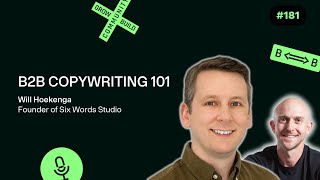
Dave Gerhardt talks with copywriter Will Huchinga about writing for B2B SaaS. They cover product positioning, how copywriters and designers should work together, and how to write web copy that actually stands out by focusing on what customers need.
CUB stands for confusing, unbelievable, or boring. And I think this is a really simple, easy framework like anyone can use when they're looking at their product positioning. Because these are the ways that positioning loses people. Right? It's too confusing. It makes claims that people don't actually, you know, believe, or they're unsubstantiated, or it's just boring in the sense that it's not actually targeted at the right problem for the market that you're speaking to. I think when you look at it from that lens, it can help you kind of pinpoint the problem with it. The number one things that I see when I'm looking at positioning that just doesn't seem to make sense is either one. The company is like hell bent on trying to create a category and, you know, they get super creative with what the name is, but it happens to be something that they're creating it. So it doesn't exist yet and it just isn't there for the customer yet. Or there's also the trying to list everything you do all at once route.
My guest today is somebody that I've worked with a bunch over the past. We haven't chatted in a while, but Will is an amazing copywriter. He's done a lot working with B2B SaaS brands over the years. We recently reconnected because he wisely joined our Exit 5 community. Dan, who has also worked with you a bunch, sent me a note. He's like, you gotta get Will on the podcast. And I was like, absolutely right. I'm gonna get Will on the podcast. So tell people who you are. What's your just like the quick background on your career story?
Yeah. Well, thank you for the kind introduction. So my name is Will Huchinga. I do copywriting and Messaging consulting for B2B brands. Really kind of a focus on improving performance of what I think of as like high value web pages. So homepages, product pages, Persona pages, things that kind of move the needle, usually in booking a demo or something like that. And it's funny you mentioned exit 5. I almost like I felt like I was sheepishly entering the party very late on that when I, when I like, joined because it had been around for a little while, you know, and I don't know what took me so long, but it's been awesome. But yeah, I mean, I got into this in the early days just by writing about SaaS marketing and like breaking down campaigns and stuff like that. I was mostly doing copywriting for more personal brands and stuff. This was like 10 years ago, and my writing got noticed by the founder of a company called LeadPages. And he reached out and was like, we're hiring copywriters. What do you think? And I was like, sure. And that was kind of my training ground for SaaS. Was spending a year there at a company that was growing really fast and just learning all kinds of stuff. Eventually got the itch to return to freelance work and ended up working with a bunch of cool companies like you at Drift and later at Privy, a lot of martech companies. And. Yeah, so just been doing that ever since and trying to write about it when I can.
Okay, so what. How do you define the role of a copywriter? Some somebody says, and let's talk specifically to our audience. I'm not talking about, you know, me bumping into my neighbor down the street saying, oh, what do you do? I'm a copywriter. Okay, whatever. In the context of B2B, B2B SaaS, specifically, how do you think of the role of copywriter?
It is really tough because I find that at a lot of B2B SaaS companies, they don't always necessarily have someone on the marketing team that is a copywriter in the sense of the way that I think about it, especially when it comes to writing web copies specifically. A lot of B2B SaaS brands have amazing content writers. And there's elements of copywriting in all this stuff, right? There's email, copywriting, all that kind of stuff to attract eyeballs, you know, tell a compelling story. But when it comes to writing, you know, conversion copy for the web, a lot of times it ends up being this kind of collection of people, you know, maybe a pride. And there was a really interesting thread about this on Exit 5 recently about, like, who writes the web copy at your company. And the responses were really varied. And it ends up a lot of times being a blend of product marketing, a little bit of, like, someone from content kind of comes in. But to me, the copywriter's job when you're talking about websites, is to know what the goal of the page is, know the context of the visitor who was coming to that page, and give them the information they want to know in a compelling way that gets them to take the desired action of the page. Whether that's booking a demo, whether it's exploring more pages, consuming more content. You have to think about the bigger picture beyond the page that it's sitting in. And to me, that's what the copywriter does, which is interesting because words are a part of that equation. But the structure of the page is a part of that equation. There's all kinds of things going on. And so I think you really need to be involved in every step of the process.
Okay, so I'm just taking notes as we do this. If you hear me typing, but why. So okay, I get it. That's a common thing that comes up, right? Who writes the copy at your company? I've seen this. It's like oh the, you know, sometimes it's product marketing, sometimes it's just this person who works on this team and they're good at writing copy. Why do you think though a dedicated copywriter is not a more common hire? I think you see it as companies scale. Like you look at a slack or a stripe, there's like a product copywriter and they live with product. But within the marketing team. I've kind of always wondered why is there not a full time copywriter embedded on this marketing team? Do you, do you think, do you have a reason for why that might be?
I think, I think a lot of times it's because they, they think about the copywriter as someone who's just doing things with words. Right. And so a lot of times that person ends up doing a bunch of content work. Their website isn't necessarily at the stage where they're kind of constantly iterating and testing and launching new pages. There's not kind of a velocity of stuff going on with the product evolving and needing to put out a bunch of new kind of conversion centric assets. And so I think they look at that and they think well we could bring in someone but they're also going to need to be able to do blog posts, email stuff and all that sort of thing. And so a lot of times that's what the copywriting role ends up being is kind of like when I first got hired by a company as like my title was copywriter and I did all of the above and you know, that's not always the best way to get results out of each of the things you're having the person doing. Right. If you're having them doing content, but their skill set is really more actual, you know, non content copywriting then it's not the best use of their time.
So. So in some cases it's like it might make sense to have a copywriter more on a contract basis for like when you're doing something like a homepage revamp that might be a once a quarter or once every six months bigger project where the day to day marketing copy you might, you know, that can be done by the person who does content. You know, the content marketing manager can write the email copy, the product marketing manager can write the landing page copy. Right?
Yeah, because I think, I think a lot of times the people who end up getting pulled in to doing, you know, a new webpage or something like that, they're refreshing the homepage. It's, it's. It's almost like that person typically has a bunch of other stuff already on their plate that they're being measured and incentivized to do well at. And it's like now this extra thing gets added to their plate. And I'm not saying that means that that person can't do a good job. A lot of times, you know, people have internal team members that step in and do pages and do an outstanding job, but it's just. It's a hard thing to have someone focused on all the time because it's not a need that comes up week after week, month after month for a lot of companies.
That's the hard part for me because it, it's not, it might not be a need that comes up, but, like, copy to me is so important. And if you don't have somebody that can do, like, the, the gap between average copy and great copy, like, it. It makes all the difference in the world. And this is what drives me nuts. Like, I like to think of myself as a decent writer, and I think copy is my. My thing or, like, my strength. I could write an email. I could write great email copy in 10 minutes. And then you watch somebody else struggle for three, six, two days to get an email out. And it's like, man, if we just had a proficient copywriter on the team right now, we could just, like, you could, you could move so much faster. And so I, we didn't end up hiring this role at Drift. I, I ended up writing a bunch of copy. And then we. We had a couple other people on the team, this guy George, who, who, who wrote a lot of the emails. Sarah. We kind of tackled it as a team, but for a while, I ended up being like the copywriting bottleneck because it was like, oh, has Dave looked at this landing page? Has Dave looked at this email? And that can become exhausting. But we, we just couldn't find the right person to do it. But we really wanted to hire a staff copywriter for that reason and be like, yeah, there might be busy times, then there might be slower times, but I do think there's value of having somebody, like, on the team who, whether it's an email, landing page, website page, whatever it is, a deck having somebody that has that skill to do it. Because I think what happens is companies often lack that consistent tone of voice and the consistent quality. And, like, the landing page might be awesome, but the email was kind of shitty.
Yeah. Yeah. And I really think part of the struggle is just like, that blend between content and copy. And I think the writer ends up a lot of times just getting pushed into content because they need someone who can write right. And they're related, but different skill sets.
All right, I don't want to talk. I've already spent too much time on the internal politics of hiring a copywriter. Let's actually use this episode to help people get better at writing copy. You sent me this awesome doc, and I want to tee this up. Just true copywriters filled with examples like perfectly framed outline. And so I'm going to read this problem. You said there's an epidemic of B2B Websites that sound identical to their competitors. They talk about the same things, use the same language, and fail to differentiate themselves convincingly. So how do you write web copy that makes your brand stand out first? Before we get into those, you have four ingredients, and let's. Let's cover each one. I'll spend a little bit of time each one.
All right.
Yeah, I see this epidemic, too. And where I struggle with this is as the writer, I feel like you can only do so much. And I'm wondering if you feel the same way. Do you feel like the. This lack of the same language, the sounding identical, doesn't it come from, like, a lack of visual vision? Like, if you find. If you work with a company and founders, they have, like, they're solving a really unique problem. They're solving a problem in a really unique way, and they have their way of doing things. Like, don't you kind of like you start licking your chops as a writer? It's when the company doesn't have any. And so I just. I'm saying that because I think this conversation needs to just be elevated a bit. It's like copywriters, they're not magicians. Right. Ogilvy has said there are no dull products, only dull writers. And I. I don't necessarily think that's true. Because if you're given a. A product, if you're giving a me too, you know, there's. There's 20 other products like it, it's going to be hard for you to write copy. So I just wanted to riff on that and hear you kind of jump off on that point.
Yeah, no, I think it's a really good point. And, you know, David Ogilvy didn't live in the era of there being like, 40,000 different SaaS tools, like, all springing up every year.
Hey, like, Will, you know, Will gets a new contract to write copy for, like a. A webinar tool. Okay, well, how are we different than every other webinar tool? It's like, well, our design is better. And it's like, no, that's not a differentiator.
Like, a lot of times as the copywriter, you are limited to an extent by what is actually true about the product. And I think that sounds, like, really obvious to say, but there could be a lot of pressure sometimes to really almost invent the thing that makes you different, whether you're a copywriter or you're the founder and you've made something that is useful. Yes. But you're trying to figure out, okay, what does this actually bring to the table relative to the, you know, 15 other similar products that are serving the same type of customer? And if the company doesn't have that figured out, it is a little bit of, like a weight holding everything down. And that's why you were speaking to the four things that I listed out. And so if we're thinking about a webpage, I think of it as having kind of a hierarchy of needs where there's four things, all of them are important, but if you don't get the ones that are the greater need. Right. It blunts the effectiveness of the other ingredients. And the first one that I put in the hierarchy is clear positioning, which goes back to kind of what you were speaking to, because great clear positioning lets people know right away, oh, this is, for me, it's designed to solve my problem, and I see what's clearly different about it. Right. And so if you don't nail that, it's not like it's impossible for the page to still be good and have good copy on it, but it just makes everything else's job a lot more difficult.
Well, yeah, you could. You can. Well, the result can. Can be someone reading that page and be like, wow, this is really well written copy. That's very witty and cute and fun, but I'm going to buy the product. Right. Like, ultimately, the job of the copy is to convince and convert someone to take an action. And so if you can clearly do that and show how you're different than alternatives, do you have a preferred method of doing positioning? Like, if someone's listening to this and they're like, okay, how, you know, how do we go and revisit our positioning? Specifically what you said, like, how do you convey very quickly and directly, here's what we do and here's how we're different than alternatives.
I think. Actually, I don't know if you're familiar with her content. Emily Kramer has a, has some really great content around positioning and just kind of a general, like very simple, stripped down framework for doing it where you're just getting super clear on naming what your product is, right? Like what category it belongs to and what you're competing against and what makes it different from that. I think when I look at positioning, there's actually, there's a test. It's an old direct response technique that I don't see come up that much because that direct response stuff doesn't always seem like the cleanest fit necessarily with some of the stuff we do in B2B SaaS. But it's from a book called Copy Logic and they call it the CUB test. Like cub. And CUB stands for confusing, unbelievable or boring. And I think this is a really simple, easy framework like anyone can use when they're looking at their product positioning. Because these are, these are the ways that positioning loses people, right? It's, it's too confusing. It makes claims that people don't actually, you know, believe, or they're unsubstantiated, or it's just boring in the sense that it's not actually targeted at the right problem for the market that you're speaking to. And so I think when you look at it from that lens, it can help you kind of pinpoint the problem with it. And if you're thinking about from a standpoint of confusing, for example, the number one things that I see when I'm looking at positioning that just doesn't seem to make sense is either one. The company is like hell bent on trying to create a category. And you know, they get super creative with what the name is, but it happens to be something that, you know, they're creating it, so it doesn't exist yet and it just isn't there for the customer yet. Or there's also the trying to list everything you do all at once route. And you're throwing so much at the people that they're just, they don't know what's going on. So I think you have to be really honest with yourself in terms of what category your product belongs to and you have to look for what those product differentiators are. And that's, you know, to speak to your point earlier, your product has those or it doesn't. And you know, as good as marketing can be and as powerful as it can be, it's always going to be fighting an uphill battle if it's really trying. If your marketing is trying to do the job of differentiating for you, when you know the product has to do that first.
Yes, there it is. The product has to do the differentiation. So here, one example is this company, Capsule. Natalie Taylor, who runs marketing over there, she was on the podcast and I have become a fan of this product. Uh, it's Capsule dot video if you want to look at it. But their homepage headline is finally a video editor made for enterprise. And I think that's good copy because it does all the things that you ex. You described without having to like spell those out. It's like very quickly your brain goes to like, it's a video editor. Okay, but it's for the enterprise. I'm an enterprise. Oh, there must not be a video editor for the enterprise. And that, that must mean that it's not secure, it's not collaborative, whatever, right? It implies a bunch of things if you are that customer. Now, if you're a small a mom and pop shop looking for a video editing tool, like, this headline is going to be like a foreign language to you. And that's great. I think that's the goal of a headline. It's to speak to the person that you're trying to target. And clearly though, Natalie and the marketing team did not make this up, it is because their strategy as a company is we're building a video editor for enterprise. As a result of that, the copy becomes easy to write.
And I'm glad that you mentioned strategy there because I think that's an under discussed thing in copy. Like the, the copy has to be in sync with whatever the overall company strategy is. And a lot of times I think that gets disconnected, especially when you bring in someone from outside the company. You know, you hire someone to write the copy, they really need to have intimate familiarity with not only where the company is now, but where it's going as well. Because sometimes you can double down on what's working now. But if the CEO is thinking we're trying to get away from that, right, then it's going to clash when it, when the point in time comes for someone to approve the copy. Right? So it's kind of this, it's always this dance between where you are now, where the company is trying to go, and the copy has to sort of shepherd that process? I think so. But I like that video example and I do think that's a clear case where, like, there's so many video products that don't serve enterprise, right? Like, there's so many ones that are targeted at individual creators and things like that. So I think that's a case where literally just stating what the product is and who it's for works really well because it's an underserved type of customer. Right? So it's always nice when you, when you have that. And then you can come in as the copywriter and just be like, this is so clear. This is what it should be. Right.
If you look at our website, exit5.com I don't think we explain at all how we're different than anybody else, but I think if you unpack the story a little bit, you can get those ingredients. And it's kind of this weird dance of like, I don't feel like we need a differentiator in some ways, because it's like, it's a community. It's a community for marketing people. Like, we don't need to explain how we're different than other community. Or maybe there's just not a lot of competition and this is more of a blue ocean and we're trading on my brand and my reputation. We've turned it into this thing. But what's your perspective on that, Mr. Copywriter?
Well, I think that Exit 5 is interesting. Well, let me ask you, what are the alternatives to exit 5? Because I see a lot of times in your post about Exit 5, you compare it to LinkedIn as kind of an alternative, right? It's sort of, It's. It's a better place to network and engage with people doing your work. So, like, besides LinkedIn, do you look at other. Are there other. Are there a lot of these, like, B2B marketing communities out there?
So part of that. So. So I don't actually think LinkedIn is a competitor in that sense. That's me kind of playing a little copywriting framing trick. Like, that's me trying to handle. Proactively handle an objection, right? Which is handling the objection of like, well, why should I pay for commute? Like, who needs to pay for a community? And so that's me knowing that that's one of the bigger objections. And so I try to write that to be like, you can get lots of great information on LinkedIn for free, but here's why you might consider joining Exit 5. So I would. I think the actual competitors are probably communities that you would pay for to join. The only real one that I know and pay attention to is Pavilion. And I wouldn't even say that they're, they're a competitor in the sense of they have basically built a very successful community of go to market executives. And so I think what they're doing is more. And this could just be my bias and how I, I'm, I'm repositioning them in my head to make the case for Exit 5. Right. But I say that their focus on, you know, go to market and executives. And if you get their newsletter as an example, their newsletter is like, hey, this week, you know, Google backed out of a deal to buy this company, whatever they were called. And here's what it means for SaaS. We're like, no, we're focused specifically on B2B marketing and the T. Like, we're not going to tell you about the stock market, we're not going to tell you about equity and options and you know, that stuff. We're going to talk to you about how to write copy landing pages, how to make an internal marketing presentation. We're going to get really tactical about B2B marketing. And so that's kind of the positioning that I've leaned into. Um, the other competitors would probably be like, free, you know, free resources. Like, I think Emily Kramer and them, they have a great, you know, substack or something for MKT1. But on the paid side, I think Pavilion is really the big one.
Yeah. I think part of it also is like, what, what are the outcomes that you're trying to get for your community members? Right. Because then I think certain communities have different outcome goals. When I look at Exit 5, I think a big part of it is helping B2B marketers advance their careers. Right? Like get a promotion, take the next step, that sort of thing. And so I think first of all, you're narrowing down to a specific role that you're focused on and then the next thing is the outcome. Right? And then I think where you. Sometimes it gets tricky with differentiation because like you said, you know, you ask someone why they're different and it's like, well, our UI is easier to use. That's an easy thing to claim. It's a harder thing to show people. Right? But I think we're the Netflix.
We're the Netflix for X. It's like, are you, are you though? I'm not sure about that.
Exactly. Yeah, don't, don't, don't try to be the Netflix for, for B2B marketers.
But even in this Exit 5 example, like, I just feel like, I feel like it's, it would be overdoing it to be like, we're the only B2B marketing community that blank. It's like, well, I don't know. There's not really that many marketing communities and we have 4,000 members. And the secret flavor is it's created by me and you may already know me, and that's why you should join. And now that we have scale and we have a reputation, I think we can trade on that. And I think the positioning, like, evolves over time.
Well, and when I, when I look at Exit five, because I obviously was familiar with you and was a fan of your content and perspective and everything, but I wasn't really sure what to expect of the actual community. And to me, what stands out is just like the quality and usefulness of the discussions. It's something that I didn't really expect to see stuff that, like, consistently on almost a daily basis, I see something that is useful to me in some way. And so I think finding a way to showcase that to people who are interested in the community can be a part of it as well. Because, you know, saying we have the best quality of conversations, like that isn't something that someone is just going to believe right away. They kind of, it has to be presented to them in a certain way. They need to have faith that like, because of something about the community, the way it's facilitated, the leadership involved, that that's going to be part of what differentiates it. And I do think to an extent, it's led by your personal brand. Right. Like you said. And I think there's a natural inclination as companies grow, which you guys have been doing, you've been hiring employees, there's a natural inclination sometimes to be like, I don't want to rely just on that. Right. Like that that can't be the only thing that differentiates us. But I will say having a founder who is front and center, center and getting their perspective, their voice out there is kind of like a cheat code for the marketing team because, you know, if we're looking back at like the four ingredients I mentioned earlier, the last one that I always put on this kind of hierarchy of needs is voice and tone, because that's sort of like the cherry on top, right? You need to get the fundamentals right. You need great positioning. The page needs to have a structure that contains the right information that the prospect wants to see in the correct order. The language needs to be customer driven and differentiated. But if you can also add in a unique perspective, if you can bring that to your copy and your pages, that's worth so much because on its own it feels different when people come to it. And I think you guys had this drift too, by the way, because you were out there all the time, David was out there all the time and you guys had a perspective on the industry and B2B marketing that was so pervasive out there that by the time people came to your website, they were aware of that. And now the website can play off of that, they can write from that perspective. And that's kind of the unfair advantage I see this with. 37signals is another company that's great at this, right? Because you're probably, if you're sort of in the customer segments that they're marketing to, it wouldn't be crazy for you to have come across a lot of their work that they put out there before you even see the product. You know, they have New York Times best selling books that talk about their philosophies around work and things like that. They're writing their founders, writing blog posts, putting stuff out there. They have this distinct perspective that when you get to the webpage now, like when they launched hey, for example, the email service, when you go to hey.com, the headline is we finally fixed your email and calendar. Which if you're a new company starting out of the blue and you go with that headline, it's like, I don't know man. Like, you know, you're starting with we, you're just saying you fix something without really backing it up at all. But because they are 37 signals, because they have this distinct perspective of how products should be built and how productivity and work should take place that a lot of their traffic has been exposed to before they get there. When they get there and they see something starting with we, they pay attention to it, right?
That's why like if you. And if you're. If you want some great examples for copywriting inspiration, go to 37signals.com. This is kind of just basically this like manifesto of type of, you know, little quotes and stuff, but just describes their motives and a couple of them that I like. Number two, work is in war. Corporate language is filled with metaphors of war. Companies conquer their market, they capture mindshare, they target customers, they employ salesforce, they hire headhunters, they destroy competition, they pick battles and make a killing. That's an awful paradigm and we want nothing to do with it. Work isn't war. We come in peace and Then another one is number four, profit motive, the tech. This is a really good one. The tech industry is especially good at losing money. Growth is electric, but profits are elusive. Like just the play on words there is so good, right? Growth is electric, but profits are elusive. We take an old School Economics 101 approach, make more than you spend. That's why we've been profitable every year since we've been in business. It's the responsible way to be reliable and take care of customers over the long haul. Anyway. That's great. I'm caught up in copy right now. So we got to go back to this sheet. Number one was clear positioning. I think we've covered that. You got to have that. And I love how you, you, you brought that back to the product. And I think this is where if you're listening to this and you're inside of the company, know that this is not your job. In a vacuum, you can draw. You need to go back to the CEO, the founders, the VP of marketing, whoever it is, your boss, your man. You need to have a strong position here so I can write copy for this. But I think really, if we do like the root cause analysis here, it's because we don't have a strong point of view. And I think that that cures all. As you said with the, with the product, the second bullet here is customer driven struct page must prioritize and highlight the information that matters most to customers. Tell me about that.
This kind of speaks to earlier what we were talking about in terms of the role of the copywriter on the team. And I think that web pages tend to go through some obstacles in their drafting process, one of which is so often design and copy work separately and there's, there's kind of, there's like two ways it typically goes. One is the page is just designed like a design comes from somewhere and then it's hand off, handed off to a copywriter. And like fill this in. You know, it's got lorem ipsum text everywhere. And it's like, you know, put the copy in here. It's got sections already, which was like the first section highlights this aspect of the product. The second one, this third one, this. And so the copywriter comes in and fills it in. The second scenario is someone writes all the copy, hands it off to design, and then isn't very involved after that point unless you know it's design coming back and saying like, can you make this headline shorter? Because it's, you know, scrunching up down into four lines. Across the page. So from my perspective, copy and design need to communicate early and often. And the process needs to be very collaborative, start to finish. Everyone who has sort of input into this page, which is typically, typically going to be whoever is writing it, whoever is designing it, and a lot of times product marketing. So if it's, you know, a product page, the person who is kind of owning that product is going to come in and have insight into the customers and sort of the, maybe the broader campaigns around it. But you need everyone in the room and you need everyone saying this is the objective of the page. And here's like, here's what, here's where the traffic is going to be coming from. Here's where we want them to go after the page so that everyone who's having a hand in it is on the same page with that. And when you do it that way, then instead of design and copy becoming these disparate processes. Right. They can play off each other so much. Well, because I'll tell you, as a copywriter, a lot of times there's things that need to be communicated on the page, and copy isn't always the best, fastest way to communicate something. Sometimes it's having some words that cue something up and the perfect visual to go along with it to really drive a point home. Sometimes the visual can do what, what I might have needed six more lines of text to do.
So when working, you're, you're, you're breaking one of my good social media lines.
Oh, no way.
What is it that you should always write? The copy before design. But you're 100% right. You, you've changed my mind on that.
See, listen, I was always a copy before design guy too, so.
Yeah.
So don't feel bad.
No, but I, I, what you're saying is like the, the, the answer is both and like meeting in the middle. Because if I know what's on the, if I know what the design element is, that's going to change what I'm going to need to write. If we're showing people the pizza, I don't have to describe the pizza. Right. Like, it makes a ton of sense. So how do you, how do you, how do you work together then? Because, like, somebody's got to get started first. Right? Like, and I do like to move. I like to move fast. Design to me, often takes longer. I could sit down and write landing page copy right now in 30 minutes. Design might take a little bit longer. So how do you do it?
So I do think there needs to be one person who's kind of shepherding the process. And as a copywriter, I'm going to say that should be copywriters. So I do think the copywriter should start. And, you know, to me, whoever's writing the copy should be doing the bulk of the customer research. And yes, you can lean on existing research that's already been done by other people in the company. The copywriter should be talking to the people who have already talked to the customers, in addition to talking to the customers. But I think you need the person who's doing the writing, doing all this research and coming away with a hypothesis. Right. This is what I think the page needs to cover. These are the things that are important to people. And here's like the priority of information that's important. So I'm going to kind of outline this a little bit. Communicate to you the designer, you know, you, whoever's kind of whoever I'm reporting to, that's kind of behind the strategy of the initiative. I'm going to talk you through my conclusions that I've arrived at. And I'd love to hear how you think, you know, designer, how what we can do with this page to communicate these things from a visual standpoint. Like, here's what I'm thinking. The structure should be if you have ideas for visuals, because a lot of, oh, wait, what is it?
That you should always write the copy before design.
But times designers have worked on other pages where something has been created in a really cool, successful way. And you can either do something that is that same style or you can bring in a visual that's worked really well on another page. So it's really. It's being collaborative and wanting to set people up to, like, contribute in a helpful way. And I also think approaching it from this collaborative standpoint is really important for getting buy in too, because I think that's something that you need to do consistently as a copywriter. Don't let the first time people have any inkling of what you're doing with this page be when you're presenting the draft. Right. I think along the way, you need to be sharing. Here's what I'm thinking, here's what I'm learning. Here's why I think the page should be structured this way. Here's why I think we should do it like this. So getting that buy in, not only from whoever you're reporting to, but also from the people who are going to be working on the page with you. Because if you get them bought into what you're seeing, I think that's going to like, I can't design at all. I have no artistic sensibilities. But I think if I can explore, explain what, what I think the page should be going for and why to the designer, I think that's going to help them do their job better and more effectively. Right. And I think it makes it more exciting for them too. So that's kind of how I, you.
Might start writing, have some rough ideas for copy, meet with the designer, suggest some structure. They might get you like a Figma mockup and then you're like, oh, this is nice. Now I can. Now I don't. Oh, I don't, I don't need this. I'm. This is going to be a headline. I'm going to write this copy for the subsection.
And so few companies I think do it like this, but it works really well when I've done it. I just think it's a far better process. And the whole reason this is important, by the way, the reason why I list this before the copy itself, knowing the structure is just because you can nail the copy. But if you have the thing that's fourth most important to the customer underneath the hero section, then again that's just going to blunt the effectiveness of it. Right. Because they're looking for the other thing that you buried down here underneath some social proof at the bottom of the page. Or it's also a lot of times getting social proof in the right places. Oh, we made this big claim in our supporting copy underneath the headline, but we don't really have any third party signals that back it up until the very bottom of the page. Because our template has the social proof down there, you know, so that's why to me, the structure is kind of the second thing that you really need to, to, to get involved.
What do you think about design in. In, you know, let's talk mostly about B2B SAS, right. It's like you pull off Ogilvy on advertising for my shelf over there and it's like you're writing copy for liquor, for cars, for cigarettes, for whatever, for products that consumer products. Right. I think one thing that contributes to what we talked about earlier, the sameness is it's very hard often to, to show the product that you're selling. And so it's like a screenshot of a dashboard. Doesn't always do it justice. How do you think about what, what design elements should work with your copy?
Yeah, I think it all depends on what the customer wants to see. But I think there's increasingly more Interesting ways to try to get people into experiencing digital products. Whether it's kind of like an on site demo or something like that, where they can kind of see how stuff moves around.
Yeah, people love people. In Exit 5, we've done a lot with Novotic and another company called Storylane. They do like product, product walkthroughs. And so I think that's a great example of like, you can basically make a product demo without having it to be a video or having anybody walk you through it. And then you can just focus that on like that's the core of your webpage. And you can have someone flip through that and then write good copy around it.
Right. And I think that goes back to like bringing the designer in on what you're trying to achieve. Right. I think I've done some work with the restaurant point of sale company Toast, and they've done some cool things with design in terms of just like getting this like a screen mock up on the page and people being able to like toggle between different setups on the screen for different types of restaurants and things like that. So there's some elements of interactivity to it. It's not this small, like, you know, 400 by 500, just, you know, naked screenshot of a UI. It brings it to life a little bit more. So yeah, it is, it's, it's tough with digital products, for sure.
All right, let's talk about differentiated, differentiated language on top of speaking in benefits and pain points rather than just features. Your copy needs to feature customer centric language that your competitors are not using.
When you start doing customer research and interviewing customers and looking at the words they're using and things like that, I actually think it's kind of easy to arrive at a lot of the same high level conclusions that your competitors have arrived at already by talking to similar people. And that's why you see five companies in the same industry all having headlines that are some tiny variation of basically will increase your revenue. They end up saying the same things. And so what I try to get at is we know like what the benefit is. How can we go deeper and different on expressing that with our copy? And it's hard to find actual shortcuts or like formulas for doing this. I've found that what it comes down to is really talking to a lot of different people. Kind of like I was speaking to earlier. Don't just talk to customers. Don't just talk to whoever your contact at the company is. If you're a copywriter who's been Brought in, talk to sales, talk to product marketers, talk to customer support, talk to all, get all these different data points on customers, what they need. Talk to the customers, of course, as well. And a lot of it comes from asking good questions when you are talking to customers. This was actually a great Exit 5 thread the other day. There was one about customer interview questions, and I picked up like, five that I hadn't used before, and it started sprinkling in. But I think it's easy when you're doing a customer interview to end up getting all the same information that your competitors are getting. And a lot of that comes from the tendency, I feel this. I don't know if everyone else feels it, but I'm kind of an introverted, you know, person. I get a little nervous before I do customer interview calls, even though I've done like hundreds of them at this point. And I think there's a tendency a lot of the times to just trying to get to your next question or if there's a silence or something that comes up, like if they have a short answer and they pause to want to jump in and fill that silence. But something that I have to consciously do is tell when you are talking to customers. This was actually a great Exit 5 thread the other day. There was one about customer interview questions, and I picked up like, five that I hadn't used before, and it started sprinkling in. But I think it's easy when you're doing a customer interview to end up getting all the same information that your competitors are getting. And a lot of that comes from the tendency I feel myself like, okay, when there's a silence, just wait. Just wait for like three to four seconds. And so often the customer will pick back up and go deeper on what they just told you. I also think, like, again, the tendency to go to the next question when you're talking to customers, it's a balance between that and listening to what they're actually saying in real time and jumping in with the. Why's the. Can you clarify what you meant when you said. Or, you know, going a level deeper. This. I don't know if everyone else feels it, but I'm kind of an introverted, you know, person. I get a little nervous before I do customer interview. Okay, like, you're interested in increasing revenue. What does that allow you to do? Or you're interested in getting a higher conversion rate. Why, like, what does that allow you to accomplish? And I think a lot of times we hesitate calls, even though I've done like hundreds of them at this point. And I think there's a tendency a lot of times to just trying to, to get to your next question or if there's a silence or something that comes off, like if they have a short answer and they pause, ask these questions because they seem like they have obvious answers. Right. But I was taught to like want to jump in and fill that silence. But something that I have to consciously do is talking to a customer the other day for a client I'm working with and it's like a Martech company and it has to do with conversion rates of email opt ins. And they were talking about how important that is to them. And I said, well, why is getting a higher conversion rate on your email opt in is important? And what they ended up saying was when someone is on our email list, their LTV is way higher. And so we're really. Myself like, okay, when there's a silence, just wait, just wait for like three to four seconds. And so often the customer will pick back up and go deeper on what they just told you. They focus on increasing LTV right now. And so that got me going in a completely different direction than if I had just stopped at higher conversion rates. You know, it's that deeper, it's that so you can, you know when anytime you write a benefit, and this is an old copywriting thing, this is not revolutionary, but doing the so you can. I also think like again, the tendency to go to the next question when you're talking to customers exercise. And the so you can not exercise, I think is really helpful to kind of get to those different things. It's a balance between that and listening to what they're actually saying in real time and jumping in with the whys. A lot of it is literally just comes down to using different language than what competitors are using. Right. So I mentioned Toast earlier. I did a page for them for cafes and bakeries a little while back. And when you kind of look at the other point of sale systems out there, you see a lot of, of things like intuitive, easy to use design, speeds up your throughput and things like that. And what I ended up doing on this page, I wanted to speak to the ease of use. Right. Can you clarify what you meant when you said or going a level deeper. Okay, you're interested in increasing revenue, what does that allow you to do? Or you're interested in getting a higher conversion rate. Why? Like what does that allow you to accomplish? And I think a lot of times we hesitate to ask these questions because they seem like they have obvious answers. Right. But I was talking instead of just saying great ui, whatever makes it easier to use. The headline for the section was trade in workarounds for a POS that just works. And workarounds was one of those things that came out of talking to customers of hearing that a lot like that was a pain point for them. Right. So instead of just saying it's easier getting like a very specific word that I wasn't seeing in other places and getting that in the headline there was another one where and you see this across like not just restaurant point is talking to a customer the other day for a client I'm working with. And it's, it's, it's like anything that's designed to get people to buy more than once. And you see this in Martech it's like keep people coming back, repeat purchases, stuff like that. And what ended up being important to these cafe owners I was talking to was like we want people to come back but like we really love being part of our community's lives and like seeing people come in again and again and developing that relationship. So I had a section that was become Yakamartech company and has to do with conversion rates of email opt ins and they were talking about how important that is to them and I said well you know why, why is getting a higher conversion rate on your email opt ins important? And what they ended up saying was when someone is on our email list their LTV is way higher. And so we're really your community's daily ritual. And the supporting copy under there was you know focused on some of those revenue generating benefits and stuff. But again it's trying to approach the same thing other people are trying to approach but from a different angle. That gets to something your customers are expressing but. But maybe won't tell you the first time you ask the question.
This is a perfect example of how.
Like copy can be focused on increasing LTV right now. And so that got me going in a completely different direction then a key.
Ingredient in the decision making process. It's like oh, your copy made me, your copy spoke to me.
If I had just stopped at higher conversion rates. You know, it's that deeper it's that so you can, you know me and.
Felt much more relatable and connected with me. And therefore you get, you get me. And that is ultimately anytime you write.
A benefit and this is an old copywriting thing, this is not revolutionary but doing the so you can the goal.
Of copy it's like I think it's in Dan Kennedy's ultimate sales letter. But he talks about how, like one of his copywriting rules is to like, understand if the customer or that ended exercise and the.
So you cannot exercise. I think is really helpful to kind of get to those different things.
Industry has a particular language, right? And so if you can speak their language, you're like, oh, okay, these people clearly, like, they're, they're not bullshitting me. Like, they, they get this. They, they get me, and I'm not going to go feature shopping now because of that. And your headline on this page is great, which is the morning rush doesn't have to then.
A lot of it is literally just comes down to using different language than what competitive.
So rushed. One follow up to this is on this page, you have a bunch of features, right? How do you decide? I feel like if it's up to the marketer, the company or whoever, they're.
Like, here's the visitors you're using, right? So I mentioned toast earlier, 50 features we have.
And I, I absolutely hate feature comparison charts because, number one, I think we all know that I did a page.
For them for cafes and bakeries a little while back.
Like, we can skew them all to our favor. I can show, you know, if I was going to make a feature comparison chart at Exit 5 and Pavilion, I would show all the things we do that are good and I'd put checks next to them. And. And then it's the. On the other side, you have like, we're not gonna list 50 things on this landing page. You kind of listed three. Do you have, do you have a guardrail for like, let's pick.
And there. When, when you kind of look at the other point of sale systems out.
There, you see how many features and benefits should we talk about? On a typical landing page, is it two or three? Is it whatever the marketer wants? How do you navigate that?
I. I don't necessarily have a hard and fast number for it. I do think if you get beyond like four or so, I just thought, I don't have a hard and fast number. And then I listed one, so maybe I do.
Three. Three. The rule of threes.
Always rule of three. Yeah, I mean, I try to shoot for, for three, but, you know, again, a lot of it comes back to when you're talking to sales, when you're talking to customers. A lot of things like, you know, intuitive, easy to use design, you know, speeds up your throughput and things like that. And what I ended up doing on this page, I wanted to speak to the Ease of use, right? Instead of just saying great ui, whatever makes it easier to use. The headline for the section was what are the primary things that are coming up? Obviously there are things that we think are important, there are things that we think are unique and different. But what are the non negotiables for them when they are analyzing a product? And this really comes into play if you're getting more specific with the page because the more someone is drilling down into, you know they've got beyond your homepage now they're on a specific feature page. I think the things they're looking for get more and more specific and sometimes there are, there are non negotiable features that if you're someone who's comparison shopping who's buying some SaaS product for your team, you have a list of things that you're looking for. And so it's always a delicate balance between wanting to be as trade in workarounds for a POS that just works and workarounds was one of those things that can be benefit pain point driven, but not wanting to bury what the thing actually is. Because out of talking to customers, of hearing that a lot, that was a pain point for them. Right. So instead of just saying it's easier as people get more and more close to buying, they're like, does it have X, does it have Y? And so you need that to be clear to people when they get to the page. You know, it's great to lead with benefits and pain points, but if you only talk in emotions and you don't get down to specific deliverable, this is the thing, this is what it is, then people are going to look somewhere else. Right? So you just have to have a sense of what gets people to buy, what are their most important things. You can talk to people, you can do surveys, you can look at product usage. There's a lot of different ways to do that, but that's one of the things that you need to determine early on when you're looking at the structure are like, what are the, what are the jobs this page needs to accomplish?
Voice and tone. I'm going to skip over this one because we kind of talked about it like in doses, but basically like how can you, how can your voice and tone reinforce your brand's unique point of view? I'm not so sure this is true today, now that they've been bought by Salesforce and they're, they're less fun. But Slack used to have a really fun tone of branding and a tone and I think that impacted Their branding like they would do, right? Kind of like funny little copy and like the release notes when you'd get the update on your phone or if you tried to upload a photo and it wasn't working like they would. I love when brands do things like that, that just sprinkle in little micro copy to like again build a relationship like we talked about earlier. But I want to wrap up and I want to just hear about you since we're all marketers listening to this podest. What is your writing process? So do you, you know, set the mood? You got like, you know, you're, it's five in the morning and you got espresso and you got incense burning and you're like, I got two hours to like write this landing page copy. Like take me into the creative process here of this master copywriter.
So I wish that I could be the cool guy sitting in the corner of the coffee shop with you know, the big headphones on, just like chilling, vibing, listening to great music. I cannot be that guy at all. I cannot be around people. I need complete silence. I love music. I'm a big, you know, I'm, I'm really, I'm listening to music all the time. I cannot listen to it while I'm doing that kind of work. So my process is very unsexy. It's me getting like a very specific word that I wasn't seeing in other places and getting that in the headline. There was another one where. And you see this across like not just restaurant point of sale but like anything that's designed to get people to buy more than once. And you see this in Martech, it's like keep people coming back, repeat purchases, stuff like that. And what ended up being important to these cafe owners I was talking to was like we want people to come back but like we really love being part of our community's lives and like seeing people come in again and again and developing that relationship. So I had a section that was become your community's daily ritual and the supporting copy under there was, you know, focused on some of those revenue generating benefits and stuff. But again it's trying to approach the same thing other people are trying to approach but from a different angle that gets to something your customers are expressing. But sitting in this chair that I'm in right now in, in my home office, sitting down in front of the laptop, but maybe won't tell you the first time you ask the question, this.
Is a perfect example of how like copy can be with a Google Doc.
Open and Typically, I always find that.
If you are a key ingredient in the decision making process, it's like, oh, your copy made me.
Your copy spoke to struggling to write or get started or whatever. It's because you have not done enough research yet. You don't know enough about the product, you don't know about the. Enough about the customers. You might have some ideas and stuff, but if it's not flowing to me, that's always a signal. I need to spend more time looking back at these customer interviews, talking to more people, looking at my. I need more data points. Right. So I generally before anything, me and.
Felt much more relatable and connected with me. And therefore you get, you get me. And that is ultimately the goal of copy. It's like, I think it's in Dan Kennedy's ultimate sales letter, but he talks about how like one of his copywriting rules is to like, understand if the customer or that industry has a particular language. Right. And so if you can speak their language, you're like, oh, okay, real quick. Just to interrupt you on that. When you work with a company, are they providing you with that and that, like, that's homework for you to just like digest. Like, hey, can you send me some call recordings and stuff? Like, how are you doing that?
So I'm always as, as soon as possible with an engagement. I'm trying to get as much internal stuff that they already have that might, might be useful to me. Right. I tell clients I want to know as much about the customer as you do. And you guys have already done a lot of, you've already put a lot of research into that. So anything you have, and I'll ask for specific things because a lot of times companies can forget about it. So yes, I'm trying to get internal documentation, sales recordings, whatever might exist that I can go through. If it's too. I might not end up being able to go through all of it if it's too much. I'd much rather have the problem of having too much information to have than not enough information. So I'm.
These people clearly, like, they're not bullshitting me. Like, they, they get this, they, they.
Get me and I'm gonna ask for stuff. I'm almost like it. It's very rare that I wouldn't want to talk to customers.
I'm not gonna go feature shopping now because of that. And your headline on this page is great, which is the morning rush doesn't.
Have to custom some great customer interviews and stuff like that. That's, that's always going to help. So I'm doing that feel so rushed.
1, 1 follow up to this is on this page you have a bunch of features. Right. How do you decide? I feel like if it's up to the marketer, the company or whoever, they're like, here's, here's the. And you're asking to like literally set up questions.
Yes.
Set up, set up conversations with customers.
Yeah. And you know, I make it easier for clients. You know, I can handle the scheduling. Obviously, I want to do it in a respectful way that they're comfortable with. You know, they're entrusting a customer talking to someone who is representing their brand, who isn't an employee. And so, you know, in a sense they have less control over in a way. So, you know, if they can introduce me, that's always great. But you know, I've done other stuff where it's creating an email campaign to.
Ask 50 features we have. And I absolutely hate feature comparison charts because number one, I think we all know that, like, we can skew them all to our favor. I can show, you know, if I was going to make a feature comparison.
Chart at Exit 5 customers, you know, people who have bought in the last six months to raise their hands to get on the phone for 30 minutes. So there's a lot of different ways to approach it. And I try to do whatever the company is going to be most comfortable with.
If you can't just sit down and get pavilion, I would show all the things we do that are good and I'd put checks next to them and. And then it's the. On the other side, you have like, we're not gonna list 50 things on this landing page. You kind of listed three. Do you have, do you have a guardrail for like, let's pick at something going. It's usually because you haven't done enough. Enough research. But this is just you laptop open in a Google Doc and you're just gonna start writing.
I'm gonna start with the headings of the page. I actually don't always start with the overall headline. Sometimes I'll start with the supporting copy that comes first because I'm a little clearer on what that should be. But generally, yeah.
How many features and benefits should we talk about on a typical landing page? Is it two or three? Is it whatever the marketer wants? How do you navigate that?
I don't necessarily have a hard and fast number for it. I do think I'm going to start above the fold. I'm going to do it in order. I'm not going to start like hop around from different sections. But, but I, if you get beyond like four or so I just said I don't have a hard and fast number and then I listed one. So maybe I do. But we'll look at the, what the headline should be, kind of get those mapped out on the page and just, you know, I'll have some research docs open that I can refer and look back to. But a lot of it's just, you know, it's, it's not a, it's not a shortcut at the end of the day. It's, it's pounding out words, writing stuff, hitting, you know, delete three.
Three, three. The rule of threes.
Always rule of three. Yeah, I mean I try to shoot for, for three know, bleeding stuff and just trying to get it down there.
How do you work with deadlines? Like do you ever time box yourself on purpose? It's something that I do, which I'm like I'm gonna, I gotta get, I gotta get a V1 of this. Like I, I, Dan and I were working on something earlier this week and I had kind of been putting it off, putting it off, putting off.
And I literally again, a lot of it comes back to when you're talking to sales, when you're talking to customers.
Put an hour on my calendar and I said, I am going to ship V1 of this, this deck, this pitch deck to, to Dan to get feedback.
On what are the, what are the primary things that are coming up? Obviously there are things that we think are important, there are things that we think are unique and different, but what are the non negotiables for them when they are analyzing a product in one.
Hour and I have to do it. Do you ever do anything like that? Give yourself force deadlines to just like make things happen?
Absolutely. A lot of times I'll have like, I'll have a themed day in my schedule. So you know, if I was writing copy for exit 5, I'm gonna have exit 5 day and the output of this is I'm gonna get to a shitty first draft, right. This, this probably won't be the draft that I share with Dave, but I'm gonna get through it so that then this really comes into play. If you're getting more specific with the page because the more someone is drilling down then some, some good will come out of it and then I can go back and refine and iterate.
Okay, listen to what this man just said. This is so, I think this is such an important part of like the writing process and the creative process is like, like you can't get to the good one until you get the shitty one out on paper. Like we're trying to name something right now and we are literally we spent four day we don't have a name yet but we're like every day in Slack we're like here's a list of 10 new names. Nope, hate them all 20 into you.
Know they've got beyond your homepage now they're on a specific feature page. I think the things they're you have.
To just block you have to get that out and I think most people don't ever share their work until they're.
Looking for get more and more specific. And sometimes there are, there are non negotiable features that if you're, they think.
It'S perfect but once you realize when you've done this long enough you actually all of those bad versions for someone.
Who'S comparison shopping who's buying some SaaS product for your team, you have a.
List of things end up getting you to get to the right version. For me, if I'm really really stuck I actually don't even things that you're.
Looking for and so you. It's always a delicate balance between wanting.
To be I, I have to sit down. I go to sit down and I go pen and paper sometimes if I really need to if I'm just like not feeling it in the Google Doc. But I, I, it's really important to call that out that you said that that's why I wanted to come back and do this because I think sometimes we just sit around expecting this thing to be perfect and you really just gotta like, like if you're, if you.
Like benefit pain point driven but not wanting to bury what the thing actually.
Is because running no matter how much you've run that first mile, that first quarter mile, first half mile, first mile usually always sucks but then you get in a rhythm and like mile two, mile three, mile four you're like ah, this feels really good. I, I've found the same is true with writing.
That's why I've never gotten into running by the way. I, I'm a, I'm a, I'm a can't get by the first mile guy. As people get more and more close to buying they're like does it have X? Does it have Y? And so you need that to be clear to people when they get to the page. You know, it's, it's great to lead with benefits and pain points but. But if you only talk in a moment. Yeah, cycling works for me but not the running. But yeah, I literally I label the Google Doc, the first one that I open up as, you know, company name drafting table and then it's just, it's the drafting table. I'm just getting it all out.
But yeah, I like that. Any other writers inside the writers room?
Oceans and you don't get down to specific deliverable. This is the thing, this is what it.
You know, people like to hear how other people work. So any, any other interesting nuggets how you create?
I'm trying to think there's anything interesting I do. I feel like I'm a fairly boring writer in terms of stuff like that but I mean, you know then people are going to look somewhere else right. So you just have to have a sense of what gets oh, take a walk, get out, move around. Like don't just sit, get up, stand up, listen to interviews, do, do whatever you need to do to kind of shake yourself up. Sometimes I'll change rooms. By the way, I did say I'm in this office sometimes I just need a change of scenery. I'll go to the bedroom, to the living room, whatever. You got to shake yourself up.
Do you read fiction?
Yeah, I do.
I feel like I try, I try.
To all people to buy what are their most important things. You can talk to people, you can do surveys, you can look at product usage. There's a lot of different ways to do that but that's one of the things that you need to determine early on when you're looking at always do a mix. I try to have a little bit of fiction, a little bit of. Of business stuff and a little bit of non fiction.
I feel like reading fiction for me brings more good vocabulary structure are like what are the.
What are the jobs this page needs to accomplish?
Voice and tone. I'm going to skip and creative writing into the mix a little bit and I think if I, I think reading business is really good because it worked this one because we kind of talked about it like in, in doses but basically like how can you. How can your voice and tone reinforce your brand's unique point of view? I'm not so sure this is true today now that they've been bought by Salesforce and they're less fun. But Slack used to have a really fun tone of branding. It works for me as like reading in general. It's a great way for me when I'm not really creative. It's because I haven't been reading and I'm like reading gets me to like, I can start sentences quicker, I can tell better stories. I have like, you know, little nuggets and nuances to use. But I do feel like the more that I've gotten into reading more fiction, like my way of describing it almost forces you to think completely outside the box. So you might be writing, you know, B2B SAS copy for toast, but you're reading this great novel that is, you know, very. The copy is really good and a tone and I think that impacted their branding like they would do. Right. Kind of like the writing style is really good. That's going to like bleed into your writing. Maybe it's music, maybe. I do think the other creative outlets kind of feed into your writing 100%.
Yeah, little turns of phrase that will just spark something sometimes. But I think that's such a great point. Have, have a diverse diet of content that you're consuming because the funny little.
Copy and like the release notes when you'd get the update on your phone or if you tried to upload a.
Form that you're feeding your brain, the more that stuff's just kind of like bleed into your work.
Yeah, I like to read on my Kindle photo and it wasn't working like they would. I love when brands do things like that that just sprinkle in little micro cop. And the one of the reasons why is because I use this app called Read Wise and I like to highlight lots of things on my Kindle and I just did this last night. But you can go through. They send you like a daily digest of BE to like again build a relationship like we talked about earlier. But I want to wrap up and I want to just hear about things you've highlighted on your Kindle. And I found this is a really good way for me to like get a quick little daily dose of like creative creativity and writing. Because I'm flipping through and I've read hundreds of books over the years and you since we're all marketers, listen to this by this what is your writing process? So every day I'm flipping through 10 little passages that I've highlighted and it's like this perfect little dose of creativity that I can you, you know, set the mood. You got like, you know, you're. It's five in the morning and you got espresso and you got incense. Bring with me me readwise.
This is super cool. Shout out to them. Funnily enough, they. They were, I think their founder was on my email list like right when they started And I had an email that was like, I'd love to give some feedback to people. Just send me your. Your. Your page. I'll give feedback on it. And, like, I want to say, like, the first Readwise homepage ever. They sent to me. So burning.
And you're like, I got two hours to, like, write this landing page copy. Like, take me into the creative process here of. Of this master copywriter.
So I wish that I've been following those guys. What they're doing is really cool. Use their product.
Like, I just flipped over to one highlight just to give you an example. But I have this highlight from the Rise of Theodore Roosevelt biography about Theodore Roosevelt. And here's the.
Could be the cool guy sitting in the corner of the coffee shop with, you know, the big headphones on. Just, like, chill line.
On the first day of January, 1907, the President had shaken 8,150 hands, more than any other man in history. It's great. You just get these great little, like, lines of copy. Right? It's just like, those help me. And I'm like, okay. Has nothing to do with B2B marketing, but, like, I'm unstuck. I feel primed.
Playing, vibing, listening to great music. I cannot be that guy at all. I cannot be around people ready to write now. All right, well, it's. Yeah. I'm just gonna say so much of B2B marketing, especially beyond when you get beyond the. I need complete silence. I love music. I'm a big. You know, I'm. I'm really. I listen to music all the time. I cannot listen to a page. What's the larger story you're telling? Right. You have to tell a compelling story. So reading stories is a great way to learn about that.
Absolutely. All right, well, this is a fantastic discussion. I got a bunch of great notes.
We're gonna do it while I'm doing that kind of work, so my process is very unsexy. It's me.
Helpful episode on. On helping you write better copy. Thinking about the role of copywriting on a marketing team. Will, it's just great to reconnect. Great to have you back in our. In our life.
I'm sitting in this chair that I'm in right now in. In my home office, sitting down in front of the laptop.
Glad to hear you're inside the Exit 5 community. I'm glad to see you doing well. We'll link to your LinkedIn. Everybody can go, you know, connect with you and follow you there. I'm sure you'll get a Bazillion messages after this and hey, maybe one one.
Or one or the Google Doc open. And typically I always find that if.
You are two new cool brands. Want to. Want to get your help writing Will, thanks for coming on the Exit 5 podcast.
Thanks so much for having me, Dave. It was great to catch up and love the podcast. Looking forward to continuing to listen.
Yeah, go reach out to Will or.
Struggling to write or get started or whatever. It's because you have not done enough research yet. You don't.
All right, good job.
Don't know enough about the product. You don't know about the customer. Enough about the customers. You might have some ideas and stuff, but if it's not flowing to me, that's always a signal. I need to spend more time looking back at these customer interviews, talking to more people, looking at my. I need more data points. Right. So I generally before anything, real quick.
Just to interrupt you on that. When you work with a company, are they providing you with that and that? Like, that's homework for you to just like digest. Like, hey, can you send me some call recordings and stuff? Like, how are you doing that?
So I'm always as, as soon as possible with an engagement. I'm trying to get as much internal stuff that they already have that might. Might be useful to me. Right. I tell clients I want to know as much about the customer as you do. And you guys have already done a lot of. Of. You've already put a lot of research into that. So anything you have. And I'll ask for specific things because a lot of times companies can forget about it. So, yes, I'm trying to get internal documentation, sales, recordings, whatever might exist that I can go through if it's too. I might not end up being able to go through all of it if it's too much. I'd much rather have the problem of having too much information to have than not enough information. So I'm going to ask for stuff. I'm almost like, it's very rare that I wouldn't want to talk to customers even if they have some great customer interviews and stuff like that. But that's, that's always going to help. So I'm doing that.
And you're asking to like, literally set up questions.
Yes.
Set up, set up conversations with customers.
Yes. And, you know, I make it easier for clients. You know, I can handle the scheduling. Obviously, I want to do it in a respectful way that they're comfortable with. You know, they're entrusting a customer, talking to someone who is representing their brand who isn't an employee. And so, you know, in a sense they have less control over in a way. So, you know, if they can introduce me, that's always great. But you know, I've done other stuff where it's creating an email campaign to ask customers, you know, people who have bought in the last six months to raise their hands to get on the phone for 30 minutes. So there's a lot of different ways to approach it. And I try to do whatever the company is going to be most comfortable with.
If you can't just sit down and get something going, it's usually because you haven't done enough, enough, enough research. But this is just you laptop open in a Google Doc and you're just gonna start writing.
I'm gonna start with the headings of the page. I actually don't always start with the overall headline. Sometimes I'll start with the supporting copy that comes first because I'm a little clearer on what that should be. But generally, yeah, I'm gonna start above the fold. I'm gonna do it in order. I'm not gonna start and like hop around from different sections, but, but I will look at the, what the headline should be, kind of get those mapped out on the page and just, you know, I'll have some research docs open that I can refer and look back to. But a lot of it's just, you know, it's, it's not a, it's not a shortcut at the end of the day. It's, it's pounding out words, writing stuff, hitting, you know, deleting stuff and just trying to get it down there.
How do you work with deadlines? Like, do you ever time box yourself on purpose? It's something that I do, which I'm like, I'm gonna, I gotta get, I gotta get a V1 of this. Like I, I, Dan and I were working on something earlier this week and I had kind of been putting it off, putting it off, putting off. And I literally put an hour on my calendar and I said, I am going to ship V1 of this deck, this pitch deck to, to Dan to get feedback on in one hour. And I have to do it. Do you ever do anything like that? Give yourself four deadlines to just like make things happen?
Absolutely. A lot of times I'll have like, I'll have a themed day in my schedule. So, you know, if I was writing copy for exit 5, I'm gonna have exit 5 day. And the output of this is I'm gonna get to a Shitty first draft, right? This, this probably won't be the draft that I share with Dave, but I'm gonna get through it so that then some, some good will come out of it and then I can go back and refine and iterate.
Okay, listen to what this man just said. This is so. I think this is such an important part of like the writing process and the creative process is like, you can't get to the good one until you get the shitty one out on paper. Like, we're trying to name something right now. And we are literally. We spent four days. We don't have a name yet, but we're like every day in Slack, we're like, here's a list of 10 new names. Nope, hate them all. 20. You have to just block. You have to get that out. And I think most people don't ever share their work until they think it's perfect. But once you realize when you've done this long enough, you actually, all of those bad versions end up getting you to get to the right version. For me, if I'm really, really stuck, I actually don't even. I, I have to sit down. I go to sit down and I go pen and paper sometimes if I really need to, if I'm just like, not feeling it in the Google Doc. But I, I, it's really important to call that out that you said that that's why I wanted to come back and do this. Because I think sometimes we just sit around expecting this thing to be perfect and you really just gotta, like, like, if you're, if you like running, no matter how much you've run that first mile, that first quarter mile, first half mile, first mile usually always sucks. But then you get in a rhythm and like mile two, mile three, mile four, you're like, ah, this feels really good. I've found the same is true with writing.
That's why I've never gotten into running, by the way. I'm a can't get by the first mile guy. There you go. Yeah, cycling works for me, but not the running. But yeah, I literally, I label the Google Doc, the first one that I open up as, you know, company name, drafting table. And then it's just, it's the drafting table. I'm just getting it all out.
Yeah, I like that. Any other writers inside the writers room, you know, people like to hear how other people work. So any, Any other interesting nuggets how you create?
I'm trying to think if there's anything interesting. I do. I feel like I'm a fairly Boring writer in terms of stuff like that. But I mean, you know, take a walk, get out, move around. Like, don't just sit, get up, stand up, listen to interviews, do, do whatever you need to do to kind of shake yourself up. Sometimes I'll change rooms. By the way, I did say I'm in this office. Sometimes I just need to change the scenery. I'll go to the bedroom, to the living room, whatever. You got to shake yourself up.
Do you read fiction?
Yeah, I do.
I feel like I try.
I try to always do a mix. I try to have a little bit of fiction, a little bit of business stuff and a little bit of non fiction.
I feel like reading fiction for me brings more good vocabulary and creative writing into the mix a little bit. And I think if I. I think reading business is really good because it works for me as like reading in general. It's a great way for me when I'm not really creative. It's because I haven't been reading and I'm like, reading gets me to like. I can start sentences quicker, I can tell better stories. I have like, you know, little nuggets and nuances to use. But I do feel like the more that I've gotten into reading more fiction, like my way of describing it almost forces you to think completely outside the box. So you might be writing, you know, B2B SAS copy for toast, but you're reading this great novel that is, you know, very. The copy is really good, the writing style is really good. That's going to like bleed into your writing. Maybe it's music, maybe. I do think the other creative outlets kind of feed into your writing 100%.
Yeah, little turns of phrase that will just spark something sometimes. But I think that's such a great point. Have a diverse diet of content that you're consuming because the more that you're feeding your brain, the more that stuff's just kind of like, like bleed into your work.
Yeah, I like to read on my Kindle. And the one of the reasons why is because I use this app called Readwise and I like to highlight lots of things on my Kindle and I just did this last night. But you can go through. They send you like a daily digest of things you've highlighted on your Kindle. And I found this is a really good way for me to like, get a quick little daily dose of like creative creativity and writing. Because I'm flipping through. I've read hundreds of books over the years and every day I'm flipping through 10 little passages that I'VE highlighted and is like this perfect little dose of creativity that I can bring with me.
Readwise is super cool. Shout out to them. Funnily enough, they. They were. I think their founder was on my email list, like, right when they started. And I had an email that was like, I'd love to give some feedback to people. Just send me your, your, your page. I'll give feedback on it. And like, I want to say, like, the first Readwise homepage ever they sent to me. So I've been following those guys. What they're doing is really cool. Use their product.
Like, I just flipped over to one highlight just to give you an example. But I have this highlight from the Rise of Theodore Roosevelt biography about Theodore Roosevelt. And here's the line. On the first day of January 1907, the President had shaken 8,150 hands, more than any other man in history. It's great. You just get these great little, like, lines of copy, right? It's just like, those help me. And I'm like, okay, has nothing to do with B2B marketing, but, like, I'm unstuck. I feel primed to ready to write now.
All right, well, it's. Yeah, I was just gonna say so much of B2B marketing, especially beyond. When you get beyond the webpage, what's the larger story you're telling? Right? You have to tell a compelling story. So reading stories is a great way to learn about that.
Absolutely. All right, well, this is a fantastic discussion. I got a bunch of great notes. We're gonna a helpful episode on helping you write better copy. Thinking about the role of copywriting on a marketing team. Will, it's just great to reconnect. Great to have you back in our. In our life. I'm glad to hear you're inside the Exit. Glad to see you doing well. We'll link to your LinkedIn. Everybody can go connect with you and follow you there. I'm sure you'll get a bazillion messages after this. And hey, maybe one or two new cool brands want to get your help writing. Will, thanks for coming on the Exit 5 podcast.
Thanks so much for having me, Dave. It was great to catch up and love the podcast. Looking forward to continuing to listen.
Yeah, go reach out to Will. All right. Good job, Sam.
More from Dave



Asynchronous work isn’t a trend. It’s how teams actually get things done without burning out.

AI is changing product marketing. Here's how top B2B teams are scaling without cutting corners.

How Product Marketing Is Evolving in 2025: Lessons on AI and Leadership with Jennifer Cannizzaro

Why referral programs look different outside of SaaS (and why that’s a good thing)

The secret to scaling dual GTM? Give every marketer ownership and get out of their way.

From content to CMO: how Jess Cook made the leap (and built her first budget from scratch)

Leading B2B Marketing for the First Time: Strategy, Budget, Content & Team with Jess Cook

Most B2B advice is built for SaaS. But what if you don’t have demos, PLG, or lead goals?
