Behind the Scenes of Monday.com’s Content Strategy
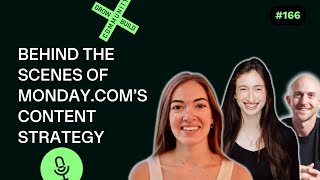
This is a YouTube video titled "Behind the Scenes of Monday.com’s Content Strategy" featuring a detailed conversation from August 2024 with Dave Gerhardt and two guests, Eliana and Arielle, who are content leaders at Monday.com. The discussion explores the structure, goals, and strategic role of the content team within the company, emphasizing how content integrates closely with business objectives. They also delve into the company's thought leadership newsletter, its creation, impact, and the importance of delivering value-based content. The conversation provides insights into content marketing at scale, team collaboration, and evolving content channels in a multi-product SaaS company.
The success of the content team is judged based on the success of the teams that they're in. Because so much of the function of the content team is asking the questions that represent the company goals. If we're working on an email and someone, let's say, on the team suggests a copy or a direction, it's the content manager's responsibility to say, okay, but we're trying to go more upmarket and we're trying to speak to a more top down Persona. Do you feel like this is targeting that? So maybe we should actually take this different approach. And for that reason, apart from kind of messaging, basically, company and, and content goals go hand in hand.
All right, I'm super excited to do this episode because we're going to do a deep dive, a little bit of a deep dive, as much as we can go deep in the next 40 or so minutes into the content strategy@Monday.com a brand that I know a lot of people listening, follow, follow, pay attention to and use. But I got two great guests today and I want first want you to hear their voices and, and introduce themselves. So Eliana, why don't you take the lead and say hi and then we'll pass it over to Arielle.
Awesome. So first of all, thanks so much for having us. I'm also excited to, to jump in and tell you guys a little bit about Monday and a little bit about what we've got going on in the content side. So I'm Eliana. I've been in kind of the content SaaS world for just about seven years. I got started in a classic kind of Jill of all trades role in a startup company where in the morning you're writing the web copy and in the afternoon you're writing emails and somewhere in between you're helping out hr. So I got kind of introduced to the world of SaaS and content marketing that way and I was able to, to really get a taste of everything. And then I was lucky enough to join the team at Monday about four and a half years ago. I was, I think the second hire for the Content Guild. And since then we've just been building out the team. Today we're around 18 people and I threw out the word Guild. But I can get into a bit of the structure and I think we'll go into that in a bit. But the content team really stretches basically the entire company of Monday and we're sort of built into each team helping to support and sort of enrich every team with content. So.
All right, yeah, let's do That I want to talk about the structure people will be interested in. Like, what does the content team look like, how many people? What does everybody do? But first, let's get Arielle to say hi.
So, hi, thanks for having us. I'm Arielle. I have been Monday for around two and a half years now. Eliana was actually my manager when I started and I joined on both the brand team and the lifecycle Marketing team is how we now call it, and then went all in on life cycle marketing. But in addition, I have been managing the thought leadership side of our content. So I will get into it later, but I've created this thought leadership newsletter that we send that's turned into a lot of other awesome initiatives. And yeah, I guess that's kind of the gist of it.
So Eliana is not your manager anymore because the team has grown.
Because the team has grown, taken on lots more.
Cool. All right, let's make sure we talk about thought leadership. So I want to talk about your newsletter. I want to talk about thought leadership, but I want to start by. Let's, let's maybe Eliana, if you can take us into the structure of the content team and maybe give us context as to like, what the overall marketing. Org looks like@Monday.com and like, like where content sits first. Let's talk about that.
Yeah, definitely. So the marketing team, the marketing department basically sits under the, the CRO organization. We've got, I mean, gosh, I'll try to list somewhat briefly the. The different focus areas. Obviously we've got acquisition marketing, we've got sales, led growth, aka Enterprise, aka B2B, however you want to call it. Of course, we've got comms, we've got design, we've got the sales enablement department. It won't kind of go into all of the different departments, but I think it is an interesting setup how we've built out the content team. And I think in order to explain where we are today, it's good to sort of go a couple steps back into sort of our origin story. When the team first came to be, we were, you know, obviously first one and then two and three and four, and we really serviced the entire company actually from a Monday request board. I mean, whether you were on HR or sales or someone from the builder's department, a developer, and you needed some sort of content support, you would submit a request to this board. Myself, Yael, whoever it was, Yael is my manager. We would look through the content request board and see who had some free time. And we would Tackle it. And it worked. It worked for a while. But I think one of the great moments for a content team is when you bring so much value that everyone then says, wait, I need someone like this sitting next to us all the time. And gratefully for us, that's kind of what happens. So eventually this kind of ad hoc, almost like internal agency system just wasn't scalable. And then that's when we took on what we call the guild structure, which is basically to say that there's a professional manager within the content guild, but each person on the team, while being managed by a content manager, they sit within the team that they're working for. So Arielle mentioned that she sits within the lifecycle marketing team, which is email marketing plus, let's call it. And so she sits with the lifecycle marketing team. She joins their morning iterations. That's where her, you know, KPIs come from. That's where her sort of daily tasks come from. And she works very closely with that team lead and that's the team that she sits and she sort of lives and breathes their goals, their KPIs, their work. But her weekly check ins and development come from the content side. And that way we're able to really sort of trickle down updated messaging, making sure that the content quality and goal setting is where we want it to be. And that structure honestly has supported us through this kind of insane growth that we've experienced over the past four years.
That's interesting because it's almost like content started as, it seems to be very reactive, like hey, we need requests, requests. Almost like a creative services agency, which is great, but that's also like very, it can be stressful, the team can get burnt out doing that. You just feel like you're taking orders from everybody else. But then also as the company grows, you have kind of shifted and you need content to play more offense now and to be more proactive. And so I'd love to hear where does like, what is the content strategy@Monday.com? because you have all these, you know, you have the enterprise side, you have the self service side. And so you got to do all the things you gotta do like enterprise content, you gotta do self serve content, you gotta do thought leadership. And one thing that I struggle with is like, look, I'm, I'm the biggest advocate of content. I think this is the thing that I'm good at and this is how I've been able to grow my career and grow businesses and marketing is through content. But the heart, the kind of gift. And the curse of that is like, content can be everything. And so that also makes it hard to figure out, like, what to do and what to work on. Even now, like with a small business, with Exit 5, it's like we're playing a little bit Whack a mole, where our content strategies heavily with the podcast and our newsletter. But the last couple weeks I've been like, man, we have no organic website traffic outside of like branded search and we really need to be doing something from SEO. But how am I going to get the resources to do, to do that? You're doing this at a big scale now. Like, how do you set goal? Like, what are the high level goals for, for content@Monday.com and how do you do all those things?
It's such a good question. And I think how you positioned it in the beginning is so accurate in terms of kind of the being offense as opposed to sort of defense. And one of the things that from the beginning of building the team, something that we've always said and believed in is content is a strategic partner. We're not kind of being looped in, in the last, kind of the last iteration and someone says, can you look this over and make sure it looks good? We are in the kickoff. And so at first when you said, what's the content strategy? I was like, how do I answer that question? And then I kind of actually started to think about it and I said, the content strategy is one to one with the business strategy. And I think it actually reflects how the team is structured as well. We don't really, let's say we're starting to prep 2025 planning. We don't really go and say, oh.
My goodness, it's June.
When I say starting to prep, I mean we're like halfway through, so wish us luck. We don't really go through and say, okay, acquisition, what's your strategy? B2B Enterprise, what's your strategy? It's. We are all really sitting at the table as a department, as a marketing department, very, very closely linked to, you know, senior leadership. And we're saying as a company, we know that, you know, we're going more in this direction. This is more of the audience that we want to speak to, our Persona.
This is great. Listen, people that are listening, listen, listen to what you said. She said content. I, I do think sometimes in companies, the marketers, because especially on the content side, we, we're, we're the creatives, right? We're, we're the writers, we're the designers. We create stuff. We don't like the business. We don't want to be the business side. But what you said, hearing it from you, it's like, no, there is no, you're not gonna that way and you're not going to be successful that way. You have to marry those two things together. Ariel, I want to bring you in just because I see you nodding along, but maybe you can add some color to this conversation about the business strategy and then I'm going to come back to this in a second.
Well, yeah, I actually, I mean 100% Eliana's nail in the description. But I think one of the things that's so meaningful and exciting about being a content person at Monday is you really are part of the conversation. You're not someone who like gets assigned a task. Like, okay, even for life cycle marketing, when we're working on an email, it's not that my team comes to me like, hey, here' what you need to do. Can you just write like, can you look it over or can you write it? It's like, okay, here's the goal that we're trying to achieve. Sit with us, let's brainstorm. How do we message this? How are we going to build this narrative and this story in a way that's going to resonate with this audience at this stage of their journey based on this pain point that they're experiencing? And I'm sitting at the table giving it, giving feedback and talking about. Well, that message is not really, you know, it's, it's a total conversation. It's a total partnership, as Eliana said. And I think that that's, that's exactly the way you need to be looking at content when it comes to building any business strategy is like looping us in right from the beginning. Because at the end of the day, your message is everything. That's what's going to determine the impact.
So, all right, so let's talk about goals then. So you made it clear that content is part of the business strategy, but every company has goals for each team function, right? I don't know. Let's talk about what is the process for goal setting at Monday. And then do you have like, you know, these are the three main okrs for content@Monday.com. like I want to get into some of that stuff. As much as you can share that. It's like, as an example, might be like, number one, grow website traffic to blah. Number two, start doing X, Y and Z thing. Do you have that kind of like three to five, like Key objectives. I think people would, that would give us light into like yep, I get it, content is part of the business strategy. But like what are the two to five things that the content efforts@Monday.com are trying to drive as it relates to those business goals?
First, I think the honest answer is, is still kind of, we have let's say our six company okrs and each of which is drilled down into per team. So if we take the SEO team, they have kind of the, their team okrs that build into the company okrs and then content is part of that. So that's, that's still definitely part of it. But I, I can say kind of looking in the year to come, let's say really the company has made a big transition into becoming a multi product company. A couple of years ago, Monday.com the product and the company and the brand were all the same thing. So it was very easy to kind of market it and the company has made a transition to where now Monday.com is the brand and we are a company that has multiple products and that as it relates to messaging, kind of building out our Personas, speaking for each product and really building out that message is something that is still a work in progress. So I can say that is a huge goal that we have this year and the year to come and probably the year to come after that. And we have a lot of kind of ongoing processes for that. We've worked with external agencies and we're working really closely with the PMM team internally at Monday. It's, it's a huge, huge process and content is really built into that. But the honest answer truly is the success of the team, of the content team is judged based on the success of the teams that they're in. Because so much of the function of the content team is asking the questions that represent the company goals. So I think Arielle's example is a great example of that. If we're working on an email and someone let's say on the team suggests a copy or a direction, it's the content manager's responsibility to say, okay, but write that we're trying to go more upmarket and we're trying to speak to a more top down Persona, do you feel like this is targeting that? So maybe we should actually take this different approach. And for that reason, apart from kind of messaging, basically company and content goals go hand in hand.
Yeah, I was just going to like to add on to that. I think it's like, it's such an interesting question, but as a team we don't separate it. So like when I'm sitting with the lifecycle marketing team, all of my goals are ensuring the success of our KPIs as a team. So it's just we don't have our own individual team as like here is what content needs to achieve. By the end of the year it's all of us on the content team work in impact oriented roles in order for our support to actually do that showcase, relate to the KPIs.
Yeah. So it's much closer to how creative and design would partner up with everybody on inside of the company. Okay, so like is there somebody, is there a team that owns like website traffic or like organic traffic through SEO and is that like a growth team and then you're partnering with the growth team on like how to achieve that goal?
Yeah, exactly. So we have an SEO team that has an SEO team lead that's coming at it more from kind of the technical perspective. And then we have a content manager who is, you know, sort of built into that team and same kind of structure she is all day, every day kind of looking at the blog thinking, SEO thinking how to build traffic thinking if our blog posts need to take a shift to support multi product need to take a shift to speak to a more senior Persona. But she is being managed within the guild. So from our perspective, we're always saying, you know, is the blog reflective of our most recent messaging? Is it supporting the company okrs? So it's kind of coming from all directions.
And then there's also the web presence team which is the, you know, the actual website. And again like on that team that's really managing Monday's website, the strategy, there are two actual like content people that are playing a role in all those pages and making sure exactly as Eliana said, like the messaging is aligned. But yeah, each person has their is part of the own team.
Got it. Okay. So that, that answers, we don't have to go into all the details of that, but that answers a bunch of the questions. So it's not. And this is actually where I think a lot of content teams struggle is like the content team on its own will just make goals for the sake of setting goals because like you want to have some direction. Right. And so it's like, yeah, we want to grow blog traffic, we want to triple blog traffic this year. But then that doesn't actually match up. Like the business doesn't have a funnel like a need for that. And so we grow the blog traffic and then this is always becomes a challenge. And then everybody inside the company is grumbling about how the content team isn't driving results. The content team is like, what are you talking about? We've grown the blog traffic, we've done all this, but it's missing, right? You're both kind of like nodding. It seems like this is something that you've either experienced in the early days and this is a unique structure that I think is very interesting to a lot of people.
I completely agree and I think it's, I think what I really appreciate about how Monday approaches content is I think early on we really gained the trust, the trust that's needed to be able to say like we, we know that the content team is providing value because every team that has someone from content is like, we need two more. And every team that doesn't have content is dying to have someone built into their team. And I think you do need for any kind of creative focus within, you know, at the end of the day a business oriented and AR focused kind of company. You need a level of trust because it's, you can never tie content design creative one to one with with ARR as hard as you try and as much as you try to create kind of like pseudo KPIs and data points. But I think that trust is a big part of making it successful and creating realistic sort of expectations that are at the end of the day business oriented.
And just to add to that one second, but when it comes to like specifically, let's say email marketing, there are ways where we are able to actually prove the impact of content or design something like that. Like where we'll do an A B test and we'll look at two different designs or two different headlines. And obviously that's in all the different areas. So we are able to say, okay, when we've optimized this content or when we've tested these like, this messaging objectively works better. And so obviously those are tied to this measuring impact. But again, it's like it's not, it's not separate. The content is about how are we showing the impact. Let's say for me, on, for email marketing, it's not like, so you're never.
You'Re never just like standing alone on an island expected to talk about the value of this because it's like someone on another part of the team like, or there was some business need to create this email strategy strategy and therefore you're the partner to do that. Or the SEO team has a goal of driving traffic, which is important to the business and so you're working with someone on the other part of the team. Am I understanding that right?
Exactly. And I think maybe one of the, the only realms that is more content focused and, and like originating from the content team is the thought leadership arena. And even that is. It's a need that's coming from so many different corners of the business. But it is more under the ownership and being driven by. By content, which is really fun for us because that's not, as you can see, that's not usually kind of our position to really own something independently. That is just for content, which is why it's something that we're so passionate about and we talk about at any given opportunity.
So like internally in the marketing team and across the business, are you kind of always like, if you're giving an update on someone or on something, are you always kind of presenting with like a partner that's on a, on a different or like the kind of team that owns the business strategy piece of.
That, I would say it depends. I think it would be hard to present something from content and basically only say I like. Anything that you are able to execute came from, as you mentioned earlier, it originated from a business need. It was supported by, again, let's take Arielle's lifecycle marketing. It was supported by the lifecycle marketing manager. From the technical side, someone had to define the Persona. Arielle worked with that person after defining the Persona to understand how to target that Persona. Then we probably did ab testing that. So it's. Everything goes through a long process. Nothing kind of exists in a silo. But on the other hand, let's say if it was a success and we did kind of a messaging test, like we had an existing email flow and we did a messaging test. That's something, you know, Arielle would definitely present. And Arielle, I'll even let you talk.
About it because as we said, because there is much more of this partnership. It obviously always is at Monday, I think more of a collaboration, no matter what initiative you've done. But I think that it's really unique the amount of value and emphasis that the whole company puts on content. Like, we are seen as really, really strategic players. And so there is total receptiveness to us being like, yeah, this is what we did. And we were able through the messaging, through the strategic, to bring these results.
All right, let's change gears. I think that that makes sense. That's very interesting. I think there's going to be a lot of content people that will listen to this and question how Content is structured inside of their organization. And I think that's great because I think one of the re, like, the reason for listening to something like this, I think it's if you just listen to a podcast or read a book or watch a YouTube video and you don't do anything with it, then doesn't matter. But I think for me, like, in my career, and I'm. I can feel this in the energy that you two have. Like, you got to be curious and you got to observe how other people do it. And if you listen to something like this and you realize that the way you have content set up at your company is wrong, don't just go back to your company and keep doing things. Be like, hey, I listen to this pot. Like, listen to how Monday.com does. This is really interesting. I think there's something we could do, and maybe it doesn't have to be exactly how you all do it, but maybe there's like a. A piece of it you can take and then, like, go bring that to your company. I think that's what makes this stuff really valuable. And I love the exercise of just always be questioning everything that you're doing in marketing. What should we stop doing, start doing, continue doing.
And I think there's this person in. Right, yeah. Content be part of the conversation.
Exactly. And there can be a lot of times that you can. I think we just smash our heads against the wall sometimes looking for, like, the latest tactic and channel, like, oh, we should be doing TikTok or whatever, when it's like, actually the way we're going to do better is by, like, reorganizing the team and, like, setting better goals and just, like, realigning the resources that we.
We.
We already have.
And maybe if I can add one final kind of thought.
You sure can. You're a guest on this damn show. Yes, you can.
So much just for listeners, like, if there is kind of a way that you collaborate with the rest of the company or department or teams, whatever the kind of size of the organization that you're working within, if there's a way that, like, leaves everybody feeling energized and feeling good and feeling like they love to kind of work together. And if there's another way that feels like you're constantly meeting friction, listen to that. That's like, that is a reality that it's showing you something. It's mirroring something about the organization, and it should feel natural and good to work with the people around you. It shouldn't feel like. Exactly, Dave. Like, you Said like you're kind of making up KPIs for the sake of KPIs. It should really reflect the natural way that the company works for, for its benefit.
All right, let's talk about one of the things that I think about a lot in content today. We got a visitor now. So. So one of the things I think about a lot in content today is the, the tools, the game has changed a little bit. Like content used to be like the content team at a company maybe 10 or 15 years ago would be like, right, right. Website content, write the blog content. Today that has shifted. Right. And we're going to talk about your newsletter strategy in a little bit. But content, like today I talk to startups, I talk to companies. It's like, like content means social media. Content means newsletter. Content means TikTok. Content means YouTube. Right. Can you just give us a, just a overview of like what channels are important and what channels you're investing in@Monday.com?
Yeah, definitely. So I can walk you through like a couple of the teams and then I think with that come, you know, the different channels. So obviously we've gone through it a couple of times, but we have life cycle marketing, we have SLG sales, like growth enterprise however most people call it. And that's mostly looking at both kind of partnerships. So we support whether it's events or partnership materials for our partnerships team. And also under SLG is any kind of sales enablement materials. So obviously that's going to be decks one pagers. As we target more and more enterprise customers. It's a lot of customized materials to basically abm. We of course have our acquisition team and that's going to be Facebook, YouTube, YouTube. We have CTV, Facebook, YouTube, LinkedIn, Google Ads, et cetera. And we also work really closely with the creative team. So a lot of let's say like our YouTube ads, which we are very known for, or our CTV ads, we did a Super bowl ad a couple years back. So we work really, really closely with the creative team to kind of tailor and harness both the messaging. But also it's fun, it's fun to collaborate and get to work on things that are either a different medium or a bit more kind of wacky and creative. Sometimes we have content managers who work per product. So I mentioned that Monday transition to be kind of a multi product company. And as that transition took more and more form, we realized we really need one content manager kind of that Jill of all trades, Jack of all trades position where it's like you're in a Tiny startup so that one person would collaborate for all of the, let's say Monday CRM Google Ads, Monday CRM YouTube ads, Monday CRM mini landing page Monday CRM thought leadership. All of that is being owned by one person. So they kind of stretch all of those different channels. We also have an annual event elevate by Monday and we have a content manager who's owning that event, plus kind of peripheral events as well. But that, that is a full time job. Plus we also have Ariel mentioned our web presence team which sits kind of under the growth function and they are constantly optimizing and updating basically our website. So whether that's homepage tests that are going on all the time, it's an amazing way to kind of get a finger on the pulse of updated messaging. We can run a test on the H1 of the homepage and get a real sense for our audience and our customer base in a few days. Or if it's, you know, launching a new mini site for a product or just kind of updating the enterprise mini site. So there is constantly, constantly work going on under the web presence function and the list goes on. But basically we stretch kind of all mediums, all focus areas and collaborate really across the company.
Want to talk about thought leadership?
Already has.
Yeah, let's talk about where. So let's talk about what, what role, what is thought leadership at the company? What role does it play in marketing? And then where did this start as a strategy for the business?
So, oh, do you want to take this or.
I think thought leadership is something that, that Monday has always really, really, really believed in. If we rename thought leadership as kind of like value based content no matter what the medium is or, or like whether it's long form, short form. One of the guiding principles I think at Monday is to be value based, to be honest, to be clear and concise, not to be kind of full of jargon, but to really, really ask yourself with every piece of content is this bringing value? And in that way I think Monday's always cared about thought leadership and always thought about it and I think only recently are we really more so looking at it as kind of an overarching initiative and focus. I think we've been doing thought leadership in, in different ways for, for a long time and I think Monday Insights, which Arielle will get into, was really our first experience successfully having one initiative that we were able to really, really focus on and build out and prove like real value and real success from something that is pure information, pure value. So yeah, I'll let Arielle kind of dive into it.
So basically, as Eliana mentioned, thought leadership is the one area where content is actually the driver. So it's not just that we're strategic partners, we are leading the conversation here. So when I joined the end of 2021, I was looped into a meeting with the CEO where he basically talked about this vision that we should create a newsletter that solely is about giving value. Now, we didn't really talk about what exactly is Monday as a product for those people that are not as familiar, but like, big picture goal of Monday as a product is to help people navigate the world of work through technology. And there was this kind of opportunity that we can go beyond just the technology as a company. We can help people navigate the world of work as people as well. And how do you do that? You keep them informed, you give them advice, you acknowledge the pain points, you provide guidance. And so the vision that he had was to create this newsletter that is solely meant to deliver value to our readers. We're not going to market our products and company and focus it on why Monday. It's going to just be about like, you read this newsletter and you, you leave with feeling more informed and more prepared than you were before you read it. So, you know, big, big ask. But he wanted it to be long. He wanted it to be just super engaging. And his vision was like, people are not going to unsubscribe because they'll feel like they're going to miss out on valuable information if they do. So that was really the goal. And so I started writing and working with amazing people to kind of build out this newsletter. And it is one of the longest emails you'll see. Definitely the longest email that comes from Monday. Every week we have, we talk about workplace trends, like what's going on in the world of work in general. We talk about AI, what's going on in the future of work. And then there's always a thought leadership topic that's specifically dedicated to managers and navigating the challenges that you face as a leader. Anything from conflicts on your team to leading with transparency to how do you give feedback and how do you get your employees to give feedback to you that's going to help your team improve and a whole range of topics. There's always water cooler chatter, which is like, you know, the kind of thing you'll be drinking coffee and with your co workers and asking, you know, did you hear that? You know, one of those kinds, some of those kinds of updates, there's like A fun fact that kind of keeps you excited to go back to the newsletter from before. And there's always amazing cartoon. We work with this, this really, really talented New Yorker cartoonist who helps us create these cartoons that only relate to the world of work. And the idea of all these topics at the end of the day is that as a leader, you're going to know what's going on in the business world, you're going to know what's going on in AI, you're going to read a section that's really focused on the challenges about being a leader and getting advice on how to actually navigate it. And then there's always just fun things to talk about at work, facts to know about work and something to make you laugh at the end. And really what has been, obviously was a really wild experience growing this. But now, two and a half years later, as someone from the lifecycle marketing, which means email marketing in a lot of ways, team, I can say that it's actually, it's the most opened email out of any email that we send from Monday, which is pretty wild. You know, a benchmark rate, open rate for us is around 30%. And this newsletter, week after week, we send it to around 3.7 million people. And the unique open rate is around 55%, which is pretty crazy.
That's amazing. That's very, that's very impressive to have done that, at that, at that scale. So I love the approach. I think what you mentioned is great. I'm curious as to hear. I think the. Miss the key for me with thought leadership, from what I've seen, is that the missing ingredient is often the thoughts. And so like you, you need to. Great thought leadership comes from having strong opinions and strong points of view. And so you mentioned all those things, but like, you know, you're just one lady. Where do you, where do you come up with. Where do you come up with the content for that? Is it research? Are you interviewing people inside of the company? Where are the opinion, like, where are you curating them? And. Or maybe it is all coming from your brain. And that would be an amazing. And like a. That that would be your superpower. But let's like rewind and like, where did, where did the. Where does that come from? And then we can talk about the delivery.
Yeah, I mean, I think honestly it's a combination of everything that you said. Definitely, like one of the goals is really to make it timely. So when I'm working on the, you know, workplace trends and the AI conversations, I'm actually really doing Research on what's going on in the world of work. And from there, I often am getting insight. Like, you know, sometimes it'll be a finding. A new study came out that says people are really lonely at work. So then that triggers the topic, okay, so how do you create a sense of belonging and connectedness for your employees? Or how do you. You know, if we talk about. Sometimes there'll be research about how employee well being has dropped. You know, employees are not doing as well. And so then the conversation is like, how do you support employee well being? Those are kind of like some of the things that guided. It also could be that Mother's Day is around the corner. And so I'm like, you should write about how to support the parents on your team. And then it's often, you know, a combination of conversations with people that can relate to the challenges. You know, I'll speak with parents at Monday and ask them, what are things your managers do? That's really helpful. What are things that you wish your manager did? What are, you know, and things in the past and kind of combining it. So it's a combination of research. It is a lot of my own kind of thoughts and ideas, and also conversations with people that are going through it and living through it. I mean, definitely some of the topics are even triggered from conversations with friends outside of the company that are telling me, venting about a certain experience, the manager. I'm like, I'm gonna write that one down. You know, I mean, it's often really triggered by real life experience. And I think that's why it feels so relevant to so many people, is that it comes from kind of real pain points. You know, it's not just like a throwing out an idea. I wonder if people care about this. It's like, no, I know people do. People are talking about it.
It's like, I. I just. I just shared this Airbnb ad recently that I liked because I have kids, as one of them just came in here. And the Airbnb ad is like, basically positioning against hotels, and they're saying, get a hotel room. You got to go to bed at the same time as your kids. And it made me think of, like, oh, that was relatable to me. But it's like a great comedian, right? Or whether it's a song that you like or comedian that you like, so often you really relate to that. You feel that in your soul, like, personally. Right? And I think that's the marketing opportunity, too. It's like, it doesn't have to be like, Groundbreaking scientific research. It's like if we understand you, the audience really well, we can really relate to the things you're going through and want to know and we can serve up that content to you. It comes from being very relatable and having a deep understanding of who that person is. Right.
100. I think sometimes it's like there I have people that will read this and be like, isn't this obvious? And then other like, I'll, we'll, we'll get feedback and people are like this, oh my God.
You just perfectly articulated like the life of a content creator, right? It's like, I'll get, we'll send out an email and I will get like a hundred responses of people are like, oh, thank you for this. Like, you get it right? Do you see all the responses that. Well, 3.7 million subscribers. I don't know if you can see all those, but you just must get some nasty messages or that one. It's always a guy who this always never a woman. It's always a man who's like, how did I get on this list? Take me off this list. This is the 50th time I've emailed you to take me off this list. I just had somebody that like, has been trying to cancel Exit 5 membership and he says that we keep billing him, but we don't. And we go into Stripe and his next to his name in Stripe it says like high risk, like high refund alert. So that means this guy's been on multiple platforms. Anyway, the point, the point that I was trying to make is you get a hundred messages from people are like, this is so relatable. Oh my gosh, I relate to this so much. Then there's like three people that are like, this is junior level content. This is stinks. And it's like you got to know who to listen to and you got to be able to like that. That's part of the game. And if everyone like, not everyone is going to like it. It's like music. Not everybody is going to like every single song someone puts out. It's knowing for those pockets. But don't you also find that that isn't that the amazing part about being like. Of creating content and having something like an email list? It's the feedback loop, right? Like you'll send out an email and you will know right away like, oh man, that topic crushed it. And then you're like thinking about your event and who's going to speak at the event and what content you want to program for the event and whatever, you know, your, your Monday event. Oh, you know what, like you must use your finger on the pulse of what your audience wants because you're, you're getting this feedback all the time. Like you could probably write down if you, if you had to single handedly program the Monday.com event, Ariel, you probably could. You're just like, what are the top 10 things people are most interested in? Right. Do you feel that?
Yeah, I mean I think 100% is like we're, we're getting insight into things that actually matter to people and even we actually sometimes like we'll take the content. I mean one of the things that actually I want to note is that the newsletter, there's nothing like really that you can click on. Like there's not really any, you know, marketing material in there. So actually the only way we've been measuring success from the newsletter has been the open rate and how many people are going back and reopening old newsletters that we've sent to kind of like, you know, because actually unique open rate is obviously like the, the unique open rate is the percentage of people that are opening it. I can send it to 100 people. How many of them open the newsletter. But the total open rate is actually the percentage that factors in people that went back and reopened it. And the total open rate of these newsletters sometimes is as high as 95%. Like it's, it's people that are actually going back. A lot of the readers are like rereading it, which is, which makes us think, okay, like this is content that doesn't just like a one time quickly open email and never see it again. It's content that people want to, want to look back on. And I think that even when it comes to some of the strongest open rate emails will turn into video content. And that's really exciting. Also when we see, we'll post it on LinkedIn and we'll see really incredible engagement and people resharing it, reposting people from all different like workplace experiences, industries, languages, locations around the world and talking about what about it really resonates. You know, there was one video talking about like how to navigate employee resignations. Like what do you do when an employee quits? And one of the pieces of advice was really for managers to know, like this is not them being disloyal to you, it's them being loyal to themselves and their career growth. And there were so many people that commented like, wow, like first of all, from the manager perspective, that was helpful and from an employee perspective. Like, I. Even someone who's like, had years of work experience, who was high up at her company, messaged me that she was planning on leaving her job. And she's been feeling such guilt for her manager that she's going to be leaving because she loves her manager. And it was just such a helpful thing to think about that reality. Like, I'm not being disloyal. I'm just prioritizing me. And I think that those kinds of responses are so amazing to see and so telling of what matters to people right now.
I also think it kind of dawned on me a bit like, as we were talking that one of the most challenging things I think about thought leadership is Dave, as you mentioned, finding those nuggets of real thought, real insight is hard. And so it's hard to create a cadence, it's hard to create a beat that you can keep up with. And I think something so unique about Monday Insights is Arielle kind of walked us through, like, the structure, and the structure itself is very stable. You know, it stays the same week after week. And that is such a mental load that's sort of taken off, you know, the structure that's expected. And then you can focus on the, the actual content. And once you have that beat and it kind of stays consistent, then you're able to look at the numbers and the engagement and get a sense for what people are interested in and continue to improve and focus more here and, and maybe ease off in other areas that are resonating less. And I think, you know, Monday is such a, like, data oriented business that I think having such a clear cut sort of structure for thought leadership really opened something that I think had. We were, we were struggling with before.
Yeah, well, there's some element to like, what, you know, I think people want really quick success with something like a newsletter and that is kind of like, like it's like hosting a podcast, right? There's just a certain amount of time that it takes. And it's now like, you know, we're getting close to 200 episodes. There's a large group of people who now listen to this podcast. No matter who I have on, because I'm the host, I've been showing up here in your ears for however many long, for whatever, for how forever long. People, you know, know me, they know my voice, they get to know you, trust you. Right. Like, Ariel's been writing this newsletter now and it's like there's some level of like, expectation know when it comes out every week, you know, what it's going to look like, you know what the topic is going to be like. I've often talked about, you know, like, open rate. There's all these gimmicks you can try to do with like a subject line, right? But it's like the real way to boost your open rate is to be, is to send an email that people want and to be. To know that like if Arielle. If. I don't know if the sender name comes from you or whatever. But like, let's say that the, the sender is Monday.com or it's Ariel or Dave from Exit 5, right? It doesn't matter if the subject line is poop or six ways to grow your career. Like, someone's going to open that email because they're like, oh, I know when Dave sends an email, like, it's quality and I'm going to open it. And so there's some level that builds up. That's, that's why you drive open rates now. Like, it's not, it's not necessarily the subject line. Is it? Like, do you even have a. Are you changing the subject line each week or are you just like, here's the insights?
Yeah. So the sender is Monday Insights. And every week we change the subject line based on what the thought leadership is. And then the preview text, which is kind of like that light gray text that shows up below before you open it, it's going to be like the workplace trends and the AI like it gives you a little headline. So basically before you even open the email, you can kind of see the general topics of the week. But the sender is always Monday Insights. And the thought leadership title is always like addressing one of those managerial pain points, you know, or benefits. And I think it's, it's, it's really, it's so true that at this point I really do believe that we have like so many people just like there's that sense of trust. They want to see this content week after week. It's some of the things that we get in our feedback is people like, it's actually the only email I look forward to reading each week. But it's even that consistency being part of the message is really telling people want, like they, as Eliana said, it's like it's something familiar and that feels settling in a time where I think we're constantly, you know, bombarded with so much content, so much marketing, so much this. Just that like every week I can count on it being in my inbox and I'll have this, this content that I want to know.
Do you take. Do you take all the newsletters and publish them on the blog also?
Yes. I mean, we're not really. It's not part of the blog that we're really promoting, but it's more so because we got a lot of requests for people that wanted to be able to easily share the newsletters they read. So we added.
I'm just reading some of them now. They're. They're so well written in, like, long form. It's like a shame to only have that be in that disposable moment of an email. It's like there's. You could repurpose all of that. And then what about, like, your. Are you. Are you the human writing each one of these newsletter these, these emails?
Yes. We actually just in the last, like, couple months brought in a freelancer who's starting to help with the, like, some of the other sections. Aside from the thought leadership, she's amazing.
I'm more curious as to, like, your process for, like, researching them. Right. Because you can't just show up that week and be like, shoot, I got to get the letter out. It's like I'm looking at a newsletter from last year, and it's like a workplace trend about, like, the Japanese workforce getting older, menopause and corporate benefits, AI and fraud. Like, all these different stories. Like, you have to spend time researching these things. And so I'm just curious to like, what's the. What does the creation process just, like, from a timeline standpoint look like?
Yeah, so as you said, it's like, because it's every single week, it really is only within the week that I'm able to find all the information. So it really is spending a lot of time researching what's going on. I have all my tabs of where, you know, what are the best outlets to get the kinds of, like, workplace trends that you need to know. And with AI, Morning Brew actually is an amazing resource as well for useful news. But basically we. Yeah, it's. It's kind of doing all the research in the first few days of the week, writing the draft. I am a perfectionist. I will not lie. So I think I read over the newsletter probably seven times before I'm ready to go with it. But basically, yeah, it'll be. The week starts with the research, writing the draft, and by the end of the week, I probably have most of the draft done, reviewing it at the beginning of the next week, and then we send it out every Tuesday.
All right, what Else. Is there anything else that either of you two are passionate about and want to say on this hugely popular B2B marketing podcast before we. We hang up? It's, it's almost six o'. Clock. Where y' all at? I want to. To want to let you off. Go, go. I don't know what you do after work. Go for a run, have a glass of wine, have dinner, go home, do nothing. So anything you want to get off your chest before we go?
I think maybe just one thing that I would say again, kind of to listeners. I think the experience of actually moving forward, and I'm sure Arielle knows what I'm going to say. Actually, like, starting this initiative of Monday Insights was such a learning experience for myself. I think, think for Ariel, I think for a lot of people involved, just because I think to say, you know, build a content strategy, build a thought leadership strategy, do this. I want you to create a newsletter that is wildly successful. It's, it's, it's big. It's, it's a big thing to try to bite off all at once. And I think what I would say to content managers, to content people on a. In, in an organization is like, just start, like, just take the first step, write the first newsletter, launch the first podcast, and the best possible thing that you can get is any sort of contact with the outside world, because yourself will never be happy. It will never be good enough. By the time you like it, the weekly trends are three weeks old. Just roll with it and you will improve along the way. You will learn. And after a month, you've been doing it for a month and then you've been doing it for two months, and that's the best feeling, and that's how you make progress, and that's how you learn, and that's how you get good. And you just have to, you have to be in a context that trusts. I think it goes back to the building the trust of a content team and the value that you bring. So you have to be in a place that you feel like trust trusts, you know, you to kind of take that initiative and you have to trust yourself and, and learn on the way and just kind of roll with it.
Yeah. And just to add on to that, and Eliana's right, it was, that was something where, I mean, when I started and I got this project, I am not gonna lie, I was so overwhelmed and I was so afraid of, like, messing up, and it was not good enough to me. And how was I, you know, and I, I was really just Like, I don't even know where to begin. And Eliana was like, just start and just try. And we're not expecting perfection. We're gonna. You're gonna learn from it and it's gonna get better and one day you're gonna love it. And I think that for me, like the beginning, it really was the most stressful part of my job. And I can say with full confidence now that it's my favorite part of my job. I feel like it is so meaningful. It's something I'm so proud of that I was able to like, really my, my, you know, as she said, leaders, like the leaders at my company trusted me enough to really build this. And it's my voice that I feel so connected to. And I think that like, that kind of as Eliana gave this like, leadership perspective of just like, make your employees feel like you trust them and don't, like, don't make them feel like the standard is perfection from the get go. And I think for employees, the perspective is really like, don't be afraid to just start and trust yourself. Honestly, that like, even those projects that feel the most overwhelming and the boat and the most, like, terrifying to really get started will probably, if you really invest, become your favorite part of your job. I really do believe that.
I love that, that you just even gave me some personal advice. I'm trying to. I want to start making YouTube videos, like, about. About marketing to help us grow Exit 5 kind of as like a side project to. While the team is doing other stuff. Like, I want to start to play in that area and it is a little bit daunting. Like, I'm worried about how we're going to get 100,000 subscribers when, like, you know, Eliana just said the best thing, which I reminded myself of yesterday, is like, you just gotta go, just start. You gotta make the first video. The first 50 were probably gonna suck. The first a hundred are gonna suck. But there might be one in there that jumps off. And I actually shrunk the scope down. And what I did is I took the idea that I had to make this first video, which is gonna be talking about this ad that Airbnb did, and talk about why it's good, what marketing lessons you can learn from it. And I actually just made it into a tweet and a LinkedIn post. And the response was like, it hit right? And so that's my signal that now I'm like, okay to go make a video about this because I've already hit on that topic and I know that it's it's going to work and it's just like exactly what you said. The quicker you can get feedback on the on the idea and get going, it's the best way to do it. So you two are awesome. I'm sorry that I had to move this out because my kids and managing life in the way, but I wish we could hang out more. I'm gonna let you all go now. Elianandrel Monday.com we'll link to your linkedins. We'll link to all your stuff. This would be a great super popular episode about behind the scenes of some of the content strategy@Monday.com thanks for giving me some your evening. I hope you enjoy the rest of your day. Thanks for hanging out with us on the Exit 5 podcast.
Thanks so much Dave for having us.
More from Dave



Asynchronous work isn’t a trend. It’s how teams actually get things done without burning out.

AI is changing product marketing. Here's how top B2B teams are scaling without cutting corners.

How Product Marketing Is Evolving in 2025: Lessons on AI and Leadership with Jennifer Cannizzaro

Why referral programs look different outside of SaaS (and why that’s a good thing)

The secret to scaling dual GTM? Give every marketer ownership and get out of their way.

From content to CMO: how Jess Cook made the leap (and built her first budget from scratch)

Leading B2B Marketing for the First Time: Strategy, Budget, Content & Team with Jess Cook

Most B2B advice is built for SaaS. But what if you don’t have demos, PLG, or lead goals?
