Building a B2B Community? Tips from Chris Walker and Dave Gerhardt
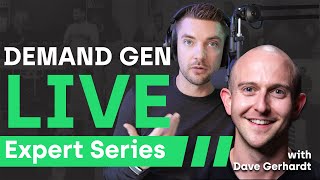
Chris Walker and Dave Gerhardt discuss how to build B2B marketing communities. They emphasize picking a specific niche, establishing expertise, and creating content that keeps people engaged rather than just selling to them.
All right, everyone, what's going on? Great to have you here for this Demand Gen Expert series featuring Dave Gerhart. We do this. We do this every month on the first Thursday of every month at 12pm Eastern. And we're back at it again today talking about building community. It's something that both of us have done quite well. Dave with dgmg, us with Demand Gen Live, we've been doing for over 18 months. And so hoping that. Hoping that through our conversation today, we can give you a lot of tips, some encouragement, potentially some strategies. So you can go and implement this at your company or for your business or however you want to apply the knowledge. And so let's get into it. First question, Dave, what do you think are some of the most important ingredients to building a community?
Oh, man. Okay, first of all, if my audio is still quiet, you're perfect. Yeah, perfect. Okay, great. I think there's. I think the most important. There's one singular one and it's expertise. How's that? I just like, I think that the way to build a community today is people want to be in communities where you're an expert, whether, like, you're into working out and you're in a subreddit on calisthenics and that that's like where you get your information from. Right? Like, we all want to deal with experts. And I think especially in the world of B2B, where you're selling to another business, it's typically that it's like you're. You're. The opportunities to be. Is to create. Is to win by like expertise in marketing or expertise in finance. You're typically trying to solve some. Some problem where they're looking to your brand as an expert and that that's where you can win. And also, like, this is why I'm obsessed with like the founder story and just like the context of the company, because typically there's like that company was started for a reason or you have some unique advantage. And so I think like the best B2B marketing strategy is to lead with education and expertise.
Expertise is a huge one. It also moves in. There are. There are some communities that aren't necessarily content. First I've noticed about yours, it's a like pretty heavy content and expertise focused. Other ones are kind of like Slack communities. People just talk. It can be a lot of noise. So I'm definitely into the expertise. I'll add a couple of them when they rip on.
I think the other thing, though is like, what I've learned is like the thing that I'm learning, Chris, with DGMG is like the, the reason it's working is because I'm the moderate. Like I'm in there and like I care. And so like that's a lesson. Like I've done this. I've hired the intern to run the community and then wonder why it doesn't work. And that's like not a knock on the intern. But it's like the reason DGMG is working is because I have this marketing experience and this is something that I'm passionate about. And I'm like, I know what to say in that world. And so I think like you have to build a community with, with that in mind, like you can't just like say like, yeah, we're going to start a slack group and people that are interested in our company can join it. Like, no, I have a very clear focus. B2B marketing. It's hosted by somebody who's done B2B marketing. Right? I saw like John' comment like in, in chat about. Too often communities are pushing the brand. I mentioned this session yesterday at hbs. One of the companies was like, our company name is X, Y and Z. We have this amazing community that is. Has a completely different name. Don't you think we need to brand them together? And I'm like, no. The reason that community is successful is because it's not the community that your brand created. I think so many companies like the bias. It's like we want to make a community, but we also want to make sure it's really beneficial to us as a brand. And they have to be like, I guess the word is like tangential. Right? Like they have to be. It's not a place to push your products and services. The benefit you get a, you get that benefit from it, but it has to be completely like, would you go and join that group whether you worked at that company or not?
Mm. I'll point out a couple of things. You mentioned their engagement, but engagement from people that have the expertise. Right? So this could be the same thing about like outsourcing your comments on LinkedIn or other things. Like one of the big ways that you build community is through those one to one micro interactions that are very meaningful and filled with expertise. So that's one another thing that I'll point out. I think that a huge driver in community, especially if you're running it tangentially to a business, is that it needs to be centered around a movement or a change that's going on in the world. It's like Basically around your narrative. So, like, Dave, I'd love to hear a little bit more about how you see it for, for yours, but for ours, it's like the world of B2B marketing is changing a lot. It's changing a lot. And the old way of thinking about things with attribution and leads is one way. If you want to go that way, you can go that way. But we have this community over here that's going to teach you a new way that's way more effective. And so we're helping people understand if they want to be part of this movement, there's a way that they can learn and progress and things like that. The last one I'll say that's super important in B2B, I think, is that people are really, if you look deeply into the, they're in the communities for mainly professional advancement and learning. And so figuring out what are other ways that you can add value to that specific thing. So it can be expertise, content, but you've put in job postings, right? Career advice. There's a lot of other ways that you can generate professional advancement.
What you, you mentioned is like, you, you said that the group, the community has to be built around this change. I, I disagree with that. But let me, let me get there and you'll see where I'm going.
Cool.
I actually think that what I was going to say before is I think that the, the first thing you have to think about is community is like a product, right? And so, like, what is your. What's the hook? What is the offer? Like, what's the hook for your community? And so I actually think, Chris, what you, the storytelling technique you're using is describing this, like, change that's happening in the world. But to me, your hook is, hey, there's a lot of shit going on in B2B marketing. We're experts in this. Stick with us, we'll teach you, join our stuff. And we're just like you in the, in the same stage, right? That's the hook. And so I think, like, if you're thinking about launching a community, like, put your like Don Draper hat on for a minute. And this is like the fun stuff to me is like, what ingredients do you have? Like, oh, you know, we have all these really influential people in our network, so maybe we could tap them in. And like, I'm always just thinking, like, how can we tell a compelling story about this? The goal is not to just make like the community of CFOs, right? Like, you need to come up with a Compelling hook that's actually going to help you build an audience. And so maybe over time you want to pivot and be the global community of CFOs, but wouldn't the better one be like the B2B SaaS CFO forum for SaaS companies doing a million dollars or less? Right? And like now you've what you've niched down and you're like, I bet you can go build a community there because you're going to go find 10 to 20 like minded people and then from there you can, you can build up like I always think you got to nail the hook. But then like it's important that what is your wedge to actually start building this community right now? Chris, you could, you could pivot this to, to 15 other things now that you have this slice of B2B marketing. Right? Like I think you have to. We also obsess over like we want to build a community, but we're not really sure how to go from like we want a thousand members in there. We don't even know how to get the first 10 in there.
It's also the idea that I don't think that you necessarily need a thousand. I think that a lot of the best communities are ones that are smaller. I think that as communities scale, sometimes they dilute the value of the, the actual community.
Oh, it also comes back to like, I think the ultimate question is like the ultimate question I would ask is like selfishly you do want to benefit as the company. Like that's why we're doing it. At the end of the day you're doing it because you, it's got to be good for business. Right? And so I would think about like the strategic question I would ask is like what is the niche? What is the niche that it would be valuable for us to be known in or like where what would it be value? Which type of community for would it be valuable for us to have, for example, as refined labs. Chris, you all could go out and create a super exclusive inner circle of a hundred top CMOs that's very hard to get into. Right? And you could fund that and it could be amazing. But secretly those are a hundred of your dream customers for Refine Labs. And you, you have, you happen to host that. And so like that's like the, at the drawing board stage of creating a community. The question, one of the like the key questions that I would be asking myself.
So we talked through a couple cool strategy things. I heard niche down. I heard think about the hook. Maybe not a movement But a hook. I like that little clarification, Dave. Thank you. And then driven around expertise and engagement. So now, like, I want to hear your. The story from you. Like, how did you actually, like, get. How did you get this started? Right? So a lot of people see what it is now, which is amazing. But what are a couple of the first steps that you took?
Okay, so, I mean, it's. None of this would have been possible with. So now I have. I have 4,000 members, 4,000 paid members in this community today. And none of that would have been possible, though, if I hadn't spent. Like, I really want to come up with some, like, sexy talk, like, how I grew this thing to whatever. But, like, I. I'm struggling with it because the reality of it is, like, the main reason was because I had built an audience on LinkedIn and social media and through what I had done at Drift and other things. And so, like, I guess the real advice would be, like, start building. And like, if you want to build a community. Looking back now, the best thing that I did was build up an audience. And I. It was really through LinkedIn. It was like I started consistently posting on LinkedIn about B2B marketing probably three or four years ago. And the response to that, I had always been on social media, but I had just kind of, like, randomly posted stuff. I loved marketing. Sometimes I talk about marketing, sometimes I talk about my workout, sometimes I talk about my sandwich. Like, never really clicked. But on LinkedIn, I just focused on talking about B2B marketing because I was working at Drift at the time and that was where our target customers were. And so, like, what I noticed was I started posting on LinkedIn and the response to my stuff on LinkedIn was like, not what I was getting on Twitter where, like, nobody would ever reply back. It was like, oh, shoot. Angelica, who's demand gen manager at company that I've heard of, like, commented on my post. Sweet, okay? And. And so it was like, it was the first, like, real social media channel that I felt like a holy shit, like, response from. And so then I just. I doubled down on that. Like, I. You start to, like, as you publish, you start to realize which topics people are interested in. And for me, that was like, B2B marketing. And then also just like, sharing my experience as, like, a working. A working parent. Not that I can relate to, like, being a mother, for example, but, like, I really was passionate after my kids were born about, like, being vocal that, like, I'm at home for them for bath time. And so, like, I really focus on those two topics. And as I'm posting more, I'm getting feedback, seeing what's working. And I basically committed to, like, two to three years of consistent posting. And then I'm doing, like, podcasts and speaking and a lot of other things. When I decided to leave, leave Drift, I had this idea of, like, I want to try to, like, create a. I think I could create a paid community. I've been posting for three years on LinkedIn. I had however many thousand followers, whatever, and I felt like, look, if I have 50,000 followers on LinkedIn, there's gotta be a Facebook group of 200. There has to be. And so I was like, you know what? I'm gonna try that, and I'm gonna try to do something completely different. I wanna make this a paid thing because I just have this hunch that, like, maybe people. Maybe people are willing to pay for it. Maybe if people pay for it, I'll share a little bit more and I'll be a little more honest than what I'm sharing on on social media, and maybe we'll get a little bit more commitment from people. And so I decided to do that on Patreon because it was really easy. My la. I timed my. My last day at Drift, when I sent that announcement, I drove everybody to my Patreon page. And so it's like I got like 300 members on the first day. People just wanted to hear, like, why I left Drift, for example. And then I just fed that thing with good content. Like, I think the hard part is like, I love. I love marketing. This is what I like to talk about and do. And so the content creation part was easy for me. It just became then like, it's almost like the LinkedIn thing. But now in a community, I'm talking about copywriting, I get 30 comments. People want to hear more about copywriting. Let's do more of that. It's just the community part is the. Is the ultimate feedback loop. But for me, it all started with having an audience first, and now it. It feeds itself. But there's no. I wouldn't recommend, like, just if you have no audience on any other channels, if you don't have an email list, if you don't have a LinkedIn following, I wouldn't go immediately start a. Start a community. I would first build an audience.
Yeah. The interesting thing is that I would kind of say that the audience that you had on LinkedIn was the. Was a community. It just wasn't in a specific place like a Patreon or A Slack group or a Facebook group, but a lot of people that are engaged with the information in a specific place, commenting, getting to know one another, and then you just move that to a place that's more of a traditional platform to have a community. But it's an. It's a critical first step. Right. Because I think a lot of companies, as you mentioned, we're going to get into some of the mistakes that companies make as we see. And one of them is that they don't have an audience and then they just try and stand up whatever it is. Slack community or some type of. Like there's a tech platform that does some type of group and a lot of the companies. And the mistake that I see is that they think that it's only for customers and would love to hear a little bit more about that.
Yeah, I mean, that's what I don't want people to take. That's what I've seen this over and over. Like, let's. Let's start a community and let's invite 20 of our VIP customers and we'll post about new product updates. Like, that is not. That's Martin, that's bad marketing. That's not what people, like, are actually genuinely interested in the opportunities to be that resource and to be the opportunities to be like. Like, the thing that gets me fired up is when somebody sends me a message and they're like, I literally got a promotion because of something that came up in the DGMG community. Like, I feel like I got better at my job because of that. That. That doesn't come from a community where people are like, here's three new ways to use our product. It's like, you have to. You have to completely separate those things. Another thing that I think, like, and we're all marketing people on this, like, I think we don't give enough credit to Is like, to know part. This is why I love marketing. Like, it's. This is the. The art of it. Like, knowing what to create. Right. So, like, if you've have years on social media in your niche, you have a much better sense of like, I think I could go start a fun community because I think I know what people are interested in. Like, going into starting a community should not be the time to like, let's figure out what marketing people are interested in. Like, there's an element where I need to keep figuring out what people in DGMG want. But like, if I know, like, I just hired a content agency to help me scale content and they're like, this is amazing because you have endless ideas for content. I'm like, I know because I'm in the community all day. Like, I see all these conversations. I don't. My issue is not coming up with creative content ideas. It's actually execution right now. And I just think, like, we don't ever factor that into, like the community building part. Right? And this is like, this goes beyond having a deep understanding of your customer that they talk about in like product management research. This is like, what are they actually thinking about? Like, what are their desires, what are their wants? And like, who do they want to. Who do they get influenced by? What are the things they talk about? That's the stuff that you have to know. And that's really, really hard to fake.
Mm. And I think most people undervalue this, like, consistent, real time feedback loop of when you communicate something with content or a message and then you get a bunch of comments. And then if you actually read the comments and try and understand, okay, from this person, from this type of company with this job title that was saying this, let me try and understand why they have this perspective or why they're asking this question or why they said this. And then you do that. Like, Dave. And I get. Let me give you 100.
I'll give you a real. I'll give you a real example. Like, I, I posted, like, I posted this line like, that life is too short to work for a CEO that doesn't get marketed, that doesn't get marketing. And I saw, like, the reaction to that was like people were laughing, tagging other people, like, and it had this little, little tiny viral thing. And I was like, that line has something. And so then I wanted to come up with a, with a video to promote the job board, DGMG Jobs. And when Danielle and I had talked about that, it was like, oh, what if that's the hook? Life is too short to work for a CEO who doesn't get marketing. And so I spent like seven grand out of my own pocket to go and make this video because I knew, I knew that it would work. Like, I knew that that line already, like, was hitting with people. And if we made a funny video that was actually executed right, like, I felt so good about justifying that cost and granted, I could just make that decision on my own. But, like, I think that that's such an underrated skill in knowing what to go and create. And you all must feel this, right? Like, how do you pick the topic for the next session that you're doing? It's like well, you see questions today. You see what's happening on social like, you're in the middle of this stuff all the time. I don't know how to, like, perfectly articulate what that's called. But you have to do it for your industry. And this is hard, right? This is in B2B marketing. It's easy. It's not easy if you're in cybersecurity or certain other industries. I get it.
When you look at some of the best communities, at least for marketers right now, the thing that I notice is that most of them.
More from Dave



Asynchronous work isn’t a trend. It’s how teams actually get things done without burning out.

AI is changing product marketing. Here's how top B2B teams are scaling without cutting corners.

How Product Marketing Is Evolving in 2025: Lessons on AI and Leadership with Jennifer Cannizzaro

Why referral programs look different outside of SaaS (and why that’s a good thing)

The secret to scaling dual GTM? Give every marketer ownership and get out of their way.

From content to CMO: how Jess Cook made the leap (and built her first budget from scratch)

Leading B2B Marketing for the First Time: Strategy, Budget, Content & Team with Jess Cook

Most B2B advice is built for SaaS. But what if you don’t have demos, PLG, or lead goals?
