Category Creation Playbook: How to Be Irreplaceable in B2B Marketing (with Josh Lowman)
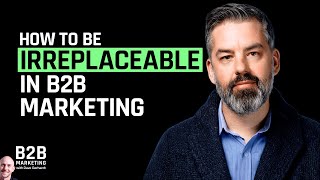
Josh Lowman breaks down how B2B companies create new market categories instead of competing in existing ones. He covers naming strategies, why customer perception matters more than your definition, and what makes a company irreplaceable in its space.
The fact that categories are so important to customers means that it will always, now and forever be central to how you define what your company is doing.
Hey, hey, hey. On this episode of B2B Marketing with me, Dave Garrett. My guest is Josh Lowman. He's the founder of goldfront. They're a category design studio. We talked about this hot topic of category creation in B2B marketers.
How are we going to name our category something different than one of our competitors? And you don't have a case for how the product is actually categorically different than that competitor. Then it just falls into that, like, trendy category creation area.
Should you create a category or not? Why to do it? Common mistakes, lessons, learnings. Plus we got into a whole topic at the end about personal life, personal development, mental health.
The right brain sees the world a lot. It's energetic, it's holistic, vibey, it's magical, it's ineffable. You can't really quite put words to it.
Josh just got back from a month long meditation retreat. We talk about that plus everything you want to know about creating a category. Here's my conversation with Josh Lowman.
1, 2, 3, 4, exit. It's so nice to see you.
It's good to see you too, man.
Yeah, yeah.
So what the heck is your backstory? So you, by the way, is your name Loman? Loman.
It's Josh Loman.
The Josh Loman. So you run a company called goldfront?
I own a company called goldfront. Goldfront is a category design studio in San Francisco.
And how long have you been doing that?
It'll be 12 years in December.
12 years. So that was 20, 2013. Not many people were talking about category creation.
Yeah, we weren't talking about category creation at that time much. We were mostly. We came out as a creative studio. Yeah, that was our category when we started. We came out as a creative studio and we happened to have a lot of experience and connections in kind of the tech world. So out of the gate we started doing stuff for like Stripe and Uber and companies like that. So we kind of like built up this reputation for working for tech companies. And it wasn't until we wrote the category POV for Qualtrics that we. And then we did one for Newsela and we kept, we kept doing a number of these category strategy engagements. So wasn't until then, until about 2020, that we repositioned as a category design studio.
And did you come up like as a creative director designer? You just gave me that vibe. So I don't yeah.
Yeah. Okay. So I came out of school in the 90s, and I was like, I'm never getting a job. I'm going to be an artist. I'm going to write and direct movies. And then I procrastinated, and I never got anything done. And then I was, like, terrified that I was going to be a waiter for the rest of my life. Not that there's anything wrong with that. And so I went through the yellow pages to find jobs, and I got a job as a. As a digital designer, even though I didn't know what I was doing. And immediately I started designing websites. So I came up as a designer, moved to San Francisco because Wired magazine told me it was the center of the digital revolution. So I moved to San Francisco in 96. It's part of the whole dot com boom and bust. And did a bunch of really, like, interesting digital projects at that time. And at a certain point I was like, my heart tells me that I'm a writer. Like, I was like, maybe I can't be good enough as a designer. Maybe I'm actually a writer. So I switched over entirely to being a writer on, like, the traditional side of advertising. And I came up through that whole thing of writing TV spots and stuff like that. And then I just kind of like, merged all these worlds of design, digital, traditional. And at a certain point, and I was starting to shoot videos, and at a certain point I was like, God, I'm like a generalist to a fault, but I need, like, one flag to fly over all this stuff that I'm doing. And I was like, okay, I need to start a company. And that was goldfront.
Why'd you call it goldfront?
I wrote names for, like, a year, and at a certain point, I just took the words gold front, you know, the grills.
I was wondering if that was like, Gold Front seems like a rapper. Like, yeah, yeah.
I just took the S off and I was like, oh, that's kind of cool. It's like a nice. Like a cold. Instead of a cold front, it's a gold front. And it's about, you know, like, gold records and success. And, you know, it's just like, I wanted. There was a. There was an agency called Funny Garbage at the time, and I was like, I want a name like that. Something that sounds kind of like, nonsense. And I shared it with, like, a good friend. He was like, that's it.
So now it's like this crazy game of, like, you have to have a good idea for a name, and then you go to GoDaddy and you're like, God damn it. There's no domains available. And so it's so great to have a. Just a phrase with, like, simple wording. Like, when I named Exit 5, Exit 5 is the only good name I've ever come up with. Everything else I've named, literally. I hosted a podcast interviewing founders in Boston in 2014. It was called Tech in Boston. The first iteration of Exit 5 was called DGMG, which is Dave Gerhardt Marketing Group.
I remember. I wasn't there.
Yeah, yeah, I know, I know. And then Exit 5 was like, I was talking to Harry Dry, who does marketing examples dot com. He's amazing. And he was like, you can name things literal or lateral. So literal would be like, tech in Boston.
Right?
Or lateral is basically like, what. What you did with Gulf Run or Exit 5, which is basically you kind of come up with a concept, and then you revisionist history, tell your story into that. And so it's like, you know, I didn't wake up in the middle of night and, like, had this vision for Exit 5. I was trying to, like, think of a good name for it. And then you come up with a story that you can tell. And even, like, working with founders in the past, like, in consulting and advising, I'm like, how can we kind of retell the story of your company so we can, like, lean into the name and give it more meaning, even if that's not, like, the idea that you had from the beginning? It's such a fun thing. Okay, so then fast forward. So. All right, that's great. Super helpful context. I don't want to. We don't need to read. I'm sure there's a separate podcast that we would need to be, like, drinking a scotch or something and hearing all of your stories from, you know, the late 90s, early 2000s in San Francisco. But the reason that I wanted to have you on this podcast is to talk about this topic of category creation, because I think if you were to make a list of maybe three to five of the hottest topics over the last couple years in the world of the people who listen to this podcast, I would say that category creation is one of them. And it's also the most commonly contested or there's the most objections.
There's most tension around this.
Yeah, yeah, there. There's some reasons for that that I'm not gonna. I don't need to get into on this pod, but.
Well, why not?
There's just more, like, per. Personalities and personal. Not about the concept of category creation. But I think that there's there, there's a take that like, the only way to win is if you create a category. And I don't believe in that. You know, like my. The sandwich shop down the street from me, she runs a great place and they make great sandwiches and everyone in my town goes there. And she didn't once think about creating a category.
Man, it's crazy. I think of the sandwich shop down the road from me in the exact same context. Like, when I'm thinking about category, I'm like, well, they didn't create a category. They're great.
So do you agree with my take or do you have a way to frame it?
I agree totally with it.
Now that said, though, if you are building something large, ambitious, like many of the founders you work with, many of the people listen, in this space, they work for those companies. If you're a founder that is out to build a world, changing, life changing, billion dollar revenue, big exit type of company, then yes, I would argue that most of the time to have one of those exits, you need to have created a category. The third kind of thing of this though is like, there is. It is much harder today than ever, I think, at least to create a category because so many names have been taken. Something I want to get into to you. And so then I'll shut up in a second. But then basically, like, but if I try to just like block the term category creation and I just think about, like from a, from a marketing fundamentals and principle standpoint, like, whether we call it category creation, whether we call it positioning, I'm sure you have a different definition for that. Like, is having a strong point of view about your company and the market. Like, the best. The most important ingredient in marketing? I would say yes, if I could pick one thing. And I don't do consulting anymore, but when I was. And I still talk to founders now just to take calls every now and then, the number one area that I think most companies are lacking is a differentiator. And so anyway, all of those things are like, yeah, I'd love to have you on and riff on this topic. And I hope people hang up at the end of this episode and, you know, finish your run or whatever you're doing and you're like, all right, I feel, I feel better about categories. So that, that's not a question, but I'm just curious to hear your. Your reaction to any of those things I said.
I think that's all spot on. I just think almost like I am thinking Almost the same thing. And I want to go deep into some of this stuff so I can tell everybody how. How I think of it.
Okay, so I actually have up this there. I have this category blueprint that you guys put out a while ago, and I saved it because I think it's. It's very. It's very use. Maybe we can start here. And so lesson number one is. What?
Can I see it?
Yeah, this is how I am. I was on a call with somebody, and they're like, yeah, I got your book founder brand up. And they're like, so on page three, you know, on page 33, you said this. And I'm like, let me. I just put it in the chat of our. Of our zencaster to you. But number one is, like, why most strategy? So why. Why does most category creation fail? Is that a good place to start? Or how about who should. When, and why should you create a category?
Okay, wait, I got a good place to start. Okay, let me take the mic. Okay, please. All right, so, man, strategy is. It's a. It's a. It's. It's pretty inaccessible. Like, it's kind of like. When I was in college, I thought about philosophy. I was like, oh, philosophy is like, something that smart people know about. But, like, I. I, like, I. I probably can't figure that out. But then I had a roommate, Mike Ehrman Trout, who, like, wore all black and listened to the Cure and smoked unfiltered cigarettes, and all he did was do philosophy, like, all day long, right? Read and write philosophy. And one day he told me, like, well, philosophy is really just trying to answer the question, what is a good life? And as soon as I heard that, I was like, oh, God, that's great. I can understand philosophy now. And in a way, his definition of philosophy is almost like this. It's almost like my definition of strategy. The question is, what is a good company? Or you could say, what is a good professional life? So let's. If we start with just a professional life, like, what is a good professional life? I would define it as you're happy and you're irreplaceable. Like, that's the best that you could get, right? So Dave says to. At drift, you're like, hey, I want $5,000 more a year. And they just go, well, you're kind of replaceable, so we'll just get rid of you and put somebody else in your place. Right? So that would be a big problem.
No, what happened was I asked for more. I asked for more money, and they Said yes. And I was like, damn it, I should have asked for, like, way more than that.
Yeah, exactly right. And I think you've done a really good job at getting into that world where you're. The senses that you're irreplaceable. It's the same thing for companies. Companies are just a group of people. So the goal of a company should be the people are happy enough and you have a product that's irreplaceable. And every company has their product on a spectrum of how replaceable versus irreplaceable are we. And you should try to get as far towards irreplaceable as possible. So a commodity like corn or eggs is totally replaceable. And hopefully these big tech startups that are trying to create a, you know, $100 billion category are making something that's really irreplaceable or they're going to have a problem.
So. So a lot of people talk about vitamin versus painkiller, but you like this concept of irreplaceable. How to be irreplaceable?
Yeah, vitamin versus painkiller, it's fine, but it's not that material. You know, the. If you're. If I'm a writer or a designer or a marketer and I'm like, trying to work on something, I can look at every single thing that. And go, does this get us closer to the sense that our product is irreplaceable or. Or further away from it?
Nice. I love this, man. This is what I love. I like when we can simplify things into.
Yeah, exactly. Because you have. Because you have a community that some of them are just. People are just kind of starting out in marketing. Right. I don't want any of those people to think, like, strategy is something that just like smart people do. And, like, it's too intellectual and it shouldn't be that at all. Just, hey, how can we make. Make our customer believe that this product is irreplaceable? And that has to do with the mind of the customer. So it's really important that we frame all of that as, like, what needs to happen in the mind of the customer in order for that to be true.
Strategy. Strategy is everything. The more. The more I've gone into my career, it's like, I used to just kind of roll my eyes at that. It's just like a, you know, Harvard Business Review type of article, but it really is. And show me a company with a, for example, this concept of, like, how do you be irreplaceable? This can't just happen in the marketing room. It's gotta be like product engineering roadmap. All of these things have to be aligned around this.
Yeah. I mean, once you just start to think about how do we get the customer in their mind to think that we were irreplaceable, it gets rid of all of these divisions around departments in your company because you're like, well, the product has to do this and the marketing has to do this, and the customer service has to do this. And as long as you're thinking about the mind of the customer and that you want them to think it's irreplaceable, you no longer think in terms of silos. Okay. So in that. So that's just my way of setting the scene to say that, like, category does not really matter unless it's just in the context of, hey, it's a really good way to become irreplaceable. So the best way that I know of to become irreplaceable on an ongoing basis is to be number one in the category. There's like, a very special thing that happens in the mind of the customer when they're interested in a category and you are number one. They will gravitate towards you just because you're considered number one. And so.
And that's a timeless, timeless marketing principle. Right. I think 22 immutable laws of marketing by reason. Trout is number one, is the law of leadership. Right?
Yeah.
I don't want to take you off wherever you're going, but this is where. Okay, got it. I'm with you. I'm with you. I'm with you. This is where it breaks for me. Maybe I'm not good enough at this exercise. And I'm sure you guys are. Have a process. But then it's like, okay, but what is the ca. Well, we are the AI generated slide deck. You know, Gamma. Right. Gamma's a. They make slide. You know, it's an AI slide generation tool. So is their mission to be the number one AI generated slide generation tool? Like, I've worked with founders before, you know, we get so might we get so. Because the big category. Because you can't just come out and be like, CRM is our category anymore.
You know, actually, before we talk about this, I just want to say one more thing about category. So. So if you want to become number one in a category, there's essentially four ways that you can do that. You could create a new category. You could transform an existing category like Tesla did with the electric car or, like, iPhone did With a smartphone. Right. You could transform the category so that you are. You become number one. You could niche down, like, you know, LinkedIn is a niche of a social network. Or you could solo. And solo is kind of like really special, where you could kind of like, try to do every single little thing a little bit differently. And even if you're in a rational category that everybody says, like, oh, it's kind of in this category, everybody knows that you're completely different. So an example of that would be notion. Like, everything notion does is, like, different. Even if you're like, oh, it's a project management tool or whatever it is. So, okay, in that case, notion is a category of one. So let me tease this out. So, like, I. In the way that I see it, there's a difference between sort of the rational category that people call it and the actual category, which is the category as it is in people's minds. So to understand. And sometimes they're the same thing, like CRM maybe, but. But if to. To like, share this idea, I could use an example. Two companies. One is Drift. And so in that scenario, this is my. This is all subjective. So this is my take on it. Right. In that scenario. Okay. Drift's this hot company. They're doing amazing. They created this category, but I think in the customer's mind they were like, well, it's like Intercom. Yeah. So the category for the customer is whatever they think of Intercom and Drift. It's like that's the actual category for the customer. Just because you named a category doesn't mean that actually was the leader of a category. The customer has to think you're categorically different from Intercom in order for them to create a category in their minds.
Yeah. And this was actually one of the big challenges in doing this was no matter what we or Intercom did every. Those things, all bucket at the time was under Live chat. It was a live chat tool. And there was live chat for in app, There was live chat for support. We tried to be the first to come out and say we're the only ones doing this for marketing today. You might call it chat bots, but, yes, you're spot on.
Okay. And so that is the. That is essentially, that is the problem with the way B2B marketing, the B2B marketing world thinks of category is that the B2B marketing world generally thinks of, like, what you guys did with Drift as category creation, but you didn't actually create a category in the mind of the customer. It was. You were number two in the live chat category, you tried to create a category, but it didn't work out. Right. Or here's another example, and I'm sorry to bring that up, because I love everything you do, but, you know, okay, that didn't work out. But. So here's another example. Clay. I don't think clay considers themselves like, creating a category, but they are. If you use clay, you know, there is nothing like clay, Right. So in your mind, it's like, that is a category. That is a totally new thing. And you're like, oh, what is the category? You're making it. You're putting it together in your mind. Well, it's kind of like a spreadsheet, but it's got AI and it has all these APIs, all these other services, and you create the category whether there's a name for it or not. And so the reason why they've succeeded is because they. They actually have created a category. They just didn't name it. And so people just go, oh, it's that they kind of. In their mind, they're all like, oh, clay. It's like a new category.
Right? So. And do you think you. Do they need to name it to. To make it a thing, or is it like you've won?
It would help, but it's not the most important part. The most important part is that that product is categorically different. And you get the. In the mind of the customer, it tips into that realm of like, oh, I can't really put this into a bucket. It's not really like Apollo. It's not really like, I can't put it in a bucket anywhere, I guess.
Yeah, like, note your notion example makes sense too there, because it's like, you don't just think of notion. You know, when you think of notion, you don't think workplace productivity. You're like, damn, planning a wedding in notion.
Right.
Notion is my to do list. And then it's also kind of replaced Google Docs at my company.
Yeah, yeah, yeah. So in your mind, it just goes into the notion category. Right. And like, that's a very good place to be.
But like, in the clay. In the clay example, though, that is. So it's not just like, market, you know, marketing didn't like, put a spin on this to create a category. It is like they fundamentally built a new thing that can be number one in a new category.
That's right. Like, so much of it is, you know, hey, what are you doing with the product?
More from Dave



Asynchronous work isn’t a trend. It’s how teams actually get things done without burning out.

AI is changing product marketing. Here's how top B2B teams are scaling without cutting corners.

How Product Marketing Is Evolving in 2025: Lessons on AI and Leadership with Jennifer Cannizzaro

Why referral programs look different outside of SaaS (and why that’s a good thing)

The secret to scaling dual GTM? Give every marketer ownership and get out of their way.

From content to CMO: how Jess Cook made the leap (and built her first budget from scratch)

Leading B2B Marketing for the First Time: Strategy, Budget, Content & Team with Jess Cook

Most B2B advice is built for SaaS. But what if you don’t have demos, PLG, or lead goals?
