Creating Webinars People Actually Want to Attend (Behind the Playbook We’re Building)
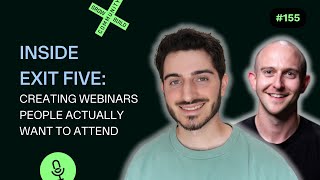
Dave Gerhardt and Matt break down how to build webinars people actually show up for. They cover segmenting personas, using ChatGPT for content, and why hosting skills matter more than you think.
We did that webinar, like, every week. The huge value in doing it was me having to go there every single week and give the presentation and get the feedback. And so even if nobody bought or nothing magical happened on the webinar, it was me having to show up. And I did that webinar for weeks and weeks and weeks. And each week, you're going through it, and you're like, no, like, this morning, I just. I showed you. Like, I wrote a script for a quick little YouTube video that I did, and it's an amazing process of, like, you write the script, but then when you go to record it, you're like, well, that line doesn't actually work. You cut that out. And so it's this amazing process of, like, massaging and editing. And maybe after 12 weeks, I had the perfect webinar. Then we recorded it, then we made it on demand, and it lived on the website. And then we built, like, an automated funnel around it. And so I. I think there's so much value in that. But you can only do that if you're obsessed with the feedback loop here, man. Just the life of a creator, it's hard to. You know, I do too many. If I do too many podcasts, I don't want to do them, but I enjoy this one. So let's do it.
Let's do it. Okay, cool. So the topic. The topic that the member wanted us to chat about was targeting two Personas. So how do you create content for two or more Personas?
Yes. All right, good question. Comes up all the time. And I think usually I. The way that I. On the surface, this doesn't sound like a complicated thing. It's like, you got to be able to talk to different audiences. Right? I. I got two people that I work with. Jazz, an example. I got Matt. I got Dan. I talk to them differently. They're different people. You understand? It's like you're. You're coaching. You know, you're coaching a team. You got two different people. You talk to them different ways. Uh, but I think why people ask this. Let's. Let's back up and talk about that. The reason why people ask it is because I think that. And Matt, let me know if you. You agree with me. I feel like what they're really asking is, like, how do I do this with the marketing tools that I have, like, the website, the email, the article. Right. It's about the tools. And so I think. I like to think first about the website, and I think the website, what I would do with the website is, I would have one, I would speak to the overall message on the website, like focus on the overall. I think webflow does a really good job of this. And so if you go to webflow, you go to webflow.com, they have build with the power of code without writing any. They don't speak to one Persona. They show all of the different case studies and logos and that's going to speak to you there. They show the different features. But then if you go to Solutions, they say they have webflow for freelancers and that's a separate page agencies, that's a separate page startups, classrooms, enterprise. And so you're going to sell, you're going to self select into one of those. That's, that's where I would start. And then the other thing is, I think people, people don't realize the power of the power of the headline and the power of the copy. I feel like copy often self selects the audience. I think we obsess over who's going to read this. But like if I write a, if I write an article and I'm like, you know, 15 tips every CrossFitter should know. If you're not into CrossFit, you're not going to read that article. That content is not for you. Dan Kennedy, I think it was in the ultimate sales letter he called this plan, he calls this planting the flag in the headline, which is basically you plant a flag for your reader to talk about who this content is about in the headline. Now beyond that, you actually have a lot of tools available to you to segment. So don't send emails to those people. Right. This is why like in the onboarding or in the data collection process, get, get, roll, get, get the, the role and the Persona of that person. And if you're going to send one message to one audience and, and it's not relevant to them, don't send it to the.
Yeah, I think there's, there's always some kind of common theme or common goal that you're solving as a business. So you always want to start there I think and then branch out like you said. Another cool thing I saw in the comments, just to get a little bit more tactical on that is in HubSpot you could actually show content to people dynamically based on what they are. So like you said, you can segment your audience, you can create one email newsletter, but based on what bucket they fit into, they're going to see that. I think that's a really cool play. Also for something that's like super tactical.
Oh, interesting. So you can, you can change what the. So the content of the email can be dynamic. So I would see like half of the email. I would see a different part of the email than you would if we were different Personas.
Yeah, exactly. Like, maybe we get an email from a company and you see the stuff that's more relevant to a C suite leader and I see the stuff that's more relevant to, you know, your middle level marketing manager.
I would also, I think we also, we also like, we like to over, like over engineer thing, over engineer problems and issues. And I think that if you're thoughtful about the messaging and the audience and you have the tools as a marketer today to like segment certain audiences, I don't think this needs to be, be as big of a deal. What do you think of the, what are you saying?
What do you think of the resource split? Like, you know, let's say you were putting out a blog article a week, an email newsletter a week, and a podcast, podcast episode a week targeted toward one Persona. Now you have another Persona you have to create content for. What are you doing? Just doubling up. Are you splitting resources? Like, how do you think about that part?
Yeah, I mean, I think, I think it's gotta be. I think you're always kind of looking at just like broad, broad benchmarks. It's like, how do you know? It's like, how much should you invest in brand? And it's like, oh, good. Benchmark is like, you know, 70% is focused on short term, 30% is focused on long term. I think that a smart marketer would be able to, well, this would be tied to the business. And so ideally we're not just like creating different levels of Persona content just for the sake of it. We're able to say like, yeah, we, we want to generate a million dollars in sales this year. Of that a million dollars, we think that 50% is going to come from Persona 1 and 50% is going to come from Persona 2. Then like broad strokes, I would just let that dictate, like how, you know the content that we're writing.
Like, what do you think are some things that companies are doing wrong? What do you think some things they can be doing better? Maybe talk us through how you got our live sessions to where they are and some things you learned along the way.
Well, I think, I think ultimately the issue with the webinar, how to make a better webinar is like, that's the answer to how to make a better podcast. How do you make a Newsletter. You can't just do this in a vacuum. You have to constantly be getting feedback and understanding, you know, did, did the, did my desired audience find this helpful? No, they didn't. Okay, well then why, or maybe nobody even showed up. And so then, like, you're kind of just constantly figuring out where to diagnose this funnel based on, you know, everything in marketing is a funnel. So you're just going to like, look at, look at, look at where this thing is stuck. But let's say that you're able to drive people to it, but the, you're able to drive people to it, but the content is not very good. Well, then you're, you're gonna diagnose like, okay, well then what can we do to improve the content? Let's go survey the people that went there and figure out what they're trying to learn, what they wanna understand. And for us at exit five, like, we got, we've gotten a bunch of feet. Like, we've, we've now done, you know, even before hiring a team. I've been doing this for two years and I've basically done two webinars a month for two years. Okay? So that is 48 webinars. Each one of them is an hour. I've spent 48 effing hours on webinars now, right? And so I don't have a perfect spreadsheet answer. I don't have a data point. I believe that so much of marketing is, is this like, gut feeling. So we've done, we've done, you know, I've done 50 hours of webinars. And so, like, I think I have a pretty strong feeling about, like, what the audience reacts to. And so for me, it's things like being in the chat and like, are you giving your webinar and you're just locked in on the slides, you're not looking, nothing's happening in the chat. Then, like, no one's active. But for our sessions, you know, very quickly, right away you see the chat is blowing up and you're like, awesome. Like, there's this topic is hitting right there. And so I think it's a little bit of like being a taste maker and figuring out, like, what topics. I, I think oftentimes we're like, we're going to do a webinar and we haven't first understood, like, well, why are we doing this? Like, is, is, does our audience want this content? Could this content be delivered in a different type of format? Right? And so, like, could this webinar just be an article. Could this webinar just be a newsletter? Does it have to be a webinar? We like to do webinars because we're a community driven business and there's value in having conversations and having people in the chat and having like, we're marketers who are selling to marketers. And so there's value in like having people in the chat, like helping each other and participating in the conversation. And so that's why we do them. Actually, somebody on this webina, it was, it was actually Pierce from the. Pierce, the guy from Knack said, you know, I don't know anybody who watches, I don't know who, anybody who watches webinars on demand. And I actually completely disagree with that point because I think we're caught up again on the word webinar. That same point is like, well then that means nobody watches YouTube, nobody listens to podcasts, right? Where it's like, well, no, if the content is interesting and relevant to me, I'm going to bookmark it and I'm going to find time to watch it later. I might watch it on my own time and I might watch it at 2x or I might multitask while it's on, but I'm going to watch it. And so I think you got to understand, like, what's the topic that you want? I've, I have done the very first webinar that I did when I was working at Drift. We had like 10 employees and we were just starting to excel customers. And I was obsessed with this, we were obsessed with this company called Leadpages, because Leadpages did these amazing webinars that were like live webinars where they told a big problem. They, they showed all this friction and then they like, they showed their product as like the solution to that. It was like a really good way of doing like a product demo that wasn't a product demo is like, hey, you probably have this problem and here's why you have this problem. Well, like, did you know that you could actually increase your revenue by doing this? And by the way our tool happens to power that. And I literally studied their webinar and I, I copied, I listened to it and I wrote down the script like verbatim. Like, I put my headphones on and I spent 60 minutes like transcribing the webinar and, and I wrote my own version of that. And I wish I had the picture somewhere, but the very first webinar that I did, I literally wrote out a 20 page script. And so I had My deck. And then I had every word that I was going to say and nobody could see me because, like, I wasn't on camera. So it's just like audio only. I literally read line by line. And I, I. What we did is we did that webinar, like every week at a certain time. We said, we're going to do a live webinar every Thursday at 1:00'. Clock. And it wasn't even a big funnel. It was basically like we were just starting to grow our email list. We were just starting to get like free users onto our product. And so we just had an email flow that like, you know, sent an invite to anybody who was in our new, like, nurture flow that week to get on the webinar. We may have had like maybe 10 to 50 people max on those sessions, but it was an amazing. The reason the huge value in doing it was me having to go there every single week and, and give the presentation and get the feedback. And so even if nobody bought or nothing magical happened on the webinar, it was me having to show up. And I did that webinar for weeks and weeks and weeks. And each week you're going through it and you're like, nope. Like, this morning I just, I showed you, like, I wrote a script for a, you, a quick little YouTube video that I did. And it's an amazing process of like, you write the script, but then when you go to record it, you're like, well, that line doesn't actually work. You cut that out, right? And so it's this amazing process of like massaging and editing. And maybe after 12 weeks I had the perfect webinar. Then we recorded it, then we made it on demand and it lived on the website. And then we built like an automated funnel around it. And so I, I think there's so much value in that. But you can only do that if you're obsessed with the feedback loop here. And so the real key to making a better webinar is like, whether it's only 10, whether you got 10 people or a thousand there, listen to feedback. Like, what did we all do in chat after this webinar today? We're already like, man, how do we do something like that every month? Like, we, we hit gold on that. Now we want to go do more of it. And you just gotta always be looking for pockets of that feedback. It's like your post from earlier this week about like the feedback loop, right? Was that a helpful answer, though? Like, did I answer, did I answer that question?
You did you did. I. It. It brought a point in my head of, like, you know, there's also the. A big part of it, a good webinar experience is also who's hosting the webinar and who's talking during the webinar. And if you're a B2B marketer in a company and you don't have someone, they could be you. But if you don't have someone in the company that is going to play host and is going to get on that webinar and give a really engaging presentation, like, it's also maybe not a great channel. Like, maybe you're better to just write something interesting, like you said. So I think that's a big reason as to why we have a good experience is you have a lot of. You've done a lot of reps and have a lot of experience playing hosts, and you do a good job at it. So it makes our webinars really good at past companies. I can't.
Hold on. No, no, no, no. Yeah, tell me, what, did your girlfriend message you? And she said, did she say that I'm the best webinar host in the world? What'd she say?
Yeah, she said she's been to every webinar possible in B2B marketing, and you're the best she's ever seen.
Take that. Take that. Am I just a pretty Bald face with 165 LinkedIn followers? No.
Hell no.
I'm a good webinar host. Dang it.
You are. You are, for sure. I've done webinars at other companies, and I just did it for the sake of doing it, but the presentation sucked. And after I was like, oh, I don't know. But looking back now, it's like, I didn't have the right.
There's a meta. This is like, this is the why go. It's like I wrote that post last week or last week about, like, sometimes I have imposter syndrome. And I'm like, man, I don't know all these things Matt. Matt's sending me. Like, he built this custom GPT. I don't know how to do that. But then, like, these circles come around. It's like, oh, no, these timeless. These timeless principles. And I think what we're unpacking and, like, the real answer, you know, I. I think I wish the, The. The how to make a better webinar answer was like, oh, it's just this one little thing. And it's like, no, it's. It's the same thing. That's like, true for any, any marketing channel, it's like, why should somebody care? How can the delivery, delivery be better or different? What can your way of doing it be like, you know, challenge. I would challenge everything. Like, just because the standard webinar is like 60 minutes, does it have to be like, what if you did a 10 minute session and you gave one practical tip and people left that session messaging you being like, damn, I wish you got more. Oh, okay, let's do a longer one or let's do it every day. Like when I was at Privy, we started a podcast there called E Commerce Marketing School. And it was initially I hosted it to launch it, but we eventually morphed it into the CEO Ben hosted it and we changed the format from 1 hour to 10 minutes and we published every single day. And every episode was like a very specific tactical tip and play. And we got there, it was completely audience driven and we learned that that's what they wanted. They didn't want these like long winded, like rambling interviews like I do with, you know, founders or whoever they wanted to like, here's one tip to double the conversion rate of the opt in form on your site and here's how this company did it. And so I think you gotta be, you gotta be obsessed with learning, you gotta be obsessed with feedback. And it's like you're making the food, but you're not delivering the food to the table and being like, how was the meal, Matt? And you're, we're, you're missing that. And as a marketer saying, man, we have so much opportunity. Like, you can get feedback. You don't wait, have to wait for statistical significance on any of these channels. You don't need lots of data. You have a direct line to everybody through email, through social, through us recording this podcast, giving us ideas. I think you got to understand how to take advantage of that. And that is the whole game right there.
And I have one more point about webinars or live sessions. Like it's like any other channel where it's going to take time. So webinar number one may be really bad, but maybe you'll get better by webinar number five, which is exactly what you were saying. And one little thing I used to do because I started doing webinars at my last company and I knew that we probably wouldn't get a lot of people to sign up if we just sent an email saying come to our webinar. So I, I did this thing where I offered Every, the first 25 people who signed up A free lunch. And we got a ton of signups. Not like a crazy amount, but maybe it was like 50 signups and we got like 45 people to show up because we gave them a free lunch. So it's like, it's kind of corny and kind of cheesy, but it's like, it got people to come to our webinar. So if you need to dangle a bit of a carrot and use something like a free lunch or free swag or free event tickets to, like, accelerate your attendance and try and wow them in that presentation, I think that's okay too.
Yeah, whatever you got to do, juice it. If you can juice it up to get more feedback on something, that's. That's the whole game. Webinars. We could talk. You know what I want, you know, we should do, you know, be really fun. We should do a webinar tear. We should do a webinar tear down. Like, tell us, tell us what the topic is. Because I think that, I think we're good at that. I think we're good at coming up with hooks and like descriptions and the delivery of the format. That would be really fun. I see you writing that down.
Oh, yeah. Broke down the funnel.
Yeah, yeah, yeah. Because I think, like, to me, the web back to the webinar thing, it's not necessarily like, was the deck bad? I think oftentimes, like, the content might actually be good, but we should deliver it in a different way. And I think we could definitely help people. You know, some of our best webinars, by the way, for these have been no slides. And that's where we fall in a trap. I think people also default to webinar means, like, I'm going to go heads down and I'm going to present for 40 minutes and then I'm going to come back up and be like, oh, any questions? Where I like to, I like to have a guest on and the guest is going to have slides, but I like to interrupt, ask questions, have a host. So maybe we should do a webinar tear down. That'd be cool.
That'd be fun. Hey, if you're a company that has anything to do with webinars, maybe we would do something with you. Who knows? Okay, last topic of the day. Someone asked, what are your favorite tools for content ideation? I think they were referring to, like two actual tools, but I think we could also talk about just strategies. How do we come up with ideas for content? We're spitting out content all the time.
My number one tool for content ideation is 15 years of experience in this industry easy. It's number one. I mean, that is number. That is number one. And I. And I don't even. I think it's easy to be like, oh, yeah, well, he's been in marketing for 15 years, so, like, he's good at coming up with marketing ideas. Yes, that's like my strongest suit. But when you're doing. When you've done it in enough in one particular topic, I might not know, like, cybersecurity, but I have, like, frameworks or, like, ways to think about that. I could help a company in the cybersecurity space come up with content ideas right there because there's all different formats. And so beyond that, beyond having deep experience in a niche. And I'm saying that because I think it's just a topic that I care more and more about lately in a world where people. Everybody wants the, like, chat GPT to write it for them, everybody wants a shortcut. So much of this is like knowing your audience deeply, and that's a big part of it. I'm honestly just. And I was drawn to this in you. And I see this is like, I've just always been a super curious person, and I take ideas from everywhere. I mean, go back to how Exit 5 got started. Exit 5 got started as a Patreon channel, a private Patreon channel. Me talking about marketing. How did I get that idea? I got that idea because I noticed on my credit card bill that, like, my wife was paying $20 a month for a Patreon subscription to some comedian. And I said, oh, who is this? What is this comedian? She's like, oh, I. You know, it's this woman. She has a private podcast. And I was like, private podcast? Yeah, it's like, members only content. So she has her main podcast and that funnels people to, like, this other podcast where she. She talks, like, off the record, more candidly. And I was like, oh, that's a great idea. I bet I could do that for marketing. So I'm just always switched on to that. I could be watching golf on tv and there's a commercial that's. Well, the commercial's not really that interesting, but could be watching YouTube. I'm listening to podcasts, I'm watching YouTube. I'm a constant reader. You see me, Matt, you own our community and the funnel for the community. The last week, we've been talking a lot about onboarding. What have I done? I've sent you 50 examples of SaaS, tools that I Signed up for that, that do onboarding well. And I'm forwarding you their emails. And so I think you just got to be curious and realize that, like, really, marketing is everywhere. It's all around you. It could be the small business that you go get lunch at and they have a funny sign, like, at the counter. I'm just kind of always switched on to that stuff. And then, you know, marrying that with, like, what's the goal? The goal of marketing? Great marketing gets people to pay attention. You get a message to land with somebody, you get that message to stick. I'm looking for those examples everywhere. And then I'm always trying to think about, why should somebody spend time with this? What's in it for them? How can you build curiosity, fomo, intrigue, scarcity, all those kind of timeless principles into the content? And then from there, it's just the delivery mechanism. Like, you know, take that webinar that we did with NAC today, Email teardowns. The webinar was the delivery vehicle. Right. We didn't think of the delivery vehicle first, though. We thought of the concept of, like, okay, their expertise is email marketing. Oh, we have a community of marketers. Let's have people submit their emails and we'll tear. We'll do teardowns. That could have been a podcast episode. That could have been a YouTube video. That could have been an event. We could have done a meetup. Right. We could have had dinner. We could have had pizzas. And then, like, everybody brought their emails live. And so I think the. The channel is. Is different. The channel is easy. It's thinking about, like, that main. The hook and the content and the copy. How do you do it?
Yeah, for me, all those things, all what you just mentioned, what I've been doing, like, ever since I joined Exit 5 for my own LinkedIn as an example. But I would replicate this anywhere is using social signals. So we're lucky in the sense where there's a ton of B2B marketers on LinkedIn. So you could literally just spend, I don't know, 15, 20 minutes, scroll through your feed, scroll through the comments and popular posts, and you could easily pick out five to 10 topics that will hit. Right? Because it's there. The proof is there, whether it's in your own content or someone else's content.
Yeah, like, I, I think about that all the time. Like, I'm, you know, LinkedIn is a big channel for us. I'm constantly looking at other people's stuff and seeing what gets attention and. And gets. Gets Popular, right?
Exactly. And to your point of no shortcuts, also, like, Since I've joined Exit 5, I've, I've commented on maybe, I don't know, 1100, 1200 posts in the community now I do it every single day.
Yeah.
And I mean, I'm, I'm just doing the work every day. I'm engaging with other marketers every single day. I'm engaging with the things they're writing about and I'm learning. I'm saying, okay, these are the topics that people care about the most. Right. So there's, there's no shortcut to that. I just.
What would you say, though? What would you like, how would you give this, how would you give this advice to somebody who is maybe listening to this and they are not, they're not in an industry like you and I were messaging earlier about like B2B manufacturing or something like that. Right. I don't even know what that means. But we'll get there.
We'll get there.
We, we want to expand. We, we have. We. I think this is, I'm just going to say this on there because I actually do. I think there's something big there. I think we gravitate towards B2B SaaS. But I do think there is a lot outside of B2B SaaS that we should and can cover and that will like, grow our TAM as a business. But I also think it'll make more interesting, interesting content. But. Okay, I hear you, Matt, but how do we do that to, you know, you know, James is listening to this somewhere and James is not able to like, pop in the community of people with the same job as him. He's more of an outsider. How do you do it as an outsider?
Do you think that's a good question? I think I would try and use the same principle, which is, is there any place, whether it's online or in person, where people in your industry are hanging out or paying attention to within that. Is there any way that you can realize, okay, these are the topics or companies or things that people seem to gravitate to more than others. And then how can I just use those as inspiration? So whether that's an in person event in your city about manufacturing, whether that's a news outlet about manufacturing, I don't know. Is there, is there a place where you can go and find out more about what people in that industry care about?
Use the Internet, blogs, podcasts, find those micro communities. Right?
Yeah, Even no Internet, like I said, in person events like, can you look up manufacturing events in my city and tell your boss, hey, this is a couple hundred bucks. But I'm gonna go there. I'm gonna stop booth by booth.
Yeah.
I'm gonna see which booths people are going to and care about, and I'm gonna learn there. And I'm Gonna bring back 15, 20 different content ideas that I'm gonna apply for, you know, mark our 20, 25 year. Right.
I love that. I. I love that as a young marker, I got a lot. I mean, actually, as an older marketer, how annoying was I coming back from golden hour? I went to, like, event for the. An event for the first time, and I got so many ideas. I love go there in person, come up with your own notes. Yeah, go, go. You know, spend 500 bucks on a ticket or whatever to go do that. I also think all that. A lot of that information is available online today, right? There's. There's a subreddit for everything. There's a community for everything. You can be a lurker and learn a lot about that, right?
Like, absolutely.
I got into running the last two years and never once posted on Reddit, but reading, like, some of the subreddits about running, I learned so much. I feel like I could create proper content for those people now just based on, like, you see what gets popular, see what has the most upvotes, you see which posts have no engagement. You can really quickly, like, pattern match. And then, then it's about figuring out, like, what is your. I think something we haven't talked about today, Matt, is like matching that to what's your point of view as a company? What's your. What's your point of view? It's not, it's not enough to just, like, you can just make content. It's like you can make great content when you have a strong point of view on the topic, like, as it relates to that. And so this way of doing things is broken. You're seeing everybody talk about it this way. Actually, we have a different way of doing it. Here's our way. You have to have that strong point of view that you can develop at the same time.
Yeah, exactly. Whenever I see something on social, I try and take it and just apply it through my own lens. And if I can't do that, then it's like I don't bother because it's like, I don't have a good point of view here. So I'm not, I'm not going to.
Go down this route on the ideation thing. Let's just, by the way, like, let's not sleep on AI though. You know, I'm on both sides of this. Like, I do like to poo poo it at the same time. But man, if I'd be lying if I told you that I don't use ChatGPT 10 times a day.
For sure.
I know you do too. Can you actually talk about, can you actually share what you did recently? I think that's an awesome example of like, somewhat related to these things. But let's talk about how you kind of reverse engineered what's good in our community and how we're going to use that. I think it's just a really good example of marketing.
Yeah, for sure. So right now I'm working on improving the onboarding for the Exit 5 community. And I was thinking about how can members get value almost instantaneously? And one of the biggest ways, because we have such a strong membership base, is to just ask a question, ask a burning question. But the issue is that a lot of people don't know what a good question looks like. And they shouldn't. I mean, why should they? So the idea was, what if I took the most popular posts from the last three months and I could get this all in our back end in circle and I plug it into ChatGPT and I say, hey, I'm trying to do this thing in our onboarding. I'm trying to teach people how to write a good post. Here are the 10 most popular posts from our community in the last 3 months. Can you reverse engineer this and can you tell me what are the top five elements of these posts that make it good? And then I just took that and now I'm including that as an instructional piece of content in our onboarding. But one step further, I took those five things and I created a custom GPT and ChatGPT using those. So essentially what people can do now is they can go to that custom GPT and they can just hit a button that says, help me write a post in exit 5. That GPT is going to ask them, prompting questions to pull information out of them, and it's going to write a good post for them. So in short, I used previous posts to help people write better posts in the community with a couple clicks of a button or a little bit of text.
So I love this example because this is like old me would just go to ChatGPT and like write a question and get a lame answer and be like, I don't get it. But now I think doing more things like this, like basically asking ChatGPT to tell you the right way to ask the question, then you'll get a better answer. And so I was like, giving design feedback recently, and I am not good at articulating design. And so I found a bunch of websites that were, I thought, similar, but I didn't know how to, like, explain them. And So I asked ChatGPT to explain the styles of all these websites and, like, what elements they had in common and how you'd articulate that to a designer. And then I got the answer back and then I could give better feedback about that. So I like doing it like that. I also like asking, like, asking it to analyze trends and patterns and then telling you how to explain that so you can explain it back and get more. And so on the content ideas thing, right? If you just go to ChatGPT and you're like, hey, let me give me some good ideas for webinars for B2B marketers, that's not great, right? But if we said, hey, we've been doing webinars for two years to an audience of B2B marketers. Here are the 10 most popular. Here are the 10 least popular. Our audience is this. They like things like this. They tend to gravitate more towards, like, this. We want to do things like this. We want to do things like that. Spend more time in, like, the upfront, the brief, the prompt. Then you're going to get really good stuff out of that. I think that's a perfect, you know, way to do content ideation. Another thing that I've been doing lately is basically using ChatGPT to, like, beef up my writing. And so I. You're sick of hearing this now, but I had this analogy where I talked about how getting sales to use your content is like, made me think of making my daughter's lunch. Once I got her to, like, she came home from school, she didn't need her lunch. I asked her why she didn't have lunch. She told me she didn't like all this stuff. I said, okay, let's make our. Let's make your lunch together. We make your lunch together and the lunch gets eaten. Voila. Right? Same thing is true with sales. And I basically, that analogy hit. I got a bunch of comments in the chat and I said, oh, there's a, like a bit here. And this is another thing, like, to, to. To bring this full circle, the feedback loop. It's almost like a, a improv comedian. Like, you're kind of just always testing, like, little bits. And it could be something you say, Matt, on This podcast and we get three emails about it. Oh, interesting. This is a pocket. We should go do more with that. Right? So this is a separate thing, but I get feedback on that. And then I'm like, yeah, I want to write something about this. And so I start to write it. I'm like, yeah, but this is kind of lame. Like, I just, it's just my story. So I go to chat GPT and I say, hey, I came up with this analogy about. Here's the question. The question was about how to get sales to use more content. Here's the analogy. I came up from this analogy. Really worked with people. Now do you. Can you help me do some research? Are there any ideas, research methodologies, frameworks, whatever that back this up? ChatGPT is like, beep, boop, beep, boop, beep. Comes back and says, actually, yes, here's some boom Gartner study that says 74% of sales content is, you know, more usable if it's created with marketing. Marketing. Fantastic. Got that. Another one says, this is actually called the Ikea effect, which is like humans are proven. Have been proven to be more engaged with something that they created together. I'm like, awesome, take that. Now I can write something. And it's much more. It's much more full. Like I've. I filled it out by doing some research and I think it can be an incredible writing support tool. I don't think if you just go to chat GBT, you're like, hey, write me a 500 word blog post about B2B marketing. You're obviously not going to get good results. But if you use it like this, like Matt and I are talking about today, you can really have a great partner on the content creation side and content ideation, and maybe it can help you make webinars that don't stink.
That's it. That's a good one.
Cool. All right, well, everybody, hey, thanks for listening to this episode of the Exit 5 podcast. No big deal. The number 59th most popular marketing podcast in the world. No big deal. Just tell everybody you listen. I hate getting those emails from Chartable anyway, so I think, do me a favor. I want you to send us an email because I want to know if you're listening to this. Send us an email. Matt and I, we read every single one hixit5.com I'm on that email. Matt's on that email. So send it to us. Send us HIIT5. Tell us, should we keep doing more of these inside Exit Fives? And what do you want to hear about and maybe what did you learn from this episode? Or maybe it's like a fist bump emoji or something. All right, hiexit5.com send us an email ASAP.
Ask them prompting questions to pull information out of them and it's going to write a good post for them. So in short, I use previous posts to help people write better posts in the community with a couple clicks of a button or a little bit of text.
So I love this example because this is like old me would just go to ChatGPT and like write a question and get a lame answer and be like I don't get it. But now I think doing more things like this, like basically asking chat GPT to tell you the right way to ask the question, then you'll get a better answer. And so I was like giving design feedback recently and I am not good at articulating design and so I found a bunch of websites that were, I thought similar but I didn't know how to like explain something.
More from Dave



Asynchronous work isn’t a trend. It’s how teams actually get things done without burning out.

AI is changing product marketing. Here's how top B2B teams are scaling without cutting corners.

How Product Marketing Is Evolving in 2025: Lessons on AI and Leadership with Jennifer Cannizzaro

Why referral programs look different outside of SaaS (and why that’s a good thing)

The secret to scaling dual GTM? Give every marketer ownership and get out of their way.

From content to CMO: how Jess Cook made the leap (and built her first budget from scratch)

Leading B2B Marketing for the First Time: Strategy, Budget, Content & Team with Jess Cook

Most B2B advice is built for SaaS. But what if you don’t have demos, PLG, or lead goals?
