Dave Gerhardt - The Power of building an audience (REWIND)
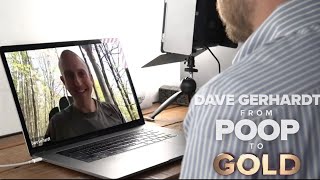
Dave Gerhardt, CMO of Privy and former Drift marketing director, talks with Benton Crane about building an audience before you sell. He covers event strategy, brand building in marketing software, and why audience matters more than you think.
And I was like, great, this should be easy. We'll get like 100 people in a room, you know? He was like, no, no, no. I'm thinking like big. I'm thinking like a thousand people in the first year. And I have never, I've never done anything of that scale in marketing. I've never run an event before. I never sold tickets. I never, you know, booked a venue and got beaker. We're all about turning a crappy situation into something positive. Quarter million dollars of credit card debt. I still remember the day when no one turned up. Throw it in the garbage and start from scratch. I could give myself a chance.
So I started something. I mean, I think that From Poop to Gold, our sponsor for this episode is our 14 day video script challenge. Yes, we are sponsoring our own show. Yes, we are. Welcome back to From Poop to Gold. I'm your co host Benton Crane and CEO of Harmon Brothers. Today on the show, I am joined by a very special guest who I'm very excited to have here. I've got Dave Gerhardt with me now. Dave is, without him even knowing it, he's kind of become one of my mentors. So a lot of people don't realize. But I didn't grow up in the marketing world at all. I never studied it. I was never part of it. When I joined Harmer Brothers, I came in as the data geek. And so I've kind of been on a learning journey myself through the whole Harmon Brothers history. I've been learning all about what marketing is and how to do it. And so I have lots of mentors out there. Some have already been on the show. Russell Brunson, Ryan Deiss. In fact, Ryan is the one who pointed me in Dave's direction and said, I need to know Dave Gerhardt. And so this is an interview that I've been excited about for some time because I've been following Dave and reading everything that Dave puts out there. And he's become a bit of a mentor. So with that introduction, welcome to the show, Dave.
That's crazy. Those two guys are legends to me in marketing. And so it's amazing to share, share what's on my mind. And I'm. I'm learning as we go, so it's, it's cool to hear. Yeah, you kind of. You kind of. You kind of got me speechless. So I appreciate that.
Well, hey, you know, those guys are, they're, they're legends for, for pretty much everyone and definitely for you and me both. So, yeah, we have tons to learn from them. But I, I also really appreciate everything that, that I get to learn from you and I'm excited for you to get to share some of that with our audience. So kind of continuing on that introduction. So Dave is the CMO of Privy, right? And the former marketing director at Drift.
So right now I'm at Privy. And Privy is we're an E commerce marketing platform which means that we basically help you. And if you're an E commerce brand, it could mean you have a store on Shopify, used to basically do all the marketing for your store, email, website conversion and text messaging. And before that I was at Drift, which a conversational marketing software company. So I've kind of only been in marketing software and it's kind of been, it's been meta. Doing. Spending a decade doing marketing at marketing software companies has really kind of forced me to learn marketing. And it's, it's the thing that I'm probably the most passionate about. Like it is kind of like it's my job, but it's also my hobby and I love doing it and love talking about it and just love the, I love the creativity of it, I love the challenge of it and I love the feedback loop that you get. Like I'm addicted to this feeling and I know this now, but I'm addicted to like creating something, having a crazy idea, going on a walk, having a crazy idea, going back to the computer, creating it, launching it, you know, having people message you, email you, share it, like see people come in, customers come in, whoever. That's the part of marketing that I've realized now that I'm addicted to. And that's the thing that I just keep trying to chase through the.
So you run marketing at marketing companies and you mentioned that that's kind of meta. What are the challenges that come with that?
I mean, I think that the challenges are like you're usually marketing to a business where there's not necessarily like it's not always direct response marketing where like I'm showing you this ad, I'm sending you this email, you're going to go buy this thing where the goal is like oftentimes to create a longer term relationship or you know, you need to get to somebody in the company and that's really hard to track. And so you don't always necessarily know like, hey, I'm going to do this thing and here's exactly what I'm going to get back for it. And so I think that makes it challenging. The other, the other challenge is just like marketing to people who do marketing, right? It's like, everyone's gonna call out. You know, I've never made. I've never had a typo without somebody, like, call, you know, taking screenshot and calling it out and. And, you know, wanting to look, you know, put me on blast or, like, you know, call you out on stuff. And so I do like that challenge because I can actually. But I like it because I can actually speak to, like, hey, I am. I am you. Like, the greatest marketing lesson is to actually, like, get inside of the head of the people at. To sell something to. And I am person. And so. So that is, like, that's the fun part, but it's also a challenge, right? It's like, you know, how. How a chef would feel, you know, at a restaurant? Like, they're gonna. They're gonna judge everything that you put that you put on the menu. So I definitely feel that part of it.
Very cool.
Let's.
Let's go back in. Let's go back in time. You know, this is the Poop to Gold podcast. And, you know, we found that every successful person out there has their own Poop to Gold journey, and I want to hear about yours. So take me back in time to one of those points in your journey or your career where you had this crap moment that you didn't know how you were going to come out the other side of it and take us to the circumstances around that.
Oh, man. I got to come up with an example of Poop to Gold. I'll give you one. I think one example for me was when I was at Drift and really, like, first year of the company, my boss, David, who is the CEO, gave. Gave me a challenge and like, hey, we want to do our first user conference this year. And I was like, great. Like, we kind of have a little bit of an audience. This should be easy. We'll get, like 100 people in a room. You know, we'll. We'll throw out an eventbrite invite. We'll do it locally here in Boston, and blah, blah, blah. And he was like, no, no, no. I'm thinking, like, big. I'm thinking, like, 1,000 people in the first year. And I have never. I've never done anything of that scale in marketing. I've never run an event before. I never sold tickets. I never, you know, booked a venue and got beaker. Like, I just was kind of good at writing, and I turned that into, like, you know, blogging and writing emails. And so I had to figure out, like, how to. How to put on that event and there was no, no clear budget. And it was like, that was, that was probably the moment, the biggest moment of AI that I've had in my marketing career.
So, so you're. So he's thinking like order of magnitude bigger than, than where your mind was going with this. So you're, you're at like a hundred. And he's like, no, I need a thousand. So what do you do?
Because I, and I. Well, I, well, I understand now why. Which is like, sure, any, any company can go out in the first year and like get a hundred people to go to your, go to your conference, but if we could say that we got a thousand, like the power of that would be, would be amazing from a marketing perspective. The, the pictures of that event, that day, just like, you know, we. And it. So there. Like, I honestly just, I just. The first thing for me was like looking at, looking at a role model. It's like everything to me now in marketing is like, it's already been done. And so number one is like, who else has already done this and who's done a good job? And so I looked really closely at Saster, which was like a big event in our space that grew from they had maybe a couple thousand people in the first year to like 15,000 people two, three years later. And I've been on their email list forever. And so I literally just dug through my inbox and started like screenshotting examples of that, of that event and how they drove sign ups and start like work backwards from how they did it. Okay, well, they didn't announce all the speakers at once. They kind of started to drip them out. And so like that gave us just a little bit of a framework to get started where, okay, I don't have to make this whole thing up on the spot. Let's go find somebody who's done this before. So like first was like modeling out who's done a good job. The second was working backwards from that day and thinking about, okay, we know that we're gonna 10, 15 speakers and they're all gonna be on stage that day. Are we just gonna like put the website up and sell tickets? Like, how are we gonna do this? And so like we got out on a whiteboard and literally just mapped out like, okay, what are the different tracks of speakers that we could have? Who are they? We know people that can get intros to them and we focus on kind of getting one or two bigger name people. Because the bet was that like, if we could get one or two bigger name People, it'd be like a snowball effect to get more so like, you know, you reaching out to me and saying like, hey, come on your. Hey Dave, will you come on your. My podcast? Before this, we had Russell Vincent and Ryan dice on like, I'm gonna be like, oh, shoot. Yeah, of course that seems legit. And I think the same is true with, with marketing that event. So then we worked back from like getting big name speakers and really just like stuck to the basics of marketing, which is like, like we had a clear plan of how many tickets we needed to get to and by when worked backwards from there on the promotional side of things and then just started mapping out like, we need an angle, we need a different hook, we need a better story because everybody else events were a commodity. And so sure, we could just send a bunch of emails about this event. But like, what's the real reason? What's the reaction that we want out of people? And so David is amazing at this as CEO. It's just like really thinking through the story. And so we came up with this name Hyper Growth event because we wanted to make it not a really tactical day of marketing for our core audience, but we wanted to make it more inspirational, motivational. Like this is a day that has nothing with marketing. It has everything to do with like helping you grow your career and, you know, your personal life. And so we're going to bring you speakers from all around life. We're going to bring you authors, athletes and entrepreneurs and salespeople. But this is not like we almost came out very clearly and said, even though we sell marketing software, this is not a marketing conference. And I think I don't know how to quantify it, but I think like having that clear take and positioning of the event ended up, you know, having the most ROI versus like, you know, it's not like we had some magic Facebook ad that we ran that like brought in or because I copied one of the SaaS sales that like we got more, more registration I think was because like we had this really clear take on the world. And through that I've just kind of learned that like it just pays in marketing to have an opinion. And like I went from kind of just going with the flow, like even, even me, like how I do interviews now I think is different because I'm like, you know what, I'm just going to give a real opinion and talk about who I really am. Because people, things seem to resonate so much stronger with you, with your audience, if you can actually have an opinion. Not Everybody's going to like you. Not everybody's going to go to that event, but. But you do so much. You do such a better job of actually cutting through the noise and getting people to pay attention with you. If you can really speak clearly about who you're for and why.
Interesting. So your approach on, you know, even though you're marketing software, but the event is not a marketing conference. What about on the targeting side? Did you still target marketers to attend the conference?
We did, but, like, not specifically. Right. That's who our audience was by default. And so, like, every time you're going to market to that audience, most of the people that are going to sign up are those marketers. But we didn't. It wasn't like, attention marketers. This is your. This is the event you should go to. It was more like, hey, you happen to be in our audience and you're marketers, so you might be interested in this. And we kind of had a feeling that, like, we could build an agenda around people that would be interesting to those types of people without having to, like, do specific talks about, like, Facebook ads and email and video.
Take me through some of the conversations that led up to that decision because I would imagine there was some pretty hearty debate around should this be a market marketing conference versus, you know, what, what you ended up with.
Because. Because we. We launched the event, not. The event was not a sales event. Like, meaning. Meaning we weren't launching. We weren't doing the event because we had, X number of, you know, dollars in revenue that we were trying to generate. It was strictly a brand play where we said, look, we. This amazing event and we just want to see what happens. By the way, if you go and look at the numbers after, it was an amazing sales event for us because, like, people actually did buy and we tracked the pipeline of those people after. But it like, come learn more about drift and we're going to try to sell you more of our product on that day. And so there wasn't the pressure to like, you know, there wasn't like a big lounge where people were giving demos and the sales team was in blazers and ties trying to book meetings. It just didn't feel like that. And that was an amazing learning for me. Marketer from a, From a, From a brand perspective in that like, brand. Brand does drive demand if you, if you do it right. And so the thought was like, hey, in the early days where we could be out just asking people for money right now, let's just have an amazing event and have Everybody talking about, holy cow, Drift had a thousand people. They had to call the fire marshal because we had people overflowing into the streets. Like that's the story that we were trying to optimize for. Not like, oh, we generated a million dollars in revenue from it. And so I think that really made a difference up front. Where it would, it would have been much harder and we would have made different decisions if it was like, hey, we need to do an event that's going to generate a million dollars. Like, I think it's a different, it would have been a different.
Right, right. So I want to dig into a little bit of how Drift pulled that off, but I want to give a little context to my question first. So, you know, one thing that, you know, we're always talking about here at Harmon Brothers is that, you know, a new and young startup needs to have sales coming in the door to keep the lights on and keep people paid and all of that stuff. Right. It's the lifeblood of the company. But as soon as they're, you know, as soon as they're able, they really need to start getting serious about building their brand because the brand is what's going to sustain them for the long haul. It's the difference between, you know, one hit wonder like Snuggie, you know, who sells a bunch, but they never become a brand versus something that, that stands the test of time, like, you know, a Nike or an Apple or something that, you know, just gets stronger and stronger as time goes on. With Drift being a brand new, you know, a brand new company at that point. From a cash perspective, how did they pull off an event like that so early in their history? Did you guys already have kind of a base of sales that could support, support that or did you guys kind of have to take a little bit of a leap of faith with the investment around that event?
So I mean, we had, we had budget to do it. So we're, we, the company is a venture backed company and they had raised, had raised a bunch of money, you know, and Series A. And so like we did, we had budget to go out and do stuff with marketing, but we also charged for tickets. And I think we were pretty close to break even on that event in the first year. But yeah, we had, we had budget to do it. I would say, like if you and I were bootstrapping a company, it probably wouldn't be. First thing that I would do would be to go try to do a thousand person event because they're not cheap, right?
So if you Guys were already at series A. That means that you had, you know, a proven product and a customer base that, you know, brought the investor or gave the investors the confidence and the faith in the future of Drift in order for them to back that. Right, right.
And then that was, like, that was part of the, you know, reason that I joined in the first place, which is, hey, these are the two guys that started this company are proven entreprene. This is the third company they'll have done together. And so, like, they were able to, you know, raise money from people who didn't necessarily care about what they were going to go do. Like, hey, we believe in you guys as founders. So here's. Here's this check and go and build a company. And that's what I was able to just attach my wagon to. But, yeah, it wasn't like, you know, there was no. There was no money to go out and do an event. But I do think that even though, like, I hear what you said about, like, you got to have sales first, but I actually think, like, the number one thing that we did at Drift in the early days was we built an. Like, even before that event, that event happened like, after I had already been there for years. And over the course of those two years, before we. Before we were even selling our product yet, we were building an audience, right? And so we were creating content. We had a podcast. We had a newsletter. And so, like, even though people had no idea what the Drift product was, they started to know Drift. And so, like, like, when we. When we launched our event, it was perfect because we had this audience primed, and we said, hey, you've gotten to know us over the last two years. Well, guess what? We have an awesome opportunity for us to actually, like, connect in real life now. Here's this story. And so, like, I think no matter what you do in marketing, I think the number one thing that you have to do is to build an audience first, because it makes everything easier. It makes, you know, events easier, makes content easier, makes everything you do easier. So I hear what you're saying on, you got to have sales first. I actually think before you have sales, you have to build an audience.
Gotcha.
Yeah.
Audience building is one of those things that I always look at as, I guess, an evergreen process that starts right at the beginning and it never ends. I don't know, what are your thoughts on audience building? Do you ever kind of shift focus from, okay, now we're in audience building mode, and now we're in, you know, what's the next mode. How do you guys think about that?
I think, I think it's gotta be. I think you, I think you learn to juggle them both. Usually you start off with audience building and then at some point you move to sales and then you have to be able to do those two things together, right? So like the way that you're gonna build and if they're gonna feed each other, right, long term sales is gonna, is gonna continue to be easier if you're also building an audience. So like, yes, you want to sell you a sales funnel and be able to sell stuff, but at the same time, like you need to be. I think I said something like a couple weeks ago on Twitter that it was like, Twitter's so weird about what gets picked up and not. But like I tweeted, don't build a marketing team. Build a media company for your niche. And I think that that's really important because I think every product in every industry, just given how many, how much noise there is in the market right now is like, is a commodity. And like you guys, you know, you guys make videos. There's, there's probably a thousand other companies that, that but the unique opportunity to like to differentiate through your brand and to build, you know, to not just share. Like, hey, here's. Hey, like it now costs X to buy a Harmon Brothers video. Like contact us today. Like, no, like you should own Harmon Brothers, should own video, should own the topic of video marketing. And like create mini shows for people who are interested, a podcast, video blog, write the, write the book on marketing. And so you build, you build a brand around this topic. And then by the way, the people that, the people that are behind this topic also have something to sell you. And it's called our product. And so like that's just, that's the approach that I, that I have learned and would take. And I think the company can really take that no matter what you're doing. Like, I'm sitting here, I'm in Vermont, I'm at my in laws house and my father in law is down there and he's a carpenter. And if he was like, hey, I want to do marketing and I want to help build a brand before we even sold any of his services. The number one thing that I would do is position him as like a leader. You know, start a YouTube channel about like do it yourself stuff at home. And he's creating it, right? Have him write like you know, three or four guides on the topic, do interviews on the topic, fill that web with video, testimonials and like examples of him. And then by the way, then we actually have something to sell you which is, which is him as a service. And so I think the bigger opportunity is to think about that. It's not even building an audience, it's to really turn your long term marketing strategy into, into a media company. And then through that people know like and trust you and that they're going to get more people to buy your stuff first. The other option is you only basically have a sale. You only have a checkout button on your site. That's it. Like why have anything else?
Yeah, I've seen it, I've seen so many examples of companies. You know, I use Snuggie as an example but, but you know, we've even had a few of our clients who you know, they launch a sales campaign and it starts bringing money in the door and they get all excited and they think they've made it and it's like, oh wow, you know, we're spending a dollar and we're getting $3 coming back in the door. So you know, we have our money printing machine, we're good to go. And then they, you know, they get complacent and they don't do all of those things you talked about in terms of building the brand, building the audience audience, positioning themselves as experts in their niche and that little bit of success ends up being so short lived for them. So I couldn't agree with you more on the importance of this stuff.
You mentioned used Russell Brunson and Clinton.
More from Dave



Asynchronous work isn’t a trend. It’s how teams actually get things done without burning out.

AI is changing product marketing. Here's how top B2B teams are scaling without cutting corners.

How Product Marketing Is Evolving in 2025: Lessons on AI and Leadership with Jennifer Cannizzaro

Why referral programs look different outside of SaaS (and why that’s a good thing)

The secret to scaling dual GTM? Give every marketer ownership and get out of their way.

From content to CMO: how Jess Cook made the leap (and built her first budget from scratch)

Leading B2B Marketing for the First Time: Strategy, Budget, Content & Team with Jess Cook

Most B2B advice is built for SaaS. But what if you don’t have demos, PLG, or lead goals?
