Dave Gerhardt - Why building a brand is the single best investment you can make | OnBrand '18
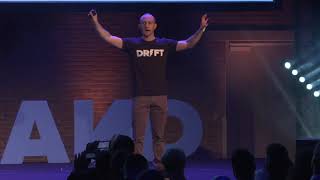
This is a YouTube video titled "Dave Gerhardt - Why building a brand is the single best investment you can make | OnBrand '18" containing a detailed talk by Dave Gerhardt from October 2018. In this presentation, Dave discusses modern marketing challenges, emphasizing the importance of authenticity, brand building, and adapting to a world of infinite supply and empowered customers. He shares practical examples from his experience at Drift and other brands, highlighting strategies like using real people in marketing, plain text emails, and leveraging employee-generated content to create genuine connections with customers.
In my. In my pocket on my shattered iPhone, which is so sad. I dropped it yesterday. There's probably 30 channels in there that I use every single day. Email, Snapchat, LinkedIn, Twitter, Instagram, YouTube, all that stuff I love. Whenever I show this slide, I always think back to like the early 2000s or late 90s. Think about that first marketer who was doing email marketing. She probably sent out an email and got a 90% open rate and 80% click rate, right? Because there's no other channels now. Today, marketers are literally like high fiving each other because they get a 20% open rate and a 5% click rate. And that's because we're just drowning in all these channels today. And really, every company in this room, without me knowing a lot about you, everybody has a blog, everybody has a podcast, everybody's doing social media, everybody's on video. All this stuff is table stakes. Ten years ago, that wasn't the case, right? If you were new and you were doing inbound marketing, you were blogging, you could win. Today, that's not the case anymore. And you know what? Like, nobody in this room is thinking, you know what I wish I had? I wish I had more content from brands. I need another podcast to listen to on my commute home tonight. I wish another company that had a blog, right? Nobody thinks that anybody ever use the app Pocket. Okay, well, that didn't go over well. Maybe it's different back home. But anyway, this is an app I used to use all the time. And the purpose of the app was it saved articles for later. Saved articles that I wanted to read because I don't want to read them during the day. I'll read them later on my commute. And I used to love this. But then recently I have the app on my phone and I realized that this is just where articles go to die, right? I save them in pocket and I never read them because I'm like, oh, you know what? I'll read that later. And then all of a sudden, I'm home, I'm having dinner, I'm changing diapers, I go to sleep, there's a million other channels. I just never get to this content. And what it really comes down to is like, we as marketers, we now live in a world that looks like laundry detergent, right? We live in this world of infinite supply. And what that means is that the playbook for how we actually do marketing, it has to change. You can't use the same marketing playbook that you used five, six, seven years ago because we now all live in this world of infinite supply. And I'm going to talk more about infinite supply versus limited supply. But these channels, channels like AdWords, SEO, Facebook, lead forms, this stuff works really well when the supply is limited. If you're the only company that has these brown pants, then as a buyer, I'm okay with jumping through all these hoops in order to get those pants right. But when supply is infinite, I'm not going to go through that process. I know that I can go somewhere else and get a better experience. And so for us at Drift, being one of literally 7,000 companies in this space, from day one, we've thought about how can we use brand to be our differentiator. And even if you're not in marketing tech and you can't relate to my slide with 7,000 competitors, my guess is that in any given industry, sneakers, pants, water bottles, flowers, whatever, right? There is hundreds of competitors in every industry today because it's easier than ever to start a business. It's easier than ever to build a product. That stuff is easier than it's ever been before. So any industry has a lot of competition. And so for us at Drift, I'll give you an example of one of those channels. We knew that Google, AdWords, PBC. We knew that that wouldn't be a magic channel for us because companies with bigger budgets than we had back in the day could just outbid. And so one keyword that was important to us is marketing automation. And for this deck, I googled marketing automation, and I literally couldn't even get to the organic search listing. That happens all the time. Now you Google something and the whole half of the page is ads. And I'm like, even though I want to click on all of their ads because it costs them money, I don't ever get to the real stuff. So we knew we couldn't rely on ppc. Same thing. We also knew we couldn't rely on SEO. SEO was a great channel for companies like Salesforce and HubSpot and Marketo, because they had the luxury of. They started doing this a long time ago. If you know anything about SEO and content, you know that Google values strong domain authority, and it takes a while to build up that type of authority. And so for us, we couldn't just start blogging and instantly rank for important keywords. And so we said, you know what, SEO's important, but it's not going to be the channel that drives demand for us because we're not going to be able to compete in this world. And why? Because back to what I said earlier, right? Everybody has a blog, everybody has a podcast. Everybody's doing social media. And in this world, the key thing to take away, if you take away one thing from this session today, this is what I want you to take away. It's that customers, your customers today, have all of the power, not you. This is how we all behave in our personal lives. But something happens when we go to work, we forget this, right? Customers have all the power because they have all of the choice today. And so just think about how you buy things, like whether. Let's just use business for this example, right? Because that's what's in this talk. But, like, think about how you buy as a person who works at a business. This is how I do it. And I bet you probably do it the same way. First thing I do is I Google the product and I want to go see. Then maybe I find an ad and I go to the website on my own without talking to anybody. Once I've found out what I need, then I text a marketing friend of mine because we all have a couple friends in marketing, like all of you in this room, and I say, hey, do you have any experience using X? And they're like, oh, yeah, that product sucks. Don't use that. Okay, done. Text another friend. Do you have any experience using this thing? They're like, oh, I love that thing. I've been using it for two years. Great. Then I do the same thing on Twitter. I do this all the time on Twitter. I go, does anybody have any experience using Blank? And I get amazing responses every time from people in the community because I follow marketers, I'm connected to marketers. I do the same thing on LinkedIn. Then I go to G2 Crowd or a couple other sites like that, and I read reviews and I want to see what other marketers like me have done. Then I make a decision. And by the time I actually get to the company's website, or if you're trying to buy Drift, for example, by the time you actually get to our website, you've already done all your research. Nobody is laying in bed on a Saturday morning going, you know what I should do today? Buy some business software. I'm just sitting on the website, right? And so we know that by the time somebody gets to our website, they're very well educated, they've already done most of their research, and now they just want to talk to us. And you and I. Nobody likes being marketed to anymore. Nobody likes being sold to. I know as me. So I'm a VP of marketing at a software company. People try to sell me stuff a lot because they see drift is growing fast. There's a lot of articles about it. And then all of a sudden I get all the emails from sales reps, right? But I don't get sold to anymore. I make the decision to buy because I've gathered the facts, and then maybe I'll talk to a sales rep who can help me get over the line. But I don't get sold to anymore. I make the decision to buy. And I know you're probably the same. And just to back this up, because you gotta have some data from an analyst firm. That's how these things go. This is from Boston Consulting Group. And they said, look, There's a new B2B buyer out there. One who does not expect and in many cases does not want to deal with a salesperson until it is time to close a deal. Raise your hand if you agree with that, right? Nobody want. I don't want. You don't want to go on the first date and have somebody propose to you. It doesn't work that way. You don't want to talk to a sales rep until you're ready. And so more than 3/4 of all B2B purchasers today, including both small businesses and enterprise customers, have only limited interaction with salespeople. This is a fundamental shift from how marketing worked even just five years ago. Salespeople could get involved early in the process. It's why marketers could afford to gate their content. Right? Because I'm going to get some leads and then sales is going to call. None of that stuff is working as well as it used to anymore. Because we live in the same world with Procter and Gamble, Tide and Gain and all those products, right? You only have one choice to compete in this world and its brand. All those things are gonna wash your clothes, right? But which one are you gonna choose? You're gonna choose the one that you feel like you have a connection to. Maybe one is more environmentally friendly. Maybe it's better for kids, right? You're gonna make a decision based on the brand. And so unless you're in a market with zero competition, you can't leave this room today and go and run the same playbook that you used in 2009 for marketing. Because brand has to be what drives demand today. There used to be a shift, right? Brand marketers would be over here. They had the arts and crafts, they had the paint supplies. They had all that stuff, right? And demand gen was over here. Those are the people who brought in the leads and the revenue. And today I don't think those two things are separate anymore. In fact, they have to both work together. And brand is what is going to drive demand for your business. But what is a brand? Right? It kind of sounds like fluff. And the talk before this one was great and had a lot of stuff similar in there. But I love this quote. I always take this quote from Mark Benioff, the CEO of Salesforce, from their book and use it when I think about what a brand is. And he said, look, a brand is a company's most important asset. A company can't own its facts. If the company's facts so speed, price and quality are superior to the competition, any good competitor will duplicate them or improve on them. Think about what just happened in the last six months with Snapchat. What happened with Snapchat? Instagram was like, you know what is a pretty good app? Snapchat. You know, we should copy Snapchat. And now Instagram is Snapchat, right? This can happen in any company, any industry, not just because Facebook is one of the highest value companies in the world. This can happen in any company out there today. And so the good news and really why I love doing this talk is that you actually don't need a million dollar budget or have to have a team of amazing creative people or go out and hire an agency to build a brand today. That used to be true. You used to need, you know, years of experience and multi million dollars of budget in order to be able to build a brand. But that's not true anymore. Because if you go back to the RX bar example from the beginning, the best brand strategy today is to be real. It's to be authentic. It's to be human. And look, you and I want to deal with real people, right? And the best marketers have known this for decades. One of my favorite books is Ogilvy on advertising. And he shares a lot of the old school direct mail and copywriting techniques from the 40s and 50s and 60s. And one thing that's in this book that this guy, Dan Kennedy, who's a copywriter for Pro and Tony Robbins and a bunch of other people that he uses all the time that I love and now use is create a damaging admission. He says, create a damaging admission and address your flaws openly and historically. This is such controversial advice for marketers because I'm a marketer, I own the brand. I don't want to tell people that I have a big pimple on My forehead. Right. It doesn't. That's not going to help me. But today, in today's world, that actually will help you. One of my favorite. Anybody seen this ad? Old school ad from Avis. Okay, so Avis is a car rental company. They were trying to compete with Hertz. Hertz is the number one car rental company in the United States. And Avis was like, well, we basically offer the same thing, so what can our ad campaign be? And this is genius. One of my favorite ad campaigns of all time, what they came on, they said, look, we're not number one, we're number two. And so we have to work harder to earn your business. And I love that because they're saying, look, our features are the same, Everything is the same. But it's simply the fact that we are not the leaders means that we have to work harder for your business, and you're going to get better service from us. And I love that. And this instantly enhances your credibility as a brand. If you walk into a store and you're like, everything is great here. Everything is perfect. You should buy from us. Nobody believes that, right? We all want to deal with brands and people that are real. I think about this a lot at restaurants. A couple months ago, my wife and I went out to dinner for her birthday, and it was a tapas restaurant. So we had about six or seven small plates, and we placed our order, and the waiter goes, you know what? You don't want to get that one. You don't want to get the potatoes. They're not very good. And I was like, okay, then what should we get? And he's like, get this thing, get this thing, get this thing. And to me, that experience says everything about this talk today, which is like, that guy's job is to actually make money and sell more. And so it's not good advice for him to tell me, hey, don't get this thing. But what happened was he earned my trust, and he instantly became more credible by telling me, don't eat this thing. Try this thing. And I love that experience. I think about it all the time. I go out to eat now because marketers like us, we typically don't like saying, don't get this thing, because we're afraid of what's going to happen. But in this case, that guy got a bigger tip. We ordered more food, and it was an amazing experience. And now we're going to go back there again and again. And Patagonia has known this from the beginning, not to nerd out and give you all the marketing books in the world today. But a great book on brand and marketing is called Let My People Go Surfing by Yvonne Chouinard, who's the founder of Patagonia. And he nailed this whole thing. He said, our branding efforts are simple. Tell people who we are. We don't have to create a fictional character like the Marlboro man or a fake, responsible, caring campaign like Chevron's. We agree. Advertising, because writing fiction is so much more difficult than nonfiction. It's that last line that says everything to me. Writing fiction is much more difficult than writing nonfiction. Right. It is harder to lie than it is to tell the truth, because then you always have to remember, wait, what was that thing that I lied about? It's much harder. And so in their ads, they don't use any stock photos. These are pictures from their ads and their website. Right. These are all people that either work at Patagonia or are their customers. I love that it's all real people. And I actually think back to Snapchat and Instagram. This is why these two channels took off. Why do we love Instagram? Because it's not this highly manicured place, right? Especially Instagram stories. Some pictures are. But on Instagram stories. For example, that's me eating breakfast in a tank top with my daughter on a Saturday morning. That is me. Really me. And I think as people, we all love real life. We love reality tv, and we love seeing that side of things. And so that's why these channels have become so popular. And so let me give you a few. I want to give you a few other examples. Twitch is another amazing example of this. I'm not a gamer, and so I might get the lingo wrong, but Twitch is basically a live streaming platform where people watch each other play video games. I don't understand it at all, but last year, 355 billion hours were spent watching other people play video games. If that's not the best example of, like, reality TV as your marketing strategy, I don't know what is. And when Drake, they actually had Drake come on with the number one video game player in this space, this guy Ninja, over half a million people watch live in real time. Not later, but literally. As this was happening, 628,000 people dropped what they were doing and went to Live Stream and watched this. It's amazing. Another example is Casey Neistat. He's done an amazing thing on YouTube by just creating a daily vlog. And he's amazing storyteller, which helps him, but ultimately, the way he grew is by Just documenting his life, right? There's a. Gary Vee says something all the time that I love. He says document, don't create. And document, don't create is what got Casey Neistat to 10 million subscribers on YouTube. People just want to watch his life. Now, the top video above where he says everything is changing. His wife is due any minute to have a baby. And that video is about how he's feeling emotionally and what his family is going through right now. I love that. Or him reviewing the latest smartwatch. Right? There's nothing gimmicky, there's nothing crazy here. It's just him talking about what's actually happening in his real life. Another example is Glossier. They don't use any model. How many makeup and beauty line products companies out there do you know that don't use models in any of their advertising or campaigns? Right? They always use real people. And they're always people from different backgrounds, different races, different body types. But the only thing they have, the one thing they have in common is that they're real people. And so this is, I took this screenshot of their homepage last night. These are all real people, right? They, this is somebody that tagged them on Instagram. Each one of these is a real person, not a model paid by the company. And this is their mission statement on their product page. Beauty products inspired by real life. At Glossier, we thoughtfully are creating a highly edited collection of pared down essential beauty products that reflect how you get ready every single day. Not how this model gets ready every single day, but how you get ready every single day. That little change is the most important thing that they have in their marketing and, and for their efforts in building a brand. But it's easy to say, okay, cool, these are all consumer companies. I work at a B2B company. This will never work. Well, I actually think this is where marketing is going, especially in B2B. I think 2 years, 3 years, 5 years, B2B marketing is going to look way more like what Glossier is doing than it is today with that classic stock photo of like the two people shaking hands, right? That stuff isn't going to work anymore because nobody relates to that. And ultimately, like every sales and marketing person out there is going to tell you that their thing is the fastest, it's the best, it's the easiest to use. And even if that's true or not, perception is everything. And so as consumers, we're going to go form our own opinions. And so even if you do have the best remote in the world, I'm not going to believe you as a consumer until I can try it and see it with my own eyes and use it. So I really believe that the only way to compete and stand out as a brand and as a company today is to be real. And I'm going to wrap up in the next eight minutes about showing you how being real, what that looks like from a B2B perspective. So one thing we did at Drift, copying a bunch of those brands earlier, is we killed all of our stock photos. We only use real pictures and that either means they have to be people we know, customers, or people at our company. I can name everyone on this slide right now, right? That's Will. He's our VP of Ops. That's Steli. He has a podcast and he's the CEO of a company called Close IO. We interviewed him on our blog. That's Maggie. She's a product manager. That's Matt and Alexa. They work on our product team. And that's Dan, one of our customers. All of our marketing is now based around real customers. So every time we do a new product launch, if I use that example of Maggie for a minute, she's a product manager. So every time we do a new product launch, we don't have some talking head from marketing do the video. We have the actual person who built the product. If she can't pitch this product, then how am I going to be able to get up here and, and do a better job? And so we work together with them and we make the product people the stars of all the videos of our product launches. My favorite example is actually something that we did with our VP of Ops. This is Will. He has a business degree. He was a former venture capitalist. He hates being on camera and he hates doing any of this stuff. But he owns our pricing at Drift. And pricing is one of the hardest pieces of any business, right? And our pricing was a little complex and it was a little confusing and so I tried to write new copy for it. A bunch of other people tried to write new copy for the pricing page on the team, but we just couldn't get it. So we said, you know what? We're getting Will on camera. I don't care. We're getting Will on camera because if Will can't explain our damn pricing, then how are we going to be able to explain it to the world? And so we made a two minute video and the video is on our pricing page. I'm not going to play right now, but it's on our pricing page and it's literally him saying, hi, I'm Will at Drift. I literally made the pricing here. So I'm going to explain to you how it works, right? And that little thing has been so successful in helping people better understand our pricing and making it much more relatable. Another thing that we did is we only send plain text emails. This is a change that we made about three years ago now, but we only send plain text emails and every email is written like we talk. I have videos in a bunch of email now because if you want to talk about being real and authentic, video is the easiest way to do that. But I just want to read from. I want to read this email to you because I think it says a lot about how we write and how we talk as a brand. This is an email you get after you subscribe to our blog. It says, okay, let's get this out of the way. Even though this is an automated email, I just want to say hey and let you know that I'm a real person. I'm Dave and I work on the marketing team here at Drift. I might not know you personally yet, but I'm pumped that you're here. You have my word that will be respectful of your inbox and only email you when we have some fresh new content or something that is worth telling you about. Hey, one favor before I go. Reply to this email and let me know why you signed up. I'd love to learn more about you. Talk soon. And then that video is me saying, look, if we ever spam you, I'm the guy that's sending the email, so just message me directly. Right? There's no BS with this. This is who we are. And this is what I want people to know. I want people to know me as Dave, not as Drift, a marketing company, because then they feel you get a lot more credibility if you can be real. Right. I go back, I'm just making this up on the top of my head, but that thing from Typeform, the reason that apology works so well is because people really felt a connection with the brand. And so having a brand earns you so much more credibility in the marketing world. And that's why we want to have all of our emails sound like they're written as a letter to a friend. And if you go and get the slides, you can just copy all these emails. I'm totally fine with that. This is also why I've been using LinkedIn video a ton because I think this has been an amazing channel for us, for marketing. LinkedIn was traditionally only like we're hiring. Check this thing out. Now I just use LinkedIn video as almost like a vlog channel for us. And for me at Drift is I just talk about what we're doing. And so I posted a picture of me and my daughter when we got to the airport in Amsterdam last night, saying, hey, I'm here, blah, blah, blah. And that's been an amazing channel where I think two, three years ago on LinkedIn. LinkedIn is a business social network. You can't be posting pictures of yourself on there, right? But now it's so amazing because that's what people want. They want to have real conversations and feel like they're working with real people. And so we actually took this bigger than just one or two people inside of the company doing it. In March, we did a product launch and we just said, hey, look, LinkedIn's been an amazing channel for us. If anybody in the company wants to post a video, do it at Wednesday, 9 o' clock when we announce our new product. We launched a new email product and it was unbelievable. We had 120 people at the company take iPhone selfie style videos and talk about our new product. Think about how crazy that is. Traditional world is like marketing writes the messaging doc. We give it out to the world. We say, here's the one pager. We just said, look, you all know this, you all work here. Record a one minute video about why you're so excited that Drift is launching a new email product. And the result was insane. We had Mike, one of our sales reps in San Francisco, he went into a coffee shop and he interviewed the barista about how great email is and how the old products were broken. Or we have Alexa, who's one of our product managers. She was on vacation skiing. And if you watch this video, it's literally her saying, like Drift launched a new email product today. It was amazing as she's going down the slopes. It was incredible. And so the result was we had 300,000 video views in just two days. That all led to the number one all time traffic day@drift.com. the way we knew that is we just looked at direct traffic to our website. Was absolutely crazy. On that day we spent $0 on promotion. All we did was just activate our team, the hundred people already at Drift. We said, hey, just use your phone and take a video and post it. And this is what happened. It was amazing. This is my favorite. I always show this, which is this guy, John East. That day he said, Dear LinkedIn, is there a filter to hide all posts about a certain brand. Cough, cough. Drift. I love this because obviously it worked. But more importantly, he didn't just see my face or somebody else's face of the company. He saw 100 different people at Drift talking about what was going on. So I want to make that point because I really believe that building a brand today does not require any. An agency or a team of creatives to do some of the best marketing. All you really need is this. You need to prioritize this. I want you to leave here today with thinking about how can my company be more real, be authentic and be human? Because that's what's gonna help you cut through the noise and create demand as a marketer, not because these channels are still important. I don't wanna knock SEO and PPC and Facebook ads. We do all that stuff, right? But I think the things that are gonna make an exponential difference in your business are not some landing page, Tweet, tweak on AdWords. It's brand driven marketing. Your moat for your business and your number one source of leads. And just remember, right, if you take anything out, take this line from Patagonia, right? Nonfiction is easier than fiction. And as a marketer today, you don't need a crazy staff. You have all the tools you need. And usually it looks something like this, right? So walk out of this room before you go here, have a drink and whatever and just think about or have a discussion about what's one thing that you can change in your current marketing to match this and to be more real and more authentic as a marketer? Thank you.
More from Dave



Asynchronous work isn’t a trend. It’s how teams actually get things done without burning out.

AI is changing product marketing. Here's how top B2B teams are scaling without cutting corners.

How Product Marketing Is Evolving in 2025: Lessons on AI and Leadership with Jennifer Cannizzaro

Why referral programs look different outside of SaaS (and why that’s a good thing)

The secret to scaling dual GTM? Give every marketer ownership and get out of their way.

From content to CMO: how Jess Cook made the leap (and built her first budget from scratch)

Leading B2B Marketing for the First Time: Strategy, Budget, Content & Team with Jess Cook

Most B2B advice is built for SaaS. But what if you don’t have demos, PLG, or lead goals?
