Do Nurture Sequences Work? How to Become a Better Copywriter and Why Brand Matters in B2B
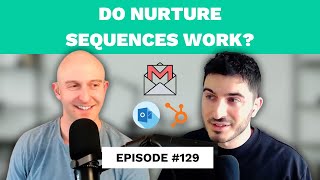
Dave Gerhardt and Matt discuss whether nurture sequences actually work, how to get better at copywriting, and why brand matters in B2B sales. They share practical advice and personal experience from their marketing work.
I just think the biggest thing you can do from a brand strategy standpoint is to nail your point of view. I think that comes from having a deep understanding of the customer, a deep understanding of the market, being able to articulate where things are going and why people need this solution right now. Exit. Exit. All right, what's up, everybody? We're live. Matt, Hello. Okay, so here's the deal. We want to put out more content. Not just put out more content, not just be a content Factory. But this Exit 5 podcast, it really has something going. The response to this is unlike any other channel. So Matt and I. Hi, Matt. We're gonna do. We're gonna do a new weekly episode. And I don't know what we're gonna call it yet. Maybe it's behind the scenes. Inside Exit 5, we got a bunch of different topics. We have so much that comes from the podC social media and newsletter. And so we're going to hang out and Matt and I are going to talk. And hopefully it's helpful for you. And my goal with this is to eventually get questions. And we have a mailbag segment. So if you're listening to this right now and you want us to talk about or answer your question or talk about your problem or challenge on next week's episode, send us an email. Hi, that's H I hi5.com. And maybe we will shout you out, talk about your thing. Feel free to share a win a story, ask a question. Otherwise, Matt, how you doing, man? It's been a month and a half as a full time Exit 5 employee. How's your life been so far?
Yeah, it's been good. It's been good. Exit 5 has been a lot of fun so far. I just feel like I'm learning. Learning a ton from you, learning a ton from Dan. So, yeah, I would say super positive so far. 10 out of 10.
Matt's in the deep end. He's, he's, he's, he's deep in it. He's. He's doing everything. He's got everything. So you may have seen him in Inside the Community. All right, Matt, what do you got on the list this week? Let's go.
Yeah. So for this week, got three things. The first thing I want to cover, and it's funny because I prepped these notes before I saw this, but we got another post this week about nurture sequences. So nurture sequences is a big thing that's coming up. You know, a lot of people asking, you know, like, can a nurture sequence replace their sales team? What's the role of a nurture sequence? What are some formats or some frameworks to follow to build good nurture sequences? So I guess I'll just pause there and I'll let you kind of riff on, like, your thoughts overall on nurture sequences, and then I could give my thoughts and even give some more prompts as to what people in the community are asking about.
All right, well, first overall, I'm going to kick it back to you. Why do you think, why do you think this person is answering this question? Because this is one of those things that, like, it is tough to, to kind of give general, broad advice to this. So tell me where you think they're coming from.
Yeah, I think these people are coming from a place where them as marketing want to be able to influence the pipeline and influence the leads that are coming in. Right. So they're generating leads, whether it's through, like, ebook downloads, webinar registrations, whatever. And they want a way that they can get these leads warm into the hands of their sales team.
All right, so here's my problem. I haven't seen nurturing be very effective. Now. I don't have all the experience in the world. So take this as, like, don't take my advice as the, the only playbook have a limited amount of experience. But I think that we rely too heavily on nurturing to do some magic work. And we, we get somebody in our marketing system somehow, and we think they're going to be nurtured over email to eventually. Like, what does that mean? Like, on email number seven, they're going to just magically respond and be ready for a sales demo now. And I don't mean to talk ill about the person who wrote this. This isn't a criticism. It's more of just a broad observation. I've gone down this hole many of times where it's like, yeah, maybe we need to do a better job nurturing. And you spend a day and you whiteboard out all these flows and scenarios and then you see the audience after five to seven emails. Like, just think about yourself personally. If someone has emailed you 3, 4, 5 times and you haven't responded, do you think you're going to respond to the 6th or 7th email and book a meeting? And so I would think about, how do you do less? How can you simplify this a little bit? And I think it, first of all, you have to map what is the journey that. What is the. Like, what is the buying experience? What is the customer journey that you want somebody to go on and don't make it infinite steps. Don't make it 10 or 20 emails. Have it be something over the course of maybe two weeks, right? Maybe there are bunch of emails over the course of two weeks and then if nobody responds to that one, maybe you put them in a different pile. And then those people, once a month you send some type of broader update and there's another step. I also think that there's multiple steps. Email might be one step, but there's also multiple steps. So it could be someone comes back and visits your website, right? Somebody you're retargeting people with ads, they're listening to your podcast, they're watching videos, there's multiple steps in the nurture. I would just like to see people just take a simpler approach. And, and I think there's usually a bigger root cause here when we get down this rabbit hole of like, maybe we need to do more nurturing. My answer to my pushback on that is like, maybe we need to actually figure out what the root cause is here and is like, is nobody responding to our emails in the first place? What's your reaction to that, Matt?
Yeah, I love that. It's funny because I wrote something on LinkedIn, maybe this was last week and the headline was the best nurture strategy is a good content strategy. And it's not one for one, but like, I mean, you take Exit five, for example. Like a lot of people join the community after months of listening to our podcast, reading our newsletters, et cetera. So our content does a lot of that heavy lifting for us. Now I know we're in a unique place where, you know, people can purchase directly off our site and maybe they don't have to go speak to a sales team. But our content is doing a lot of the heavy lifting, right? So a lot of times in the community when someone says, what should my nurture sequence be? What should I look like? I respond saying, what is your content strategy? Have you figured that out yet? And I'll explain why. And most people are like, oh, damn. Yeah, we don't really have a great content strategy, right? So if your content strategy isn't figured out, I mean, you still might be able to do the nurture sequence properly, but I think it's easier to go the other way. It's first set up the content that can nurture people, whether they're on social, email, podcasts, et cetera. And then if you can find, you know, a value add way to add in a couple nurture emails, then do it. But otherwise I Think to focus on the content strategy is the first step.
When you say, like, set. When you say set up the content, what do you mean?
Just, I mean, figure out, like, for example, here we have, you know, an email newsletter that goes out once a week, podcasts that go once or twice a week, posts that go on. On social every single day. Right. And that's nurturing our audience all throughout those channels. So it's like, got it set up with that. Set up that.
So we already have that. It's like we already have this machine going. And so it's less about like, how many times did we email them? So, yeah, that's an interesting observation. So I think also we want, like, we, as marketers, we tend to like, obsess over the steps and it's like, well, they're going to get this email and then do this thing. And things just don't happen in that linear fashion. And especially today with all the touch points of market. It's exactly what you said, send three or send three to five emails. But also know, like, how do you push people to your other properties? And so maybe you're just going to send three emails. First email is, you know, hey, also, by the way, all of this matters when we're talking about nurturing, the entry point matters here. And so nurturing somebody who say, joins your newsletter is going to be different than someone who converts on a specific product page that says contact us and never actually responds. Those are all going to be different strategies. So get on the whiteboard, map out all the flows. How do people buy your product? And the more you can simplify that, the better. All right, let's go to the next question.
Cool, cool. So, next question. This is one where. Yeah, yeah, yeah. So this is one where you're, you're going to love this one. But someone asked, what are the best books and resources to become a better copywriter? So, yeah, I just want to talk about, you know, how you think people can become a better copywriter. I know you have like the, the 10 laws of copywriting, but I want to get higher level than that. It's like, what are the, you know, the daily steps that someone could take or, you know, how could a more junior marketer become a good writer?
Sure. So I think, I think copywriting books are great, and I obsessed with them and studied a lot of them. I do think that a lot of the lessons in each book are very similar and a lot of the core principles are there. And so I would pick one or two books and really study Them, I got a bunch of them on my shelf over here. I'm going to look at one. I'll give you one. I'll just give you one specific one. The book is called the Copywriter's Handbook by Robert Bly. That's a great one. A lot of people other recommend some book like there's like an Ad Week Copy Handbook. There's something by Joseph Sugarman. I've never read either of those. That's the one I read. I've also read some other like I think Ogilvy on advertising is a good one. It's not, it's not copywriting specific but it's a good glimpse into like how to think about writing for advertising. And the reason writing for advertising is the thing to study is because ads almost like billboards are like fast paced in your feed. They need to grab your attention quickly. And so you learn a lot about the principles of copywriting. So I would start by just picking up one of those books and I like that. I like Copywriters Handbook because it's very, it's like a, it's like a school book. Like it very. It lays out all the steps in copywriting and why study that one book, Read that one book. Don't go read 15 books. It's a waste of time. Pick that one book, go deep, study that book. Then after that you need to write. You need to actually do the thing. You need to actually practice. And what's amazing about today is that we have free channel. We have channels that you can write for free. So Matt, you've been going hard like writing on LinkedIn the past probably 30 to 45 days. Don't you see how that helps you become a better copywriter? Right? You're writing every single day. You need to be out there writing. If you're not willing to Write publicly on LinkedIn or Twitter, totally fine. Open up a Google Doc. Start a daily writing practice and set a timer and Write something for 30 minutes every sing day. Write about a story. Write about something that's bothering you. Write about something that's frustrating. But do it in a way that you're trying to. Once you've learned the some key elements from that book, you're going to actually, you're not just writing an email. Like you're not, you're not just writing a quick email to your friend who, who you want to get, you know, see if they're, they're around this weekend. Like try to actually write a compelling story. You need to just get reps in for Me, the way that I really learned was by having to send out a weekly email. When I was at Drift, I we wanted to start a newsletter. I had to start the week, I had to send out the weekly email. I had to write it and send it. And so it was amazing because it was at the time I'm studying these copywriting books, I got to send out the email. And so I got to see every week, did more people respond? Did we get. What was the open rate, what was the click rate, what was the responses? And you can't put too much pressure on each email. You just need to think of it like, I'm just going to do this. And so over the course of a year, if you write that newsletter like Matt, you're managing our newsletter now. Think about how many reps you're going to have in writing newsletters by the next year, the year next year at this time. So you got to write. I do. Even though I gave advice of like, do a bunch of different things. I think that if you can pick one core topic to write on, you'll. You'll get better faster. It's tough to like, write about all different topics. And so if you want to become a better copywriter and you're interested in marketing, take to LinkedIn or Twitter or one of those channels and write. Write your. Write your daily thought or lesson or tip about marketing. And that's how you're going to get better at copywriting.
Yeah, I love that.
Also, become a student, pay attention to the copy that you read and keep a swipe file. I for the longest time had an Evernote file where I screenshotted everything that I thought was great. If I see a LinkedIn ad, screenshot, if I see an email screenshot, if I see a landing page, screenshot. If I see build up that, that rep that, like that, that swipe file of ideas. You also have another tool that I didn't have when I was learning copywriting, which is ChatGPT. Use ChatGPT as your research assistant. Use it as your editor. Ask it to poke holes in your writing. Ask it to you. Here's a tears of something you could do. Find that copy that you like. Somebody writes a great newsletter. Feed that copy to ChatGPT and ask it to describe the writing style. And ask and then try to write in that style. There's, there's so much that you can do now with ChatGPT to, to become a better copywriter.
Love it. Yeah, I agreed with that.
What do you have to add? You've Been. You've been going hard on copywriting. What? I'm sending you messages every. Every day, being like, wow, you're getting better at this. This is great. What. What's your. What have you been doing?
Yeah, so I think it's a couple things. I mean, just to circle back, like, two years ago is actually when I started my LinkedIn journey before my last job. And at the time, I, like, I wasn't that good of a copywriter, or at least I don't think I was. And I didn't really have anything specific to talk about, but I just said, you know what? I'm gonna write about things that are on my mind every day. And I know that's not like the LinkedIn Growth Playbook 101, right? You're supposed to pick a topic and you're supposed to niche down a little bit or niche down a little bit. But I didn't. I just wrote and wrote and wrote, and my audience didn't grow like crazy. But what happened was when I ended up getting another job, people at this company were like, oh, Matt, like, you know, you write some pretty cool stuff on LinkedIn. Like, I like your stuff. And then whenever they had something that they wrote, whether it was for LinkedIn, in email, whatever it was, they would go to me and ask me for copy feedback. So now I was getting all these messages in the company about, you know, how can I improve my copy? And I became, you know, one of the better people in house that writes copy. So I think it's like, it doesn't have to be perfect to start, but it's just getting started. And then you'll see that, you know, that'll lead to people in the company coming to you for copy.
Yeah. Surprise. You gotta just do a lot of it and you'll start to learn.
Yeah, exactly, exactly. So, yeah, that's my two cents. Then also, you know, working for this guy called Dave Gerhardt, his feedback with copy's pretty good. So if you can do that, I would say definitely try and do that.
Love that. Yeah, It's. If you're able to take feedback, you don't ever take it as a personal criticism. Right. And I think that's. That's very important.
Absolutely, absolutely. Why brand matters in B2B? This was a social post, a LinkedIn post that you did maybe last week, was it?
No, I didn't write it. My LinkedIn, my LinkedIn VA. I'm Chad GBT, writes all my LinkedIn posts. So I did not. I didn't actually write it. I'm just kidding. I did. Somebody messaged me last week and said, who writes your LinkedIn posts? I'm like, I do. I do, man. Come on. Okay, so why brand matters in B2B? So I posted this with a picture of Gartner, has this classic. And I've used this graphic. I knew this was going to work because I have posted about this graphic for five years. But Gartner put out this B2B buying journey. And it's just like this cluster of just like all these different steps. And the point is that the B2B buyer's journey is not linear. People don't just see an ad and go buy. B2B is a considered purchase. You're often spending fifty, a hundred thousand plus dollars, you know, depends on what the product is. You're spending a lot more money than you are on a consumer product. You're buying it for work, your job. It takes time to implement, to go through security and procurement. Your job is often on the line. You're spending the company's money, not your own. So B2B is a considered purchase. And so if you just think of all those things, right, of course it matters more that you have a brand and a brand is your reputation. And so in a world where like, how many people do we see on G2 and they're like, hey, we were rated, you know, 4.8 stars and we were rated 4.7 stars, and we were rated 4.6 stars on G2 and all these things, right? How can you possibly make a decision about what product you're going to buy when every company is throwing their feature checklist at you, every company is touting their G2 reviews, every company is mentioned in this Forrester report, In this Gartner report, the way you're going to win is on brand. And in B2B, everybody is. Everybody is shopping. They're not buying. And so even if you have a brand, a company that you think you're going to buy from, you're going to go do your due diligence. If I said to you, Matt, we're thinking about moving our newsletter platform, right, you might have a company in mind that you have for us to use for the newsletter, but you're going to do your diligence and you're going to say, all right, I'm going to evaluate these two or three platforms. Well, when you go and do the research and you real that 80% of the features are pretty similar and you can't really tell, and they're telling you one Thing you're going to buy based on brand, and brand is your reputation. And so this is the opportunity in brand. I always tell this story, but as a junior marketer coming up, I didn't know anything. I still don't know anything. But at my very. One of my very first jobs, I remember, like, needing to present a marketing plan. And I was like, I don't know how to do that. What's a marketing plan? And so I looked up. I was like a religious follower of HubSpot at the time, in their early content days. And HubSpot had a great article on, like, how to build a marketing plan and present to your boss. So I grabbed that, I wrote my version of the plan presented to my boss, and she was like, blown away. She's like, this is amazing plan. Like, holy shit. I didn't know you could think like this and do all this. And so I became a HubSpot fan years and years before I ever bought their product. Because they made me smarter. They helped me do my job right. They helped me when they help me get promoted. And that, to me, is a perfect example of what. What a brand can do. That's content marketing. But that's from the brand. I got that. I got that association and affinity for HubSpot as an example. I didn't buy HubSpot until 10 years later, but it was because of that brand. They helped me along the way. And so I think that you need to. You need to make brand a priority. If you're. If you're in B2B, what do you want people to say about you? What. What's on brand for Matt? What is Matt's reputation, right? Like, who do you want to be? What do you want people to say about you when you're. How do you build that? And the way that you build that today is by having a strong narrative, a strong point of view, a unique perspective on the world and on the market, and you execute on that through content. So last thing on this is there's this great Seth. Seth Godin tells this story. It was on some podcast I listened to years ago. I can't give proper credit, but make sure that the credit is to Seth Godin. He says that in B2B, people are going to buy the thing that is either cheaper or the product that they bought at their last job, right? Why you're going to buy the thing that's cheaper because no one's ever gotten fired for buying the less expensive thing, right? Or you're going to buy the thing you bought at your last job because it's safer. Oh, we've always just used Salesforce CRM. Like no one gets fired for buying Salesforce. We're going to buy Salesforce. But the opportunity, unless you want to compete on the low end price or you're already the established brand, the opportunity, he says, is to give people a story that they can tell to their boss about why they should buy your product. Right. And so somebody's able to. I saw this at Drift all the time. Like, I don't know, I'm not really sure, like how different their product is from Intercom. It kind of just like chat. But like, I really love their podcast and I went to their event. I just like, like the way that they talk about things and see the world and that's why I buy from them. Right. That's what you want to channel with brand. That's why brand matters in B2B.
Cool. Yeah, yeah. I was going to say the last company of mine, you know, we were losing all the time on price to our bigger competitors. And you know, everyone used to think like, oh, like why, why are we always losing to them? Like, our product is better, like, what is it? And when you sent that post, it triggered that. If, you know, when you're constantly losing on price to your bigger competitors, it is the brand. Right? It's, it's. They don't, they just don't trust you. And it's what you said, like someone could get in big trouble for hiring or for going with us as opposed to a competitor.
I just think the biggest thing you can do from a brand strategy standpoint is to nail your point of view.
Yep.
I love that. That comes from having a deep understanding of the customer, a deep understanding of the market, being able to articulate where things are going and why people need this solution right now. What are the big trends in the world? How do you solve those problems? That's what this comes down to. The, the point of view. You could call it the strategic narrative. You could call it the positioning. The differentiator is in there also. That's going to be like the 80, 20 of like how do you build your brand? And then content is how you execute on it. The megaphone piece of that. So you can't just have the story. You need to be able to like articulate that. And that's what, that's what the content is.
Cool. Love that. How to become the go to resource for your customers.
The way you become the go to resource firm for your customers is to really get clear on your narrative, really get clear on that point of view, on that story to your market. But you have to have a way of telling that to the world. And so I think a great example that we're seeing. So one example from the past is Gong. Gong did a great job of this. And they used LinkedIn as their way. They say, hey, our buyers are. Our buyers are salespeople. Salespeople and tech are all on LinkedIn. We're gonna go hard on LinkedIn and we're gonna tell our. We're gonna basically use LinkedIn as our content distribution channel, and that's where we're gonna build. I think we're seeing this right now with another company with Apollo. They're like all over LinkedIn. They're sharing their point of view. They're publicly going hard after their biggest competitor, which is ZoomInfo. They're always kind of like poking holes and talking about what's going on there. That's a. That's a great example of that. And so you need to. How to become the Go to resource. I'll recommend a great book for you. There's a. The book is called Story Brand by Donald Miller. And I think that positioning and messaging is like, there's not one perfect framework for it. And so I like to take little. I've kind of taken pieces of all different people's things over the years to like, cobble my version of it. But I really like Story. Story Brand because the concept of Story Brand is essentially like your. Your customer is. Your customer is the main character in the story, and they have this problem and they need help solving it. And like, you give them the plan and the way to solve the problem and then you help them win. And so you're the hero. I love that it's. And he talks about. There's just so many movies that have been that, right? Like, you know, your. Your customer is Luke Skywalker and you are Yoda, and you're there to help guide this person along the way so they can, you know, conquer, you know, save the world. And I think that's a great way to think about that. So you can't just have this living in a Google Doc, though. You got to get on offense and be able to tell the story publicly. I think LinkedIn is a great place to start. But your website, it's gotta be on your website. It's gotta be sprinkled through everything you do. It's gotta be very clear that when I read your stuff, I see your differentiated point of view in everything where.
Are you going to. Just real quick because this is something I thought about, like your customers aren't on LinkedIn. You know, how are you sharing that message? What are some other ways you've seen it done with an audience that isn't on LinkedIn per se?
I would say that with they have something like 800 million users, I think it's tougher to make a case that your audience are not. I think there's probably people that might listen to this that are in, you know, some manufacturing niche or some, you know, some, some vertical that people are not on LinkedIn. I don't have a specific answer to give you, Matt, about where to tell them to go, but I can give you a principle. Principle, just the most basic marketing principle is where do they hang out? Where do they hang out? It could be an industry event. It could be a, they have a, one big trade show every year that everybody goes to. Right.
Love that. Yeah.
Okay, great. Then you're going to have a booth at that place then. Let's not just have our regular logo and slogan up here. Let's think about how we reach people. Right. There's a local meetup in your area. There's a network group. It's, it's all those places. It's working backwards from where, where do, where do your potential customers hang out?
Cool.
That's where it starts. Awesome. Thanks for coming on. Let's do this. We're going to do this regularly. I made a note. We got to get your mic situation figured out. I'm going to send you a good mic or we'll double check your connection settings here. Luckily, the crew at Hatch will do us a solid on the, on the post production end. Shout out to Hatch, but send us a note. Hi, exit5.com we're going to make this a recurring segment. Under 30 minutes in and out. Right now we're just, we're taking stuff that we see in the community and on LinkedIn and newsletter responses. But I'd love to make this. Imagine if this was just completely listener driven and each week we had a bunch of questions from, from listeners and we got to dig into that. So Matt, anything you want to just plug real quick for what's going on in and around Exit 5 the rest of the month. Real quick.
Yeah. So next week we're dropping a template which will help marketers set goals and make marketing plans. So we talked about in this episode, you know how to make a marketing plan. This is a great two pager that I think you use throughout your career. It's dropping next week. So I think you guys really like that one. And then at the end of the week, we have or end of the month, sorry, we have an ad creative teardown. So the team at no boring design you could submit your ads to us. And the team at no boring design will not only give feedback, but they're also going to redesign your ad for you. So the team at no boring design you could submit your ads to us. And the team at no boring design will not only give feedback, but they're also going to redesign your ad for you. So those are two things that, you know, I think are really, really awesome. And I'm really looking forward especially to the ad creative teardown. I think that'll be super cool.
Cool. All right, go and check it out. Exit5.com if you're not a member already, send us an email. Hi5.com we'll take listener questions. We'll see you on the next episode of the pod. Good job, Matt. Sam.
More from Dave



Asynchronous work isn’t a trend. It’s how teams actually get things done without burning out.

AI is changing product marketing. Here's how top B2B teams are scaling without cutting corners.

How Product Marketing Is Evolving in 2025: Lessons on AI and Leadership with Jennifer Cannizzaro

Why referral programs look different outside of SaaS (and why that’s a good thing)

The secret to scaling dual GTM? Give every marketer ownership and get out of their way.

From content to CMO: how Jess Cook made the leap (and built her first budget from scratch)

Leading B2B Marketing for the First Time: Strategy, Budget, Content & Team with Jess Cook

Most B2B advice is built for SaaS. But what if you don’t have demos, PLG, or lead goals?
