Do you really want to be CMO? Returning from Parental Leave, What's working in B2B marketing today
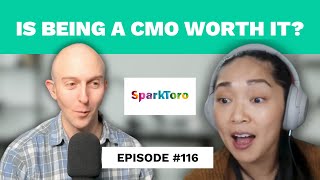
Dave Gerhardt talks with Amanda about returning from parental leave and whether the CMO role is actually worth it. They discuss what's working in B2B marketing now, the trade-offs between leadership and individual contributor work, and how SparkToro approaches marketing differently.
If I'm trying to drive people to a webinar and I write a post that's like zero click content, how are they going to register for the webinar? But I feel like you've driven massive results to your content by doing this. Can you talk about that?
I feel like when people question it, they take this all or nothing approach where they're like, how am I going to get people to join my webinar if I never drop a link? Where I'm like, I'm not saying never drop a link. I'm saying give standalone value so they don't have to click. So with that, it would be like, will give an insight that you're going to cover on the webinar. Because I feel like I see way too many marketers promote webinars by saying, what are you going to do about your content strategy? Find out in our webinar where you're like, I don't know, anyone could write that. Do this one thing to make sure you have a really solid content strategy. By the way, we're also going to give you four more pieces of advice in our webinar. So join it. There's that, like, give actual value in the promotion for it. If you work really closely with like your blog team or some kind of organic content team, then you can find ways to embed that webinar link into your blog posts. Wasn't even like, I sent a bunch of extra emails, right? It was just, I just did this extra thing totally organically, just embedded it in the blog post. Didn't even require an additional manual touchpoint and it just very naturally drove the extra registry.
Exit.
Exit.
All right, Amanda's here. This is, this is your first week back at work and I'm lucky enough to get you for about an hour for the Exit 5 podcast. So thank you. Congratulations. You're. You're not a new mom because this is your the second time around, but you have a four. You have a four month old. You're back at work and you got a big smile. You look great. Everything, everything, everything's going good. I'm, I'm happy to have you back. And I emailed you last night just to make sure you still want to do this and hang out. And you sent me an awesome email which is like, you're such a content wizard. I feel like you just seeded like 15 of your own, like future pieces of content and in what you wrote to me. But I'm happy to have you back and it's always good to chat with you.
Yeah, thanks for having me. And you know what? Maybe selfishly I'm just really excited to have a conversation with another adult. So there's that.
I know that feeling. I know that feeling. And, and for, for, for me, when my kids, when, when my son was my second kid, my son was born, it was like covet happened right after that. And so we spent a lot of time. There was a good year and a half where it was just me and my wife and a three year old and a one year old. Like not a lot of adult conversations happening anywhere.
Oh man.
I think I've always been like, I've, I've kind of been like. I describe myself as in extroverted introvert. In that my default state is introverted. I'm good being by myself, but I enjoy conversations with other people, you know, speaking, presenting, stuff like that. I feel like since the last three, four years though, that's flipped and I'm like, I'm ready to have grown up. I'm ready to hang out, have adult friends again.
Oh yeah, totally. I think I'm pretty similar. I get very much into like, I don't know, I think part of it too is once I'm in introvert mode, it's kind of hard to break out. But then once they do, I'm just happy to like have more interactions, talk to people, present, network, all that good stuff.
So one thing that we had traded in the email that I think was interesting is so at SparkToro, you are the sole marketer, you are the marketing intern and the cmo. You do the whole thing. What was that like? Leaving, going away and having a kid, which anybody who's gone through that process knows that it is the furthest thing from a. It is the furthest thing from time off as possible. It is so much harder than work in so many ways. But I'm just curious to hear about that experience.
Yeah, I mean, honestly, it was pretty stressful, I think, especially because I went into labor about a week earlier than I was meant to.
So you write up all the plans, you got all the plans, here's what's going to happen, then all of a sudden it just goes out the window.
Yeah. Or here are the plans. But I still have to do these three more things and then I can go. And then of course went to labor a little bit early and was like, oh shoot. These three really important things that I should not have left until this week, I should have gotten them done. So it was stressful in that sense of like, I'm the only person on my team who's leaving. But on the other hand, I mean, we had. I obviously work with very competent people, right? So I'm not worried about, like, oh, everything's going to go to shit. It's not that. It's more of, like, oh, no, I hope I'm. I feel badly about leaving this extra burden on Rand and Casey. I, uh. And then we also had hired Brendan Hufford of Growth Sprints to help fill in for me while I was out. And so then I was kind of worried about, like, oh, no, is Brendan set up for success? Like, is. Does he just have all his crap dumped onto his plate? And he's like, thanks. So that was stressful, but, you know, it's okay. Things.
Did you have any. Did you have. I. I've heard that. I've heard that a lot of people who've been in a similar situation are. And I even remember feeling this. And I wasn't the one who gave birth. And it's. It's much harder on the. On the mother. I remember a feeling of, like, are they still gonna want. Like, am I still gonna be needed? Like, when. When I come back? Is, am I gonna get lapped here? And did you have any of that feeling at all? Whether, you know, obviously that's not gonna happen and not the case, but it feels like a pretty natural thing to, like, take yourself out. You know, when you're out for three months and you. You realize that the company goes on without you, do you have any feelings of, like, wait, are they gonna need me when I come back?
I mean, totally normal feeling. I didn't have that this time around, you know, because I'm. Because we're such a lean team. But I definitely had that feeling the first time around when I was working at a bigger tech company and, you know, had a lot of time to. And that was also when I had a team reporting to me. So I really had to make sure that everything was buttoned up and that I had a good plan going out. So that was a time, too, where I was. I was really nervous about essentially getting replaced. And then it kind of happened to some extent. I mean, when I got back from leave, I was laid off from my job a few months later. And, you know, it wasn't because of my parental leave, but I couldn't help but feel like, well, I created the infrastructure to not work with me, and so the team theoretically knew how to work without me, and so if they had to cut someone, it made sense that it was me. Even though that's a terrible thing to happen to any kind of, any new parent coming back to work.
Of course. Yeah. Well, it's all, it's all different, right? Like a big part of the CMO and marketing leader job is, is people management. And so instead of writing a blog post, you are, I got a one on one in 30 minutes and I got to have a hard conversation with somebody on my team and that person's not going to like what I have to say and I got to deliver hard feedback and this is going to cause a ruffle in the team and there's a lot more of that. And I think what happens to a lot of people is you get into marketing because you like the writing and you like the creating. You're good at it. It drives results for the company or wherever you're at. Obviously when that happens, hey, more thing comes your way. Hey, Amanda, you're really good at that. Why don't you take on this? Sure, I'll take on that eventually. You're, you're the hub and you're doing a lot of things. The natural progression is to then say like, yeah, why don't you lead this team? And I think in the short term it's easy to be like, yeah, that sounds awesome and let's say yes and like this thing. But one topic that I like to talk about on this podcast a lot is people who. Look, we do podcasts where we talk to CMOs and I think it's very important to lay out like here, here's what a great CMO does, here's what that job looks like. But I really want to through this podcast also lay out the other side and show people that there's, there's both career paths. So we'll have content about helping you become a cmo. But there's also like, hey, there's people like me, there's people like you, Amanda. There's many other people who are like, I kind of like, I kind of like the writing and creating part and I'm going to try to carve out a career, you know, for, for in that world as opposed to just being a cmo. And I've always said I think before you there should be like a quiz. You should be, you have to have take like an assessment like, are you sure you want to be a people manager? And do you know what that entails?
Yeah, they totally should. And like, I think a big problem too is that everyone, you know, every like, you know, employee, right, like white collar worker, everyone's incentivized to become a people manager regardless of how much they actually like it or regardless of how good at it they are. Right. Like, that's kind of the only way to make more and more money. You don't know a lot of people who are individual contributors who are also well compensated. Like, I feel like that tends to be more so in technical roles. Like you might have like a senior software architect who does all the work, but there aren't a lot of like VPs of marketing who don't have any direct reports. That'd be weird, right? Yeah.
And so do you feel like, like, how does this work with. For, for people that are listening that might not be super familiar? Tell us, what is SparkToro? Is the team going to be small forever? What the makeup of marketing looks like there? I think that's helpful context. I want to keep going on this topic a little bit with you.
Oh yeah, for sure. Yeah. So SparkToro is a B2B SaaS company where we have an audience research tool that other marketers, entrepreneurs, whatever, can use to better understand their audience. So you can search for things like. Well, we're also relaunching the product so soon everybody will be able to see the keywords that your audience is searching for. So like if your audience is cmos, you can see like what are some popular keywords among CMOs or people who self describe as CMOs. You can also see the influential podcasts, social accounts, YouTube channels, subreddits among any given audience. And we do this. Historically we had been doing this largely through social network data like Twitter, Instagram, Facebook, LinkedIn and more. But with the relaunch product, we're also going to be leveraging search data and clickstream data so you'll get more insights on the keyword stuff on lookalike audiences, like based on who visits certain websites. So yeah.
Okay. And the team is three people?
Yep, three of us.
Your VP of marketing, network data like.
Twitter, Instagram, Facebook, LinkedIn and more. But with the relaunched product, we're also going to be leveraging search data and clickstream data so you'll get more insights on the keyword stuff on lookalike audiences, like based on who visits certain websites. So yeah.
And you, you own all that? The company is. Are you going to stay at three people? Like, what, what is the hiring? Like, how does hiring and what, what is the hiring and growth plan look like?
We don't really have one yet. I mean, a lot of it is like it's just going to be the three of us for a while. But we do hire a lot of agencies and consultants.
Okay. And the team is three people.
Yep, three of us.
You're VP of marketing. You, you own all that the company is. Are you going to stay at three people? Like what, what is the hiring like? How does hiring and tends to help us.
So we've worked with Gia and Claire at Forget the Funnel, we've worked with Asia Orangio at Demand Maven and most recently Brendan.
What does the hiring and growth plan look like?
We don't really have one yet. I mean a lot of it is for that Growth sprints. So we hire highly, highly competent senior people to work with us and then as far as full time employee goes, we don't know. Right. Like I think, I think, I think the next hire that we would make would probably be someone on the technical side to help share Casey's workload. Casey's our co founder and CTO before we hire another. Like it's just going to be the three of us for a while. But we do hire a lot of agencies and consultants to help us. So we've worked with Gia and Claire at Forget the Funnel, We've worked with Asia Aranjio at Demand Maven and most recently Brendan Hufford at Growth Sprints. So we hire highly, highly competent senior people to work with us. And then as far as full time employee goes, we don't know. Right. Like I think, I think, I think the next hire that we would make would probably be someone on the technical side to help share Kasey's workload. Kasey's our co founder and CTO before we hire another marketing person.
Cool. And how do you describe like the things you own as VP of marketing?
I guess I would describe it as I definitely own all the top of funnel marketing and like organic marketing. Kasey and I tag team on the metrics stuff because a lot of it is reliant on me asking him like, hey, can you pull this report on this audience? Or like can we see how many people, like how many people have logged into SparkToro and like run at least two queries in the past month? So I lean on Kasey for a lot of that. But day to day, you know, I manage our email marketing social channels, mainly LinkedIn because that's our largest kind of most engaged, most relevant audience as well as our event program. Those are kind of my three main priorities. Event as defined by digital and physical events. So we do like a monthly office hours webinar and this year we're going to Take our annual summit Spark together to an in person event. So we're really excited about that.
Nice. I, I, I really want to do an event this year.
Yeah. An in person one or.
Yeah, yeah, yeah, yeah. In person. The gravitational pull of it is quite strong and I think there's just something when you get everybody together in person. I also think that just given the nature of like the Exit 5 business, I, it can be an awesome day to create content and so if we you know, had a bunch of interesting sessions all like I want all those videos, I want all that stuff could be podcast content and just we get so many one off messages of like hey, when are you going to do an event? When are you going to do an event? There's just something about being able to like high five someone in person.
Yeah.
Or whatever that I think is, is tough to replicate online. We've been doing a bunch of webinars too and, and those are good but there's something that's a little bit more intangible that comes from the in person thing and I think that will give us a nice little boost this year.
I think so too. And I, I mean you have a really engaged community so I really would imagine that they're pretty hungry to go to an in person event. Yeah, that would crash.
I bet it would. I feel really good about, I feel really good about how it would be. It's more just like the, I have a lot of scar tissue from doing like events in the past and like I don't want to self inflict. Like I have a nice life right now. I don't want to, I don't want to like cause a lot of self inflicted pain. But I just hired a CEO. He's, he's awesome. We have the budget to like, you know, we could bring on an agency to do a lot of the heavy lifting. And so I've, it's take, it's been like two years of this marinating and I'm like dude, you should just do it. Like it's not going to be that bad.
I know, but it's like I get it. It's also just, it's really expensive. Not that you can't afford it but like it's a lot of money to handle and it's a lot of money, a lot of work.
Yeah, it's a lot of money. And like even though I think there's ways that we can do it through sponsors and like we have a lot of demand for sponsors for like digital and sponsors love events and so I have no doubt that we could find, you know, call it three to five sponsors who could basically help us make sure that it generates revenue. It still doesn't make it any less stressful because just the sticker, you know, even if you have the budget to do it, the. The sticker items of, you know, paying a designer, you know, finding a designer and paying them 1200 bucks to do some design project is different than, like, well, just to hold this space. It's, you know, $150,000. It's like, yeah. And so that's. That's a hard. That's a hard adjustment. And this sounds. And that I've only worked at companies that have raised VC money and have had lots of. Had big budgets and grown really fast. And so it shouldn't be this way, but it is. It's like, yeah, that. That was also someone. That was someone's money at that point. That money matter. Sure. But it is much different when, like, it is physically my bank account and the money is coming right from there and we're writing a check to someone just.
Ah, yeah. Oh, totally. But since it's. Since everything is done at scale, like, even seemingly small things are so expensive. Like, you'd think, like, oh, we're just gonna order a bunch of, like, water bottles, and before you know it, it's gonna be $20,000.
You're like, why are you say. Why would you say that? I use. Right. Like, we want to buy lunch. Like, let's say we do a small, relatively small event. Let's say 100 people, right? And buying. We buy lunch for everybody. That's $10. You can't get lunch for $10. It's gotta be 20. Maybe 30. Probably 30 bucks. That's 30 grand just to feed people so they don't complain about it. So anyway, I think there's something to it. There's something to an event. I need to just put this on tape so when Dan listens back later, he'll be like, okay, we're gonna do an event. I was actually gonna ask you not to transition. I think. I think we kind of made the point on the. On the cmo, the CMO piece, and maybe we'll put a. I think one thing that you said in. In your note to me about this, which is, I think is really important, is like a big part of the CMO thing is chasing status. We all chase status in some way, but maybe now there are different ways to look at status. In the old world, status equals title and money. Maybe now status equals Time spent how you want it. Do you feel like being the sole marketer gives you a little bit more control of your schedule? In that you, you got a list of things you have to do, whether it's write that email, write that article sched, you know, create that campaign. You can do that whenever versus like if you're a CMO and you're a people manager and it's like, you know, Nancy on your team wants to have a meeting and needs to talk to you about something. Like, you, you got to be there for her. And that's, it's a. You can be a little bit more control. Am I right in making that assumption?
Yeah, totally. And that's, that's like the biggest thing for me. Yeah. Because I mean, like, that's what I've really realized over the past couple years. And this is like, especially with having kids, it's like, how do I like make this like full point? So I mean, I'm thinking about like, because I have kids, right? My, the time that I spend with my kids is limited, but the time is spent with myself is also limited. And like, since I work from home and everything, I think about things like how do I want to spend my whole day? Whether it's work, family life, personal time. So yeah, I mean, and those, those.
Hours fill up really quickly.
They fill up so fast. Right? They really do. Especially when you factor in like morning drop off and afternoon pickup and then you gotta make dinner and put the kids to bed. You're like, the time goes quick. And for me, at least it was. I've, I've. I've asked myself, like, do I want to. How much time. How much of that limited time do I want to spend in meetings? You know? Not a lot.
No, absolutely not.
And I liked. And like I like to have a couple of meeting free days each week. Like it used to be, I would hope for one meeting free day, but now I'm like, maybe I could have like two where I just like do my work, do some writing stuff, jam out some projects and call it a day. And I feel like I don't know. And look, this is probably just like me in my bubble of A lot of the people that I talk to now are like other entrepreneurs, solopreneurs, consultants online, where they mostly get to spend their time how they want it. Where I feel like that seems more desirable to me. So as we talk about like what status looks like now, you know, Right. Where before, right. Ten years ago, me was like, cmo, that's an important job. Important, powerful, you make a lot of money. Like, I want that job. But more recently I've thought, you know, if I wanted to be a cmo, yeah, I probably, I probably would make more money. But at what cost, right? Because at some point you got to ask yourself, like, what are you going to do with that money? Right? Like, granted, if it's, if it's the change from making a couple hundred thousand per year to making millions, that's different, right? That, that's a big jump. But in general, it's like if you're going to, if you're already making a pretty good amount of money where you have a pretty comfortable life and it comes down to making what you make and making like 15, 20 grand more per year. I know this is very first world, first world problem of me to say. I know, but like, but it's true. If you're making it, if you're comfortable enough and you think about like making 15, 20k more, you quickly realize that after taxes, that doesn't really change your life that much. Like, that allows you to go on maybe like one more nice vacation in the whole year with a family, right? So like, that's when I really think about like, well, what am I gonna do with this extra money? Like, is it gonna give me anything that I can't, that I don't have right now? Like, is it really truly gonna change my life? And then I, that's when I just kind of go back to. I'd rather just get to choose how I spend my time than make an extra 20k or even an extra 30k today. Because I'm just like, I'd rather just keep my existing schedule where I work like 30 hours a week. I have like two meeting free days and I still have time to do my personal creating stuff, right? I still get time to hang out with my kids, cook meals now and then and like, enjoy my time. Like, I'd rather have that.
Yeah, it's, it's, it's really wise of you to. To walk through this path. Also, I would argue that most people are who listen to this are all in the first world problem bucket. Like, this is a people who work in B2B SaaS.
Yeah, it's true.
Yeah.
Think about it. Because, because you, I mean, you actually have done the real CMO thing. Like, do you ever think about, like, do you think you would go back to being a cmo? Like maybe at a bigger tech company or something?
No, that would be like, no, my. Absolutely not. Why would not? And that's not that I don't mean that in a disrespectful way. I just mean I've built a business now where I don't have to go do that. And I would do that if, if everything, if all of the, my current exit 5 business, if it went to 0 and I was looking for work, that would be one path that I would consider. Right. And I could go to LinkedIn and I could say, hey, I'm available to be hired as a CMO and maybe there'll be some inbound. Now the further I, and I don't know, who knows? Hopefully that won't ever happen. But the further I get away from being a CMO, 5, 6, 7, 8, 9, 10 years, maybe the less appealing I would be to get hired in that role. And so I run. There's a risk there, but I think that's a fallback path for me. I also just kind of feel like, and from what I know about you, you're similar in this sense is like I feel like I'm always going to be create, I'm always going to find my way to create something and, and whether that's start my own business, start a podcast, start a blog, buy a small business, build a small business, I don't know. I have no idea. I just feel like that's more my DNA of like creating and I'm going to find a way to like create income through, through that path. Anyway, the CMOs, I was just gonna say also on the CMO thing now, and this is not going to be the case for everybody, but like I make more money with, I make more money from Exit 5 than I did as a CMO now kind of, I, I worked at two companies where there were acquisitions and so I made some money through those acquisitions and that was significant. Right? However, to your point earlier, like the only way you're going to make those millions in the CMO role is 4, 5, 6 years at a company having equity, you know, so you're going to have to put in, it's not going to happen overnight. And so, so from like just a salary stamp, from a straight up salary standpoint, like I think you can make, you can make more than your CMO salary on your own. You might have, you know, if you have half a percent in a billion dollar company, obviously that's going to be a bigger, a bigger lottery ticket. But now I can make more money than I made as a cmo. Plus I'm building an asset, I own a business, I'm hiring people. Like there's Instead of owning a tiny equity, instead of owning a tiny equity stake in somebody else's company, I now own 100% of my own of my own business. And that's how I, how I'm thinking about it, at least today.
Yeah, I mean, that obviously makes sense. So what was that transition like for you in going from, you know, traditional CMO to going full time solo creator and then that transition from solo creator to now hiring people again? Like, what were those? Yeah, what was that like?
It was. It's tough. It's tough because one of the. So, so what happened to me was I had been building, you know, unintentionally audience building, and we, we should talk about this topic at some point, but, you know, started to build a following online. I was at a company that was growing really fast and the company got a lot of attention and I was the one who was leading the marketing efforts at that company. And so like, by osmosis, you kind of like your brand kind of grows with that. And so I launched my first like, paid channel while I was still a cmo. And so like, when I decided to, when I decided to go and do that full time, I already had a pretty, a pretty strong stream. I started initially, started this thing on Patreon and I had like thousand, a couple thousand paying members, a couple thousand members paying $10 a month at the time on Patreon. And so I was making, you know, between 10 and 20 grand a month through paid content while it was still a cmo. And so when it came time to like decide that I wanted to do that, there was no, there wasn't a worry about like, well, where is income going to come from? Right? And, and you know, most people that I talk to are like, hey, I want to leave my job. I want to become a solo, you know, creator. I want to do consulting or whatever. But like, I don't know, like, I don't have any clients lined up. It's kind of risky, three to six months. So I'm very, very fortunate that I didn't have to go through that. I didn't, I didn't have to go down that path. Also though, in addition to starting that. Look at this cat right now. In addition to starting that, I, I'm sure you, you get this. I'm sure other people listening get this. Like, I would get inbound messages all the time. Maybe not hundreds, but like a couple messages a month from some company being like, hey, do you do any consulting? And I started to realize like, huh, there is Life beyond the company that I'm working at. And people want me. They want my experience, they want my advice, they want my knowledge. And I started to get enough of them where I'm like, wait a second, I didn't say yes to any of them at the time, but I started to say, I started to see them all where I was like, huh, there's something here where like, I'm getting asked to do a lot of these pick your brain things. Or like, hey, can we meet with you for an hour? I read this amazing book called Million Dollar Consulting by this guy Alan Weiss, which is. Gives you basically a framework to like, justify. I think this is a hard thing that people have a hard time getting over. How do you justify charging for your time? But he's like, look, if you're a knowledge worker and you've built up knowledge in this, in this industry, like, that is your product. And so I started charging for my time and people said yes. And so I started to realize, like, wow, I have another, I have another income stream here too, which is like, people can trade money for my, you know, 10 years in this industry and knowledge. And I was able to start doing a little bit of consulting on the. At the same time. And so when it came time to go work, like, go fully for my work for myself, I had a little bit of consulting. I had some of this, you know, content business bubbling. And so it was like, let's just go all full in on this. The first year that I worked for myself, I did both. I did consulting and I did content. And a year ago, I lost all my consulting clients, the economy, you know, I was thriving in the, in the, in the tech bubble of, you know, 2020 to 2022. Like, there was just consulting coming out the ears, you know, like, there was a lot of demand for that type of stuff and people had very, you know, budgets and whatever, that all went to zero. And so last year, well, this is probably two years ago now, I had this decision of like, well, what should I do? And I decided to say no to all consulting. And I said, I'm going to go all in on this content business. I see a lot of similarities between other businesses that, whether it's HubSpot acquiring the hustle, sales hacker selling to outreach. I see a lot of even things like in the past, like content marketing, Content Marketing Institute, I saw a lot of those threads. I was like, I'm going to go all in on this business. I'm going to rebrand it. So it's not the Dave show. I don't want to be that guy. I don't want to talk about marketing for the rest of my life. I'm going to shift into like running a company that is a media company. And so I changed. I rebranded from DGMG to Exit 5 and now I'm hiring people and bringing on a team and I had to do all those things to, to get away from like this being the Dave Show. I see, you know, I was, I was very like talking about solo, this narrative of solopreneurship. And I see lots of people talking about that. The hard part about that is like it can be a great way to make a bunch of money, but you're, you're stuck on that. You're going to be. I, I would be stuck on that like hamster wheel forever, right? If I, I needed to like dance monkey, like have it, have a take about B2B marketing to get new clients, to sell a course, to do whatever. I started to see the seeds of like, oh no, you have a much, you have a very interesting business if you go all in on this like Exit 5 thing and create a media company. And that was my realization and that's kind of what I've been focused on for the last year or so. I'm very hard headed. I'm seeing this in my daughter now who's six. I need to do things when I'm ready. Meaning like if we want to get her to ride her bike, take her training. She no, I'm not riding my bike. I'm not. One day, if we can't force her to do it, out of nowhere she's like, dad, today's the day. I'm okay, let's go ride that. And that's exactly me. I, I've known for a year that I should be hiring people and I should invest in this business and I don't have to have hot B2B marketing takes anymore. I can shift into, be more of the CEO and build this media company. It just took me like waking up three months ago to being like, wait a second, I already know who I should hire. I should just hire this person. And I called Dan Murphy, who I used to work with. I hired him twice at my last two companies or worked with him and hired him the second time. And I just didn't believe that he would come here and do this. And so he said, yeah, man, you have an amazing business. I'd love to work with you. And that's kind of changed my life in the last 60 days. And now it's given me, like, this new energy and to what we talked about earlier with time and everything. Hiring him has been like, the obstacle. The obstacle is the way bringing on a partner and a COO has allowed me to, like, spend more time. I can hang out and talk to you and do this podcast now. So this is to learn, turning into a narrative. But there's just a lot in there that I thought you could appreciate and I wanted to.
Oh, absolutely. Well, it's also cool is like, you got to enjoy the solopreneur life. Right. Like, having no one to answer to or, like, worry about. Right. But now you're. You've basically kind of hired your friends. Right. And I mean that in a great way.
Yeah.
Your friends who, you know, can do the job well.
Yeah.
Like, working with.
That's why I put off hiring for so long because, like, I had a completely free schedule in that, like, I could just do things when I wanted on my terms. And I was like, ah, like, I've been working this way for a while. I have a way of doing things. I like to move really fast. I'm very direct in, like, feedback. I. I had such a clear vision for, like, what I needed to do for this business. I didn't want to hire. I didn't want to go the more, like, junior route and hire someone much more junior, where, like, I would have to train them, I'd have to coach them, and not that I don't think that's valuable and I could help somebody grow in their career, but, like, I've already done that. I've already managed a team. I don't want to do that anymore. And so I was like, you know what? It's easier for me if I just do it myself. Then when I find out that somebody's available that, like, I know and, like, and trust and they know my working style, and if I tell them, like, hey, that thing that you did is not good. Let's do it again. They're not going to, like, go off in a huff and not talk to me for three. For three days. And we don't have to have all these, you know, one on ones and meetings. It just. It brought a lot of comfort. And I was like, yes, this. This makes a ton of sense. And he is really good at the operating stuff and managing people and hiring and running systems. And so it's allowed me to basically have best of both worlds. Now. We can go hire people, we can invest, we can hire agencies, we can hire people, we can do other everything. But it doesn't have to all be because I wanted to do it.
That really resonates, I think. Like, I mean, you've basically hired a. Hired a peer, right? Someone, like, you don't have to talk to Dan every day or check in and be like, hey, like, what's the status? Right. I'm sure you probably even go days without speaking just because you're both doing your own thing.
Yeah.
And I can.
I can message him and say that, hey, I hate this. And I think that's so important. It's like, just like a relationship, right? Like, whoever your partner is, like, you. You need to be able to, like, be direct, and life is short, and you need to be able to just make decisions and move fast and not get so offended about everything.
Yeah. And I think, you know, I think a lot of this is why the three of us at SparkToro work so well together and that, like, you know, we'll. We'll. We'll talk a lot about how, like, we're not a meeting. We don't have. Really have a meeting culture. We all kind of do our own thing. I definitely go days without talking to Rand or Casey. They go days without talking to each other. Now, I think it's a unique kind of relationship, right? Where, you know, you think about, like, they hired me as the only marketer, but I wasn't coming in at, like, marketing coordinator or marketing manager level. Right. Like, I didn't need to join and be taught, like, what email is. Right. It was more of like, hey, here's mailchimp. Here are the two quirks that you should know, but you got the rest, right? Like, that was a lot of it. And it works really well for us because we're all. We're each really independent in what we can do, and we each have our own pretty senior skill set. So, like, yeah, it's only three of us, but we probably have the same output as, like, a team of 12 or 15.
I love that. That's exactly how I feel. And I haven't been able to articulate that. It's. We can move fast. You remove a lot of, like, the BS in between. You don't have to have lots of meetings. Right. I bet you don't talk to them for days, but I bet you that they're also not wondering, like, what's Amanda doing right now? And we're. We're paying her all this money, and I don't even know what she's done. Like, you have to get. You can't have that. That that will be toxic and that will never work out. Right. And so how do you, what's work for you? Like do you, do you share what you're working on? Like how do you build that trust? Because you didn't know them, you didn't know these people coming in. Right. And so how do you build that trust to like not have somebody you know on your ass, like asking you where you, where you're at, what you're doing? Are you really good at internal communication? What's your trick?
I think the big thing has been having a couple of programs that I own fully. So the two examples of that would be our monthly ish office hours webinar and our email newsletter which goes out about twice a month. So with that I say that I call that out because those are some deliverables that they know I'm always, I'm kind of always working on. So they'll know like they might, they're probably not thinking every week, like when's that newsletter coming out? But they kind of see it come down the pike. They might see like that I've started a draft in mailchimp, like things like that. So they know that, they know that it's happening. The other thing is when we do, we do have like strategic meetings probably a couple times per year. Right. And these are the things that's like, here's what we have to work on for the next six months or like so these are like big picture things. One example would be like the Spark Together event. Right. Like we, so we started to work on that as an in person event. So we know that's happening. Um, so I think it's more that at a very high level we all know what the other's doing. They all know what I'm doing. They probably won't know what I'm doing on a Wednesday morning, but they know like in, in general, in Q1, some of the things that I'm working on and they don't really care about the nitty gritty details.
I was making notes because I, I don't want to like jerk this conversation. But you mentioned something really interesting which I want to go down. So I've wanted to talk. I, I, I make some notes during this and I want to talk. Maybe we can shift away from, let's talk about marketing. You mentioned that you own, you know, it's a lot top of the funnel and it's email, it's LinkedIn, it's events. Can we talk about that email strategy that you mentioned? I'm trying to figure out what the right email volume is for us. And my hunch was like, oh, we could be sending more email, but we're sending a couple emails a week and it's. It's okay. I think we could be doing better. Then I hear you saying, like, you're only sending two emails a month. What is your. How do you think about your email strategy for Sparktoro? What. What's the goal of it? You're only sending two, two emails a month? Like, what, are you crazy? Talk me through that.
Yeah, yeah. So we do send more emails in a given month. So we do have an onboarding sequence for everybody who sign ups for the product, whether it's free or paid. So we have this like, automated sequence that I think it lasts about three weeks or so. So people will get a product email every couple days and it'll. It offers tips, you know, introduces our newsletter, that kind of stuff. So there's that. We also do two email newsletters per month and then probably two emails per month that promote the office hours series. And then we might do like one or two other emails in a given month that would promote, like, the product. It might be some kind of. Yeah, might be some kind of nurture campaign to get people to go from free to paid. So I guess the way we see it is because I know that we have, however, amount of product, automated product emails going out any given time. I just don't like to Send more than 2 emails per week in general. So, like, for instance, if I know the newsletter is going out, it's going out tomorrow. I definitely won't schedule another email that goes out tomorrow. The other thing is we also have a separate email list. There's a little bit of overlap for people who subscribe to our blog. So this is purely just people who signed up to read blog posts or get alerts for blog posts. So our main list is, I think today it's around 60,000 people. The blog list is, I think, is around 12,000 people. And that the blog, the blog list grows very organically. Like, we don't do anything. We don't do anything to promote it. It's just whoever comes to the blog and decides to sign up, they get it. There's some overlap, not a ton. And the last thing I'll say is we're pretty aggressive about removing cold subscribers from that main list. So, yeah, I'd say every three months we go in and like send an email campaign that says, like, hey, we really want to make sure that you actually want our emails Looks like you haven't opened one of our emails in the past month or the past couple weeks.
Yeah.
Click here.
I just do that because I'm cheap and it saves me lots of money.
And HubSpot, honestly, that too. We're like, yeah, because we're kind of like, why are we going to pay this extra money?
It's crazy. It's crazy. How much money? Yeah, for sure. And so, so, so you feel like two, two emails a week is right. Yeah, I agree with that. We, we send two. We just started doing two emails a week. We have this. We came up with something called like a snack. It's like a marketing tip. And then we have a newsletter. The challenge is like, we often, we often have other stuff that like, we need to promote. Like we need to drive web, we need to drive attendance to a webinar or we need to promote something within the community. And then all of a sudden someone gets three, four messages. And I think for a lot of people it's not a big deal. But then you always have that one person who's like, you sent so many emails. And I'm like, well, you can, you can unsubscribe, you can. It's okay. But it's something that I think about a lot and I'm just curious and, and I'm trying to figure out like, what the right, what the right balance is. Like, do we go, do we send more emails and be a little bit more transactional and make quick hits or do we do like this two emails a month and they're like super well researched. You know, I've seen some of the content that you all put out and you, you know, when, when Amanda writes, Amanda likes to go deep. And I like that. I like that strategy.
Yeah. I mean, I will say like, we, we never.
And be a little bit more transactional and make quick hits. Or do we do like this two email.
Send email to fill a quota. We only send email when we really have something to say. And that's something to say. It might be an idea that we think is important and worth sharing. Or it might be like, we really want to promote and promote the product and get people to go from free to paid. That's worth saying. Right? So we'll never just be like, ah, we should just send an email. It's been a while, I don't know, let's put something together. It's always going to be like, we really need to drive more customers or we really need to share this idea or we really need to get out this survey and ask people their thoughts on this thing so that we can create more content.
That's great. That's a good, that's a good. Ben. That's a good frame to think about it. I just lost my note. But never send an email to fill a quota. Like, send an email when we have something to say. That's also makes it easier to stand behind that email. Like if someone is like, hey, you're sending too many emails, like, I can. I feel better about that. If it was like, ugh, if that kind of just felt yucky, like we need to send that email to like, to fill a quota. That feels different than like, whoa, hold on. No, we, we, like, I really wrote this. Like, this is something that I wrote. I wanted, I wanted to say. And then how do you figure out like, is there a cadence for like free to paid or is it just kind of like, oh, we should, we should do a free to paid email or is it like an, a system that's always going.
I think there's a system that's always going, see, I don't even remember. But like there's an automated email that's like, hey, if you were, if you paid for this product, here's what you'd get. And then we do a couple of one off things, but we tie those one off things to product launches. So like we'll do one when we relaunched into v2, we'll do it again when we launch like new features. But yeah, so there's always some kind of cadence. It might be like once a quarter that we have like a good product or feature launch that we make sure we promote to our audience.
What about, let's talk about LinkedIn. Yeah, what, how would you articulate your Strategy for, for LinkedIn? Is it based on the company page? Is it the three of you posting regularly? What. What's working for you all on LinkedIn? And I know you're coming out of a, you know, you're four months post, baby, so I'm sure you haven't been going hard on LinkedIn.
Yeah, yeah. So there. Yeah, that is true. You know, honestly, I've actually used like a framework of something you've said. I think you maybe you've repeated it, but you've said this. Like, I think it was like three years ago, a long time ago that you said this because I remember it and it was essentially using your company page as like the company news feed and then using the employee page or your personal page to amplify it or like to talk about like a personal connection to it. So for that it means like anytime we have a webinar or anytime we have like a new blog post, all of it will get promoted on the company LinkedIn page. I try to pick out a standalone idea so that anybody scrolling through gets like, you know, that zero click content where they get like that discreet like takeaway. They're like great. Got it. And they can either choose to click or just move on with their day. So everything gets shared there and then for us then, then Rand or I will repost it with a, with our thoughts or at the very least will engage with it. But what I like to do is for my, for my personal page, I like to write like my personal connection to a given piece of content, like why I'm excited about an upcoming webinar or like why I wrote a blog post in like why I chose a certain topic.
The engagement on the company page is pretty good. I just was looking at it and it, and it's clearly like, I'm glad that you referenced that because I think it's like, I like to think about it like that news ticker and people. But it's like a one, two, it's a one, two punch. They have different purposes, right? Like people want to know that the business exists, that content wants to be, you know, content needs to be relevant. You're going to share different things there. You can add a little bit more personality from your, your personal pages. I see that you all like repost other people, which works really well. You mentioned your thing, so you referenced my thing. I talk about your thing all the time, which is zero click content. And this has become more important than ever because LinkedIn punished. Like you can't put a link on LinkedIn and get high engagement. Like they reduce the reach of a link in a post. The thing that kills me is that they don't just give you a comment. Like if we could just pin, I want to be able to pin a comment. They had that feature for a while because then you could do something. You could write great content and then be like, hey, here's that link. I could write something about this interview and then in the comment I could pin that comment and be like, hey, here's the link to that conversation that I wrote about in this post with Amanda. If I do that in the comments, the comment, you know, it goes all over the place. That's one of my biggest frustrations. I don't need that many additional tools from LinkedIn. But just to be able to pin a Content, but pin a comment. But your thing with zero click content is genius because it's like you're giving somebody, you're giving somebody everything in that post without having to click. And it's going to work much better with the way that the algorithm works and it produces better results because it drives more engagement. More engagement equals more reach. More reach equals more followers. And you just kind of like keep this loop going.
Yeah, absolutely.
I didn't really have a question there other than like, it's a good strategy and more people should do it. It's hard though, because a lot of marketers get stuck on the, well, hold on, how are, if I, if I'm writing, if I'm trying to drive people to a webinar and I write a post that's like zero click content, how are they going to register for the webinar? But I feel like you've driven massive results to your content by doing this. Can you talk about that?
Oh yeah, I could do. Yeah, definitely. Yeah. So like, I feel like when people question it, they're, they, they, they take this all or nothing approach where they're like, well, should I, So how am I going to get people to join my webinar if I never drop a link where I'm like, I'm not saying never drop a link, I'm saying give standalone value so they don't have to click. So with that, it would be like, well, give an insight that you're going to cover on the webinar. Because I feel like I see way too many marketers promote webinars by saying, what are you going to do about your content strategy? Find out in our webinar where you're like, I don't know, anyone could write that. But what it should be is like, do this one thing to make sure you have a really solid content strategy. By the way, we're also going to give you four more pieces of advice in our webinar. So join it. So there's that like give actual value in the promotion for it. And then also if you can bake that, if you work really closely with like your blog team or some kind of organic content team, then you can find ways to embed that webinar link into your blog posts. Like, one of our best attended office hours series was about audience Personas and it was something where I did a blog post on it first and then when we decided to turn it into a webinar, I included the webinar like signup page on my blog post. And so a bunch of people were going to this blog post over the course of like a couple weeks. And at the very top, it was like, we're going to cover this in a webinar. Sign up here. And we got like hundreds more extra signups for that. Like, I believe at the time we were averaging like 500 or 600 registrants per webinar. But when I, when I did this for this particular webinar, we got almost a thousand signups. So it wasn't even like I sent a bunch of extra emails, right? It was just, I just did this extra thing totally organically, just embedded it in the blog post. Didn't even require an additional manual touch point. And it just very naturally drove the extra registrants.
You mentioned a really important thing at the beginning of that too, which is you can do that, but also if you create value, Create value, Create value. Give away value. Give away value. When you do have something to promote and you're like, hey, we're doing this webinar tomorrow, sign up here, that actually does work. It drives a ton of registrants, right? I notice this all the time. If I am promoting too many things on LinkedIn, I feel that I can be a case study of this. Like, If I write 10 posts that are like, sign up for our thing. Go to this thing. Ba da da, it's not going to work, right? If I just write like, good content, good content, good content, good content. And then I'm like, by the way, we're doing a webinar tomorrow. You should sign up. That post will drive hundreds of registrations. That, that always works. And so I think that's another, like, very important side benefit of zero click content. Okay, we gotta wrap up. I could talk to you forever. I wrote a ton of notes. I try to write a ton of notes during this so I can do less work later because we're all about working smarter. Hashtag. We're. We're growth hackers. We're parents. We're growth hackers. We're. We're marketing experts. We're LinkedIn thought leaders. We are zero click content Gurus. We are LinkedIn page versus company page personal stra. Strategists. Amanda, good to see you. Good to hang out with you. I hope you enjoy the rest of your day. Everybody that's listening, go follow Amanda on LinkedIn. Send her a message. Tell her it's nice to have her back on the pod and, and wish her a, A warm welcome back to SparkToro.
A thanks, Dave. It was so fun to be here.
So fun to be here. Thank you.
More from Dave



Asynchronous work isn’t a trend. It’s how teams actually get things done without burning out.

AI is changing product marketing. Here's how top B2B teams are scaling without cutting corners.

How Product Marketing Is Evolving in 2025: Lessons on AI and Leadership with Jennifer Cannizzaro

Why referral programs look different outside of SaaS (and why that’s a good thing)

The secret to scaling dual GTM? Give every marketer ownership and get out of their way.

From content to CMO: how Jess Cook made the leap (and built her first budget from scratch)

Leading B2B Marketing for the First Time: Strategy, Budget, Content & Team with Jess Cook

Most B2B advice is built for SaaS. But what if you don’t have demos, PLG, or lead goals?
